Agra · Getting around · 10 min
Getting from Agra to Jaipur Without Wasting a Day
Three honest answers cover the 255 km: a train from the station you probably didn't arrive at, a coach that boards across town, or a car that only pays off if you stop on the way.
The 255 km between Agra and Jaipur look trivial on a map and can still swallow an entire day if you book them carelessly. Almost every useful train leaves from the station most visitors have never set foot in, the buses board at three different points on opposite sides of the city, and the car, the priciest option by some margin, is the only one that lets you see anything in between. Decide which of the three you want before you lock in your hotel nights, because the answer sets your wake-up time and, on one of them, your entire second morning.
The station most Jaipur trains actually use
Agra Fort Railway Station (AF), in Rakabganj a few minutes from the fort walls, is where almost every daytime Jaipur service starts or calls. That one fact causes the most common and most expensive error on this leg: a first-timer books a taxi to Agra Cantt, because that is where they arrived from Delhi, then finds the train boarding on the other side of the city. Read the station code printed on the ticket, AF and not AGC, before you order the ride out, and give yourself thirty minutes of cross-town traffic even at dawn.
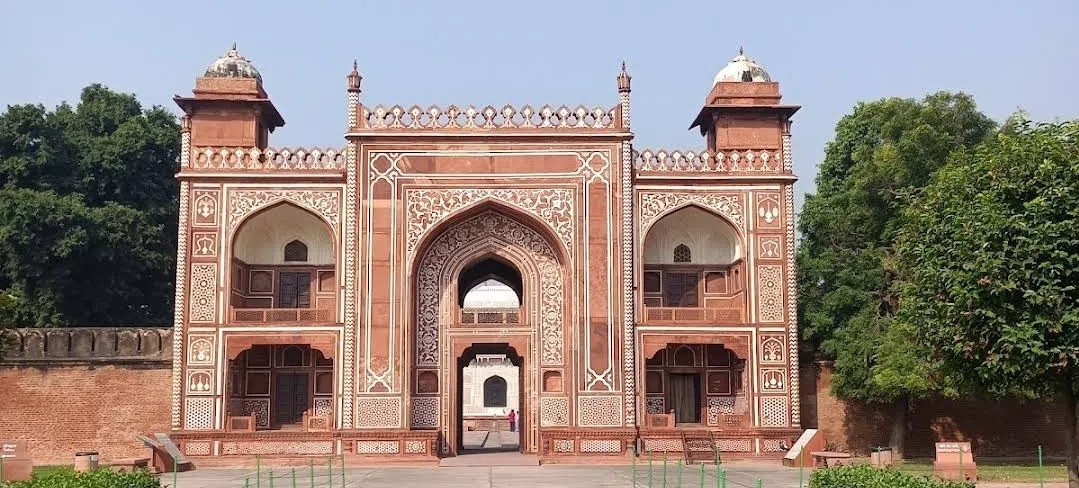
The station itself is plain and it functions. Four platforms, entry free, platform ticket ₹10 if someone is seeing you off. Coach parties pass through routinely, so nobody blinks at six people and a luggage trolley, but there is no lounge, little shade and no realistic place to sit out a long delay. In April and May that matters more than it sounds on paper.
One piece of housekeeping while you are looking at timetables. The old Jaipur-Agra Fort Shatabdi has not run since 2018, and stale listings, hotel desks and third-party aggregators still show it. If someone offers you that train, it does not exist; go back to the live timetable rather than argue the point at a counter.
What Agra Cantt is good for
Agra Cantonment Railway Station (AGC), in the Cantonment area to the south-west, is the better-equipped of the pair: a tourist information counter, retiring rooms, ramps and lifts, and an executive lounge from ₹150. Entry is free, platform ticket ₹10. If you are travelling with someone who cannot manage stairs and a scrum, this is the station that will treat you properly.
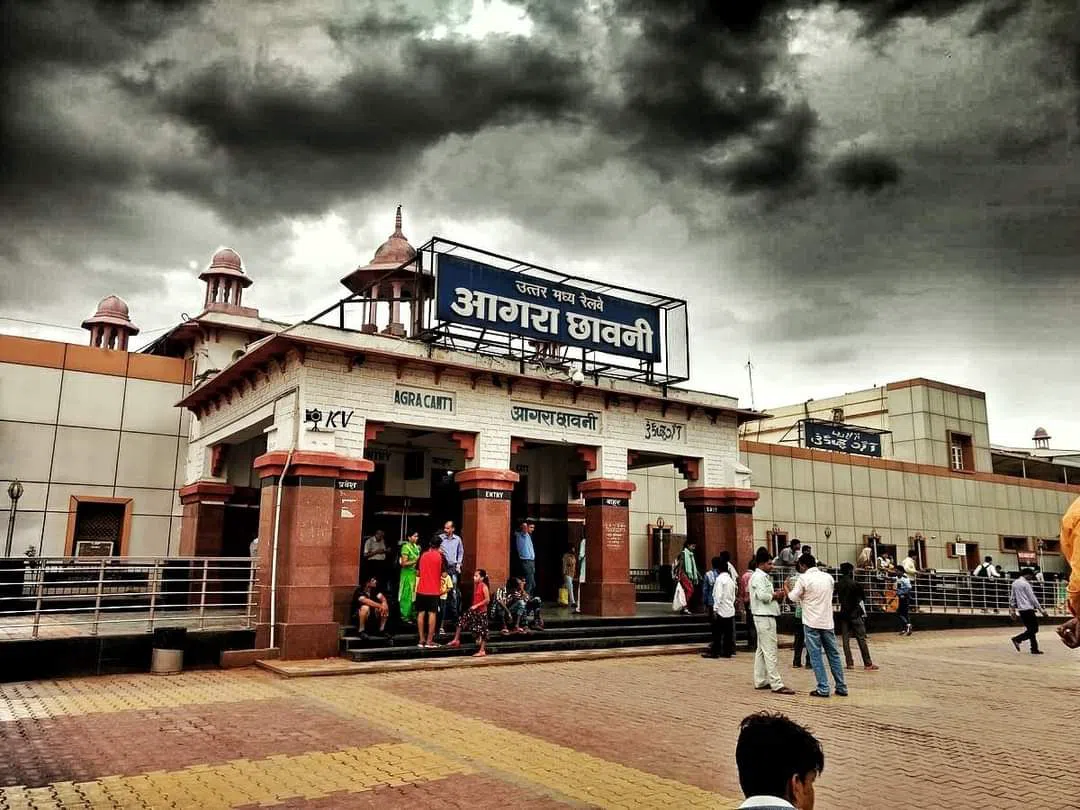
It does have Jaipur departures, roughly 06:10 and 17:20, but far fewer than Agra Fort, and the two windows are unforgiving. The early one means leaving your hotel around 05:15 and skipping breakfast; the late one lands you in Jaipur after dark, a poor time to be finding an unfamiliar guesthouse in the Old City. Most people end up back at Agra Fort for the mid-morning options, which is fine so long as they know that in advance rather than at 05:40 with bags in a car boot.
Walking out of Jaipur Junction
Every Agra train terminates or calls at Jaipur Junction (JP), on the western edge of the city centre, and the arrival is where a smooth trip can still go wrong. Walk out of the main exit and keep walking to the prepaid auto and taxi booth. It is signposted, it takes a minute to reach, and it is the one thing to do before you engage with anybody. A prepaid auto into the Old City runs about ₹100-150.
The drivers who approach you on the concourse, before you have reached the booth, are quoting roughly triple that. They are not dangerous, just working the gap between a tired arrival and a booth fifty metres away. For a party of six or more the booth is also the only sane way to split across vehicles without three separate negotiations running at once on a hot forecourt.
The bus tiers and what separates them
The road option splits into three operators with genuinely different characters, and the corridor is busy enough that you rarely wait long.
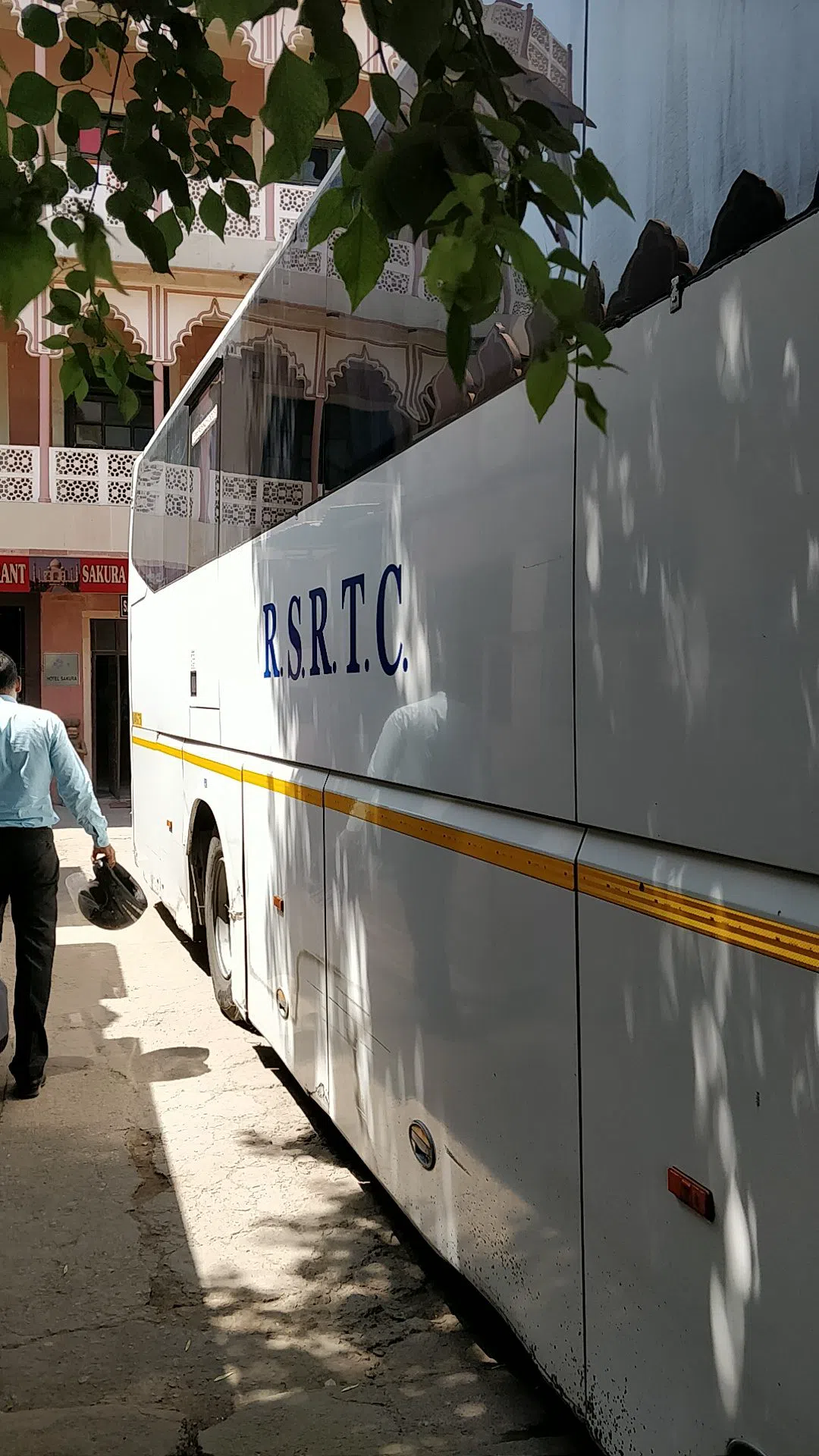
Rajasthan State Road Transport Corporation (RSRTC) runs the state fleet along the Golden Triangle corridor all day, covering the 255 km in about 4h15, at ₹358-591 depending on whether you take ordinary, express, deluxe or Volvo. It is the cheapest reliable option and seats are bookable online in advance. What matters is the tier: ordinary services are effectively first-come, so a party of four arrives to find two seats together at the front and two at the back, with luggage wherever it fits. If you have bags and a full day behind you, pay the difference for deluxe or Volvo.
NueGo operates GreenCell's electric coaches on the route, with multiple daily departures, seat selection at booking, and boarding at Idgah, Agra ISBT or Agra Fort. Fares typically land at ₹600-1,200, with route-wide pricing running ₹699-1,570. Reckon on 4h30 door to door, with drops at Narayan Singh Circle and Sindhi Camp. Four and a half hours without engine noise makes it the quietest ride on the corridor for the money, and the seat selection makes it the easiest scheduled bus to keep a group together on.

zingbus takes groups too, with app-based ticketing, live tracking, free cancellation windows and a fixed boarding point rather than a kerbside scrum. Fares run ₹700-1,600 depending on tier and how late you book. The catch is the timetable: departures skew very early, the flagship leaving around 04:00 from Namner Circle. That works if you want to be in Jaipur for breakfast with a full day ahead, and not at all if you did a sunrise at the Taj the morning before. Check the boarding point printed on your ticket, because it is not always the main bus stand.

Boarding points that catch people out
Idgah Bus Stand, in Idgah close to Agra Cantt station, is the city's biggest and the default boarding point for Jaipur services. Entry is free and walk-up tickets start around ₹350. It is chaotic in the ordinary way of large Indian bus stands: no formal waiting lounge, bays that change, announcements you will not hear. The workable method with a group is to send one person ahead to find the bay while everyone else stays put with the bags, rather than moving eight people and twelve pieces of luggage twice.
The alternative pickup, Agra ISBT in Transport Nagar, sits on the Delhi side of town, a different journey entirely from your hotel, and the reason some people miss a bus they booked correctly. Confirm which one your ticket names the night before, not on the morning.
What a private car actually buys you
Uber Intercity is the transparent-pricing route: a fixed in-app fare, one-way or round-trip, schedulable up to 30 days ahead. Current fares run ₹3,576 for UberGo, ₹3,699 for UberXL and ₹3,804 for a sedan. UberXL seats six with luggage, which for a family or a group of friends undercuts six bus tickets on the premium tiers. The limitation is structural: the driver has no incentive to wait while you spend ninety minutes at a monument, so treat it as a transfer with a comfort break rather than a day tour.
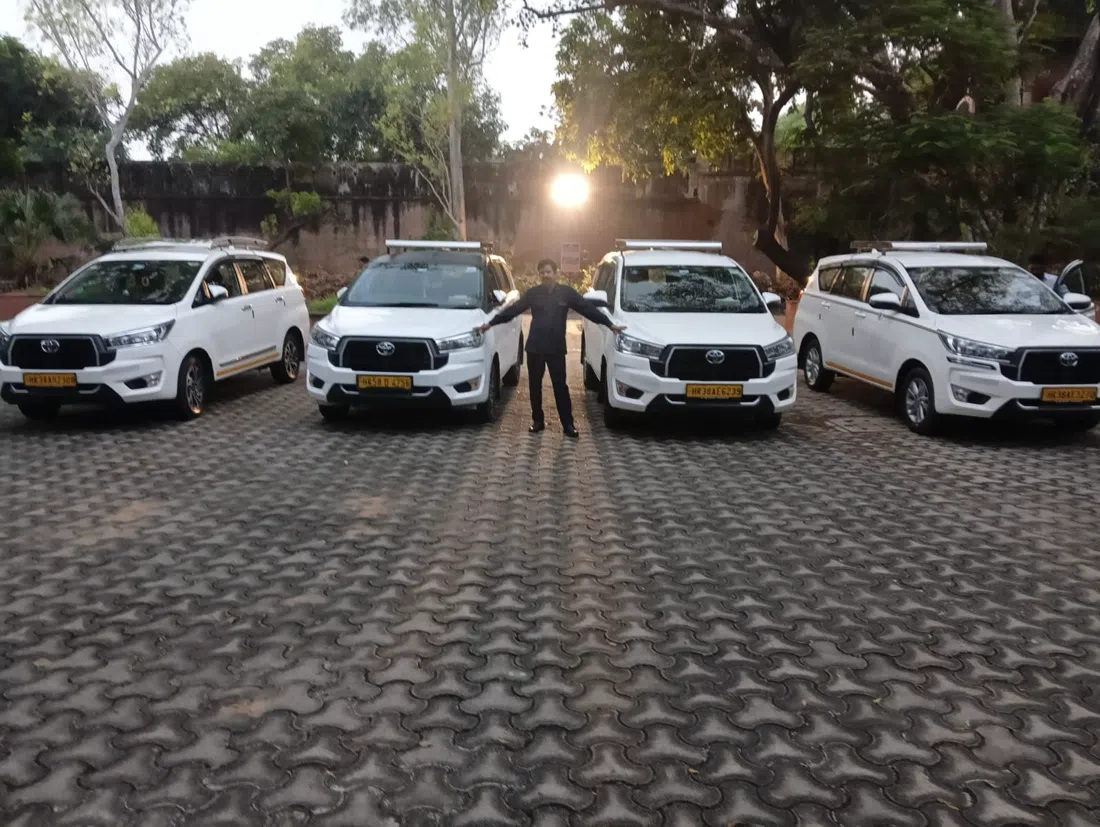
Savaari Car Rentals is built the other way around. Chauffeur hire in Innova and tempo traveller classes, from ₹2,880 one way, or roughly ₹3,700 once tolls and sightseeing stops are folded in, with a booking model designed around parties travelling together and stopping together. If you want monuments on the way rather than a separate day for them, this is the call. Agree the stop list, and whether tolls, parking and the driver allowance are included, before you set off, not at the first toll plaza.
Three stops that justify the car
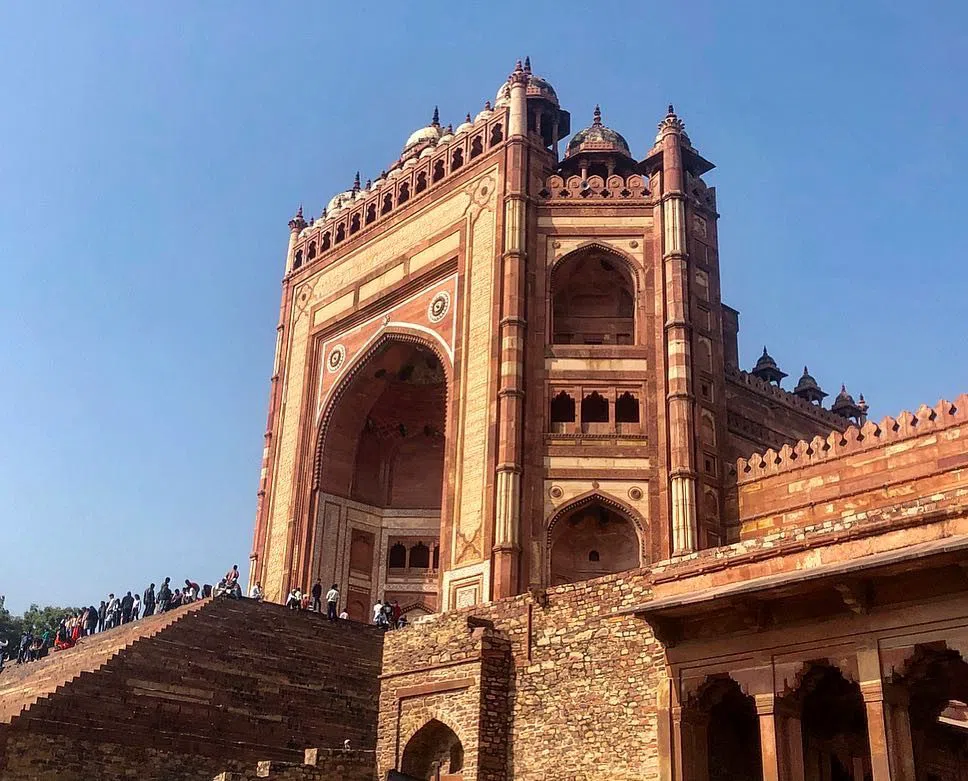
Fatehpur Sikri sits 37 km along the Jaipur road, which makes it the one stop that costs almost no detour at all. Akbar's abandoned capital has a large car park with a shuttle up to the gate and licensed guides available on site; entry is ₹610 for foreign visitors, ₹50 for Indian nationals, and under-15s go free. It is open daily except Friday, when the palace complex is shut and only the mosque side is accessible. If your travel day is a Friday, either shift the day or accept that you are seeing half of it.
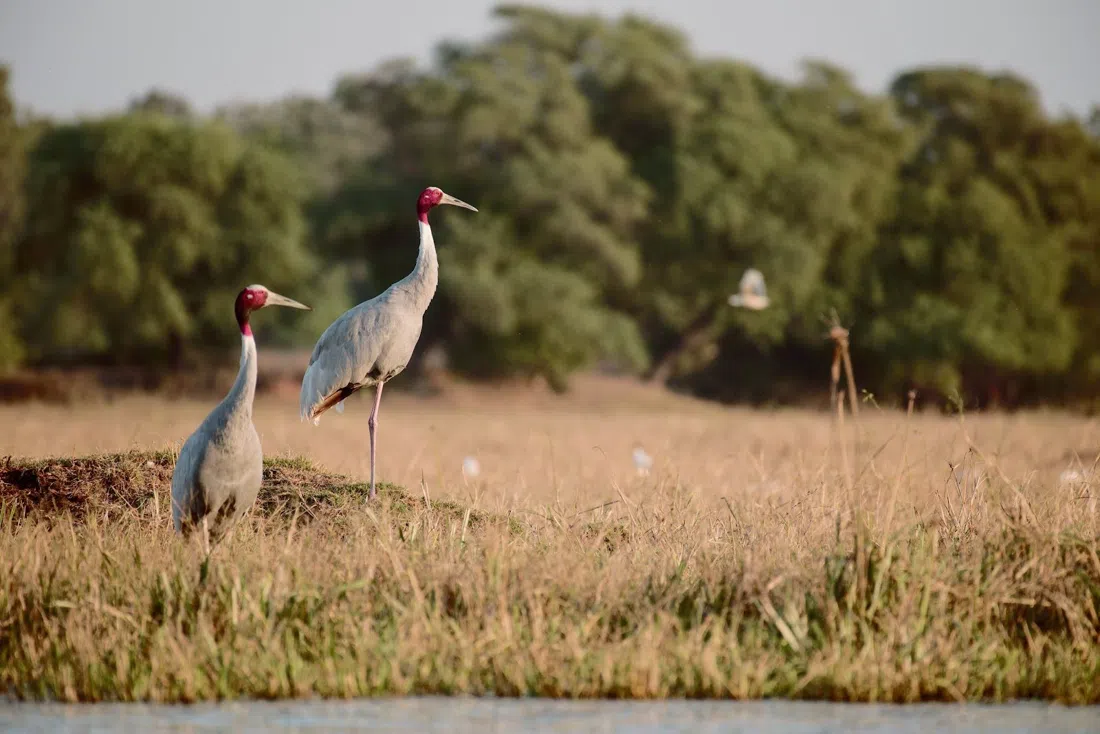
Keoladeo National Park at Bharatpur lies 55 km out, directly on the NH-21 route rather than off it. No private vehicles go inside, so a group splits across cycle-rickshaws with naturalists, which works well for six to twelve people and rather less well for a couple in a hurry. Entry is around ₹200 for foreign visitors and ₹75 for Indian nationals, plus ₹300-400 for the rickshaw and naturalist. Give it two hours, and go between October and February when the migratory birds are in; timings shift with the season, so confirm at the gate rather than online.
Chand Baori in Abhaneri, about 10 km off the highway near Dausa, is the strongest single argument for taking a car instead of a train. You view the stepwell from the rim of an open courtyard, there is coach parking outside the enclosure and no timed entry, and it costs ₹300 for foreign visitors, ₹25 for Indian nationals. It falls roughly 90 minutes short of Jaipur, and the light on the steps is at its best from late morning to mid-afternoon, which, working backwards, argues for a departure from Agra between 07:00 and 08:00.
Where to break the drive
Chokha Dhaba at Padli near Mahwa lands almost exactly halfway, which is where you want a break on a four-and-a-half hour drive. It is explicitly geared to tourist coaches: large car and bus parking, air-conditioned family dining rooms, and washrooms that are actually maintained. Budget ₹300-600 a head for a full thali. The kitchen is pure vegetarian, and the dal baati churma is what to order rather than the North Indian standards that every highway kitchen makes adequately and none makes well.
Matching the option to your party
Two people with light bags and no interest in monuments on the way should take the train from Agra Fort and spend the saved money in Jaipur. It is the least tiring option, it is immune to highway traffic, and the arrival at Jaipur Junction puts you at a prepaid booth rather than a roadside drop.
Four to eight people are usually better off on NueGo or a deluxe RSRTC service, because seat selection and a fixed boarding point solve the two problems groups actually have. Ordinary state buses will get you there for ₹358 and split your party across the aisle for four hours.
Anyone who wants Fatehpur Sikri, Keoladeo or Chand Baori should stop pricing this as a transfer and price it as a day. A Savaari car with an agreed stop list costs roughly ₹3,700 all-in and replaces a separate excursion day, which makes it cheaper than it looks on the line item. Uber Intercity is the better choice when you genuinely just want to arrive.
Practical notes
Trains from Agra Fort take between four and five hours; RSRTC runs about 4h15 and NueGo about 4h30, both before traffic. With two monument stops, plan on a nine-hour day and leave by 07:30. Avoid the Friday departure if Fatehpur Sikri is on your list.
Reserve trains as far ahead as you can, because this corridor fills. Bus seats are bookable online with all three operators, and zingbus has free cancellation windows if your plans are soft. Uber Intercity can be scheduled 30 days out, which is worth doing for an early start.
Carry small notes. Platform tickets are ₹10 and monument entries are ticketed, but rickshaw fees and naturalist tips at Keoladeo are cash, and the prepaid booth at Jaipur Junction is quicker with exact change.
Per person, a bus costs ₹358-1,600 depending on tier and operator, and train fares sit in the same broad band by class. A car works out at roughly ₹600-950 a head for six, before entries: add ₹610 for Fatehpur Sikri, ₹300 for Chand Baori and around ₹500 for Keoladeo with a rickshaw if you are a foreign visitor.
If the early departures mean a pre-dawn start, stay near the Cantonment or Idgah rather than across the river; start with the Agra hotel search and filter by that side of town. For what to do with the days on either end of this leg, the Agra guide covers the city itself.
8 September 2026 · a first week before the flat: the Agra hotel directory