Budapest · The weekend · 10 min
Cycling Budapest from the Danube Quays to the Buda Hills
Where to ride in Budapest, what a bike costs, and which riverside kitchens are open when you get there.
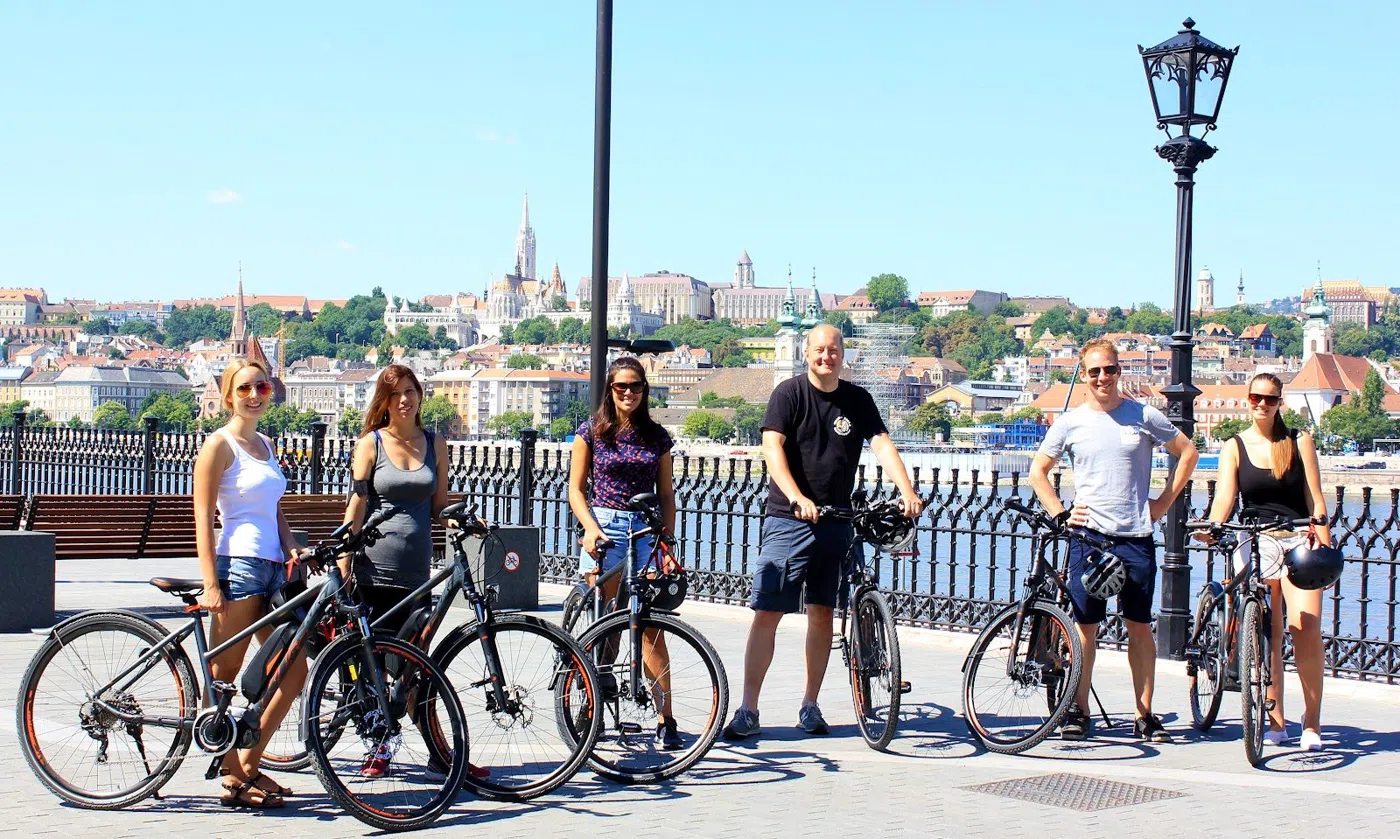
The Danube does most of the work in Budapest. It separates the flat half of the city from the hilly one, it carries a signed long-distance cycle route north out of town, and for nearly six months of the year it borrows a lane of the Pest embankment back from the cars. Ride here and you spend the day beside water: a car-free island in mid-river, a quay handed over to people at weekends, and a flat path running 25 km upstream to a small riverside town with a train home for the tired.
Bikes by the minute or bikes by the day
MOL Bubi (citywide, 222 docking stations) is the public bike-share scheme and the cheapest way onto the embankments without a rental contract. It relaunched on 3 August 2026 with a new fleet that includes electric-assist bikes, and around 500 extra drop-off Mobi-points have been phasing in since September, so one-way hops are more practical than they used to be. Pay-as-you-go costs 60 HUF per minute, an e-bike adds a 250 HUF unlocking fee, and monthly passes start at 2,500 HUF for a classic bike or 3,500 HUF for an e-bike. There is no booking and no minimum; every rider registers individually in the app, so a group of six simply takes six bikes from the same dock and settles up separately.
Run the arithmetic before you commit to a long day. Per-minute pricing is good for a twenty-minute hop along the quay and poor value if you want to sit on a riverbank for an hour with the meter running. Somewhere past ninety minutes of riding, a day rental wins.
Yellow Zebra Budapest (central Pest) has been renting bikes and running tours since 1999 and is open every day, 9am to 8pm from April to October and 9am to 6pm from November to March. Hire starts at roughly €15 a day, which covers the run out to Római-part and back with hours to spare, and it is the one operator here that will put you on a bike in the middle of January. E-bikes are available, which matters if your plan includes the hills above Buda.

For a self-guided week, a day or two of rental plus pay-as-you-go Bubi for short evening trips usually beats either on its own. If you are still choosing a base, the flat Pest side inside the Grand Boulevard keeps you a few minutes from the river on every ride; the Budapest hotel search covers the districts on both banks.
Riding with a guide, and which operator suits which group
Budapest Bike Breeze (central Pest) caps its scheduled tours at 12 riders, so you can hear the guide instead of trailing a crowd. The Budapest Highlights tour is 29 EUR per person, with an e-bike upgrade if someone in the party is unsure about pedalling for three hours. Private group, family and team-building rides are booked separately. Its most useful departure is the full-day Szentendre bike-and-boat trip on Fridays, about eight hours door to door: you ride upriver and return on the water, which solves the problem of a 25 km outbound leg and a group with no intention of riding it twice.
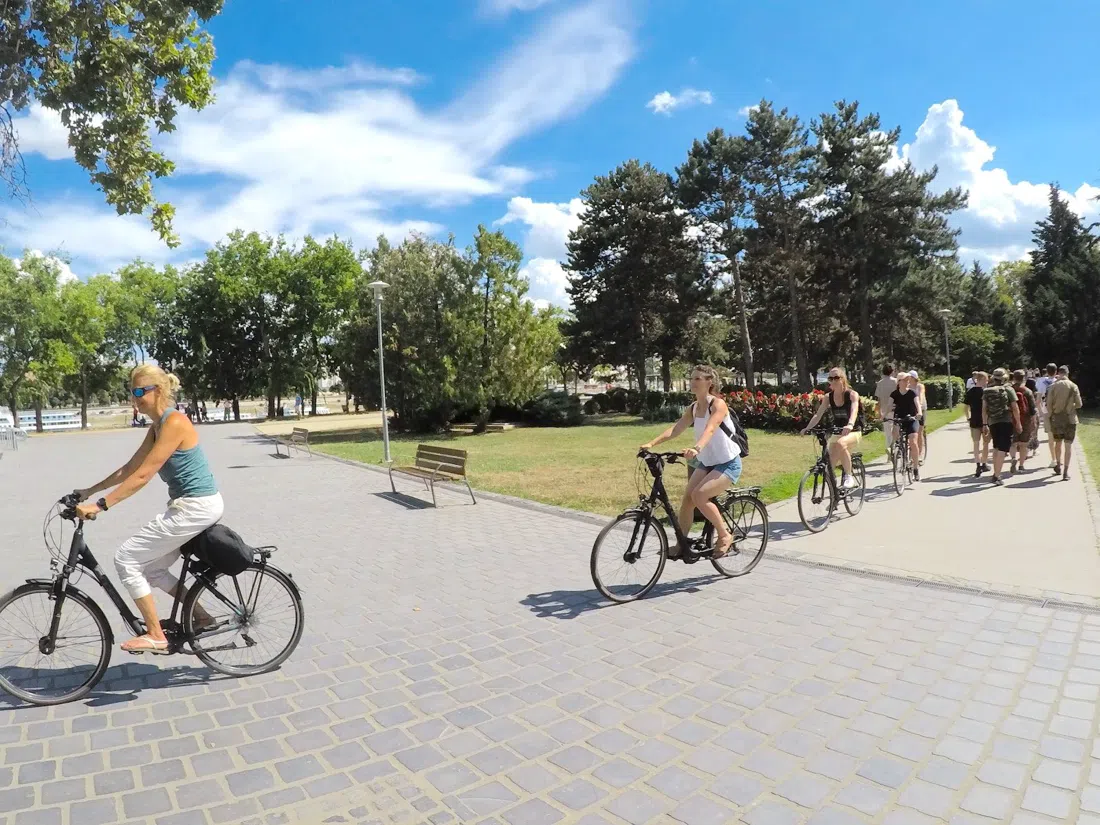
BudaBike Tours (Buda side, booked by email or WhatsApp) runs half-day city tours in small groups at roughly €30 to €35 per person, with tailored private and group departures on request. It is a long-established local outfit with consistently good recent reviews of its guides. Its Blue Danube route (Margaret Island, Óbuda, then the riverbank towards Szentendre) is the northbound ride done properly, and the one to take if you want the geography explained rather than a string of photo stops.

Yellow Zebra's guided tours sit at about €30 to €40 per person, with private and family groups taken on request; for groups up to eight there is no deposit and you pay on the day. That is worth knowing if you are travelling with people who make plans and then change them.
Couples and confident riders manage perfectly well self-guided, because the riverside routes are flat and signed. Mixed-ability groups, families with young children and anyone nervous in traffic do better on a capped small-group departure or with a private guide who can set the pace. None of these operators runs a door policy or a dress code; the constraints are group size and booking notice.
The island loop with no cars on it
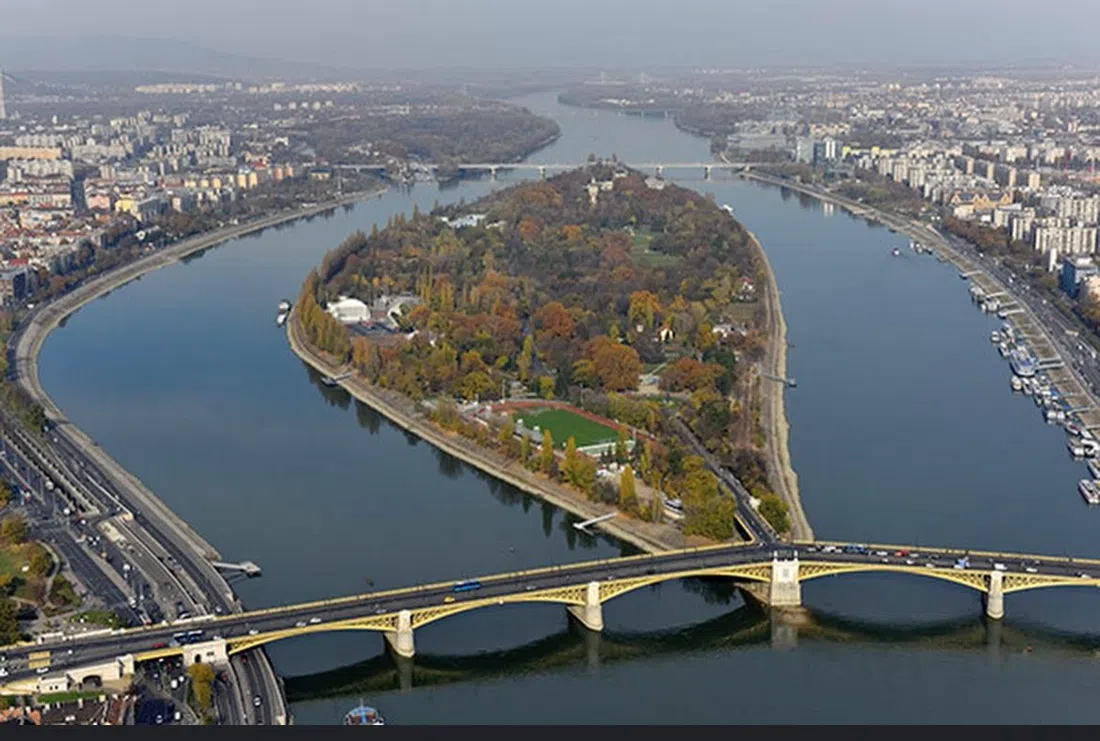
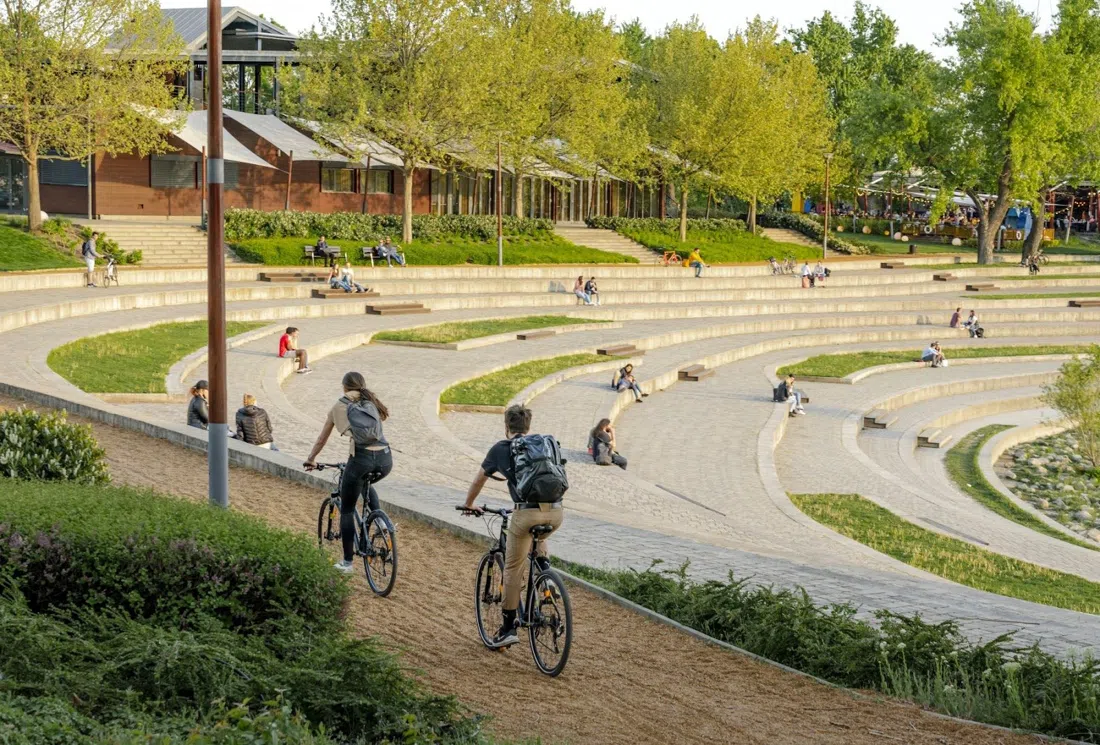
Margaret Island (Margitsziget, mid-river between Buda and Pest) is a 5.3 km traffic-free loop and the safest place in the city to put a nervous rider on a bike. It is a free public park, open at all hours, with no restriction on group size. The medieval convent ruins in the middle are worth a slow lap; this was a religious retreat centuries before it was a park. The musical fountain at the southern end and the Palatinus lido give the ride an obvious shape: start at the south, drift north, turn, come back down the far side.
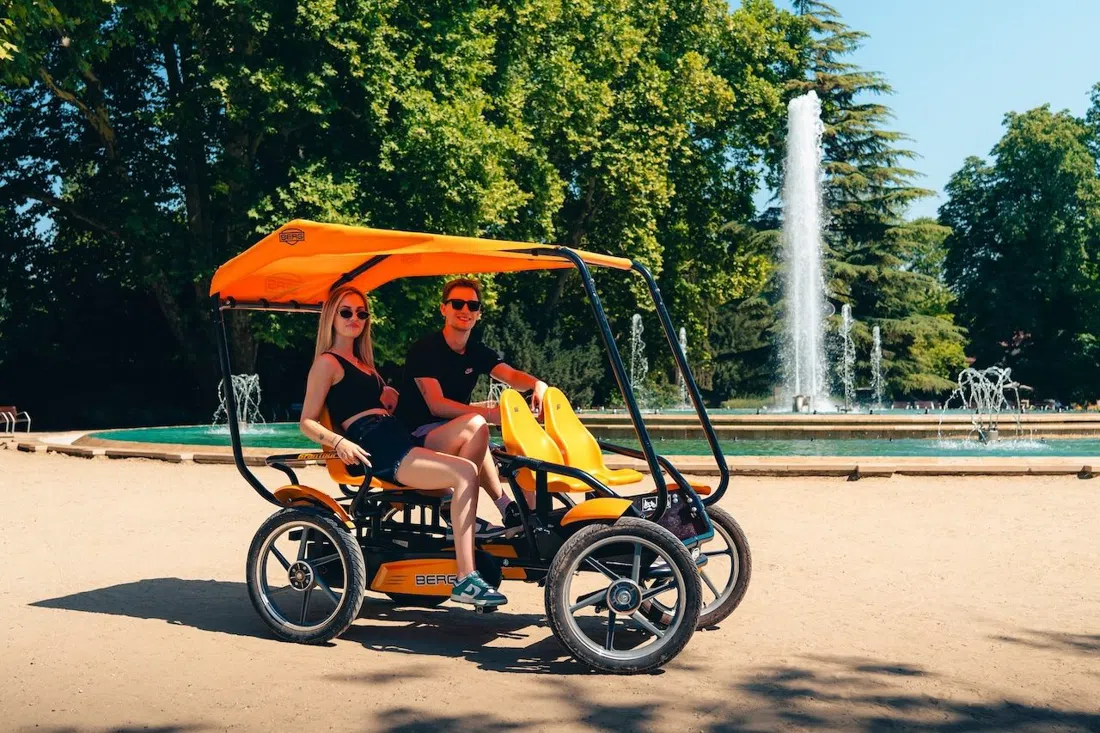
Go Mobility (Margaret Island, southern gate) is the walk-up hire point right where you arrive, open daily from 9am to dusk from spring through November and shut over winter. Thirty minutes costs 3,900 HUF for a bike, 5,500 HUF for an e-bike, 5,000 HUF for a tandem and 6,900 HUF for the four-seat bringóhintó, the pedal-powered quadricycle that is the standard family choice here; booking online takes 15 percent off. No reservation is needed. Larger adult groups get steered towards tandems and singles rather than quadricycles, which is sound advice: four adults pedalling a bringóhintó round a busy Sunday loop is slower and more argumentative than it looks.
Holdudvar (Margaret Island) reopened in June 2026 under the team behind Pántlika and Pavilon Kert, serving Neapolitan pizza from a wood oven in a garden built for crowds. Pizzas and mains run roughly 4,000 to 7,000 HUF. Tables are bookable and used for events, so groups are genuinely welcome; call ahead at weekends. Check the day before you ride out, because it runs Tuesday to Sunday and closes on Mondays.

The Pest quay when the traffic is shut out
Pest rakpart (the Buli Rakpart, central Pest embankment) is the best stretch of riverfront riding in the city, and it is only sometimes available. From 1 May to 23 October the Pest quay is given to people rather than cars all day at weekends and on public holidays, and from 6pm on weekdays. It is an open public street, free, with no limits on numbers, and the concerts, yoga sessions and workshops staged along it are free as well.
The quay is worth planning a day around, but only inside those hours. Outside them the same road is a working traffic artery and no place for a family ride, so aim for a Tuesday evening rather than a Tuesday morning. Between 6pm and dusk in high summer the Buda side turns gold across the water, and that is the best hour of cycling the city offers.
North to the fried-fish bank at Római-part
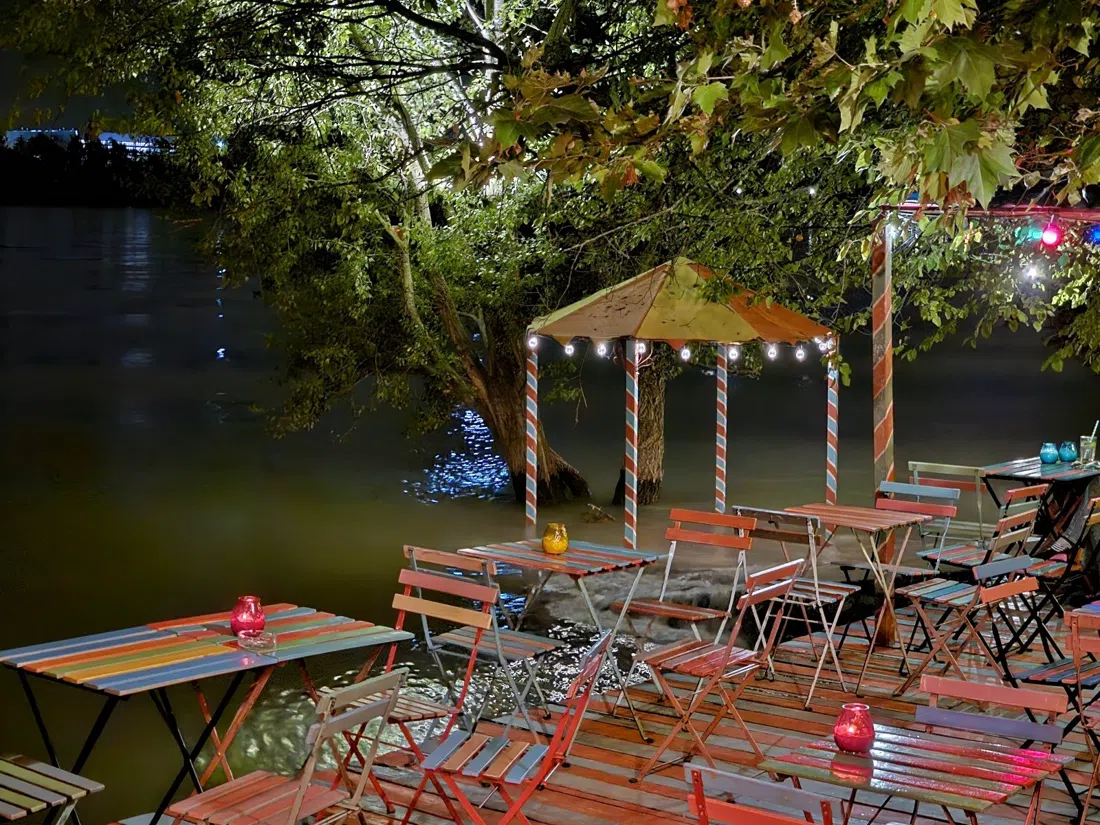
Római-part (Óbuda, about 12 km north of the centre) is a long riverside promenade and food strip, and the reason half the city's cyclists ride north at all. EuroVelo 6, the Danube long-distance route, runs straight through it. The name means Roman riverbank: Óbuda was the Roman town here, and the path follows the same water. Riding it is free, the buffets handle groups without fuss, and cycling clubs use the strip constantly. Fried hekk (hake), lángos under garlic and sour cream, and a cold beer come to roughly 2,500 to 4,500 HUF.
Fellini Római Kultúrbisztró (Római-part, Óbuda) is where to aim if you want to sit down rather than eat off a paper plate at a counter. It is a sprawling open-air site with loungers and a stage, explicitly bike-friendly (there is a bicycle service point on site), and it pours Belgian draught beer alongside vegan options and live acoustic sets. Grilled sandwiches, burgers and lemonades run roughly 2,000 to 4,500 HUF. There is no door policy and it is built for large casual groups. It is seasonal, roughly 1 May to 1 October, so treat it as a summer and early-autumn stop and check before setting off in April.
The 25 km run upriver to Szentendre
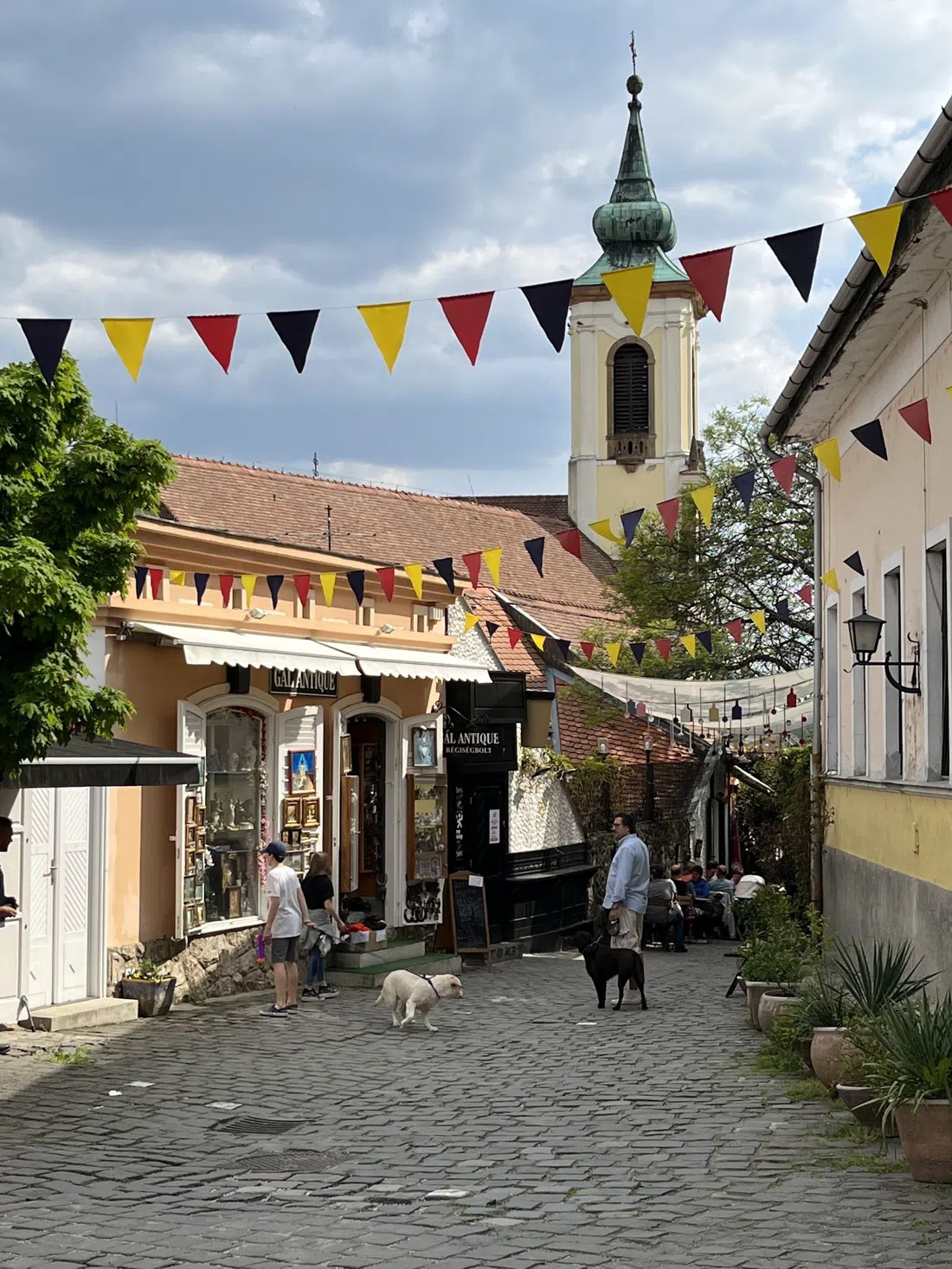
Szentendre (25 km north, at the end of the riverside path) is what turns a city break into a proper day out. The route is flat and signed the whole way, out through Óbuda, along Római-part, then through floodplain woods on EuroVelo 6, and an unhurried group with stops should allow around two hours each way. Nothing about it is technical. The variables are wind on the exposed stretches and how long you linger.
The escape hatch is the HÉV suburban train, which carries bikes back into the city for a few hundred forints on top of the fare. Say that out loud at the start of the day, because it changes the mood of the ride for anyone unconvinced they can manage 50 km. The Friday bike-and-boat trip from Budapest Bike Breeze is the other way to skip the return leg entirely.
Kacsakő Bisztró (Szentendre riverside) is the reward at the far end: burgers, house lemonades and coffee on the water, roughly 2,000 to 4,500 HUF, away from the souvenir crush in the middle of town. Groups are fine, though the deck is small at peak times and ten people arriving unannounced at 1pm on a Saturday will wait. It closes on Mondays and Tuesdays, and its hours move with the weather, so a phone call on the morning you ride is not wasted effort.
South on the Buda bank to Kopaszi-gát
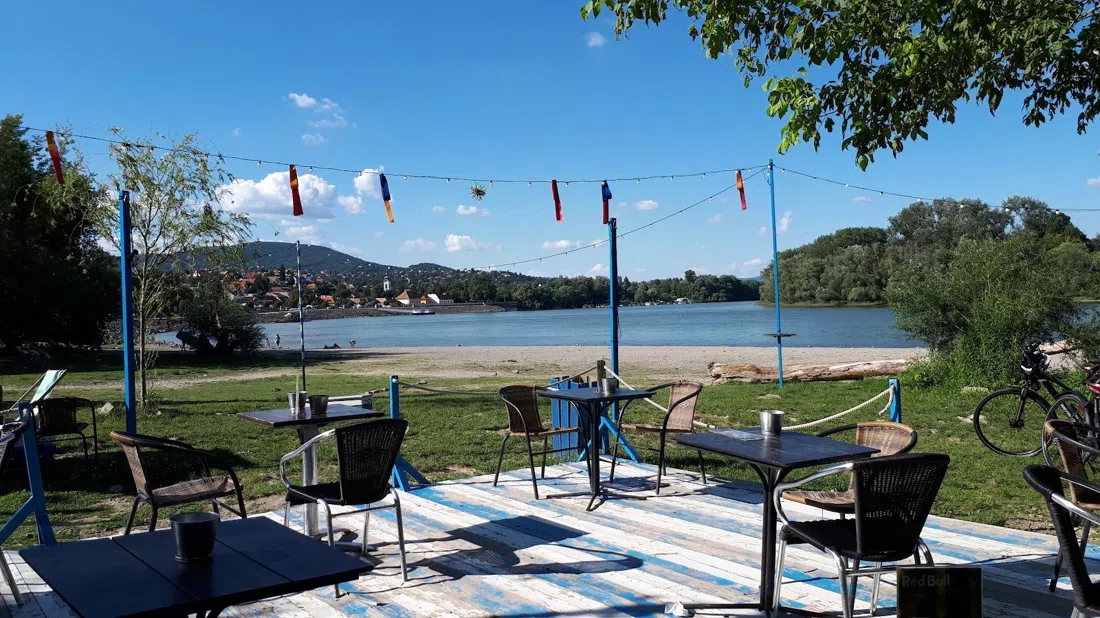
The southbound ride is shorter, quieter and far less photographed. Kopaszi-gát (BudaPart, south Buda) is the turnaround: ten hectares of lawn on a spit of land where the water sits as calm as a swimming pool, with cycle paths running right to the gate. It is a free public park with two MOL Bubi stations in the quarter, which makes it the one destination in this guide you can reach comfortably on a shared bike and then leave the bike alone for a long lunch.
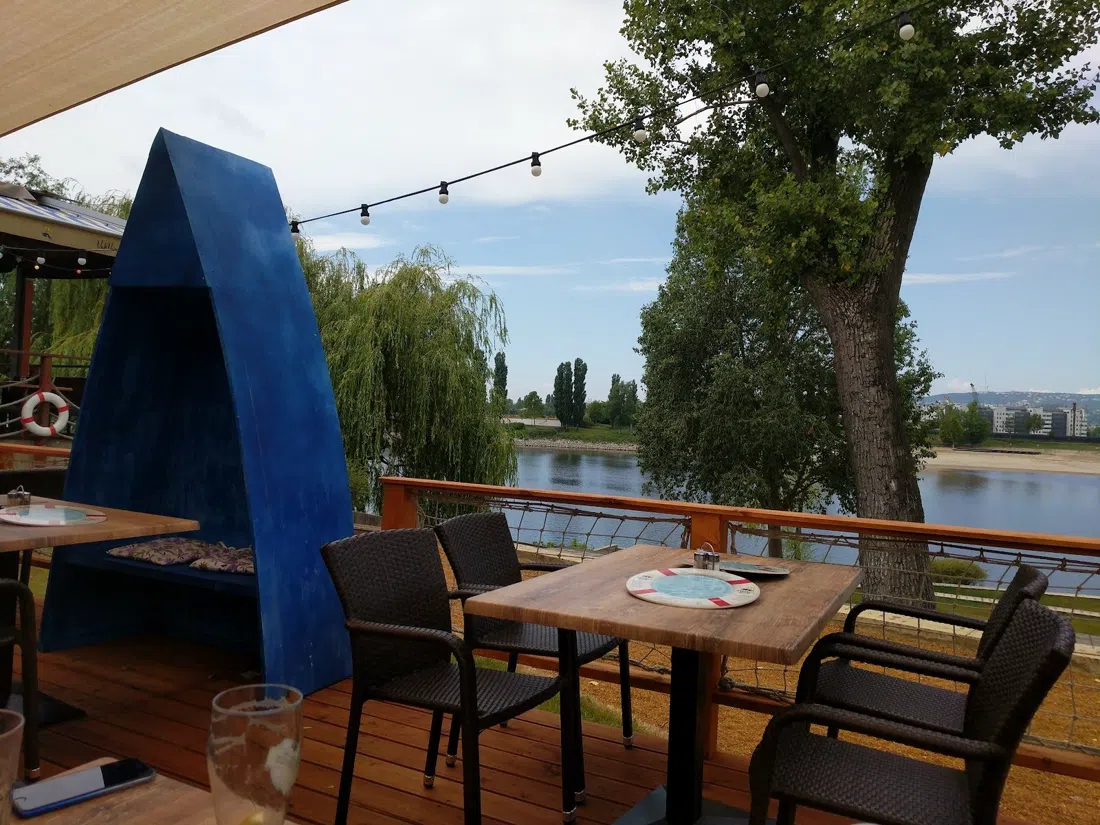
VakVarjú Beach Bistro (Kopaszi-gát) sits directly on the waterfront and does generous, unfussy cooking, with mains roughly 4,500 to 8,000 HUF, open daily from noon to 11pm. It has several separate terrace sections and a reservation line (+36 70 339 6333), which makes it one of the few properly group-friendly sit-down options on the water. Book at weekends. Like most of the riverside, it is a spring-to-autumn operation and shuts for winter.
Normafa without the climb
Normafa (Buda hills, above the city) is the ride out of the river valley: free public parkland and woodland viewpoints, with park staff on site daily from 8am to 4pm. The climb from the river is long enough to end the day early for most people on a rental bike, and there is no need to ride it. The cogwheel railway carries up to 16 bikes, and buses 21, 21A and 212 from Széll Kálmán tér take one bike each uphill. Go up on somebody else's wheels, ride the woods, and come down under gravity.
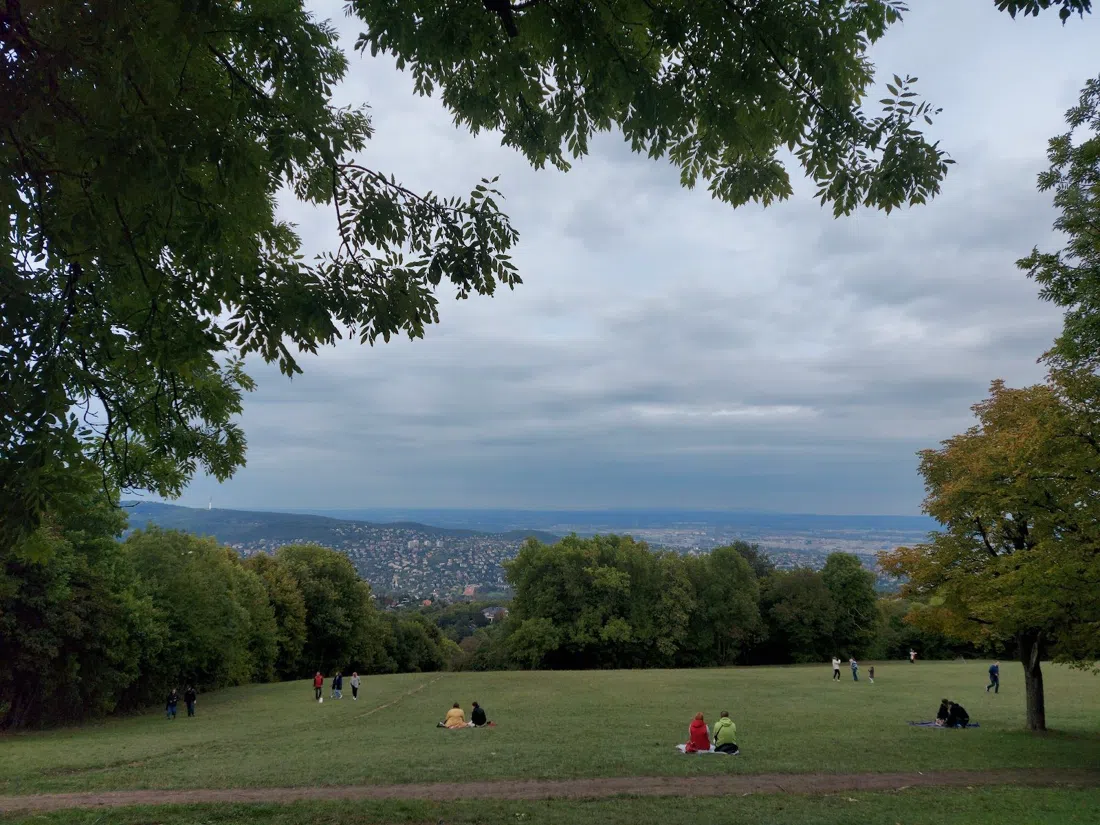
This is a ride for confident riders and small groups rather than families with beginners. The surfaces up here are forest tracks, not the manicured asphalt of the island, and the bus limit of one bike each makes a party of six a logistical exercise: send people up in pairs, or use the cogwheel railway, which takes the whole group at once.
Practical notes before you ride
The riverside is a May-to-October proposition. The car-free Pest quay runs 1 May to 23 October, Fellini roughly 1 May to 1 October, Go Mobility spring to November, VakVarjú spring to autumn. Outside that window Margaret Island, Római-part, Kopaszi-gát and Normafa are all still open and free, and both Yellow Zebra and MOL Bubi still have bikes. What you lose is the food and the closed quay.
Everything is priced in forints and cards are taken almost everywhere, but the small buffets along Római-part move faster on cash, so carry a few thousand forints. A realistic self-guided day comes to about €15 for the bike, 2,500 to 4,500 HUF for lunch on the riverbank and a few hundred forints for a HÉV ticket home, so under €40 a head. A guided half-day is €29 to €40 per person depending on operator.
Bikes travel on the HÉV to and from Szentendre for a small bike ticket, on the cogwheel railway up to Normafa (16 bikes at a time), and on buses 21, 21A and 212 from Széll Kálmán tér at one bike per bus.
Weekday evenings from 6pm are the window for the Pest quay. Start early for Szentendre if you intend to ride both ways. Check Holdudvar for Mondays and Kacsakő for Mondays and Tuesdays before building a day around either.
Bubi, Go Mobility and the embankments need nothing at all. Book scheduled tours a day or two ahead in summer; Yellow Zebra takes groups up to eight with no deposit, and BudaBike arranges private departures by email or WhatsApp. For the rest of the city, the baths, dinner and the parts of the trip that do not involve pedalling, see the Budapest guide.
11 September 2026 · a first week before the flat: the Budapest hotel directory