Budapest · Where to live · 7 min
Óbuda on foot, the Roman quarter of Budapest
Budapest's District III has Aquincum's Roman town, three museums inside one baroque palace, a car-free stretch of Danube bank and a courtyard that puts on concerts.
The world's only surviving Roman water organ sits in a museum in Óbuda, on the ground where the capital of Roman Pannonia Inferior stood. In the same district, four life-size bronze women carrying umbrellas stand in the open paving of a small cobbled square. The Danube bank here has three kilometres of promenade with no cars on it.
Fő tér and the Zichy Palace
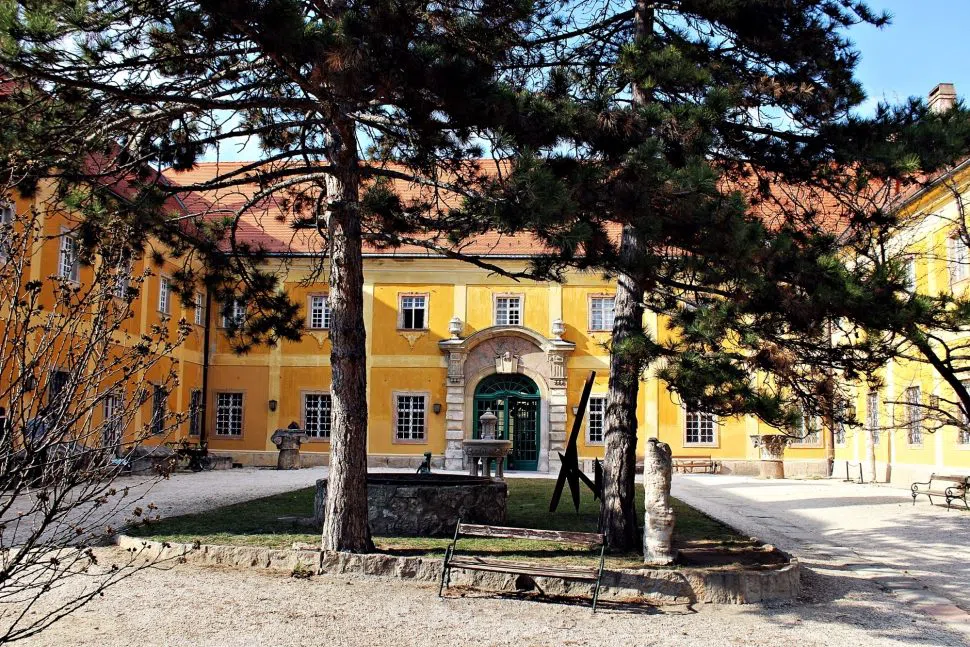
Start on Fő tér (Óbuda Main Square) (District III), the village-like heart of the quarter. Pastel ochre and cream townhouses ring the cobbles, the yellow Zichy Palace takes one side, and Imre Varga's four bronze 'Women with Umbrellas' stand out in the open paving, which is where most of the photographs in District III get taken. The square is free and open at any hour, and everything else in this part of Óbuda is within 10 minutes' walk of it.
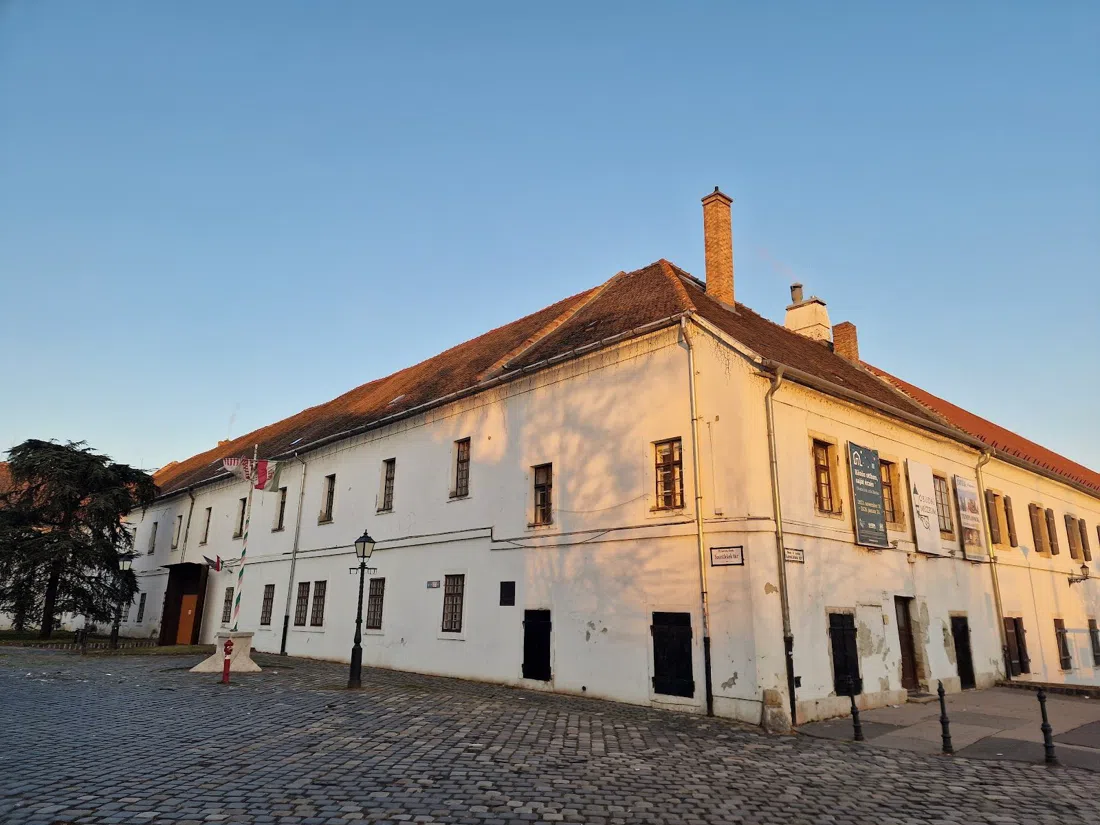
Three more sights share the palace. Óbuda Museum (Óbudai Múzeum) (Fő tér 1) has the ground-floor galleries in the yellow baroque wing, white and vaulted, with old shop fittings and a floor display of the medieval churches excavated from under the square you have just crossed. Entry is 800 Ft, or 600 Ft a head for parties of 10 or more, and free for everyone on the first Saturday of each month. Give it an hour before anything else; it explains why Óbuda looks the way it does.
Vasarely Museum (Szentlélek tér) fills a side wing of the same palace with high white rooms hung with huge hard-edged canvases of warping chequerboards and colour-shifted spheres. This is the largest Vasarely holding anywhere, 1960s optical art inside a baroque palace, and the permanent collection was rehung and reopened on 16 September 2026. Entry is 2,400 Ft. The doors stay shut on Monday and Tuesday, so keep the square, the churches and the riverside for those days.
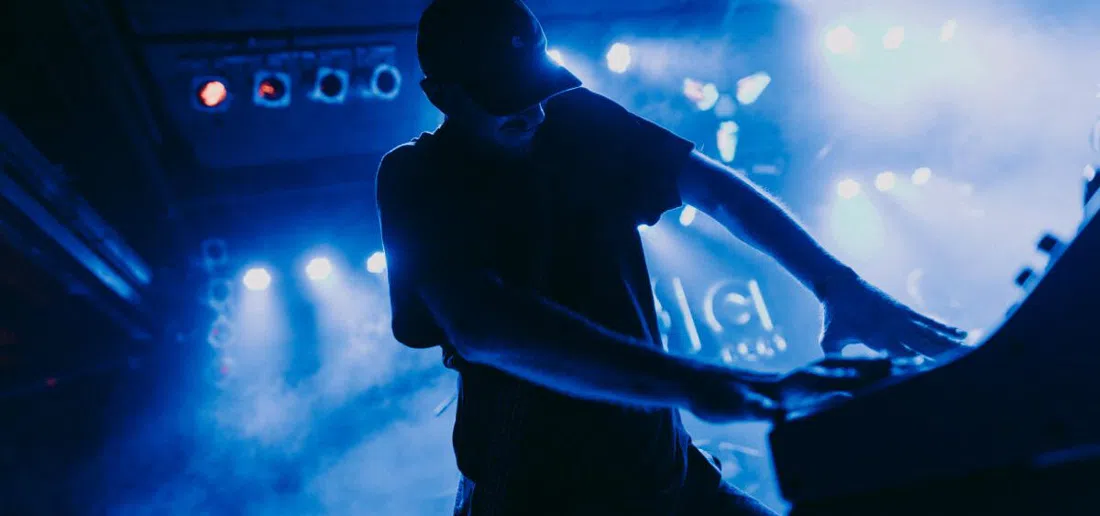
In the evening the same address becomes the quarter's concert venue. Kobuci Kert (Fő tér 1) uses the palace's gravel inner courtyard, a low stage against the old wall, long beer benches under mature trees and strings of bulbs overhead. The programme runs from mid-April to September and takes in folk, world music, jazz, ska and rock. Weekdays it opens at 16:00, weekends at 11:00. Many nights are free and concert tickets run 2,500 Ft to 5,000 Ft. Come as you are; there is no dress code. It shuts for the winter.
The Roman town and the amphitheatre
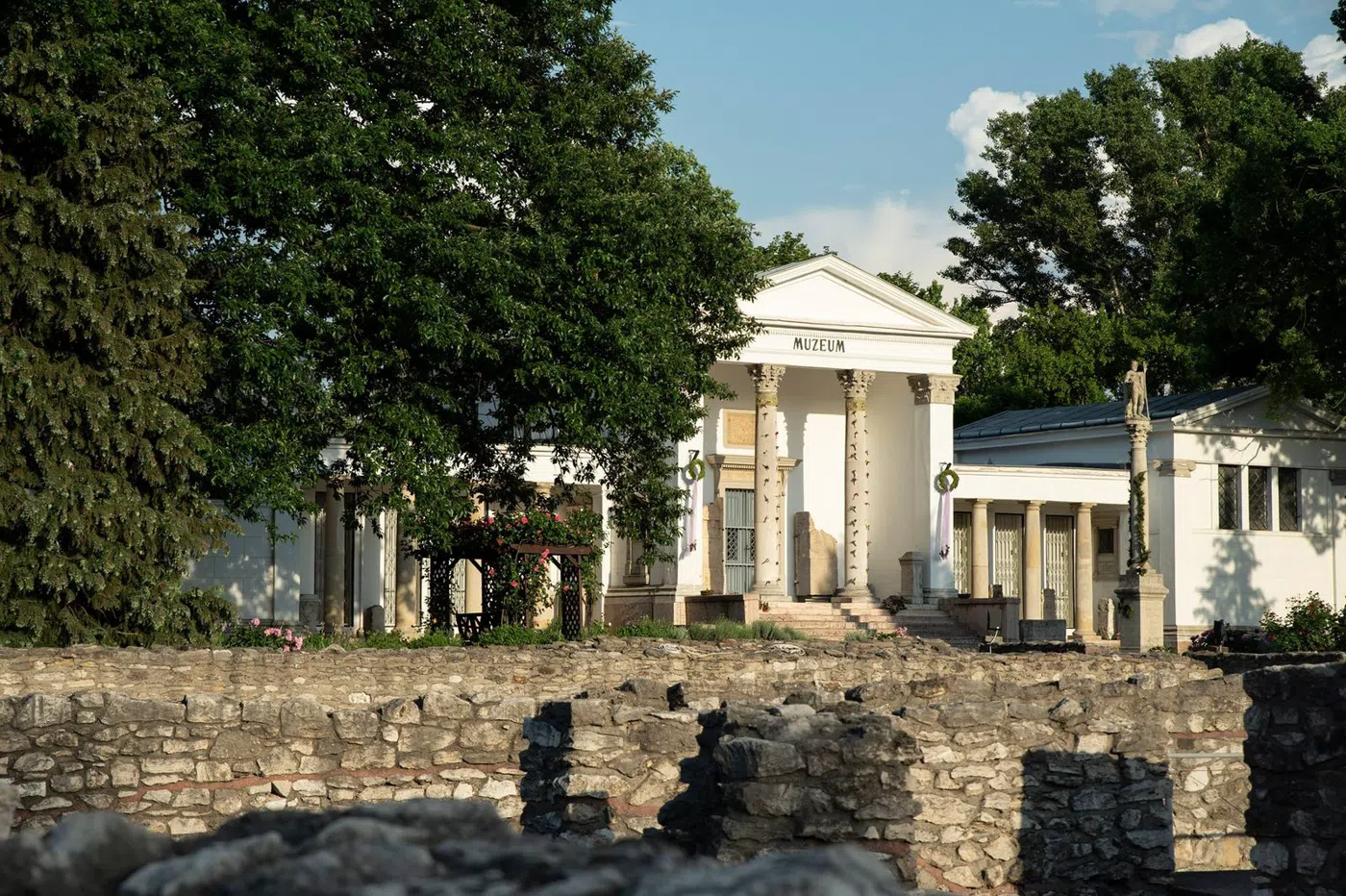
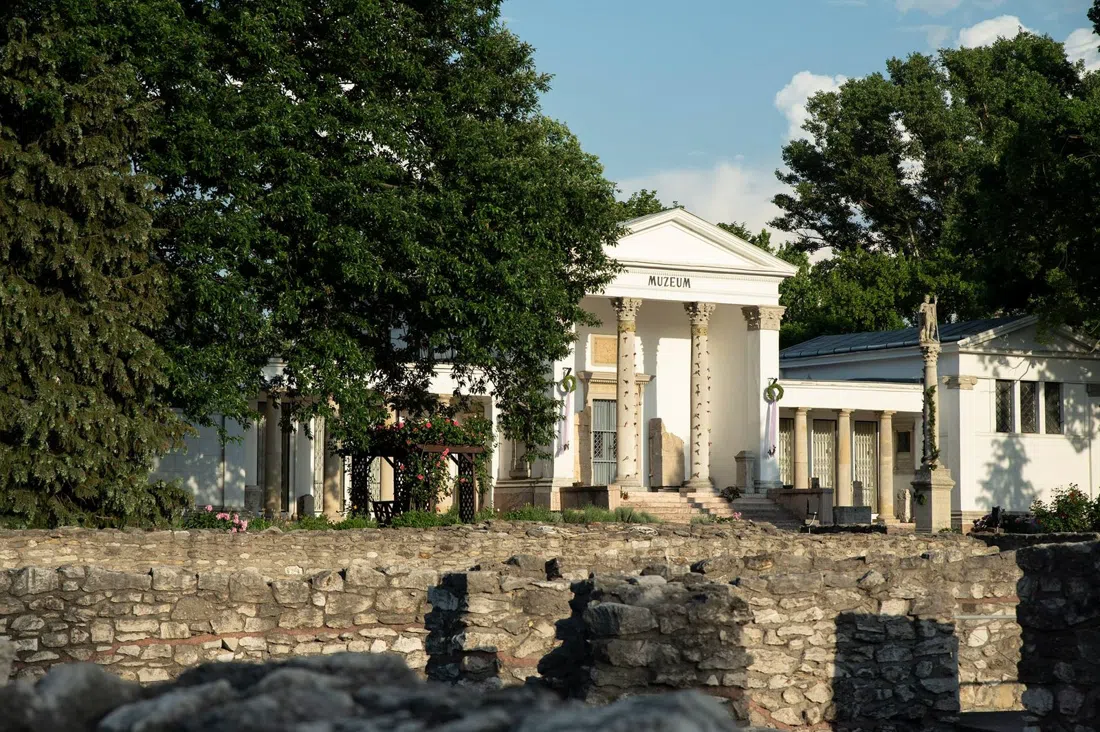
Aquincum Museum and Archaeological Park (Szentendrei út) is the reason Óbuda exists. The low grey stone foundation walls of a Roman town are laid out across mown grass, with a reconstructed ochre-painted Roman townhouse, the ruined civil amphitheatre and a modern glass-and-concrete museum block behind them, and the HÉV railway running past on Szentendrei út. The water organ is indoors, in the museum block. Adult entry is 3,500 Ft. The park takes half a day, so give it a whole morning and eat afterwards. Book English-language guided tours before you go.
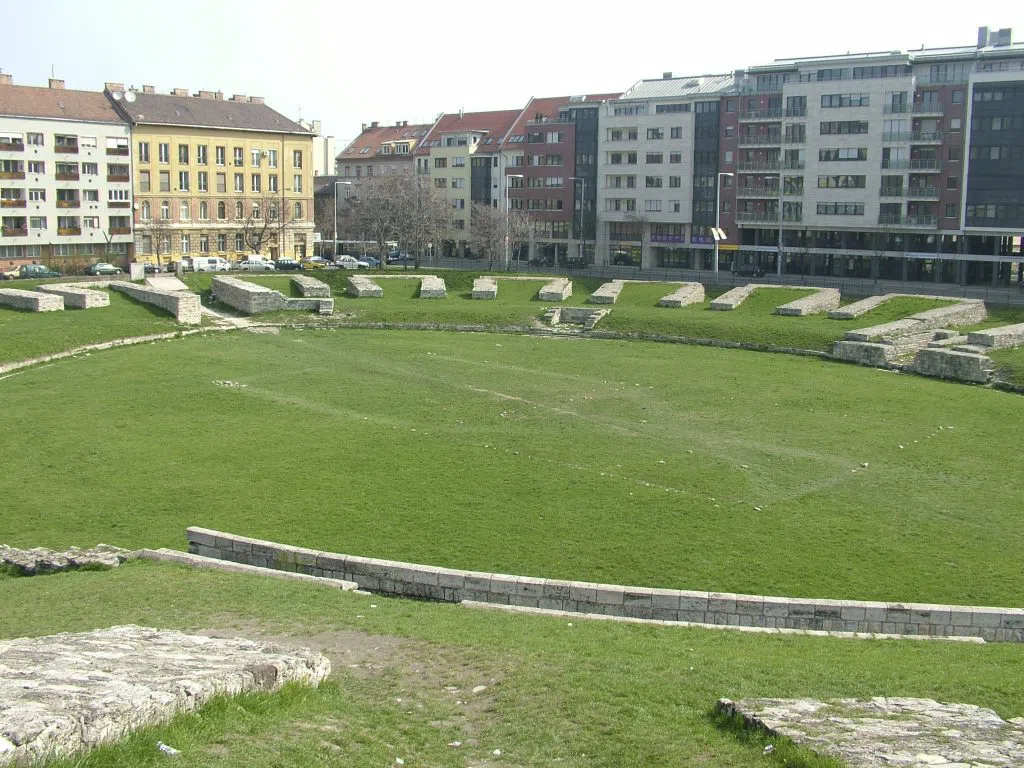
Aquincum Military Amphitheatre (Pacsirtamező utca) needs no planning at all. A sunken grassy oval lies walled in weathered Roman stone between 20th-century apartment blocks and tram wires, and its arena floor is larger than the Colosseum's. Entry is free, the site is unfenced, and no one counts how many of you walk in. Most people on Pacsirtamező utca pass it without looking.
Churches on Lajos utca
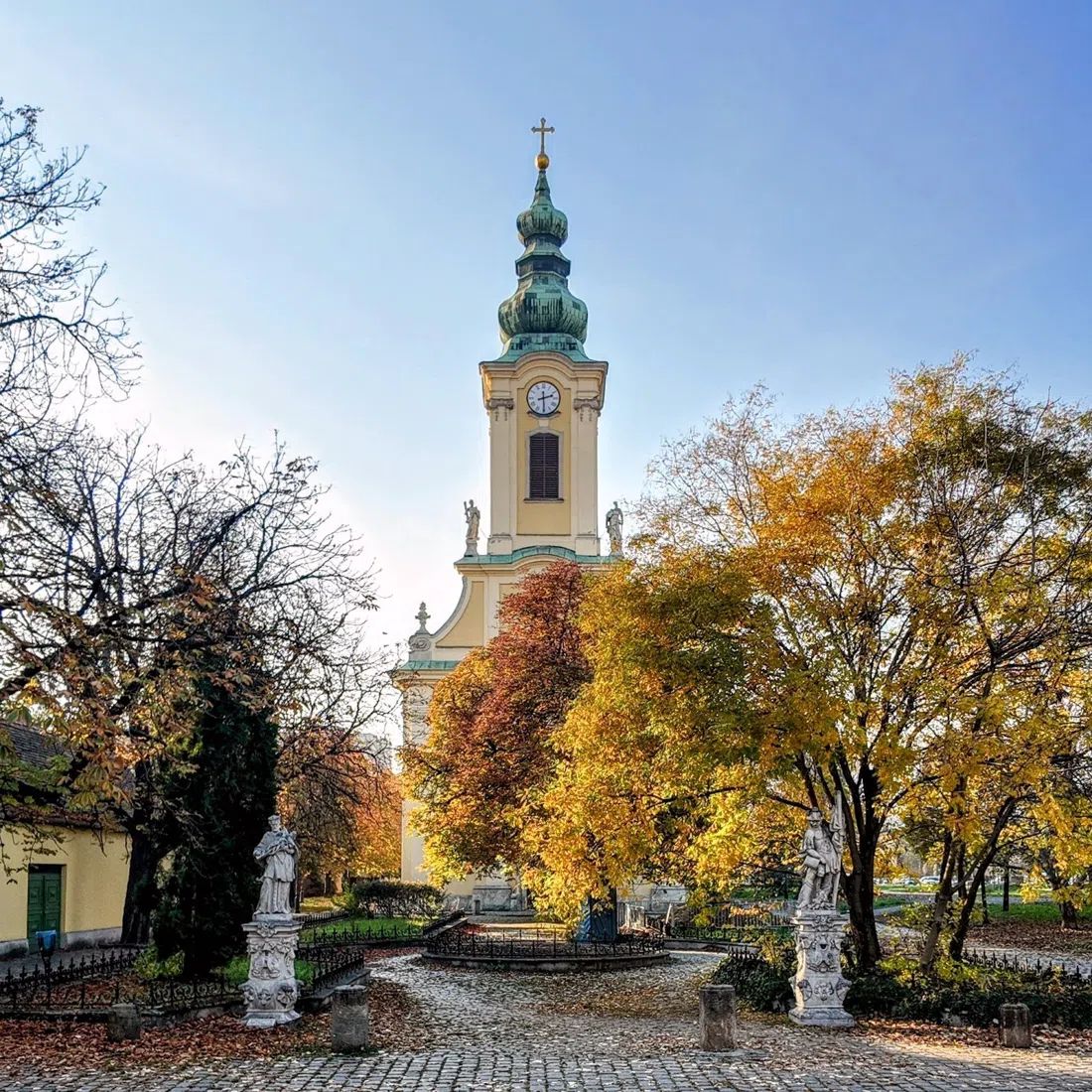
Two minutes from Fő tér, St Peter and St Paul Parish Church (Szent Péter és Pál főplébánia-templom) (Lajos utca) was built between 1744 and 1749 and is the largest church in the district. Károly Bébó's statues of St Roch and St Sebastian stand in two niches on the cream-and-white baroque front, with a St Rosalia relief above the door. Inside, a single barrel-vaulted nave runs to a red marble high altar. Entry is free. Come when no Mass is being said and you will probably have the place to yourself.
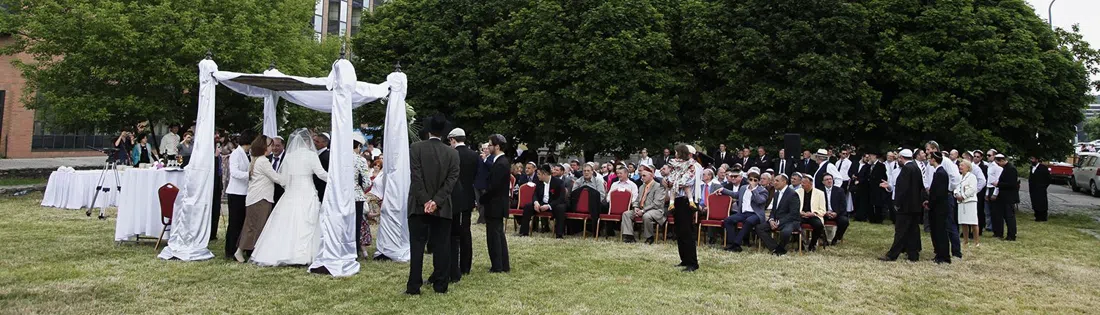
Further along Lajos utca, Óbuda Synagogue (Óbudai Zsinagóga) (Lajos utca) has six colossal Corinthian columns and a plain triangular pediment across a pale classicist front, far grander than the small street in front of it. It was completed in 1821, spent decades as a television studio and now serves a congregation again. Weekday visits run 9:00 to 14:00, against a donation or a guided-visit fee. For a Sunday, or for any visit with a guide, telephone and arrange it first.
Kiscelli utca above the quarter
Kiscelli Museum (Kiscelli utca) is a long baroque Trinitarian monastery on a wooded hillside above the quarter, and the walk up Kiscelli utca is a proper climb out of the tourist flow. The monastery church lost its roof, and the bare brick nave now works as a raw exhibition hall with room for any number of visitors. One room is given over to hand-painted shop signs from old Budapest. Nothing else in the city looks like it inside. Winter hours shorten to 10:00 to 16:00, and the shows change, so check what is hanging before you make the climb.
The Danube bank
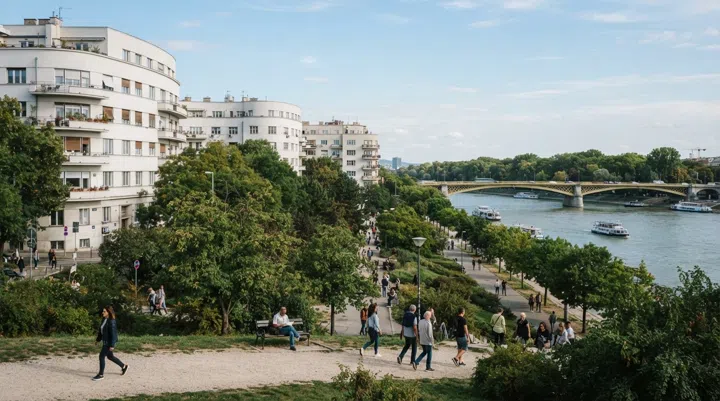
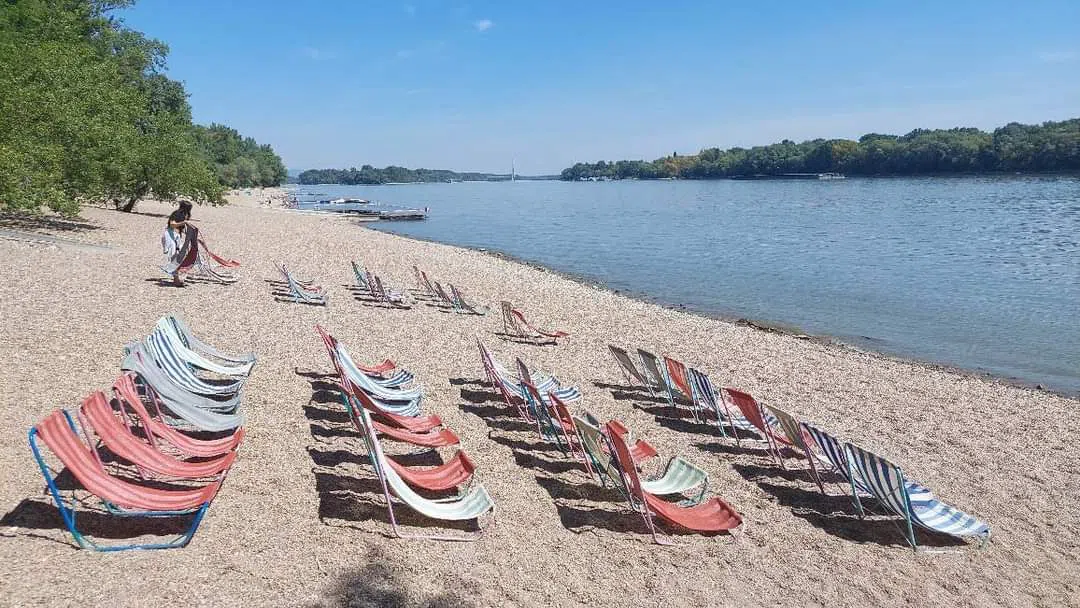
Római-part (Roman Beach riverside) (Danube bank) is where Óbuda spends its summer. Three kilometres of flat gravel and asphalt run under tall plane trees, past wooden rowing-club boathouses, pontoon terraces and anglers, with the water lapping at the edge of the path. Beer gardens and food stalls open along the strip, cyclists and rowers arrive with the warm weather, and tour buses do not come here. Walking the whole length is free.
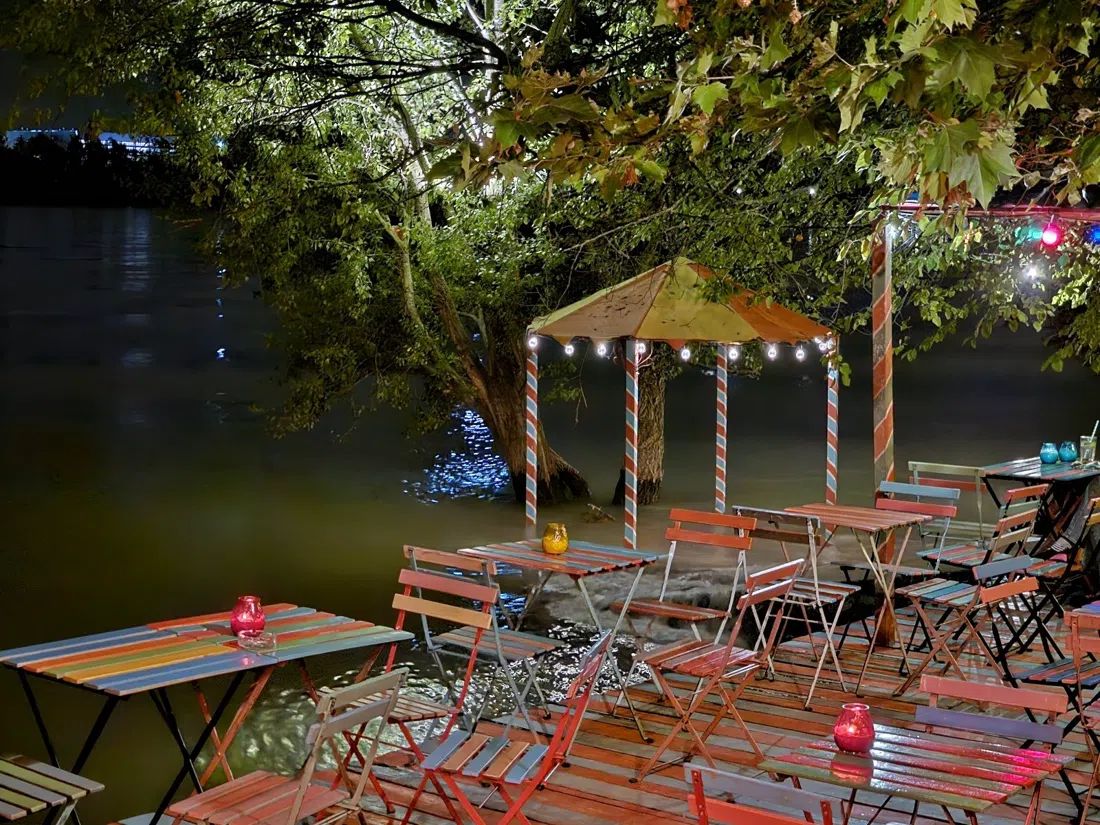
Fellini Római Kultúrbisztró (Kossuth Lajos üdülőpart) sets the tone of that strip: two brightly painted circus caravans parked on the bank, one pouring drinks and one cooking, with mismatched chairs, bunting and bare feet dangling over the water. Belgian beer, grilled fish and fried-bread lángos come out of the food caravan. Live music plays on Fridays, and the summer brings concerts and open-air film nights that fill the bank. Winter hours are cut back. May to September is the season to come, and you can walk in.
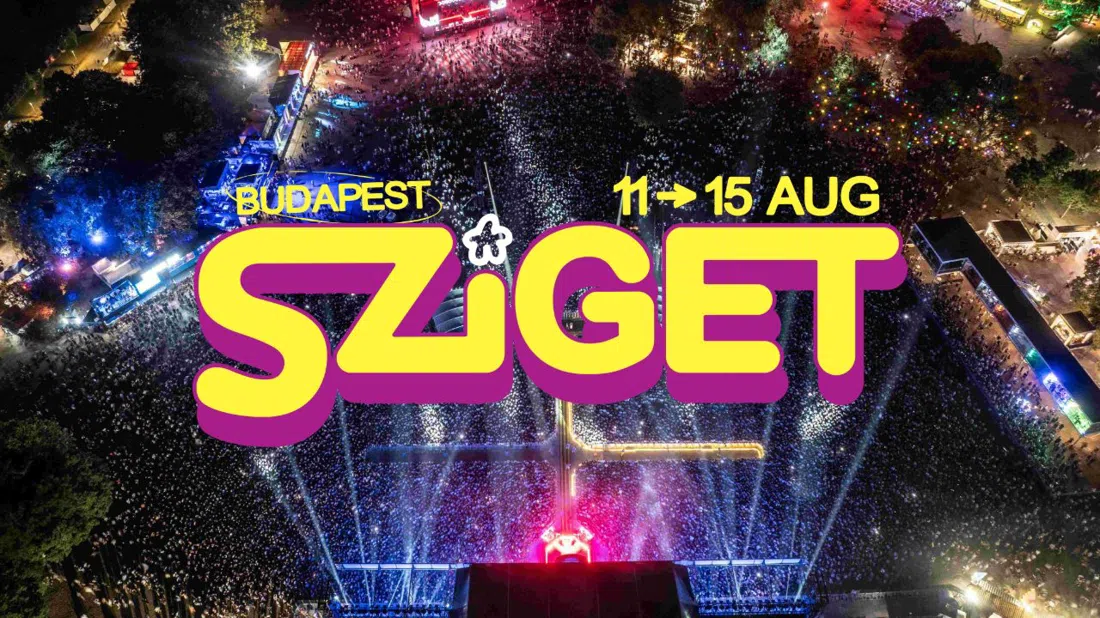
Hajógyári-sziget (Óbuda Island) (reached by a low road bridge) is a flat man-made island of poplar woodland, scrubby meadow and cracked shipyard concrete, with a marina on one side and bare festival-stage footings on the other. For 11 months of the year it is a quiet woodland walk, free and open. The Sziget Festival takes it for five days each August, camping included; the 2026 edition ran 11 to 15 August, and 2027 is announced for 10 to 14 August. Outside the festival you will have the bridge and the paths largely to yourself.
Eating around Fő tér
Kéhli Vendéglő (Mókus utca) has been open since the 1890s on narrow Mókus utca, and the writer Gyula Krúdy name-dropped it. Dark wood panelling, old photographs and copper pans surround red-and-white cloths across several rooms, and a vine-shaded courtyard takes the warm evenings. Order the marrow bone on toast and the goose leg. Mains run 5,000 Ft to 9,000 Ft. A small gypsy band plays between the tables every evening from 18:30 to 22:30, which is also the window to avoid if you want to talk. Book a table by telephone or through the web form.
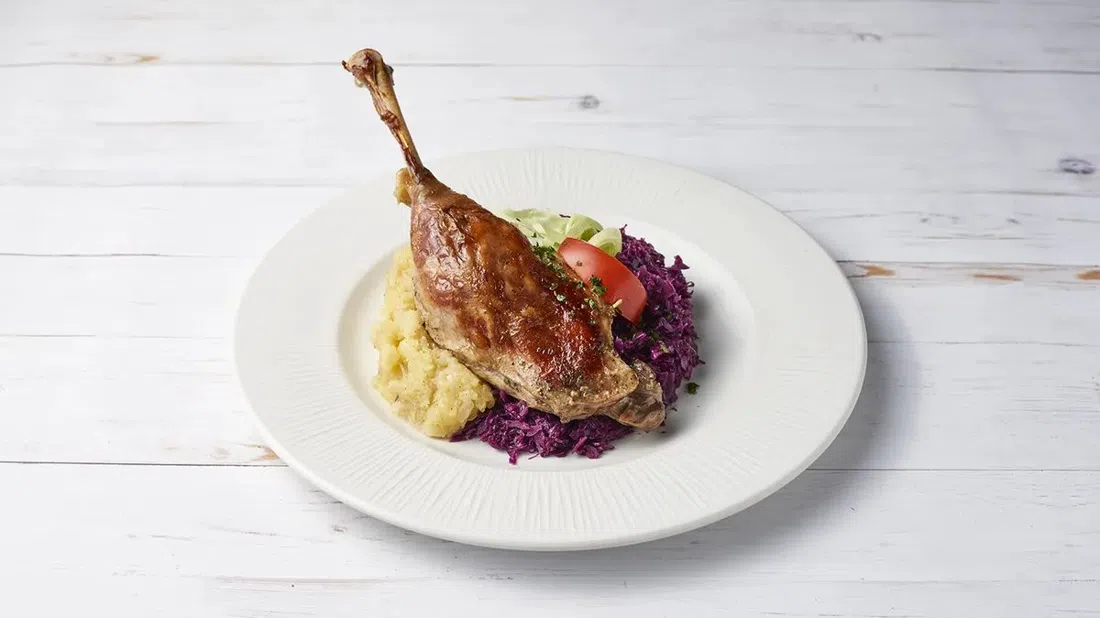
Harapó Mókus Vendéglő (Zápor utca) is a plain whitewashed corner inn on a residential street inland from Fő tér, with a few simple wooden chairs on a small street-side terrace. The kitchen plates Hungarian classics, catfish paprikash with sheep's-cheese nokedli among them, and there is no band. The dining room is small, so book ahead for a party of more than six. It closes on Sundays.

Epicurean (Pacsirtamező utca) is Óbuda's first serious fine-dining room, built into the exposed red-brick halls of the old Goldberger textile factory: three low-lit rooms with a single long table laid for 14. Those 14 covers are the entire night, and one party can book the whole place out. Service runs Thursday to Saturday. Book weeks ahead.

Staying in Óbuda
Verdi Budapest Aquincum (Árpád fejedelem útja) is a long cream 1990s riverside block facing the Danube and Margaret Island, rebranded from the long-standing Aquincum Hotel. It is the only full thermal hotel in Óbuda, with three indoor thermal pools under a glazed roof, a poolside bar and thermal water piped over from Margaret Island. Trams to the centre leave from the door. The four-star building also has conference capacity, coach access and parking on site, which suits anyone arriving by road.
Opening days and booking
Vasarely closes Monday and Tuesday, Harapó Mókus closes on Sundays, Epicurean serves Thursday to Saturday with tables gone weeks in advance, and Kobuci Kert runs mid-April to September. Telephone the synagogue before any visit outside its weekday hours, and reserve at Kéhli by phone or web form. See the Budapest guide and the Budapest hotel search.
24 October 2026 · a first week before the flat: the Budapest hotel directory