Cartagena · Staying safe · 8 min
Bazurto market and the barrio San Francisco in Cartagena
On the working side of Cartagena there is a market, a fort, a convent on the hill and a row of seafood terraces. Here are the hours, the prices, and the one place you should not walk alone.
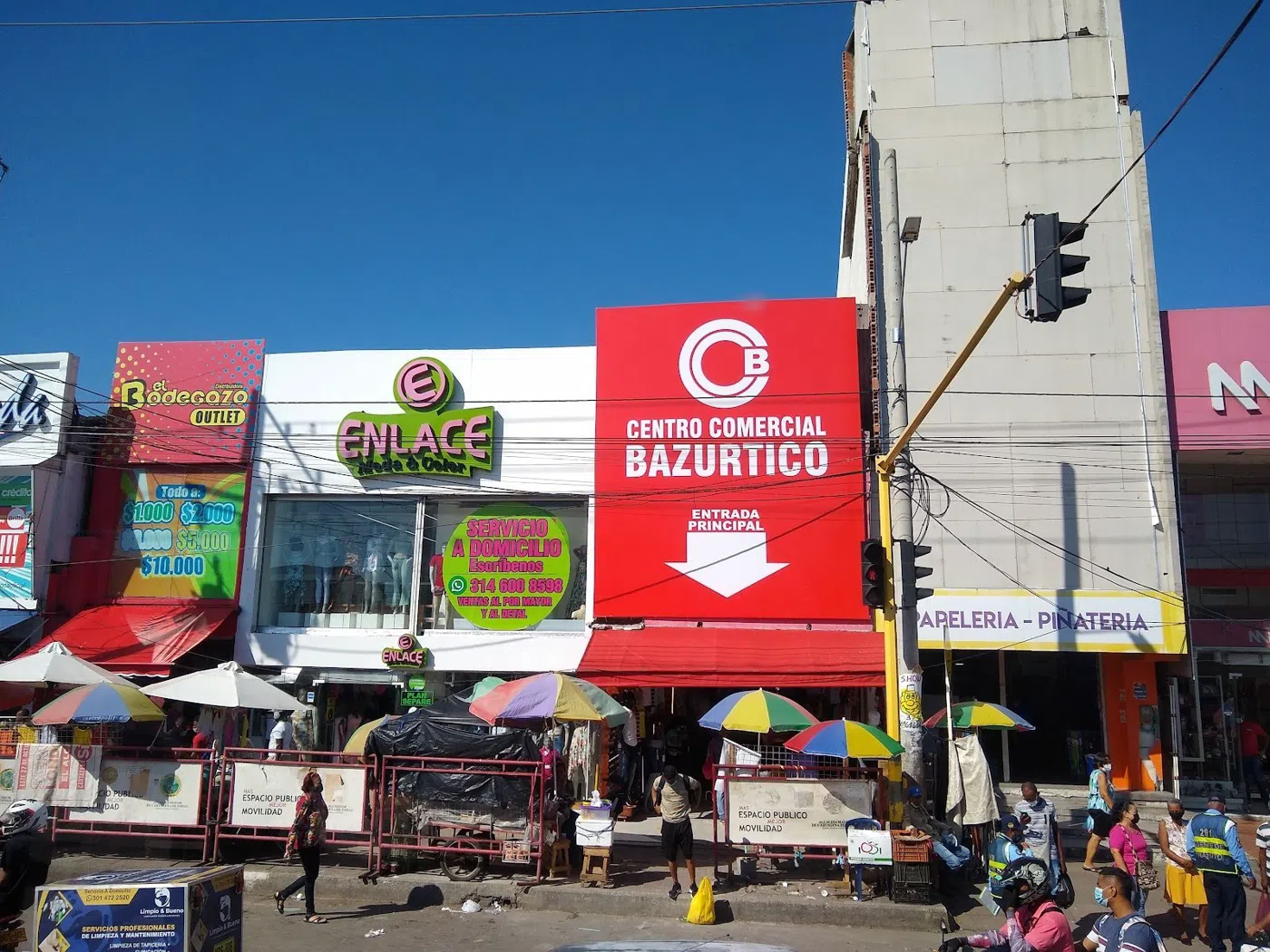
Mercado de Bazurto runs for a kilometre of zinc and tarpaulin off Calle 30, where a plate of food or a juice costs $5.000 to $25.000 and the entrance is free. Behind the stalls, wooden fishing boats unload onto the Ciénaga de las Quintas. The Distrito plans to move the wholesale trade out to a Nuevo Bazurto, so the market as it stands has an end date.
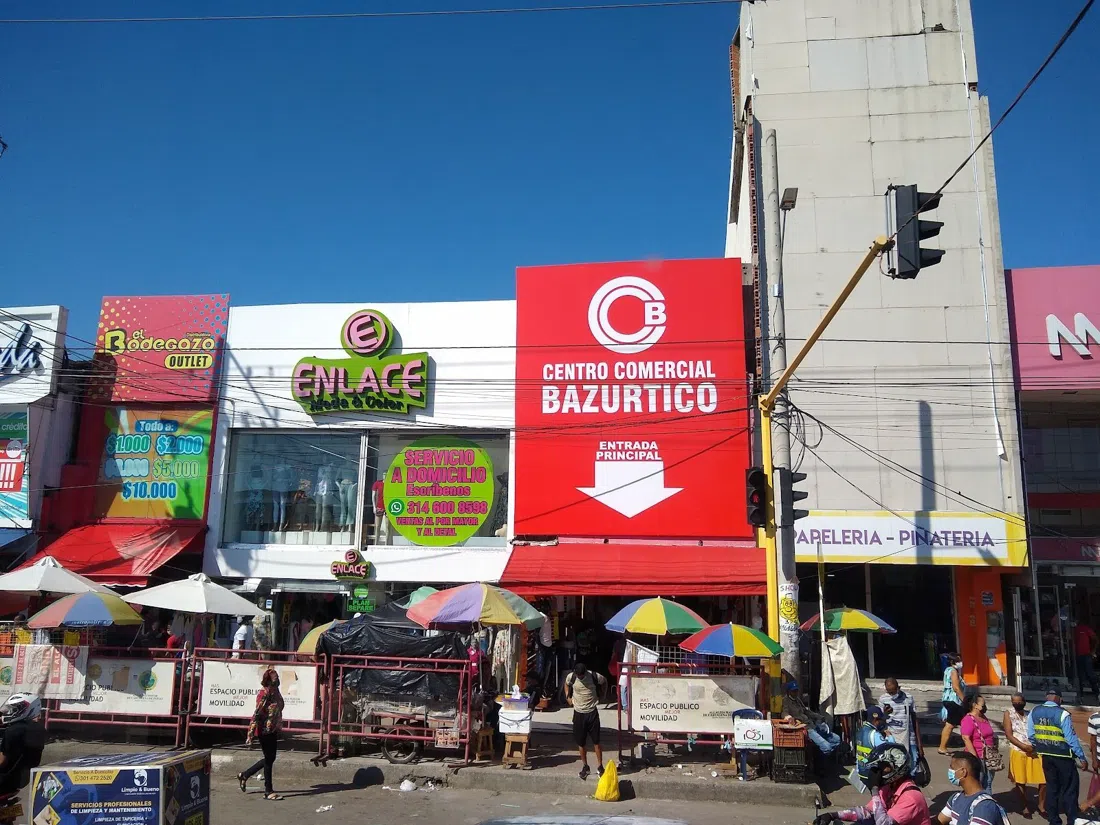
Mercado de Bazurto in the morning
Go in the morning, and go with a guide; people who live here warn against wandering in alone. The market is the reason outsiders come to this working-class side of Cartagena at all. It is the city's larder: wheelbarrows of iced snapper, mounds of plantain, yam and papaya, butchers' tables, mototaxis nosing through puddled aisles.
Beyond Colombia's Bazurto market tour (Camellón de los Mártires) leaves daily at 10 a.m. and runs four hours with a bilingual guide and transport in and out, at $215.000 per person. It needs a minimum of two people, and booking closes at 8 p.m. the day before. You taste as you walk down the fish alley, zapote, níspero and corozo with coconut water, and the vendors laugh at the gringos.

Lunch is at Donde Cecilia inside the market, the family comedor still trading in 2026 and still the lunch stop on every market tour. Nothing is written down. Whole fried mojarra arrives with coconut rice and patacón on an enamel plate, there is mote de queso, and $20.000 to $35.000 covers it. The stall kitchen has one long communal bench table under a tin roof, so eight to twelve people fit if someone calls ahead. It trades at lunchtime and winds down mid-afternoon, and a faded photograph of Anthony Bourdain hangs on the wall.

Castillo de San Felipe and the La Popa convent
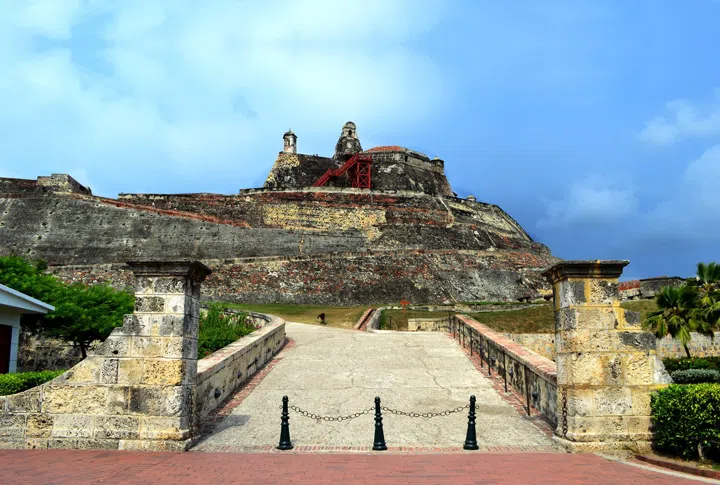
Castillo de San Felipe de Barajas is 2 km west of the market belt, the biggest Spanish fort in the Americas, coral stone stacked up the Cerro de San Lázaro in zig-zag ramps and batteries with dark tunnel mouths cut into them. A huge Colombian flag flies on top and Bocagrande's towers sit on the horizon. Gates open at 7 a.m. and close at 6 p.m. daily. Arrive at opening for the shade and the empty tunnels. Entry is $38.000 for foreigners and $33.000 for Colombians, and children from 6 to 13 pay $16.000. A group rate of $32.000 and a school rate are published, and guides tout for work at the gate.

Santuario y Convento de Santa Cruz de la Popa sits on the city's highest hill, 1.5 km from the barrio and rising directly above it. Take a taxi up the hill, agree a round-trip fare and keep the car. It opens 8 a.m. to 5:30 p.m. daily. Adults pay $11.000 and children $8.000. The whitewashed 17th-century Augustinian cloister runs around a stone well with bougainvillea over the arcades, the chapel holds the gilded Virgen de la Candelaria, and the panorama goes 360 degrees over the bay, the lagoons and the barrios below. Coach and taxi parties fill the courtyard all morning.

Puerto Duro and the mangrove boardwalk
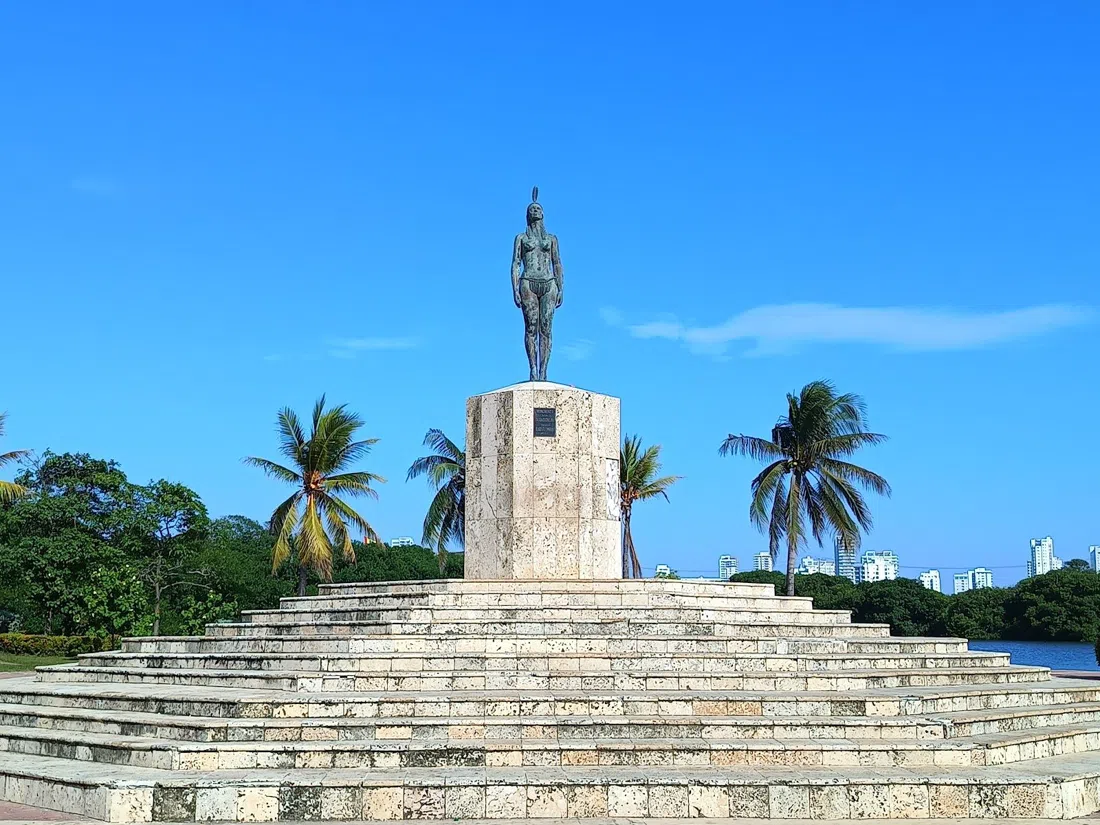
Monumento a la India Catalina stands on the Chambacú lagoon between the market belt and the walled city, a bronze indigenous woman with one arm raised on a stone plinth. The plaza around her was rebuilt and unveiled again in July 2026, part of the renewed Puerto Duro sector, with permeable paving, design benches and native planting, lit by LEDs after dark. It is a free public plaza, with the water and the San Miguel bastion behind, and it is best at dusk. Two minutes is enough on the way in.
Parque Espíritu del Manglar (Rafael Vergara Navarro) is Cartagena's only mangrove walk inside the city, 2 km from the market on the Ciénaga de las Quintas. Timber boardwalks run out over the red mangrove roots, herons stand in the shallows, and the old city wall and La Popa hill sit in the distance. Entry to the municipal park is free and the hours are 3 p.m. to 9 p.m., with some days closed. Families take over the playground and the games pavilions late in the afternoon.

Seafood in the fort and on the water
Fuerte de San Sebastián del Pastelillo on Manga island holds the Club de Pesca, 2 km from the market and the one grand place to eat on this side of the water. Tables sit under almond trees inside the low stone walls of a small 18th-century fort, the yacht masts of the Manga marina alongside and the city skyline across the bay. Club de Pesca opens noon to 11 p.m. daily, with live music Thursday to Saturday. A meal runs $70.000 to $140.000 per person. Groups are most of its trade, so reserve, and ask for the water-side terrace.

La Pesca Restaurante Bar in El Bosque is where people who work in this part of town eat seafood, 2.5 km from the market across the Ciénaga. The dining room is open-sided at the water's edge, cazuela de mariscos comes bubbling in a clay bowl, and fishing boats pass against the mangrove on the far side of the channel. Doors open at 11:30 a.m. and close between 9:30 and 10:30 p.m., some nights with live music. Count $40.000 to $60.000 per person, with no tourist mark-up. Reservations go through +57 302 255 1907.

La Casa de Socorro in Getsemaní is the benchmark for Cartagena home cooking, a market-style kitchen that grew up, 3 km from Bazurto and worth the taxi once the stalls have quietened. The room is bright, with painted wooden chairs and local art, cazuela de mariscos gratinada in a clay dish and jugs of corozo juice. It serves daily from 11:30 a.m. to 11 p.m., at $40.000 to $85.000 per person.

Reina Arepa in Manga trades in the evening only, 4:30 p.m. to 10 p.m., 2 km from the market. Arepas come off the griddle split and stuffed with shredded beef, cheese and avocado, ordered from a chalkboard at a lit counter on a quiet street with plastic stools on the pavement. A filled arepa is $15.000 to $30.000, and locals queue for them. The counter is tiny: four to six people fit, and a larger party should order ahead on +57 320 950 4001.

Caribe Plaza on Calle 29D
Centro Comercial Caribe Plaza is a few hundred metres from the market, a white block ringed by palms and parked mototaxis with La Popa visible above the roofline. Inside are more than 200 shops, a glass atrium, a food court and a multiplex, and there is no door policy of any kind. It opens 10 a.m. to 8 p.m., and to 9 p.m. on Friday and Saturday. Entry is free and lunch runs $25.000 to $50.000. Crepes & Waffles here is the local family favourite. Come for the air conditioning, the cash machine and a cold beer after a morning in the stalls.

Baseball at the Once de Noviembre
Estadio de Béisbol Once de Noviembre Abel Leal (Villa Olímpica) sits 3 km from the market in the same working-class east of the city, where Cartagena takes its baseball seriously: a weathered concrete grandstand under floodlight pylons around a red clay infield. Tigres de Cartagena are confirmed for the 2026-27 league, 20 November to 3 February. Buy at the window on the night; popular tickets usually come in under $50.000. The seating is terracing, the shirts are Tigres, and drums and brass carry the cheap seats. Nothing a visitor does in this city is more local.

Bazurto Social Club, now in the walled city
Bazurto Social Club takes its name from this district and is the one reliable place to hear live champeta played. Since March 2024 it has traded off Plaza Santo Domingo in the walled city, 4 km away. It opens Thursday to Saturday from 9 p.m., with free dance lessons early and a cover of $30.000 that is waived before 10 p.m. Check its Instagram before you set out, because it has gone dark for spells. The back patio is hung with bulbs and hand-painted picó art, cartoon lettering over loudspeaker stacks, and the band and its dancers pull the crowd in.

Beds in Pie de la Popa and Manga
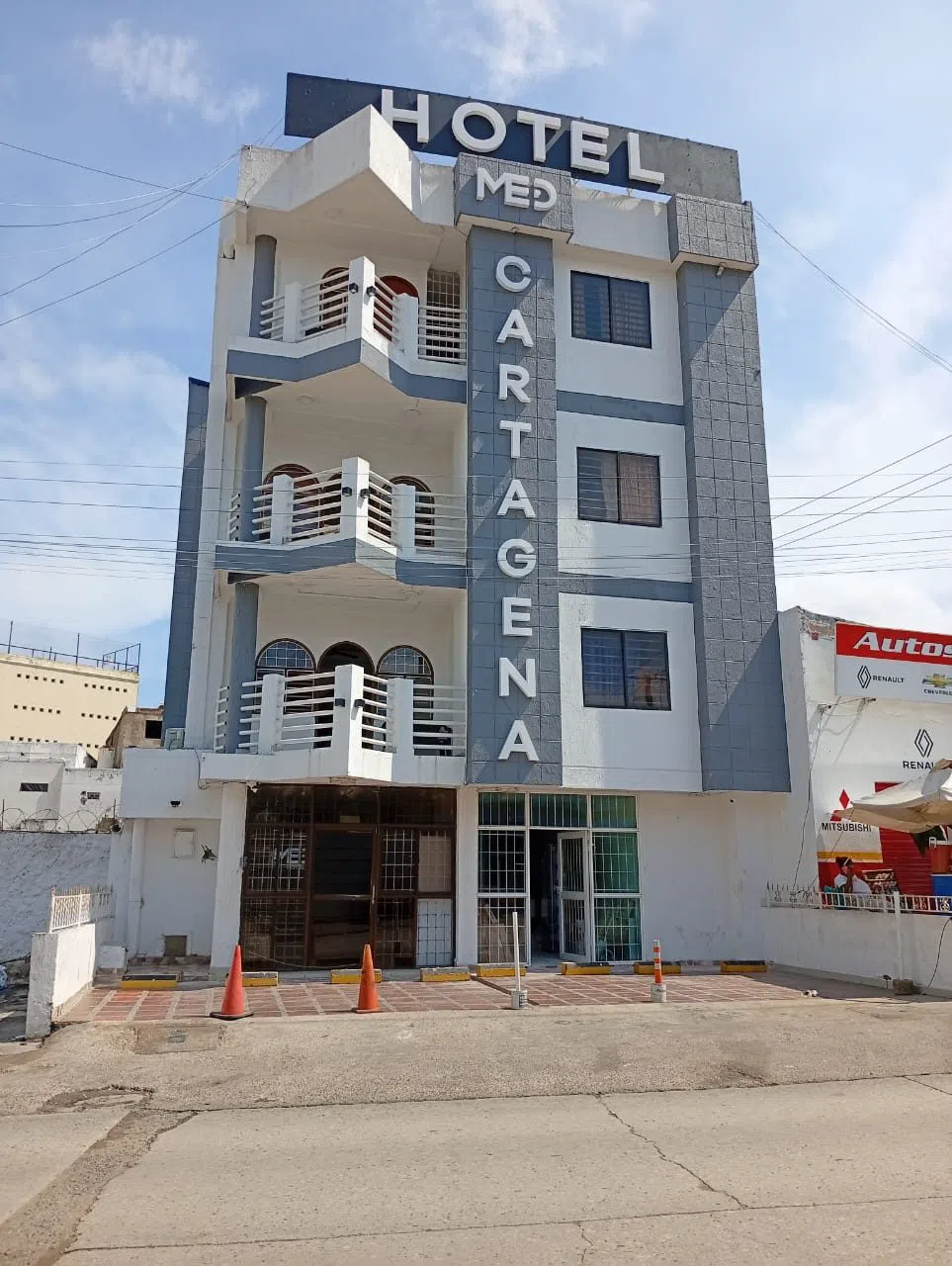
Hotel Med Cartagena (Carrera 21, Pie de la Popa) is the nearest decent bed to the market, a plain mid-rise on a quiet residential street with La Popa hill and the convent directly behind it. A double is $180.000 to $300.000 a night. It is clean and small, with family rooms, a little reception and restaurant, and no lift. San Felipe is a 17-minute walk, the La Popa viewpoint under 1 km, Bazurto a short ride.
Holiday Inn Express Cartagena Manga by IHG (Carrera 27) is 10 minutes from the market and 10 from the walled city, a low white block on a leafy street of mango trees and old Manga mansions. A double with breakfast is $300.000 to $450.000. The desk is staffed 24 hours, the breakfast is a buffet, and there is an outdoor pool deck to collapse onto when you come back from Bazurto.

Closed days and bookings
The market trade winds down in the early afternoon and Donde Cecilia closes with it, while the mangrove park keeps afternoon hours and shuts entirely on some days. Book the market tour by 8 p.m. the day before, reserve at Club de Pesca, and check Bazurto Social Club's Instagram before crossing town. See the Cartagena guide and the Cartagena hotel search.
3 November 2026 · a first week before the flat: the Cartagena hotel directory