Florence · Getting around · 11 min
Crossing Florence by Tram and Bus on a €2 Ticket
The flat €2.00 fare covers the tram, the city buses, the night network and the urban trains — here is how to use all four without wasting an afternoon working it out.
Florence is small enough to walk end to end in forty minutes, which is exactly why visitors lose half a day to it. The things you actually want sit just past the edge of comfortable walking: the airport, the hill with the view, a Medici park in the hills, a car park that doesn't end in a ZTL fine. All of them are reachable on a €2.00 ticket that runs for ninety minutes and works on more vehicles than most people realise.
One ticket, ninety minutes, four kinds of vehicle
The fare is flat and it is not complicated. €2.00 buys ninety minutes on the urban network: tram, city bus, night bus, and regional trains inside the city boundary. That last one is the part nearly everyone misses. Ninety minutes is generous in a city this size. It is enough to ride up a hill, look at the view and come back down on the same ticket, if you are brisk about it.
Where you buy it changes the price. The at bus app (Autolinee Toscane's own ticketing, works citywide) sells a single for €2.00. A contactless bank card tapped on the validator works too, as do Tabnet, Telepass and the machines at every stop. By SMS it's €2.40. Ten tickets in one transaction is €18.20, a monthly pass €42.20. Buy from the driver and it's €3.00, half again for the privilege of not planning.
Two rules catch people out. First, the ticket has to be validated or activated at the start of the first journey, not when you board the second vehicle. An unvalidated ticket in your pocket counts as no ticket at all. Second, one phone can hold several tickets, but every passenger needs their own, validated. Inspectors fine per person, not per party. I have watched a family of four work this out at Piazza della Libertà, and it is not a conversation you want in your second language.
If you'd rather deal with a human, or you're buying for a group, go to the Autostazione Autolinee Toscane (Via Santa Caterina da Siena 17, two minutes' walk from Santa Maria Novella). Seven staffed counters handle over 5,000 passengers a week, alongside automatic machines. Urban tickets are €2.00; extra-urban fares are priced by distance. Buy a block of ten in one go rather than queueing individually, and do it on arrival: the machines out at the stops take cards but regularly run out of paper stock, which is a problem you discover at the worst possible moment. The office is open Monday to Saturday 05:45 to 20:20, Sunday and holidays 06:25 to 20:00. It is also where every Tuscan day trip that isn't a train departs from, so you'll be back.
The tram that now stops at the Accademia's door
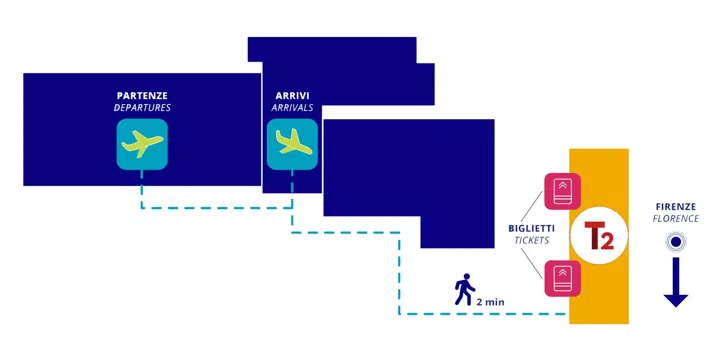
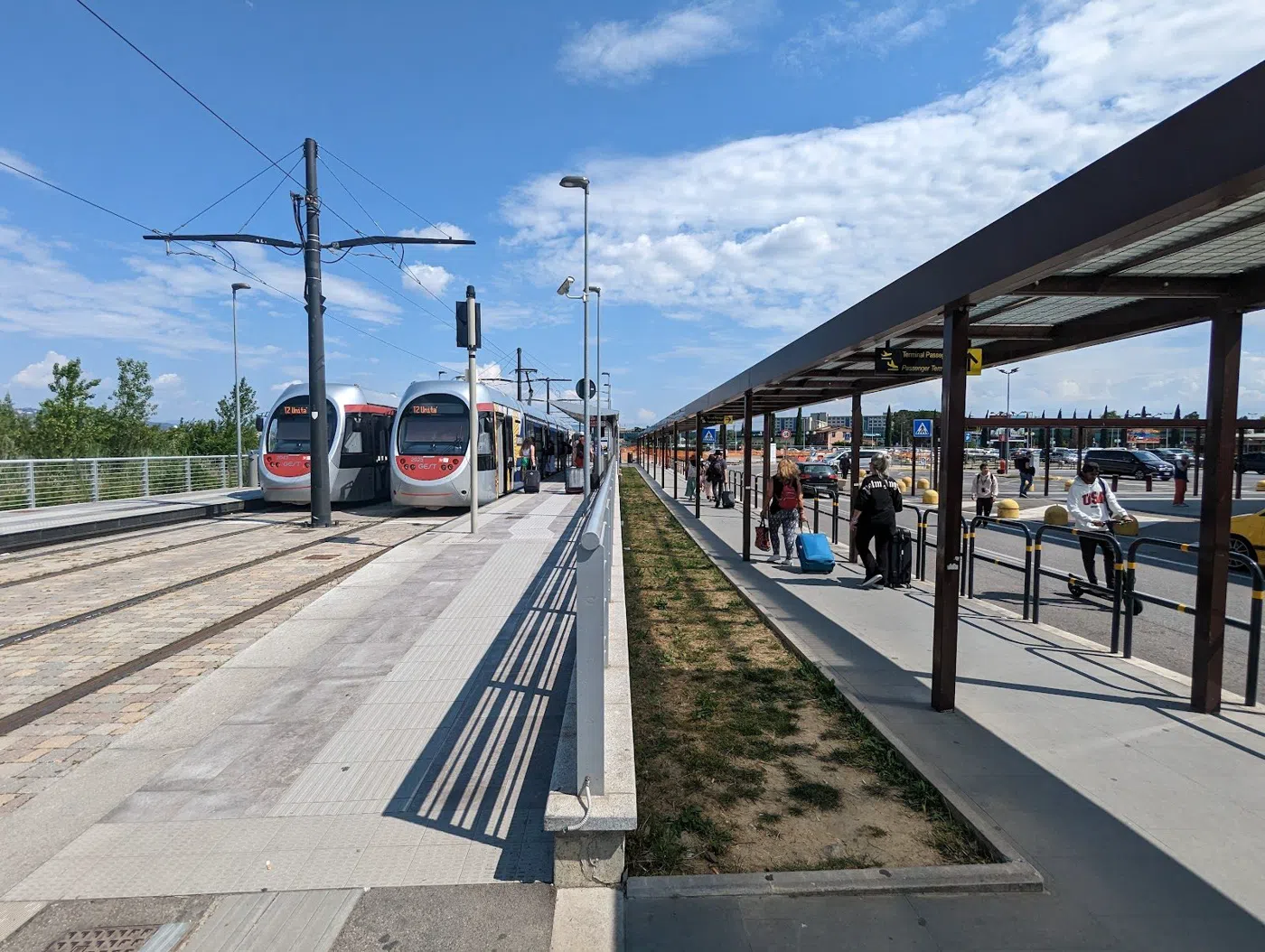
Tramvia Line T2 "Vespucci" (airport to San Marco, run by GEST) used to be an airport shuttle that abandoned you at the station. Since the San Marco extension opened in January 2025 it runs from the airport to Fortezza, then Piazza della Libertà, then San Marco: 8.8 km, about 35 minutes end to end, with the northern terminus a short walk from the Accademia. That changed the arithmetic of arriving in Florence.
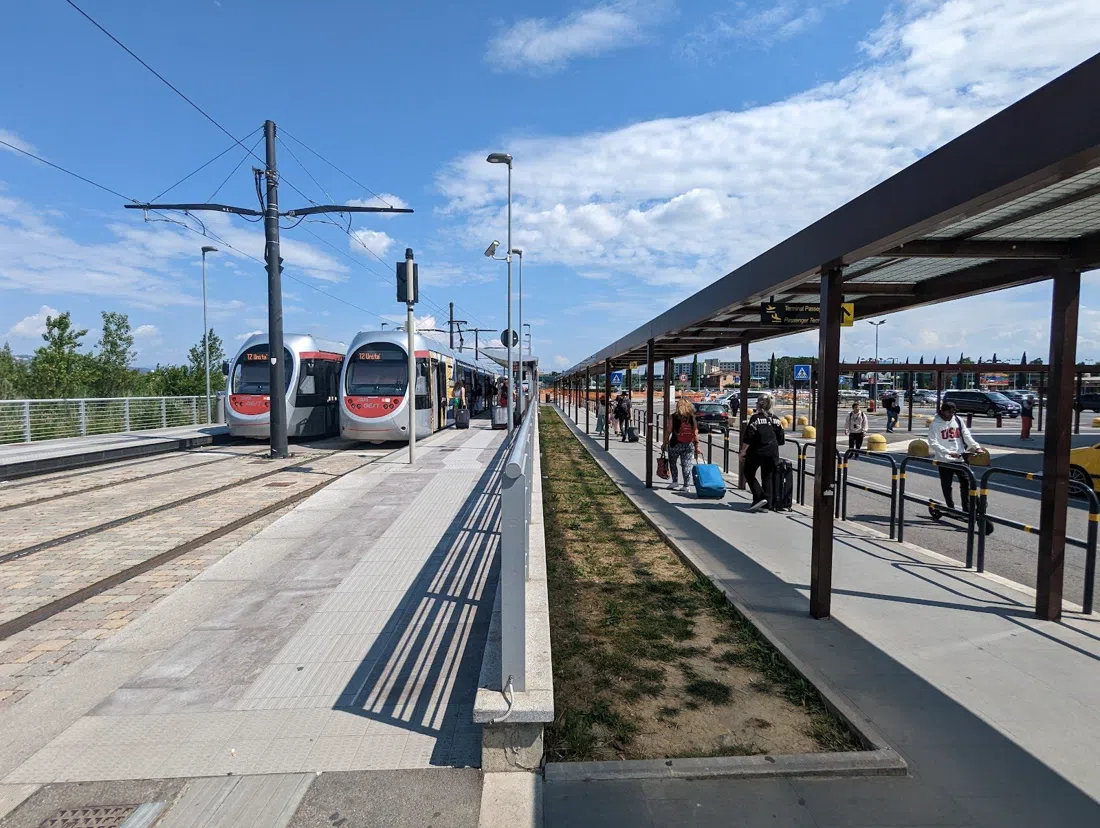
No reservation, no bag charge, and the same €2.00 ticket as the bus. For a group arriving with luggage it is the least stressful option in the city: nobody negotiates a boot, nobody waits for a second car, and you step off within sight of where you're actually going.
One practical note about space. The airport end of the line has the most of it; the San Marco end has the least. If you're boarding at San Marco with cases at a busy hour, let one tram go and take the next rather than wedging four people and four bags through a full door. Coming the other way, board at the terminus rather than the first stop after it and you'll usually get a place near the luggage area.
If you're still choosing where to sleep, it is worth knowing what sits within a few hundred metres of the T2 alignment. Fortezza and Libertà both put you on a direct, no-transfer run to the airport at 05:00, when taxis are priced accordingly. Start with a Florence hotel search and check the walk to the nearest stop before you book, not after.
Leaving the car outside the city and riding in
The ZTL, Florence's restricted traffic zone, is the single most expensive mistake a driving visitor makes, and the cameras don't negotiate. The answer is to not enter the city by car at all.
Parcheggio Villa Costanza (on the A1, at the southern end of tram line T1) was Italy's first motorway park-and-tram, and it is still the best-designed answer to the problem. You come off the motorway, park, and walk to the tram without ever joining Florence traffic. Santa Maria Novella is 22 minutes up the T1.
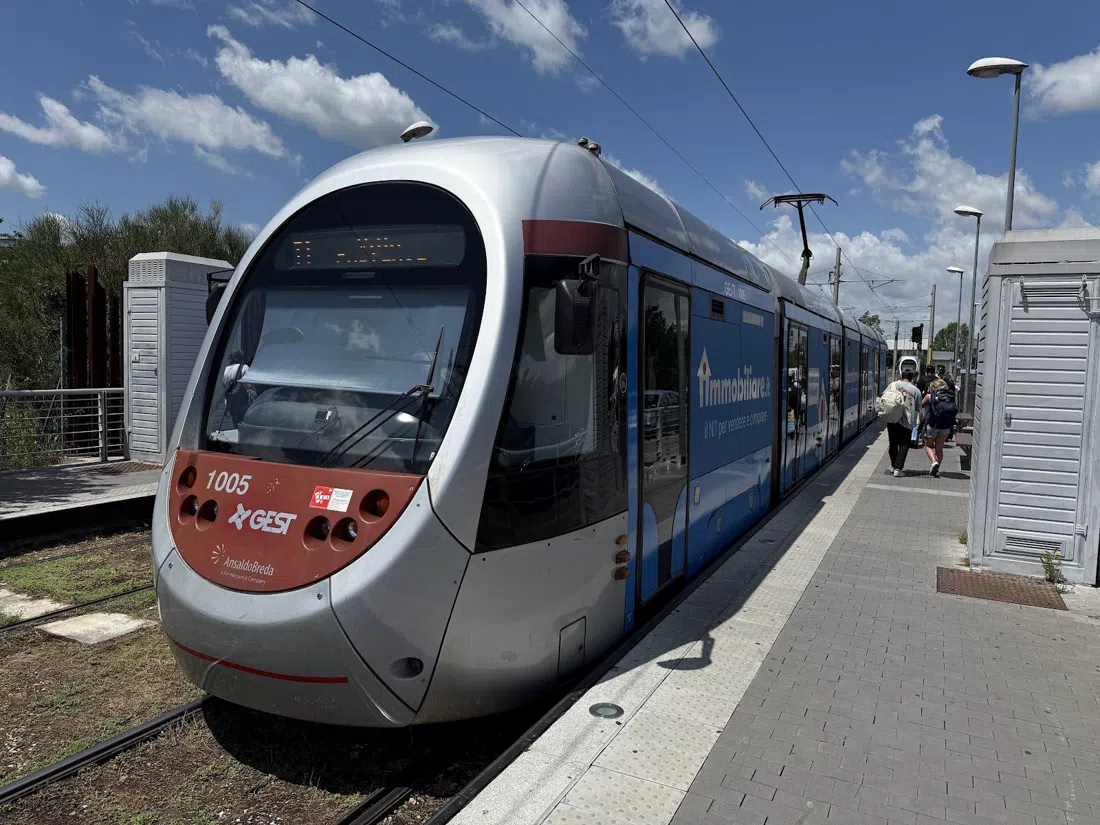
The numbers: 487 car spaces, 25 accessible spaces and 25 dedicated coach bays, which makes it the only Florence park-and-ride genuinely built for a bus-sized party. €1 for the first hour, €2 for four hours, €4 for eight, €7 for a full day. Open 24/7, and you can leave a car for up to 30 consecutive days, which makes it a sane base for a Tuscan trip that starts and ends in Florence.
Parcheggio scambiatore T2 Guidoni (northern edge of the city, on the T2 toward the airport) is the twin, and for a day in town it is absurdly cheap: €1 for ten consecutive hours during T2 operating hours. There are 252 car spaces, five accessible and 38 coach spaces, plus a monthly option online for transport pass holders.
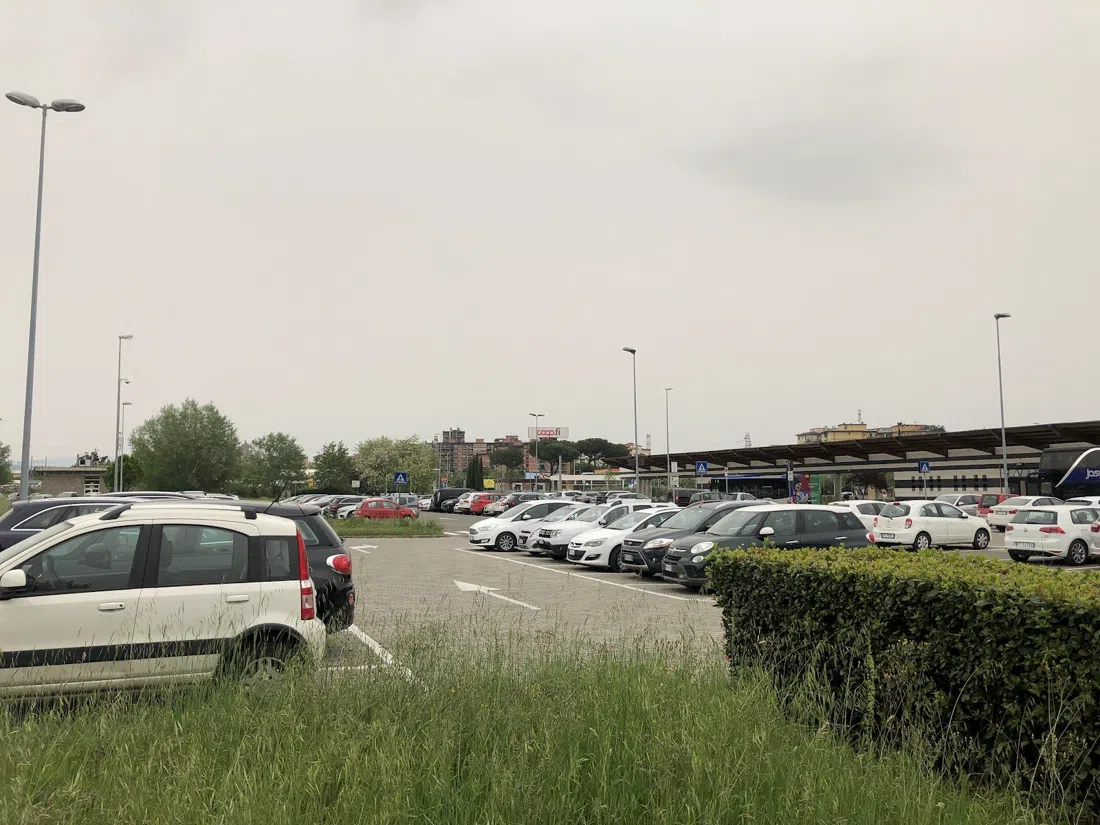
The catch is deliberate. After those ten hours the rate jumps to €4 per hour, so Guidoni is a day car park and nothing else. Leave a car there through the night and the arithmetic turns against you fast. Entry is by barrier with automatic payment and no staff on site, so there is nobody to explain a situation to. Read the sign before the barrier lifts.
Overnight or multi-day, use Villa Costanza. One long day of sightseeing from the north, use Guidoni.
The three-minute train hardly any visitor uses
That same €2.00 ninety-minute urban ticket is valid on Trenitalia regional trains inside the Florence boundary, between Santa Maria Novella, Rifredi, Statuto, Campo di Marte, Le Cure, Le Piagge, Rovezzano, Castello, San Marco Vecchio and Porta al Prato.
So a three-minute hop across town costs the same as a bus hop, with none of the traffic. Santa Maria Novella to Campo di Marte on a bus at 18:00 is a slow, hot experience. On a regional it is over before you have found a handhold.
It suits specific trips exactly: anyone staying out near Campo di Marte or Rifredi, anyone with an early onward regional connection, anyone who has badly misjudged the distance from Rovezzano. It is not a metro. Frequencies follow the regional timetable rather than a turn-up-and-go headway, so read the departure board instead of assuming one is due.
There are no group limits on regionals and no seat reservations either, which cuts both ways: four of you can board together, but you may all be standing. Walk to the ends of the platform. The end carriages are consistently emptier than the middle ones, where everyone clusters by the stairs.
Piazzale Michelangelo without the sunset crush
Bus lines 12 and 13 (the hill loop up from the Oltrarno to Piazzale Michelangelo) run the same circuit in opposite directions, which is the only fact you need at the stop: whichever comes first is the right one.
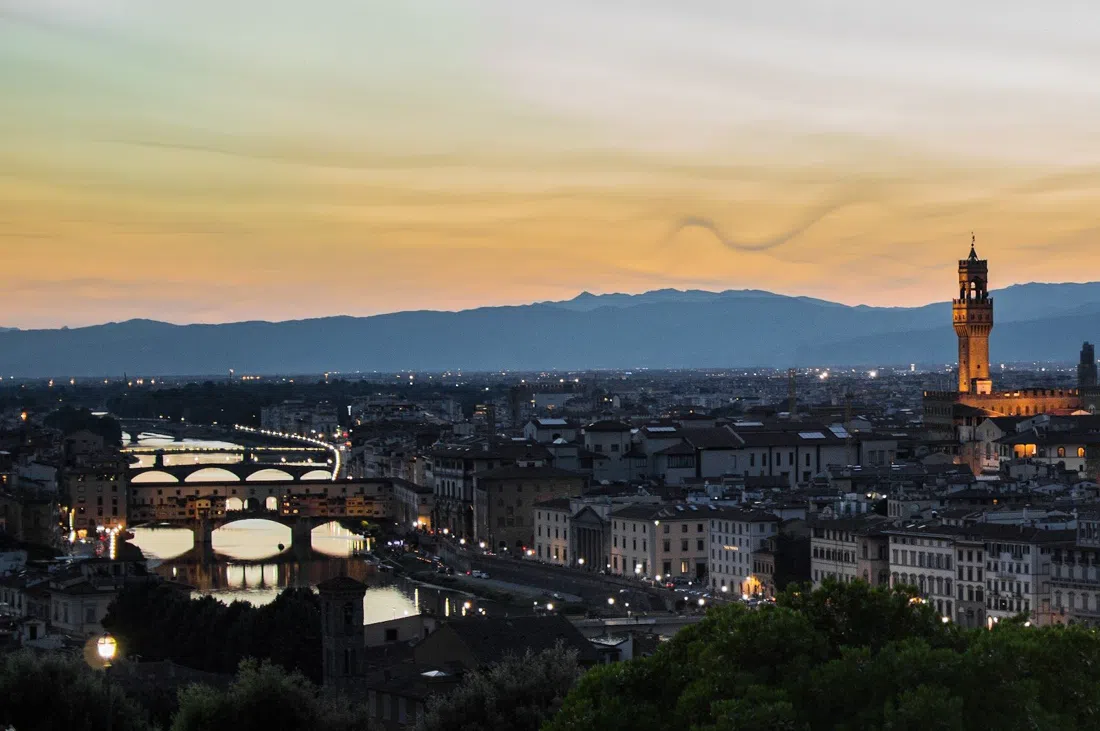
At sunset both are standing room only, and that is not a mild warning. A group of more than six should either ride up mid-afternoon and wait out the light at the top, or accept in advance that you will be splitting across two buses and regrouping at the terrace. Decide which before you are at the stop, because the group that hasn't decided is the group that loses a bus arguing about it.
The €2.00 ticket covers up and back if you are quick. Ninety minutes is enough for the ride, a look and the return; it is not enough for the ride, a look, a drink and the return. Budget a second ticket if you are staying for the view properly, and buy it before you go up rather than at the top.
Check the current line page before you set off. The 12 has been on diversion since 20 August, with a further route change from 9 September, so the stop you used last time may not be the stop today. Walking down afterwards is a genuine option: roughly twenty minutes to the river through the gardens, and it costs nothing.
A Medici park at the end of an urban fare
Bus line 25 (Piazza della Libertà north to Pratolino) is the cheapest big day out available in this city. €2.00 gets you to the Parco Mediceo di Pratolino, and entry to the park is free: an afternoon of Medici landscape, giant statuary and deep shade for the price of a single bus hop.
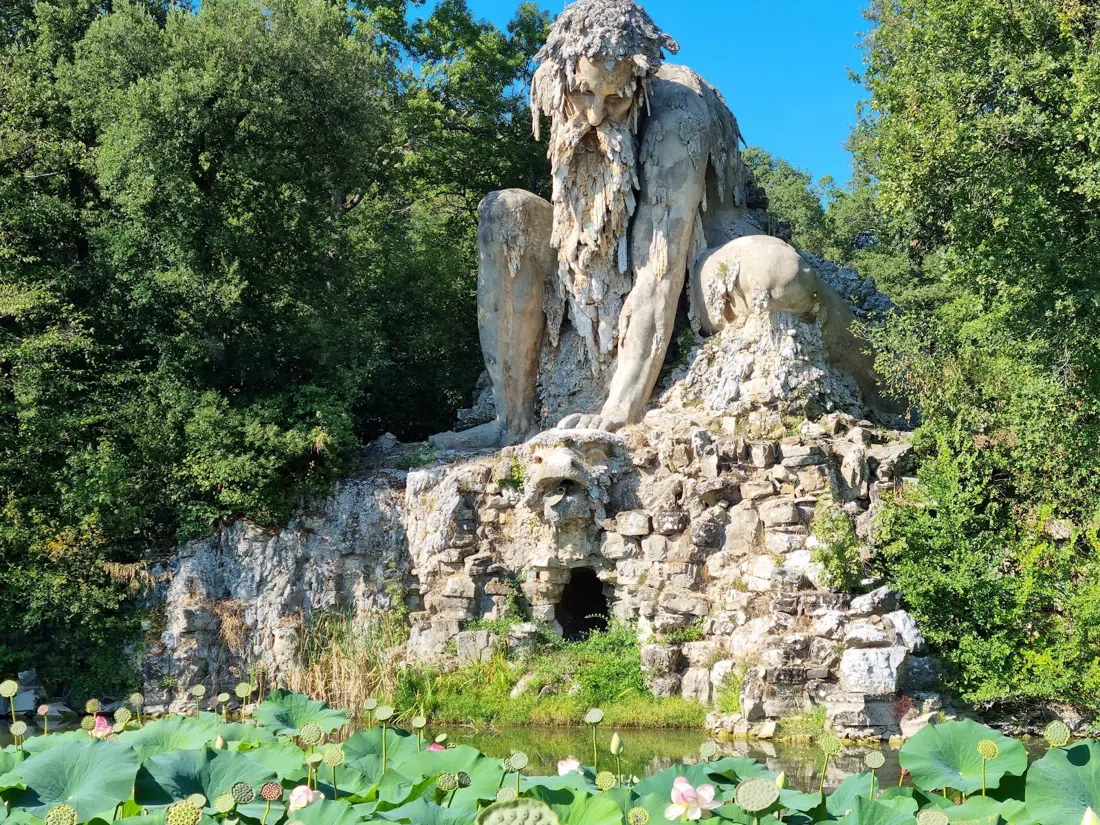
It suits a family or a small party comfortably. Larger groups should read the timetable first, because headways stretch out beyond Pian di San Bartolo and a missed return means a long wait rather than a short one. Fix your return departure before you walk into the park, not after you have lost track of the afternoon in it.
One live caveat: emergency roadworks at La Lastra have been in force since 3 July and can shift stops on the upper stretch of the route. If the stop you expect isn't where you left it, walk a hundred metres and look for the temporary pole before concluding the service has been cut.
Getting a group home after dinner
For years the honest answer to "how do we get back from dinner" was a taxi, or a long walk. The "In bus, anche di notte" night network (Autolinee Toscane, citywide) changed that: 24 lines running from 22:00 to 02:00 at 15 to 25 minute headways, radiating from Piazza della Stazione, Fortezza da Basso, Piazza della Libertà and Porta al Prato.
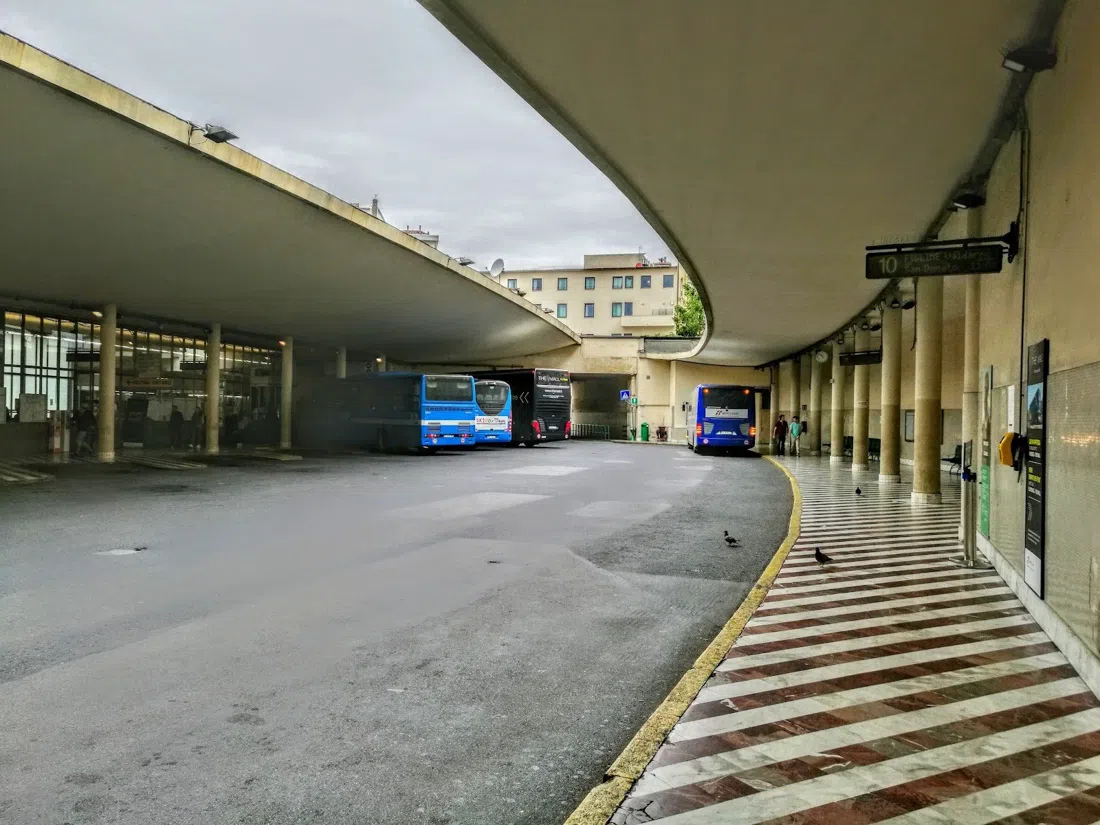
It was built to work when the trams stop. The fare is the same €2.00 single, with no night surcharge.
Capacity is not an issue at that hour, which makes it the practical way to move six or eight people back across town without ordering three taxis and losing two of them. The four hubs are the thing to memorise: if you can walk to the station, the Fortezza, Libertà or Porta al Prato, you can get home. Book dinner within walking distance of one of them and the end of the night stops being a logistics problem.
When two wheels or four are actually faster
RideMovi (bike sharing, bays across the city) is now the only micromobility option in Florence. Shared scooters were withdrawn on 31 March 2026, so don't build a plan around them. The fleet is expanding past 5,000 bikes.
On the non-resident pass (€14.99 a month) rides work out at about €1.60 per 15 minutes. Between 02:00 and 06:00 that drops to €1 per 20 minutes on e-bikes and €0.50 on pedal bikes. Marked parking bays are enforced, so end the ride inside one. Leave a bike against a wall and you pay a charge for it.
The group limitation is built in: one account per bike. Six of you means six phones and six separate unlocks, and in practice one person's payment method will fail at the kerb while the others wait. Fine for two. Tedious for six.
Taxi 4242 (SOCOTA radio taxi, with ranks at the station, the Duomo, Repubblica and Santa Croce) is the fallback, and it pays to know how the meter behaves. The base fare is €3.30 in the daytime, €6.60 from 22:00 and €5.30 on Sundays and holidays, then €1.10 per kilometre. You can also book through appTaxi.
When you phone, the meter starts at the base fare the moment the call is taken, not when you get in. A car that takes eight minutes to reach you arrives with money already on the clock. Walking to a rank is cheaper, every time.
Standard cars seat four. There is a surcharge above three passengers plus €1.10 per item of luggage, so call ahead for more than four people: you need two cars, and you want them dispatched together rather than one after the other.
Practical notes
Tickets are €2.00 flat for 90 minutes, valid on tram, city bus, night bus and urban regional trains. Ten for €18.20, monthly €42.20, €3.00 from the driver. Validate at the start of the first journey. One per person, always.
You barely need cash. The app, contactless bank cards on the validator, Tabnet, Telepass and the stop machines all work. Carry €20 anyway, for a driver-bought ticket or a taxi that prefers notes.
On timing: the night network covers 22:00 to 02:00. The airport run on the T2 is about 35 minutes end to end, so budget 50 with the walk and the wait, and a clear hour if you are moving a group with luggage.
For budget, two people making three journeys a day for four days is about €48 in singles, or €36.40 using two carnets of ten. A car at Guidoni for a long day is €1; a full 24 hours at Villa Costanza is €7. Set against one airport taxi, a week of transport here is close to free.
And one rule: don't drive into the centre. Park at the tram and ride in, because the ZTL cameras have no sense of humour.
For what to do once you are off the bus, start with the Florence guide.
17 September 2026 · a first week before the flat: the Florence hotel directory