Jakarta · The weekend · 9 min
Volcano Crater, Tea Rows and Hot Springs in a Day From Jakarta
Drive to the rim of an active crater, walk a guided trail past the mud pools, pass tea estates at the foot of the cone and finish in volcanic hot water. This guide covers what each gate charges and when to be there.

The summit road up Taman Wisata Alam Gunung Tangkuban Parahu (Kawah Ratu) ends in a car park beside the rim at 1,830m, where the ground drops into a grey-white bowl streaked with sulphur. Steam rises off the crater floor below the railing. PVMBG has held the alert level at Level I (Normal) through 2026.

The rim at Kawah Ratu
This is the only drive-to active crater rim near Jakarta, and the day is built around it. Indonesian visitors pay Rp30,000 on a weekday, Rp40,000 at the weekend. The foreign rate is Rp200,000 on a weekday and Rp300,000 at the weekend, with a vehicle fee on top. Everything is paid at the gate.
The viewpoint asks nothing of your legs. The road finishes in a large bus and car park beside the rim, and groups walk straight out to the railing. Souvenir stalls and pine trees crowd the earth rim behind you.
PVMBG warns of sudden phreatic blasts, and the rim can shut at short notice. Check the mountain's status the morning you go.
The walk down to Kawah Domas
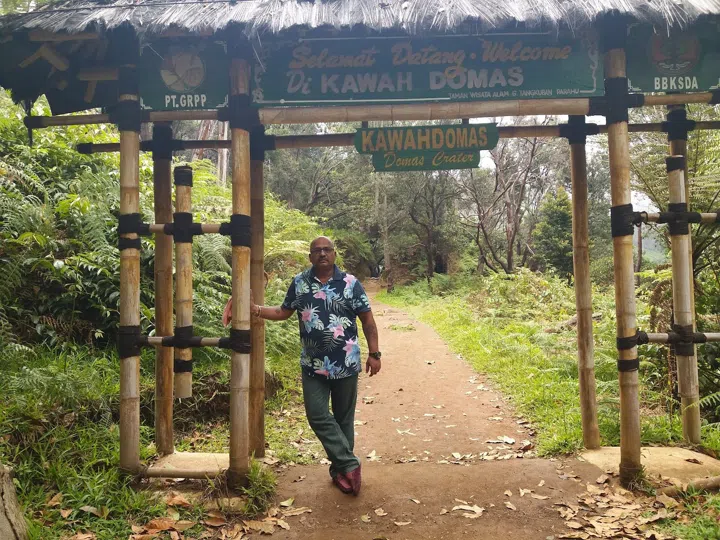
Kawah Domas is the half of the volcano most day trips leave out. A 1.2km forest trail drops to a bare ochre and grey hollow of bubbling mud pools and hissing vents, 30 to 40 minutes each way.
The field is guided only, one guide to between one and six guests, so a larger party splits into several guided groups. The guide is Rp100,000 for up to six people, and the field itself sits inside the park ticket you already hold. Eggs are lowered into the boiling water in bamboo baskets for a small extra charge, as is the sulphur mud spa, which leaves people smeared pale against the forest wall.
Wear shoes you don't mind ruining. Wear shorts if you want the mud.
Tea rows at Ciater
Kebun Teh Ciater (Ciater Tea Plantation & Tea Factory) lies at the foot of the volcano, waist-high bushes in tight green rows rolling over the Subang hillsides under the cone. A raised wooden walkway carries you out over the crop. PTPN runs the estate for visitors and takes tour groups daily, factory walk-throughs included, and the withering troughs stand inside the Dutch-era sheds.

Entry to the plantation area is Rp5,000. Tea walks and factory visits are priced separately, and cafe drinks are extra.
Asstro Highlands Ciater (Subang-Ciater road) is the easiest place to sit down inside the tea plantation. Timber restaurant decks and white dome glamping tents stand directly in the rows, with the Subang valley falling away and mountain ridgelines stacked behind. Restoran Nusantara Sunda seats groups, and if you are only eating you skip the attraction ticket.
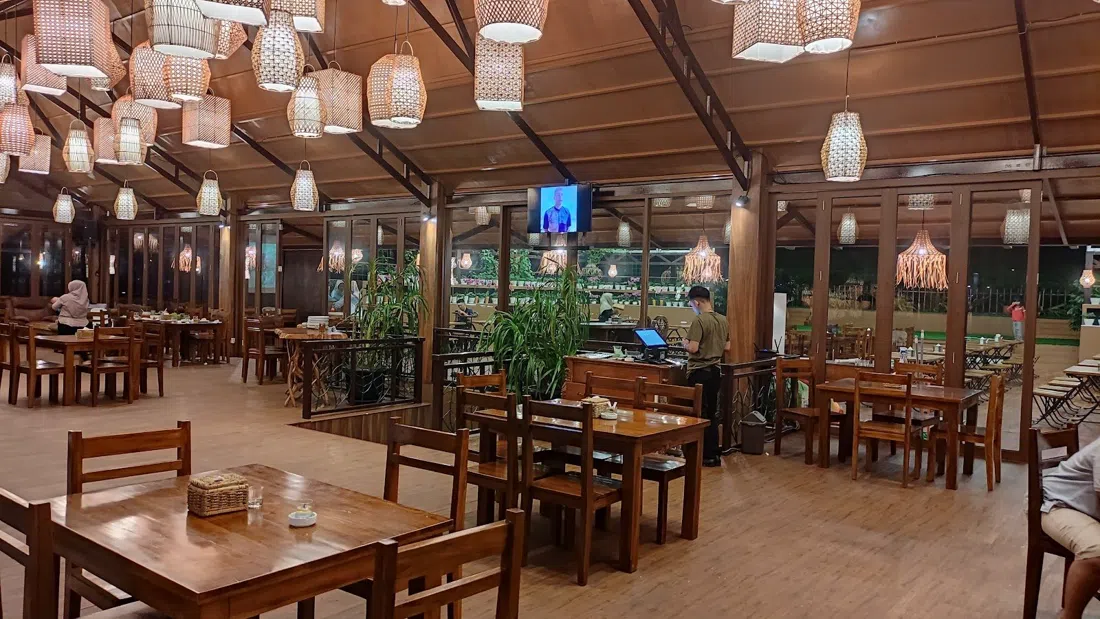
Entry for Indonesians is Rp20,000 on a weekday, Rp25,000 at the weekend. Foreign visitors pay Rp50,000, and meals are extra. The gate opens 07:00 to 19:00 daily. Coaches park on the road outside.
Hot water at Sari Ater and Maribaya
Sari Ater Hot Spring Resort (Ciater) is the classic hot-spring stop on the Tangkuban Parahu circuit. Mineral water runs steaming over dark volcanic rock into terraced soaking pools, with foot-bath channels alongside and mist drifting off the surface under the tree ferns. The water is volcanic and the setting is a busy recreation park with lockers and restaurants, built to take coach groups all day. It opens 08:00 to 22:00 most days.
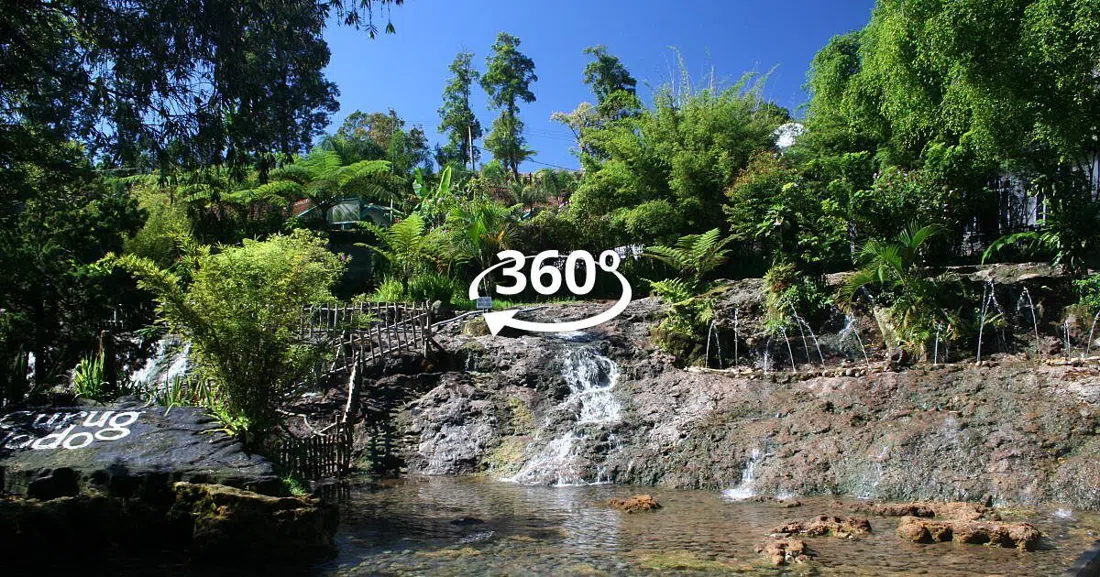
The park package is Rp50,000 to Rp55,000. A pool package is Rp90,000 to Rp95,000, and private tubs cost more.
Maribaya Natural Hot Spring Resort is the one to take when Sari Ater is packed. Tiled pools and wooden foot-spa benches sit in a steep forested gorge with a tall waterfall at the head of the valley and suspension-style bridges over the river, which means stairs, a lot of them. Entry is Rp35,000 to Rp45,000. The foot spa is Rp25,000 and the deluxe pool Rp35,000. A VIP pool or tub runs Rp90,000 to Rp115,000, and VIP pools are limited in number. Ask early if your group wants one.

Lunch over the paddies on Jalan Sersan Bajuri
Sapu Lidi Makan di Sawah (Jalan Sersan Bajuri) is where you eat out over the rice fields. Bamboo and thatch saung huts stand on stilts above flooded paddies and fish ponds, with duckboard paths between them and wooden art-gallery buildings at the edge. The large huts seat groups lesehan-style, on the floor. Service is slow by design.

Mains run Rp35,000 to Rp165,000. Set lunches start at Rp50,000 a head. Book ahead at weekends. Go at midday, because the paddies vanish after dark.
Kampung Daun Culture Gallery & Café is the better-known alternative, a wooded ravine of open-sided thatched huts terraced down beside a stream, lanterns strung through the bamboo and small waterfalls between the dining decks. The kitchen is strong on nasi liwet. Mains are Rp40,000 to Rp150,000, and some huts carry a minimum spend. It has taken group bookings since 1999 and opens 09:00 to 21:00.

Fruit at Pasar Panorama and La Fresa Farm
Pasar Panorama Lembang is the market behind the fruit-market line on these itineraries. Tarpaulin-shaded stalls hold highland strawberries, avocados and salak, weighed on hanging scales over narrow wet aisles. Produce sells by the kilo, and a bag of strawberries or avocados costs single-digit to low tens of thousands of rupiah.
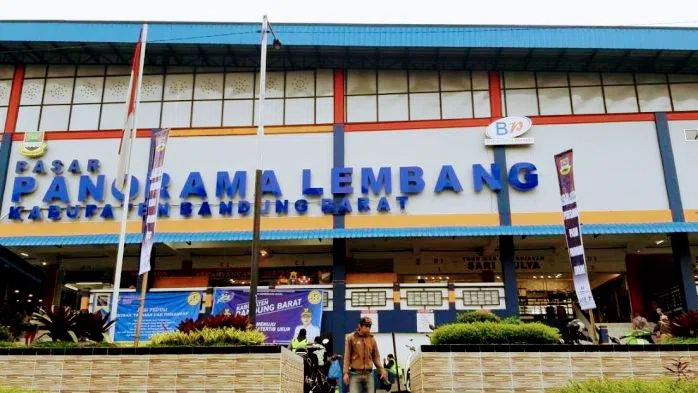
Go early. This is a working public market with no door policy, and the aisles are tight, so a big group should go in in twos and threes. The market was renovated and some traders moved to the newer Modern Market on Jalan Raya Lembang. Stalls shift about.
La Fresa Farm Lembang is the most reliable fruit-picking stop in Lembang. Long polytunnel greenhouses hold raised strawberry troughs at chest height, big pale Japanese berries on the vine, with the Jayagiri hills outside. Scissors and baskets are provided. The farm is set up for school and tour groups, with outbound activity space beside the picking.

Entry is Rp35,000, redeemable against a strawberry product. Berries are Rp25,000 per ounce, and you pay by weight for what you take home. The farm opens 08:00 to 17:00 daily.
Extra stops on the Lembang road
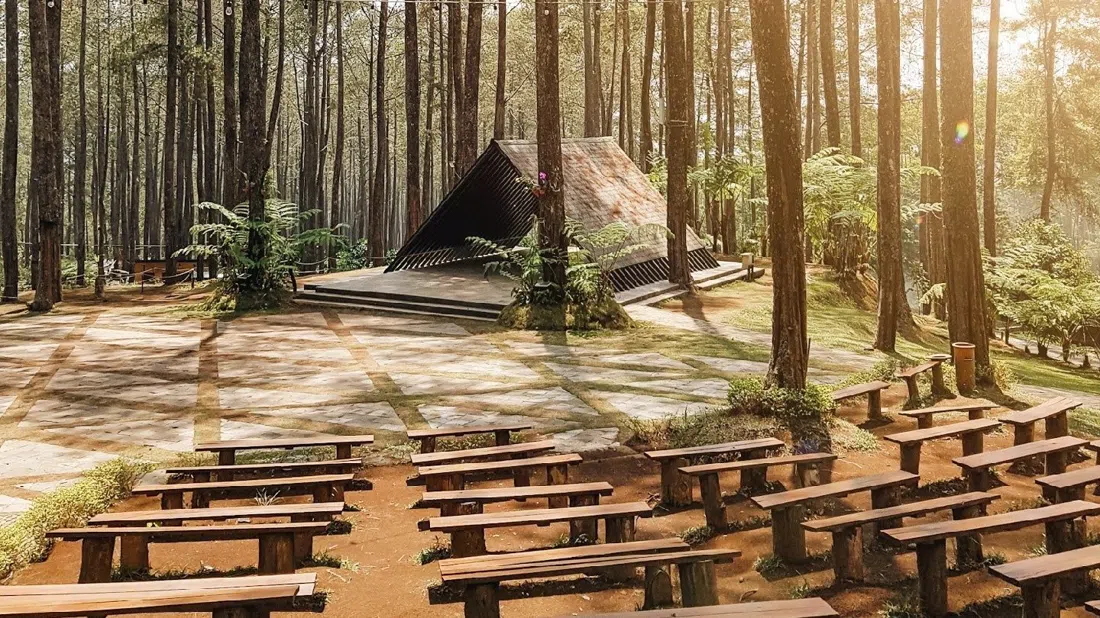
Orchid Forest Cikole (Lembang-Tangkuban road) sits directly on the road up to the crater, which makes it the cheapest extra to bolt on. Orchids are mounted on tall straight pine trunks, and a 125m rope-and-plank sky bridge hangs 23m up between the trees. The bridge is single file, and a group crosses in a stagger. Tickets are Rp50,000 to Rp55,000 on a weekday. Weekend entry is Rp60,000 to Rp70,000. All-access is Rp125,000 and the sky bridge Rp20,000 extra. The gate opens at 10:00, after you should already be at the volcano.
Farmhouse Lembang is five minutes from the Lembang junction, a mock-Alpine run of timber and stone buildings with a round-doored hobbit house built into a grass bank and deer and rabbit pens behind. It is a photo park. Entry is Rp35,000, swappable for a bottle of Lembang milk, and that swap is well liked. Weekends and holidays run Rp40,000 to Rp50,000. The hobbit slide is Rp25,000 and rented Dutch costumes Rp85,000 to Rp135,000. It opens 09:00 to 18:00, with coach parking and costume desks on site.

Floating Market Lembang still trades daily, wooden sampans moored along the lake edge serving food straight from the boats, swan pedal boats and a Japanese-style garden behind. You buy wooden tokens first, since the stalls take no cash. Entry is Rp40,000 as of October 2026. Boat rides are Rp25,000 to Rp35,000 per person, and a cruise is Rp100,000 to Rp200,000 per boat. Hours run 09:00 to 18:00 on weekdays and later at weekends.
Dusun Bambu Family Leisure Park is the most scenic place around Lembang to feed a large group, 15 hectares of terraced lawns and bamboo walkways above a small lake with paddle boats and Mount Burangrang behind. The giant woven-bamboo nest pods in the trees are the image people come for, and four themed restaurants absorb the volume. Entry is Rp25,000 on a weekday, Rp30,000 at the weekend. Peak days are Rp40,000. Activities are ticketed one at a time at Rp35,000 to Rp90,000. The grounds open 09:00 to 21:00 and the rides 10:00 to 17:30.

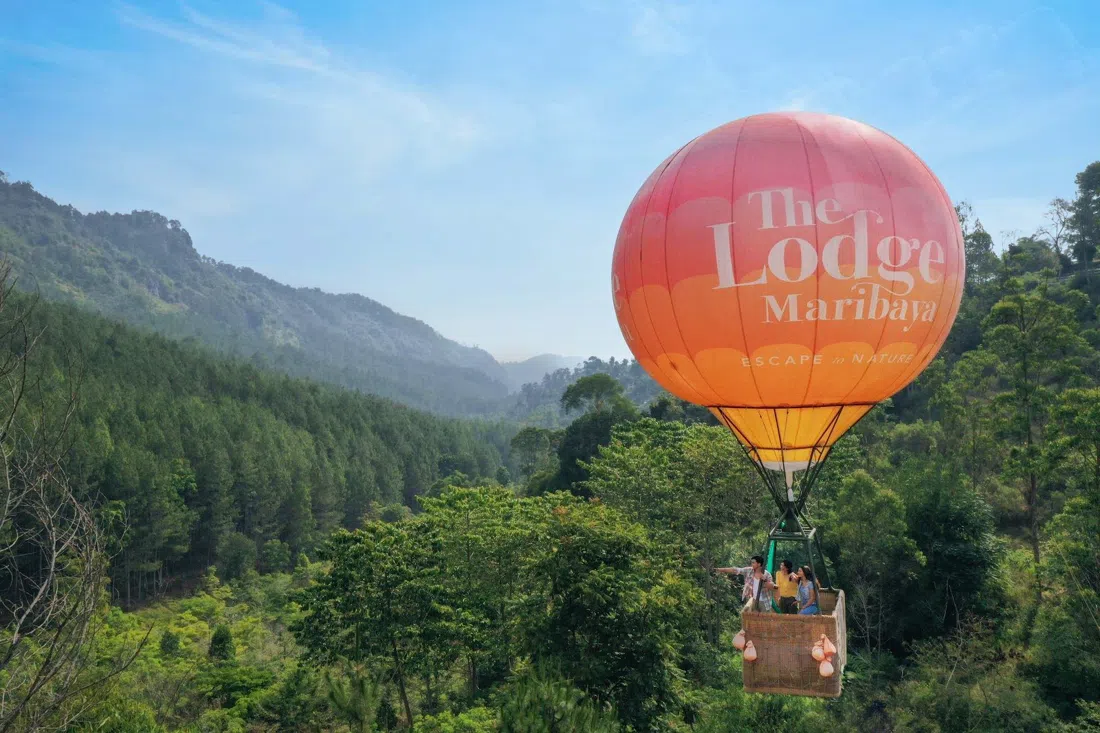
The Lodge Maribaya is the photo stop on the Maribaya side, a pine ridge with a swing and a hammock cantilevered out over the valley drop, a tethered hot-air-balloon basket and bamboo sky platforms in the mist. Entry is Rp65,000 basic, up to Rp145,000 to Rp165,000 for all-access. Individual rides are Rp11,000 to Rp35,000, and each one queues separately. The park opens 09:00 to 17:00. Come only if your group wants the rides, since an hour here is an hour off the volcano.
Museum Geologi Bandung on Jalan Diponegoro
Museum Geologi Bandung (Jalan Diponegoro) explains what you stood on at the rim. Four galleries cover Indonesian geology, hazards and the history of life, and mounted dinosaur and mammoth skeletons stand under the high ceiling of the 1928 colonial hall. Java Man hominid skulls and West Java volcano models sit in glass cases.

Entry is Rp3,000 general and Rp2,000 for students. Foreign visitors pay Rp10,000. The museum opens 09:00 to 15:00 Monday to Thursday and 09:00 to 14:00 at weekends, and closes on Fridays. Individuals scan a QR code at the door. A party of more than 20 must book a month ahead by WhatsApp.
Booking ahead and paying at the gate
Every stop on this route is bought when you arrive, and guided day trips out of Jakarta run seven days a week. Two things cannot be left to the gate: a weekend table at Sapu Lidi, and the museum if your party runs to more than 20 people. Several gates charge less on a weekday than at the weekend, and the weekend is also when the lunch venues fill.
Is a full day worth it
The crater and the Kawah Domas trail carry this day, and the tea rows, the hot pools and lunch fill the driving between them. It suits a traveller with one spare day who wants an active volcano without a dawn climb, and it asks for an early start and some patience with parks built around coach traffic.
Best time to go
Start at the rim, before the parks on the Lembang road open their gates. The crater is the one stop that can close on the day you arrive. Take it first.
If the fruit market matters to you, slot Pasar Panorama in ahead of the mountain, when the stalls are at their fullest. Keep Kawah Domas for late morning, when you have already seen the rim and can afford to get dirty. Hot water works last, and Sari Ater stays open into the night.
Pick a weekday. Weekend rates are higher at the crater gate, at Asstro Highlands and at Dusun Bambu, and a Friday rules the museum out altogether.
Before you set off
Check the volcano's status the morning you travel, because the rim can shut at short notice, and remember the museum is dark on Fridays. Book the weekend lunch table and any party of more than 20 in advance; the rest is paid as you arrive.
See the Jakarta guide and the Jakarta hotel search.
31 October 2026 · a first week before the flat: the Jakarta hotel directory