Krakow · Where to live · 8 min
Krakow's Salwator quarter from the river to the mound
Krakow's first garden city runs uphill from the Vistula boulevards to an 1820s earth mound, with a Norbertine convent, a wooden chapel and a much-loved Polish dining room on the way.
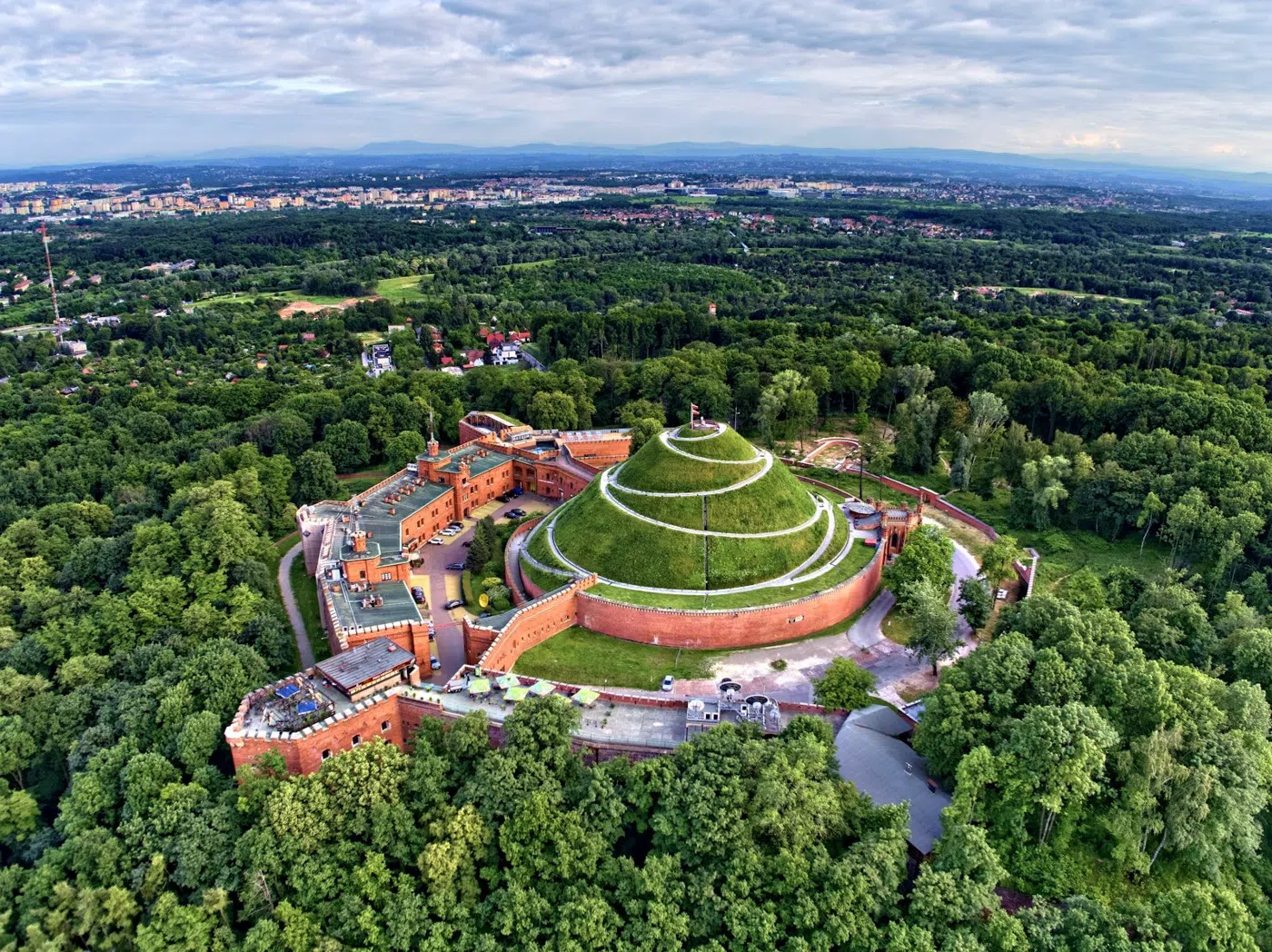
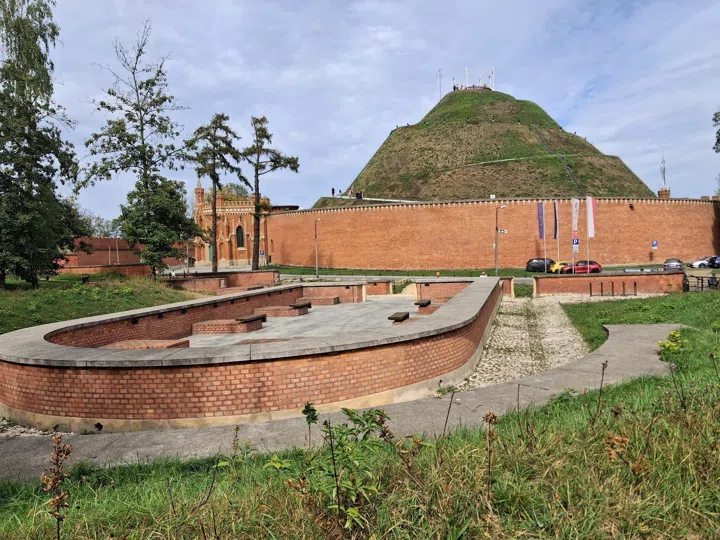
Kopiec Kościuszki is a 34-metre cone of earth, raised in the 1820s and later wrapped in an Austrian brick fort. Below it the whitewashed wall of a working Norbertine convent runs along ul. Kościuszki, facing the Vistula embankment. The tram loop at the bottom of the hill sits on the western corner of the city's common meadow.
The climb to Kopiec Kościuszki
Start at Kaplica bł. Bronisławy (on the approach road up the hill). The Austrians built it between 1856 and 1861 to replace a chapel their own fortifications had destroyed, and it now stands in the brick rampart it shares with the gateway to the mound. The stone is neo-Gothic, with pointed arched windows under a pinnacled gable. The interior is small enough that a look from the door covers it, which makes the chapel a good pause before the last of the climb.
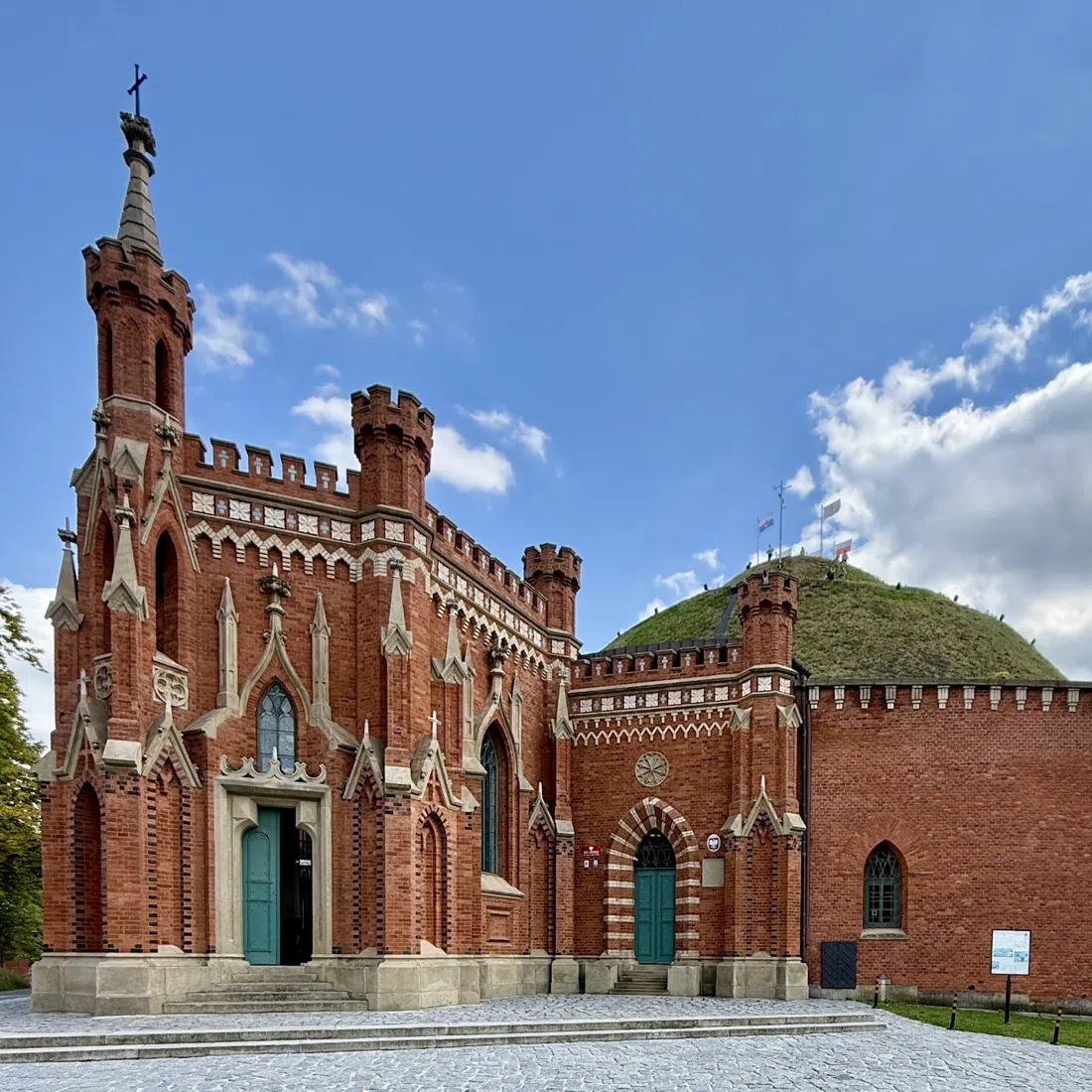
Kopiec Kościuszki (Fort 2, at the top of the hill) is what brings most people to Salwator. A spiral gravel ramp winds up the grassy cone to a stone summit plaque, and the red-brick casemates of the 19th-century fort ring its base. From the top the Vistula valley opens out and the Tatra ridge shows along the horizon, the best free-standing panorama in Kraków. Adult entry is 34 zł, reduced 26 zł, and the ticket covers Fort 2 and the Kościuszko Museum. In the low season the site opens daily 9:00 to 15:30, and last entry falls well before dusk, so the mound is a morning job rather than an evening one. Guided group tours run Monday to Friday and must be booked by email in advance, at 25 zł a head for 10 or more.

Restauracja Pod Kopcem (inside the fort at the mound's foot) is the one sit-down meal up here, served in the vaulted brick casemates. The separate Panorama Cafe upstairs puts cakes, coffee and cold beer on a terrace above the ramparts, looking over forest to the whole city and, on clear days, to the Tatras. The cafe runs seasonally, spring to early autumn, and closes at dusk. Walk-in dining downstairs is fine; book at weekends. Prices are zł zł zł.
The churches below the hill
Klasztor i kościół Norbertanek (ul. Kościuszki, opposite the embankment) is Kraków's largest sacral complex and the oldest Norbertine house in Poland, founded in the 1160s. The long convent wall reads as a fortress from the pavement, and behind the gated courtyard a squat square bell tower stands over a Romanesque stone portal. The house is enclosed and still working. The church is open to all for quiet visits outside Mass times, with no commentary indoors. Each June the Lajkonik hobby-horse procession sets out from here. Entry is free.

Kościół Najświętszego Salwatora (on the hillside terrace above the convent) gave the whole quarter its name. The single nave dates from the 12th century, the masonry outside is Romanesque, and the 16th-century wall paintings and the Baroque altar are both still in place. A small walled graveyard of nuns' tombstones rings it under old trees. Access is unreliable outside service hours, so time your visit around Mass if you want to be inside rather than on the terrace. It costs nothing.

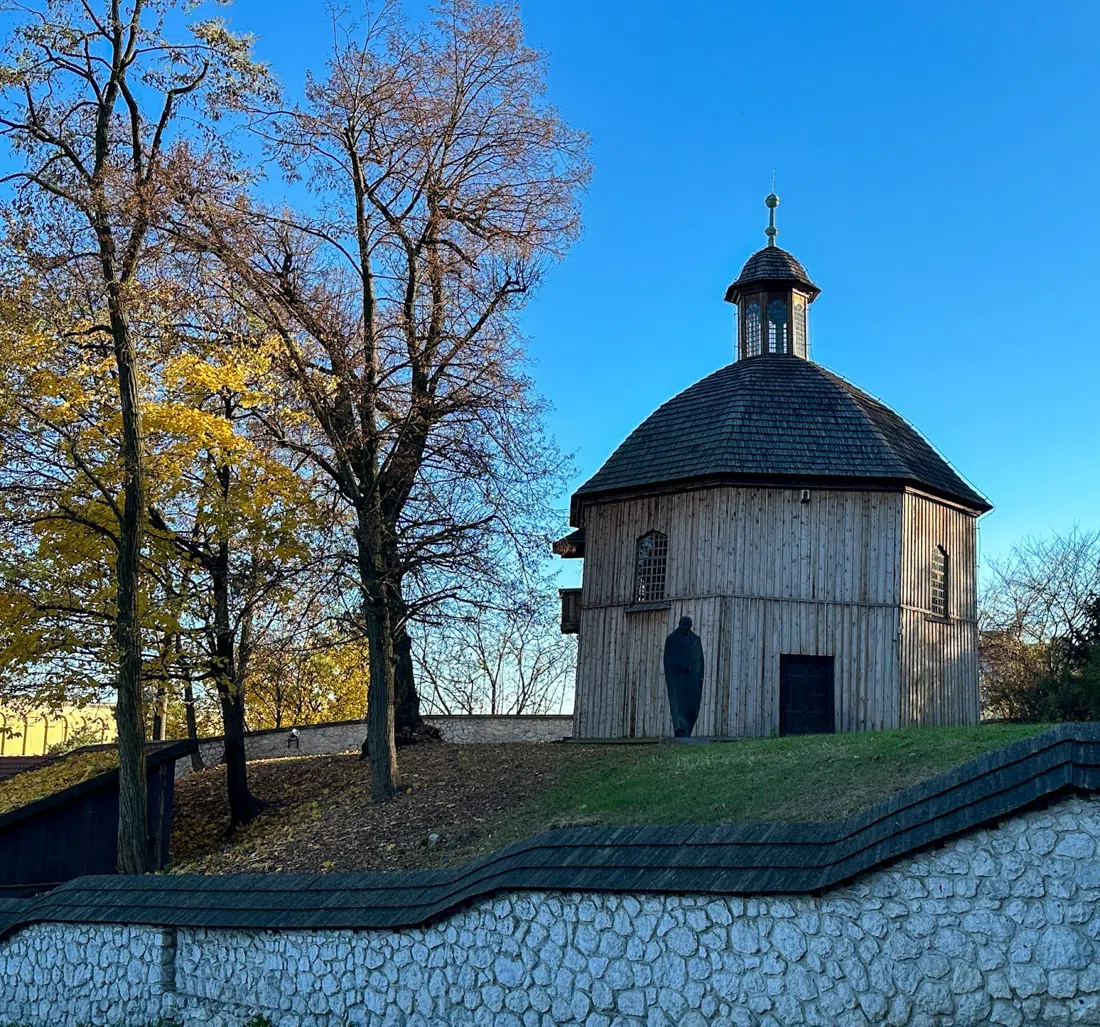
Kaplica św. Małgorzaty i św. Judyty (on the grassy slope under the lime trees) is an octagonal timber gontyna from the late 17th century, clad in vertical dark boards and crowned with a shingled dome and a lantern cupola. It stands on the Wooden Architecture Route and reopened after a restoration that ran for several years. Visits are free and guided, and the room takes a handful of people at a time. Opening is May to the end of September, Thursday to Saturday 9:00 to 18:00 and Sunday 12:00 to 17:00. Outside those months you see the boards and the dome from the grass and no more.
Cmentarz Salwatorski
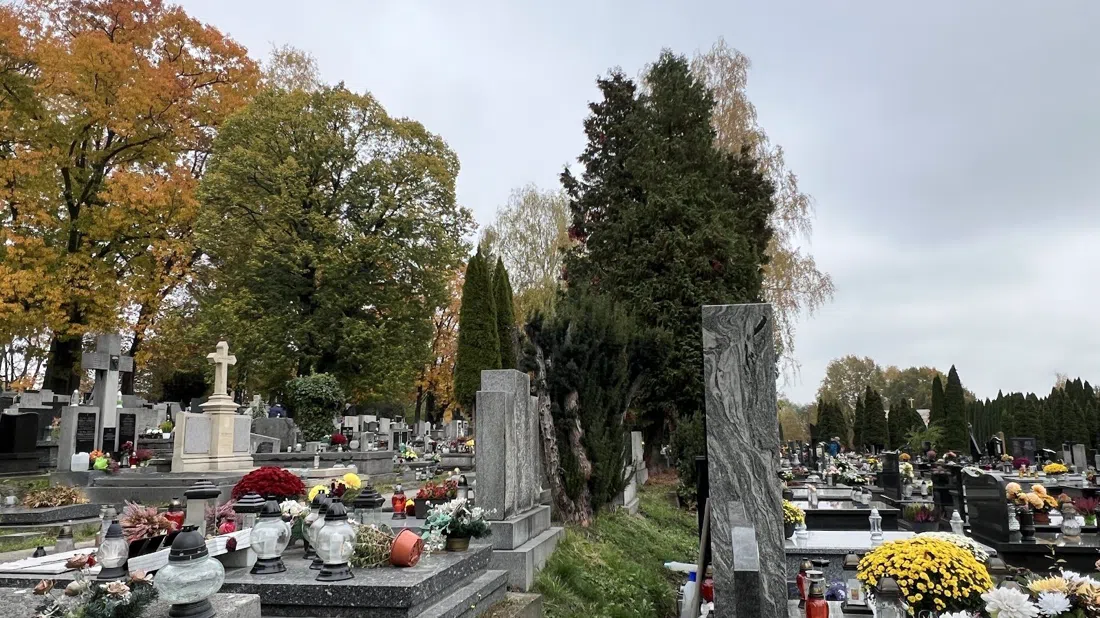
Cmentarz Salwatorski (on the slope below the mound) is the most beautiful of Kraków's necropolises, and the sculpture is the reason: carved stone angels and modernist work rising in terraces, with a bronze Archangel Michael standing before the chapel. Stanisław Lem, Andrzej Wajda and the sculptor Bronisław Chromy are buried here. The slope doubles as a viewpoint, and over the wall you get city rooftops with distant mountains behind them. No ticket is needed. Local guides run themed walks through the terraces, and voices carry here, so keep yours down.
The garden city streets
The Salwator villa quarter (ul. Gontyna and ul. św. Bronisławy) came out of a competition held in 1910 and was Kraków's first garden city. Around thirty interwar villas behind clipped hedges still set the character of the place, on steep, quiet lanes under trees. White render, deep eaves and loggias repeat down the slope, and one façade carries a large wild-haired Medusa bust in relief. The half-hour loop between the chapel, the churches and the cemetery is the best of Salwator and asks nothing of you but the walk. These are residential streets with no gates and no tickets, and people are at home behind the hedges.

The river and Błonia
Bulwar Rodła (the left bank, from the Rudawa confluence towards Dębnicki Bridge) is the Salwator stretch of the Vistula boulevards. The embankment is broad stepped stone, the path above it asphalt and lined with poplars, and rowing-club boathouses and moored pontoons sit along the water with swans among them. The EuroVelo 4 riverside cycle route uses the same path, so keep to one side. Wawel Castle is a 20-minute walk downstream on this bank. Seasonal sightseeing boats and the water tram call at the Salwator landing by ul. Flisacka, which gives you a way back into the centre without the walk.

Błonia (at the Salwator tram loop) begins where the tram turns. Cattle grazed these 48 hectares into the 20th century; the grass is now mown and unbroken, treeless in the middle, with a ring path of lamp-posts and benches and the city blocks on the skyline beyond. Kraków runs, flies kites and holds its mass events out here. Crossing it on foot is the natural way to walk into the quarter from the centre, and it is free and open at any hour.
Eating and drinking
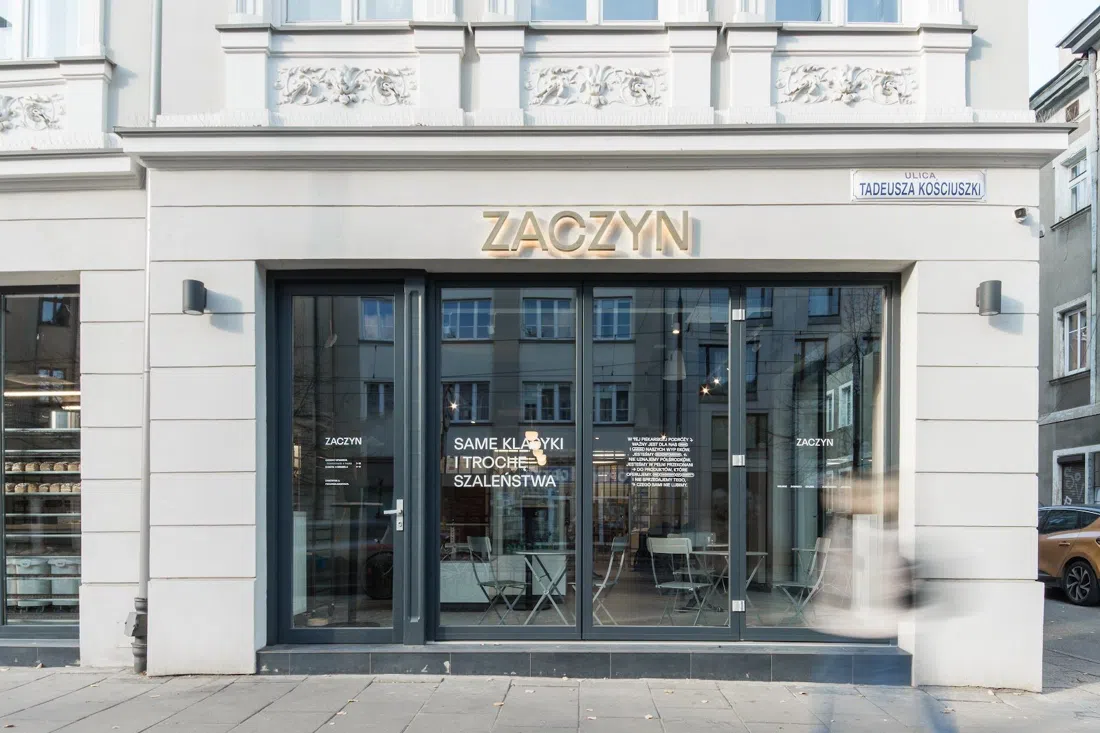
Zaczyn (Salwator) mills its flour on the premises and ferments the dough long, and the shelves carry dark sourdough boules by opening. The short counter runs to hummus and nut-butter toasts, and the menu is entirely plant-based. Seating is limited, so the sensible move is a loaf and something to put on it for the climb. Open Monday to Friday 7:00 to 18:00, weekends 9:00 to 17:00. Prices are zł.
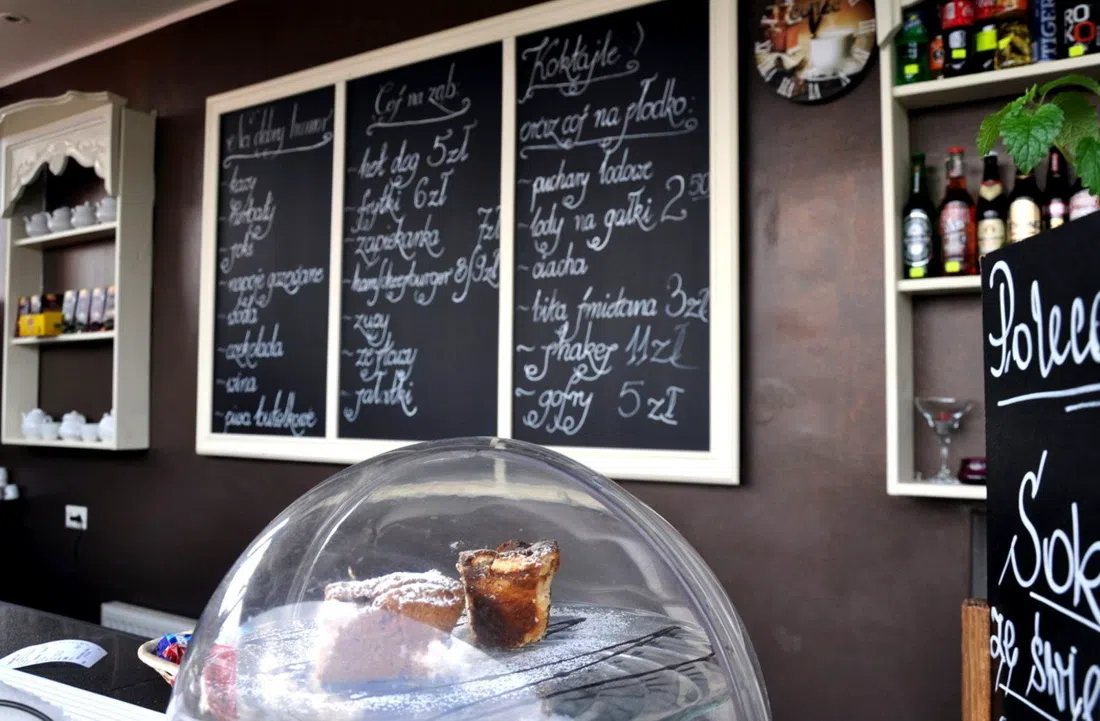
Salvator Espresso Bar (ul. Kościuszki 23) is the quarter's serious coffee stop: batch brew in flasks on the counter, hand brews, espresso tonic, homemade cakes under glass and retail bags of beans on the shelf behind the machine. The room is tiny, and more than four of you will be standing on the pavement. It is pet-friendly, dogs sit under the tables, and it keeps a children's corner. Open daily until 18:00. Prices are zł.
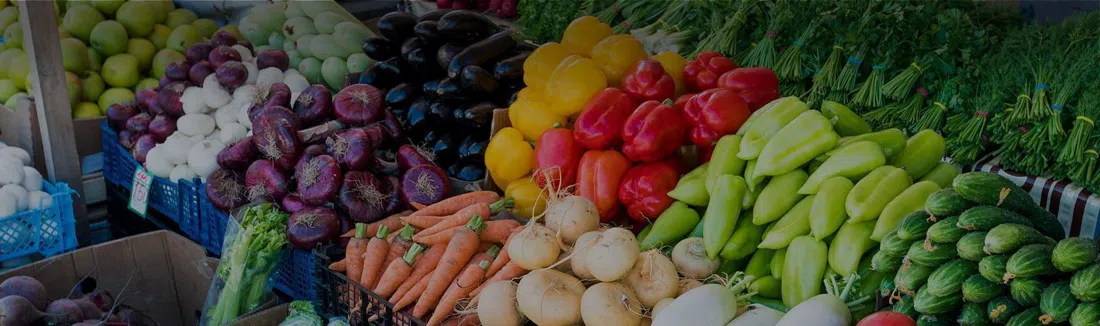
Plac na Stawach (the market square, apartment blocks closing in on all sides) is the neighbourhood's own produce market and the cheapest good eating in Salwator. Green-roofed metal stalls hold crates of fruit, barrels of pickles, farm cheeses and cut flowers. Buy smoked cheese, sourdough and seasonal fruit for the walk up the hill. Trading is Monday to Friday 6:00 to 20:00 and Saturday 6:00 to 18:00, closed Sunday. The aisles are narrow when it is busy.
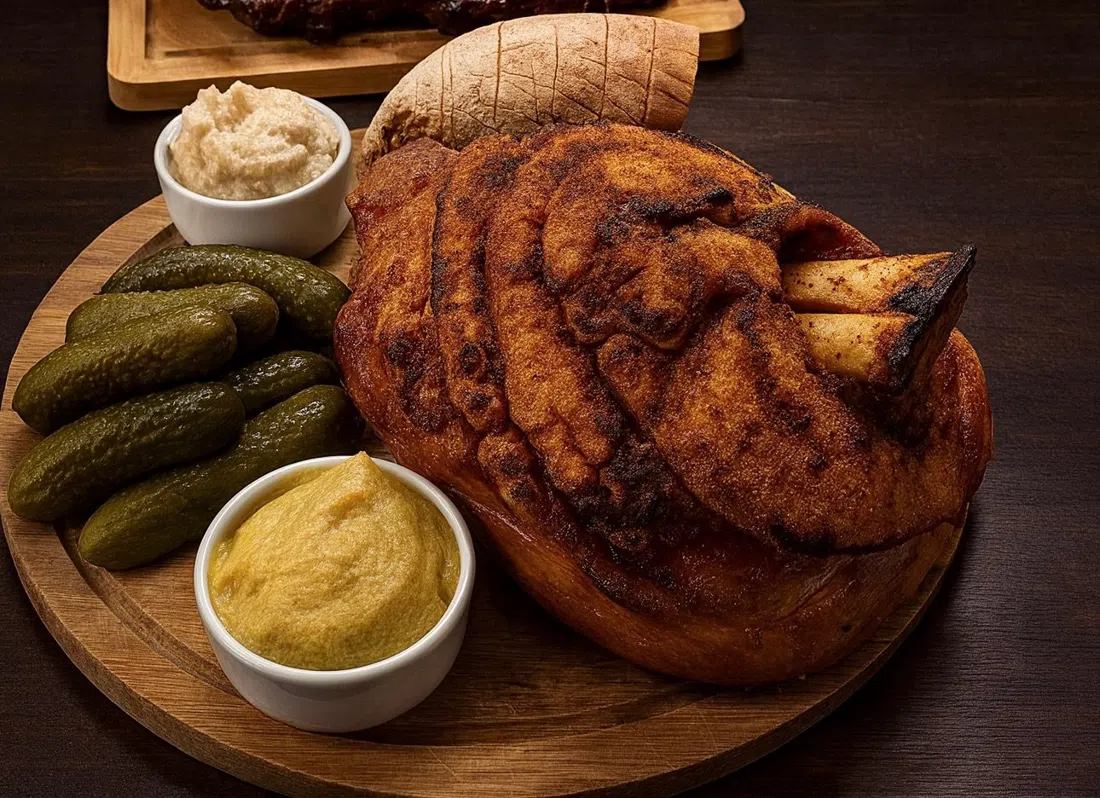
Golonkarnia Bar & Restauracja (a short walk east along ul. Kościuszki) is built around a wood-fired brick oven, and whole glazed pork knuckles come out of it on boards with sauerkraut and caraway. The wood-oven golonka is the whole reason to come, and it is done properly. This is the quarter's best-loved traditional Polish table, heavy timber benches and platters sized for sharing. Book a table; it fills. Open Tuesday to Saturday 12:30 to 21:30. Prices are zł zł.
Zamęt (ul. Stachowicza, near the market square) opened in mid-2026 in the former Astrid space, and Tomasz Tracz cooks seasonal food there, built around the produce, after twenty years in restaurant kitchens abroad. The room is small and pared back, bare wood tables along an open kitchen pass, with fresh truffles shaved at the table. This is the most ambitious food in Salwator. Reserve by phone or through MojStolik. It closes Tuesday and Wednesday. Prices are zł zł zł zł.
Where to stay
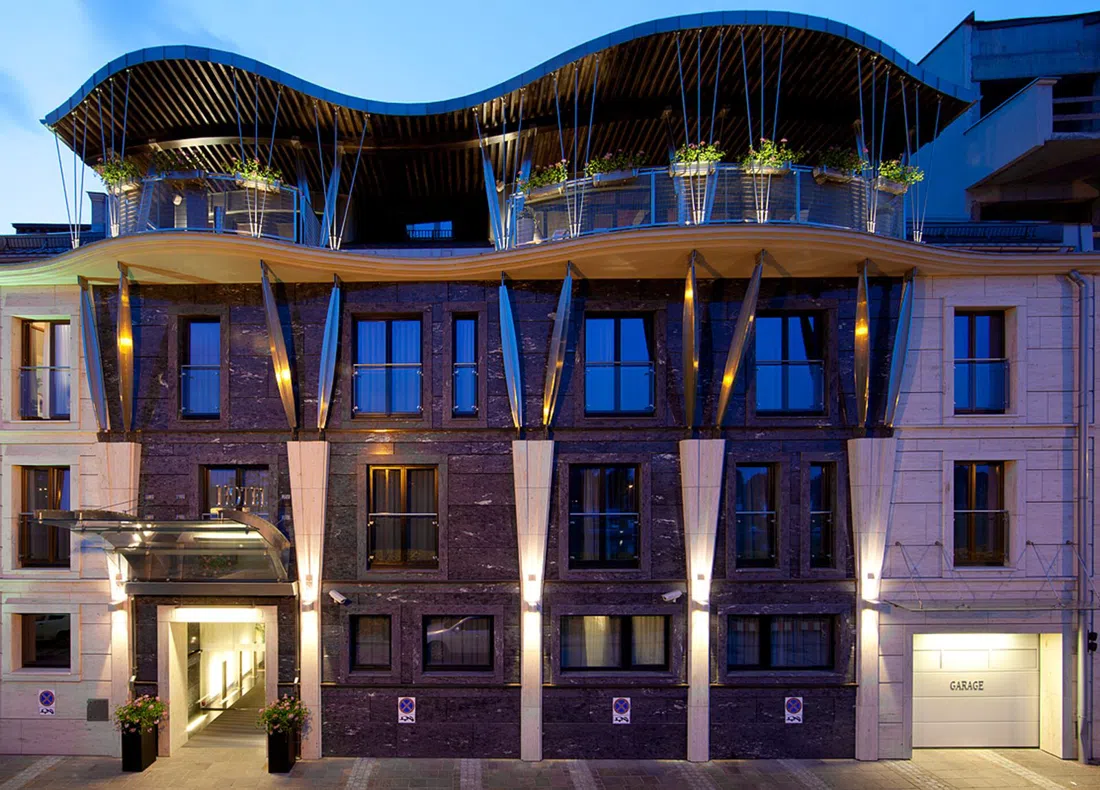
Niebieski Art Hotel & Spa (ul. Flisacka, directly on the Vistula bank) puts you in Salwator itself. The four-storey building holds 37 rooms and two apartments, with river-facing rooms and balconies looking across the water, art hung through the interiors and a basement spa with a sauna and a steam room, which earns its place after the hill walk. Tram 2 from the main station stops opposite at Flisacka.
Practical notes
Plac na Stawach closes on Sunday, Zamęt on Tuesday and Wednesday, and Golonkarnia opens Tuesday to Saturday; the wooden chapel and the Panorama Cafe are both seasonal. Book Golonkarnia and a weekend table at Pod Kopcem, reserve Zamęt by phone or MojStolik, and email in advance for a guided group tour of the mound.
See the Krakow guide and the Krakow hotel search.
7 November 2026 · a first week before the flat: the Krakow hotel directory