Los Angeles · Where to live · 7 min
Downtown Los Angeles (DTLA): The Neighbourhood That Reads Like Several Cities Stitched Together
From the 1917 arcades of Grand Central Market to Frank Gehry's steel curves on Bunker Hill, DTLA is where Los Angeles keeps its history, its art and its best rooftop views.
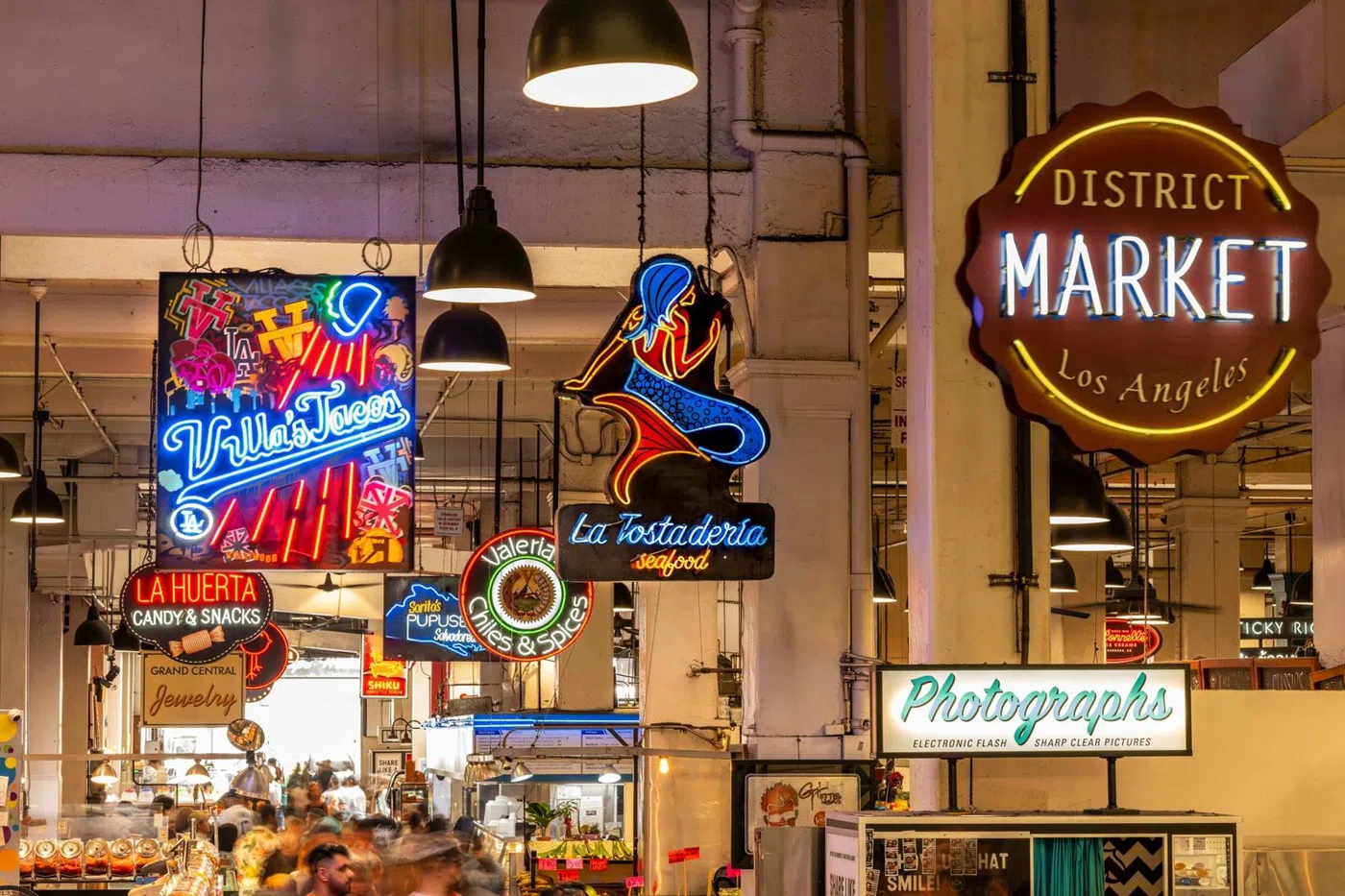
At 317 S Broadway, Grand Central Market has been feeding this city since 1917, and it's still the fastest way to read the neighbourhood: office workers, gallery-hoppers and out-of-towners queuing shoulder to shoulder under one terracotta-tiled arcade, plates balanced on forearms, no two orders alike. A few steps away, the 1901 Angels Flight funicular still hauls riders up Bunker Hill for $1.50 a trip, a century-old shortcut between two versions of the same city. Downtown Los Angeles isn't one neighbourhood so much as several, stitched together by a Metro line and a shared zip code. Bunker Hill is glass-tower quiet, a renewal-era grid of law firms and concert halls that goes largely dead by 7pm on weekdays. Drop down Angels Flight or Hill Street, though, and the temperature changes — the Historic Core's cast-iron facades, the Arts District's loading docks turned tasting menus, Little Tokyo's plaza restaurants booked out by email. This is a feature about all of them.
What Downtown LA is known for
DTLA is where Los Angeles keeps its architecture and its history, which is a strange thing to say about a city famous for having neither. Frank Gehry's stainless-steel Walt Disney Concert Hall, home to the LA Philharmonic, anchors Bunker Hill alongside The Broad, the contemporary art museum built by Eli and Edythe Broad. General admission is free, but reserve ahead — same-day tickets go fast.

The two buildings face each other across a plaza that sums up the neighbourhood's split personality: monumental civic architecture standing over streets that were, within living memory, written off entirely. That tension — grandeur and grit within the same three blocks — is the thing every DTLA visitor ends up talking about, whether they came for the art or the food.
Where to eat and drink
Grand Central Market is still the easiest entry point into DTLA's food scene, a 40-plus-vendor hall that's operated continuously since 1917. Go for Eggslut's egg sandwiches, the al pastor at Tacos Tumbras a Tomas, or a pastrami sandwich at Wexler's Deli, and expect it to be genuinely packed by 12:30.
Serious diners now point east, to the Arts District, where Ori Menashe and Genevieve Gergis have built a small empire out of former warehouse space. Bavel does Middle Eastern mezze — the duck 'nduja hummus is the dish people bring up unprompted — while their earlier restaurant, Bestia, still pulls crowds for wood-fired pizza and hand-cut pasta on the same stretch of industrial street.
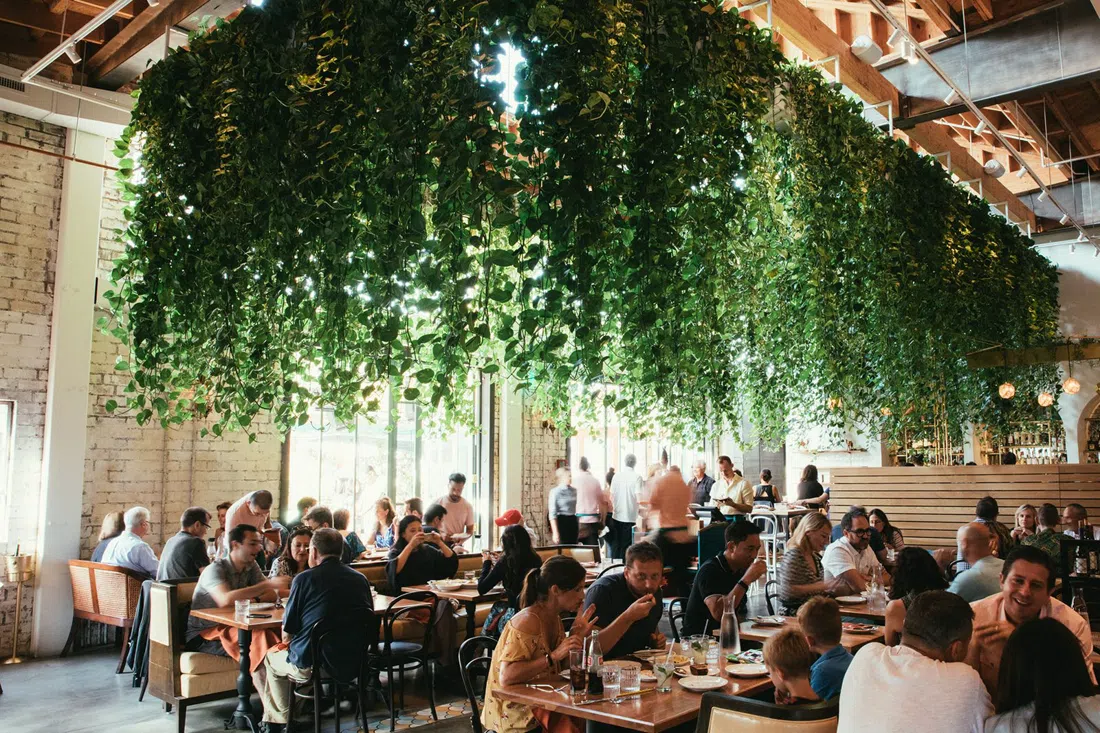
For something faster and cheaper, Sonoratown turns out Sonoran-style tacos on flour tortillas made to order — no reservation, no ceremony, just a short line and a quick turnaround. Up on Bunker Hill, José Andrés' San Laurel sits on the 10th floor of the Conrad hotel, its dining room angled toward Walt Disney Concert Hall so the view does some of the work the menu doesn't need to. And in Little Tokyo's Honda Plaza, Kinjiro runs two nightly seatings, reservation-only and booked by email rather than an app — an izakaya that rewards people willing to plan a night around it rather than wander into it.
Nightlife
DTLA's after-dark identity is written in rooftops, and Perch has been the benchmark for over a decade. It occupies two floors of a Financial District tower — a French bistro and bar on 15, an open-air terrace on 16 — and on a clear night the terrace is still the best argument for staying out past dinner.
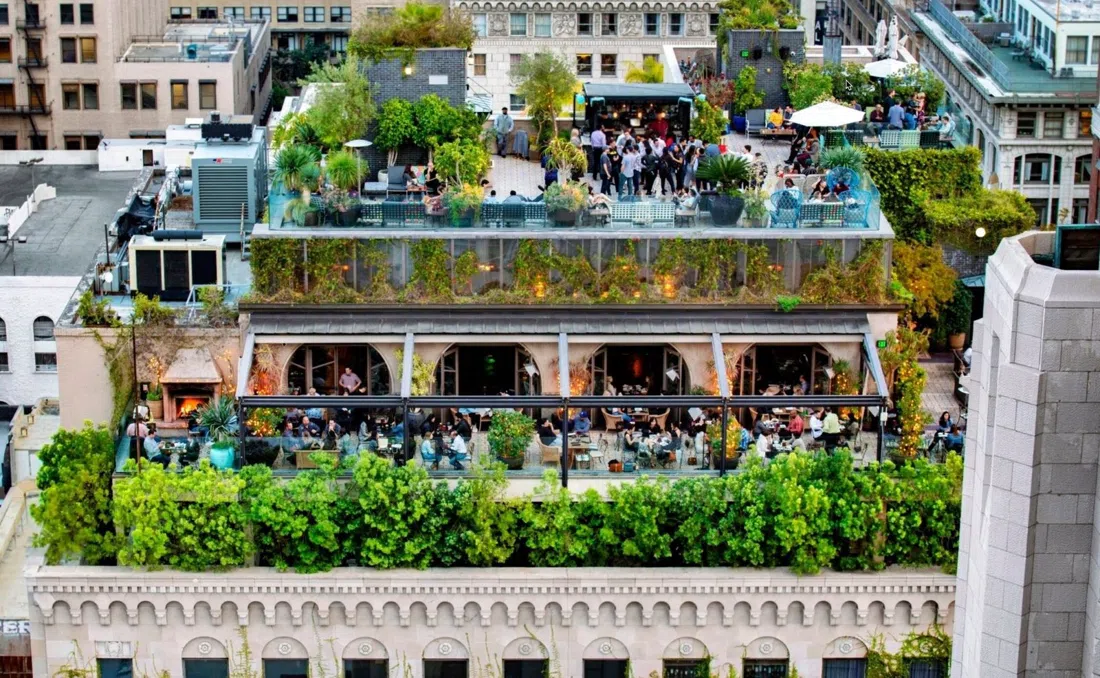
Spire 73, on the 73rd floor of the InterContinental, goes further up and claims the title of highest open-air bar in the Western Hemisphere, which is the kind of statistic that's more fun to experience than to fact-check from the ground. Level 8, atop the Moxy on Spring Street, takes a different approach entirely — eight distinct concepts spread across one rooftop, so the crowd shifts depending on which corner you're standing in. None of these are quiet places, and that's rather the point: DTLA's nightlife scene is built around altitude and skyline, not hushed conversation.
Things to do
The Broad and MOCA Grand Avenue sit across the plaza from each other on Bunker Hill, and both offer free general admission. The Broad holds two of Yayoi Kusama's Infinity Mirror Rooms, which is reason enough that timed tickets should be booked well before you land — same-day slots disappear.
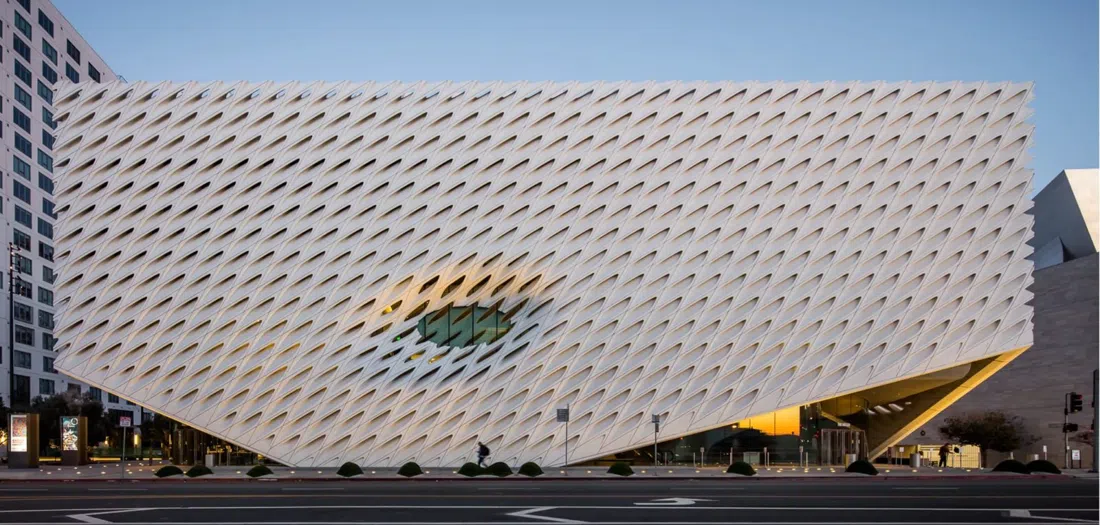
MOCA Grand Avenue runs its own free timed-entry system next door, a smaller, quieter counterpart worth the walk across the plaza. Walt Disney Concert Hall is worth circling on foot even without a ticket to a performance — the curves catch the light differently depending on the hour, and there's no charge for looking.
For something older, the Bradbury Building on Broadway dates to 1893, its wrought-iron atrium free to view from the lobby and instantly familiar to anyone who's seen Blade Runner — this was the Tyrell Corporation set. And Angels Flight itself, that $1.50 funicular linking Bunker Hill to the Historic Core, is less a mode of transport than a piece of the city's own mythology, in continuous on-and-off operation since 1901.

Shopping
Shopping in DTLA centres on ROW DTLA, a former produce-and-cold-storage complex in the Arts District reborn as a campus of roughly 100 independent stores and studios.
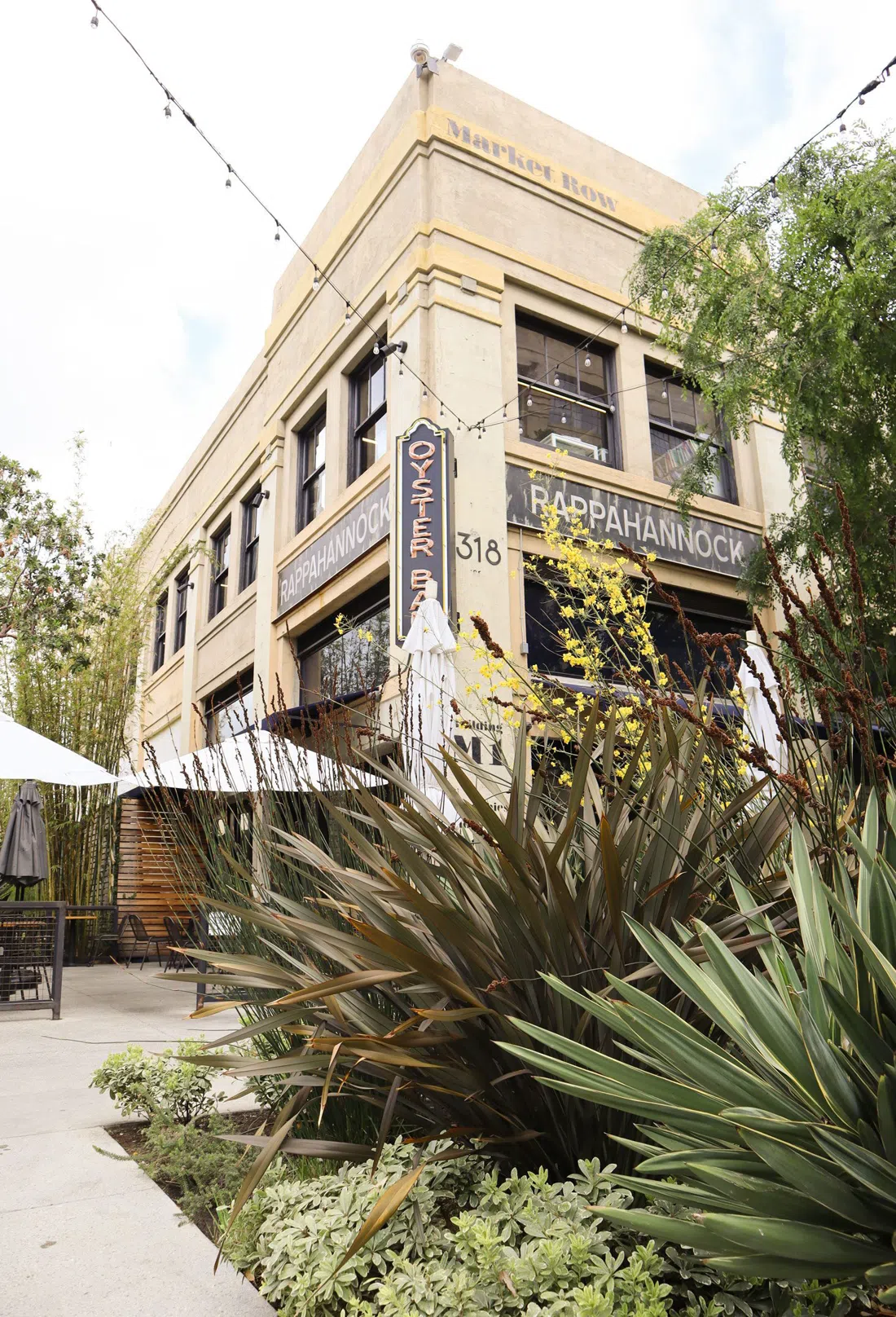
Poketo stocks colourful, design-led stationery and homewares that reward a slow browse; Shinola sells watches built with the same unhurried confidence; and Hennessey + Ingalls, alongside the ARTBOOK outpost nearby, covers architecture and art books for anyone who's just spent an afternoon at The Broad and wants to take some of that home. It's a different rhythm from Grand Central Market's shoulder-to-shoulder pace — ROW DTLA rewards wandering rather than queuing, and a couple of hours here slots naturally after an Arts District lunch at Bavel or Bestia.
Where to stay in Downtown Los Angeles (DTLA)
Bunker Hill and the Grand Avenue corridor suit museum- and concert-focused trips — walking distance to The Broad, MOCA and Walt Disney Concert Hall, quiet once the offices empty out, and close enough to Angels Flight to make the walk down to Grand Central Market for breakfast an easy habit. The Historic Core and Broadway corridor put you closer to that market crowd and the cast-iron architecture, with a livelier, less buttoned-up feel after dark. Wherever you land, budgets skew mid-to-upper here: Grand Central Market lunches and taco stands like Sonoratown run cheap, but the Arts District tasting-menu scene and the design-forward hotel stock push the average spend up — expect to pay more for a comparable room here than in Koreatown.
Getting around
DTLA is the hub of the entire Metro Rail network, which makes it one of the only LA neighbourhoods genuinely workable without a car. Union Station — also LA's Amtrak and Metrolink terminal — is the northern terminus of the B (Red) and D (Purple) subway lines, and it's a working piece of civic architecture in its own right, not just a transfer point. A few blocks south, 7th Street/Metro Center knits together several more lines, meaning a visitor based on Bunker Hill can reach the Arts District, Little Tokyo or L.A. Live without ever looking for parking. Getting into DTLA from LAX takes a similar path: the LAX FlyAway bus runs direct to Union Station in 30 to 50 minutes depending on traffic, or you can take Metro's free shuttle to the K Line and transfer onto rail from there — slower, but considerably cheaper. Once you're here, walking covers most of it; the neighbourhood's real geography is measured in the ten or fifteen minutes between Bunker Hill and the Historic Core, not in freeway exits.
What all of this adds up to is a Downtown built for people who want their LA trip organised around museums, food and a skyline rather than sand. It rewards a walking pace and a bit of pre-planning — book The Broad, email Kinjiro, check the FlyAway schedule — and it punishes the assumption that Los Angeles has no centre at all. Spend three days moving between Grand Central Market, Bunker Hill's plazas and the Arts District's warehouses, and DTLA stops feeling like several neighbourhoods and starts feeling like one, just a large and unevenly lit one.
8 August 2026 · a first week before the flat: the Los Angeles hotel directory