Los Angeles · Where to live · 7 min
Santa Monica, Los Angeles: The Beach Town With a Michelin Star
A street-by-street guide to LA's most walkable beach neighbourhood, from the 1909 Pier to Dave Beran's Michelin-starred tasting menu on Main Street.
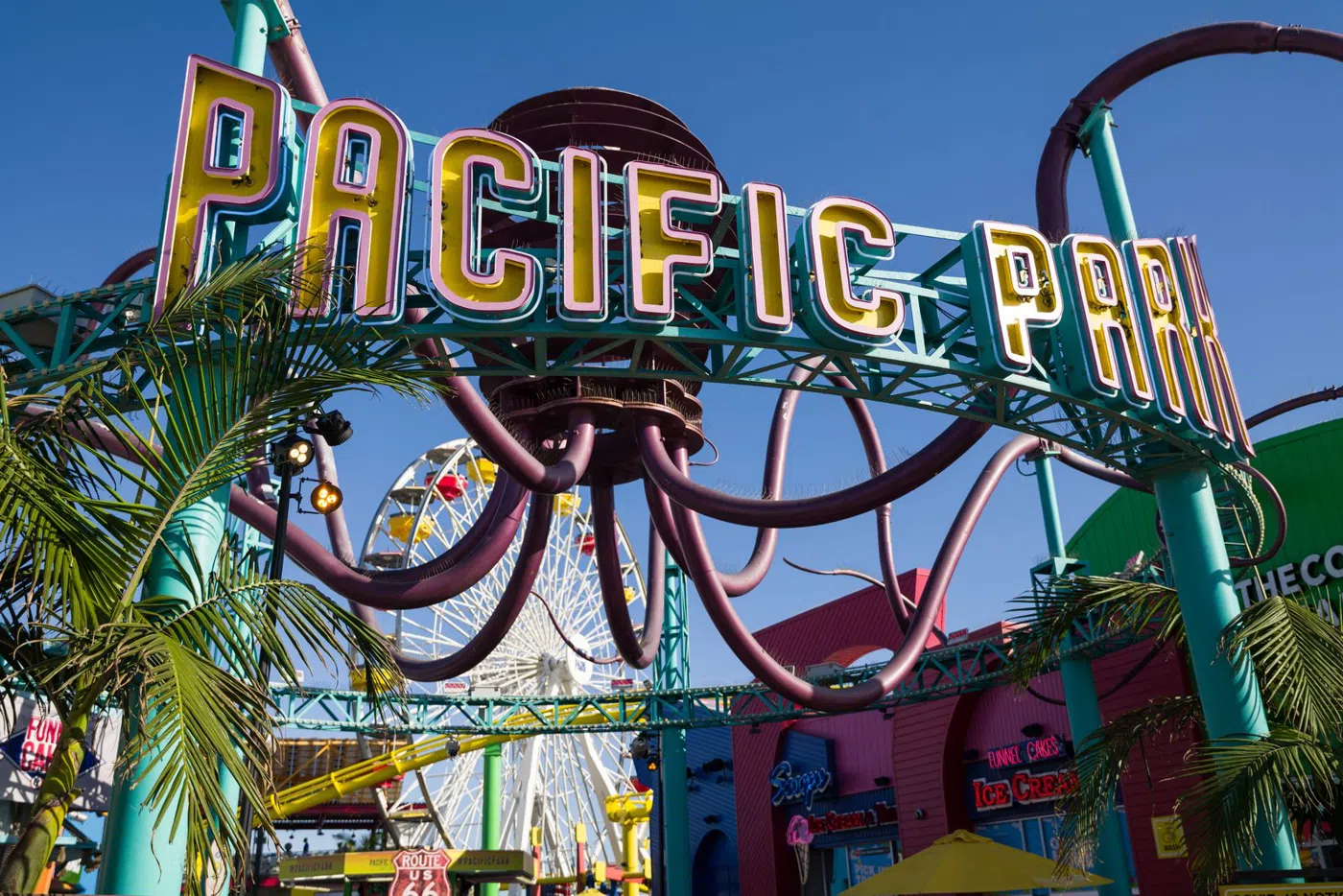
The Santa Monica Pier has stood at the foot of Colorado Avenue since 1909, and on a clear afternoon you can watch three generations of the same family ride the solar-powered Ferris wheel at Pacific Park while, a few decks below, a kid presses a flashlight into a touch tank at the Heal the Bay Aquarium. That contrast is Santa Monica in one frame: a beach town built for postcards, sitting a few blocks from a downtown grid where a Michelin star and a $16 submarine sandwich exist on the same street. It's the neighbourhood most first-time Los Angeles visitors picture before they've even landed, and for once, the picture mostly holds up.
What Santa Monica is known for
Everything here still radiates out from one wooden structure. The Pier opened in 1909 and remains one of the last old-style amusement piers standing on the California coast — not a recreation, not a mall dressed up as a boardwalk, but the real, weathered thing, planks and all. Pacific Park sits at its far end, a genuine amusement park built out over open water, its Ferris wheel and roller coaster both running on solar power — the kind of detail that only registers once you've stood underneath and noticed how quiet the machinery is against the surf. Tucked below the boards is the Heal the Bay Aquarium, free to enter and small enough to cover in twenty minutes, with touch tanks and octopi pulled from the water just offshore.
Beyond the Pier, Santa Monica reads as two neighbourhoods stitched together at the beach. Downtown, around the Pier and Third Street Promenade, is polished and touristy — chain stores, street performers, palm trees strung with lights, and, in the last couple of years, a visible homelessness and safety debate the city hasn't fully resolved. Head north toward Montana Avenue or south down Main Street and the temperature drops: fewer performers, more strollers, restaurants that locals actually book on a Tuesday night.
Where to eat and drink in Santa Monica
Santa Monica's dining scene punches well above a beach town's weight, largely because a handful of serious chefs picked it as home base rather than commuting in from Downtown or the Eastside. The clearest evidence is Seline, chef Dave Beran's tasting-menu restaurant on Main Street, which opened in December 2024 and by mid-2026 had already picked up both a Michelin star and a James Beard Award — a fast, unusual trajectory for a restaurant barely out of its first year, and reason enough on its own to plan a trip around a table.
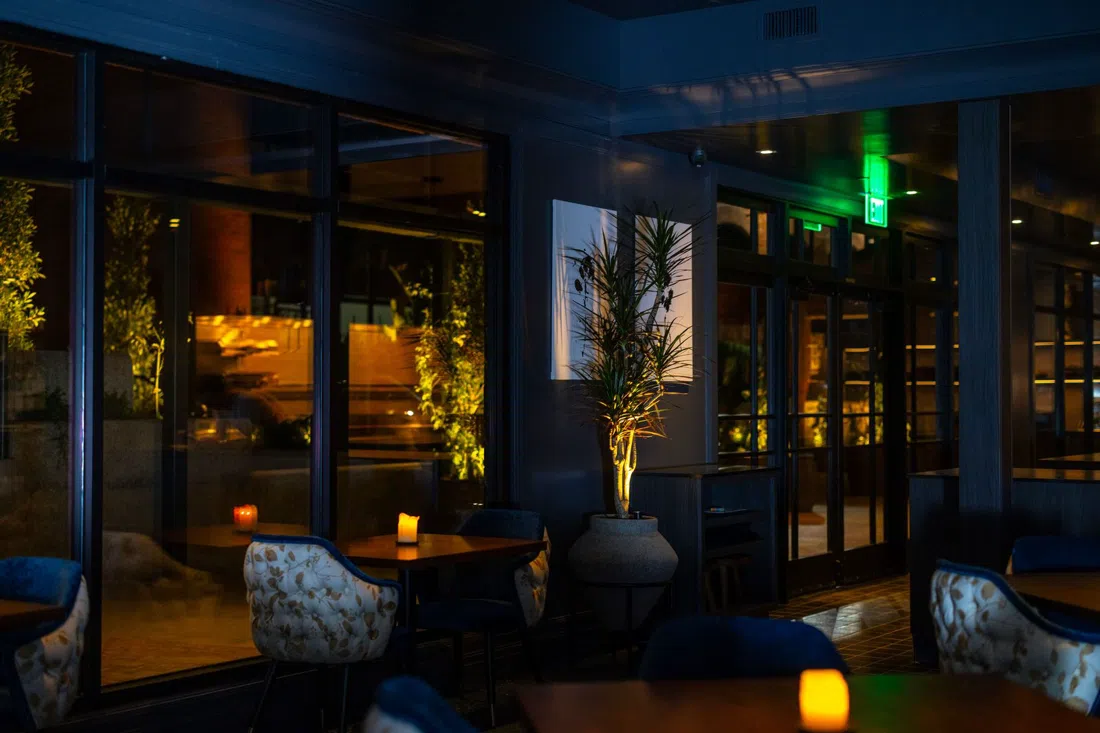
Beran isn't finished with the neighbourhood, either: a few doors down is Pasjoli, his Michelin-starred French bistro, where the dish to order is the canard à la presse — pressed duck, carved tableside, the kind of theatre most French bistros stopped bothering with years ago. For a more rooted, market-driven version of California cooking, Rustic Canyon on Wilshire has been at it longer than almost anyone in the neighbourhood, chef Jeremy Fox building the menu around what's fresh at the farmers market a few blocks away — restaurant and market practically in conversation with each other. Bryant Ng's Cassia takes things in a different direction, a Southeast Asian brasserie where the Vietnamese pot au feu is the dish regulars order on repeat, and Holy Basil, the Westside outpost of a wild, seafood-leaning Thai kitchen, adds another register of heat and citrus to the strip.
None of that is to say Santa Monica only does tasting menus. Father's Office, the classic Montana Avenue gastropub, has built a cult following on a burger it refuses to modify — no ketchup, no substitutions, argue with the kitchen if you like, you'll lose — alongside a serious rotating craft beer list. Down on Lincoln Boulevard, Bay Cities Italian Deli has been slicing meats for decades and remains the source of The Godmother, a sub sandwich locals will drive across the city for.
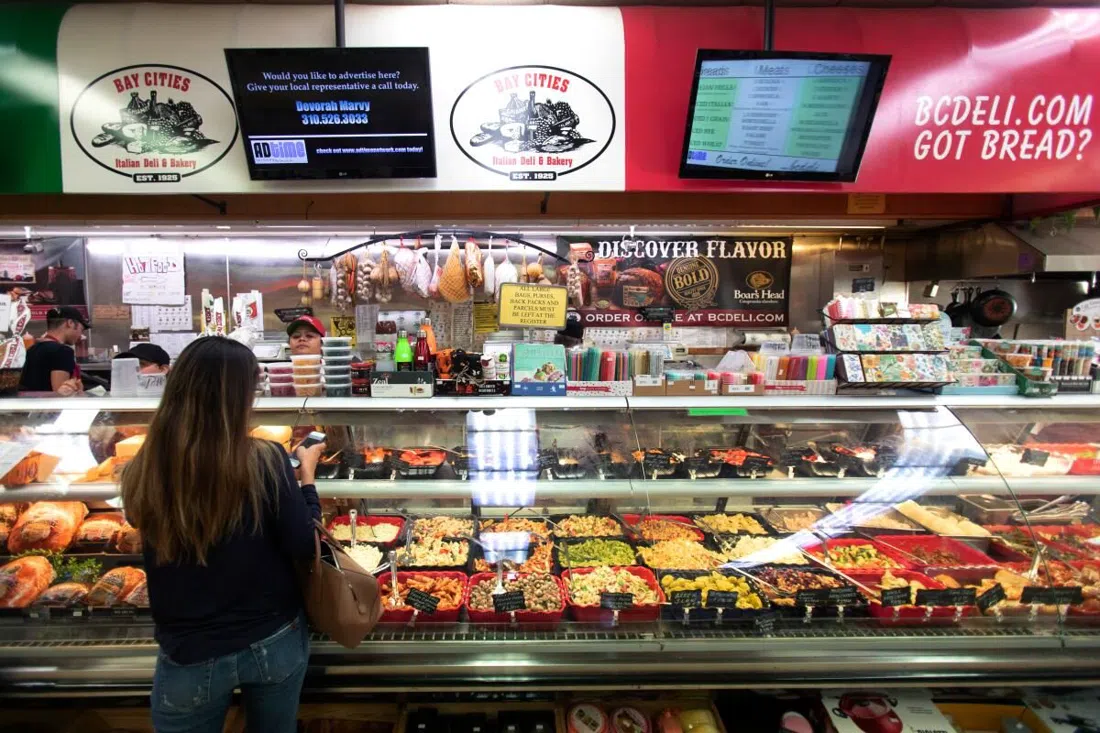
For something quieter, Huckleberry Bakery & Cafe covers the daytime shift — pastries, a proper breakfast, coffee strong enough to justify the beach walk that follows.
Nightlife in Santa Monica
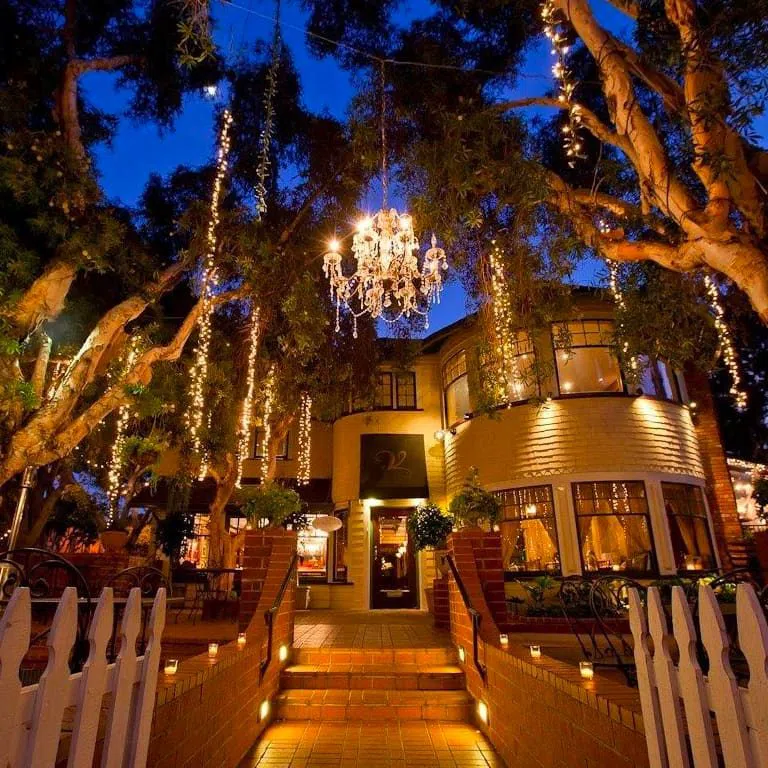
This was never going to be a clubbing neighbourhood — that job belongs to Hollywood and West Hollywood, forty-five minutes east on a good night. What Santa Monica has instead is concentrated on Main Street and inside its beachfront hotels, and it suits a slower evening anyway. The Victorian is the area's biggest draw: an 1892 house, physically moved and restored, that now runs as a three-floor bar and nightclub in Ocean Park, with DJs taking over on weekends and a crowd that skews louder the later it gets.
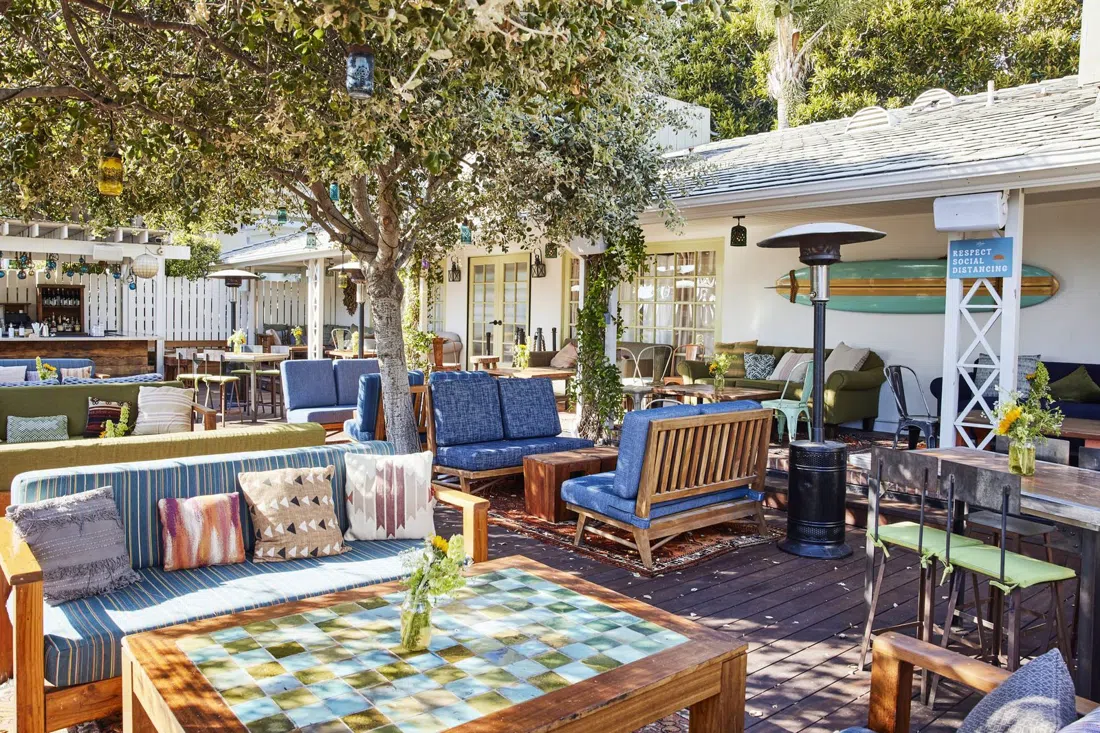
For something with a view, the Fairmont Miramar's Bungalow does Baja-surf beach house better than anywhere else nearby — firepits, a pool table, and a sunset over the Pacific that most rooftop bars in this city would kill for.
If you'd rather the evening start quiet and stay that way, Basement Tavern on Main Street plays it speakeasy: low light, a serious cocktail list, none of the Promenade's foot traffic.
Things to do in Santa Monica
Start where everyone starts: the Pier, walking out over open water toward Pacific Park, then doubling back for the Aquarium underneath. From there, the neighbourhood's real geography opens up along the bluffs. Palisades Park runs along the clifftop above Pacific Coast Highway, a strip of grass and palm trees with unbroken views out to Catalina Island on a clear day — free, always open, and the best place in the neighbourhood to understand why Santa Monica has been a resort town since the 1870s.

A few blocks south, Tongva Park makes the case for what Santa Monica has been building since 2013: a sculptural, deliberately modern public park and playground wedged between the Promenade and the beach, curved paths and native planting where surface parking lots used to sit. For families, the better half-day trip is the Annenberg Community Beach House, a restored 1920s pool and beach club — a private Hearst-era estate once — now reopened as a public facility with a splash pad and playground that make it an easy sell to kids who've already been told to put the phone away.

Shopping in Santa Monica
The retail spine of downtown is the Third Street Promenade — three pedestrianised blocks between Wilshire and Broadway, lined with mainstream chains, street performers and buskers working the crowd for tips between sets.
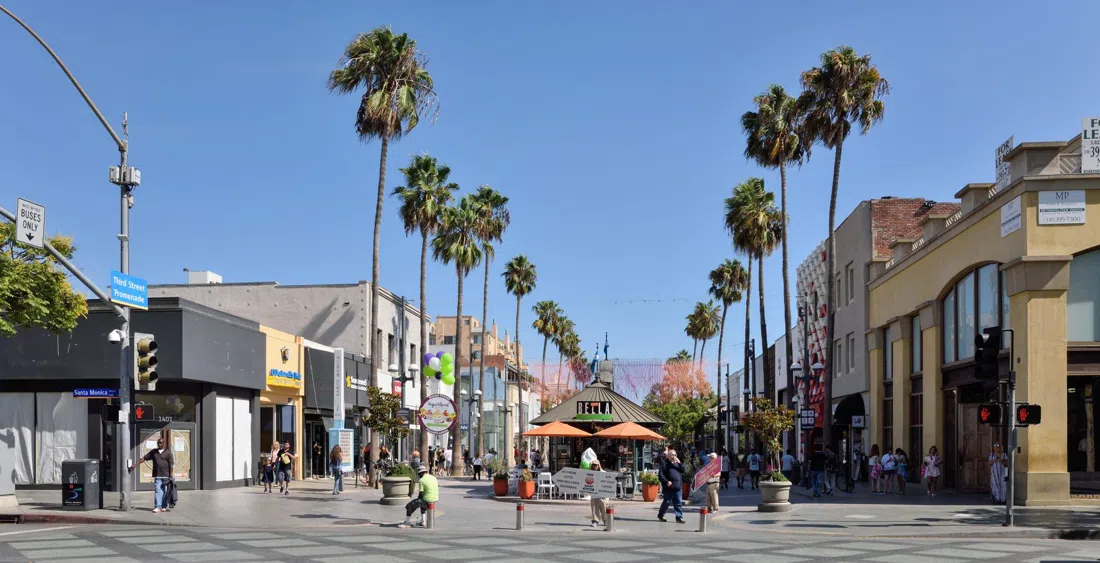
It feeds south into Santa Monica Place, an open-air mall anchored by Nordstrom and Bloomingdale's, with a rooftop dining deck that catches the last of the ocean light before sunset. It isn't where you go for independent boutiques — Main Street and Montana Avenue do more interesting work with smaller storefronts — but for a straightforward afternoon of shopping within walking distance of the beach, the Promenade still does the job it was built for.
Where to stay in Santa Monica
Where you sleep changes the neighbourhood you experience. Right around the Pier and Third Street Promenade puts you in walking distance of everything — the beach, the restaurants, the Metro — but closest to downtown's evening street activity, which is fine for most visitors and worth knowing about if you want a quiet night. North of Wilshire, toward Montana Avenue and the numbered streets, the pace drops: fewer performers, more residential blocks, a short walk or bike ride back down to the water whenever you want it. Budget accordingly either way — beachfront and Promenade-adjacent hotels carry a real premium over anything a mile inland, and fine dining at Seline or Pasjoli runs into the hundreds per person, even as Main Street's casual spots and the farmers market keep the rest of a trip affordable.
Getting around Santa Monica
Santa Monica is flat and genuinely walkable, which is not something you can say about most of Los Angeles. The Pier, the Promenade, Palisades Park and Main Street all sit within fifteen to twenty minutes of each other on foot, and the Strand bike path picks up whatever walking won't cover, running flat along the coast for cyclists and runners who'd rather skip the car entirely. For trips further afield, the Metro E Line — the old Expo Line — terminates at Downtown Santa Monica Station near 4th Street, and it's a direct 45 to 50 minute ride into Downtown LA with no transfer, about as good as LA transit gets. LAX is trickier: 20 to 30 minutes by car outside traffic, but 55 to 75 minutes by train via the E Line and K Line with a transfer, so most visitors budget for a rideshare on arrival and departure even if they walk everywhere in between.
8 August 2026 · a first week before the flat: the Los Angeles hotel directory