Luxor · The weekend · 13 min
Inside Edfu's Falcon Temple on a September Day Trip from Luxor
The most intact pharaonic temple in Egypt. How to walk it before the cruise boats arrive, and what a September day out of Luxor actually costs.
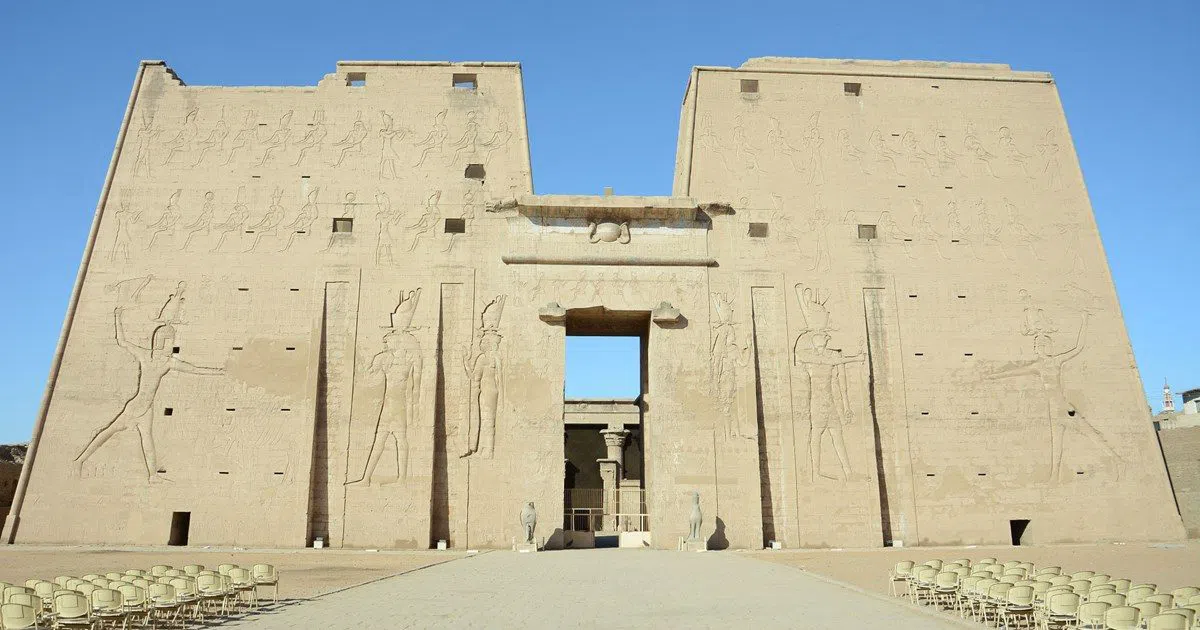
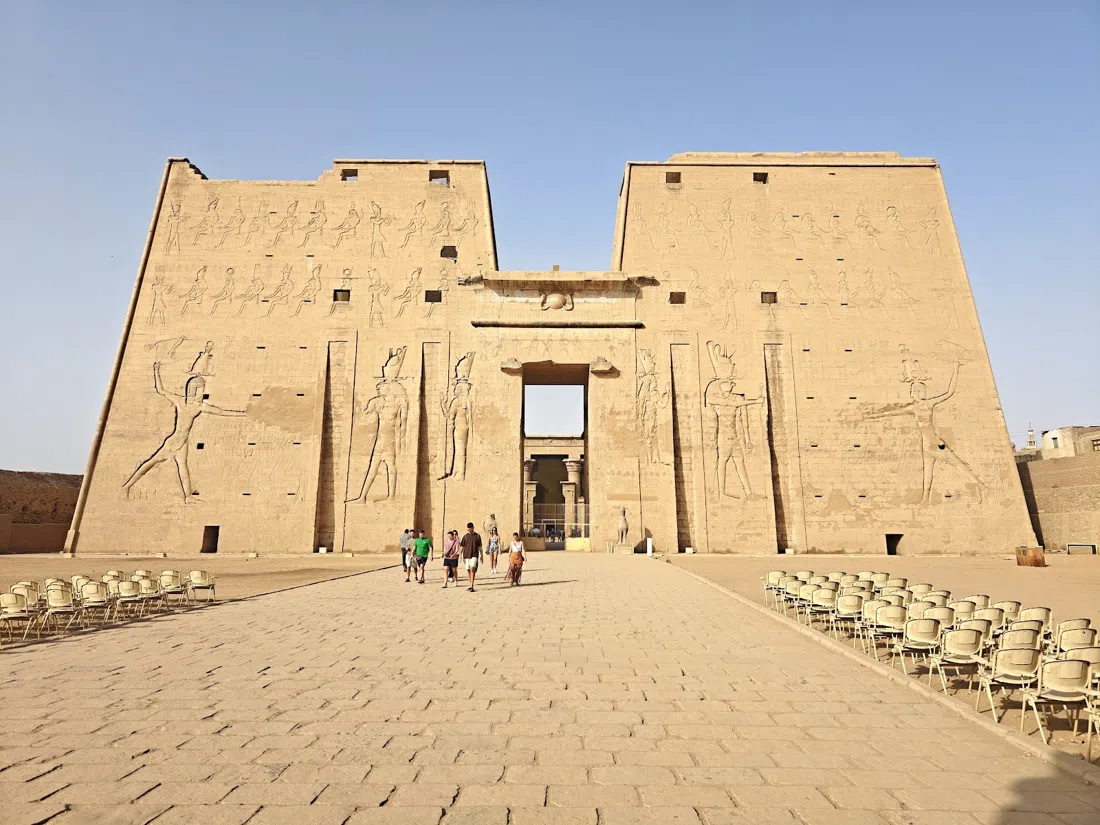
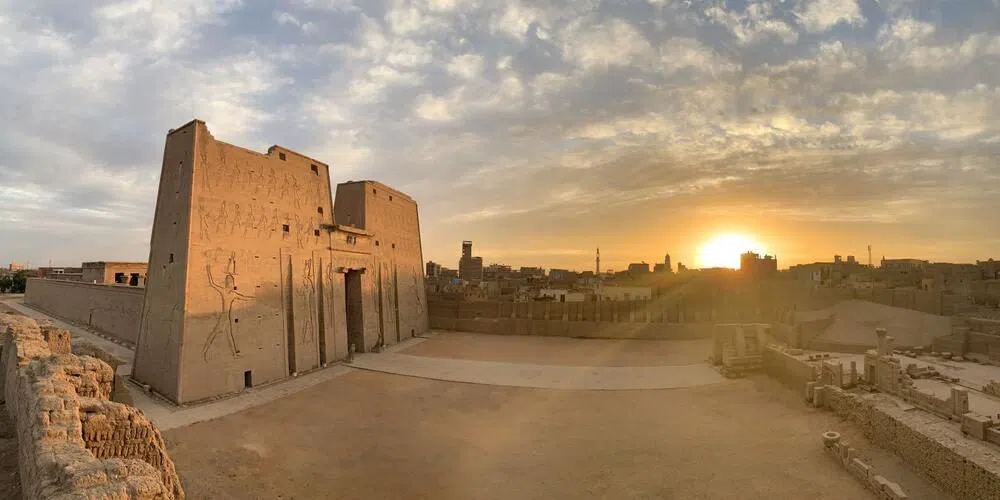
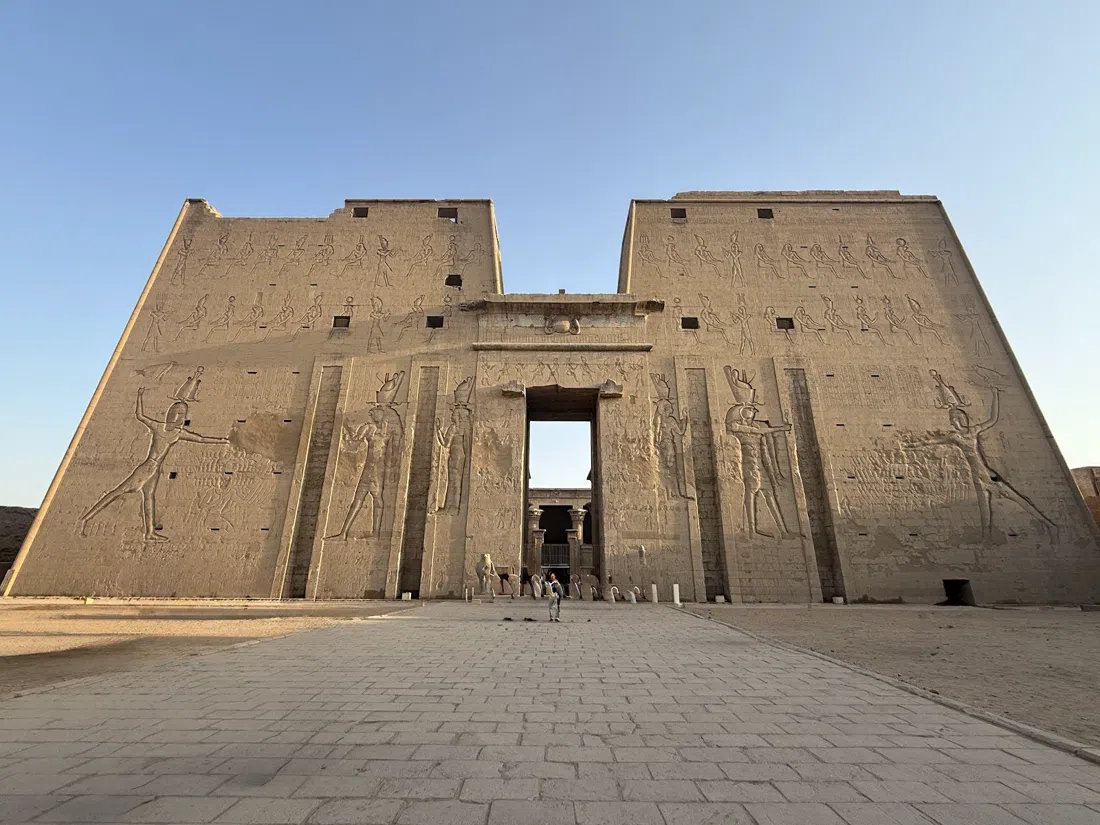
Two black granite falcons stand at the gate at Edfu, and the pylon behind them still carries its full height of sandstone, uncollapsed. Walk out of the September sun into the first hypostyle hall and the air changes within three paces: cooler, dust-dry, cut by a shaft of light from a slot in the ceiling. That ceiling is the whole point. Almost nowhere else in Egypt can you still walk a temple the way it was built to be walked, front door to dark sanctuary, with the roof on.
What still stands at Edfu
The Temple of Horus at Edfu (in the centre of Edfu town, roughly two hours south of Luxor by road) is the most completely preserved pharaonic temple standing anywhere: roof, walls and doors in place, and a granite naos still sitting in its unlit sanctuary. It is late work. Ptolemaic builders spent the better part of two centuries on it, and by the time the doors were finished the Roman conquest was a generation away. Sand and then a village buried the building nearly to the capitals, which is precisely why it survived; the nineteenth-century clearance took the houses off the roof and handed the structure back more or less whole.
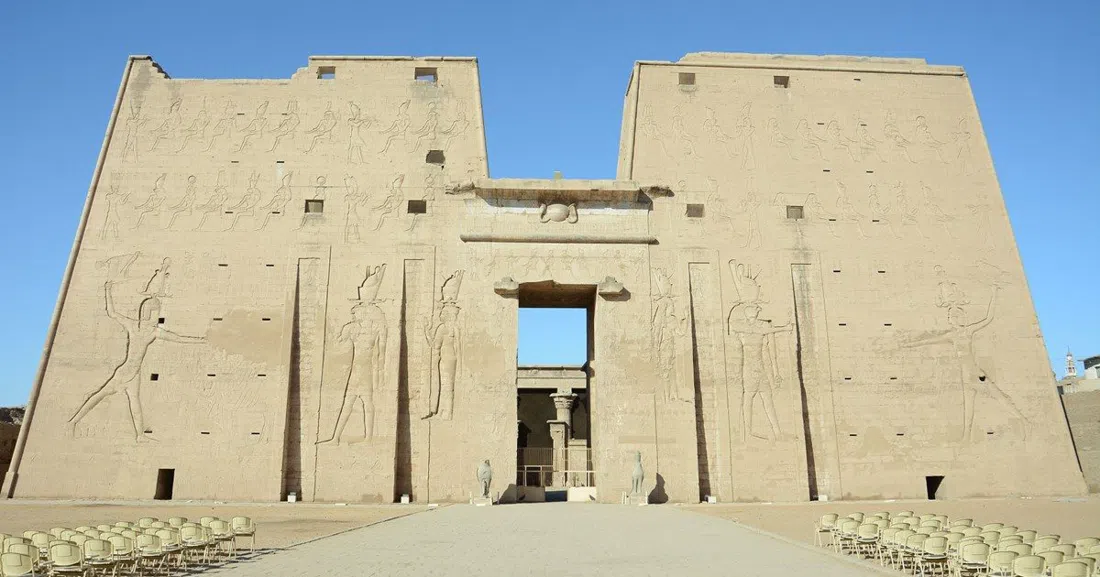
What you do here is walk a procession in reverse of the way it was designed and then again the right way round. Through the pylon into an open court ringed with columns, where the light is still full and hard. Into the first hypostyle hall, where it drops sharply. Then the second hall, the offering hall, the vestibule, and finally the sanctuary, a plain dark room with the naos in it, older than the building that houses it, and a modern replica of the sacred barque standing in front. Off the corridor that rings the sanctuary are the small side chapels, including the room the texts call the laboratory, its walls carrying recipes for temple incense and perfume. On the inner face of the enclosure wall, the reliefs tell the story of Horus harpooning Seth in hippopotamus form, scene by scene, with the text running above it like captions.
The site is built for the traffic it gets. There is a paved coach park, a wide processional route and enough room in the court that a guide can lecture a full group without anyone feeling crushed. The pinch points are inside. The interior halls and the sanctuary corridor choke as soon as two or three groups overlap, and timing is the only way round it.
The two corners most groups walk straight past
The Mammisi (Birth House) of Edfu (in the open forecourt, before you reach the pylon) is included in your temple ticket and takes five minutes. It is where the divine-birth procession ended, a small columned structure with the dwarf god Bes worked into the capitals, and it stands exactly where a guide parks a coach group to do the briefing, so the group looks at the pylon instead and walks on. Five minutes here is the cheapest way to see something the rest of your boat did not.
The Edfu Temple Nilometer and enclosure-wall stair (inside the temple enclosure, off the ambulatory) is the other one. It is a squeeze, single file on the stair, which is why guides send people in twos and threes rather than moving a group through it. It is also the one cool, quiet spot on the site and a working piece of ancient infrastructure rather than a decorated surface. One caution: the stair up to the temple roof nearby is frequently closed to the public, so do not build a visit around getting up there.
Ten minutes in the blockyard while the tickets are sorted
The Edfu Temple Visitor Centre, open-air museum and blockyard (at the coach park end of the approach) is the only interpretation on the whole site. The complex was designed around the coach park built in 2005, and the sheltered blockyard added in 2012 holds some 350 inscribed blocks under cover. It is worth ten minutes while your guide queues for tickets, which beats standing in the sun waiting.
The Edfu Temple cafeteria and bazaar arcade (on the approach and exit path) has the water, the shade and the toilets, and you should use all three before you go in rather than after. Drinks and snacks run about EGP 30 to 100. The souvenir stretch is another matter. Stallholders work the coach doors and the exit hard, and first-hand accounts agree that the run is pushy. Agree a price before anything is put into your hands, and carry small notes so you are not negotiating change as well.
How long it takes, and when the halls are empty
Ninety minutes covers the temple properly at a walking pace that lets you stop and read a wall. A guided group is usually in and out faster than that. Add the mammisi, the nilometer, the blockyard and a cold drink and you are at two and a half hours, which is as much as the site can honestly absorb.
Gates open at 07:00, currently 06:00 on Sundays and Wednesdays, with last entry around 16:00. In September the heat argument and the crowd argument point the same direction, which makes the decision easy: be at the gate when it opens. A dozen cruise boats can moor at Edfu at once, and they do not stagger themselves for your benefit. By mid-morning the court is full and the sanctuary corridor is a queue. The hour before last entry is the other thin slot, but it is the hottest part of the day and you are gambling on how the boats have spread out.
Paying at the door against booking a seat
Entry is EGP 450 to 550 for an adult, roughly half that for students with ID, and EGP 40 for Egyptians. That is a door price, paid in cash or through the official ministry site. The temple does not sell out and there is no timed-entry system; the ticket window is just a ticket window.
What a booked tour buys, then, is the vehicle, the departure time, and someone who can read the walls out loud, rather than access. The multi-day Nile itineraries that take in this temple carry 1,182 traveller reviews between them, and the most-booked of them is rated 4.7 out of 5 from 598 reviews, so there is a well-trodden version of this day available if you want it. That one runs three days a week (Monday, Wednesday and Friday), which matters more than it sounds if your own dates are tight. Prices on that itinerary start from 249 USD per person, though a private car and driver out of Luxor for a single day is a different and much cheaper proposition. If you want the temple and nothing else, hire the car. If you want the river, take the boat.
Arriving by river, and the calèche question
The Edfu Nile mooring and Corniche (Sharia an-Nil) (the waterfront strip where the cruise boats tie up) is where whole vessels disembark at once, and the drivers waiting there compete hard for that business. A calèche to the temple runs roughly EGP 50 to 100 per person, cash, negotiated before you sit down rather than after.
Be honest with yourself before you get in one. First-hand accounts from 2026 describe underfed and limping horses at this mooring, and some operators have moved to tuk-tuks or minibuses instead. It is a real reason some people prefer to come by road from Luxor, which sidesteps the whole scene.
From inside the temple enclosure you can see the Tell Edfu mound and Old Kingdom mastaba field (immediately beside the temple), which is three thousand years of the actual town stacked in section, with an Old Kingdom cemetery on its south-west edge. You look at it rather than walk it (the Yale excavation area is fenced and the hill tombs beyond are not open), but knowing what the mound is turns a pile of dirt into the most legible thing on the site.
Worthwhile stops on the road south from Luxor
A road day from Luxor gives you something a boat cannot, which is the ability to stop.
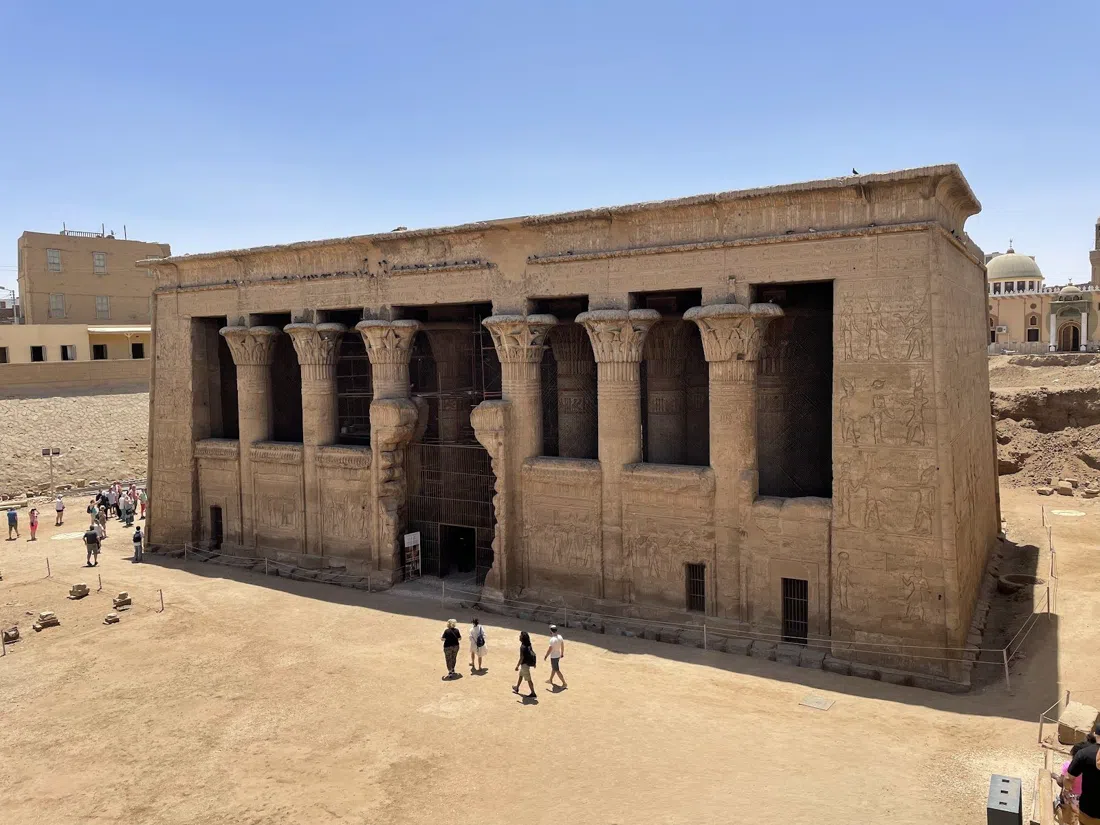
The Temple of Khnum, Esna (sunk in a pit in the middle of Esna town, the first stop out of Luxor) is the obvious opener. After the Egyptian-Tübingen cleaning campaign it has the most colour-saturated ceiling you can stand under in Egypt: astronomical figures and zodiac bands in restored paint, not archive photographs. Only the entrance hall has been excavated, so it is a 45-minute stop rather than a half-day. Budget roughly EGP 300 to 450 for an adult. It is a single enclosed room, which means early or late it is yours and mid-morning it is shoulder to shoulder.
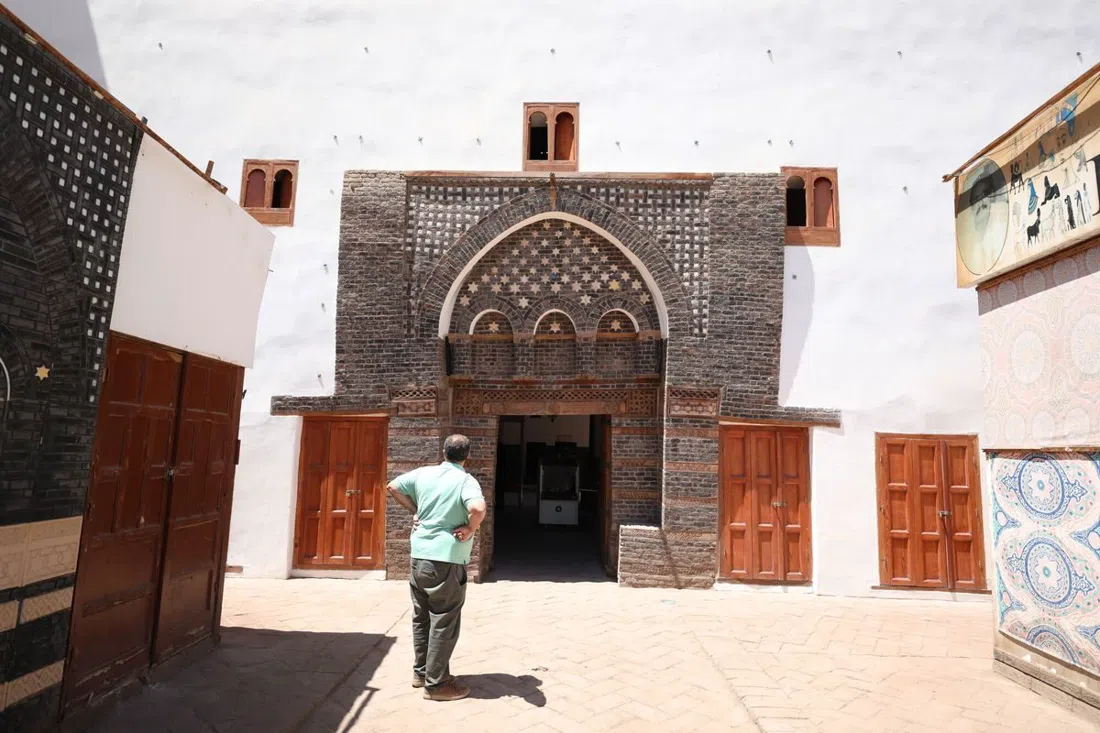
Two minutes' walk away, Wekalet al-Geddawi and the Qisariyya market, Esna (the restored caravanserai and the covered market lane behind it) is the rare stop on this route that is about a living town rather than pharaohs. It was shut to the public from 1951 until the Takween-led conservation reopened it as a crafts and cultural hub, and the wider town revitalisation made the Aga Khan Award shortlist. The courtyard handles a full group comfortably; the market lane is narrow and better walked in threes and fours.
Elkab (Nekheb) (fifteen kilometres north of Edfu, directly on the road) costs a road day almost nothing in time and is quiet enough that you will likely have it to yourself. Guardians unlock the painted tombs individually, so a group goes through in batches and you want small notes for them. It opens at 07:00 with last entry around 16:00, and if you want the desert temples up the wadi as well, say so at the ticket window rather than at the tomb door.
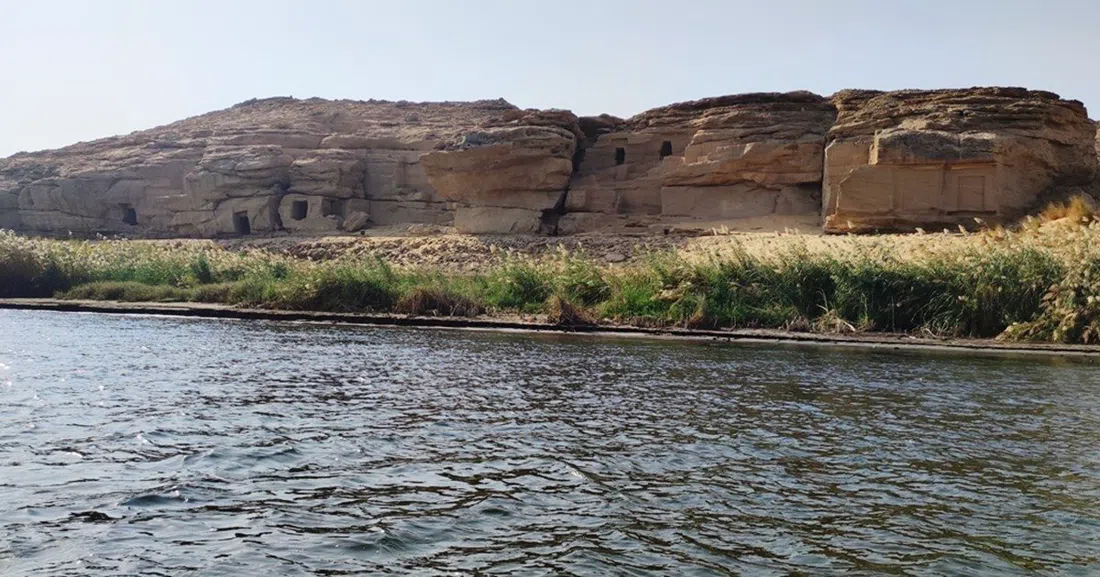
Two more are for people with a driver who knows the ground. Edfu South Pyramid (Naga el-Goneima) (about five kilometres south of Edfu, in open desert) is roughly 4,600 years old, one of a handful of provincial step pyramids attributed to Huni, surveyed by the Chicago and Yale teams. There is no ticket office, no guardian, no signage and no shade, so go only if your driver has cleared the track locally. Gebel el-Silsila (on the river between Edfu and Kom Ombo) is the quarry that produced the stone for this temple and for much of what you have already seen around Luxor, with rock-cut shrines above the cuttings. It opens at 07:00 with last entry around 15:00, but it is usually reached by felucca or dahabiya and road access has to be arranged in advance, so check before you promise it to anyone.
Going further south in the same day
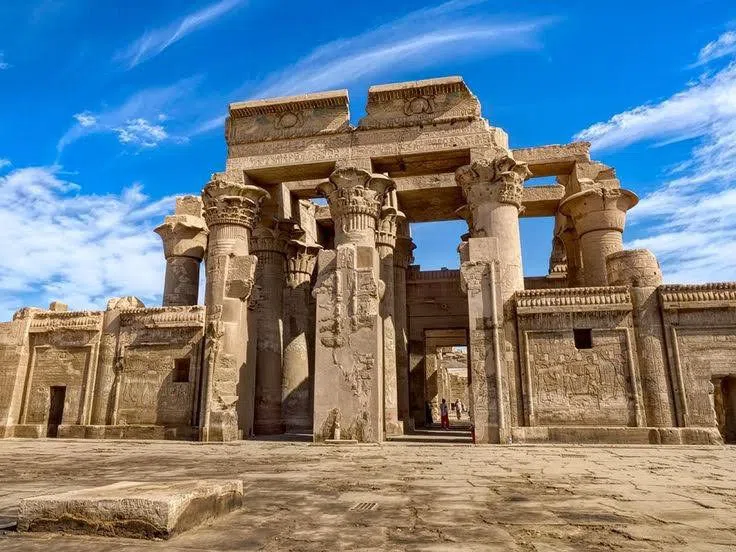
The Temple of Kom Ombo and the Crocodile Museum (sixty kilometres south of Edfu, right on the riverbank) is the standard second half of this day, and it earns the drive by being different: a double temple split down its axis between two gods, a relief that appears to show surgical instruments, and a museum of mummified crocodiles next door that is included in the ticket. About EGP 450 for an adult, EGP 225 for students, on the same 07:00 to 18:00 summer schedule. It is busiest when the cruise boats moor in the late afternoon, so a road day that arrives at lunchtime has the better of it.
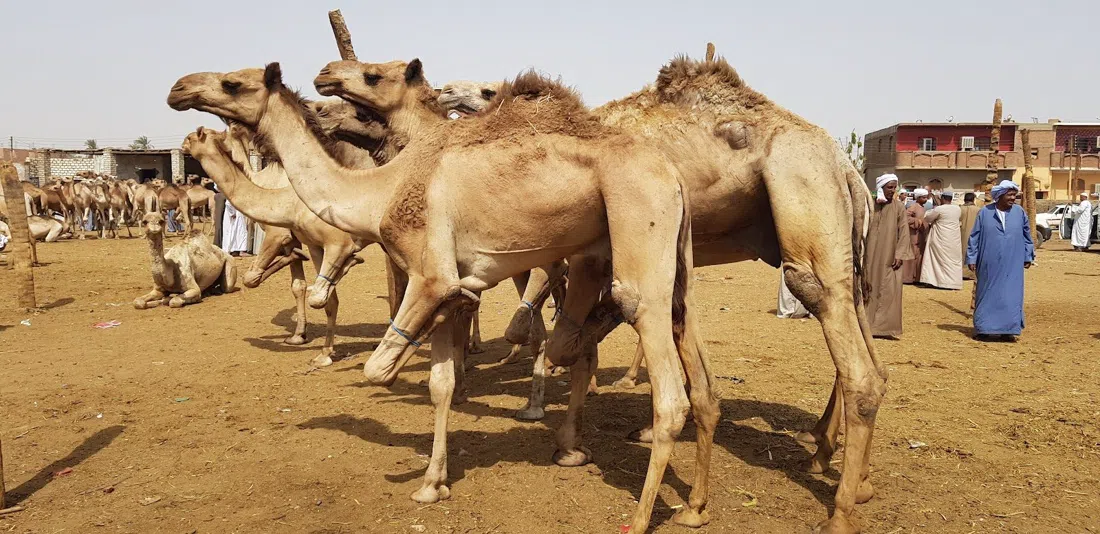
Daraw Camel Market (seven kilometres south of Kom Ombo) trades from about 06:00 and peaks between 07:00 and 10:00, with Tuesday the big day and Saturday and Sunday also busy. It is informal, crowded and small-groups-with-a-guide only, not somewhere to unload a coach. It is also raw: the animal handling is rough and plenty of visitors find it upsetting. It is the exact opposite of a temple morning, which is either the reason to go or the reason not to.
The temple after dark
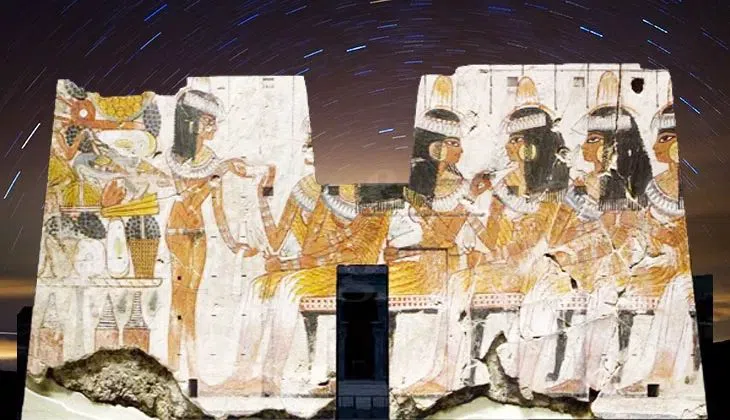
The Edfu Temple Sound and Light Show (at the temple itself, after closing) is the only way to see these halls empty and cool. Headset translation runs in six languages and the ticket is separate from daytime entry, at about US$15 for an adult and US$8 for a child aged six to twelve. Sittings are listed at 20:00 and 21:00, but the operator states dates are subject to change, so confirm on the day rather than the week before. The second sitting runs on a minimum head-count when booked at the door, which means organised groups get it away easily and two independent travellers may not. Realistically it suits people overnighting on a boat at the mooring; from Luxor it means a very late return.
The best time to go in September 2026
Early September in the Nile valley is still full summer. Afternoons run well above 35°C, the stone holds the heat, and the walk from the coach park to the pylon is entirely unshaded. Late September takes the edge off the evenings but not the middle of the day.
That gives you one good answer and one acceptable one. The good answer is the first hour after opening: 07:00, or 06:00 on Sundays and Wednesdays as the schedule currently stands. You get the cool stone, low light raking across the court reliefs, and the interior halls before the boats have finished breakfast. The acceptable answer is the last ninety minutes before the 16:00 cut-off, when the day-trip traffic has gone south and the light in the court is good again, accepting that you are walking in the day's peak heat.
What this means from a base in Luxor is an early alarm. Leaving around 05:00 puts you at the gate for opening with time for the blockyard, and it also means the road stops on the way back are done in the afternoon rather than the morning rush. If you are still choosing where to sleep, the early-departure logic favours somewhere on the east bank with a kitchen that will do breakfast boxes, worth filtering for when you run a Luxor hotel search.
Is it worth the day
Yes, with one honest caveat. If you have already walked Karnak and the west bank tombs, Edfu is not more of the same. It is the only place on this stretch of river where you experience a temple as an enclosed, dark, sequenced building rather than as a roofless ruin. That is a different sensation, not a bigger one, and it is the reason to spend four hours in a vehicle.
It suits anyone who liked the idea of Karnak but found it hard to read, anyone travelling with older children who need a building with rooms and doors rather than an archaeological plan, and anyone doing the river by boat, for whom the stop is already paid for. It also suits couples happy to start before dawn, and people who want one deep stop rather than four shallow ones.
It is a poor day for anyone who cannot be at the gate early, anyone unwilling to do two hours each way in a car in the heat, and anyone with limited mobility who is not warned in advance that the mammisi, the nilometer stair and the mound are all uneven ground. And if you have only two days in the region, the Luxor west bank is the stronger use of one of them, so start with the Luxor guide and treat Edfu as the third-day trip it is.
Practical notes for a September day
Transport. A private car and driver from Luxor is about two hours each way and lets you add Esna, Elkab and Kom Ombo without renegotiating. A seat on an organised coach costs less and fixes your timings. The river version is a multi-day cruise, not a day trip.
Cash. Bring Egyptian pounds in small denominations. Temple tickets can be bought at the door in cash or through the official ministry site; guardians at Elkab, calèche drivers, the bazaar arcade and the cafeteria are all cash, and nobody will have change for a large note.
Timing. Leave Luxor around 05:00 for the 07:00 opening, or 06:00 on Sundays and Wednesdays while the earlier gate holds. Last entry to the temple is around 16:00, Kom Ombo runs to 18:00 in summer, and Gebel el-Silsila closes earliest at around 15:00 last entry.
Budget. Per adult, count roughly EGP 450 to 550 for the temple, EGP 300 to 450 if you stop at Esna, about EGP 450 for Kom Ombo with its museum, small notes for tomb guardians at Elkab, and EGP 30 to 100 for drinks. The vehicle is the variable, and it is the one worth splitting with another couple.
What to carry. More water than you think, a hat, and a small torch, because the sanctuary and the side chapels are genuinely dark and the reliefs in them are the reason you came.
22 September 2026 · a first week before the flat: the Luxor hotel directory