
Australia · the visa
Melbourne
Melbourne suits a remote worker who wants dense coworking, cafés that do not mind a laptop, and fixed broadband that actually delivers the plan speed, all on half-price public transport until January 2027. The catch is housing: unit rents are at record highs, the vacancy rate sat at 1.6 per cent in July 2026, and a stronger Australian dollar makes every figure dearer for anyone paid in US dollars.
- A month · September 2026$2,700–3,600Coworking4 spacesPieces13
The sheet
Researched 9 September 2026 · figures hold for September 2026
- One-bed flat, inner suburb (Brunswick to South Yarra)
- A$1,860–2,170 per month ($1,340–1,560)
- Median asking rents of A$430–500 a week from the Victorian government's December-quarter 2025 rental report, as republished by RentBuzz; Domain reports unit rents up 4.9 per cent in the year to July 2026, so expect a little more at inspection.
- Coworking day pass
- A$49–69 plus GST ($35–50)
- CreativeCubes.Co lists A$49 for coworking and A$60 for a hot desk; Hub Australia lists A$69 excluding GST at its seven Melbourne sites, September 2026.
- Coworking hot desk, month
- A$209–440 ($150–320)
- Range quoted in 2026 Melbourne coworking round-ups; the cheapest is CreativeCubes.Co, the top end is a central Collins Street address. GST is usually on top.
- Flat white
- A$4.50–6.00 ($3.25–4.30)
- Independent specialty cafés charge A$5.00–6.00 in 2026; chains sit at A$4.20–4.80, per MELBZ.
- Café lunch
- A$20–30 ($14–22)
- Typical per-person café or casual restaurant meal in 2026 cost-of-living guides for Melbourne.
- Prepaid SIM, 28 days
- A$25–45 ($18–32)
- Boost (Telstra network) A$25 for 15GB or A$45 for 60GB; Optus A$30 for 35GB; Vodafone A$35 for 55GB, per 2026 traveller SIM guides. Some MVNOs run six-month intro deals at A$12–15.
- Public transport (myki), month
- A$115–230 ($83–165)
- Full-fare daily cap is A$11.40 for zones 1 and 2, halved to A$5.70 from 1 June 2026 until 1 January 2027; the low figure is 20 commuting days at the half-price cap, the high figure the normal cap.
- Gym membership, month
- A$50–100 ($36–72)
- Budget chains A$50–65, standard gyms A$75–100; Expatistan's Melbourne business-district average is A$99 in 2026.
- Pint in a pub
- A$13–15 ($9.40–10.80)
- A standard pub pint now runs closer to A$13 than the old A$10; Expatistan lists A$15 for a neighbourhood pub in 2026.
A month in Melbourne
AUD (Australian dollar); USD at 0.72 per AUD, 9 September 2026A$2,700–3,600 ($1,950–2,600) before groceries and evening meals. Basis: an inner-suburb one-bed at the December-quarter 2025 median, a monthly hot desk, a 28-day SIM, myki at the half-price cap, a mid-range gym, twenty flat whites, fifteen café lunches and a handful of pints, all at September 2026 prices where sourced.
Fixed broadband is the strong point. The regulator's final Measuring Broadband Australia report, released 17 June 2026, found fixed-line NBN connections delivered 99.4 per cent of plan speed in the busy 7pm to 11pm evening window, and NBN fixed wireless on the Home Fast tier averaged about 160 Mbps down and 13 Mbps up in busy hours. Most inner-suburb flats are on fixed line; ask the agent which NBN technology the building has before signing. For mobile, buy a Boost SIM on the Telstra network for the best coverage outside the city: A$25 for 15GB or A$45 for 60GB over 28 days, with Optus at A$30 for 35GB and Vodafone at A$35 for 55GB as alternatives. SIMs are sold at the airport, Australia Post, Coles, Woolworths, ALDI and 7-Eleven. eSIMs are easy: TPG, Lyca, Kogan and Yomojo activate through an app within hours, and several run six-month introductory rates of A$12–15 a month.
Where to work
- Hub Australia · CBD (Collins, Flinders, Bourke and Nicholson Streets), St Kilda Road and Church Street, Richmondday A$69 plus GST ($50), Monday to Friday 8.30am–5pm · month Not published on the day-pass page; enquire per siteSeven Melbourne locations, soundproof phone booths, member kitchen and café, and day passes bookable online without a membership.
- CreativeCubes.Co · Carlton, Collingwood, Cremorne, Richmond, South Melbourne, Hawthorn, Footscray, Balaclava, East Melbourne and the CBDday A$49 coworking or A$60 hot desk ($35–43) · month From A$209 ($150) per 2026 round-upsThe widest suburban spread of any operator, so there is usually one within a tram ride of wherever the flat is; on-site café, printing and quiet zones.
- JustCo · CBDday Not verified · month From A$340 ($245) per 2026 round-upsA central hot-desk option for someone who wants a Collins Street address rather than a neighbourhood one.
- Waterman Workspaces · Suburban sites outside the CBDday From A$50 plus GST ($36) · month Not verifiedCheaper day rate than the CBD operators and useful for anyone living further out; check which site is nearest before booking.
Cafés that tolerate laptops
- Code Black Coffee · Weston Street, BrunswickFree wifi and, in Concrete Playground's words, stacks of sockets; the Brunswick branch is the biggest and opens longest of the chain.
- A Minor Place · Albion Street, BrunswickFree wifi, plenty of power points, a comfortable indoor room and an outdoor deck for the warmer months.
- Krimper · Guildford Lane, CBDAmple power outlets and fast wifi, and it explicitly encourages laptops with no time limit, which is rare in the centre.
- Guild Cafe, State Library · Swanston Street, CBDLarge communal tables, big windows and the library's free wifi; a natural half-day base between meetings.
- The Journal Cafe · Flinders Lane, CBDOpen late every night with wifi via the City Library, so it works for evening calls to Europe or the Americas.
- Hobba · Malvern Road, PrahranFast free wifi in a warehouse space that Concrete Playground rates as comfortable for a long working session.
- Le Bajo · North MelbourneSpacious communal tables, strong wifi and a quiet room; listed among 2026's best work-friendly cafés.
Where nomads live
- Fitzroy and CollingwoodAbout A$480 a week for a one-bed, roughly A$2,080 a month ($1,500), December quarter 2025Walkable to Brunswick, Smith and Gertrude Streets, the densest strip of laptop-tolerant cafés and small coworking rooms in the city.
- BrunswickAbout A$430 a week, roughly A$1,860 a month ($1,340), December quarter 2025The cheapest of the inner-north options, with Code Black and A Minor Place on the doorstep and the Upfield line or Sydney Road trams into town.
- Richmond and CremorneAbout A$460 a week, roughly A$1,990 a month ($1,430), December quarter 2025Tech-office territory with Hub Church Street and CreativeCubes Cremorne nearby; three train lines and several trams into the CBD.
- St KildaAbout A$450 a week, roughly A$1,950 a month ($1,400), December quarter 2025Beach, the 96 tram and a long history of short-stay flats; slightly cheaper than Fitzroy for a similar flat.
- CarltonAbout A$440 a week, roughly A$1,905 a month ($1,370), December quarter 2025University district a short walk from the State Library and the CBD coworking cluster; Lygon Street for lunch.
- CBD and SouthbankAbout A$595 a week for a one-bed in the CBD, roughly A$2,575 a month ($1,860); two-beds in Southbank and Docklands run A$900 or more a weekEverything on foot, but the highest rents and the towers are mostly small investor units.
How a working week runs here
Melbourne's remote-work infrastructure is unusually dense for a city of its size. Hub Australia alone has seven Melbourne sites, CreativeCubes.Co has nine suburbs covered, and the day-pass economy is mature enough that A$49–69 plus GST buys a phone booth, a kitchen and reliable wifi without a membership. The cheaper way to work is the café, and the city's café culture makes that easier than in most places, provided the flat white is bought and rebought.
Concrete Playground's May 2026 list of work-friendly cafés runs to fifteen venues from Brunswick to Prahran, and the useful signal is the venues that name sockets and wifi rather than atmosphere: Code Black and A Minor Place in Brunswick, Krimper in the CBD, and the State Library's Guild Cafe with its communal tables. The library itself, and the City Library wifi that reaches The Journal on Flinders Lane, are the free fallback.
Getting between all of this is cheap for now. The whole metropolitan network is one fare zone, and the state has halved fares from 1 June 2026 until 1 January 2027, so a full day of trams and trains caps at A$5.70.
The housing squeeze
Rent is the figure that decides whether Melbourne works as a base. The Victorian government's December-quarter 2025 rental report put one-bed medians at A$430 a week in Brunswick, A$450 in St Kilda, A$460 in Richmond, A$480 in Fitzroy and A$595 in the CBD. Domain's rent report for the year to July 2026 has Melbourne rents up 5.1 per cent, units up 4.9 per cent, with unit rents at record highs and the vacancy rate at 1.6 per cent, down from 1.8 per cent a year earlier. Domain's own description of conditions for tenants is 'pretty intense'.
The practical consequence for a short-stayer is that a twelve-month lease on an unfurnished flat is the cheap route and is also the hardest to get without local references and payslips. Furnished monthly lets through the big platforms exist across the inner suburbs, at a premium over the leased medians above, and most arrivals use one for the first month while they attend inspections.
Money and paperwork
Australia has no digital nomad visa. Remote workers arrive on a Working Holiday, Student or other long-stay visa depending on eligibility, and most short stays are on a visitor visa that does not permit working for an Australian employer. Check the current conditions before assuming a laptop in a café is fine for the stay length planned.
Prices quoted by coworking operators usually exclude the 10 per cent GST, so add it. The Australian dollar was buying 0.72 US dollars on 9 September 2026, up roughly 10 per cent over twelve months, which means the same Melbourne budget costs a US-dollar earner noticeably more than it did a year ago.
What recent arrivals report
Public forum threads on Melbourne from 2026 are thin; the recent record is mostly dated guides and listings rather than first-person accounts. Those guides converge on the same points: the coffee is expensive but the cafés tolerate long sits, coworking is plentiful and mid-priced, broadband is not a worry, and the cost that surprises is the flat, not the desk. The 2026 cost-of-living round-ups from Melbourne removalists and local publishers put a pub pint at A$13–15, a café meal at A$20–30 and a standard gym at A$75–100 a month, and none of them describe Melbourne as a cheap base.
Seasons
Melbourne runs on southern-hemisphere seasons and is known for swinging through several in a day. Summer, December to February, is warm and mostly dry and is the easiest time to work from cafés and outdoor decks; autumn, March to May, is mild and settled. Winter, June to August, is cold, grey and has the most rain days, and coworking memberships earn their keep then. Spring is changeable with strong winds. Two practical timing points hold for September 2026: public transport is half price until 1 January 2027, and the rental market is tightest and dearest through the summer lease turnover, so arrivals in autumn or winter face less competition at inspections.
Researched from rentbuzz.com.au · propertyupdate.com.au · hubaustralia.com · creativecubes.co · whitepeakdigital.com · waterman.com.au · concreteplayground.com · laptopfriendly.co · figures hold for September 2026
Where to live
9 pieces by the writers on the ground
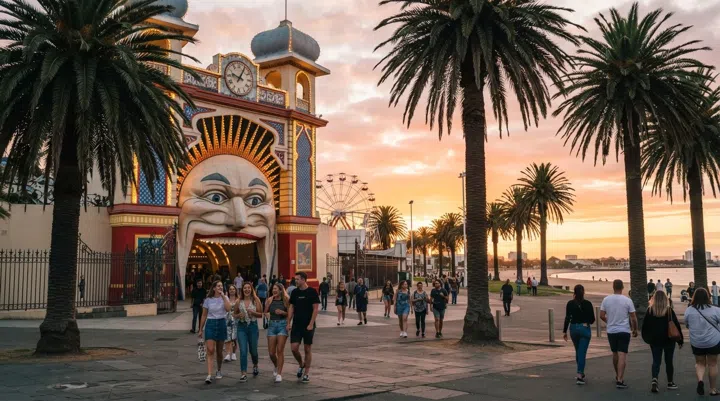 Where to live · MelbourneSt Kilda, Melbourne: cake shops, penguins and the old seaside swaggerSeaside suburb guide with local character
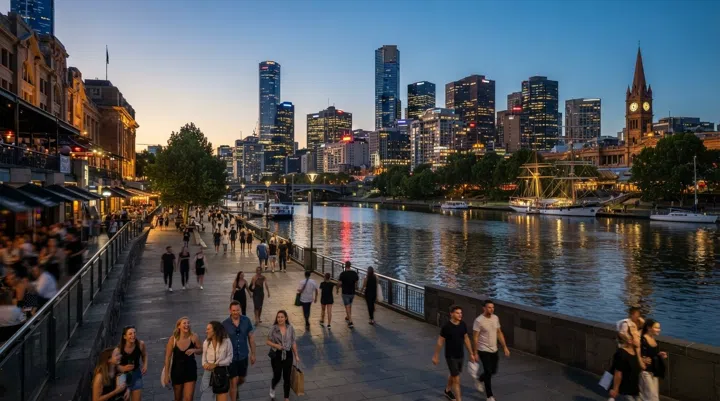 Where to live · MelbourneSouthbank, Melbourne: riverfront gloss, galleries and skyline drinksNeighbourhood guide with galleries and bars
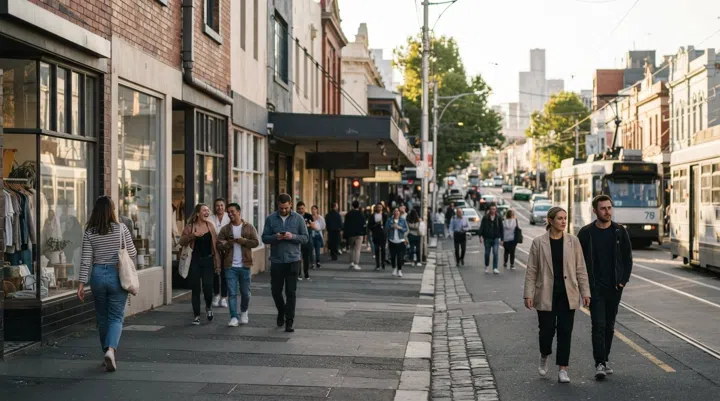 Where to live · MelbourneSouth Yarra, Melbourne: gloss, gardens and the long walk between themNeighbourhood guide with parks and nightlife
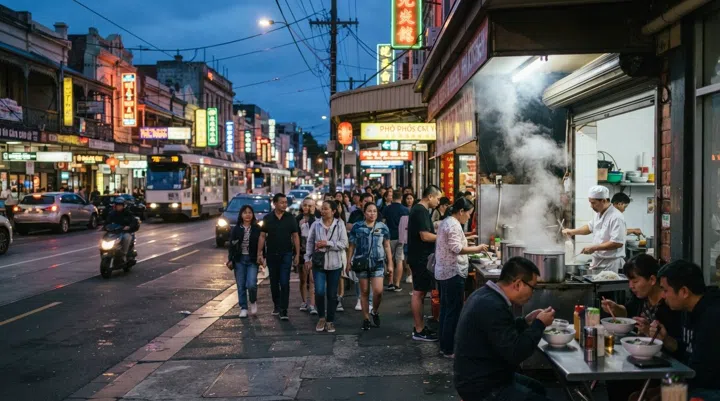 Where to live · MelbourneRichmond, Melbourne: where Little Saigon meets the MCGNeighbourhood guide with food and transport tips
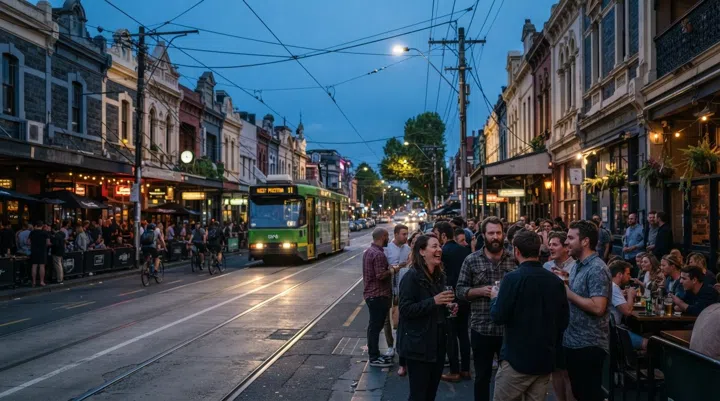 Where to live · MelbourneFitzroy, Melbourne: where the city’s rebel heart still beatsVibrant suburb guide with nightlife and street life
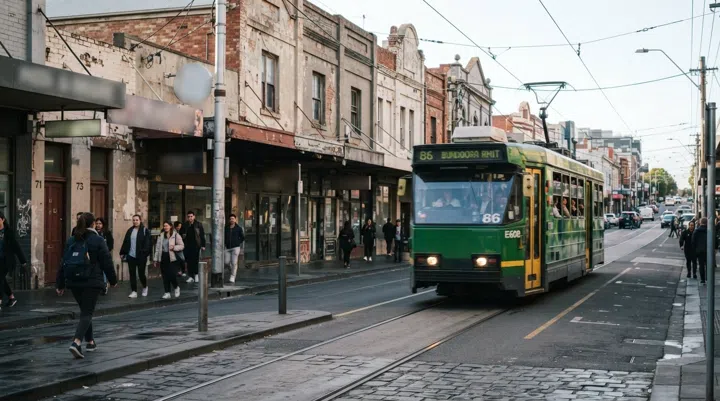 Where to live · MelbourneCollingwood, Melbourne: breweries, murals and train-carriage burgers on Smith StreetNeighbourhood guide with local culture and amenities
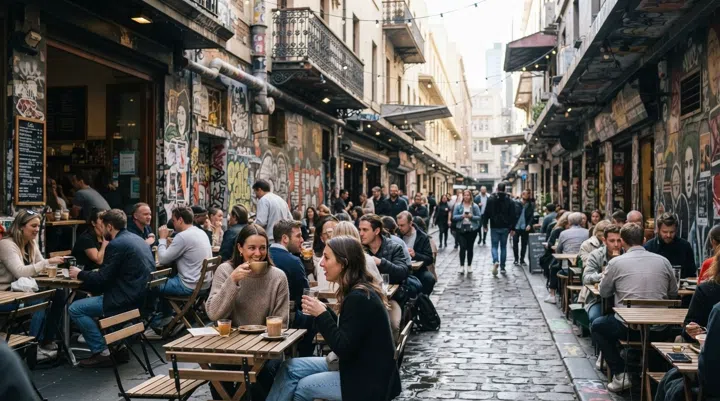 Where to live · MelbourneMelbourne CBD: laneways, trams and the city’s edible centreCentral neighbourhood guide with practical details
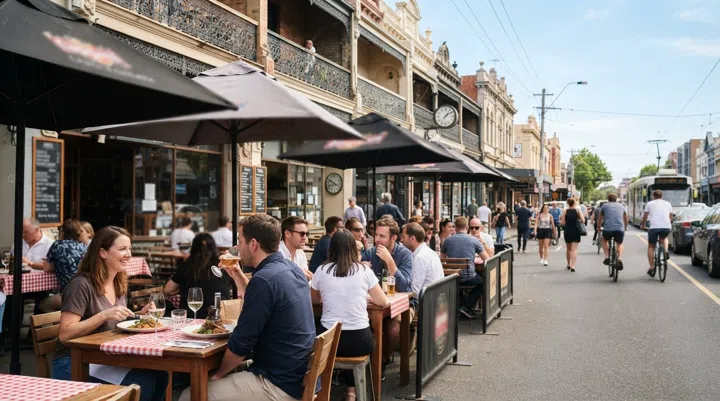 Where to live · MelbourneCarlton, Melbourne: espresso heritage, gardens and Little ItalyInsightful walk through a key Melbourne neighbourhood
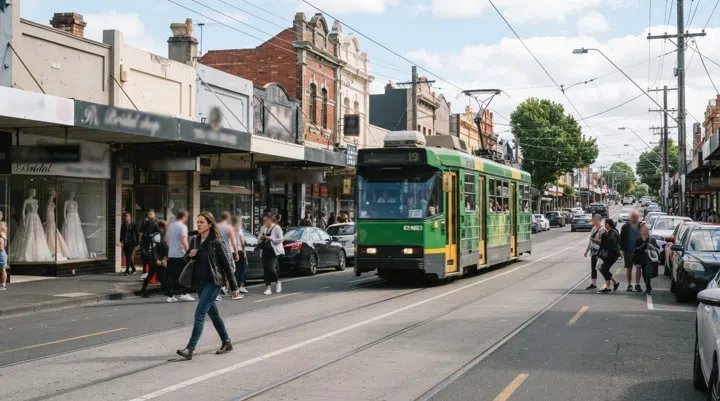 Where to live · MelbourneBrunswick, Melbourne: Sydney Road’s lived-in inner northDetailed neighbourhood walk with local vibe
Where to work
4 pieces by the writers on the ground
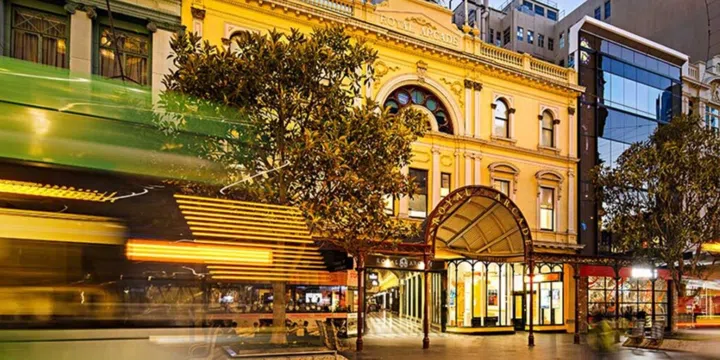 Where to work · MelbourneThe Quiet Courtyards Behind Melbourne's Busiest LanewaysWalking route with coffee and group seating tips
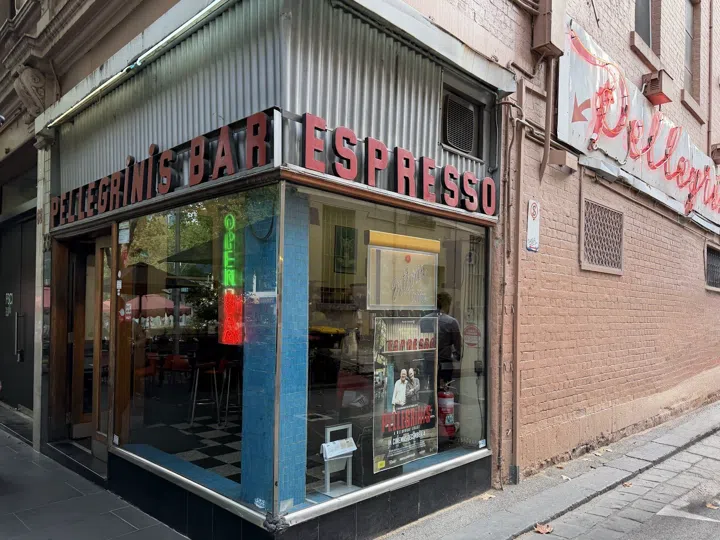 Where to work · MelbourneMelbourne's Coffee Obsession: Where the Flat White Was BornCoffee culture route with roasteries and cafes
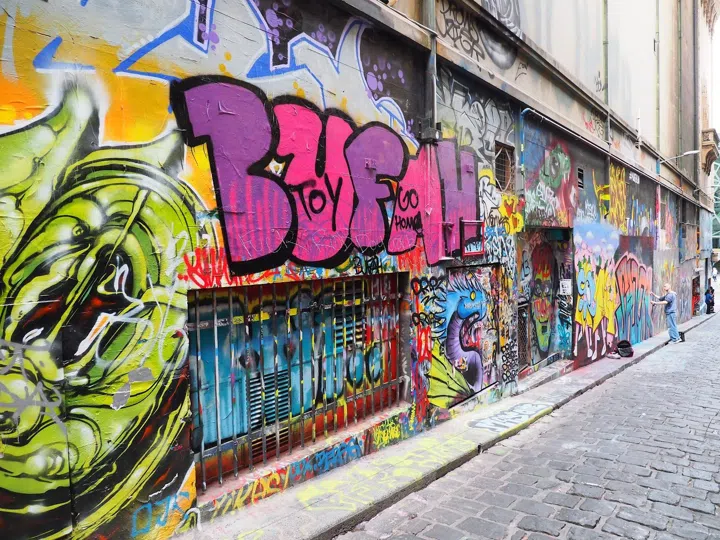 Where to work · MelbourneThe City Written in Its Lanes: Inside Melbourne's Laneway CultureDetailed guide to laneways with coffee and bars
 Where to work · MelbourneThe Roof of the City: Melbourne's Rooftop Bars and the Culture That Learned to Look UpRooftop bars guide useful for social work breaks
The kit
Some links pay us a commission
- eSIM before you landAiralo
- Nomad insurance, monthlySafetyWing
- A multi-currency accountWise
- Visa applications, handlediVisa
- A VPN for the bankNordVPN
A first week before the flat: the Melbourne hotel directory