Milan · Where to live · 13 min
Brera in October, Milan's Art Quarter Done Properly
How to work Milan's Brera in October 2026: the 08:30 opening at the Pinacoteca before the queue builds, the new rooms that aren't in the guidebooks yet, gold ginkgos in a free walled garden, and the closed days that ruin an unplanned day.
By the second week of October the light in Brera arrives low and sideways, sliding along the cobbled lanes and catching the upper render of the buildings long after the pavement has gone cool. The crush that makes this district unbearable in July has thinned, the aperitivo tables are still outside, and behind the big museum a walled garden full of ancient ginkgos turns gold. October is the month Milan's art quarter is at its most workable, as long as you plan around its closed days rather than straight into them.
What Brera actually is
Brera is a compact grid of blocks north-west of the Duomo, and you can cross it end to end on foot in about twelve minutes. Its centre of gravity is one enormous building, Palazzo Brera, which began as a Jesuit college and was handed a second life in the 1770s when Maria Theresa's administrators turned it into a cluster of public institutions: a gallery, a library, an art school, an observatory and a teaching garden, all stacked around the same courtyard. Giuseppe Piermarini, the architect who gave Milan its opera house, had a hand in finishing it, which is why the courtyard reads as a piece of restrained Enlightenment stagecraft rather than a palace.
The practical consequence for a visitor is unusual. A single address holds five separate things to see, each with its own hours, its own ticket and its own rules about groups. Get those hours right and Brera is the most concentrated cultural half-day in the city. Get them wrong and you will stand in front of three locked doors in a row. The Milan guide covers everything outside this district.
Be at the Pinacoteca for 08:30
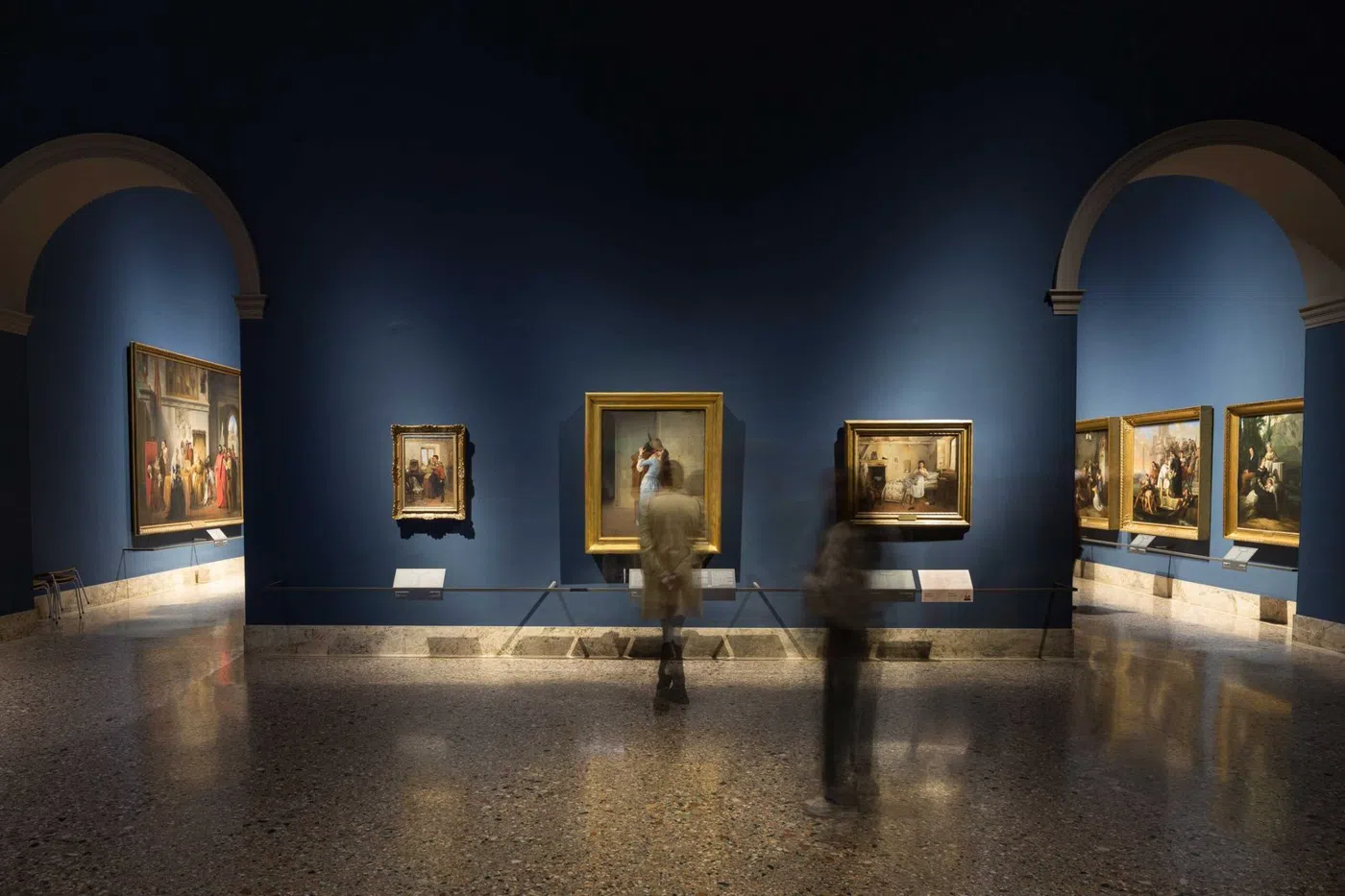
Pinacoteca di Brera (Palazzo Brera, Via Brera, the anchor of the district) is the reason any of this exists. It opens Tuesday to Sunday at 08:30, takes its last entry at 18:00 and closes at 19:15. That 08:30 opening is the best queue-dodge available here: for the first half hour you have the rooms more or less to yourself, and by eleven you are sharing them.
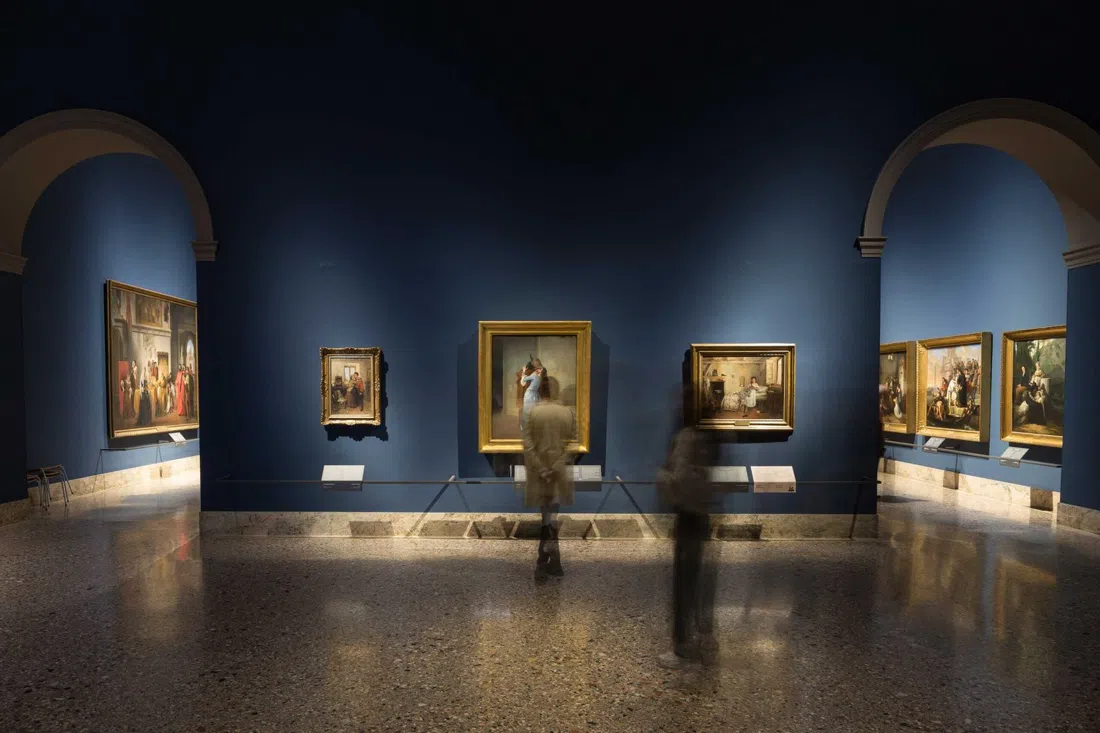
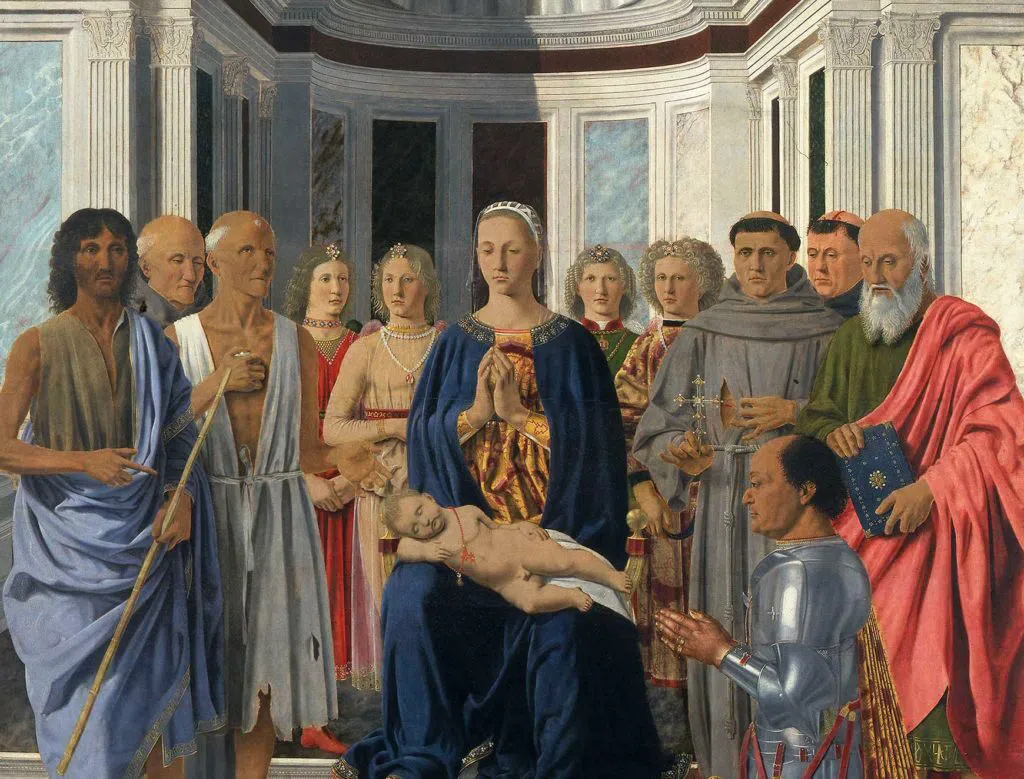
What you walk through is a teaching collection, assembled to give the art students next door models to copy, which is why it reads as a sequence of lessons rather than a treasure hoard. You get the foreshortened body in Mantegna's Dead Christ, Piero della Francesca's Montefeltro Altarpiece hanging in its architectural hush, Raphael's Marriage of the Virgin, a sombre late Caravaggio Supper at Emmaus, and Hayez's The Kiss, the one picture every Italian school party is brought here to see. Allow two hours at a steady pace, three if you read the labels properly. It is a long enclosed walk on hard floors, so budget a sit-down.
Entry is €15 for the Pinacoteca alone, or €20 for the Grande Brera combined ticket that adds Palazzo Citterio and stays valid the same day plus six more. EU visitors aged 18 to 25 pay €4, under-18s are free, and the first Sunday of the month is free with a reservation. In this window that is Sunday 4 October 2026, which is also one of the busiest days of the month inside. Couples and solo visitors can walk up without ceremony. Organised groups cannot: a guided group must book a slot through the Brera Booking system, use radio headsets, and stay within the size the booking office allows. Walk-in groups are turned away at busy times, and October afternoons count as busy.
The newest rooms in Brera
Palazzo Citterio (Via Brera, a two-minute walk up the same street) only opened to the public on 8 December 2024, after roughly half a century of delays. That matters for a 2026 trip in a dull but useful way: almost every printed guidebook on a traveller's shelf predates it, so most people walking past still do not know it is open. It is the quieter half of the €20 ticket, and the 20th-century material is a genuine change of register after four hours of altarpieces.
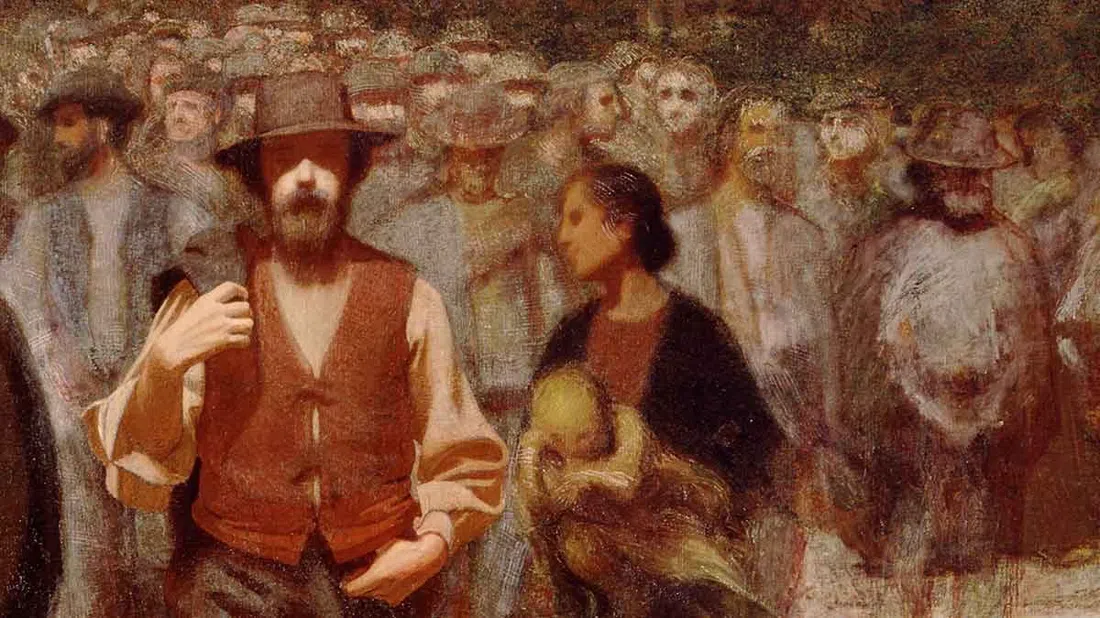
It is also free on the first Sunday of the month with a reservation. The underground galleries are tight, and guides working with larger parties have to split them, so this is a far better experience as a pair than as a group of twenty. Allow 45 minutes to an hour. Book it through the same system as the Pinacoteca.
A library, a courtyard and a very small dome
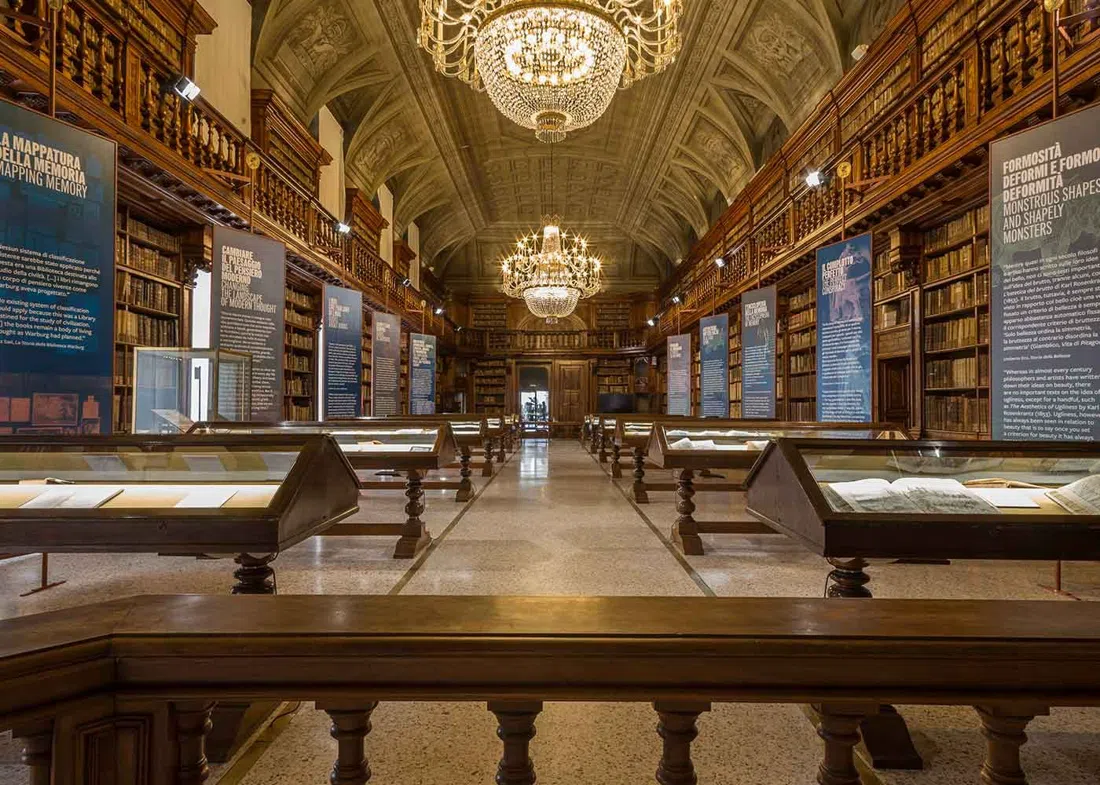
The Biblioteca Nazionale Braidense (inside Palazzo Brera, with a door through from the galleries) is the easiest free add-on in the district and one most visitors never register. It is a working library rather than a sight, open to individuals over 16, and it keeps library hours: Monday to Friday until 18:15, Saturday until 13:30, shut on Sunday, which is the exact inverse of the museum next door. Groups are admitted only on the library's own booked tours and workshops. Go in quietly, look at the room, leave the readers alone.
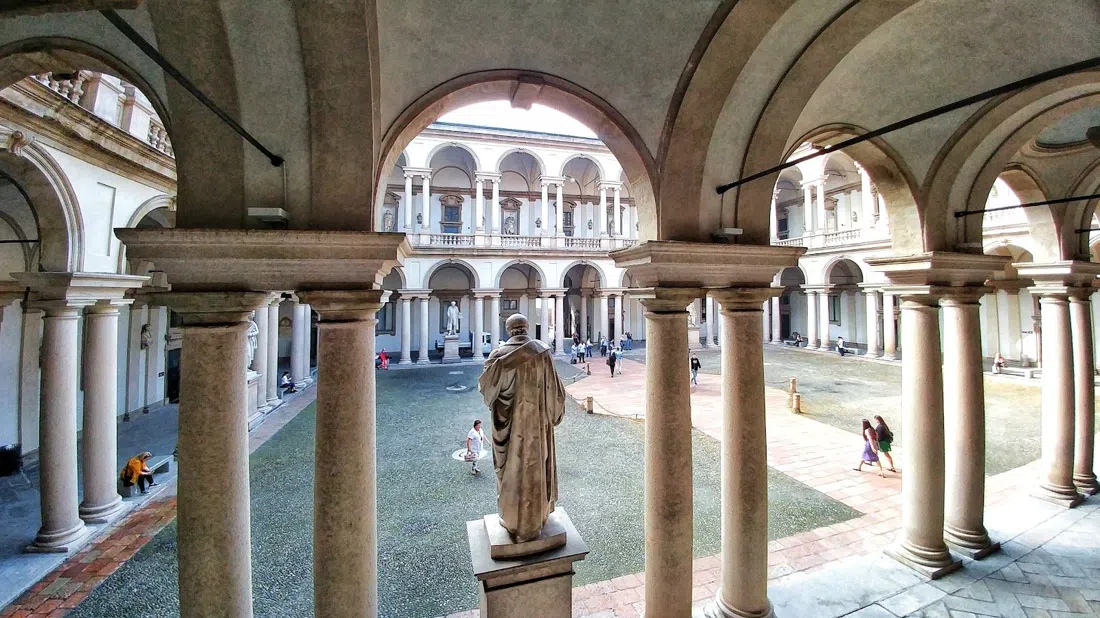
The courtyard of the Accademia di Belle Arti di Brera (Palazzo Brera, on the way to the ticket desk) costs nothing and takes five minutes. Everyone crosses it to buy a Pinacoteca ticket and almost nobody looks up at the double loggia or at the students carrying half-finished canvases past Napoleon's bronze. This is the thing that keeps Brera feeling lived-in rather than curated. The studios and halls themselves open to the public only during the Accademia's summer show, so in October the courtyard is what you get.
The Museo Astronomico di Brera — Osservatorio INAF (upper floors of Palazzo Brera) is the sharpest nobody-knows-this-is-here stop in the district and the hardest to slot in. The instrument gallery is €6, €3 reduced; an accompanied visit to the Schiaparelli Dome is €12; a guided visit is €15 but runs in Italian only; under-5s are free. The dome takes seven people at a time and only with an accompanier, days are limited, and organised groups are not admitted at all without arranging it by email first. There is no lift to the second or fifth floor, which rules it out for anyone with mobility limits. Email ahead or skip it, and do not turn up hopefully with a tired child.
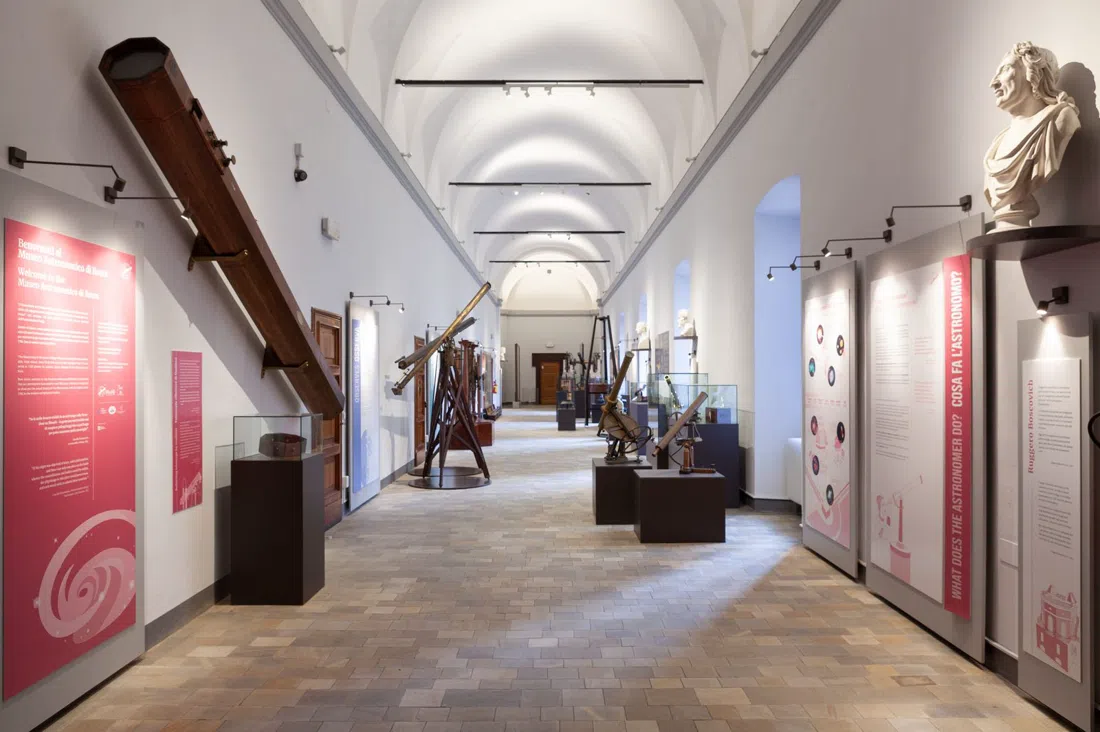
October gold in the Orto Botanico
The Orto Botanico di Brera (behind Palazzo Brera, entered from Via Fratelli Gabba or through the palazzo) is the district's best free surprise, and October is its single strongest month: the ancient ginkgos go properly gold, and the walled beds hold the warmth of the afternoon. Open access for individuals, no ticket, Monday to Saturday only, 10:00 to 18:00 until 31 October and then 09:30 to 16:30. School and organised groups need to arrange a guided visit with the University of Milan in advance.
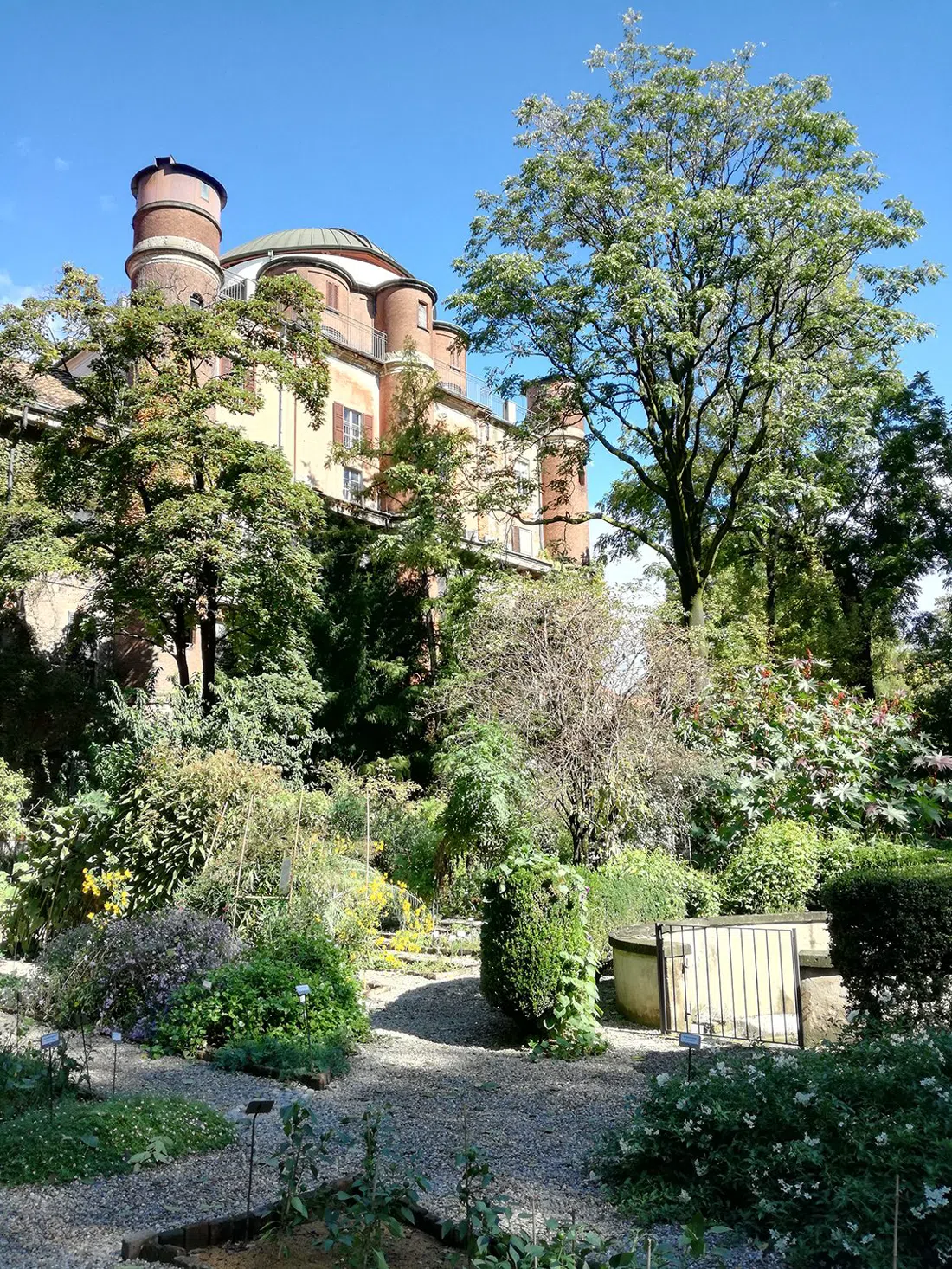
The Monday-to-Saturday rule is the trap. The garden does not pair with a Sunday museum day, so if your only Brera day is a Sunday, accept that you are losing both the garden and the library and plan a different shape.
Churches that fill the gaps the museums leave
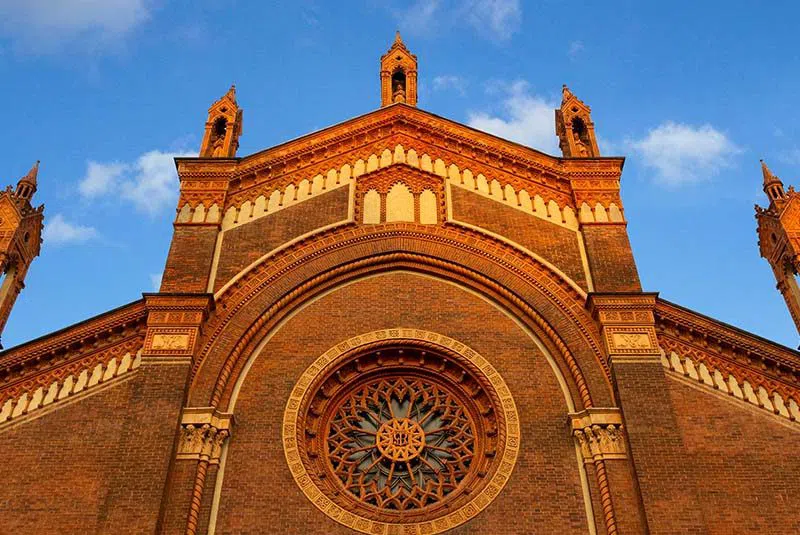
Chiesa di Santa Maria del Carmine (Piazza del Carmine, the geographic heart of the district) is the parish church, open 07:15 to 19:15 daily, which makes it the obvious fallback when everything ticketed is shut. The square outside is where the neighbourhood genuinely sits in the sun, and in mid-October that is a real pleasure rather than a line in a brochure. Tourist visits are not always permitted during Mass, so avoid the 09:30 and 18:30 weekday services.
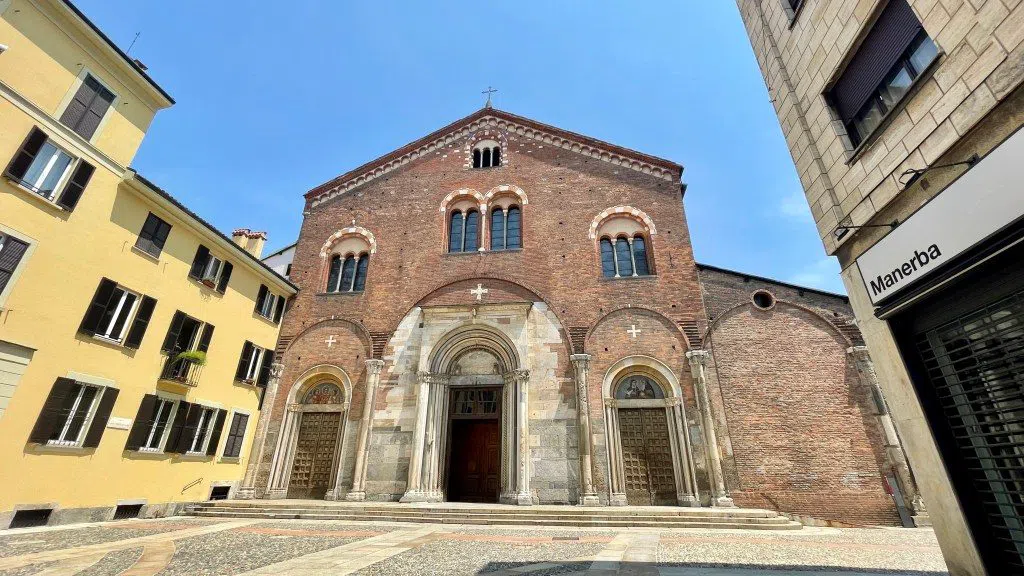
Basilica di San Simpliciano (Piazza San Simpliciano, three minutes north) is the oldest thing in Brera by well over a thousand years and the proper counterweight to the boutique-and-gallery version of the district. From September to June it is open 07:15 to 19:00 on weekdays, so October gives you the full schedule. Free, groups welcome outside services, visits pause for Mass.
Chiesa di San Marco (Piazza San Marco, five minutes from the Pinacoteca) carries the best music story in Milan's art quarter. Verdi conducted the first performance of his Requiem here in 1874, and Mozart lodged in the attached convent as a teenager. It still hosts concerts, which is worth checking when you arrive. Typically open 08:00 to 19:00 with a midday break on Sundays; weekday Masses at 07:45, 09:30 and 18:30 stop visiting.
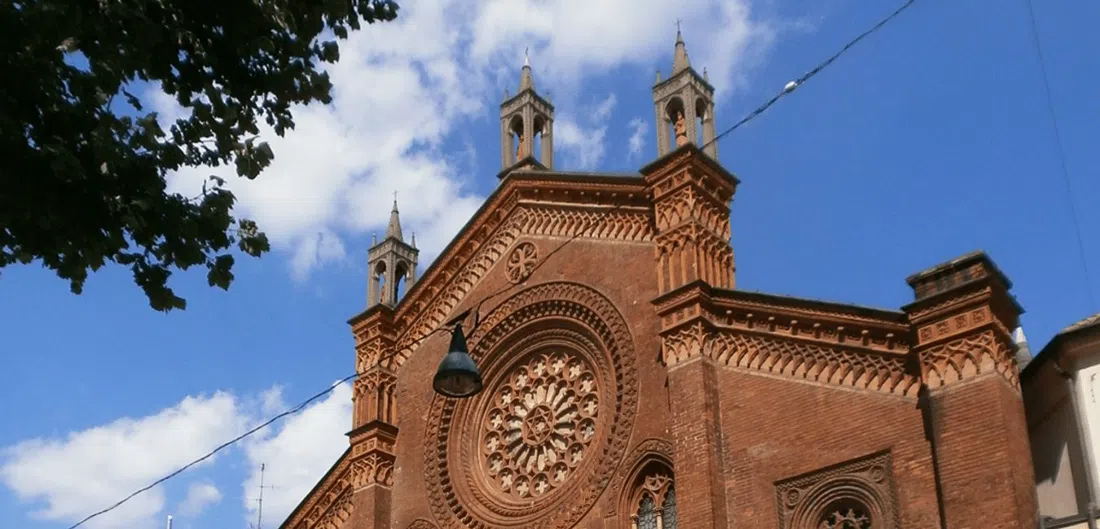
Free history two minutes from the ticket desk
Palazzo Moriggia — Museo del Risorgimento (Via Borgonuovo, two minutes from the Pinacoteca) is free, open Tuesday to Sunday 10:00 to 17:30, closed Monday like its neighbour, and almost always nearly empty. It supplies the political backstory to everything else in Brera: why the gallery is national, why the streets are named the way they are. Rooms are small, so guides keep parties moving, but for a couple it is twenty unhurried minutes and it costs nothing.
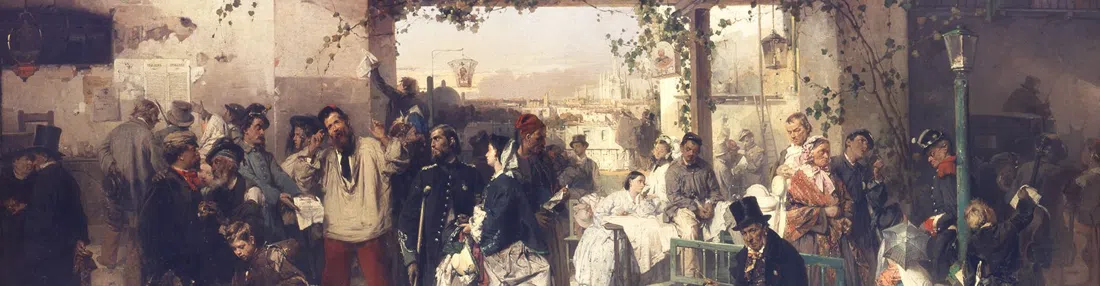
Where to stop between galleries
Caffè Fernanda (inside the Pinacoteca, Palazzo Brera) is the obvious mid-visit break and a rare museum café that is part of the story. It is named for Fernanda Wittgens, the director who hid Brera's paintings from the bombs and reopened the museum in 1950. Coffee and a pastry runs €2 to €6, lunch roughly €25 to €45. There are 32 seats inside and about 40 under the loggia, so small groups are fine and coach parties simply will not fit. Book ahead if you want lunch rather than a standing espresso.
Bar Jamaica (Via Brera, a minute from the gallery door) was the canteen of post-war Brera, where Accademia students drank alongside Piero Manzoni and Lucio Fontana's circle. Walk-in, no door policy, €8 to €14 for a drink with aperitivo snacks, open 07:30 to midnight Monday to Thursday and Sunday, to 02:00 on Friday and Saturday. That makes it the natural landing place after the museum shuts at 19:15. The pavement tables go first; large parties should call ahead.
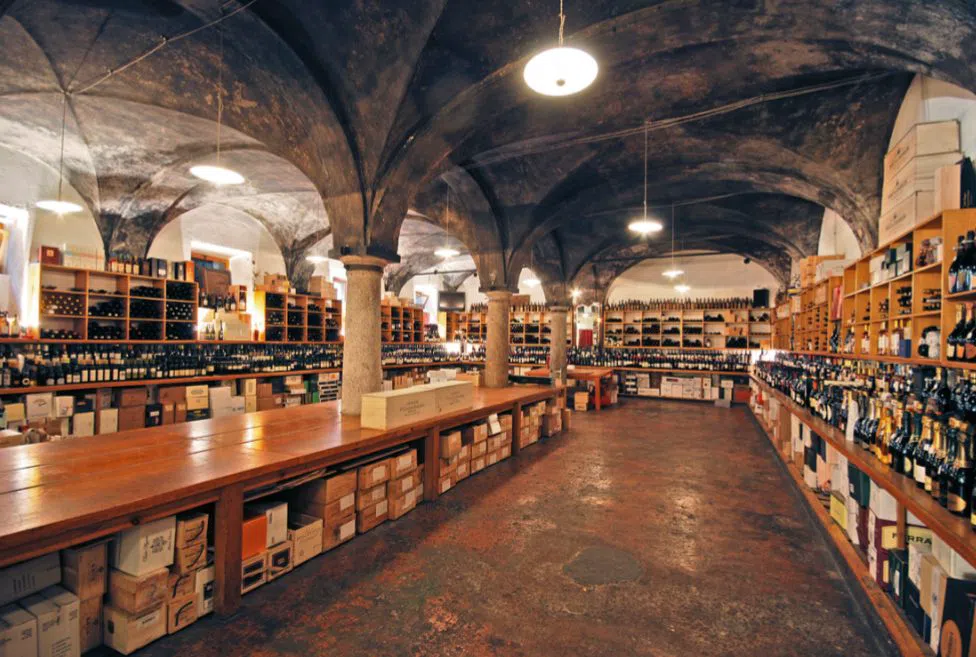
N'Ombra de Vin (Via San Marco, on the northern edge of the district) has been a wine merchant since 1973 in a genuine monastic cellar, with a list running past 2,500 labels. €6 to €14 a glass, €25 to €40 with a plate of cured meats. It is the one Brera drinking spot that is a piece of architecture in its own right, the vaulted lower rooms take groups, and those rooms fill early in the evening, so book. On Sunday it opens only from 18:00.
Sunday 18 October changes the whole walk
The Mercatino dell'Antiquariato di Brera (through the district's streets around Via Brera) has run since 1981 on the third Sunday of every month except August, 09:00 to 18:00. In this window that is Sunday 18 October 2026, the one date that turns a Brera walk into an event and also the one Sunday the district is at its loudest. It is free and open-street, and it is genuinely crowded: if you are with more than three people, set a meeting point and a time rather than trying to stay together.
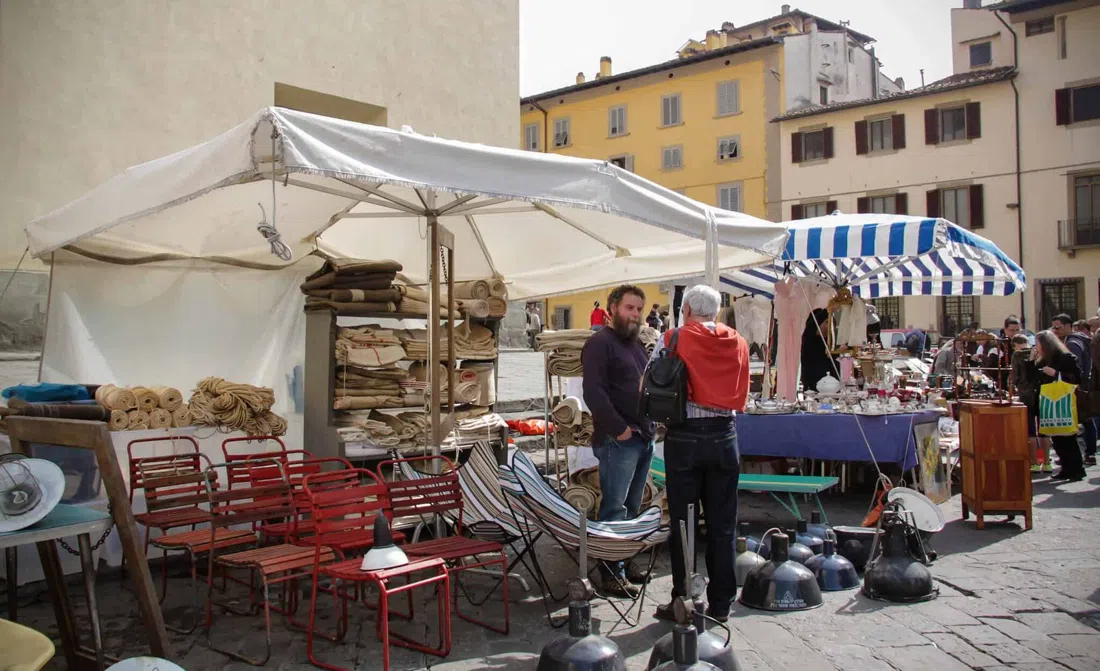
Plan the rest of that day accordingly. The library and the botanical garden are both shut on Sunday, the Pinacoteca and the Risorgimento museum are open, and the cellar wine bar does not open until six.
When Brera is shut, walk five minutes
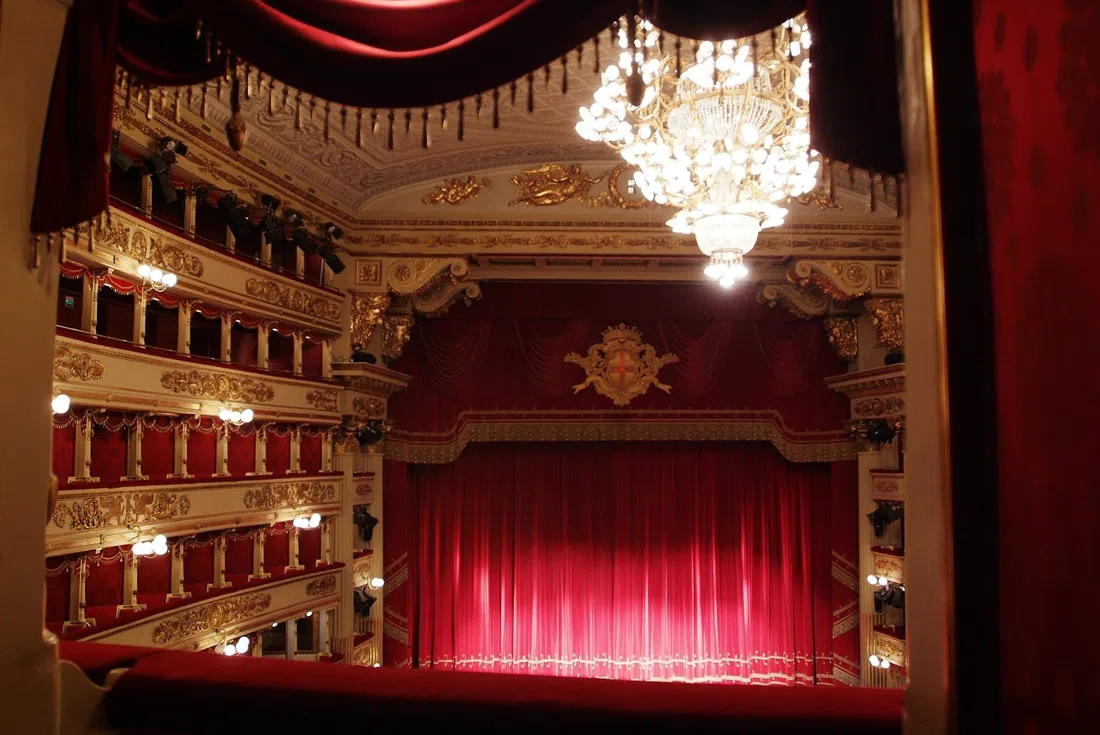
Monday closes the Pinacoteca and the Risorgimento museum, which catches a lot of short-break visitors. The fix is the Museo Teatrale alla Scala (Largo Ghiringhelli, on the southern edge of the district), open daily 09:30 to 17:30. Tickets are €12 for a fixed date, €8 for students and over-65s, €15 for an open fast-track ticket and €20 for a family; groups have a dedicated booking line. The glimpse into the auditorium from a box is a lottery against the rehearsal schedule and is withdrawn without notice, so a morning slot is the safer bet and you should not build the visit around it.
Museo Poldi Pezzoli (Via Manzoni, five minutes south) closes on Tuesday rather than Monday, which makes it the exact complement to the Pinacoteca's week. €15 adult, around €10 for young visitors, €13 over-65. It is the house-museum answer to Brera's state-gallery scale (domestic rooms, armour, clocks, a famous profile portrait) and far less crowded. Rooms are small, so groups need prior booking and work best kept tiny.

Buying at the door against booking a guide
For an individual or a couple in October, the door works. Arrive at 08:30, buy the €20 Grande Brera ticket, and you have two museums, six days of validity and no reservation anxiety. Add the free stops (courtyard, garden, library, three churches, the Risorgimento rooms) and you have a full day for the price of one ticket.
Booking ahead changes from convenience to necessity in two cases. Any organised group must hold a slot, use headsets and respect the cap, or it will be refused at busy times. And the observatory dome, at seven people accompanied, needs arranging in advance by email.
A guided cultural tour of the district exists and can be booked, with prices from 161 USD per person. What that buys is interpretation and sequencing, not access: the art behind the door is €20. The booking platform flags the top tour here as likely to sell out, so if you want a specific date in October, sort it before you fly rather than on the morning. Who should pay for it: first-time visitors who want the Napoleonic hang and the Risorgimento politics joined up by somebody who knows the material, and anyone with half a day and no appetite for logistics. Who should not: anyone happy to read, walk and stop for coffee at their own pace, which in a district this small is most people.
Best time to go in October
Tuesday to Friday at 08:30 is the best slot of the week. The museum is quiet, the garden opens at ten so it catches you on the way out, and the library is open until 18:15 if you want to end indoors. Saturday is fine in the morning and busy from mid-afternoon, when Brera's shopping streets fill. Sunday splits in two: 4 October is free entry with a reservation and correspondingly packed, 18 October is market day and loud in a good way, and both Sundays cost you the garden and the library.
Early October is still warm enough to sit outside at seven in the evening. The pivot is 25 October, when the clocks go back and the useful light is gone by about five. After that date the courtyard and the garden are morning and early-afternoon propositions, and the garden's own hours shorten on 31 October. Rain, which October supplies, is less of a problem here than almost anywhere in the city: between the gallery, the library, the Risorgimento rooms, three churches and the opera museum you can fill a wet day without a taxi.
Is it worth it
Yes, and more than most people expect, because the ratio is unusual: one €20 ticket, a long list of free doors, and no travel between them. Brera suits people who like looking at things slowly, couples, and anyone who would rather spend a day in twelve blocks than tick off four districts. It suits large groups considerably less well, since the gallery caps and routes them, the new underground galleries have to be split, the café will not seat them, the dome admits seven, and the market swallows them whole.
If you want spectacle, Milan has louder options. If you want the quarter where the city actually kept its paintings, its students and its ginkgo trees in the same building, come in October and start early.
Practical notes
Getting here is simple. Lanza on metro line 2 and Montenapoleone on line 3 both put you a few minutes' walk from Via Brera, and several trams stop along the southern and western edges. A single urban ticket costs a little over €2 and a 24-hour pass well under €10; contactless at the gate works and saves the machine queue. Do not drive: the district sits inside the city's charged traffic zone and parking is a waste of money.
Cards are accepted everywhere that takes a ticket, including the museums and the wine bar. Carry €30 to €50 in cash anyway for the antiques market, where a lot of stalls still prefer it, and small coins for church donation boxes. Timing in one line: 08:30 Pinacoteca, 11:00 Palazzo Citterio, lunch in the museum café or at the wine bar, 14:00 garden and courtyard, 15:30 churches and the Risorgimento rooms, aperitivo from six. A realistic budget is €20 for tickets, €30 to €50 for a sit-down lunch and an aperitivo, and nothing at all for half the day's stops. For somewhere to sleep within walking distance of the gallery door, start with a Milan hotel search and look at the blocks around Piazza del Carmine and Via San Marco.
1 October 2026 · a first week before the flat: the Milan hotel directory