Tel Aviv · The weekend · 11 min
Tel Aviv to Rosh Hanikra in September With the Grottoes Closed
The sea caves at the end of the country are shut this September. The northern day out of Tel Aviv still works, and this is where you stand for the view now.
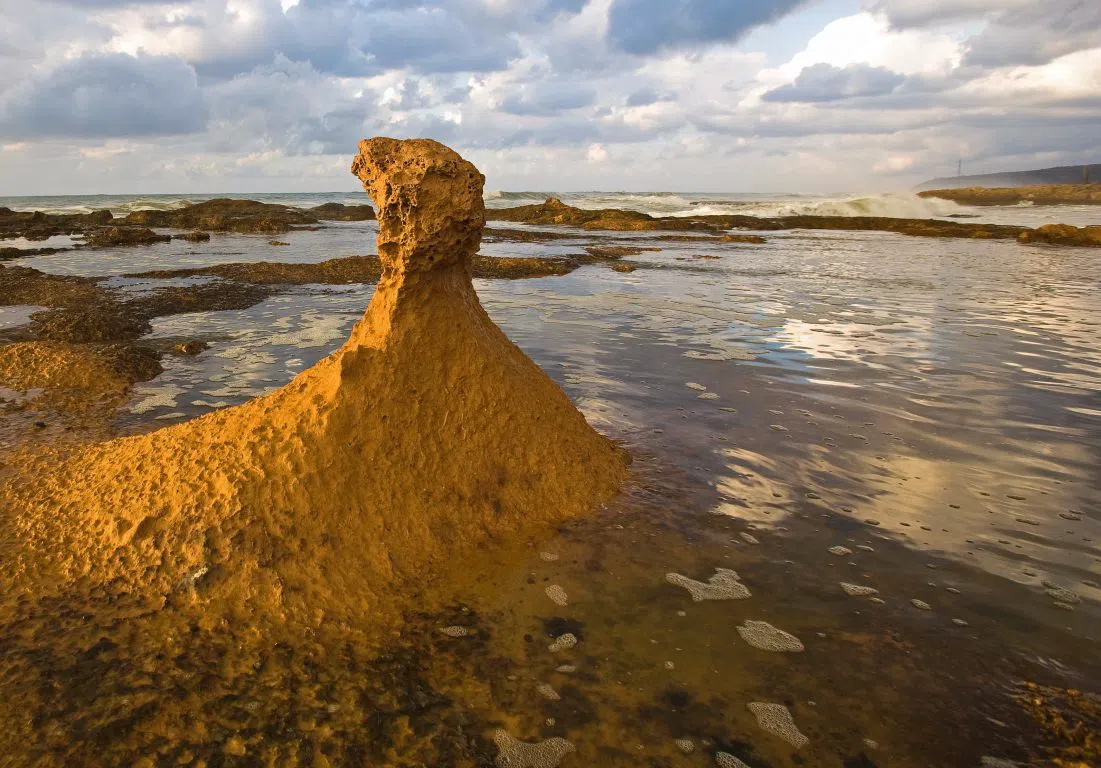
You drive north out of Tel Aviv for a little over two hours and the country simply runs out. At Rosh Hanikra the coastal plain ends in a wall of white chalk that the sea has been hollowing from underneath for far longer than anyone has been counting, and the road ends at a fence with Lebanon on the other side of it. This September the grottoes inside that chalk are closed to visitors, which changes the shape of the day but does not cancel it.
What is closed and what you can still stand on
The grottoes are the sea caves at the foot of the headland, the reason the name is on every northern itinerary, and they are not open. Treat any plan that promises you the inside of them as out of date, and check on the day before you commit a morning to driving up there. No firm reopening date has been published, so you are going north for the coast and the border country rather than for the caves.
The closest you can currently get to that cliff and still be somewhere open is Betzet Beach (the last stretch of sand before the border fence, five minutes south of the headland). Walk to the waterline and turn right, and the whole view north is the headland itself: the chalk going straight down into water that is genuinely the colour the photographs claim, with nothing built between you and it. There is a kiosk, there are toilets, and that is the entire infrastructure. The parking takes a coach but nothing else here does, so this is a forty-minute leg-stretch rather than a billed stop. Entry is free or a small parking fee.
The two places that replace the cliff
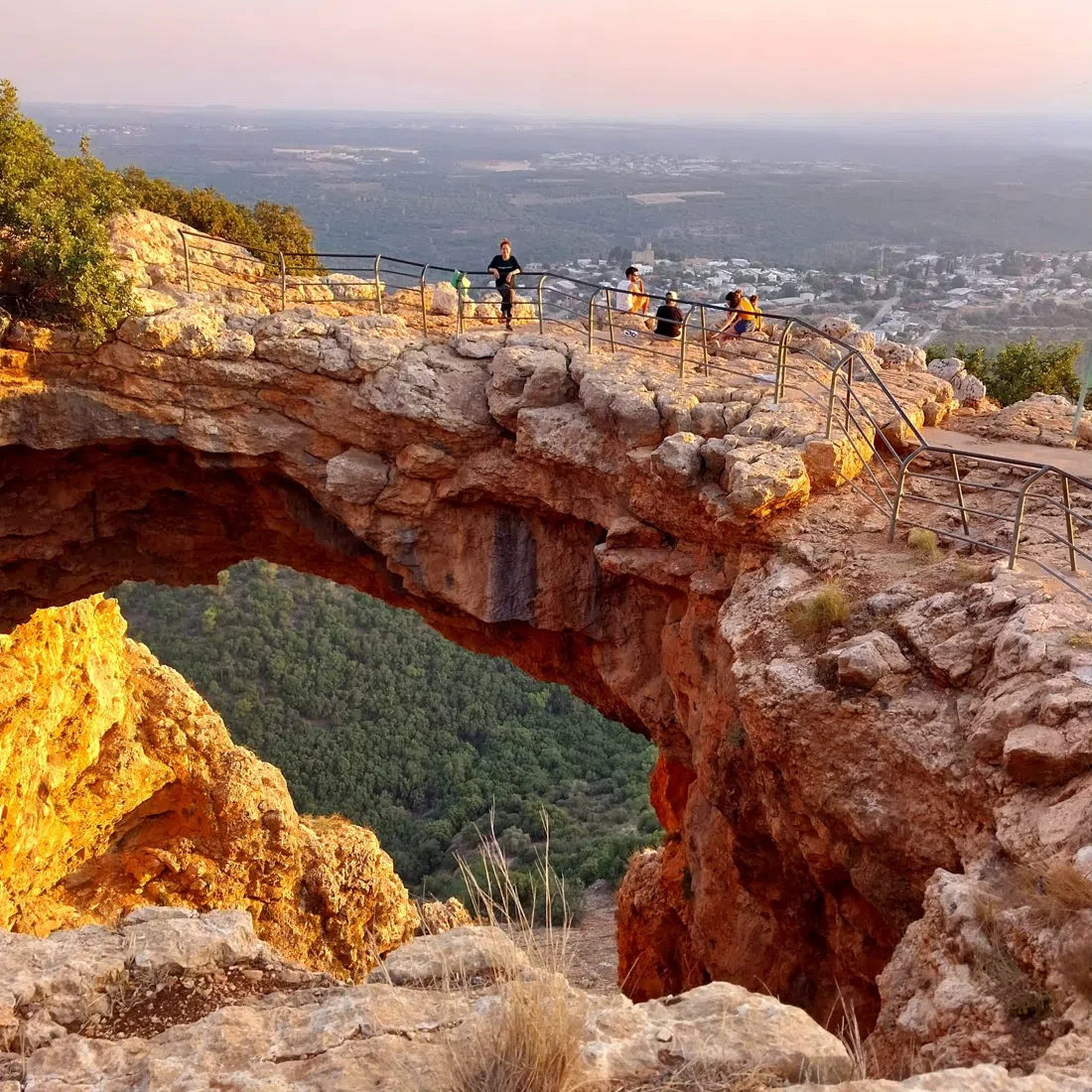
Keshet Cave, in Adamit Park (the ridge above the Betzet valley, twenty minutes inland) is where I would send you instead, and it costs nothing. The path from the car park is paved and wheelchair-accessible, which is rare up here, and it takes you out onto a natural rock arch, the roof of a collapsed cave, with the coastal plain and the sea laid out underneath. Licensed operators abseil off the arch for roughly ₪150–250 per person if you want to go over the edge rather than stand on it. One caveat: this sits inside the border strip. The army lifted the northern restrictions on 22 June 2026 and the park is unstaffed and open all year, but confirm access on the morning you go rather than discovering a closed road.
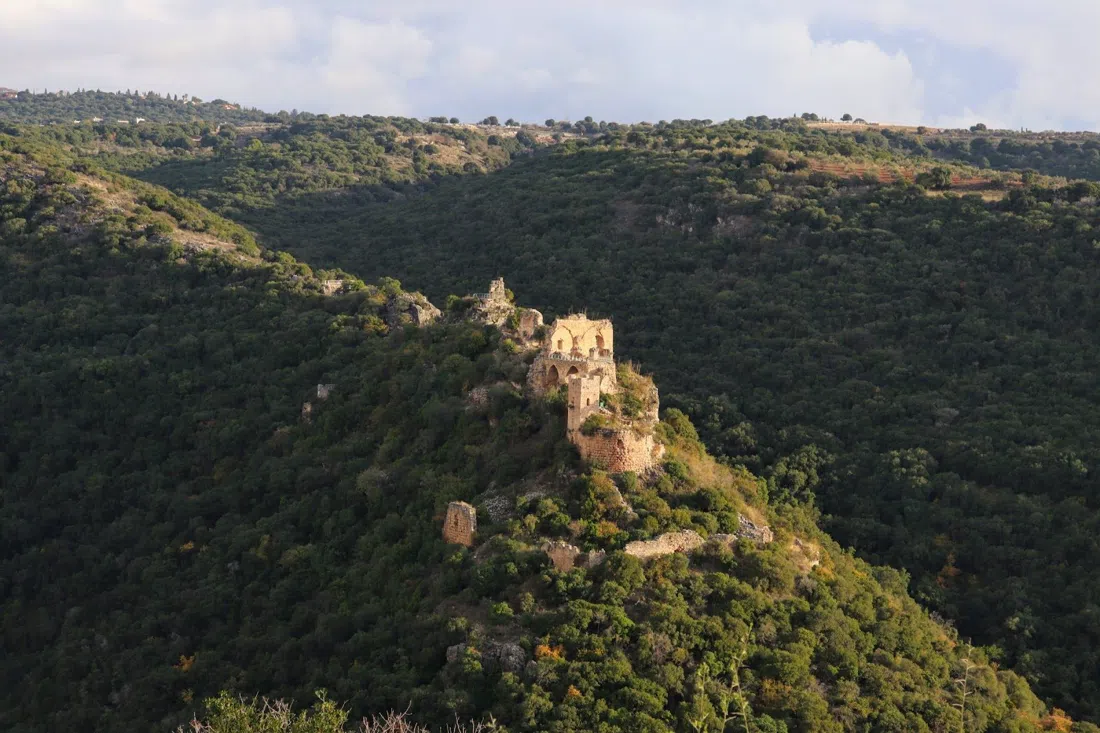
Goren Park, with the Montfort lookout (KKL forest above the Kziv stream) is the inland half of the same idea. The Crusader castle of Montfort is the photograph everyone knows, and almost nobody realises it is taken from this side of the canyon rather than from the castle itself. You can walk down to the ruin, but it is a four-hour round trip through the gorge; from the shaded tables at the lookout you get the whole thing across the valley in ten minutes. Free, no booking, coach parking, toilets. For a group, this is the easiest win of the day.
Akhziv, and the one-woman state next door
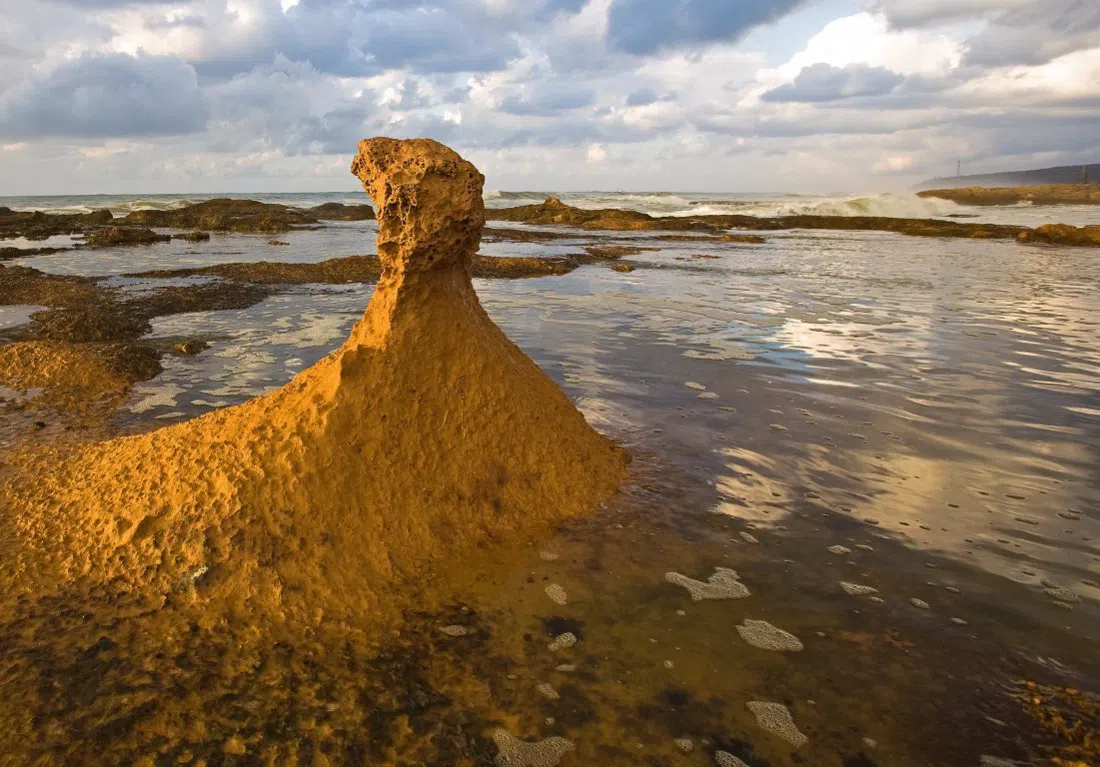
Akhziv National Park (the coast five minutes south of the headland) is the obvious substitute if you wanted water. It is a fenced park built around sheltered sea pools with lifeguards, lawns and picnic areas, and it happens to sit on a tell that has been occupied for three thousand years. The Phoenician harbour town came first, and everything since has been layered on top. Entry is roughly ₪30–40 for an adult. In September you still catch the summer timetable of 08:00–17:00; the hours shorten sharply once the season turns, which catches out people working from an October blog post. Groups are routinely booked through the park office, and the car park takes coaches.
Immediately beside it is Akhzivland (the headland compound at the park's edge), the self-declared micronation Eli Avivi announced in 1971 and which is still lived in and still stamping passports. It is a genuine one-off and I would not skip it if the door is open, but the door is one elderly resident, Rina Avivi, running the whole thing alone. Ring ahead, bring small groups only, expect an entry donation of about ₪10–20, and accept that opening is informal and can simply not happen on the day. It is not a coach stop and nobody should sell it to you as one.
Twenty minutes that explain the border
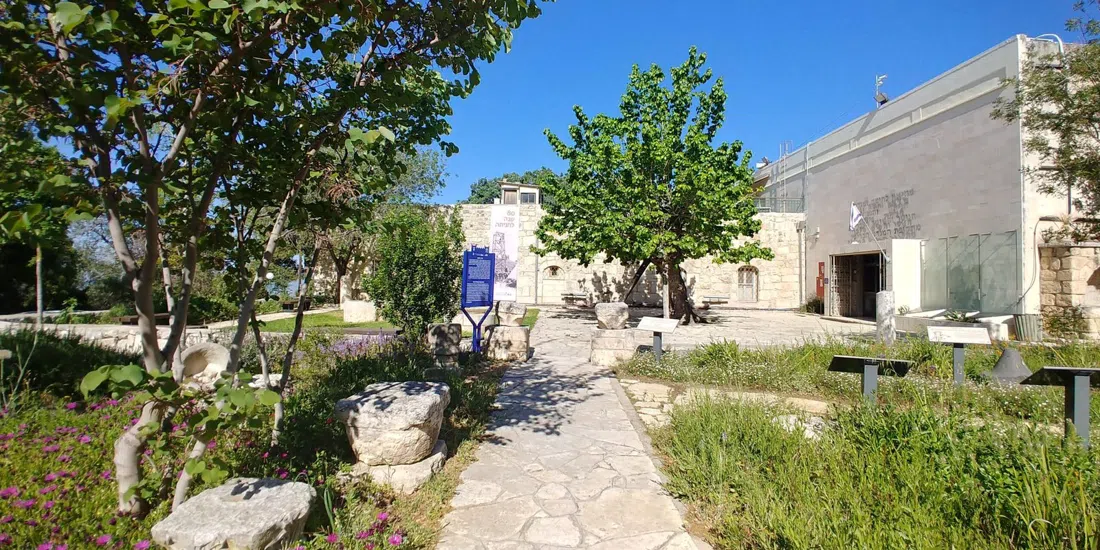
If you are spending a day driving along a frontier, Hanita Museum (the Tower and Stockade site inside Kibbutz Hanita, up on the ridge) is the piece of context the trip otherwise lacks. It covers why this particular hilltop mattered in 1938, when the settlement was thrown up overnight in the Tower and Stockade pattern, and it takes about twenty minutes to walk. Open Sunday to Thursday 10:00–16:00 and Friday 10:00–13:00, roughly ₪20–30 per person. Phone first: it is a working border kibbutz and the museum is volunteer-run, so it will not absorb a full coach without notice.
The road south and a heavy stop
Everything comes back down the same coastal road, and two stops sit directly on it.
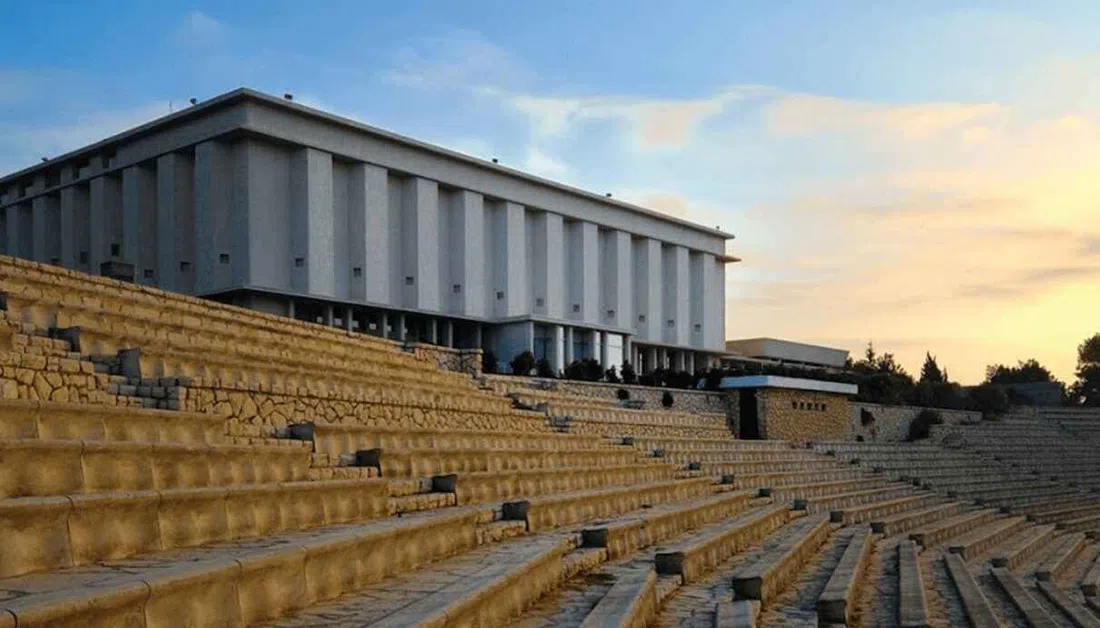
Ghetto Fighters' House Museum (on the Akko–Nahariya road, at Kibbutz Lohamei HaGeta'ot) was founded in 1949 by survivors and is the first museum of its kind anywhere in the world. It is purpose-built for groups, with booked guided visits in several languages, coach parking on site, about ₪30–40 for an adult, open Sunday to Thursday 09:00–16:00 and Saturday 10:00–17:00. The one thing I would ask of anyone leading a party: flag what it is before you arrive. Dropping this unannounced into a day that started at a beach is unfair on people who have no warning.
Ga'aton Boulevard and the Nahariya promenade (the town centre, running straight down to the sea) is the practical stop. This is the only proper town between the fortress city and the border, founded by German Jewish immigrants in the 1930s, and the boulevard still has the stream running down its middle and the cafés facing each other across it. Coffee is around ₪14, a sit-down lunch ₪60–100, and there is ample coach drop-off at the beach end. It is also the nearest place with beds if a trip decides to stay north; most visitors do not, and sleep back in the city, where the Tel Aviv hotel search gives you a far wider choice.
The Crusader half of the day
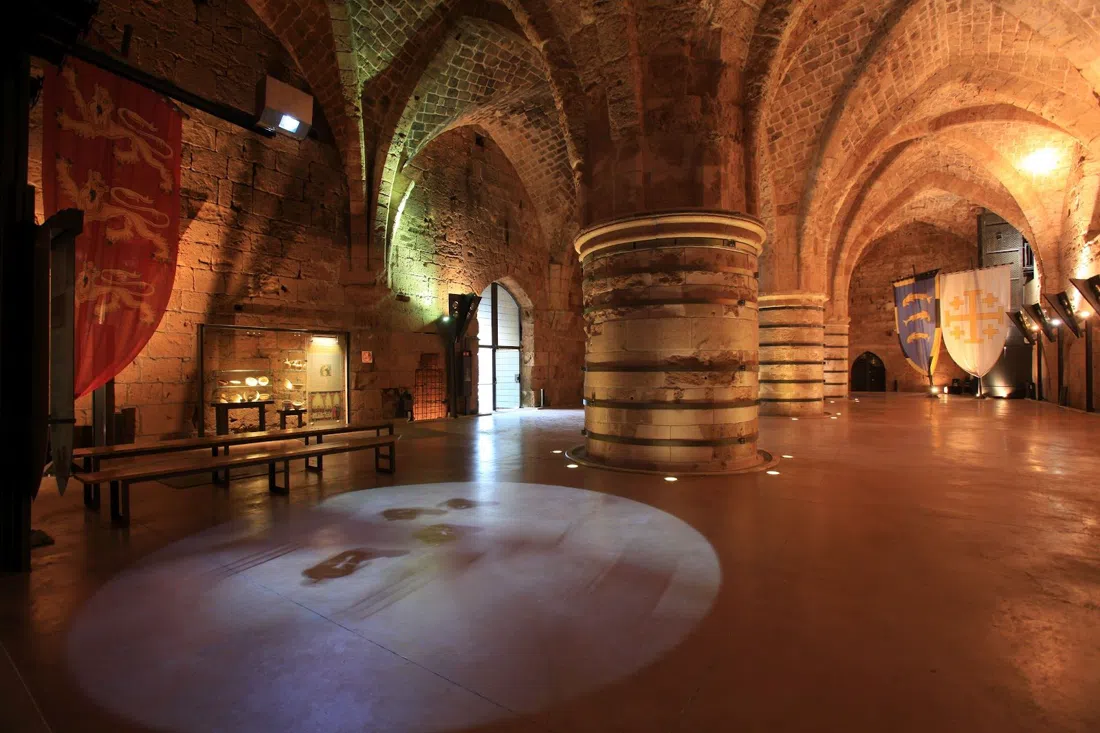
The Hospitaller Fortress, the Knights' Halls of Old Akko (inside the walled old city) is the anchor of any northern run and the best-preserved Crusader interior in the country: vaulted halls you walk through at ground level rather than a ruin you look at. The combined Old Akko ticket starts at about ₪49 and also covers the Templar Tunnel, the Turkish bath and the Okashi museum, so budget two hours rather than the one that most schedules allow. Audio guides run in around ten languages and last entry is an hour before closing, which in summer hours means the doors stop at 18:00 and you must be in by 17:00.
Al-Jazzar Mosque (a two-minute walk from the fortress gate, Old Akko) is deliberately not on that combined ticket, which catches out nearly every first-timer at the door. It is a separate ₪10. Ahmed Pasha al-Jazzar built it in 1781 and it is the largest mosque in the country outside Jerusalem; the courtyard is the calmest place in the old city on a hot afternoon. Visitors are admitted outside prayer times, groups are fine, and shoulders and knees must be covered, with a headscarf for women. Robes are lent at the door if you arrive unprepared.
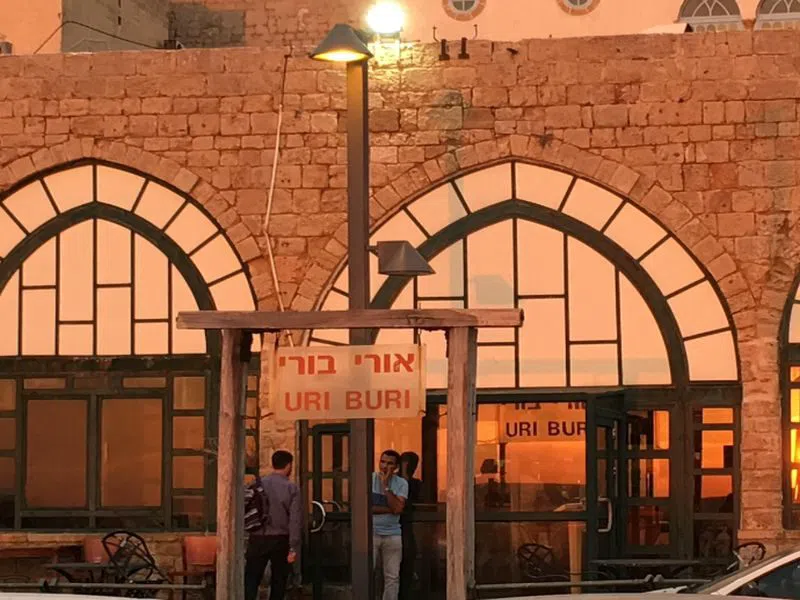
If the day is built around one meal, build it around Uri Buri (at the sea end of Old Akko, in the old Ottoman house by the lighthouse). Uri Jeremias has been cooking there since 1989, the format is small seafood plates that keep arriving until you say stop, and the room was rebuilt after it was firebombed in 2021. Reserve well ahead; it opens daily 12:00–23:00 and takes booked groups only with notice. A full run of plates lands somewhere around ₪250–400 per person. The Efendi Hotel upstairs is the same owner if you decide not to drive back.
Two stops on the way back, and one on the way up
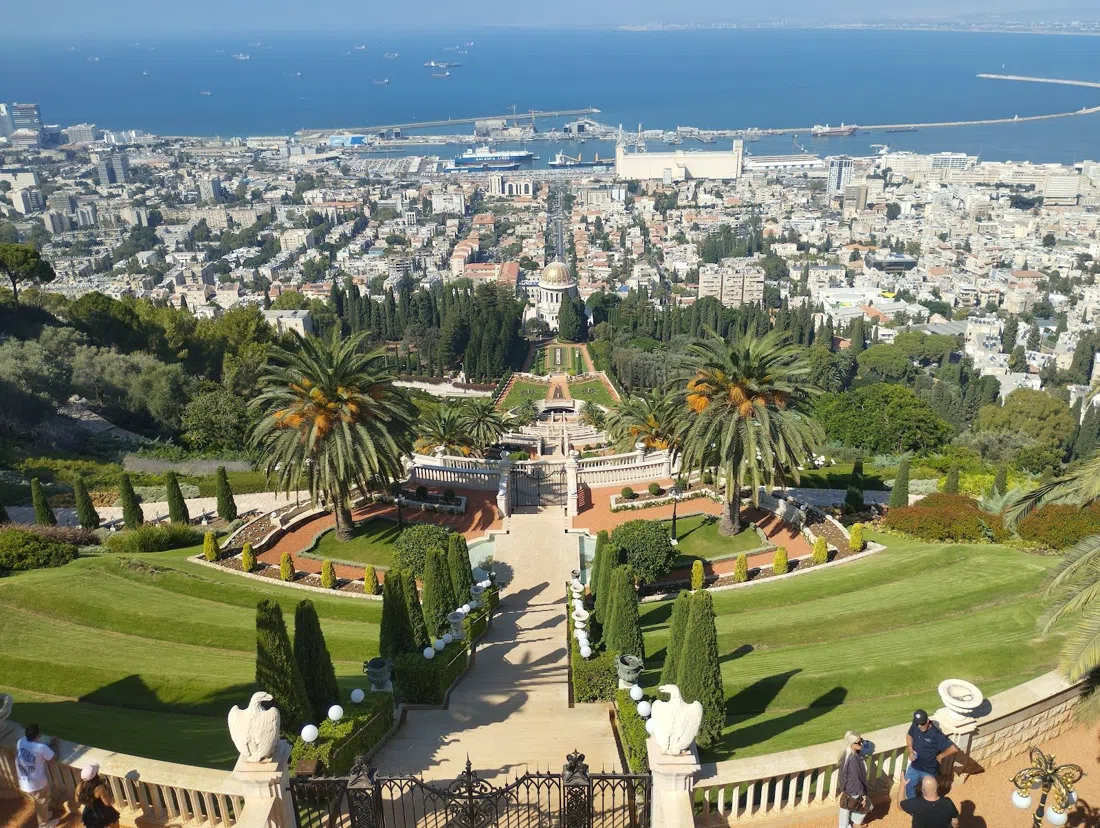
The Baháʼí Gardens (the terraces climbing Mount Carmel in Haifa) are free, and the timings are the single most common mistake on this route. The upper viewpoints are open 09:00–17:00, but the inner gardens and the shrine only 09:00–12:00. Guided tours run daily except Wednesday in English, Hebrew, Russian and Arabic, they are reservation-only and they fill; a group should book about seven working days ahead on +972 4 8313131. Modest dress is enforced at the shrine. A day that goes all the way to the border cannot also make a noon shrine slot.
Which is what the Louis Promenade, Yefe Nof (the clifftop walk at Merkaz HaCarmel) is for. The postcard image of the terraces is taken from up here looking down, not from inside them. Coaches drop at the Merkaz HaCarmel end, a minute from the Carmelit's Gan HaEm station, and ten free minutes on the railing rescues anyone who missed the cut-off.
Northbound, Caesarea National Park (the Herodian harbour, forty-five minutes out of the city) is unavoidable on the route, which is exactly why it is the stop most schedules short-change at fifty minutes. The full park is about ₪40 for an adult, ₪18 for the harbour only, ₪14 if you are eating there, and it runs 08:00–17:00 from April to October, closing at 16:00 on Fridays and holiday eves. There is a visitor centre and a film, and the theatre still works as a theatre.
Booking ahead or driving it yourself
With the caves shut, the case for a guided coach is weaker than it was, but it is not gone: the drive is four to five hours of the day, the parking at the old city is unpleasant, and somebody else watching the Akko closing time is worth something. The guided option that covers this route starts from 99 USD per person and runs five days a week (Monday, Tuesday, Thursday, Friday and Sunday), with the season running from 22 September 2026 through to 16 September 2027. Note what those operating days do to your planning: Wednesday and Saturday need a car, and Wednesday is also the one day the gardens run no tours.
Driving it yourself costs you fuel and the fortress car park and buys you the two free stops that most coaches cannot fit, the rock arch and the castle lookout, which this September are the stops carrying the day.
Is it worth it with the grottoes shut
As a pilgrimage to the caves, no: wait for them to reopen. As a day out of the city, yes, and more so than the version with the caves in it, because the caves tend to eat two hours and leave people with a photograph and no idea where they have been. What you get instead is a coast road, a rock arch nobody queues for, a Crusader hall you can walk through, and a lunch worth the drive.
It suits anyone who likes a landscape with the history attached, and anyone travelling with someone who cannot do stairs: the arch path is paved, the lookout is level, and the fortress mostly is. It suits couples better than large parties, because three of the best stops here are small, volunteer-run or one-person operations. It does not suit anyone with under five hours or anyone whose whole reason for going was the blue water inside the cliff.
Best time to go in September
September is the right month for this route and the wrong month to leave late. The summer timetables are still running (the national park on 08:00–17:00, the coastal park to 17:00), but the sea is at its warmest of the year and the light on the chalk is best in the first two hours after opening. Leave the city by 07:00. Do the far north in the morning while it is under 30°C on the ridge, take the inland lookout at midday when there is shade and a table, and arrive at the old city mid-afternoon so you are inside the fortress well before the last-entry hour.
Midweek is quieter than Friday, and Friday closes everything early: the harbour park drops to 16:00, the kibbutz museum stops at 13:00. September also carries holiday eves, which trigger the same early closing at national park sites, so check the specific date you are travelling rather than the general opening hours. Saturday changes public transport entirely and is the day to have a car or not to go.
Practical notes
Transport is two to two and a half hours each way by road from the city. The train runs up the coast to the northern towns and is comfortable, but the arch, the lookout and the kibbutz museum are not reachable without a car or a coach. Budget a ten-hour day door to door.
Carry a few hundred shekels in small notes. The parks and museums take cards; the beach parking, the micronation donation and the kiosks are easier in cash, and the ₪10 mosque entry is its own transaction at its own door.
Self-driven, reckon on ₪30–40 for the coastal park, ₪49 and up for the combined old city ticket, ₪10 for the mosque, ₪20–30 for the kibbutz museum, ₪30–40 for the museum on the coastal road, and nothing at all for the arch and the castle lookout. Lunch is ₪60–100 in town; the seafood tasting is a different order of money at ₪250–400 per person. A guided seat starts at 99 USD.
For timing, out by 07:00, north by 09:30, inland by midday, old city by 15:00, back in the city for dinner. Ring ahead for anything volunteer-run, and confirm border-strip access on the morning. If you have a second day and would rather not drive it, the Tel Aviv guide has the shorter things to do closer to home.
22 September 2026 · a first week before the flat: the Tel Aviv hotel directory