Tel Aviv · Getting around · 12 min
Riding the Tayelet from Tel Aviv Port Down to Jaffa
A flat, mostly car-free line from the northern seafront to a working fishing harbour, and the opening hours that decide what time you should set off.
You ride with the sea on your right for the whole first half, and the only climb worth the name comes at the very end, up to a hilltop garden where the skyline you have just spent an hour passing stands up behind the water. Between the two ports it is separated lane or car-free park nearly the entire way, which is why this route suits people who have not been on a bike in years. The clock decides your day, not your fitness: half the stops keep their own hours and two of them shut in the middle of the afternoon.
What the ride actually is
The Tel Aviv-Jaffa ride is one line with a few detours hung off it. You start on the northern seafront, follow the coast south past the hotel beaches, cut inland for a couple of blocks of old city, then pick up a disused railway alignment that carries you the last stretch into Jaffa without meeting a car. The whole thing is flat. A guided version takes about three hours door to door, of which maybe an hour is pedalling and the rest is standing next to your bike while someone explains what you are looking at.
The history here is the road surface. The inland half of the route runs on the bed of the 1892 railway that once ran inland from the Jaffa coast, and two of the better stops on the ride are that railway's leftovers: the terminus and the track bed. Even without a guide you notice the alignment, the way the path refuses to bend where the streets do.
The waterfront half
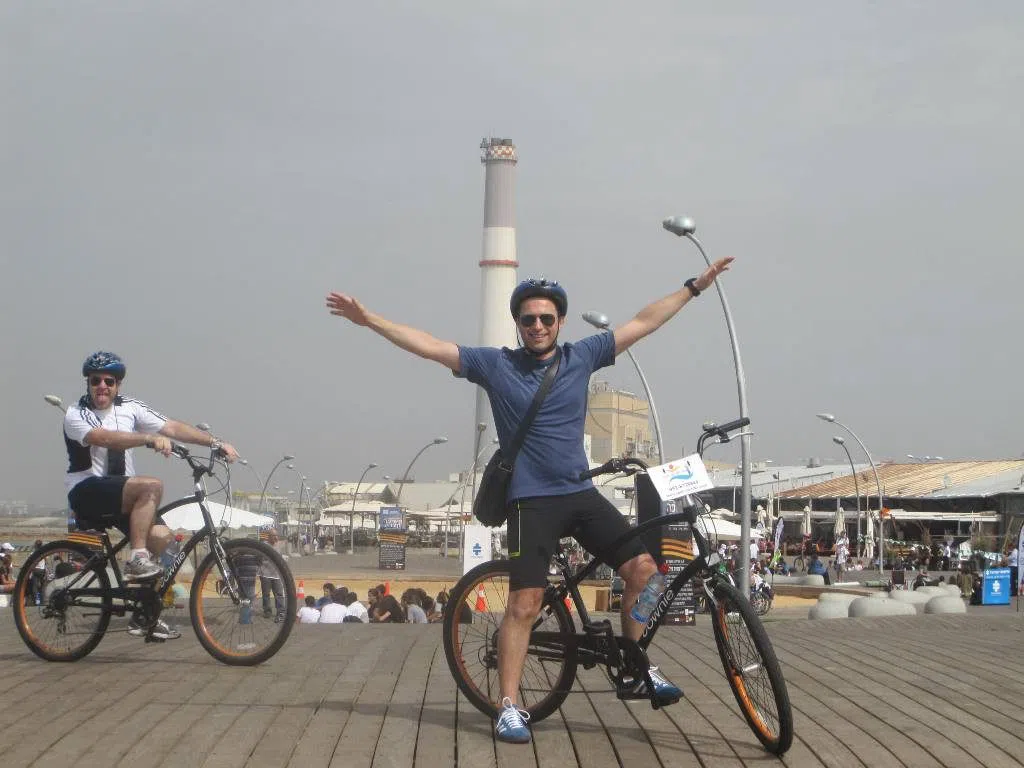
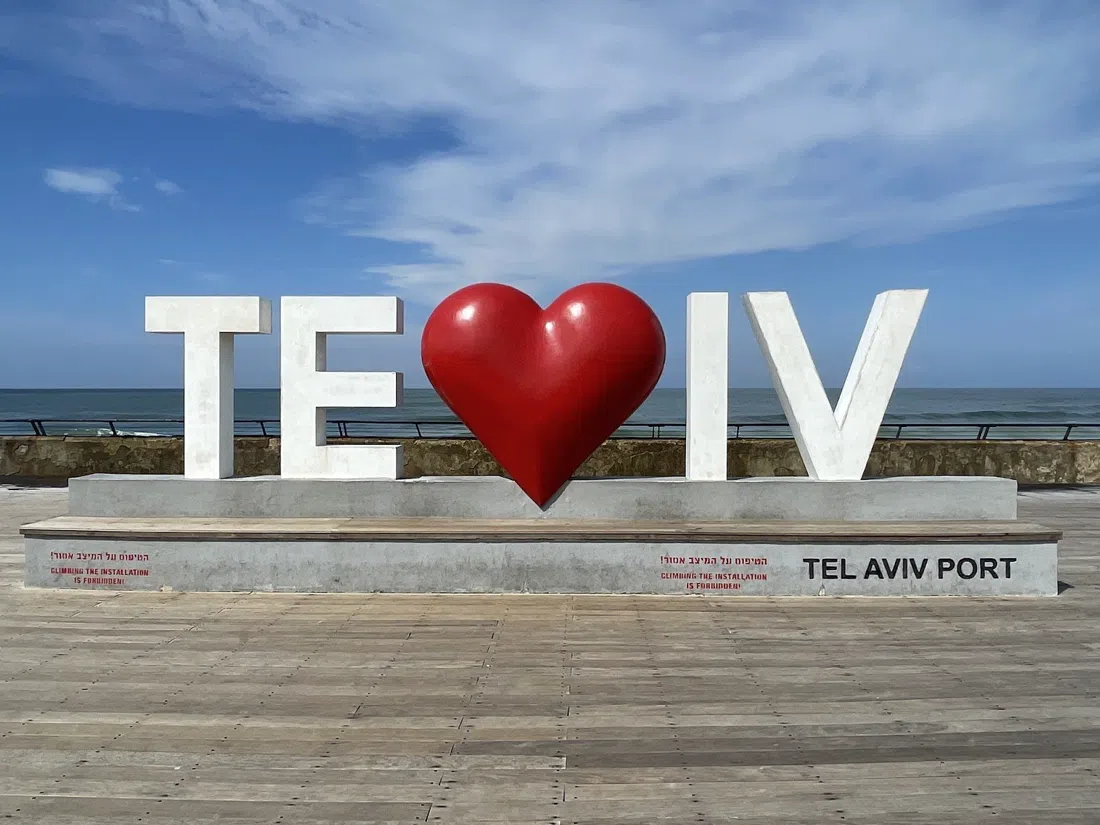
Tel Aviv Port (Namal Tel Aviv), the timber-decked compound at the northern end of the seafront, is where most rides begin. It is open public space with no door policy, and the covered Shuk HaNamal food market inside runs Monday to Saturday if you want breakfast before you set off. Entry is free; food and drink are at city prices, not market prices. If you are meeting a tour here, come fifteen minutes before the stated departure rather than at it. Helmets, water and saddle height all get sorted on the deck, and a group of twelve doing that at 09:30 sharp leaves at 09:50.
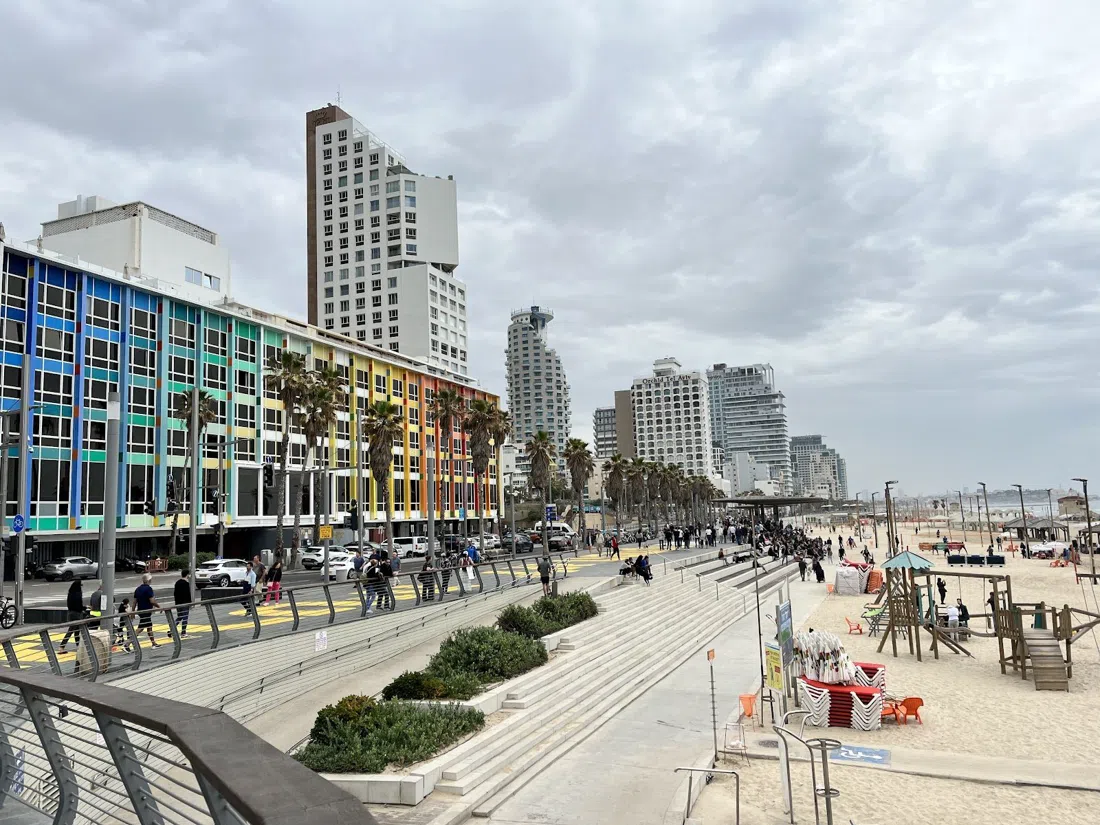
From the port you drop onto the Tel Aviv Promenade (the Tayelet), the seafront strip that runs unbroken all the way to Jaffa. This is the spine of the ride: a separated lane, effectively no junctions, the sea on one side and the hotel wall on the other. It is wide enough to ride two abreast for most of its length, but any sensible guide puts a group into single file through the Gordon-Frishman stretch, where joggers, scooters and people walking out of hotels all use the same few metres. It costs nothing and it is always open. Older itineraries need one correction: the Charles Clore beachfront restaurant Manta Ray closed after twenty-seven years, so if a plan you have been handed includes lunch there, it is out of date. Eat in Jaffa instead.
Where the ride turns inland
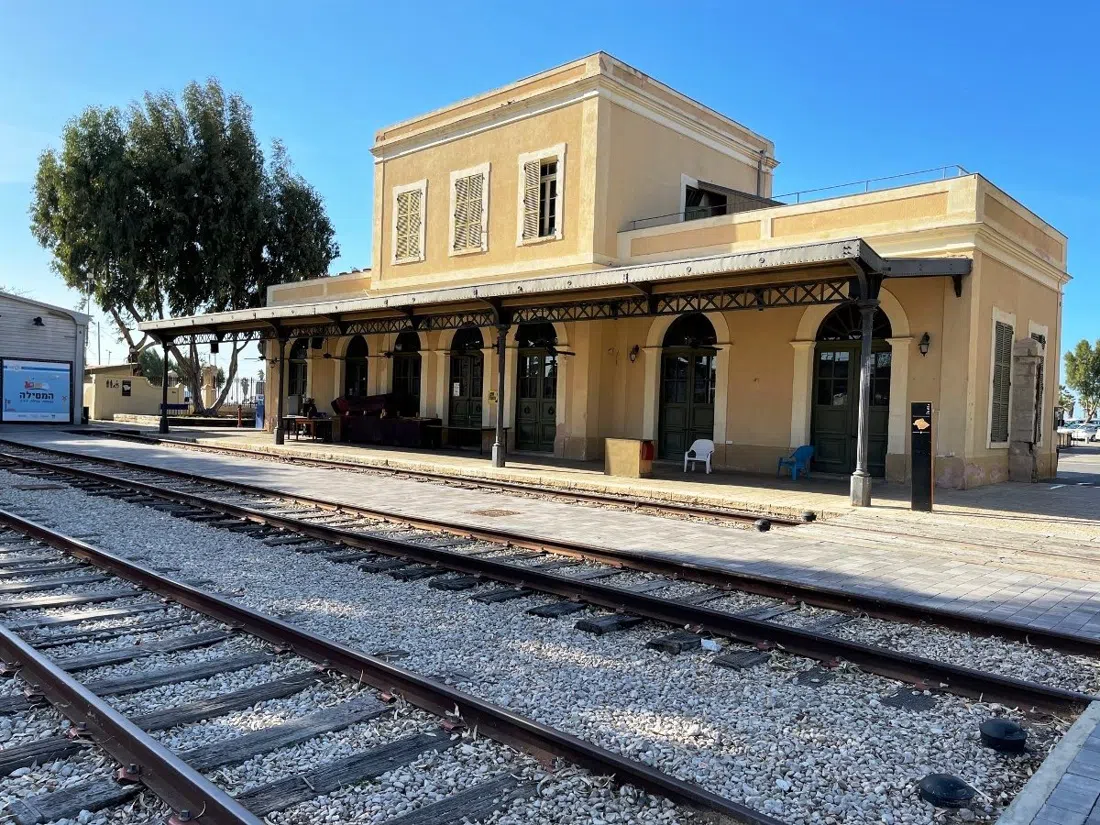
The first real stop is HaTachana (The Station), the restored railway compound between the beach and Neve Tzedek. This was the 1892 line's coastal terminus, left to rot for decades and reopened as an open-air compound of boutiques and cafés in 2010. For a group it is the easy stop: room to lean bikes, benches, and shade, which is the part that matters between June and September. It is free to enter and you want twenty minutes there, not an hour.
Two minutes further on is the Suzanne Dellal Centre for Dance and Theatre, the courtyard at the heart of Neve Tzedek. The courtyard is walk-in and free whether or not anything is on that night, and groups are fine as long as you keep the volume down, since there are usually rehearsals going on behind the windows. Get off the bike before you enter. The surface is uneven, the lanes around it are full of people looking up at the buildings rather than ahead of them, and riding through is both rude and slow. This is the prettiest few hundred metres on the route and the one you should spend on foot.

The car-free run down to Jaffa
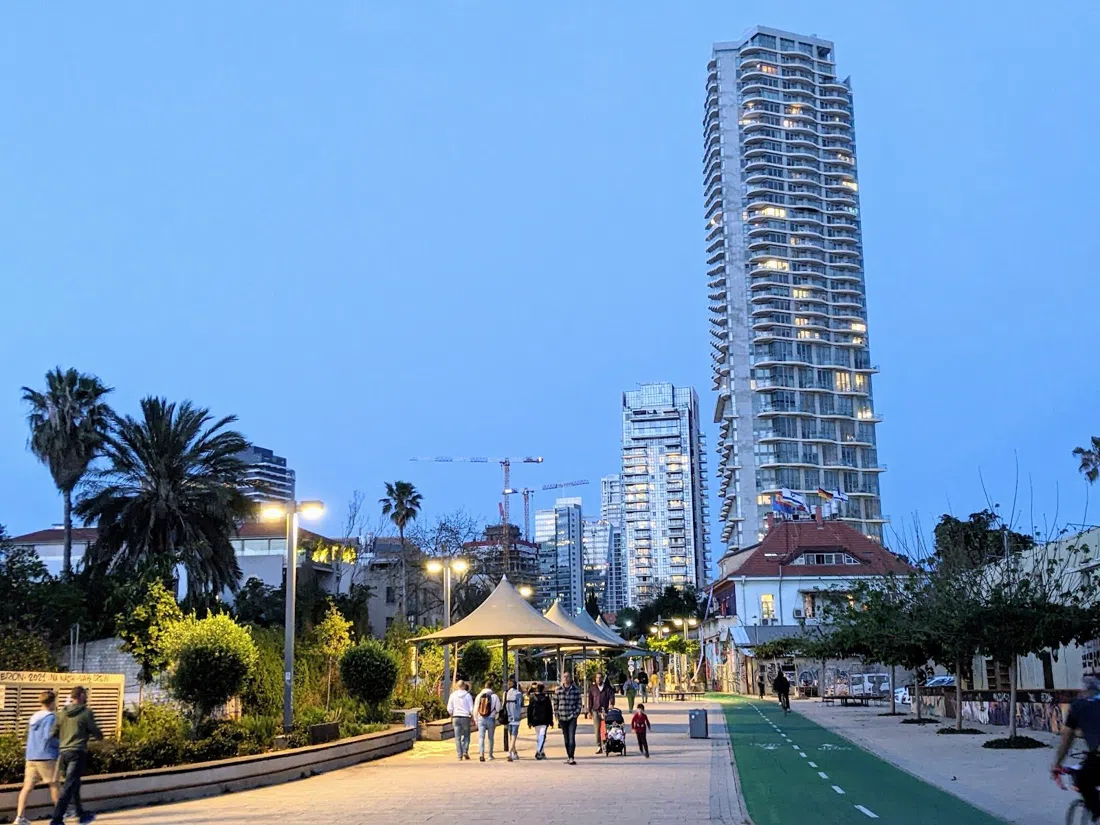
South of Neve Tzedek the route joins Park HaMesila (Railway Park), the linear park laid along the original 1892 track bed, opened in stages with the main central section from 2020. It is the reason this ride works for beginners: wide, traffic-free, entirely public, no junctions to negotiate. If anyone in your party is nervous on a bike, this is the stretch where they stop apologising and start enjoying themselves. It runs from central Tel Aviv down to the edge of Jaffa and delivers you almost at the flea market door.
Old Jaffa, mostly on foot
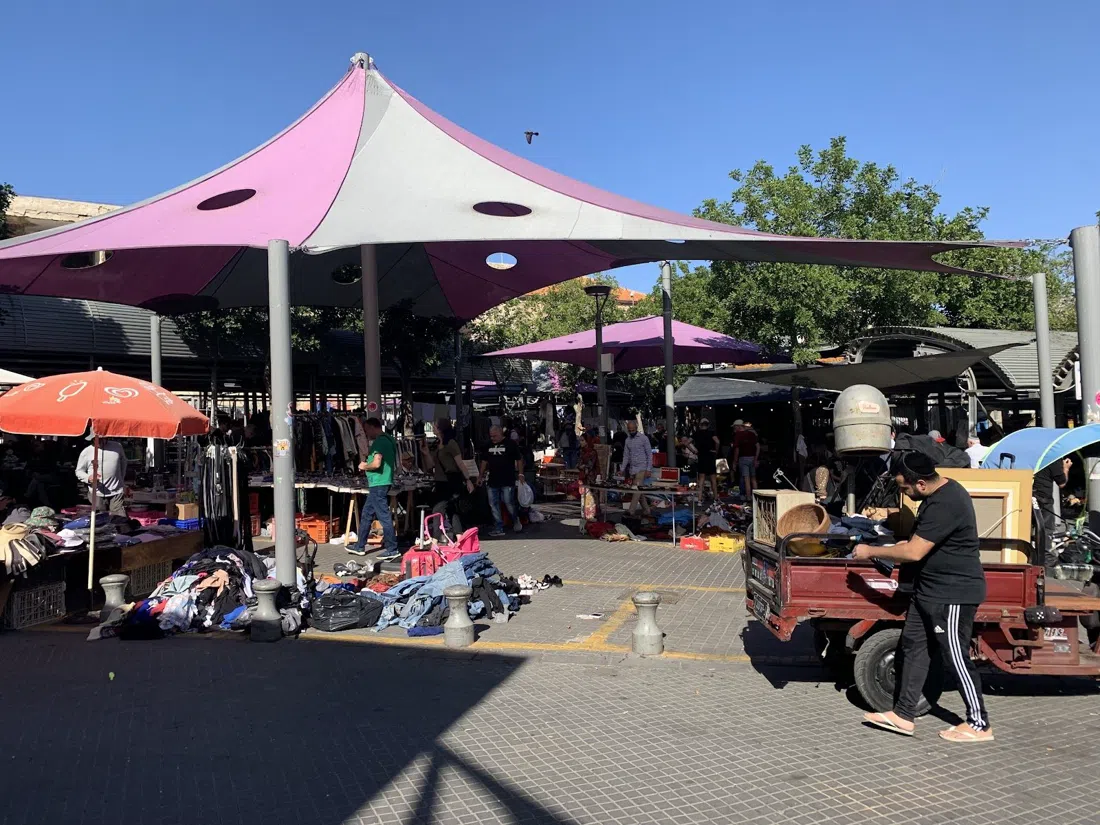
From here the bike becomes something you push. The Jaffa Flea Market (Shuk HaPishpeshim), in the middle of Jaffa, has lanes narrow enough that a group of eight riders is simply an obstruction, so park at the edge and walk in. The market runs Sunday to Thursday roughly 10:00 to 18:00 and Friday until early afternoon, and it is shut on Saturday for Shabbat, which means a Saturday ride gives you the buildings and the bars without the trade. Browsing is free and haggling is expected.
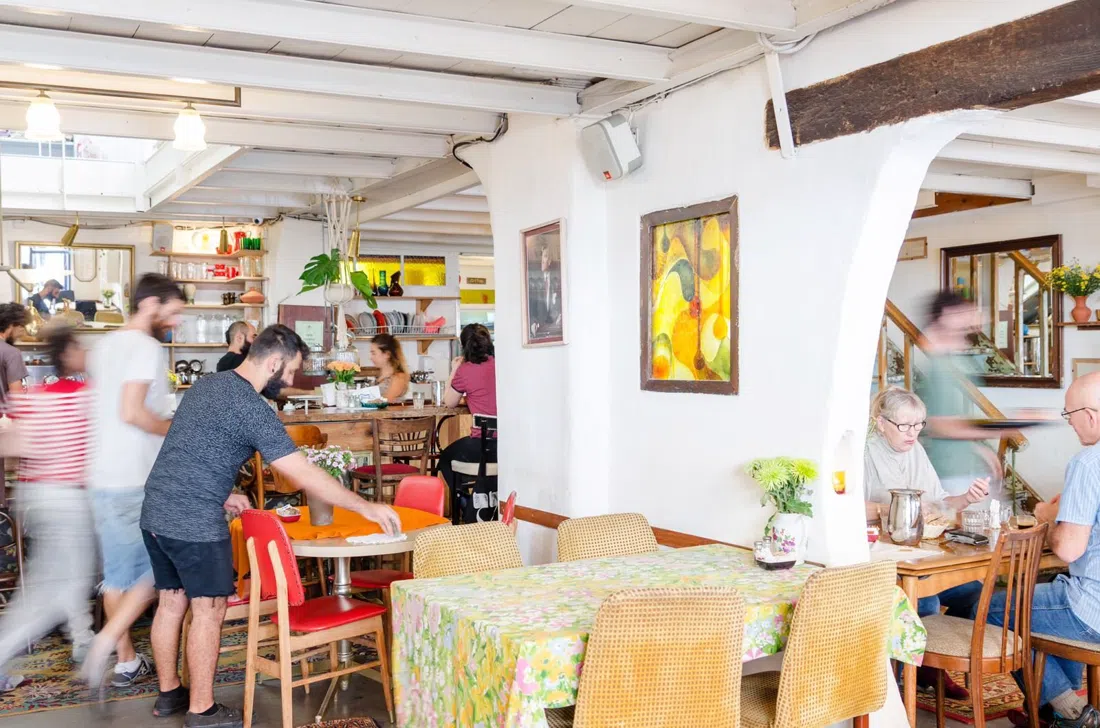
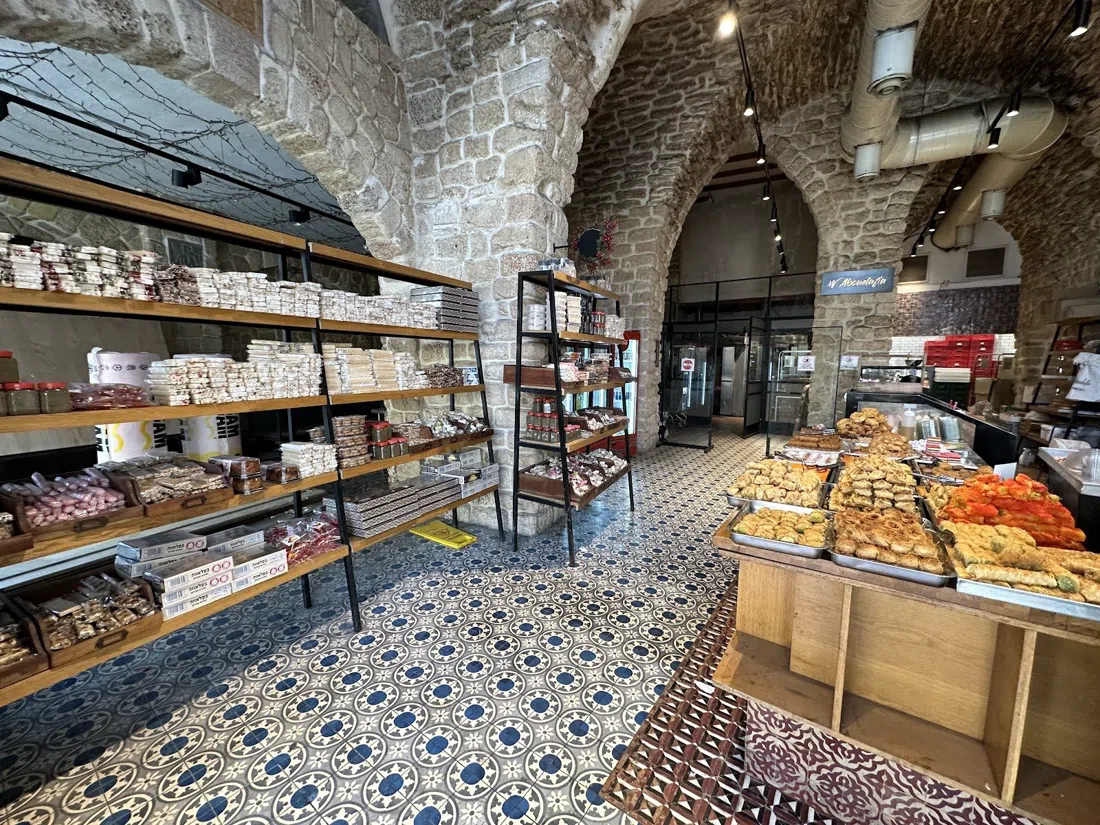
Food here is straightforward. Abouelafia Bakery, on the Jaffa side of the market quarter, has been running since 1879 and is open around the clock, which makes it the one stop that works whatever hour your ride reaches Jaffa. It is counter service with no reservations: you order, you pay a few shekels, you eat standing on the pavement with everyone else. For something to sit down to, Café Puaa in the middle of the flea market opens at 09:00 and stays open past midnight most nights, so it covers both the mid-ride coffee and the meal afterwards. Inside is small, most of the seating is on the pavement, and for a party of more than four you should book.
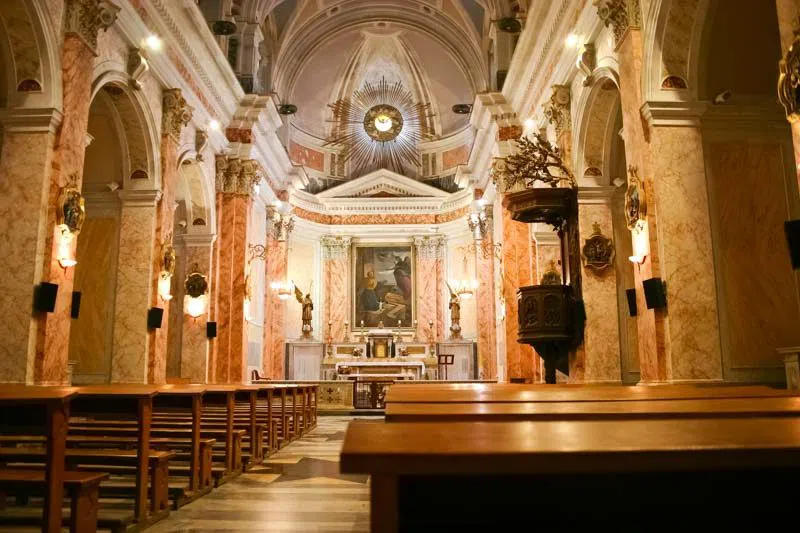
St Peter's Church, Jaffa stands above the market in Old Jaffa. Entry is free, donations appreciated, and groups are welcome outside service times, but modest dress is enforced, shoulders and knees covered, which is worth saying out loud to a party that has just ridden the length of a beach. The catch is the long midday closure, roughly 11:45 to 15:00, which morning tours ride straight into. Check the day's hours before you build it into a stop.
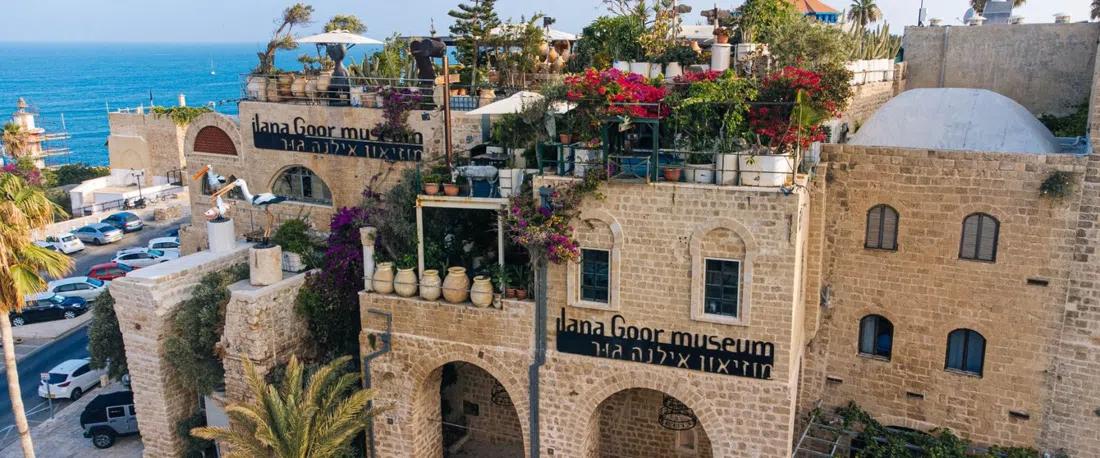
The indoor stop worth your time is the Ilana Goor Museum, the artist's house in Old Jaffa. It takes groups by arrangement, but the staircases are narrow and large parties get split and staggered. Concessions are around 25 NIS, a child about 20 NIS, a family ticket about 100 NIS, with the adult rate a little above the concession price. It closes at 16:00 Sunday to Thursday and 14:00 on Friday, so if you ride in the afternoon for the light, you are trading this away. Choose one.
Then the hill. HaPisgah Gardens (Abrasha Park) and the Wishing Bridge sit at the top of Old Jaffa, open around the clock, unticketed, with enough room for a group to spread out without annoying anyone. Stand at the rail and the coastline you have just ridden is laid out in front of you with the sea behind your shoulder. Late afternoon is when this works, when the light comes in off the water and onto the towers rather than straight into your lens.
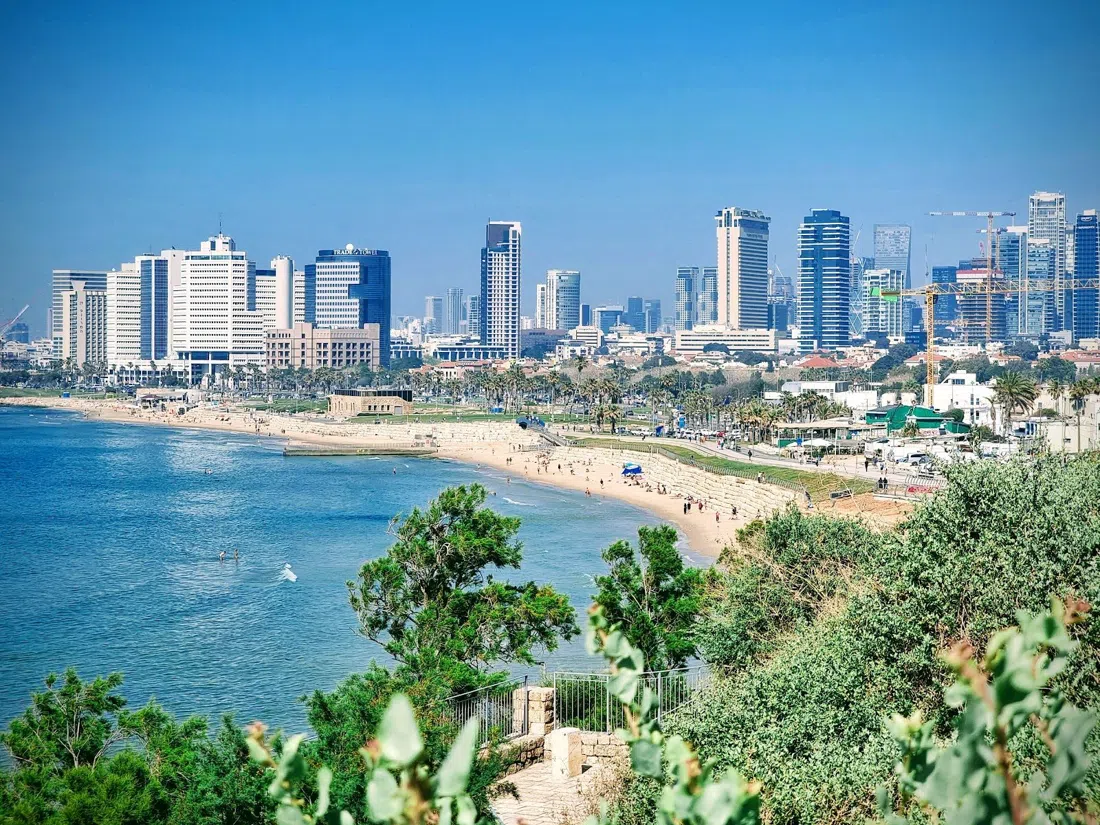
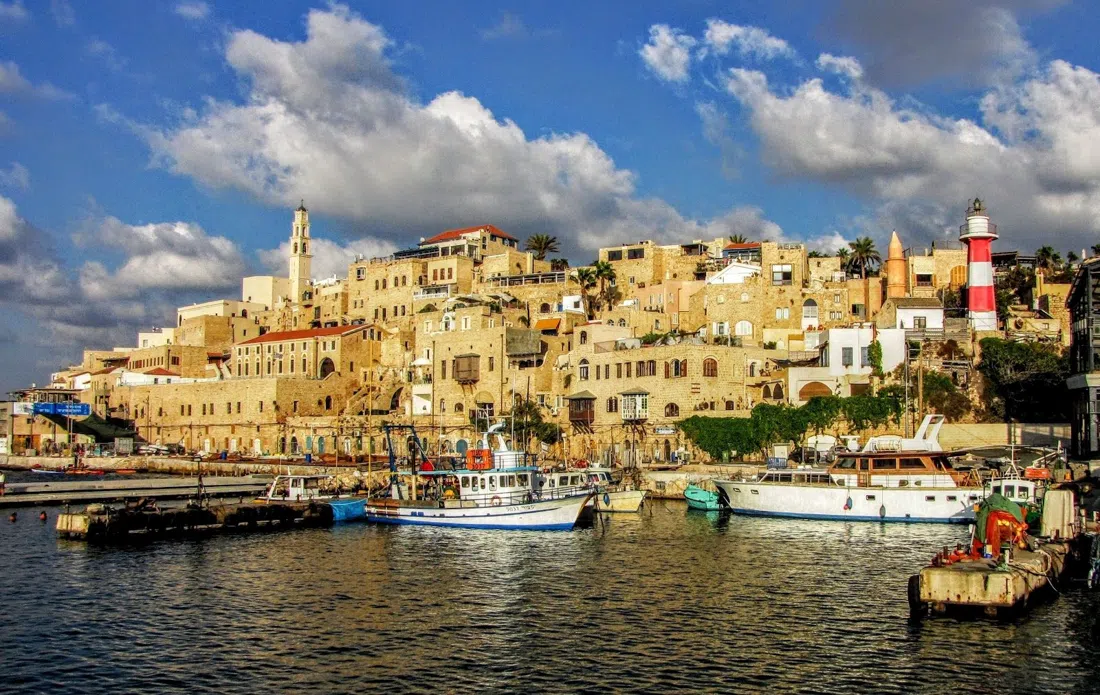
The ride ends below at Jaffa Port (Namal Yafo), still a working fishing and yacht harbour rather than a restored set, with nets, ice, diesel and a row of hangar restaurants that will seat a group and charge properly for fish. The quayside is open and you can ride it. It is an honest place to stop.
Guided or under your own steam
The difference between the two has little to do with the riding.
TLV Bike Tours, based out of The Spot Hostel at Hata'arucha 3 by the port, has been running since 2009 and its daily route is the classic version of this ride: port, promenade, HaTachana, Neve Tzedek, Rothschild, Old Jaffa. Departures are Sunday to Friday at 09:30, the scheduled tour caps at about twelve riders, and it runs around 200 NIS per person for three hours. A private full day is about 1,300 NIS for one to three people, with per-head extras above that.
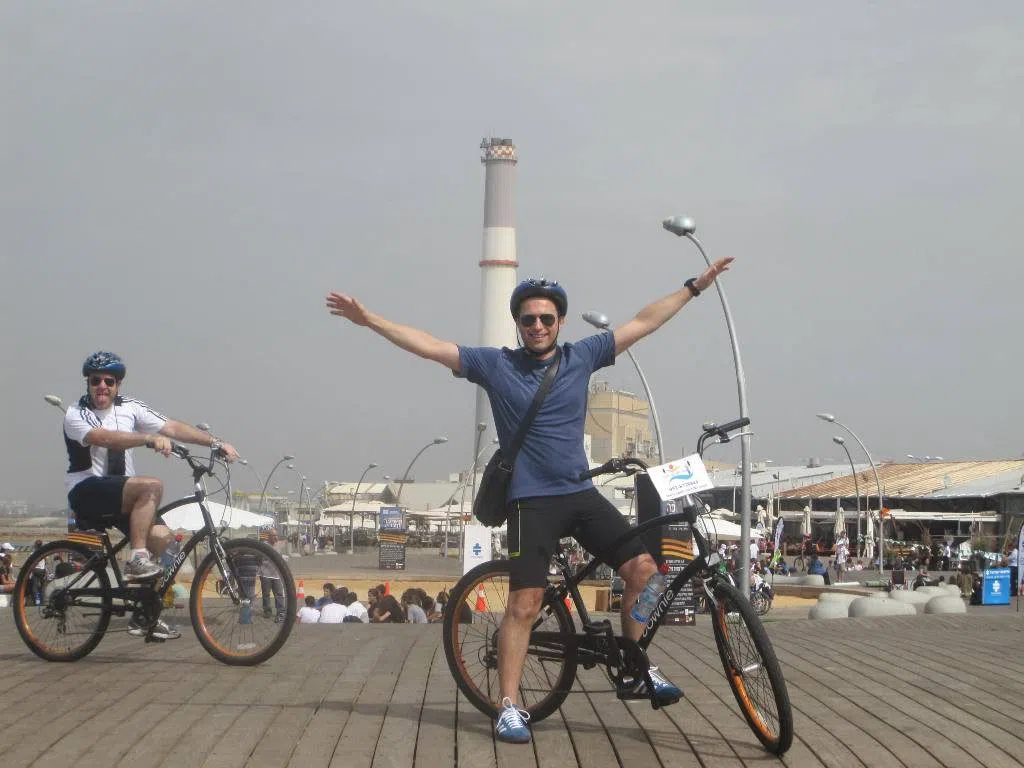
MikeyBikey takes anything from one to twenty people, which makes it the practical choice for a family group or a small work party that would otherwise have to split across two bookings. It runs six named routes, including one covering Old Jaffa and the city, at around $70 per person, with two departures a day at 09:30 and 14:00, useful if you are working around a flight or refuse to give up a beach morning.
Yalla Bikes TLV runs every tour as a private group: minimum two riders, no strangers attached to your booking. It is around 250 NIS per person, with three fixed routes, a waterfront-and-Jaffa line, a beach-and-park line, and a city-centre line through Rothschild, Dizengoff and Rabin Square. They will flex the pace, which is the thing to ask for if your group's fitness is mixed.

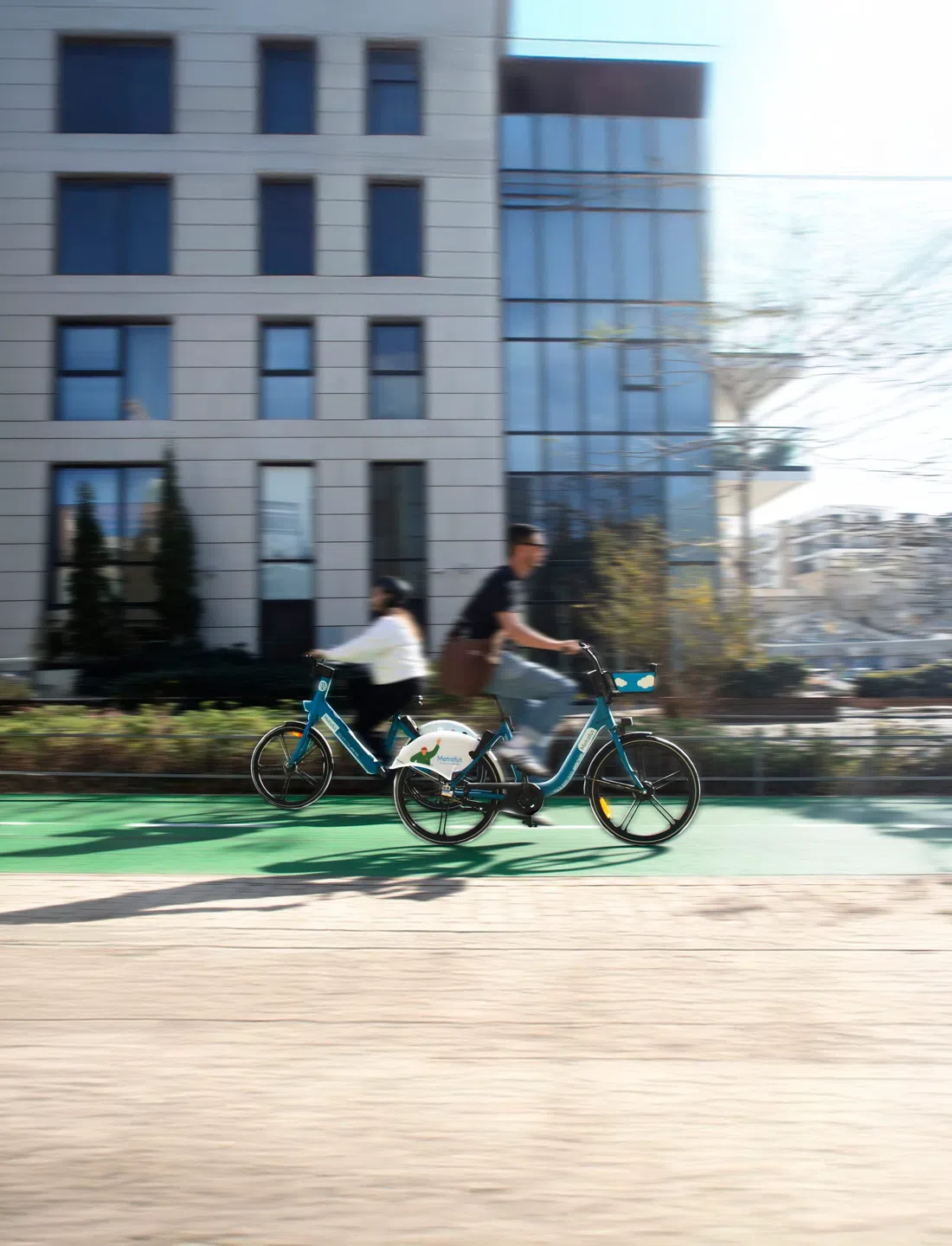
If you would rather do it alone, Metrofun is the city bike share, the rebranded Tel-O-Fun, with more than 400 stations across the city and its immediate neighbours, and both classic and electric bikes. Day passes are cheap. Two warnings. There is no group handling at all, so every rider needs their own account and card, which gets slow past three or four people. And since February 2026 there are parking-zone rules about where you are allowed to end a ride. Read those before you set off, not while you are standing in Jaffa trying to dock.
Booking ahead and what the demand looks like
Nothing about this ride is hard to get onto, but the good departures fill. Across the bookable tours here there are 188 traveller reviews, and the top one is rated 4.7 out of 5 from those 188 reviews, which tells you the format is well-worn rather than experimental. It runs six days a week: Monday, Tuesday, Wednesday, Thursday, Friday and Sunday, from 75 USD per person. The Saturday gap is Shabbat and it is not negotiable. If Saturday is your only free day, hire a bike and ride the route yourself, accepting that the flea market will be shut.
Book ahead if you are a party of more than four, if you want an afternoon departure, or if you are travelling in spring or autumn. For one person on a Tuesday in winter, booking the evening before is usually enough.
Is it worth it
Yes, with one qualification. The riding is easy, and it is not what you come for. What you get is the only way to take in the length of the city in a single go without spending the day on buses, along a route that happens to trace the two things the city is built on: the beach and the railway. A guide earns the fee in Neve Tzedek and Old Jaffa, where the buildings do not explain themselves, and in the plain business of not having to navigate.
It suits first-time visitors with two or three days, families with teenagers, and anyone who wants to reach Jaffa without a taxi. It does not suit serious cyclists, who will find it slow, or anyone unwilling to get off and push through the old city. If there are two of you and you already know the city a little, share bikes and this route on your own phone will do much the same job for a fraction of the money.
Best time to go
Morning and late afternoon are two different rides. A 09:30 departure gives you the flea market in full trade, a chance at the Ilana Goor Museum before it closes, and cooler air. From June to September that last part is worth more than it sounds, and the shade at HaTachana becomes the stop everyone lingers in. The trade is that you reach St Peter's during its midday closure and the hilltop in flat overhead light.
An afternoon start reverses all of that. You lose the museum and most of the market, you get the church open again after 15:00, and you arrive at the top of Old Jaffa when the sun is coming off the sea and the skyline is lit. Take the afternoon unless the market is what you came for.
By season, March to May and October to November are the comfortable months, dry and warm without the summer humidity. July and August are ridable if you start early and carry more water than you think you need. Winter is mild and mostly fine, with occasional heavy rain that shuts the ride down for a day at a time. Fridays run short everywhere, with the market, the museum and the shops all winding down ahead of Shabbat, and Saturday is the day of empty lanes and closed doors.
Practical notes
The start points sit on or near the seafront and are easy to reach by bus or on foot from the hotel strip. Check what is within walking distance of the northern seafront in the Tel Aviv hotel search before you commit to an early departure time.
Cards work almost everywhere, including on the bike share, but carry a small amount of shekels for the bakery counter, the market stalls and the church donation box. Those are the three places where cash still saves you time.
Block three hours for a guided ride and four if you intend to eat in Jaffa afterwards. Doing it yourself takes about the same: the pedalling is an hour, everything else is stopping.
Per person, without a meal, budget roughly 200 to 250 NIS for a scheduled guided tour, or from 75 USD per person on the bookable options. A share-bike day pass plus a museum ticket and a pastry comes in well under 100 NIS. A fish lunch on the harbour can cost more than the tour did, so decide that one before you sit down.
Getting back is a short taxi from Jaffa Port, or twenty minutes of easy riding back up the promenade. Most guided groups return by bike, so say in advance if you would rather be left in Jaffa for the evening. The Tel Aviv guide covers the neighbourhoods this route only passes through.
21 September 2026 · a first week before the flat: the Tel Aviv hotel directory