Tel Aviv · The weekend · 9 min
The Dead Sea's Otherworldly Float: A Practical How-To for First-Timers
How to get to the lowest point on earth from Tel Aviv, which shoreline suits you, and the four rules that keep the float pleasant instead of painful.
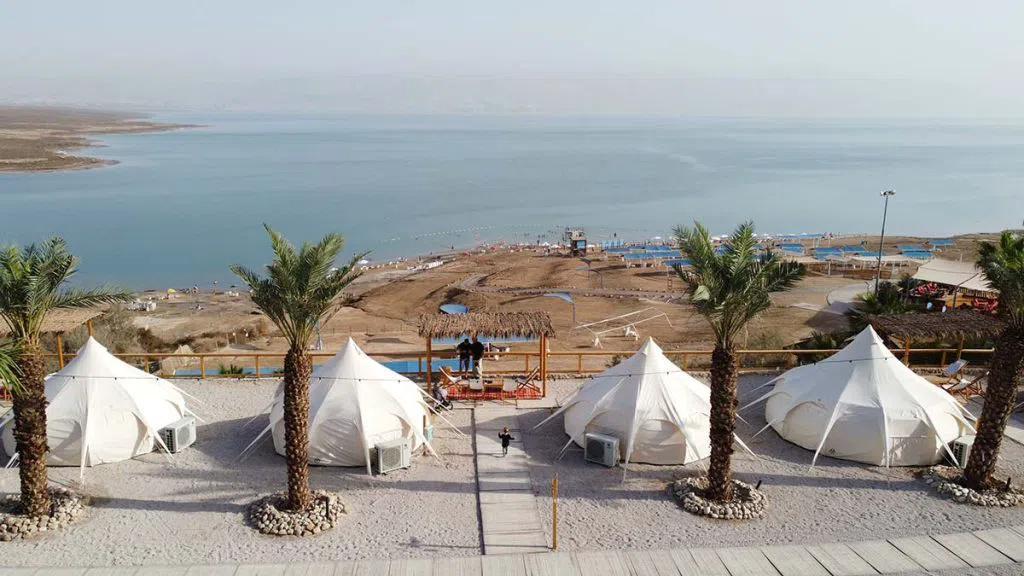
The water holds you up before you've decided to trust it. Ten minutes in, salt has dried into pale rings across your forearms, and the haze over the hills on the far shore is doing something no photograph quite holds onto. This is the lowest point on the surface of the earth, close to 430 metres below sea level, and it keeps dropping by roughly a metre a year as the water recedes. That recession is the fact that shapes almost every practical decision below — where the shoreline actually sits this season, why some access roads have shifted, and why one beach you might have read about elsewhere is closed for good.
Most visitors base themselves in Tel Aviv and treat the Dead Sea as a long day trip or a one-night detour south. Either way works. What follows is organised by who you're travelling with and what kind of day you want, because the right beach for a couple on a quiet afternoon is not the right beach for a coach party of forty.
Why you float, and the four rules that keep it pleasant
The Dead Sea runs at roughly 34% salinity, about ten times saltier than the open ocean, which is why your body sits high in the water without effort — you don't tread water here, you rest on it. That's also why the rules matter more than at a normal beach. Don't shave for 24 hours beforehand; any nick will announce itself the second salt water finds it. Keep your face out of the water — a splash in the eyes stings hard and doesn't fade quickly, and swallowing it can trigger real nausea. Don't plan to swim in the conventional sense; strokes just splash brine at your own face. And don't stay in longer than 15 to 20 minutes at a stretch — the salt concentration dries your skin faster than you'll notice while you're floating, so get out, rinse at the showers most sites provide, then go back in if you want more.
The mineral mud sold in tubs across the country comes straight from this shoreline, and at several of the beaches below you can scoop it yourself, coat your skin, let it dry pale grey in the sun, then rinse it off — free, and arguably more satisfying than the spa version. The sea itself has been shrinking for decades as the Jordan River that once fed it is diverted upstream, and the retreat has left the old shoreline riddled with sinkholes, particularly around Ein Gedi. That's not a minor detail: it's the reason the historic public beach at Ein Gedi has been closed to visitors for years, and it's why the venues below sit where they do rather than where older guidebooks say they should.
Start here if this is your first float: Ein Bokek Public Beach
Ein Bokek Public Beach (public beach, Ein Bokek) is the default answer for a reason. It's fully public — no booking, no door policy, no cap on group size — and it's lifeguarded from 7am to 6pm in summer and 7am to 4pm in winter. Everything you actually need is free: showers, changing rooms, and lifeguard cover. It's also where most of the day-tour buses from Tel Aviv and Jerusalem park, so you'll have company, but the beach is long enough that it rarely feels crowded near the water itself. Go early — before 9am in summer if you can manage it — both to beat the heat, which climbs into the low 40s Celsius by midday from June through September, and to get the float done before the beach fills with coach groups mid-morning. If you're travelling alone, as a couple, or in a small group with no interest in paying for a beach club, this is where you go, and there's no reason to look further.
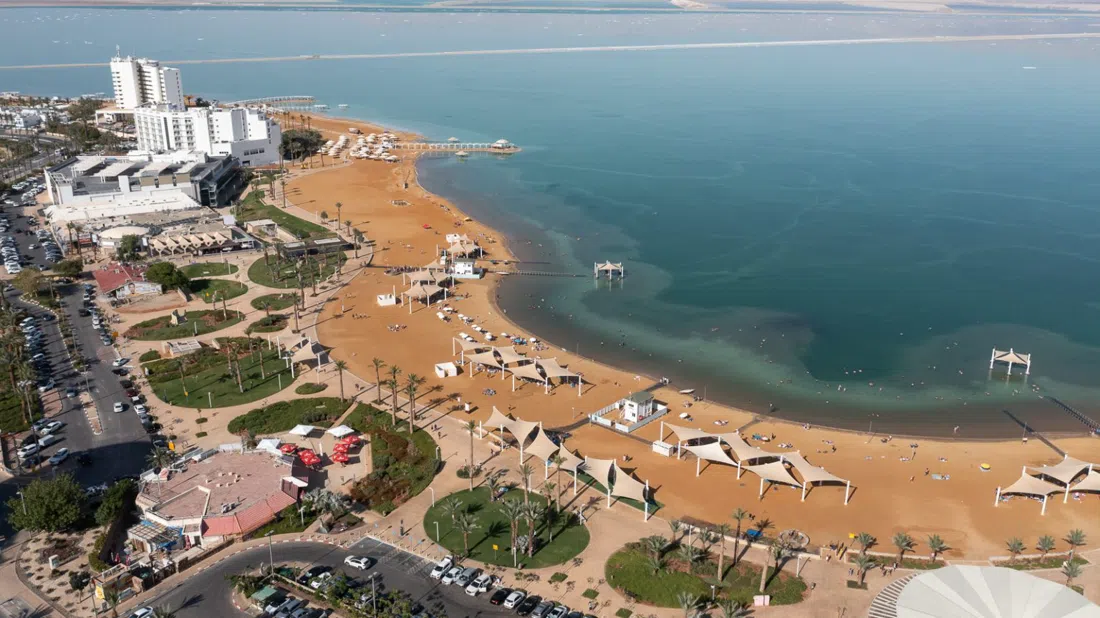
The northern shore, where the mud is the main event: Kalia, Neve Midbar, Biankini
Three beach clubs cluster on the northern shore, each with a slightly different pitch, and all three welcome groups more formally than Ein Bokek's free-for-all does.
Kalia Beach (beach club, northern shore) charges around 54 NIS for an adult and opens 8am to 6pm in summer, 8am to 5pm in winter. It's the pick if photogenic mud pits matter to you — the mud here is deep, easy to reach, and genuinely worth the detour. Groups are welcome with advance notice for coach parking, so if you're organising for a dozen people or more, call ahead rather than turning up. One thing worth knowing before you book: Kalia sits just past the Green Line, in the West Bank. That doesn't change the experience on the ground, but it's the kind of detail some travellers prefer to know in advance rather than discover on the day.
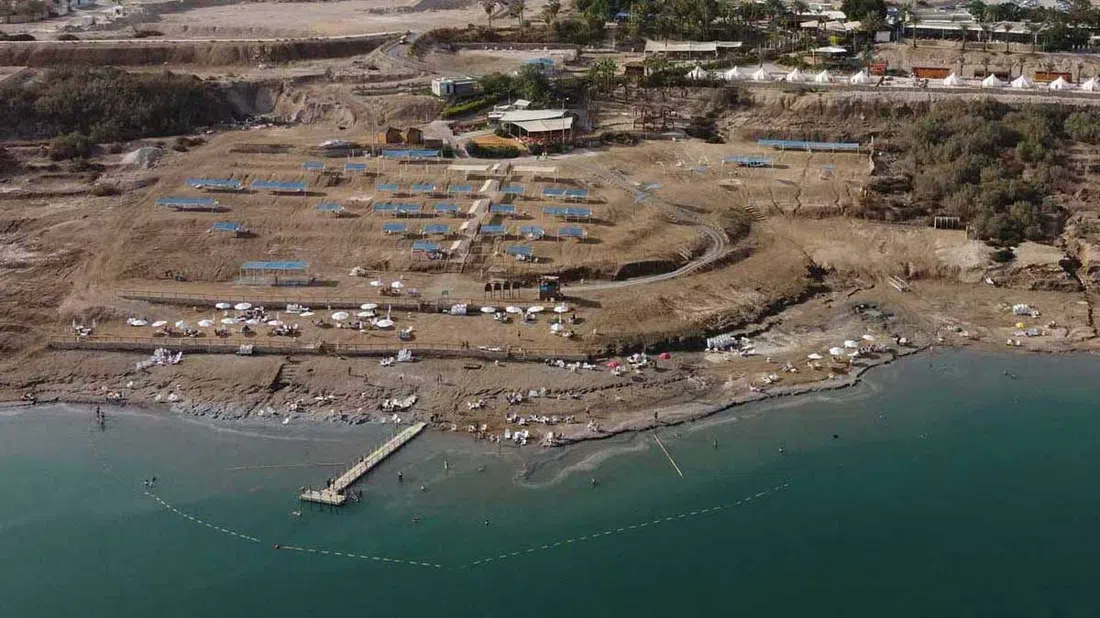
Neve Midbar Beach (beach club, northern shore) is the most family-friendly of the three. Entry runs roughly NIS 60–80 for an adult, there's no door policy, and camping groups are common enough that nobody will look twice at yours. What sets it apart is the layout: separate pools away from the main float area, real shade structures, and unlimited natural mud you can apply as often as you like. If you're travelling with kids or a mixed-age group where not everyone wants to float for hours, this is the one that keeps everybody occupied.
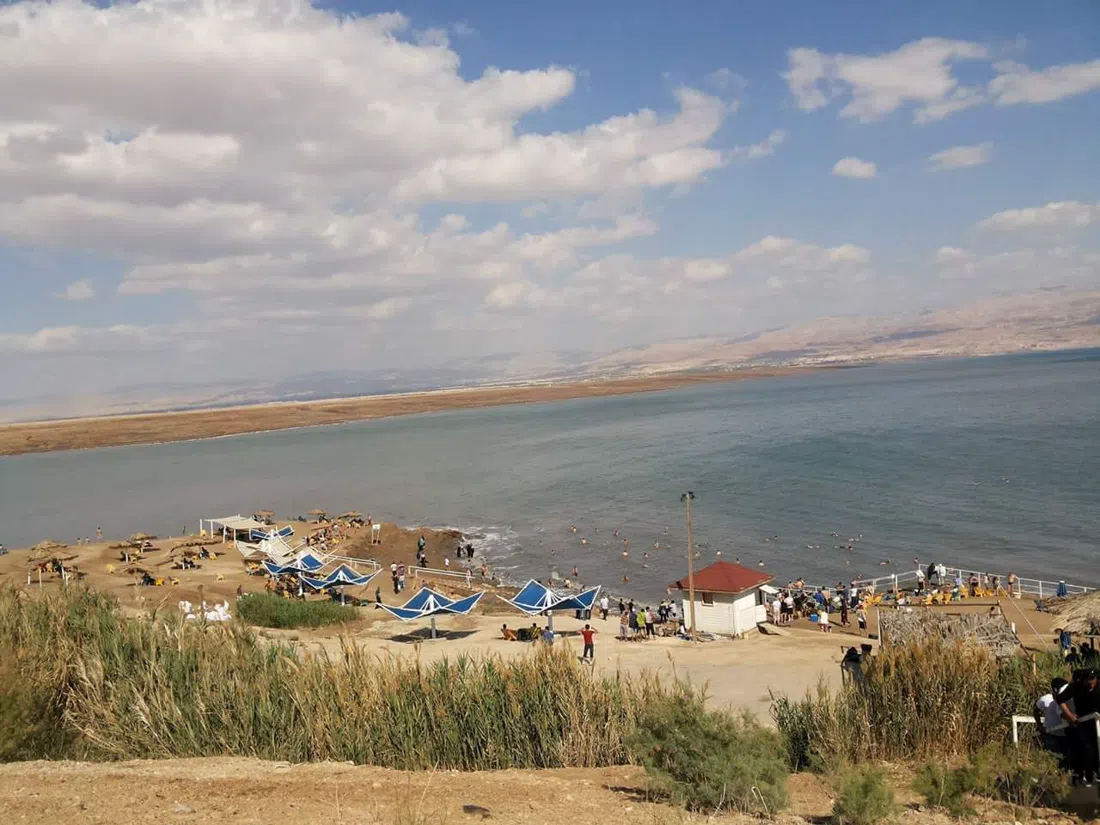
Biankini Beach, at the Biankini Village Resort (resort beach, northern shore), costs roughly NIS 80–100 for the day and is built around a Moroccan-village aesthetic — low domed buildings, shaded courtyards, a salt room alongside the float. The front desk operates 8am to 10pm, and day groups are welcome as long as larger parties book ahead. It's a resort-beach hybrid rather than a pure beach club, and the atmosphere is the reason to make the northern detour rather than settling for the closer options near Ein Bokek.
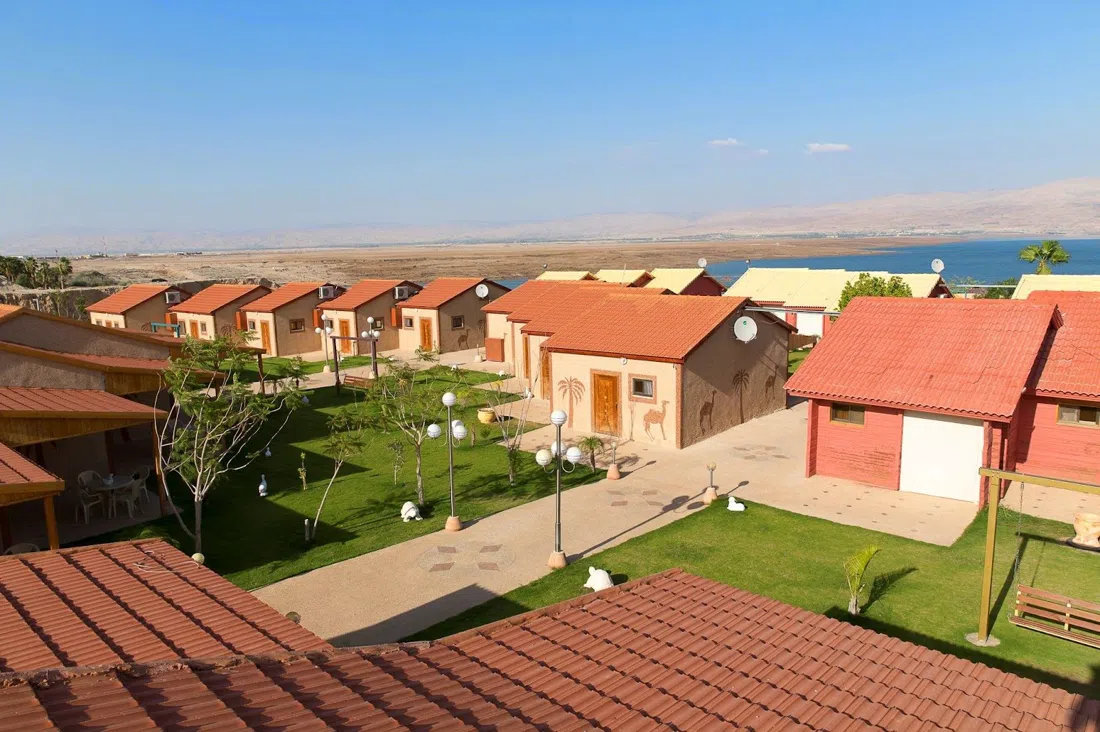
If you want the float plus a treatment: the hotel day-pass route
A cluster of hotels along the Ein Bokek strip sell day passes without requiring a room booking, which is the better route if what you actually want is the float plus a proper spa treatment rather than a hotel stay.
Isrotel Dead Sea (Nevo, Noga and Kayma properties, spa resort) is the polished end of this range. A day pass with a treatment included runs around NIS 650, rising by NIS 60 on weekends, and groups need to be arranged in advance through hotel reception. Book the day pass specifically rather than a room if the float-plus-treatment combination is the whole point of your visit — it's considerably cheaper than paying for an overnight stay you don't need.

Herods Dead Sea Hotel and its Vitalis Spa (spa resort) sit at a similar price point, roughly NIS 300–500 for the day, arranged through the hotel concierge for groups. It leans heavily into treatment rooms and a grand, formal atmosphere, but there's a firm age restriction worth flagging before you book: the spa is 16 and over only, so it's not the choice if you're travelling with younger children. It's also worth a quick call ahead to confirm the sauna and jacuzzi are back in service, since both have had periods of downtime.
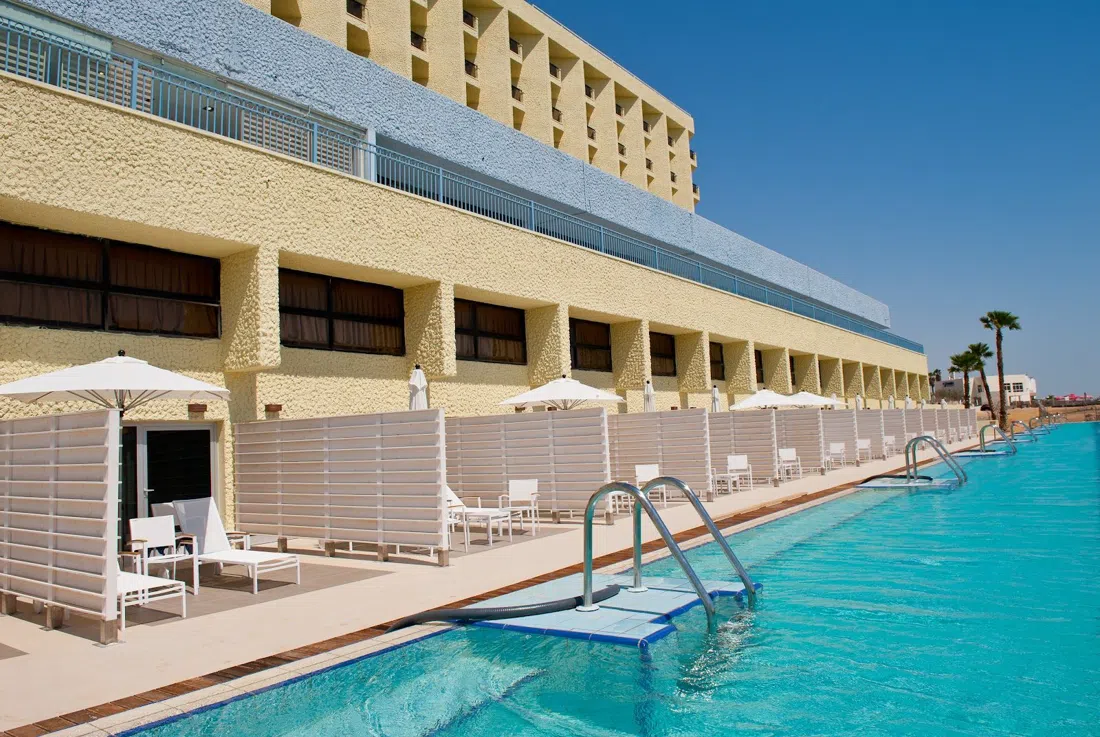
Leonardo Club Dead Sea (spa resort and water park) is the one hotel in the area with a genuine water park attached, and it's the practical answer for a mixed-age group where floating in mineral-heavy water won't hold everyone's attention for a full day. It runs as an all-inclusive package with day-pass rates that shift by season, and it's explicitly family-friendly rather than couples-oriented.
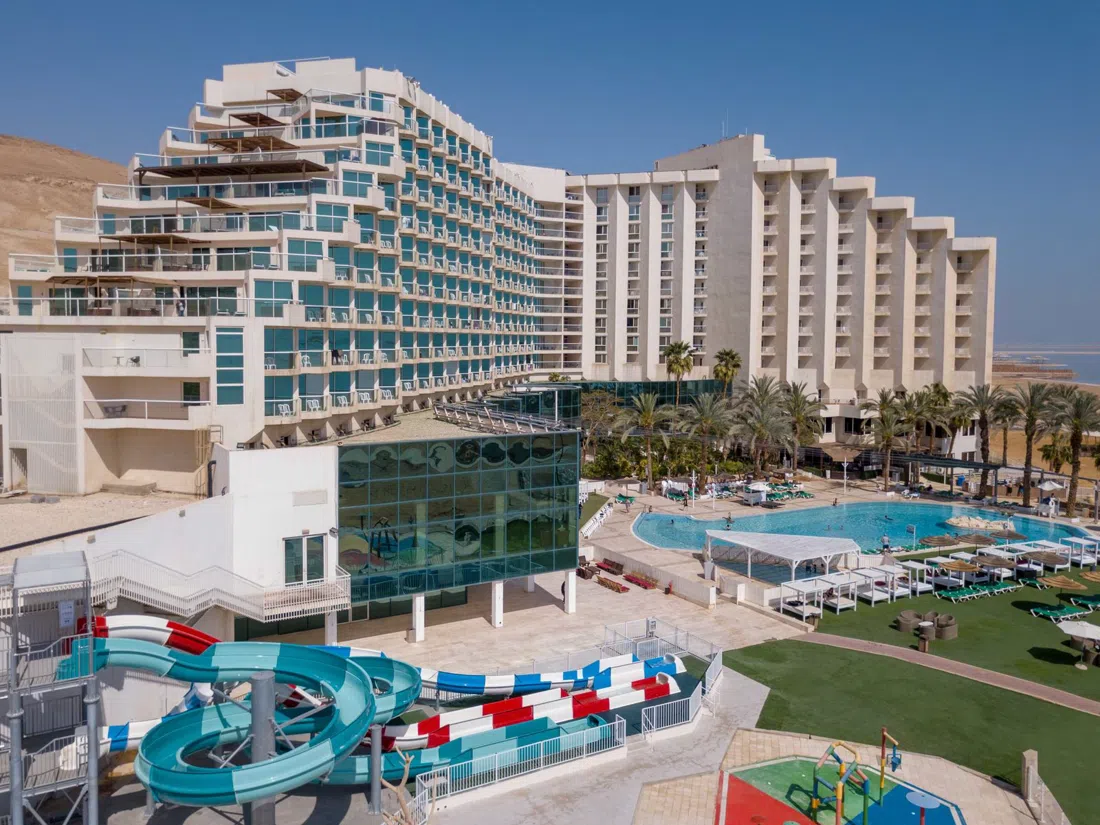
Dead Sea Premier Beach Resort & Spa (beach and spa) doesn't require a hotel stay at all — walk-in day groups are fine, and beach-only entry costs roughly NIS 100–150. It also has a sulfur pool that most first-timers walk straight past in favour of the main float, which is worth seeking out if you've already done the standard float elsewhere and want something different.

Herbert Samuel Hod Dead Sea, recently rebranded from Hod Hamidbar (spa resort, budget tier), is the honest budget option in this group. A day pass with lunch included runs NIS 160–200, there's a day-pass desk on site, and budget-conscious groups are explicitly welcome. It won't compete with Isrotel on polish, but it does the same core job — float, rinse, treatment if you want one — for a fraction of the price.
Pairing the float with a hike: Ein Gedi
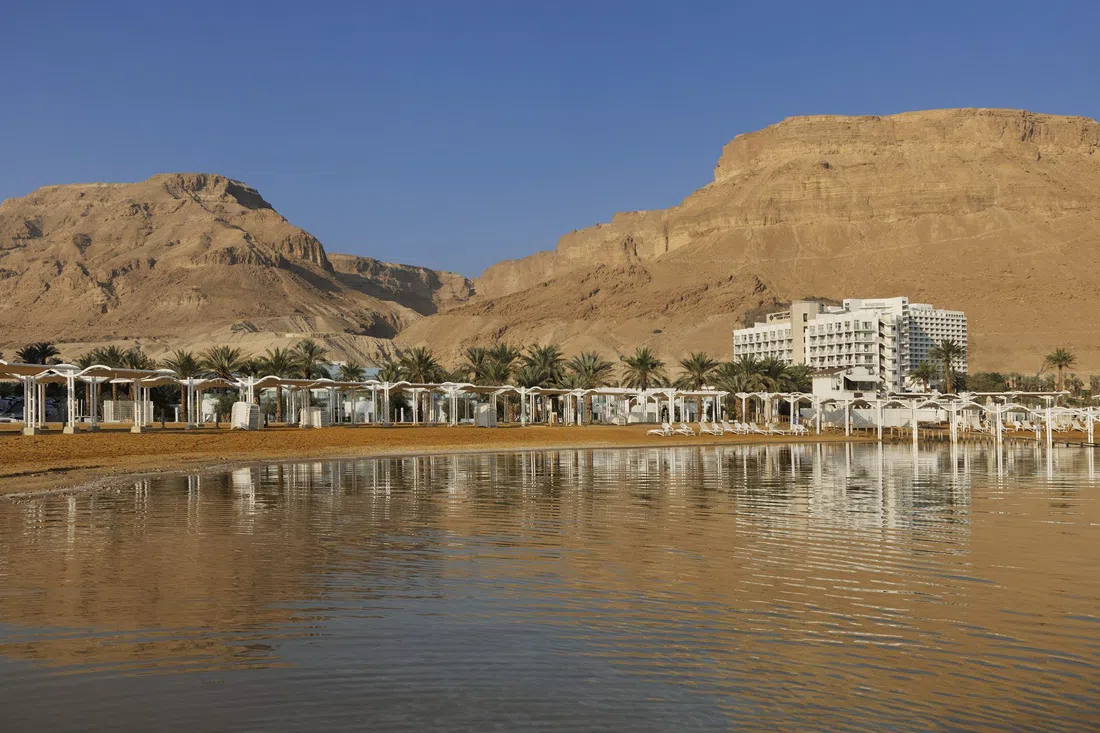
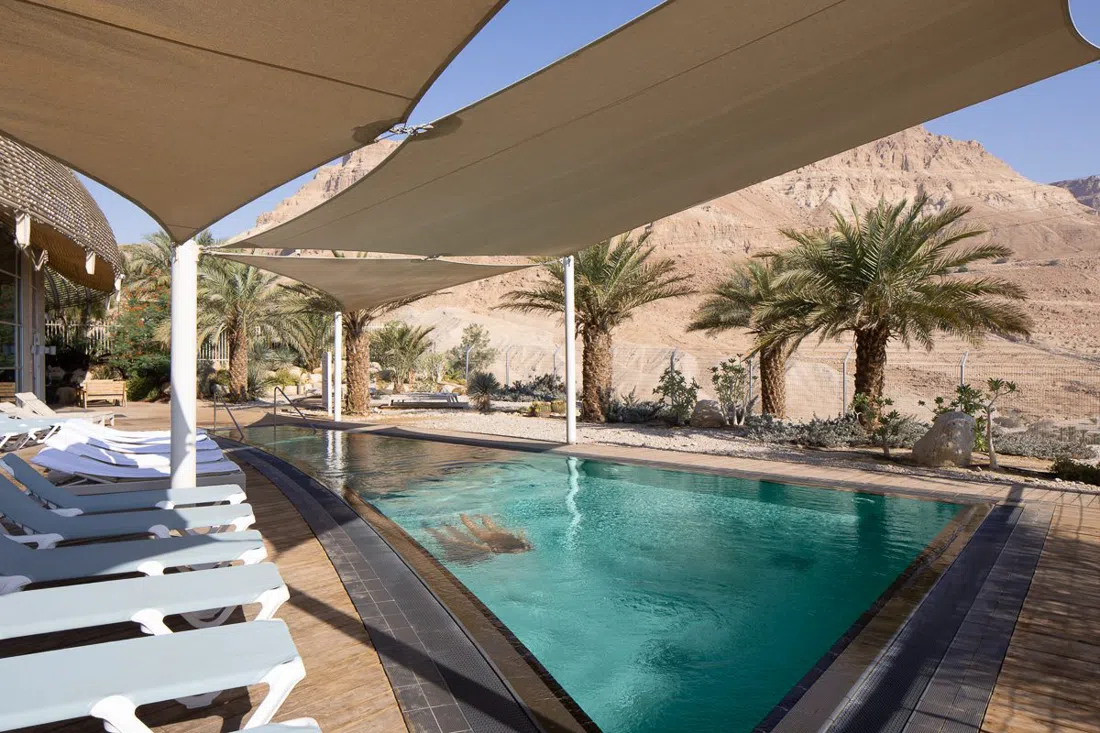
Ein Gedi Kibbutz Hotel and its Synergy Spa (spa and nature reserve) is worth building a half-day around rather than treating as a quick stop. Day visitors are welcome, entry runs roughly NIS 95–120, and it's a natural add-on for anyone hiking the adjacent Ein Gedi Nature Reserve, where freshwater waterfalls and pools sit a short walk from the Dead Sea itself — a genuinely different sensation after the density of the salt water. This spa has effectively replaced the historic public beach at Ein Gedi, which has been closed to visitors for years because of the sinkholes mentioned earlier; if an older source points you toward a free public beach at Ein Gedi, that beach no longer exists, and this is the current route in.
Getting there without a car
If you'd rather not rent a car or navigate Route 90 yourself, two operators run the route regularly from Tel Aviv.
Abraham Tours (day-tour operator) is built for solo travellers and small international groups — shared minibus, straightforward online booking, and itineraries that typically combine Masada at sunrise, the Ein Gedi hike, and a Dead Sea float in a single day for roughly NIS 180–480. It's the default no-car answer for first-timers based in the city.
Bein Harim Tours (day-tour operator) handles larger coach groups as routine business, running multi-stop itineraries that often pair Jerusalem with the Dead Sea in one trip. Prices run roughly $70–120 depending on the itinerary, and it's the more reliable choice if you're organising a larger tour group rather than a handful of independent travellers.

If you'd rather base yourself in the city for the rest of your trip and treat the Dead Sea purely as a day excursion, start your accommodation search here: Tel Aviv hotel search.
The practical basics
Transport. By car, the drive south on Route 90 from the Tel Aviv area takes roughly 1.5–2 hours depending on your exact starting point and whether you route via Jerusalem or straight down through the Judean Desert. Egged buses run the route without a car, and both tour operators above handle the drive for you as part of a packaged day.
Cash. Carry cash, particularly for the free public beach's incidentals and for the smaller beach clubs — card machines exist but aren't universally reliable this far from the city, and entry booths at the less polished sites sometimes run cash-only. The hotel day-pass desks all take cards without issue.
Timing. Summer heat (June to September) makes an early start non-negotiable; aim to be in the water by 9am and treat midday as shade-and-shower time rather than float time. Winter is milder and more forgiving on timing, with beaches like Ein Bokek trimming their lifeguard hours accordingly.
Budget. The full range runs from free — Ein Bokek's public beach, showers and lifeguards included — up to roughly NIS 650 for a day pass with treatment at Isrotel. Most travellers land somewhere in the NIS 60–200 range at one of the beach clubs or budget spa resorts, which covers entry, showers, and usually a mud supply.
For everything else worth knowing before you head south — where to eat, where to stay, what else the city itself offers — the Tel Aviv guide covers the rest of the trip.
3 August 2026 · a first week before the flat: the Tel Aviv hotel directory