
Tel Aviv · Where to live · 13 min
Walking Neve Tzedek in Tel Aviv's September Light
Three hours on the streets Tel Aviv was built out of, with the houses worth going inside, the opening hours that catch people out, and what September does to the timing.
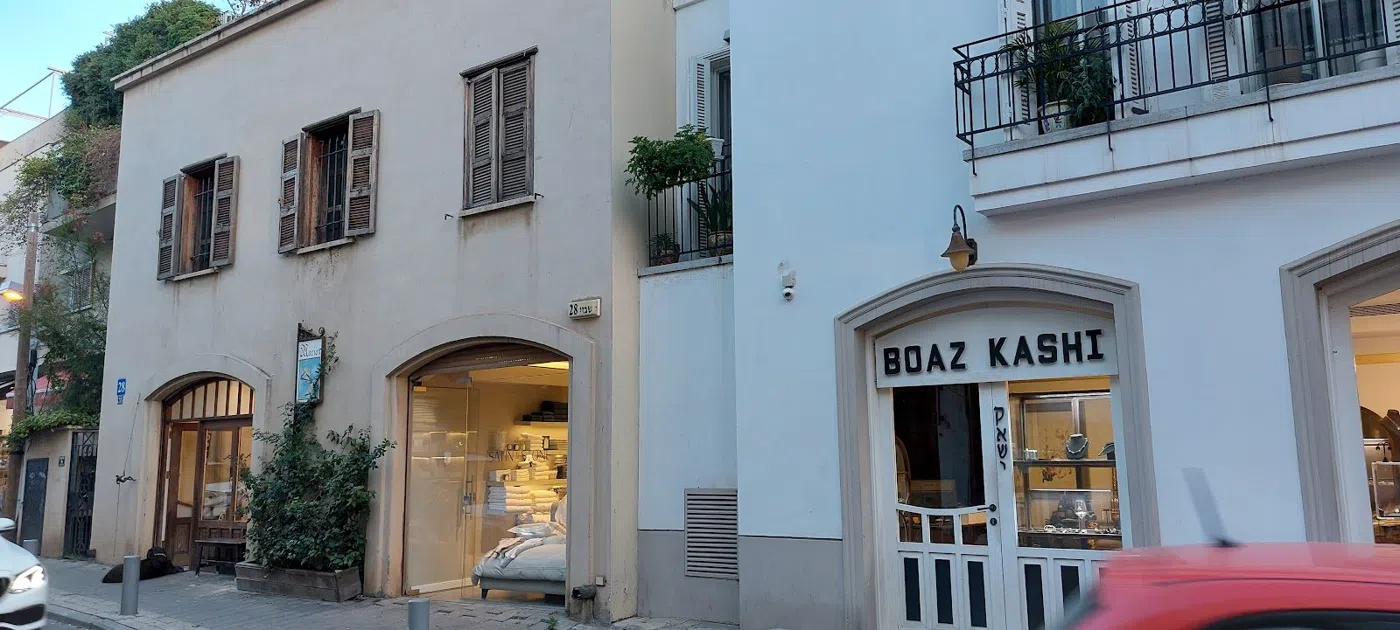
The lanes off Shabazi Street are barely wide enough for two people and a bicycle, and in September the heat doesn't let go of them until about six in the evening. Wait for that hour and the render on the old houses turns orange, the bougainvillea over the doorways stops looking dusty, and the few streets Tel Aviv grew out of finally make sense under your feet. Give it three hours, carry water, and leave the middle of it unplanned.
What you are actually walking through
Neve Tzedek (the Shabazi Street lanes, south-west of the city centre) went up in 1887, twenty-two years before the city that now surrounds it. Families left the crowded port down the coast and built a small settlement with no grid behind it: one- and two-storey houses, shuttered windows, external stairs, courtyards shared between doors. That pre-planning geometry is still the reason the walk works. The lanes kink, stop dead, open into a yard and rejoin Shabazi Street, which is the spine everything else hangs off.
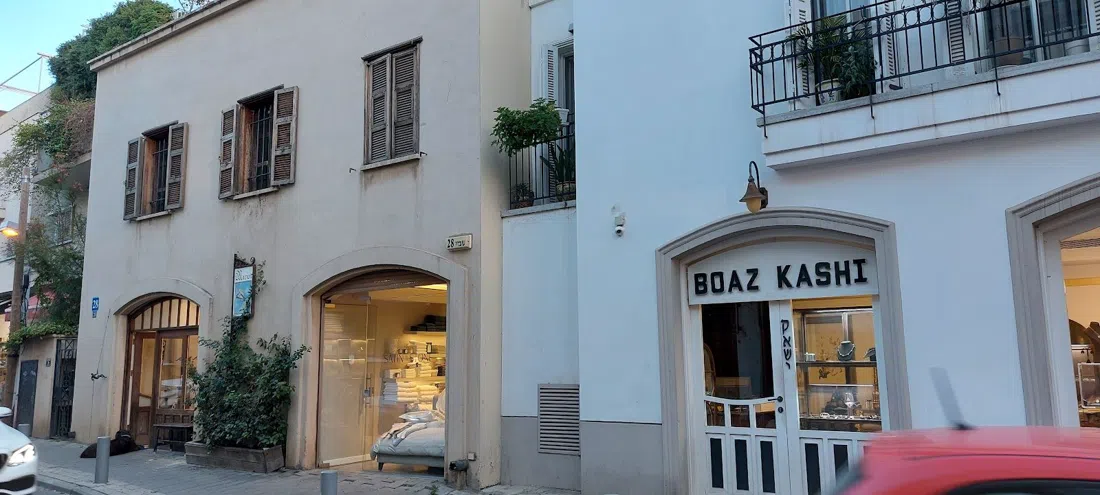
What you see is domestic architecture at close range. There is no monument here, no ticket barrier and no queue. You walk past a tiled step, a repaired lintel, a painted metal shutter, a studio window with someone working behind it, and then you are back on Shabazi with a jewellery shop on one side and a café on the other. The quarter is small, fifteen minutes end to end if you march, so the walk is measured in stops rather than distance.
Restoration from the 1980s onward saved the buildings and priced the street: the shops are boutiques, the rents show in the tags, and on a warm evening the main corners are busy with people doing exactly what you are doing. None of that spoils it, but if you arrive expecting a preserved village you will be annoyed for the first ten minutes. Read it instead as the oldest surviving fabric of a very young city, and it repays the attention. For everything beyond these lanes, the Tel Aviv guide covers the wider map.
How long it takes and when to set off
Two hours covers the streets, the plaza and a coffee. Three to four covers one indoor stop, a proper meal and the walk downhill to the sea. More than that and you are shopping, which is a fine way to spend an afternoon but not what this piece is about.
In September the hour of the day matters more than the date. From around eleven to four the lanes are hot and the light is flat and white, bad for looking at buildings and worse for standing still while someone explains them. Go early, from about eight, when the street is being swept and delivery vans are the only traffic and you can photograph a façade without a person in it. Or go from five, when the shade comes back over Shabazi and the evening crowd builds slowly. Both work. The middle of the day does not.
The two houses that explain the street
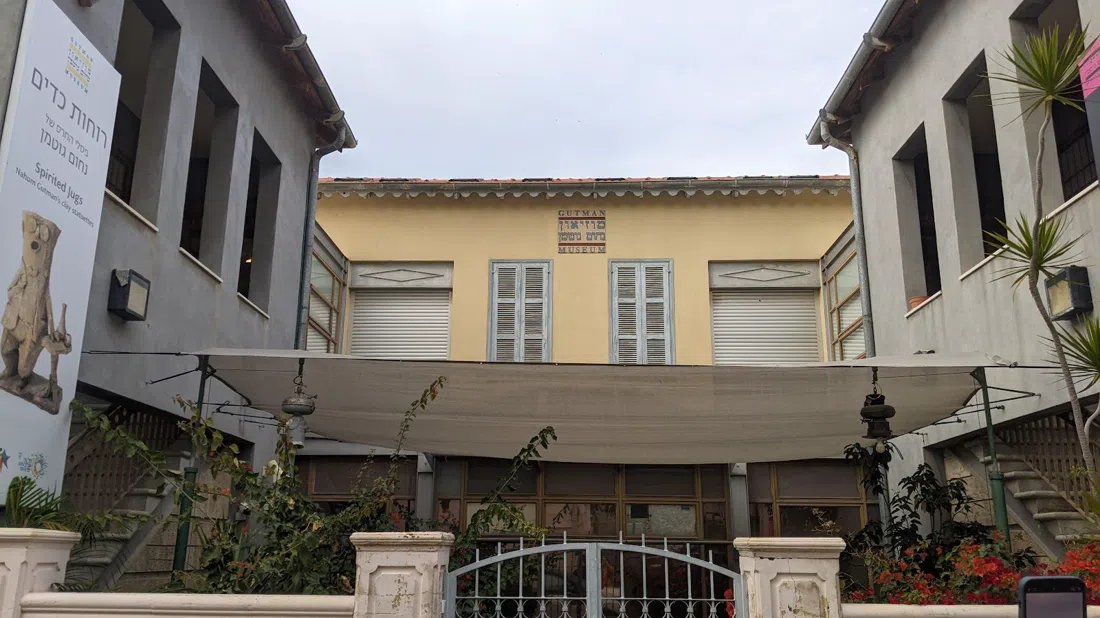
Nahum Gutman Museum of Art (a restored house just off Shabazi, Neve Tzedek) is the one indoor stop that makes sense of what is outside the door. It occupies the old Writers' House where Agnon and Brenner lodged, and the rooms are small, which is charming alone and a problem in a crowd. Entry is ₪35 for adults, ₪20 for students, ₪30 for pensioners and free for under-18s. It is closed on Sundays, so build the week around that rather than discovering it on the step. Groups and school visits go through the education department in advance on 03-5161970.
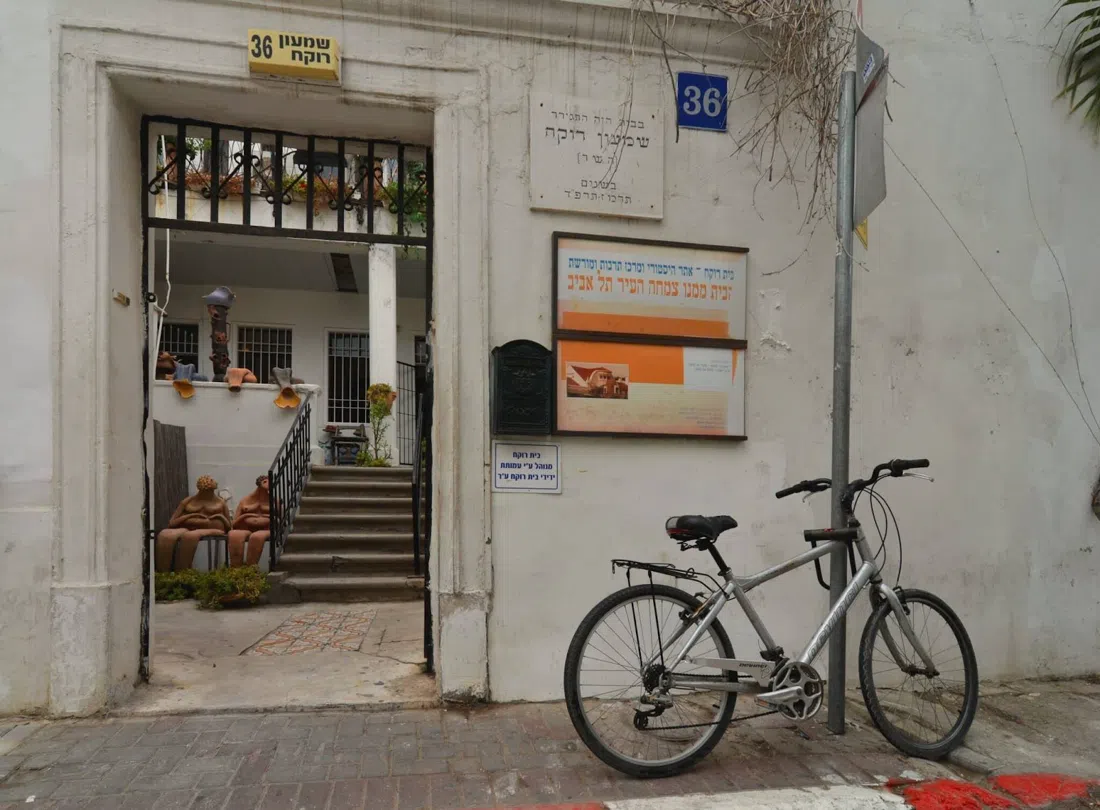
Rokach House — 1887 (Beit Rokach, in the lanes north of Shabazi) is the house of the man who founded the neighbourhood, and it is not run as a museum in the usual sense. You sit through a 60 to 75 minute lamplit mystery built around the Rokach brothers' feud of 1887, history delivered as theatre rather than through vitrines. Sessions are capped at about eight people, which is why it works and why walk-ins rarely do. Expect roughly ₪100-150 a head and book by phone on 054-6797940; companies and private parties can take a dedicated slot the same way. If you are two people who like being told a story in a dark room, this is the hour you will remember. If you are six people on a tight schedule, check availability before you build a day around it.
The plaza that started the restoration
Suzanne Dellal Centre for Dance and Theatre (the main plaza, Neve Tzedek) is the building that pulled the rest of the neighbourhood back from demolition, and it is still the open space everyone converges on. The plaza and gardens cost nothing and are open all day: orange trees, stone terraces, a lot of shade by late afternoon, and people sitting on the steps who have no intention of seeing a performance.
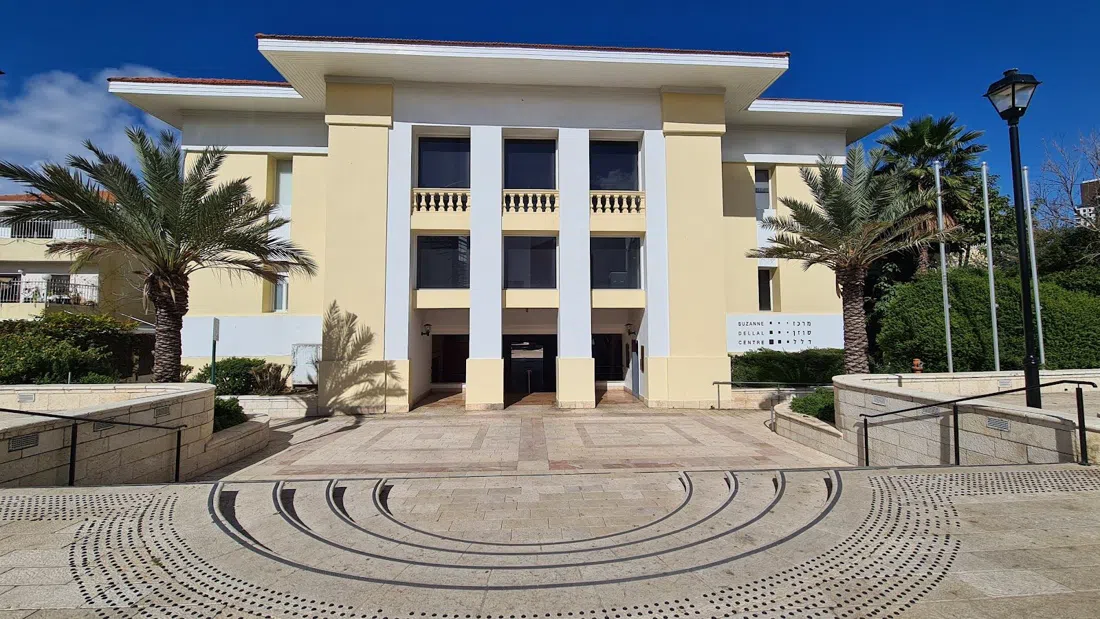
It has been home to the Batsheva Dance Company since 1989, and September 2026 has a working programme of Israeli contemporary dance. Tickets run roughly ₪80-220 depending on the piece and the house, performances are typically evening, and group seats are handled by phone on 03-5105656. If you are staying nearby, this is the easiest way to turn a walk into an evening without a taxi at either end: walk in from the lanes, eat within sight of the plaza, and walk out again.
Downhill to the old railway station
From the plaza the ground tips gently towards the sea and you arrive at HaTachana (the Jaffa Railway Station Compound, on the southern edge of Neve Tzedek). This was the coastal terminus of the 1892 railway inland, and the restored platform buildings, stationmaster's house and sheds now sit around an open-air compound that costs nothing to enter. Food and drink run about ₪30-90.
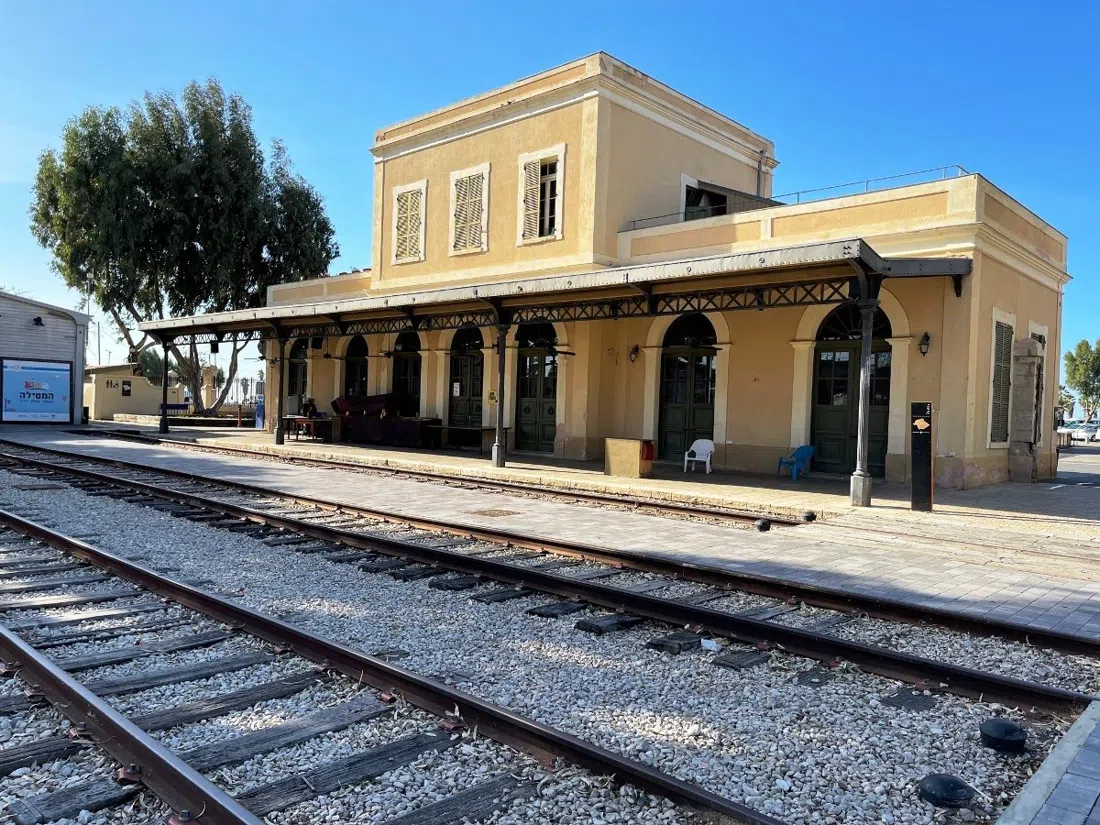
The retail units come and go, and midweek parts of the compound can feel quiet and slightly under-used. The buildings are the point. Walk the platform edges, look at the stonework and the rail bed, and treat whatever is trading that month as a bonus rather than the reason you came. It is also the natural end of the walk, since you are two minutes from the water.
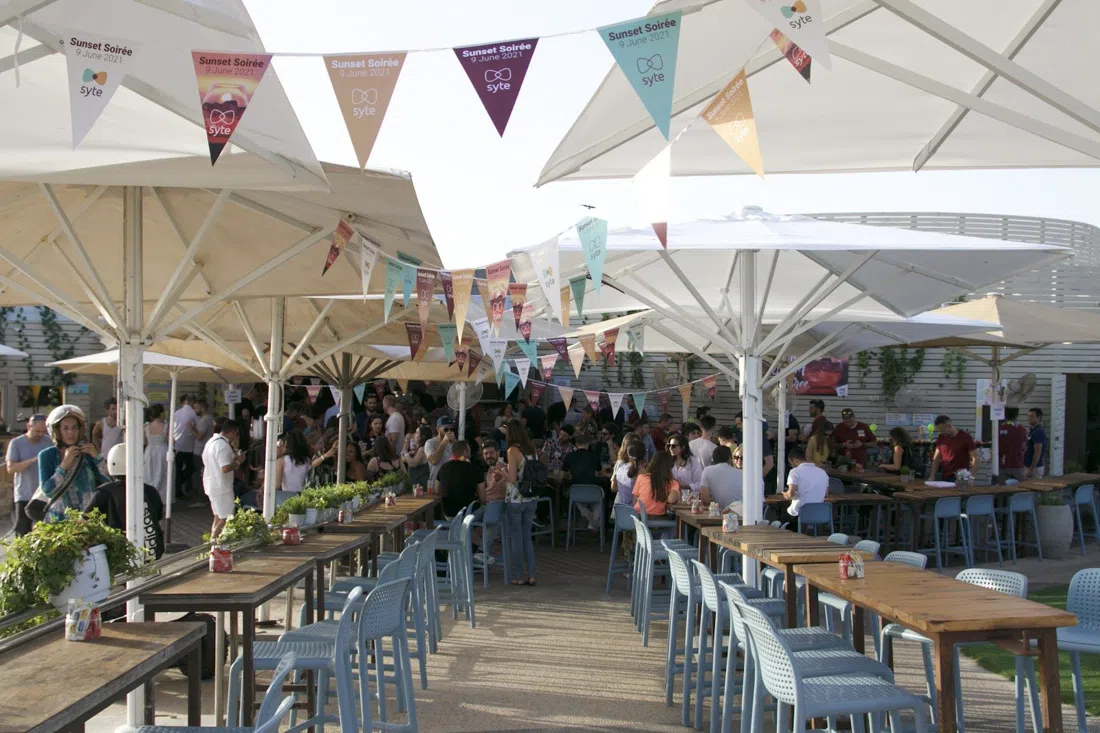
Charles Clore Park and the Alma Beach promenade (seafront, directly below HaTachana) is where those two minutes take you. Open park, no gates, no hours, and the standard place for large groups to meet or disperse. In September the light holds until about seven, and the view south along the coast to the old town skyline is the image most people leave with. Bring something to sit on; the grass is watered.
Two more history stops within ten minutes
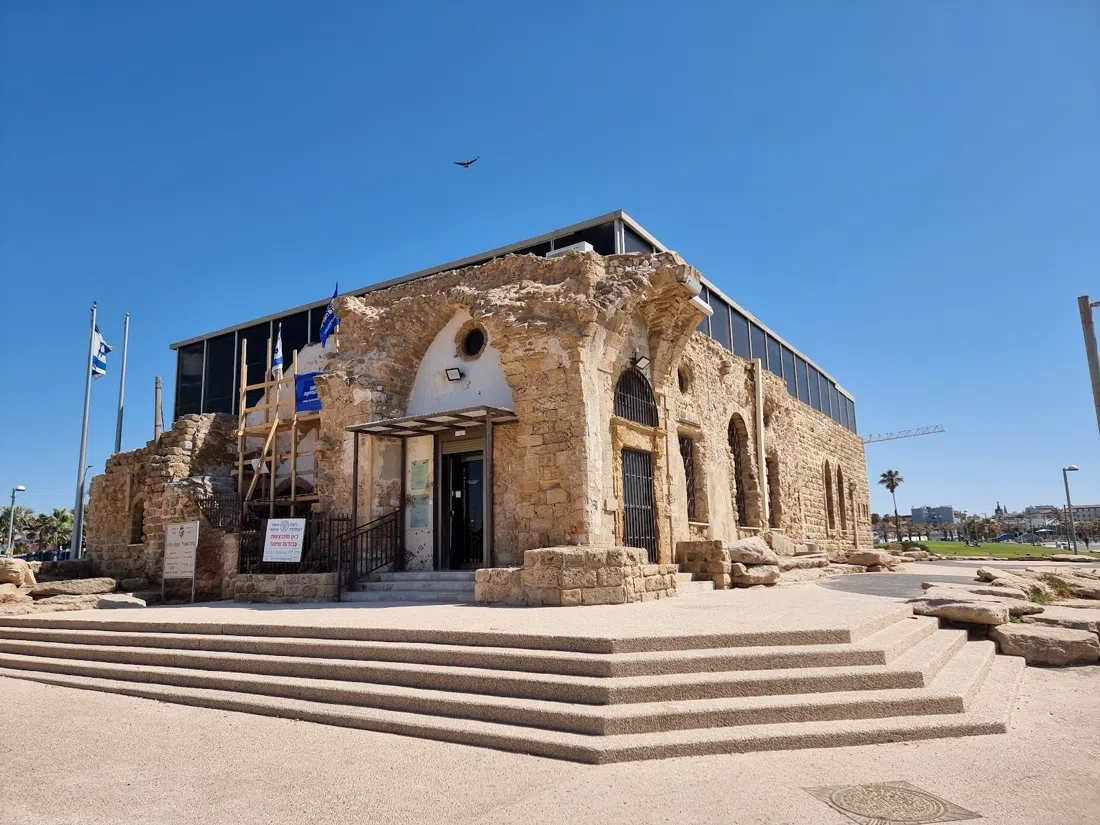
Etzel Museum 1947-1948 (Beit Gidi, on the seafront in Charles Clore Park) is five minutes from Shabazi: a black glass box built over an old stone ruin, and hard to miss on this stretch of coast. It covers the 1948 fighting for Jaffa from the Irgun's own perspective, and you should read it as one side's account rather than a neutral survey. Entry is ₪20 adult, ₪15 child or senior. It opens Sunday to Thursday, roughly 08:00-16:00, and closes Friday and Saturday, so it drops out of any weekend plan entirely. Visits, particularly group visits, should be arranged in advance on 03-5172044.
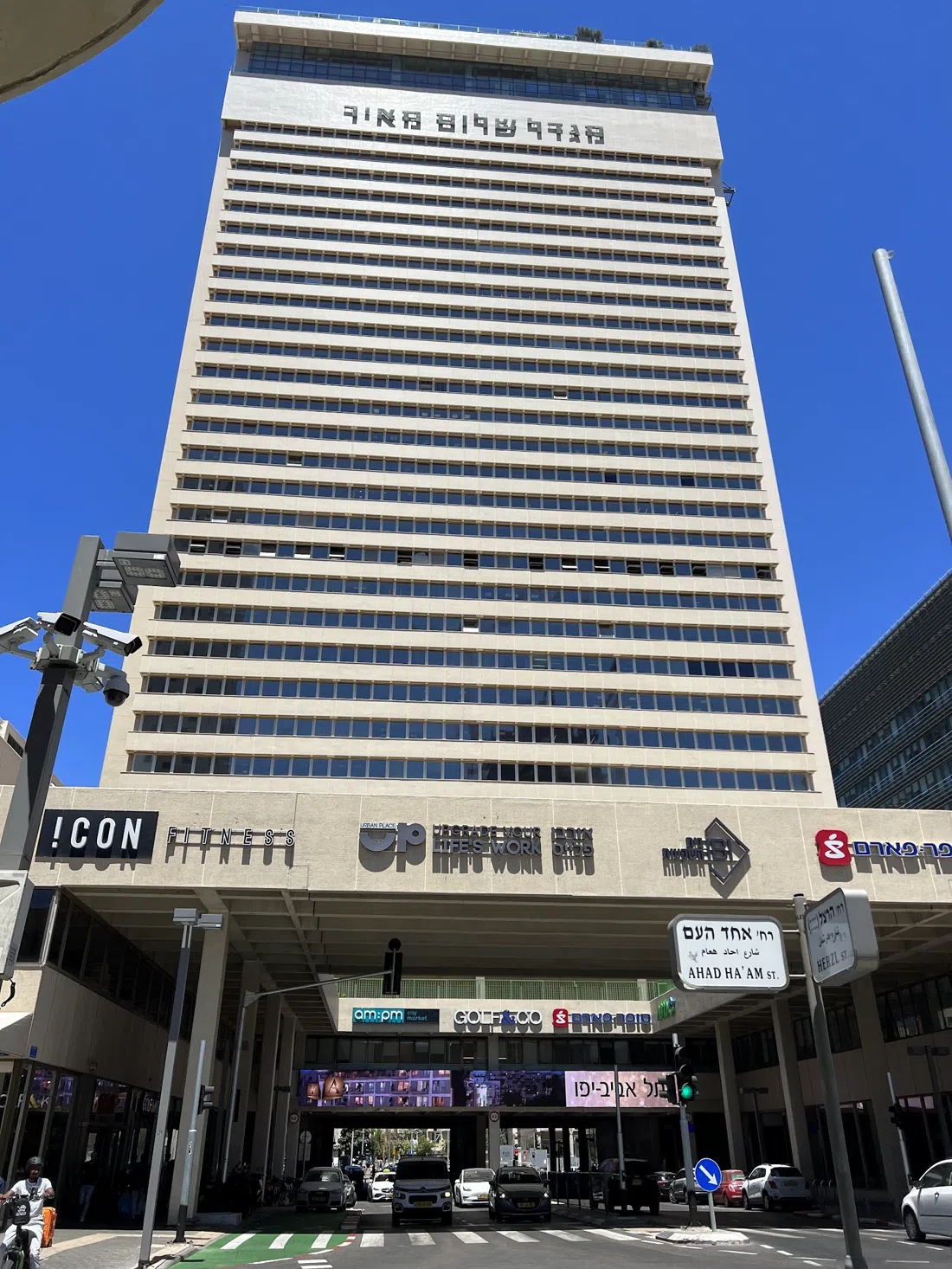
Shalom Meir Tower (ten minutes north, on the site of the old Herzliya Gymnasium) has free public galleries in its lobby, including Nahum Gutman's mosaics and exhibitions on the city's early decades. Open Sunday to Thursday roughly 10:00-17:00 and Friday until 13:00, no booking needed, groups fine. While Independence Hall is shut for its overhaul, the temporary visitor centre sits here too. It costs nothing and fills a hot hour usefully.
Eating without leaving the lanes
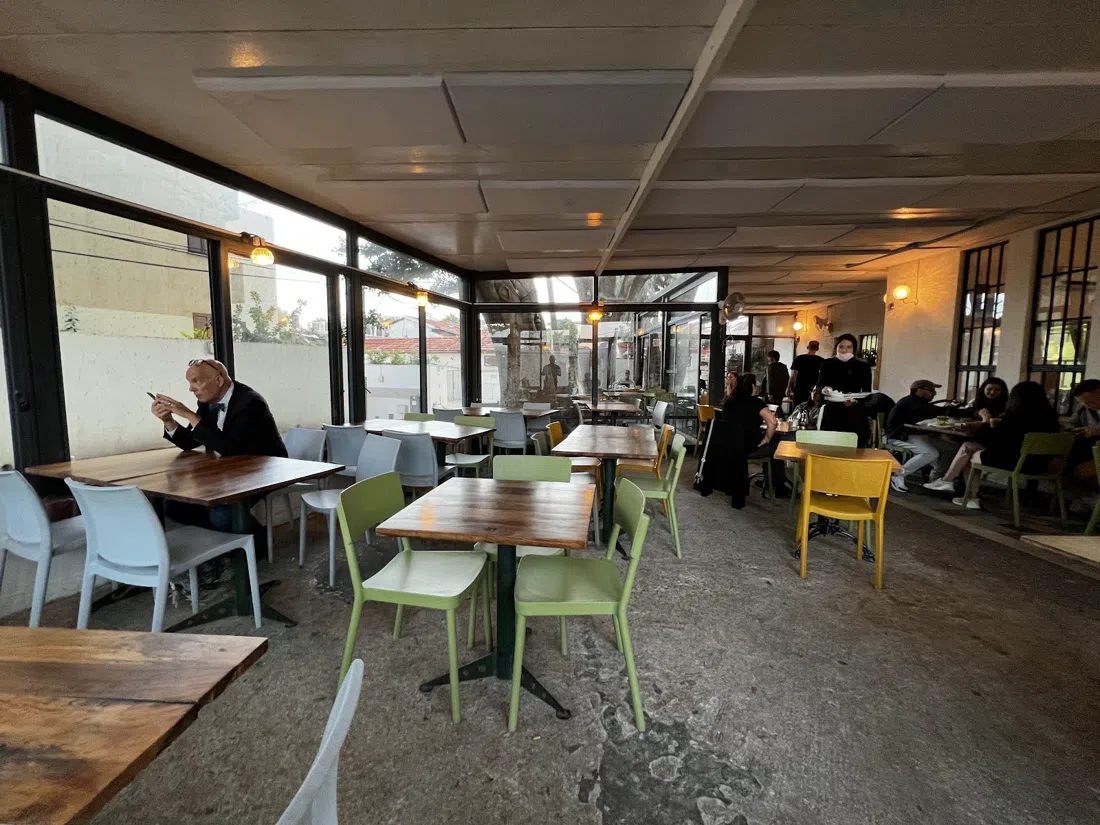
Café Suzanna (Shabazi Street corner, Neve Tzedek) is the long-running pavement café and the default meeting point before or after a walk: open 11:00 to 23:00 daily, breakfast plates, a tree over the terrace, ₪60-140 a head. Tables can be booked; small groups fit on the terrace, but anything large should call 03-5177580 first rather than arrive hopefully.
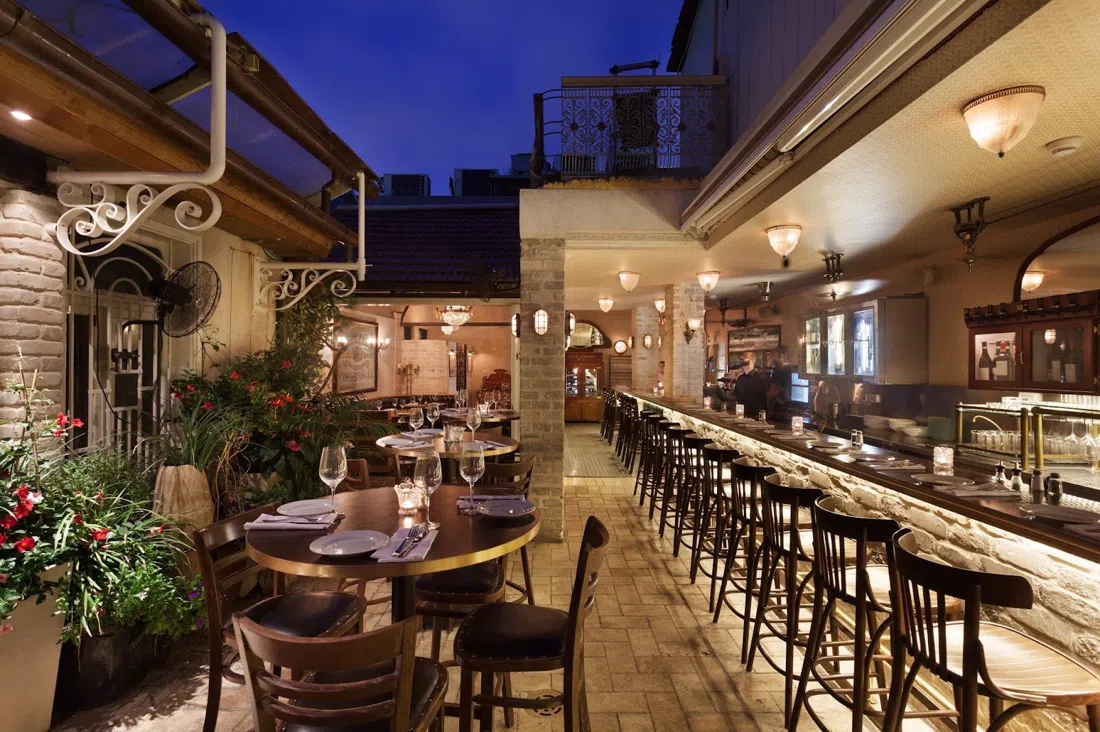
Dallal (beside the Suzanne Dellal plaza, Neve Tzedek) has been the quarter's serious restaurant since 2007, built into restored 1880s buildings around a courtyard that is worth the bill on its own. Dinner runs ₪150-350 a head; the patisserie side is the cheap way in, and a coffee and a pastry in that courtyard costs a fraction of the same seat at eight in the evening. Group bookings and private events go through Villa Dallal on 03-5109292.
Meshek Barzilay (Neve Tzedek, a short walk off Shabazi) is the neighbourhood's farm-to-table vegan kitchen and the simplest answer when a group has four different dietary requirements and one of them is non-negotiable. Nobody ends up with a sad side plate. ₪70-160 a head, reservations taken, call 03-5166329 for parties over six.
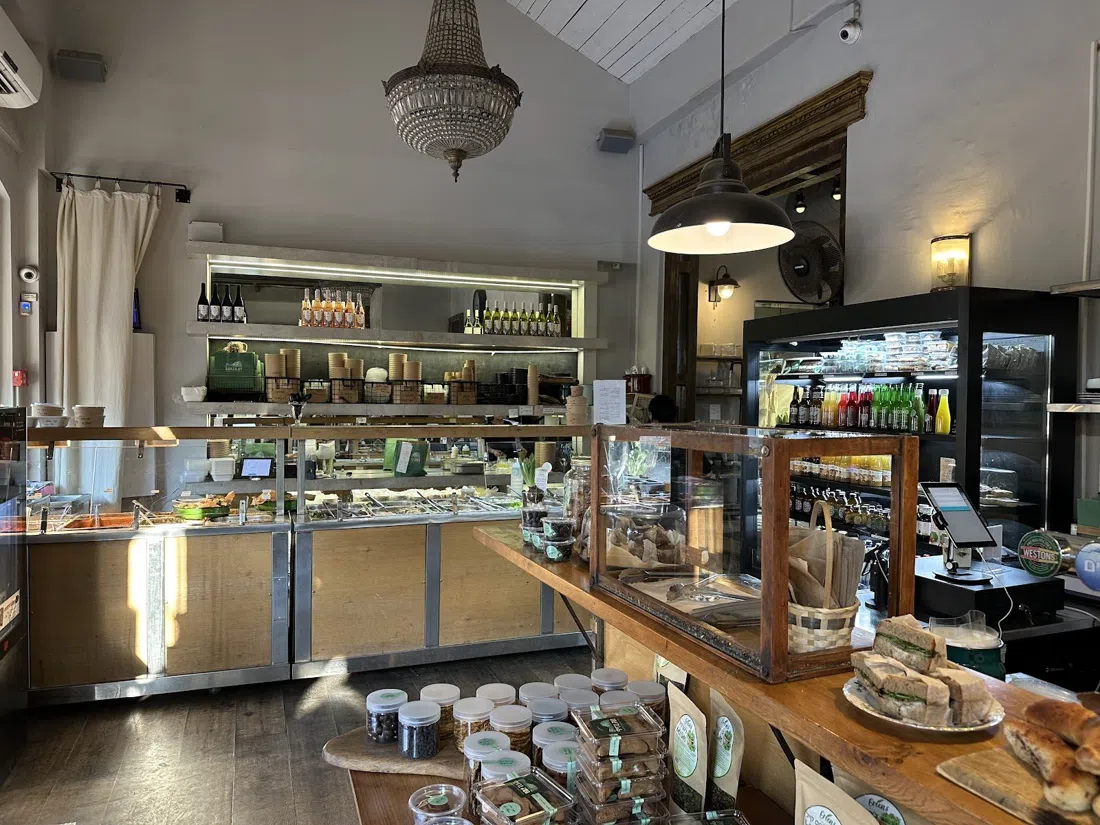
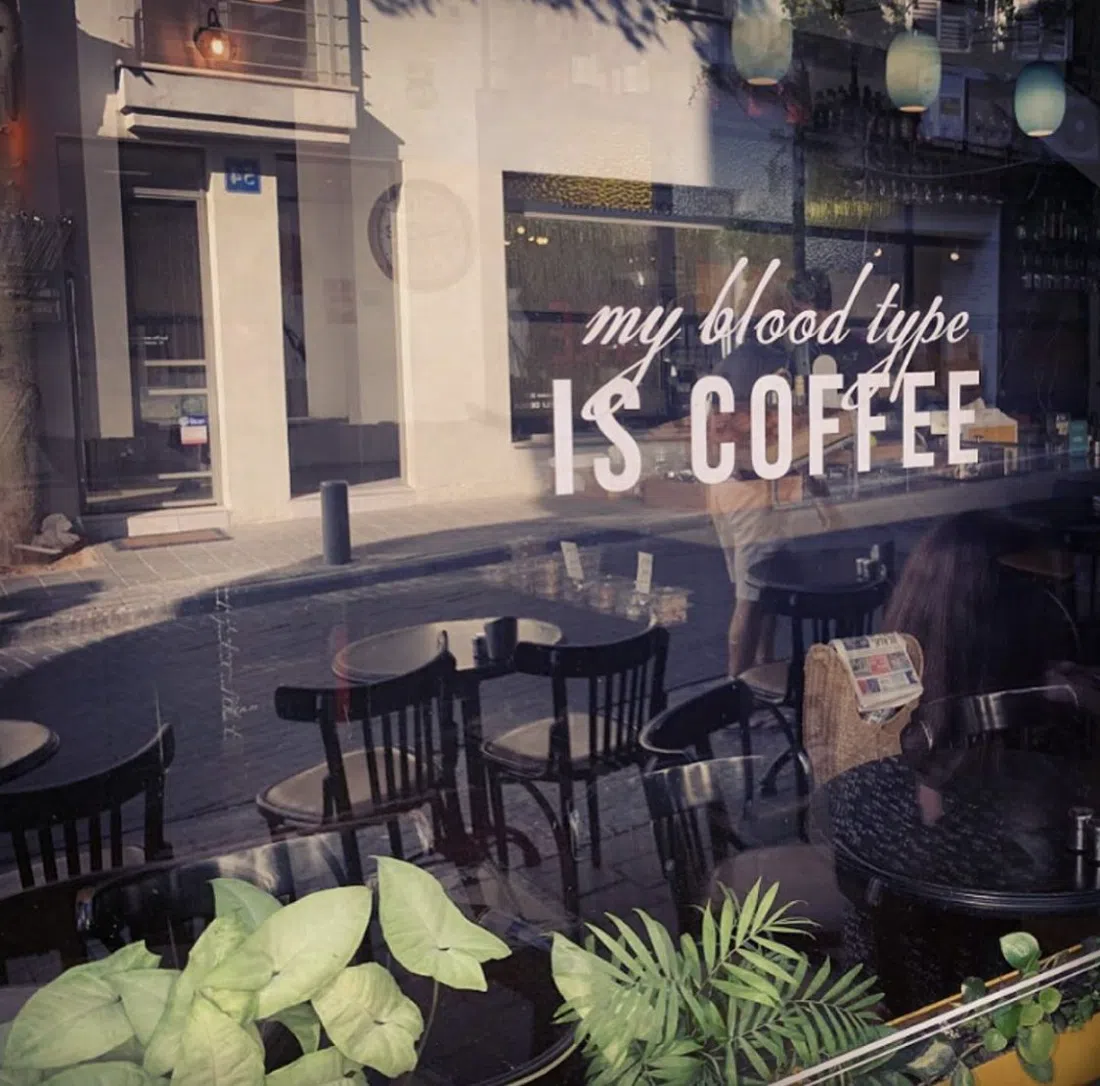
Café Alma - Neve Tzedek (the quieter end of Shabazi) has more room than the crowded corners and turns into a cocktail spot from late afternoon, ₪55-130 a head. When a walking group needs one table and a bathroom rather than four pavement seats, this is the practical choice.
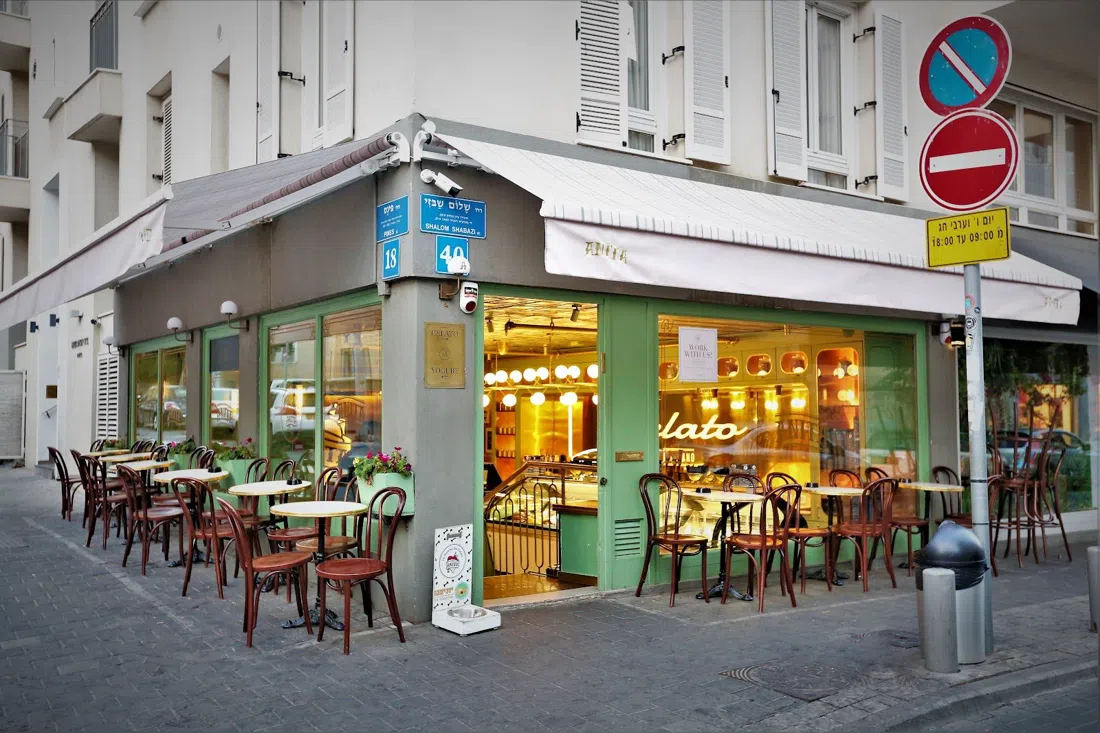
Anita Gelato (Shabazi Street, Neve Tzedek) is where Anita started in 1998 before it spread well beyond this street. Counter service, no bookings, ₪18-35, and a queue that backs up badly on warm evenings, which in September is most of them. Groups wait like everyone else. Most walks end here.
The market that tells the other half of the story
Levinsky Market (Levinsky Street, about ten minutes inland) was built from the 1920s by Greek, Balkan, Turkish and Persian Jewish immigrants. It is the story Neve Tzedek tells in architecture, told here in spice sacks, dried fruit, cheese counters and stuffed vegetables. Browsing is free; tastings run ₪10-40 a stop. Shops keep rough daytime hours Sunday to Thursday and Friday morning, and the market is closed on Saturday. Food tours pass through daily, so the narrow stretches get congested in the late morning. Go early, buy something you have to carry, and walk back downhill.
Walking it alone or with a guide
The streets are free and self-guided works. If you want the history rather than the shopfronts, a licensed guide earns the fee: Gal Klil Tour Guide (private and open-group walks, Neve Tzedek and around) links the lanes, the old railway compound, the Suzanne Dellal plaza and the tower in about three hours, which is the sensible route if you are only doing this once. Private walks are quoted per group (expect a few hundred shekels upward), and open departures need a minimum number of participants, so confirm the walk is running rather than assuming.
Delicious Israel (culinary walking tours ending at a Neve Tzedek atelier) is the food-led alternative, running two to five hours with tastings included and a small private atelier as the final stop. It is premium, typically several hundred shekels a head, and the atelier's size is the reason to book well ahead. Cooking classes and private dinners run from the same base.
On booking generally: nothing on the street requires a ticket, so there is no queue to beat and no advance purchase to make for the walk itself. What genuinely needs booking is the small-capacity material: the eight-seat sessions at Rokach House, theatre seats, a table for a group, a guide on a fixed date. Guided walks here run seven days a week, and there are 184 traveller reviews across the bookable tours, with the top-rated walk at 5.0 out of 5 from 58 reviews. Private guided options start from 299 USD per person, which is the honest gap between doing this yourself and having it explained to you.
Access, doors and what groups should know
There is no door policy anywhere outdoors, since the lanes, the plaza, the railway compound and the seafront park are public and unrestricted. The constraint is width. Parties above about fifteen clog the lanes, and experienced guides split them in two for exactly that reason. If you are organising a group, split it before you arrive rather than after someone complains.
Surfaces are uneven: old paving, kerbs, a few steps between levels, and the slope down to the station compound. It is walkable but not smooth, and the plaza and HaTachana are the flattest ground in the area. Indoors, capacities are small. The Gutman rooms and the Rokach sessions both fall over with numbers, while Café Alma and Meshek Barzilay absorb a group without drama.
Is it worth it
Yes, with a caveat. Neve Tzedek is worth two to three hours of anyone's trip because it is the only place where the city's first decade is still standing at street level, and because the walk has a natural shape (lanes, plaza, station, sea) that needs no organising. It suits couples, slow walkers, people who like buildings, and anyone who would rather look at a doorway than a checklist.
It does not suit visitors who want a single big attraction with an entrance and an exit, or anyone travelling with children who need something to do rather than something to look at. And if you only ever see it between noon and three in September, you will wonder what the fuss was.
Best time to go in September
September is still summer here. Days are hot and humid, the humidity eases a little towards the end of the month, and useful daylight runs to about seven in the evening. That gives you two good windows: 08:00-10:30, when the streets are quiet and the museums open, and 17:00 onwards, when the shade returns and the plaza fills.
Build the week around the closures, because they catch people out. The Gutman museum is closed Sundays. The Etzel Museum runs Sunday to Thursday only, roughly 08:00-16:00. The tower galleries run Sunday to Thursday until about 17:00 and Friday to 13:00. Levinsky Market is shut on Saturday. Friday afternoon into Saturday is quiet across the board, though the streets, the plaza, the railway compound and the seafront stay open and walkable. A Saturday here is a good walking day and a poor museum day. The autumn holiday period also falls in September and hours move around it, so phone the day before for anything with a door.
Practical notes
Getting there. Arrive on foot. The quarter is a walk south from the city centre or a flat ride along the seafront promenade, and cars are a liability: the lanes are narrow, largely one-way or pedestrian, and street parking around Shabazi is scarce and expensive. If you drive, park near the seafront and walk up.
Money. Prices are in shekels. Cards work in the cafés, restaurants and museums, but carry a couple of hundred shekels in cash for the Levinsky stalls, small tastings and anywhere with a counter rather than a till.
Timing. Three hours for the full route: lanes, plaza, one museum, station compound, seafront at sunset. Two hours if you skip the indoor stop. Book the Rokach session and any theatre seats before you travel; everything else can be decided on the day.
Budget. The walk itself is free, as are the plaza, the station compound, the seafront park and the tower galleries. A realistic day runs ₪35 for the Gutman museum, ₪20 for the Etzel Museum, ₪18-35 for gelato and ₪60-140 for a café meal, with dinner at the top end of the quarter reaching ₪150-350 a head. Add roughly ₪100-150 if you take the Rokach House session, ₪80-220 for a performance, and a few hundred shekels upward for a private guided walk.
Staying nearby. Sleeping within ten minutes of Shabazi is what makes the early-morning and late-evening windows usable rather than theoretical; compare rates and locations through Tel Aviv hotel search.
13 September 2026 · a first week before the flat: the Tel Aviv hotel directory


