Cartagena · The weekend · 11 min
Neck-Deep in Warm Mud at Cartagena's El Totumo Volcano
An honest account of the mud crater an hour north of Cartagena: what the hour inside is really like, what it costs in small notes, and where to spend the rest of the day once you are rinsed.
The mound is barely fifteen metres high, the colour of wet cement, with a wooden staircase bolted up one flank and a car park at its foot. You climb it in swimwear in front of everybody, swing a leg over the lip, and lower yourself into a warm grey crater where half a dozen strangers are already suspended at chest height, unable to sink and unable to properly stand. It is the least dignified hour on offer anywhere near Cartagena, and the one almost everybody is still describing at dinner three days later.
What actually happens in the crater
Volcán de Lodo El Totumo is not a volcano in the sense the word promises. Nothing is molten and nothing erupts. It is a mud dome, a low cone pushed up over centuries by gas and pressurised clay rising from deep below, topped by a crater roughly four metres across and filled to the brim with grey mineral mud. The mud sits at about blood temperature, closer to a bath drawn an hour ago and forgotten than to anything at a thermal spa. There is a faint mineral smell, sulphurous at the edges, that follows you home on your hair.
The physics are the entire experience. The mud is dense enough that you cannot sink and too dense to swim through, so you hang in it upright like a cork in treacle, arms out, feet nowhere near anything solid. Every movement is slow and comic. Sitting up is a negotiation, and turning over is a small engineering project. Fifteen minutes in there is plenty; twenty is generous. People laugh in a way adults rarely laugh in public, which is most of what you are paying for.
The crater is staffed. Attendants work inside the mud, and they will take you by the arms, tow you across to make room, and offer a massage, kneading your shoulders and back while you float. Another man usually works the rim with visitors' phones, photographing everyone in turn because nobody in the mud can hold a camera. None of this is included in anything, and nobody will say so up front. These are paid services, settled in small notes at the end, and the asking figures rise with how flustered you look. Decide before you climb the stairs what you want: a massage, photos, both, neither. "No, gracias" said once and pleasantly is understood perfectly well. What you should not do is accept three services with a vague wave and then discover you have only a 50,000 note on you.
Getting out is the other half of the ritual. You emerge grey and slick, walk down the same staircase dripping, and cross to the lagoon at the foot of the mound, where women wait waist-deep to wash you. This is brisk and unceremonious, since you are turned, rinsed, scrubbed, and your swimwear is worked over with you still in it, and it is also the only realistic way to get the mud out of your ears, your hairline and the seams of your costume. It is another tip. If being handled by a stranger is genuinely unwelcome, you can wash yourself in the shallows, but expect to leave with silt in places you will find later.
The skin talk is worth treating as folklore rather than medicine. Guides will tell you the mud is therapeutic, mineral-rich, good for joints and complexions. What is demonstrably true is that you come out unusually soft-skinned, faintly sulphurous, and about three shampoos away from normal hair.
Getting to the mud and back again
The site lies roughly 50 kilometres northeast of the walled city, along the coast road past the salt flats. Allow an hour and a quarter in the best case and closer to two if you leave during the morning crush out of the city. Almost everyone goes on an organised half-day run, because a taxi negotiated door to door with waiting time costs more than the trip is worth unless you are four people splitting it. Departures cluster in the early morning and again in the early afternoon; take the first slot of the day, since the crater is a conveyor belt whenever three minibuses arrive together and much pleasanter with eight people in it than twenty.
Entry to the site itself is a small fee collected on arrival in cash, and it is genuinely small, a fraction of what you will end up handing over in tips. Bring the money in 5,000, 10,000 and 20,000 peso notes. There is no card machine, no ATM, and no appetite for change-making at the bottom of a muddy staircase.
The access road is unsealed for the final stretch. After heavy rain in the wet months it turns claggy, and operators do occasionally cancel or turn back: a real risk from August into November, and close to a non-issue from December through April. If your trip is short and the volcano is the thing you came for, book it early in your stay so a washed-out day still has a second chance behind it.
What to bring and what to leave behind
Wear swimwear you have stopped loving. Pale fabric comes back a permanent dishwater beige no matter how thoroughly the lagoon women scrub it, and white is simply finished. Take a dark towel and a full change of clothes, including underwear, and flip-flops rather than anything with laces or a mesh upper.
Leave jewellery, watches and rings at the hotel, because the mud swallows anything that slips and it is not coming back. Contact-lens wearers should think hard: you cannot wipe your own face in there, and mud in an eye is the one thing that turns the hour sour. Glasses and sunglasses will not survive either. Long hair is easier braided or under a swim cap, and skip sunscreen before you go in because it will not last five minutes; reapply properly after the rinse, because the walk between crater and lagoon is fully exposed and the light on that coast is punishing. And do not shave that morning. Fine grit in fresh nicks stings for hours.
Phones either stay in the vehicle or go in a sealed waterproof pouch on a lanyard. There is no third option that ends well.
Who this suits and who should think twice
Groups do best here. The volcano is a shared indignity, and the bigger and more willing the party, the better it plays: stag and hen groups, extended families, friends travelling together. Couples enjoy it too, but nobody should mistake it for romance, since you will be photographed at your absolute worst by a man you are about to tip.
Children usually love the mud itself. The honest caveat is that the crater is a deep, soft-walled pool with no shallow end and no floor to stand on, the staircase is steep, and the handrails are notional. Under-tens need an adult with a hand on them the whole time, and toddlers are better left out of it entirely.
Skip the crater if you have open wounds, recent surgery, or an ear or eye condition you are protecting. Skip it if stairs are a serious obstacle, because the climb and the lip of the crater are the whole barrier and there is no way around them. And skip it if you want your day curated. The volcano is scruffy, transactional and a bit of a scrum, and that is not a defect in the operation so much as the nature of the thing.
Where to wash the day off properly
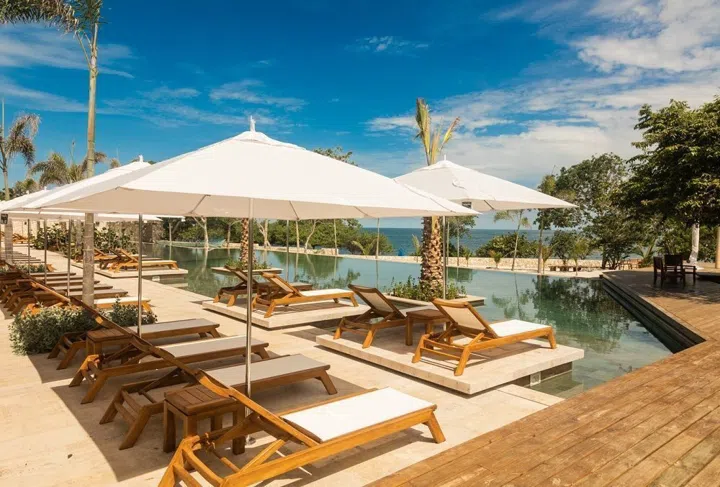
A mud morning leaves you with an afternoon and a residual sense of grit, and the best cure is water you can see through. The simplest option is Fenix Beach on Tierra Bomba, a ten-minute boat hop across the bay with departures through the day, free cancellation up to 24 hours out, and day passes around USD 55 to 75 including the return transfer, a welcome drink, lunch and a towel. Ten minutes on the water and the city skyline is still in view, which is precisely why it is the easiest booking on this list for a large party. Kayaks, paddleboards and champeta classes fill the afternoon for anyone who cannot sit still.
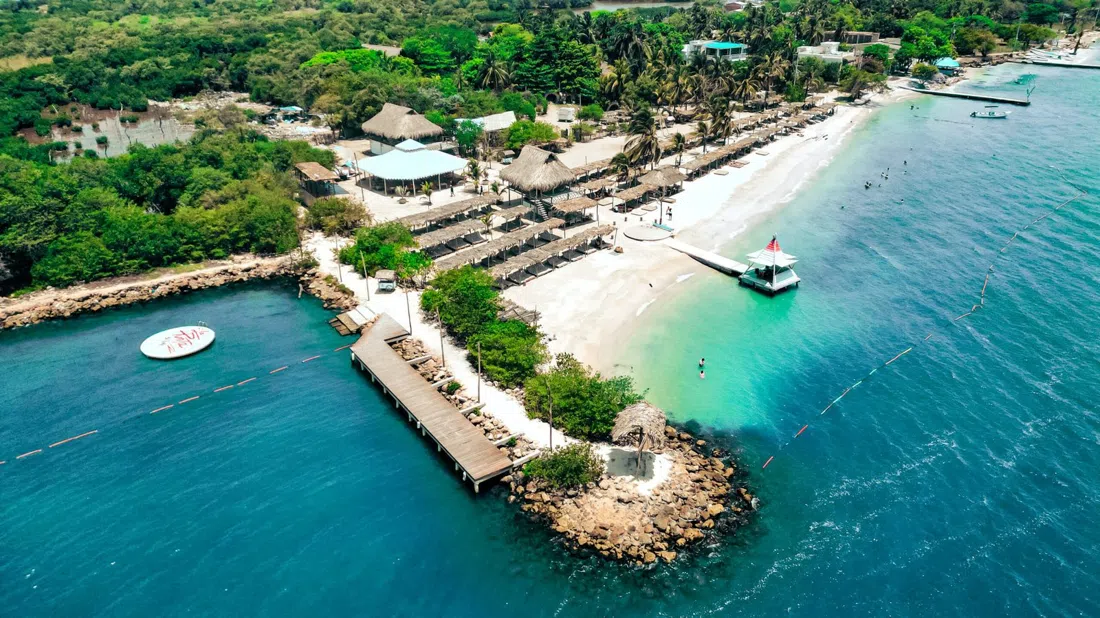
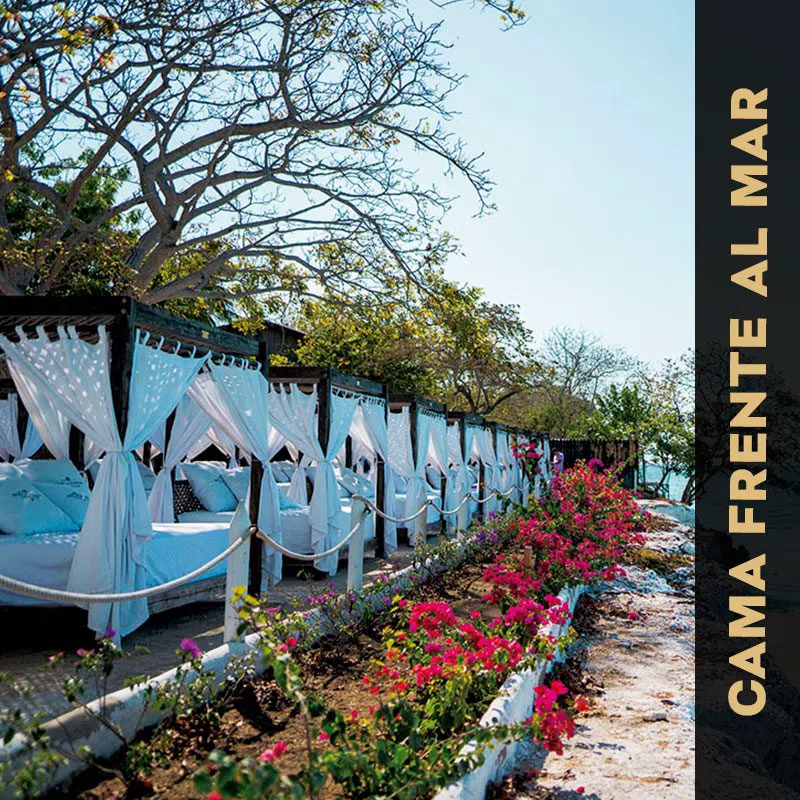
For a beach day built around the food, Blue Apple Beach, also on Tierra Bomba, is the design-led end of the same island. Boats leave Bodeguita pier door 1 at 10:00, 11:30 and 16:45, the club runs 11:00 to 23:00 across brunch, lunch and dinner, and passes start around USD 55 with higher tiers adding lunch, dessert, a towel and a fifteen-minute massage. A proper one, on a table, which after the crater feels like a different civilisation. It has also been a long-running name in responsible local hiring, which matters more here than the brochure language suggests.
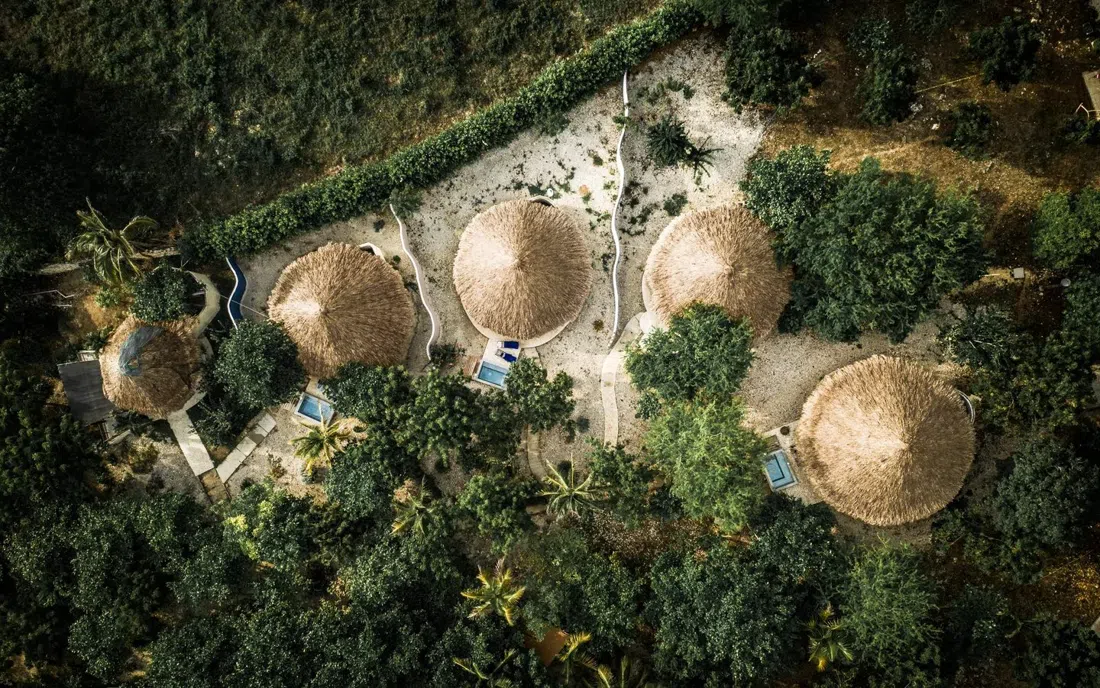
The polished, quiet alternative is Bora Bora Beach Club at Playa Blanca on Barú, fifty minutes out by speedboat. The day pass is COP 390,000 per person, with COP 290,000 payable up front and roughly COP 31,500 port tax plus about COP 8,800 insurance on top, and what you are buying is the absence of vendor pressure: the hawking that defines the public stretch of Playa Blanca is designed out of the property. Read the door policy before you book. The Club Area is strictly 18+, so despite the club selling to couples, families and groups, it is the wrong call for anyone travelling with children. Choose it for an adult group that wants a lounger and no negotiation.
All three are day trips from town rather than places to sleep, so it is worth settling the base first. The Cartagena hotel search covers the walled city, Getsemaní and the Bocagrande strip, and where you stay decides which pier you can reach on foot.
The islands day that earns its boat ride
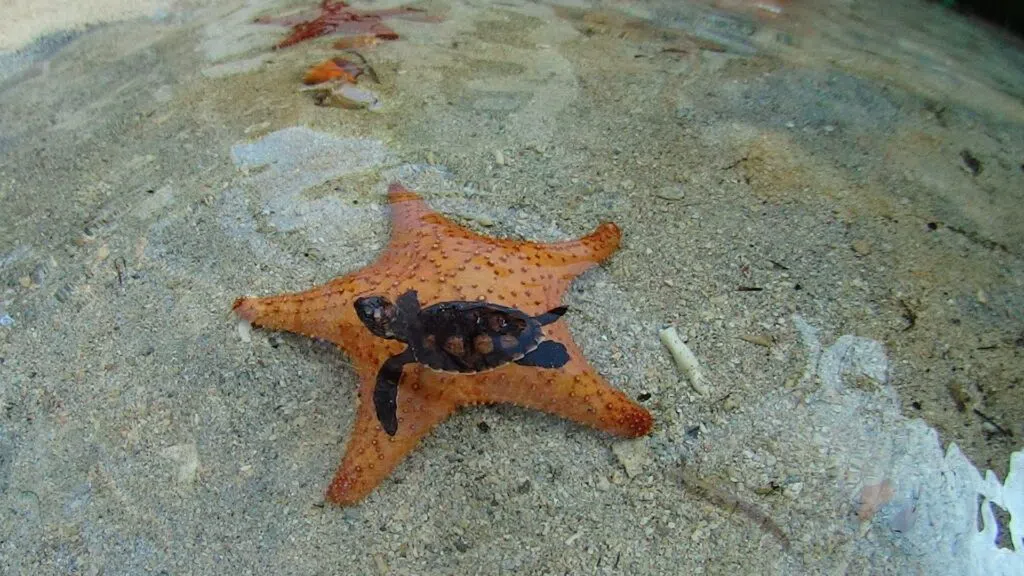
If you are already spending a day on the water, Oceanario Islas del Rosario CEINER in the Rosario Islands is the stop that justifies the fuel. It is a working conservation and reef-restoration centre rather than a show aquarium, with more than 1,400 animals across some 140 Caribbean species, and it is the one substantive thing on an islands itinerary that is otherwise sunbeds from end to end. Entry runs about COP 40,000 for adults and COP 30,000 for children aged two to ten, with boat transport separate; most visitors arrive as part of a Rosario Islands day at USD 50 to 90 all in. The catch is timing. It opens for only a short window each day, so your arrival is dictated entirely by the boat schedule, and group visits are slotted through island operators rather than booked directly. Confirm the Oceanario is actually on the itinerary before you pay, because plenty of island days quietly skip it.
Mangroves twenty minutes from the hotel strip
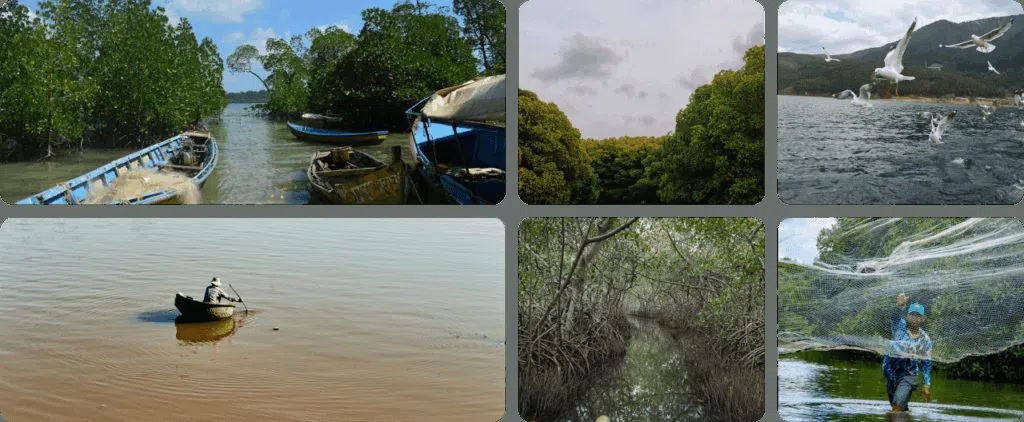
The gentlest counterweight to the volcano sits twenty minutes north of the hotels. Ecotours Boquilla runs out of the La Boquilla fishing village, community-owned, with local guides paddling visitors through the mangrove tunnels in wooden canoes for two to three hours at USD 25 to 50 per person. Packages extend into lunch, crabbing, a cooking session or a drum-and-dance performance, and the whole operation exists because the Afro-Colombian fishing community here fought to keep these mangroves from being cleared. There are enough canoes and guides to take groups comfortably. Some guides work mainly in Spanish, so ask for an English-speaking guide when you book rather than on the jetty.
Two land days for when you have had enough boats
When the sea is rough or the children have reached their limit, Aviario Nacional de Colombia on the Barú road is the reliable fallback: the largest aviary in the Americas, fifty minutes out by car, open daily 9:00 to 17:00 with last entry at 16:00 and closed on 1 January. Foreign adults pay COP 90,000, children and students COP 65,000 under rates effective 1 September 2026, and under-twos go free. Group rates and guided circuits are available, and the in-flight bird shows at 11:30 and 15:30 are worth planning the visit around rather than stumbling into.
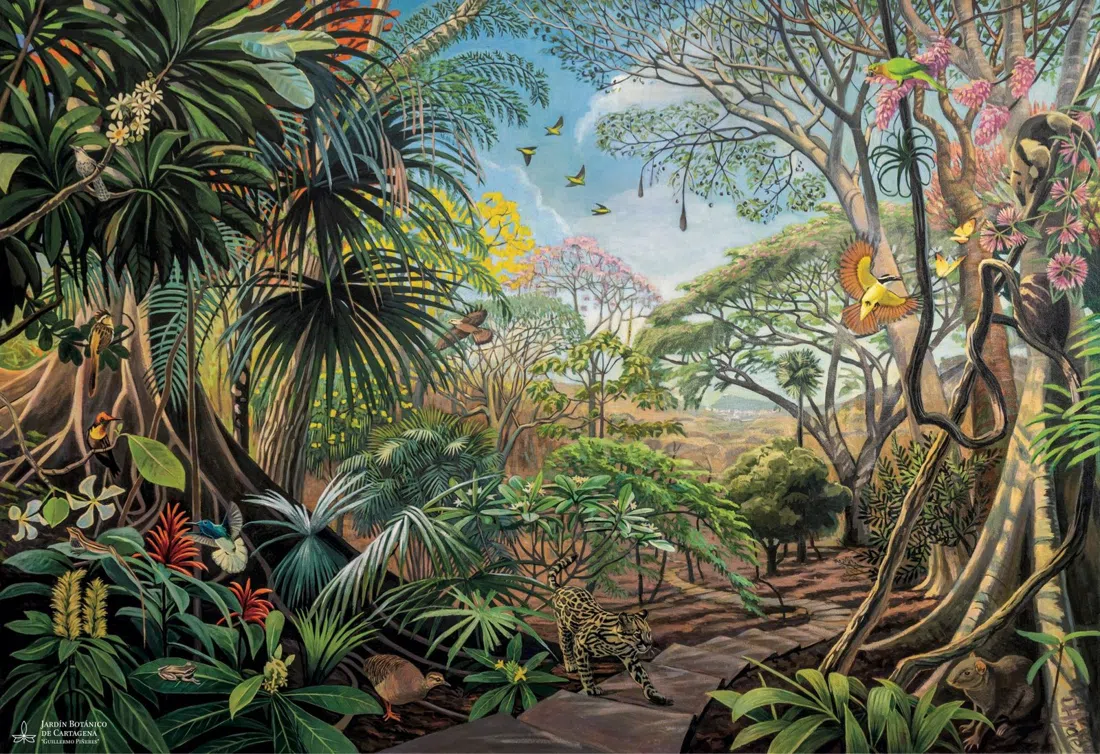
For something quieter still, the Jardín Botánico de Cartagena "Guillermo Piñeres" lies thirty minutes inland and is missed by almost every visitor to the city. Over 300 plant species and a genuine remnant of forest, cool under the canopy, open 08:00 to 16:00 every day except the first working day of the week, with entry around COP 15,000 to 25,000 and guided tours available if you give notice. It is the antidote to a week of piers, and the last place in this guide where nobody will try to sell you anything.
The practical end of it
Cash is the first rule. The volcano runs entirely on pesos in small denominations (entry, massage, photos, lagoon rinse, a drink afterwards), and there is nothing resembling a card terminal for the last 50 kilometres. Draw money in the walled city before you leave and break it into notes no larger than 20,000.
Budget the day honestly. The organised half-day trip itself is the small part, and the tips are the rest. Reckon on the equivalent of USD 25 to 45 per person all in for transport, entry and a normal set of tips, and carry a little more than that so you are not counting coins in the mud. A beach club afterwards doubles or triples the day's spend, which is why most readers do the volcano on its own morning and the water on another.
On timing, the dry run from December to April is the safe window for both the access road and the boats; August to November brings rain that can close the track and cancel crossings. Early departures beat afternoon ones for crowds at the crater and for the drive. Allow four to five hours door to door, and do not book anything that needs you clean and presentable within two hours of getting back, because mud has a long tail. Piers for Tierra Bomba and Barú sit within walking distance of the old town, boats to the Rosario Islands leave from the main terminal, and taxis to La Boquilla or the botanical garden should be agreed on a price before you get in. For everything either side of this particular day, where to eat, which districts to walk, what the seasons actually do here, the broader Cartagena guide is the place to start.
29 September 2026 · a first week before the flat: the Cartagena hotel directory