Chicago · Where to live · 8 min
Humboldt Park in Chicago from the swan boats to Paseo Boricua
A 197-acre park with pedal swans, two steel flags 59 feet high, and the only museum in the United States devoted year-round to Puerto Rican art: you can walk the lot in a day.
Two steel Puerto Rican flags arch over the traffic on Division Street, 59 feet tall and 45 tons each, one at California Avenue and one at Western. The half mile between them is Paseo Boricua. At the western end of that walk sits a 197-acre park with lagoons, a sunken rose garden and two bronze bison.
The park, the Prairie River and the rose garden
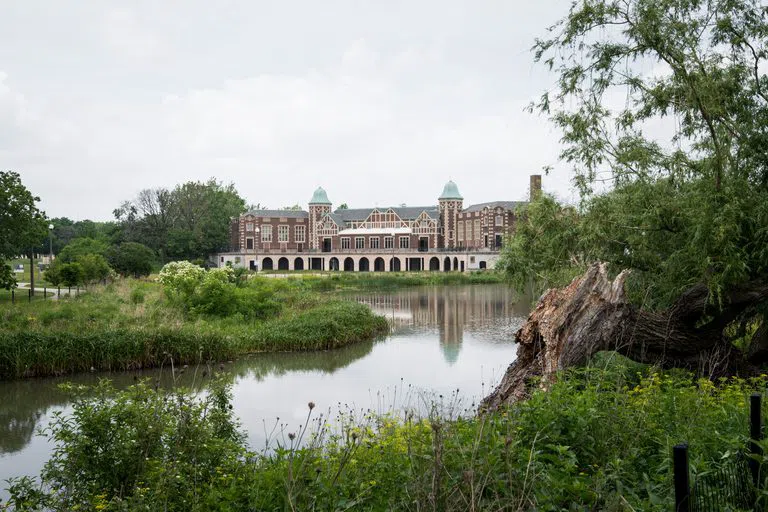
Humboldt Park (West Side) gave the neighbourhood its name, and the day starts here. Jens Jensen laid out its Prairie River, a rock-lined stream that slips over a low stone waterfall. The rose garden is formal and sunk below the path, with a bronze bison standing at either side of it and the lagoons behind. A boulevard of mature elms runs the length of the 197 acres.
Entry is free and unticketed, dawn to 11 p.m., and a group of any size walks straight in. A large organised picnic or event needs a Chicago Park District permit, applied for ahead of the day.
Give the park a morning, then walk east to Division Street. If you would rather spend the half day going the other way, Garfield Park Conservatory is 1.5 miles south down the boulevard, also free.
The boathouse and the swan boats
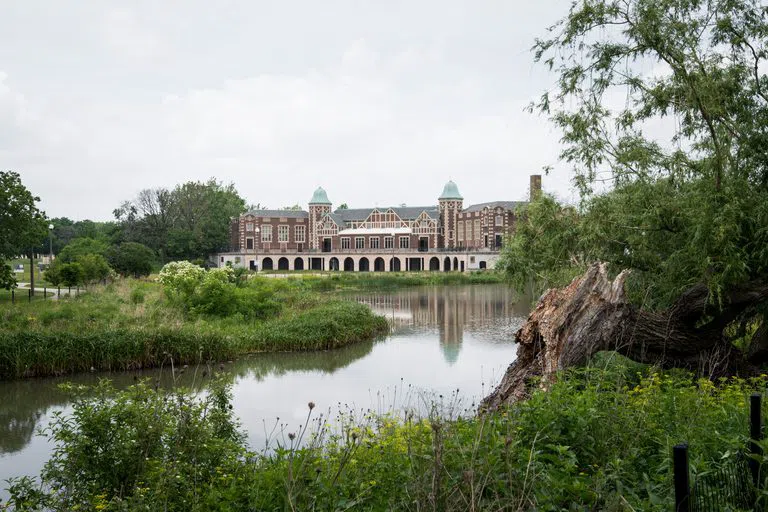
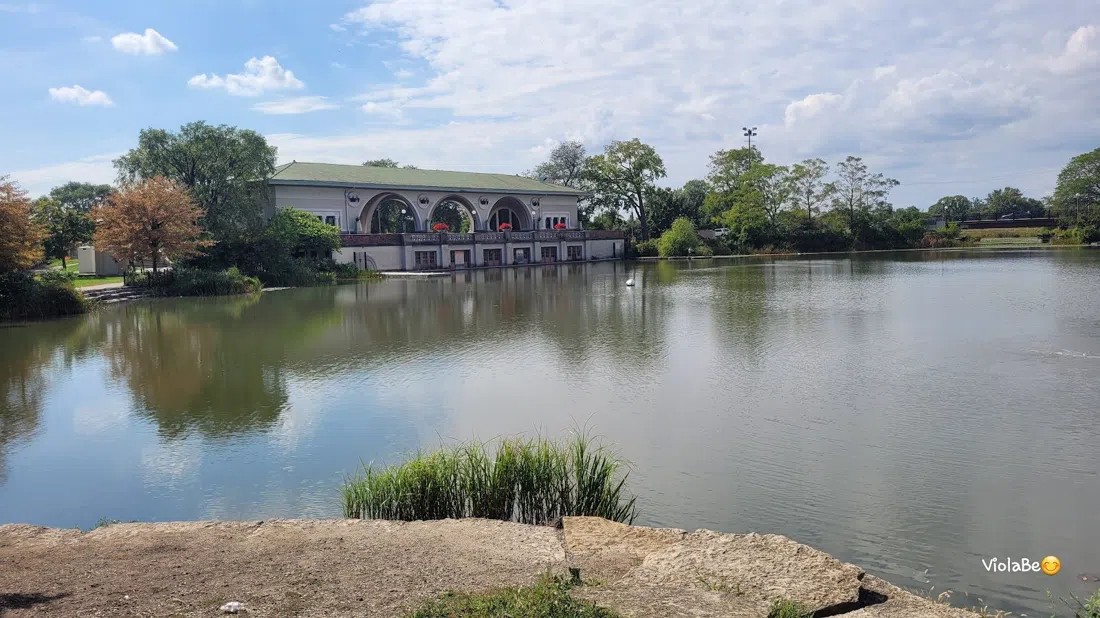
Humboldt Park Boathouse Pavilion (on the lagoon, inside the park) is a designated Chicago Landmark and the best photograph in the park. The 1907 Prairie School building is pale stone and stucco, with a long balustraded terrace and twin pergolas stepping down to the water. The terrace and veranda are open to anyone, with no door policy and nothing to pay to walk round the building.

At the dock below sits a fleet of white fibreglass swan pedal boats, hired by the hour at $30 a boat, and several swans can go out together. Surrey bikes are $29 to $39. The swans came back in April 2026 after sitting out a season, and they run from late April to October, so check the season before you promise anyone a pedal round the lagoon.
Swimming on the lagoon
Humboldt Park Beach (near Sacramento Avenue) is Chicago's only inland beach, which means swimming off a park lagoon miles from Lake Michigan. A crescent of imported sand runs along the water, with a lifeguard chair and a buoy line, and trees and three-flats stand where the open horizon would be at the lake.
Swimming is free and lifeguarded. The 2026 season ran June 19 to Labor Day, 11 a.m. to 7 p.m. daily, and the beach is shut for most of the year. No alcohol and no glass come through the gate.
Paseo Boricua and the gateway flags
Paseo Boricua Gateway Flags (Division Street at California and at Western) went up on Three Kings' Day 1995 and were granted protected Chicago Landmark status in 2022. Each is ribbed steel with a cut-out star punched through it, and both are floodlit after dark.
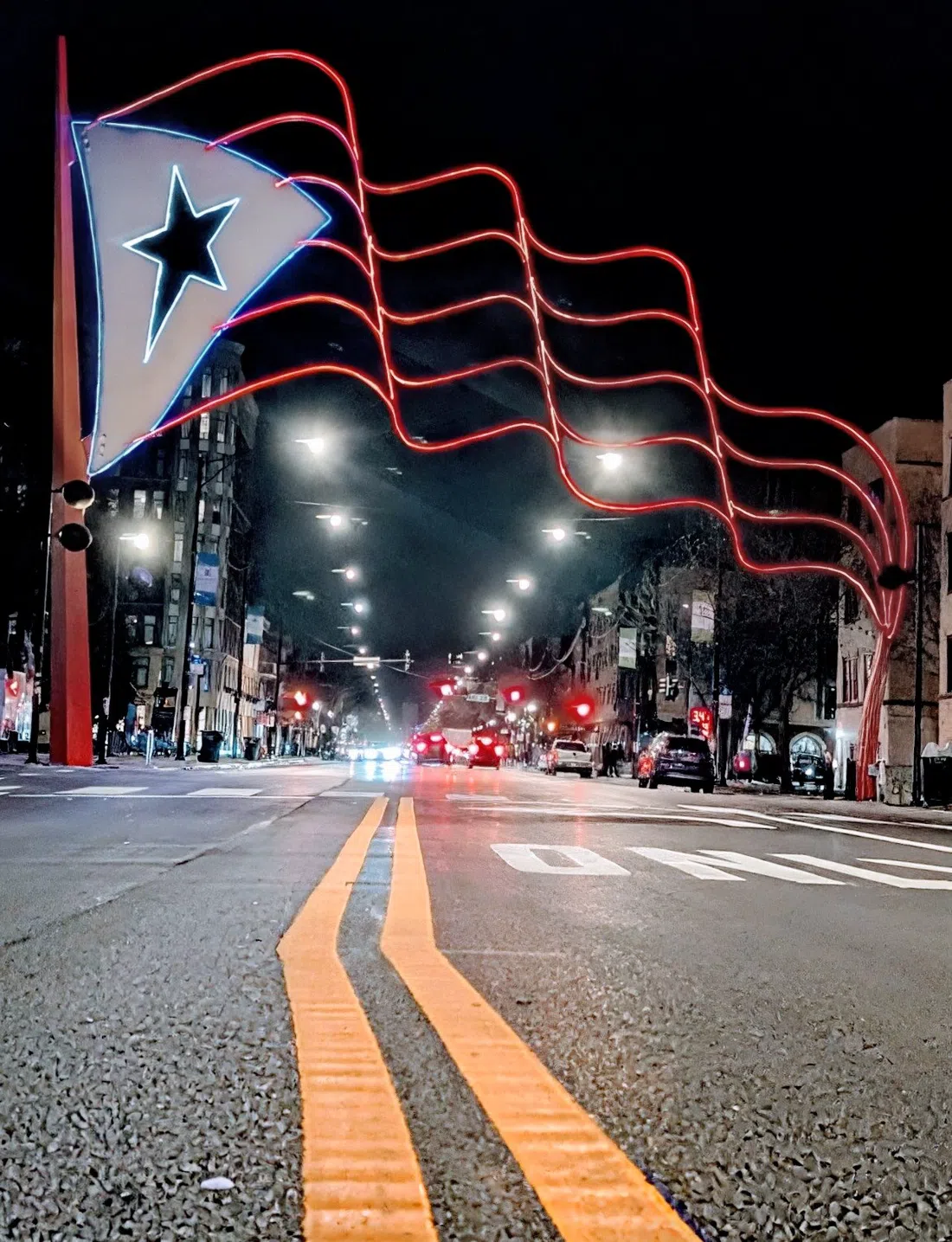
Walk the half mile from one to the other rather than photographing a single arch and turning back. The street is public and free, at any hour and in any number. Come back at night if you want them lit.
A walk through 80 murals
Paseo Boricua Tour Company (meets at Ciclo Urbano, 2459 W Division St) runs year-round under Eduardo Arocho, who has lived in the neighbourhood his whole life, and covers some 80 murals in 75 minutes across six blocks. If you are arriving from outside Chicago, this is the stop that explains the others.
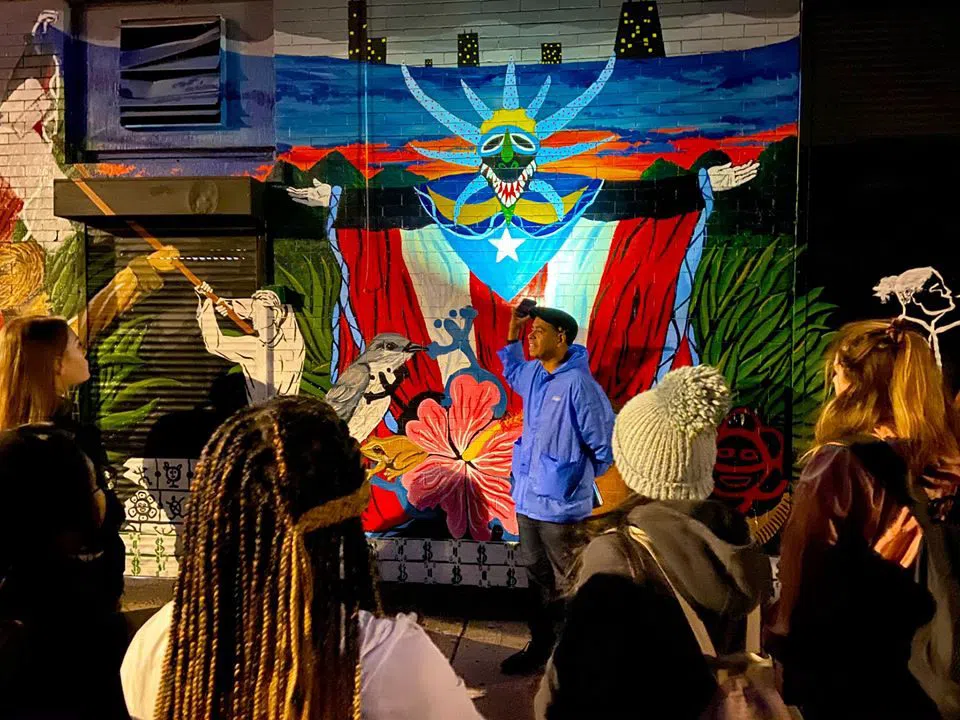
Private tours start at $35 a head. School and community tours are a flat $250 for up to 35 people, and the public pop-up walks take 15. A tour can include a lunch booking at a Puerto Rican restaurant, which is the thing to ask for when you reserve.
The casita on Paseo Boricua
La Casita de Don Pedro (Paseo Boricua) is a small, brightly painted replica of a 1940s rural Puerto Rican casita, with a corrugated zinc roof and a shuttered porch. The garden around it is laid out to read as the Puerto Rican flag from above, and a bust of Pedro Albizu Campos sits beside the house. Most people walk past it, which is a shame.
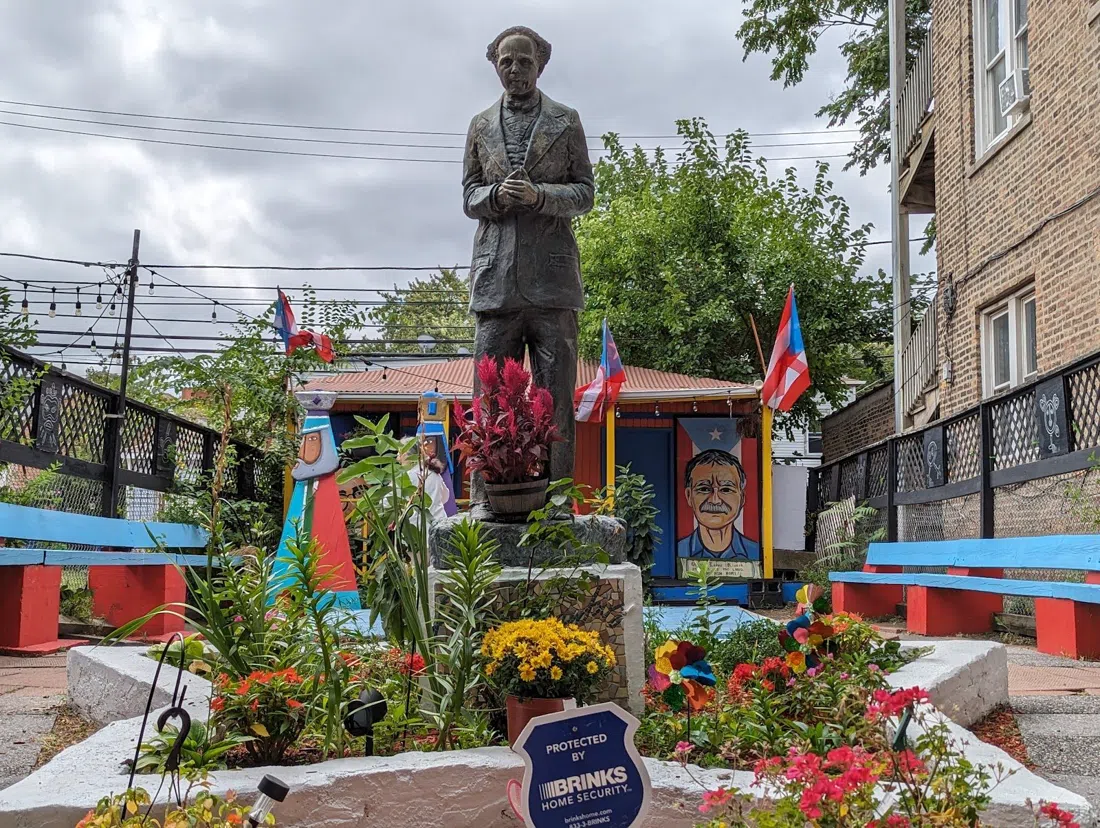
The programme is free: workshops, bomba y plena performances and a summer artisan market. Opening follows those events, with no fixed daily hours, so the reliable way in is the walking tour or a summer festival weekend. Donations are welcome.
The museum at Division and Sacramento
National Museum of Puerto Rican Arts and Culture (Division and Sacramento) occupies the 1895 Frommann & Jebsen park stables and receptory, a Chicago Landmark in red brick and limestone, German Renaissance Revival, with a conical corner turret and broad arched carriage doorways still in the facade. Inside are galleries of vivid Puerto Rican painting. It is the only museum in the United States devoted year-round to Puerto Rican arts and culture.

Admission is free and donations are invited. The hours are short, Tuesday to Friday in the daytime and Saturday mornings, which puts this stop before lunch and nowhere else in the day. Call ahead for parties over about 10, and arrange group and school tours in advance.
Breakfast and coffee on Division Street
Café Colao (Division Street) is the morning stop before the murals. Strong Puerto Rican coffee and café con leche come out of a tiny bright room, with flaky quesitos and pastelillos in the counter display and flag colours and local art on the walls. It trades 8 a.m. to 3 p.m. Monday to Saturday. A crowd that will not fit the room should take it away.
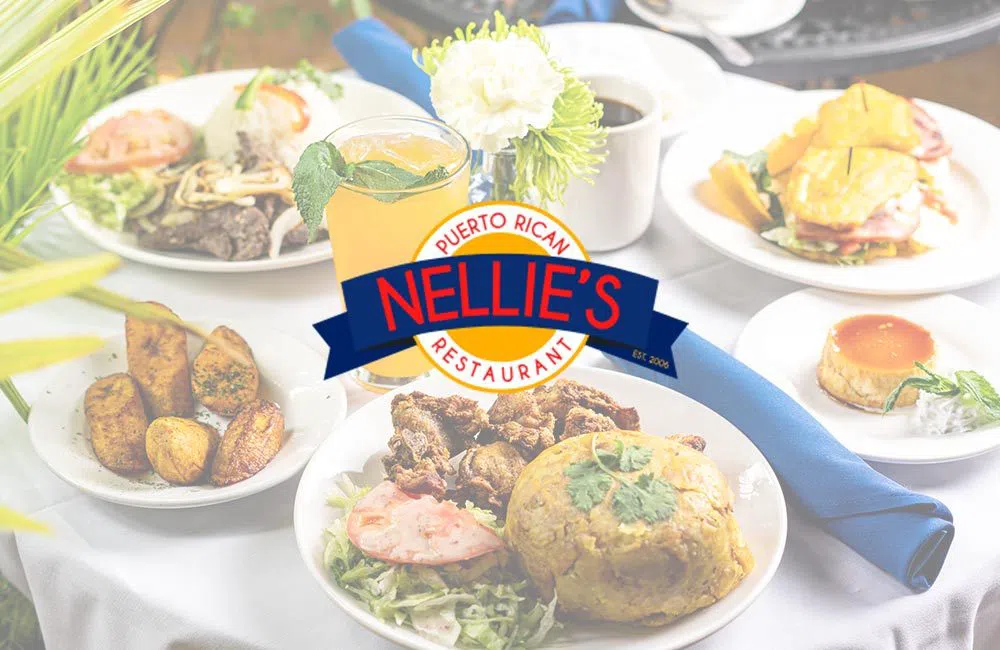
Nellie's (Paseo Boricua) has been family-run on the street since 2006 and is the cheapest and easiest way into the food. The jibarito arrives on a paper-lined plate with maduros: steak layered between two flattened fried green plantains in place of bread. Breakfast also runs to coconut oatmeal. The room is a plain corner storefront with a counter and vinyl booths, and tables get pushed together when a party turns up. It opens 7 a.m. to 3 p.m. on weekdays and 9 a.m. to 4 p.m. at weekends, and closes before dinner.
Lunch and dinner on Paseo Boricua
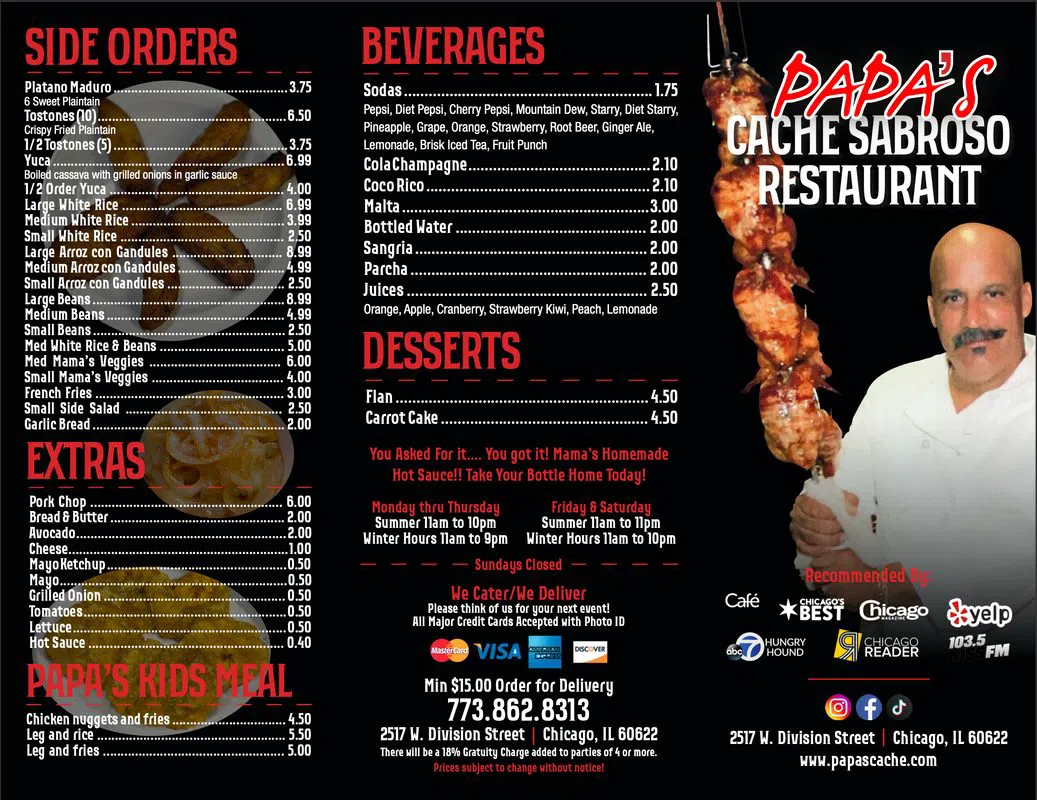
Papa's Cache Sabroso (Division Street) turns whole chickens on a charcoal rotisserie behind glass and pounds mofongo in a wooden pilón, under a tropical mural in the dining room. The kitchen sends out big family-style trays and does catering. Hours are 11:30 a.m. to 9 p.m. Monday to Thursday and to 10 p.m. Friday and Saturday, closed Sunday.
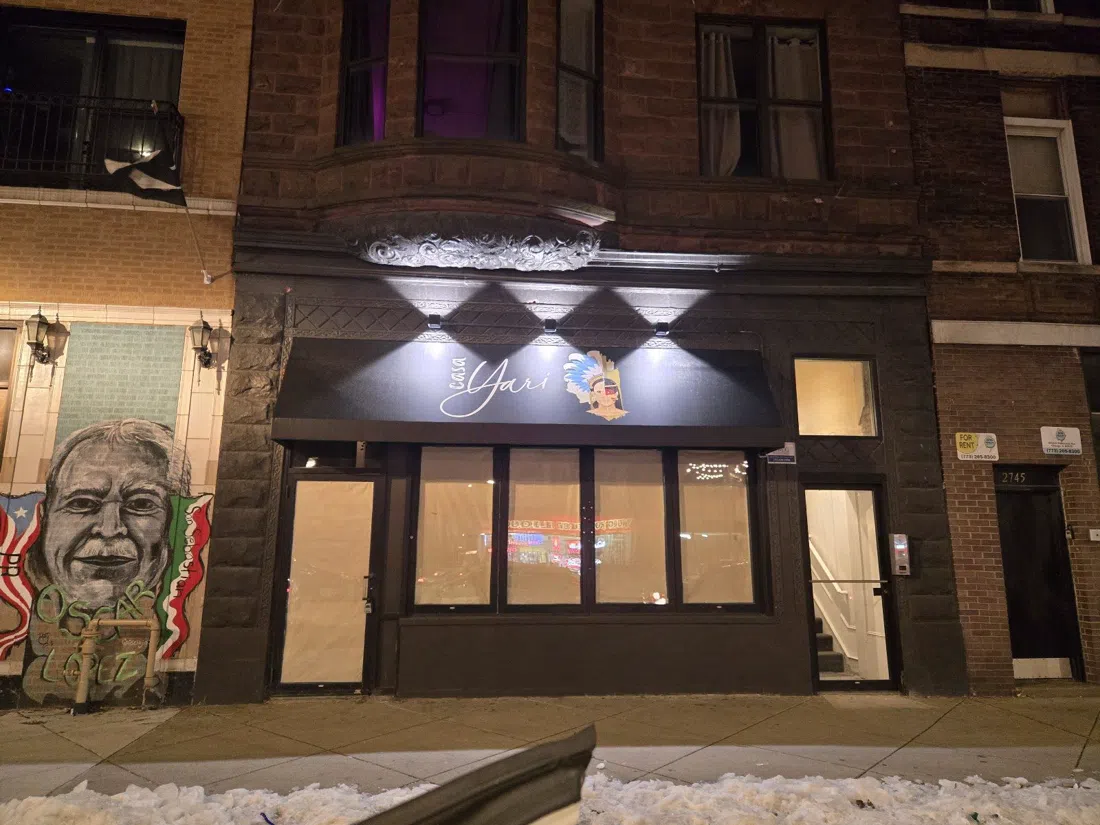
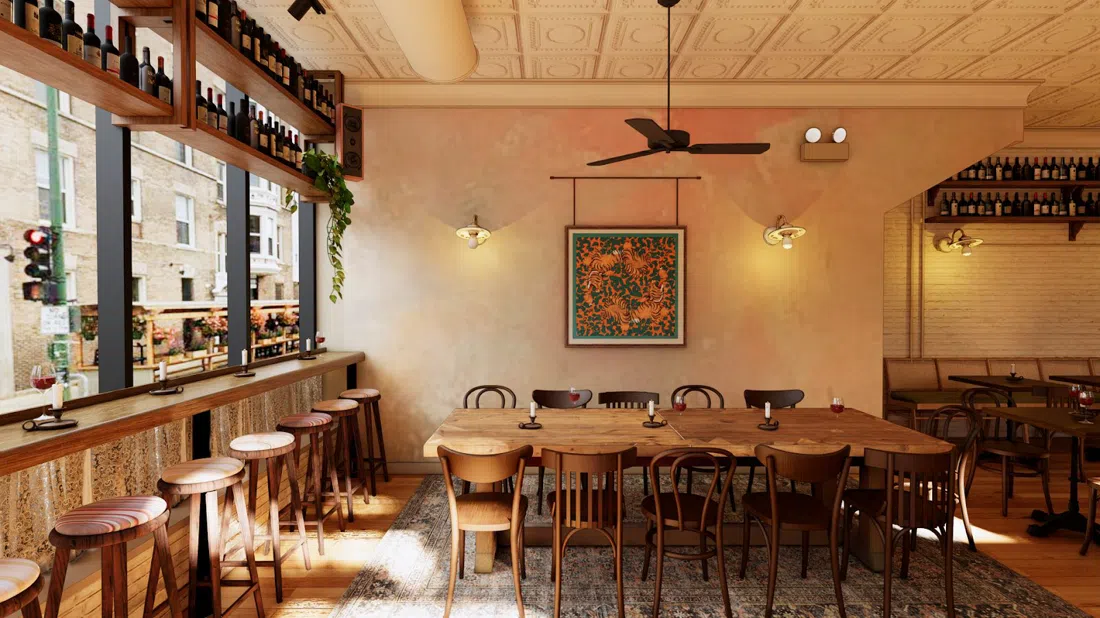
Casa Yari (Paseo Boricua) arrived in January 2026, when chef Yari Vargas moved the restaurant onto Division Street into a room twice the size of the old one. Warm wood and plants fill it. Pastelón and pollo chuco come with printed menu cards carrying handwritten notes about the family. Almost every dish has a vegan version, which is useful for a mixed table. It serves dinner only, and weekends need a reservation.
Taan (Augusta and California) is the booking people in the neighbourhood are chasing at the moment, $$$. Chef Chanita Chayaluk opened it in September 2026 in the space Segnatore vacated. The corner room is narrow, with a marble bar and natural-wine bottles racked up the back wall, and the Thai dishes are plated small and European with Midwestern seasonal vegetables. It runs 5 to 10 p.m. Tuesday to Saturday. Walk-ins are taken, and anything over four should be called in or booked ahead.
Pie and a soda fountain by the park
Spinning J Bakery and Soda Fountain (a block from the park's eastern edge) rescued a 1928 marble-and-brass soda fountain bar from demolition and rebuilt it inside the shop. Lattice-topped fruit pies sit under glass, and the pie changes. Sodas are hand-pulled, and a Thai tea milkshake is on the board. Service is at the counter, the tables are small and no reservations are taken. It trades 9 a.m. to 3 p.m. and closes Monday and Tuesday.

Drinking on California Avenue
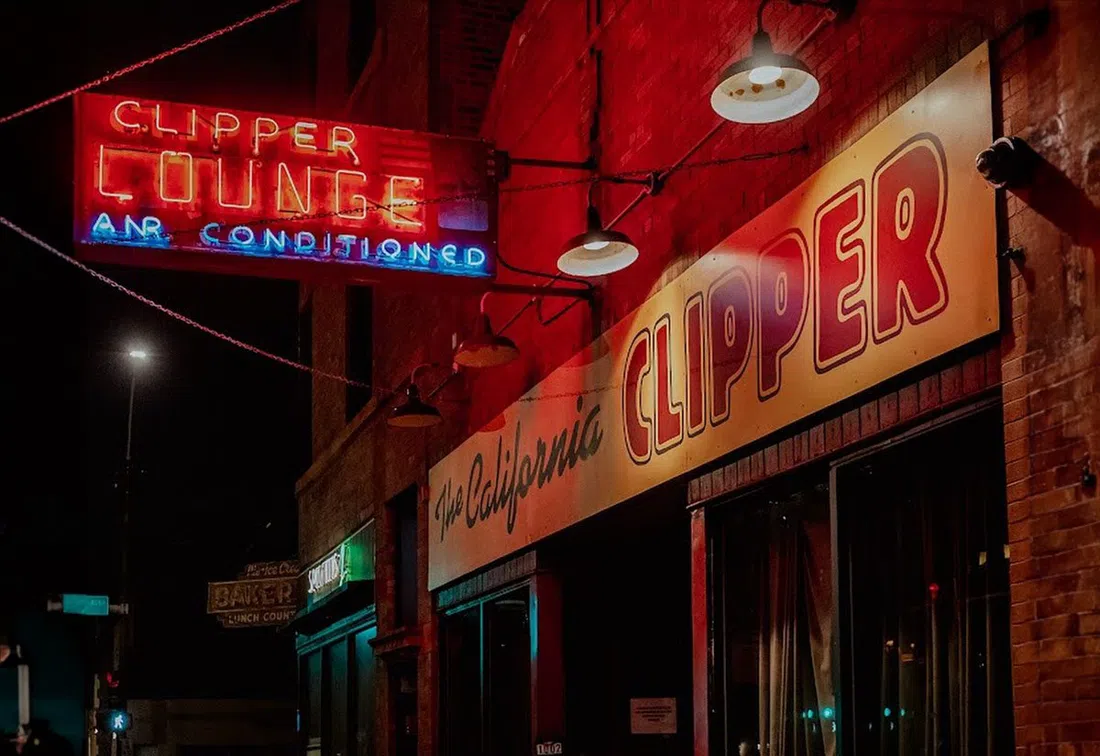
The California Clipper (California Avenue) has been open since 1930 and was a Prohibition-era speakeasy before that, so the drinking history here runs deeper than anywhere else in Humboldt Park. A 60-foot purple Bakelite Art Deco bar runs the length of the dim 1930s tavern, with red horseshoe booths down the side, and the back room still books live country, jazz and soul. Nobody on the door gives you trouble. Hours are 6 p.m. to 2 a.m. Tuesday to Sunday, 3 a.m. on Saturday, closed Monday.
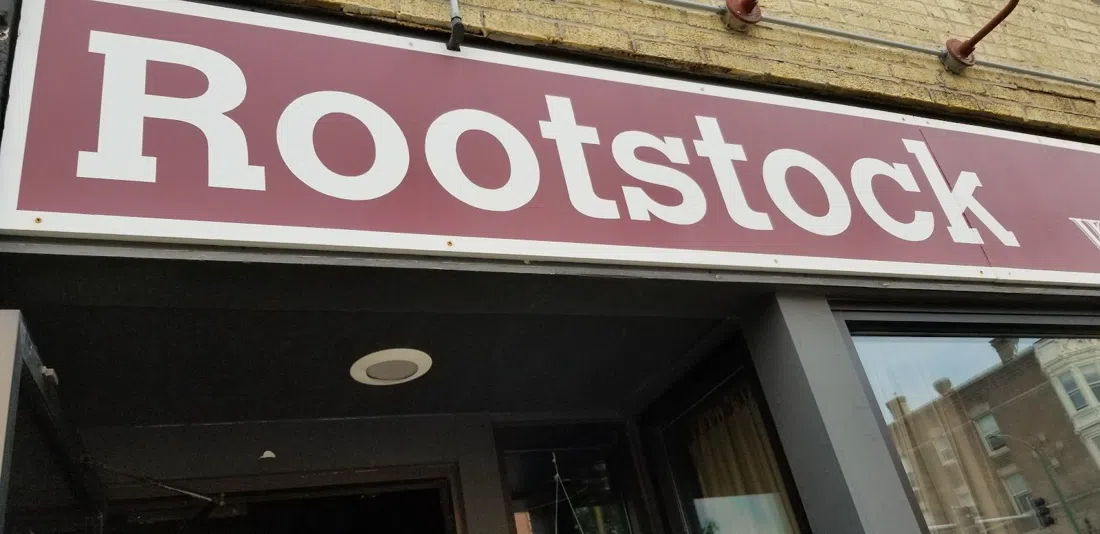
Rootstock Wine & Beer Bar (California Avenue, two doors along) is the long-standing grown-up option on the same corner, and the place to end a late night. It is a low-lit corner bar with a chalkboard wine list above the back bar, charcuterie and cheese boards and unfussy wooden tables. The kitchen runs late, and real food comes out past midnight. It closes Sunday.
Where to stay
Humboldt Park has almost no hotels. The Robey, Chicago (Wicker Park) is the realistic base, two miles east, 10 minutes by car or a direct bus along North Avenue. It is a 1929 Art Deco limestone tower standing on its own at the Milwaukee, North and Damen six-corners, narrow and wedge-shaped, with 89 rooms across two buildings and private-event spaces, $$$.
The 13th-floor Up Room is glazed on all sides, with the downtown skyline beyond it, and the rooftop bar takes group bookings. It fills at weekends, so reserve. The Blue Line at Damen puts the airport and the Loop within easy reach of the door.
Closed days and what to book
Spinning J closes Monday and Tuesday, the Clipper closes Monday, and Papa's Cache Sabroso and Rootstock close Sunday, while the museum, Café Colao and Nellie's are daytime trade only. Book Taan, reserve a weekend table at Casa Yari, call the museum ahead of a group, and check the swan-boat season before you build a day around the lagoon.
See the Chicago guide and the Chicago hotel search.
4 November 2026 · a first week before the flat: the Chicago hotel directory