Havana · Getting around · 10 min
Getting to Viñales from Havana When the Fuel Runs Short
The valley is still two hours west of the capital, and the hard part in 2026 is arranging the drive home before you arrange anything else.
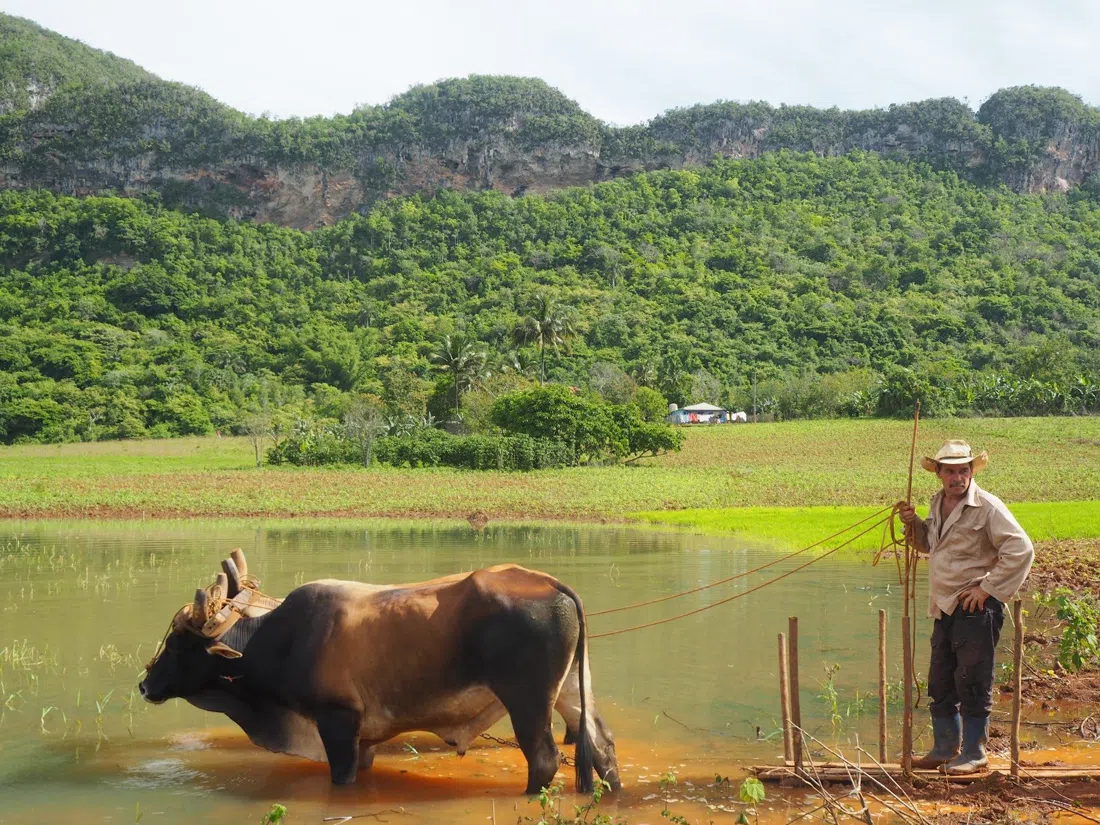
Two hours west of Havana the cane country buckles and the mogotes rise out of the tobacco fields: limestone hills with sheer grey sides and green hair, standing over a valley floor still ploughed behind oxen and hung with wooden curing houses. Viñales has been a protected cultural landscape since 1999 and it remains the easiest beautiful thing to reach from the capital in a single day. The road has not changed, but the fuel has, and with it the whole arithmetic of getting home the same night. Plan the return before you plan anything else and the rest of the day falls into place.
Which three days the coach runs
Víazul (intercity terminal on Avenida Independencia, out past the Plaza de la Revolución) is the cheapest honest way west, at €16 to €24 one way for a seat on a scheduled coach. The detail that reshapes everything in 2026 is the timetable: the Havana to Viñales service now runs on Friday, Saturday and Sunday only. If your nights in the capital fall Monday to Thursday, the coach does not exist for you, and the two sections below are your entire menu.
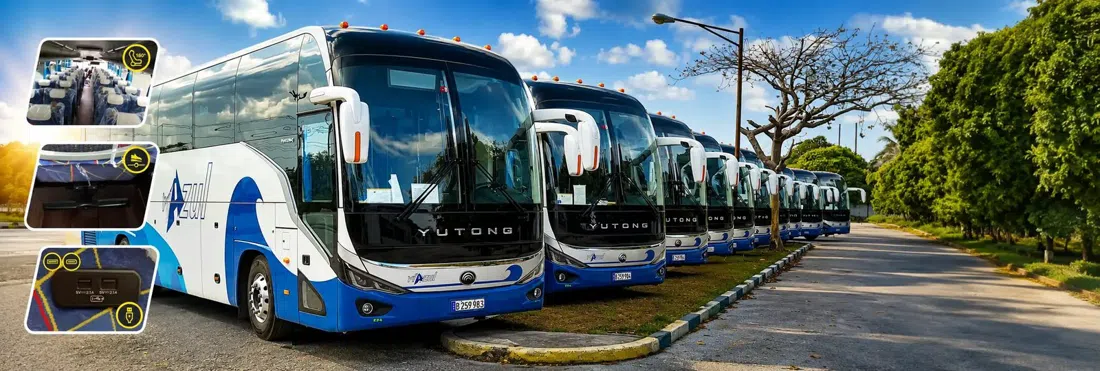
The booking system is unforgiving in a specific way. Víazul takes groups, but every seat has to be bought individually online in advance, so there is no single transaction for six friends. Make six bookings in one sitting and check they all land on the same departure. The Viñales run sells out and walk-ups rarely get on, so turning up at the terminal in the morning and hoping is not a plan. Book the return leg at the moment you book the outbound. A seat west without a confirmed seat back is how people end up sleeping in a casa they did not budget for.
Buying a seat or buying the whole car
The colectivo rank at the Víazul terminal (Avenida Independencia, alongside the coach bays) is where the shared taxis gather, and it is the option that works on days the coach does not. Cars take four to five passengers at US$15 to 20 per seat, and they are faster than the coach, two and a half to three hours, because nobody stops for a scheduled rest. Couples should expect to share with strangers and to wait until the car fills. A group of four has the better hand: buy out the whole vehicle for roughly the price of four seats and leave immediately, which turns a shared taxi into a private transfer at close to coach money.
Two conditions, both settled out loud before anyone gets in. Agree the price, and agree the return time, because the same driver taking you back in the late afternoon is worth more than the ten dollars you might save by haggling. Take the driver's phone number, name a specific pick-up point in Viñales (the town square is the obvious one) and pay part on arrival with the balance back in Havana; money still owed is the only real guarantee in this system. Departure also depends on the driver finding fuel that morning. Sometimes they do not, and the car that was certain at nine last night is a shrug at seven today.
Letting somebody else find the diesel
If your day cannot absorb that shrug, pay an operator to own the problem. Cuban Adventures (Havana departure, door to door) runs a ten-hour day, 08:00 to 18:00, with a maximum of twelve people, picking up from your accommodation and including a guide, site entries and lunch. They operate Monday to Sunday except Cuban public holidays, and the price is quoted on request rather than published. Twelve is small enough to move through a cave without a scrum and large enough to keep the per-head cost sane, and it is the best insurance against being stranded in the valley on an afternoon when transport thins out.
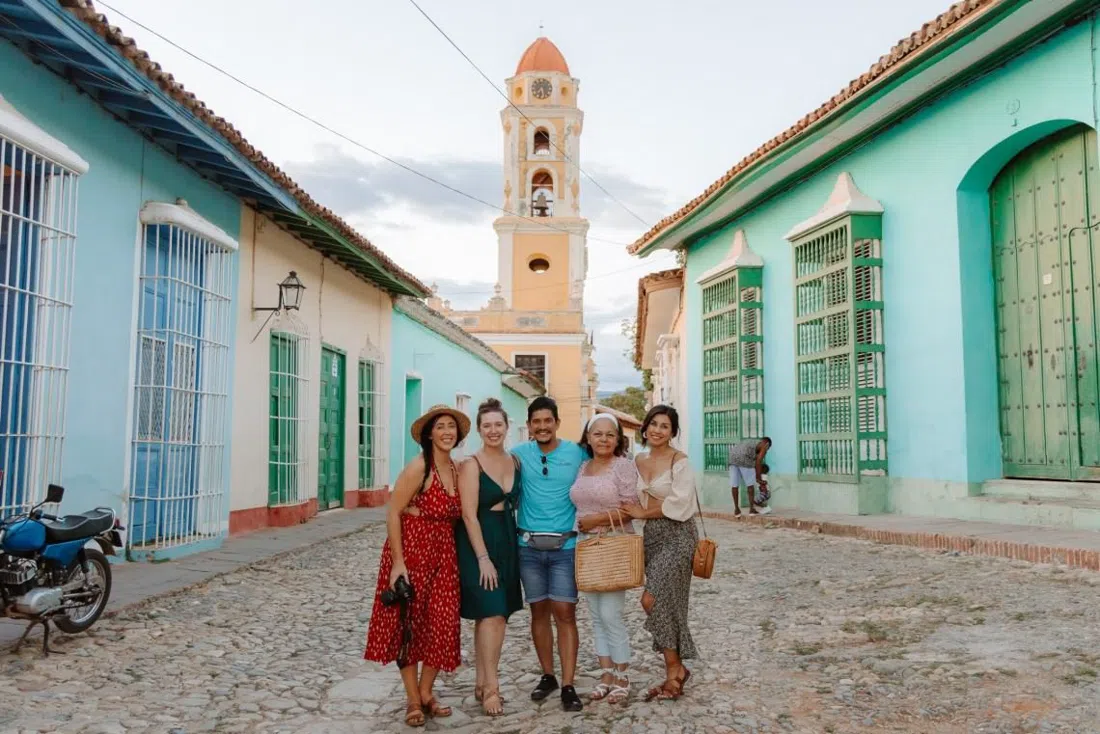
Sunny Vinales Tour (Viñales-born agency, collects from Havana) sells private days only, so a family or a group of friends travels as its own party with no strangers in the vehicle. Expect roughly US$80 to 150 per car depending on how many of you there are, which makes it the cheapest option per person once you are four or five. They ask for at least 48 hours' notice, and that window is what the driver needs to secure diesel. A decade of trading and a consistent run of good reviews suggest they usually do.
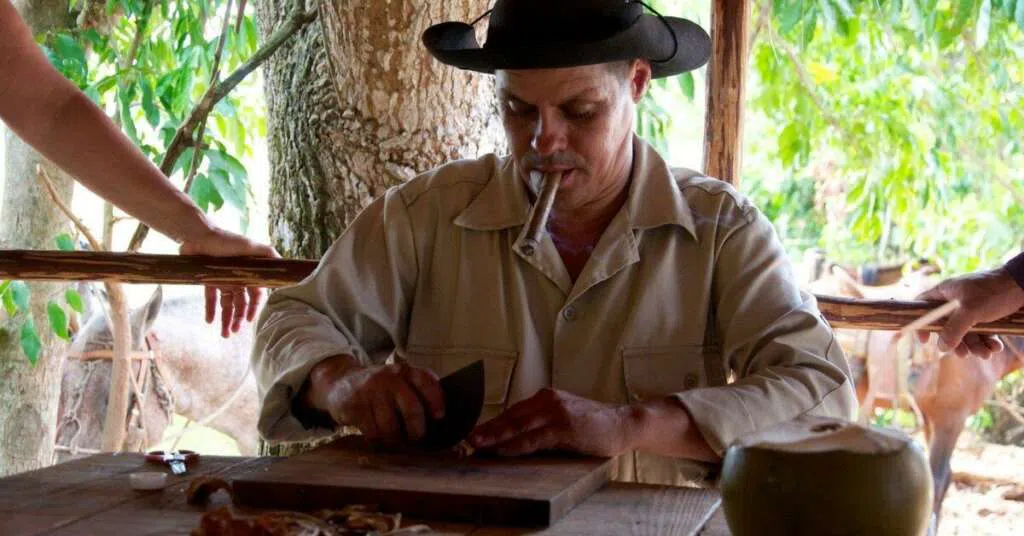
Authentic Vinales Tours (based in the valley, arranges the Havana legs too) charges US$40 to 70 per person for a guided day in small private groups, pick-up and drop-off included. Its advantage is geography. The car and the driver already live at the destination end of the road, so the fuel they queue for is provincial fuel, and the vehicle starts its day where you want to end up rather than fighting its way out of the capital first.
All three collect from your address, which makes your address part of the plan. Stay somewhere a driver can find by street number and describe over the phone, not a place known locally by a nickname. If you are still choosing, the Havana hotel search will show you what is bookable in Vedado and Habana Vieja, both of which are easy morning pick-ups.
What the valley gives you on foot
The most fuel-proof day in Viñales is the one that never needs a second vehicle. JMC Viñales Aventura, run by José-Manuel and Chrystel, guide walks entirely on foot from the town: €16 for the four-hour route, €26 for the five-hour version with a Cuban meal, departures from 9am, booked online, with children aged four to eight at half price and under-fours free. Nothing about that day depends on a fuel queue, which makes it the best fallback if your driver cancels at breakfast and you find yourself in the valley with eight hours and no wheels.
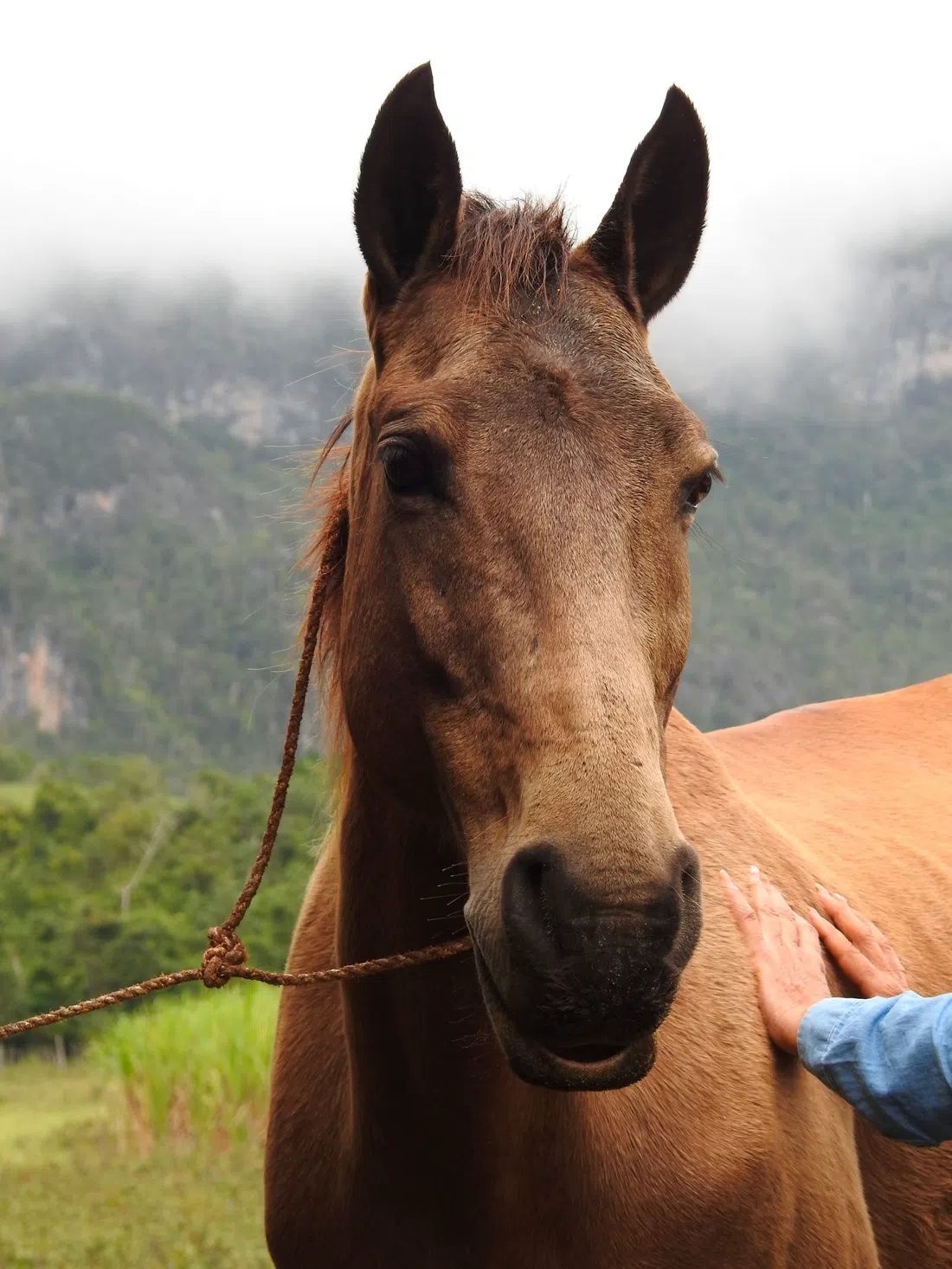
Before committing a whole day to a particular trail, stop at the Centro de Visitantes, Parque Nacional Viñales, on the main road just past Los Jazmines. It opens daily 8am to 5:30pm (tel. 48/79-3157), entry is free, guided hikes run to roughly US$6 to 10 per person, and official guides are assigned to walk-up groups without a booking. It is also the one place that will tell you straight which trails are currently staffed. Give it ten minutes, because staffing moves around and a closed route discovered at the trailhead costs you an hour of your return-time buffer.
For something shorter and more elastic, Viñales Vive la Aventura sells activities à la carte and by the hour through native guides, with bookings by WhatsApp on +53 5364 2771 and a mix-and-match list of bike, horse, cave and tobacco add-ons. Prices start from about US$10 per person for the one-hour tobacco tour. That hourly structure lets you build a half-day around whatever transport actually turned up, rather than committing to a full programme at eight in the morning when you still do not know how you are getting back.
The sights people drive to and how long each takes
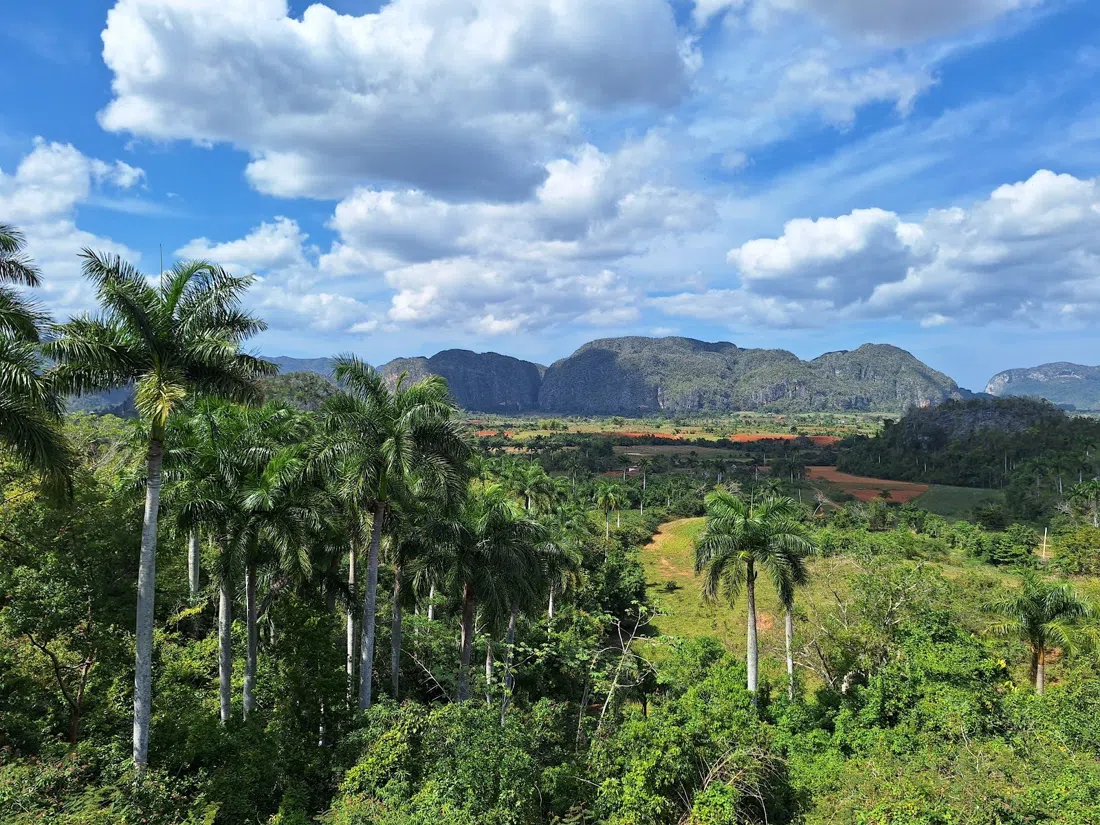
Mirador de Los Jazmines sits five kilometres south of the town on the main road and delivers the postcard, the whole valley laid out with mogotes standing in it. It is an open terrace with no door policy, coaches and groups stop all day, and it costs nothing. The hotel behind the lookout is not taking bookings at the moment, but the viewpoint itself is unaffected. It is close enough to reach by bicycle from town, which matters on a day when your car has evaporated.
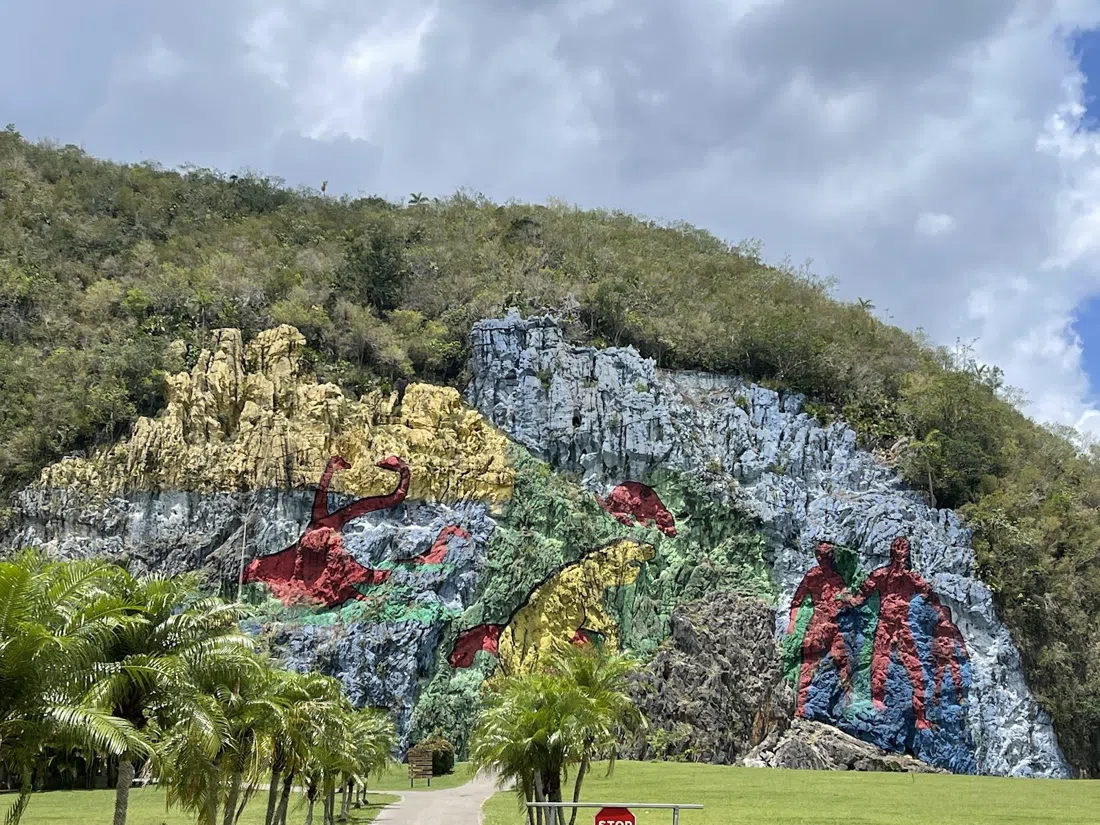
Mural de la Prehistoria, at the western end of the valley, divides people honestly, and you should know which side you are likely to land on: it is a 1960s state-commissioned painting applied directly to the flank of a mogote, enormous and unsubtle. Entry is about US$3 including a drink, waived if you take the roughly US$15 lunch, and the on-site open-air restaurant seats large parties without fuss. The piña coladas are genuinely good. Treat it as the easiest thing to combine with the western end of the valley rather than a pilgrimage.
Cueva del Indio, north of the town, costs about US$5 (around 150 CUP) and runs roughly 200 metres on foot followed by 400 metres by boat on an underground river, done in 30 to 40 minutes. Boats hold about ten, so a group of eight moves through together rather than being split; the trade-off is queues at midday when the tour coaches land. It is commercialised and nobody pretends otherwise, but the short, predictable format is exactly what suits a day trip with an unforgiving departure time at the other end.
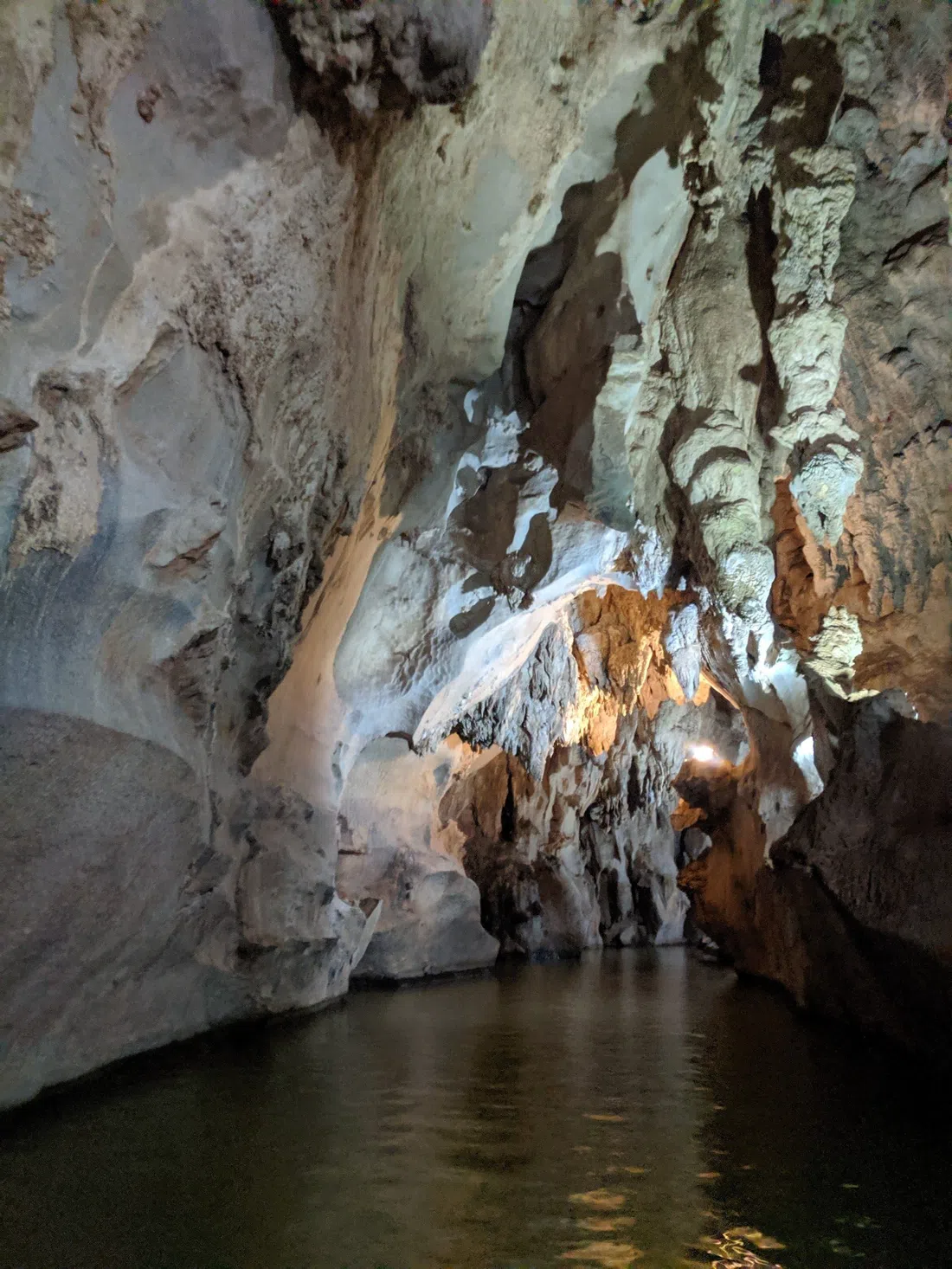
The cave that needs a confirmed tank
Gran Caverna de Santo Tomás is the most rewarding thing in the region and the one that will break your schedule if you improvise it. Cuba's largest cave system, it is visited in guided groups only with headlamps supplied, opens 8:30am to 3pm, offers a short and a long route, and costs about €10 including equipment. It also sits 20 kilometres west of Viñales at El Moncada, so you are asking your driver for 40 kilometres of extra running on top of the day. Settle that in Havana, in the original price, with fuel confirmed, not at the junction at eleven in the morning, when the honest answer will be no and the awkward one will cost you.
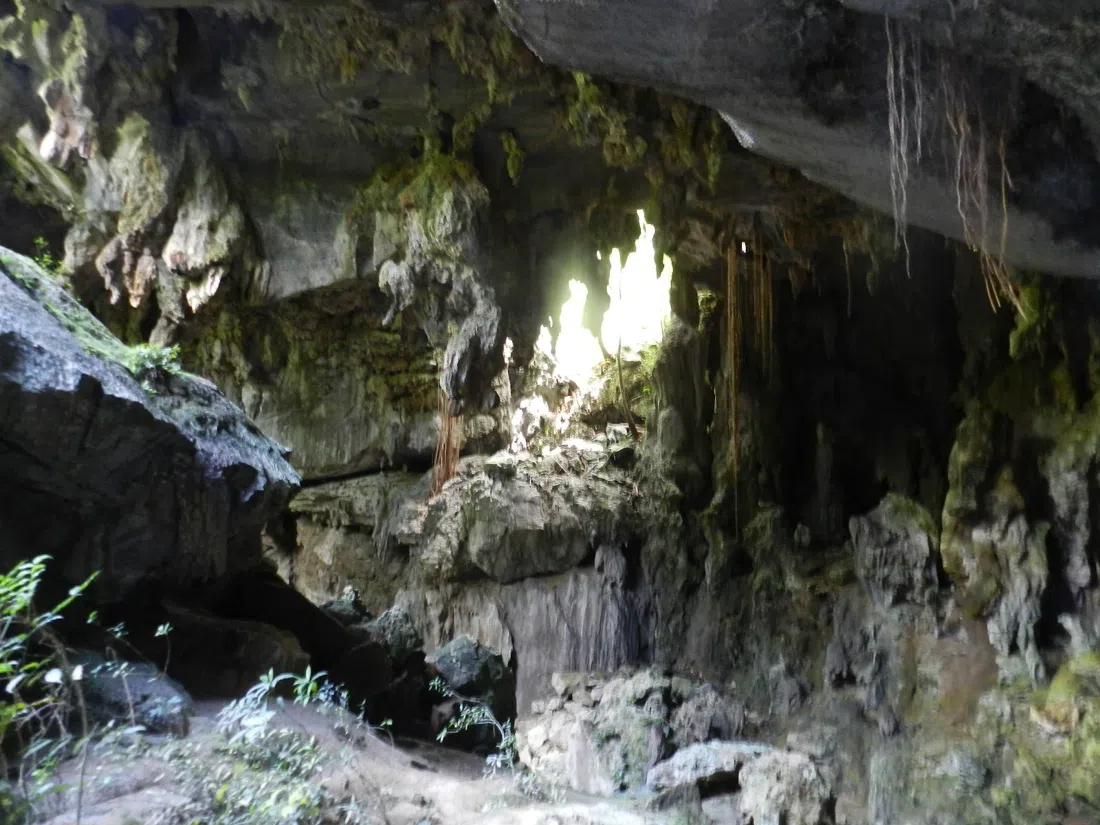
Lunch sets the shape of the day
Finca Agroecológica El Paraíso, on the hillside above the town, serves a set lunch of a dozen small plates grown in its own garden for 260 to 640 CUP per person, and it is the best meal in the valley by some distance, the reason a great many day trips are built around midday rather than around the sights. It takes groups but does not accept reservations, so arrive before 1pm or expect to wait, and bring notes: it is cash only (+53 5 8188581). A party of eight should send one person up ahead of the rest.
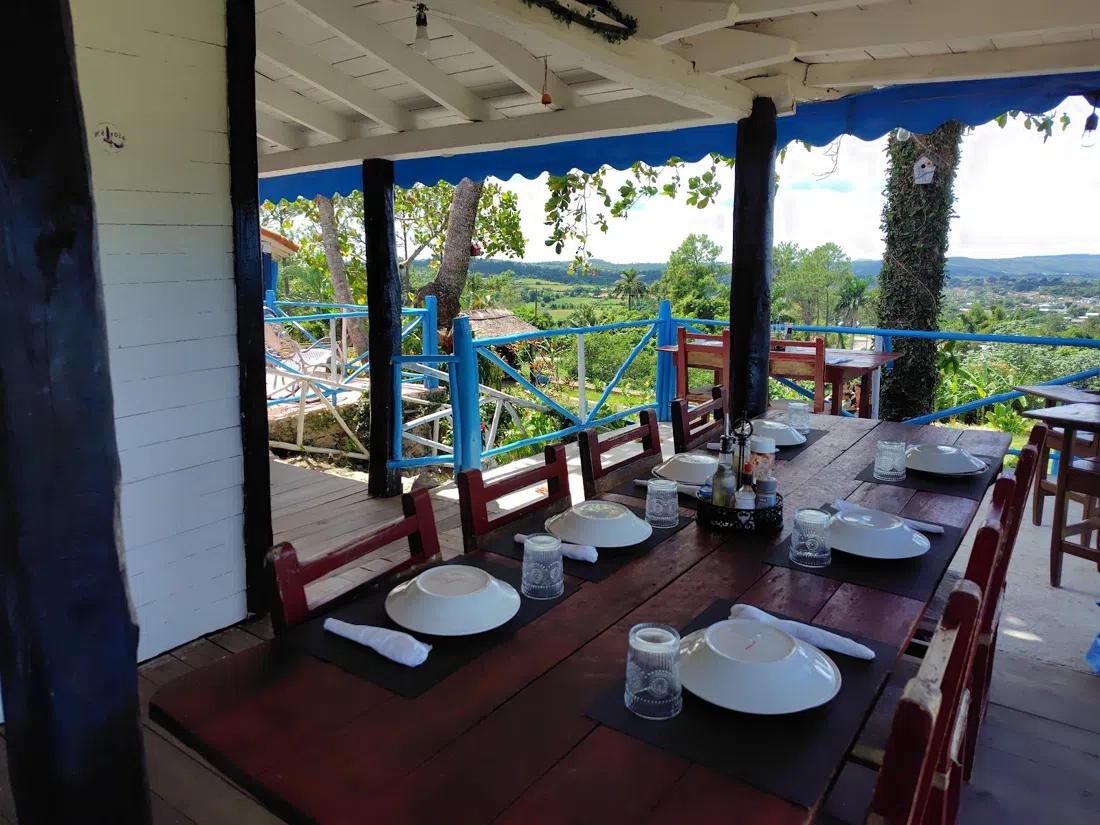
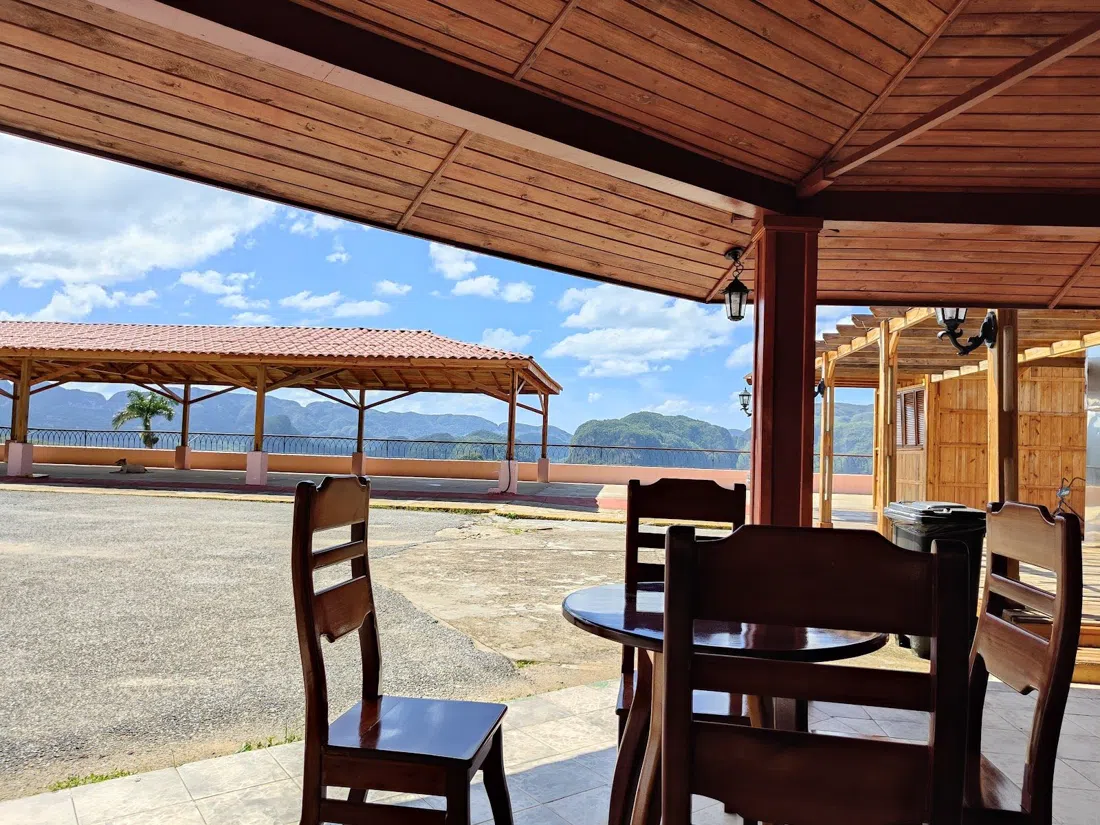
If you are on a coach clock and cannot gamble on a queue, El Restaurante-Mirador Balcón del Valle takes both groups and bookings, opens 8am to 10pm every day, and charges up to about 260 CUP (around €10) per person, cheaper than Havana for roughly the same ropa vieja. Its stacked wooden terraces put you over the valley rather than beside it, which is a different and slightly vertiginous pleasure.
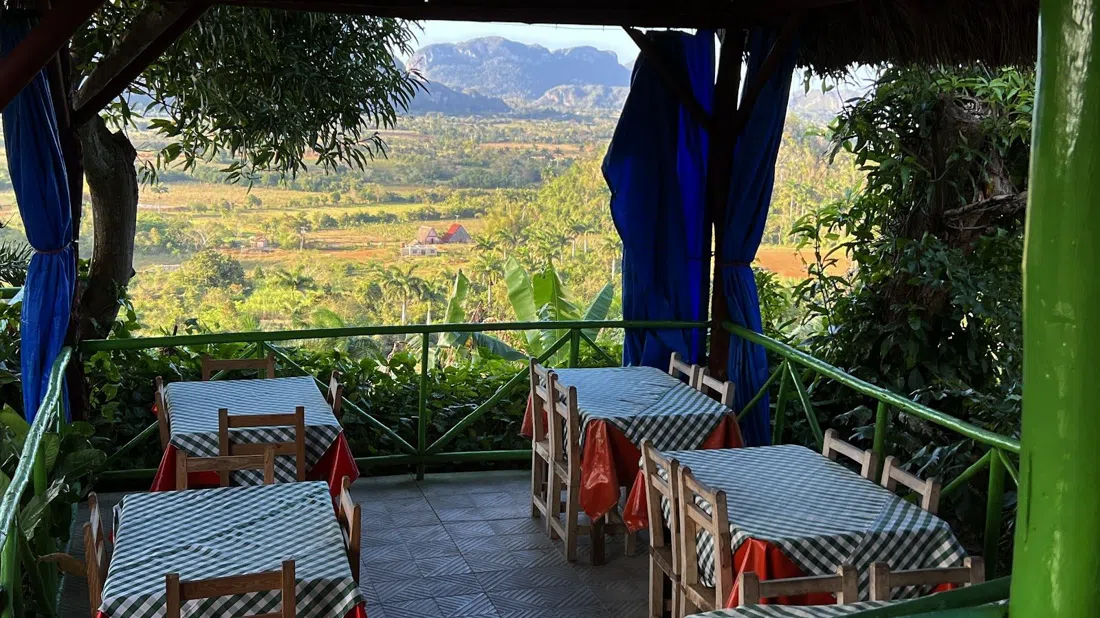
A day that still works when nothing moves
Suppose the car never comes and you are in Viñales on foot. Finca Raúl Reyes is one kilometre north of the town square: an informal family tobacco farm with no booking system, free to visit, cigars and coffee for a few dollars, and small groups welcomed as they arrive. The path behind it climbs to Cueva de la Vaca and hands you a valley view for nothing. In the town itself, Jardín Botánico de Caridad opens daily 8am to 7pm, costs nothing beyond an expected donation, and gives you a 20-minute guided walk through a family garden started in 1918 and still run by the Miranda family, with 189 orchid species among the fruit trees.
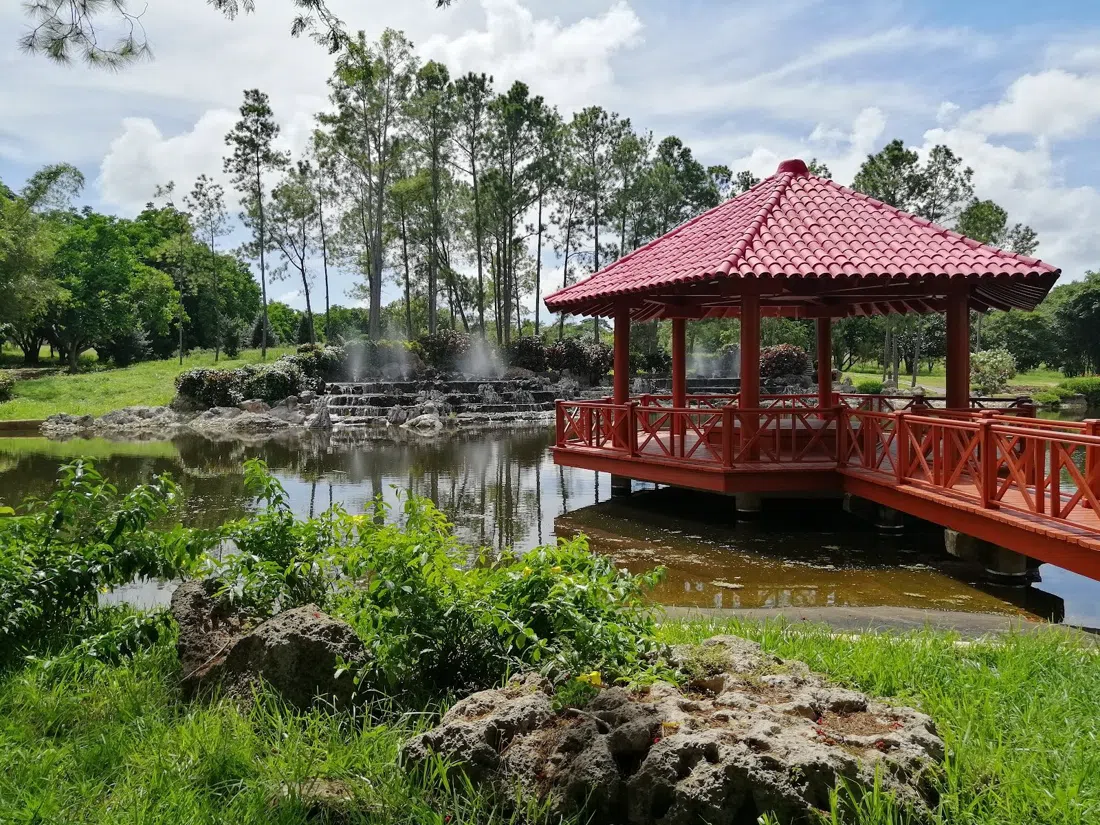
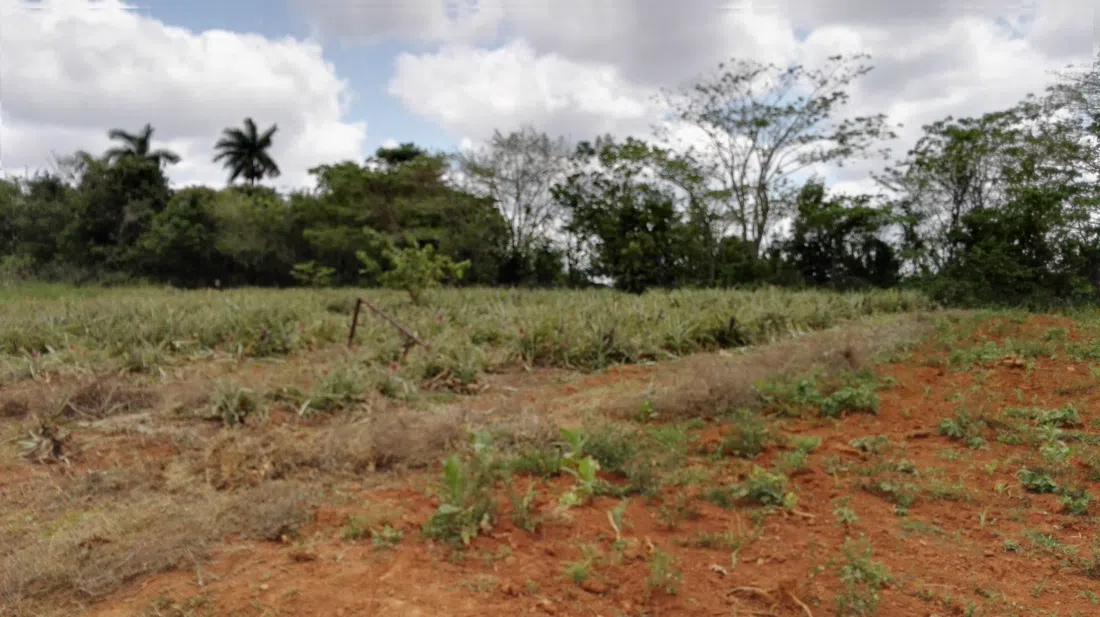
Those two, a guided walk and a long lunch make a complete day, and none of it depends on whether a vehicle moves.
Transport, cash and the shape of the day
Build the day backwards from the return. Out of Havana by seven, in the valley by ten, lunch before one, and moving again by four gives you a real margin; a day that plans to leave Viñales at six has no margin at all. If you are on Víazul, remember the Friday to Sunday constraint before you book your nights in the capital. If you are on a colectivo, confirm the return time twice, once when you agree the fare and once when you are dropped off.
Carry cash and carry it in small denominations. El Paraíso is explicitly cash only, the farms and the garden run on notes and donations, and nothing in the valley should be planned around finding a working card machine. Keep CUP for the cheap things (the cave, the mural, a lunch at Balcón del Valle) and harder currency for the driver and the guided day.
On budget: the leanest version is a Víazul return at €32 to 48, a free viewpoint, a guided park hike at US$6 to 10 and lunch for a few hundred CUP. The middle is a colectivo seat each way at US$15 to 20 plus a hike or a tobacco tour. The comfortable version is a private car at US$80 to 150 for the group, or an all-in guided day at US$40 to 70 a head with lunch and entries handled. All three are honest ways to see the same valley; at the top end what you are buying is the certainty of getting back. For what to do with the evening you return to, see the Havana guide.
26 September 2026 · a first week before the flat: the Havana hotel directory