Manila · Where to live · 11 min
Sleeping Between Manila's Old Walls and the Casino Bay
Sixteen honest beds across five Manila districts, and how to pick the one base that decides how much of the city you actually see on a first trip.
Stand on the ramparts at Baluarte de San Diego at eight in the morning and you hear two versions of Manila at once: bells from San Agustin, the oldest stone church in the country, and the low freeway drone of Roxas Boulevard already thickening. Six kilometres south, past Rizal Park and the seawall, the casino towers on the reclaimed bay land are still lit from the night before. Where you sleep between those two poles decides how much of this city you see, because in Metro Manila you measure the distance between two addresses in hours rather than kilometres.
Why your district matters more than your hotel
Manila is a chain of districts that grew into each other, each with its own skyline, and the roads between them were never designed for the traffic they now carry. The seven-kilometre hop from Intramuros to Makati can take twenty minutes at six on a Sunday morning and ninety on a Friday evening, and nothing you book will change that. So plan a first trip by deciding which Manila you want to step out into each morning, booking one base there, and budgeting taxis for everything else. The wider picture (what to eat, where to walk, how to shape the days) sits in the Manila guide. This piece is only about the bed.
Five bases cover almost everything a first-timer wants. Intramuros puts you inside the Spanish walled city, laid out from the 1570s, with the churches and forts at your door. Ermita and Bay City run along the water, from Rizal Park down to the mall-and-casino complexes on the reclaimed land. Makati is the financial district, and the one where you can eat well and walk at night. Bonifacio Global City is the newest grid, built on a former army base, with proper pavements. Ortigas is the cheaper middle, useful if someone else is deciding your schedule.
Inside the walls where the morning belongs to you
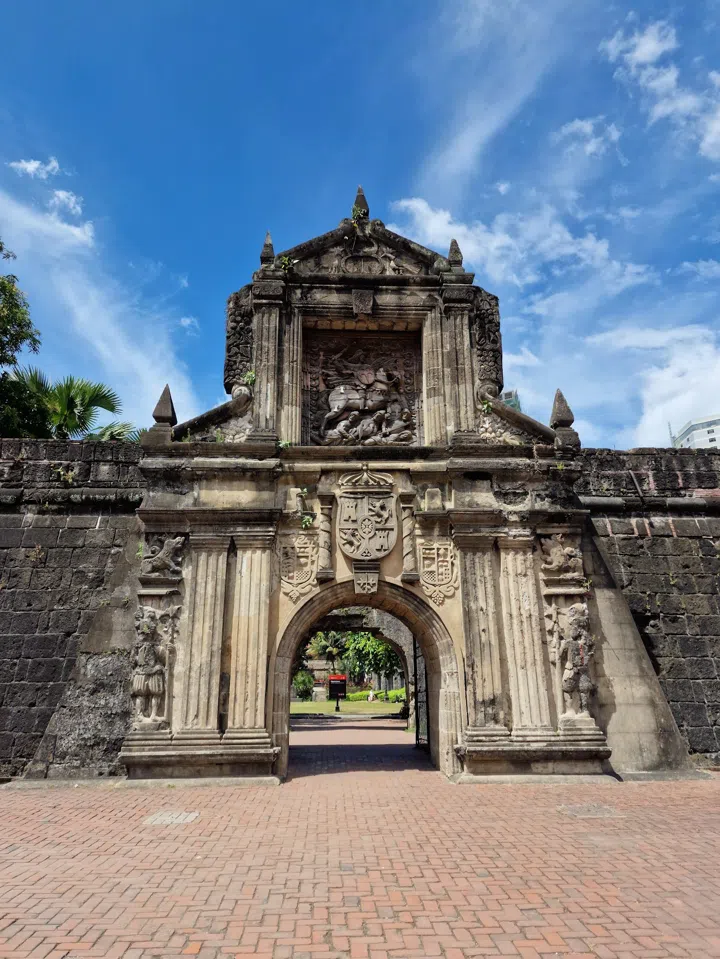
Intramuros is compact, twenty minutes on foot from one side to the other, and it holds Fort Santiago, San Agustin with its UNESCO listing and its museum of cloisters and carved choir stalls, the Manila Cathedral, and Casa Manila's reconstructed merchant rooms. The gates open early and the coaches arrive mid-morning, which is the argument for sleeping inside the walls: at eight you have the plaza and the fort largely to yourself, and by ten you are somewhere else while the tour groups queue.
The Bayleaf Intramuros (Intramuros) is the only comfortable hotel actually within the walls, so check it first for your dates. Rooms run roughly ₱4,000–6,300 a night (about $70–110), there are function rooms and a roof deck that hosts private events, and groups are taken without fuss. The standard rooms are compact, so a party of ten will spread across floors rather than share a corridor. The trade-off is dinner: options inside Intramuros thin out badly after dark, so plan on eating at the hotel or taking a taxi out to Ermita or Makati and back.
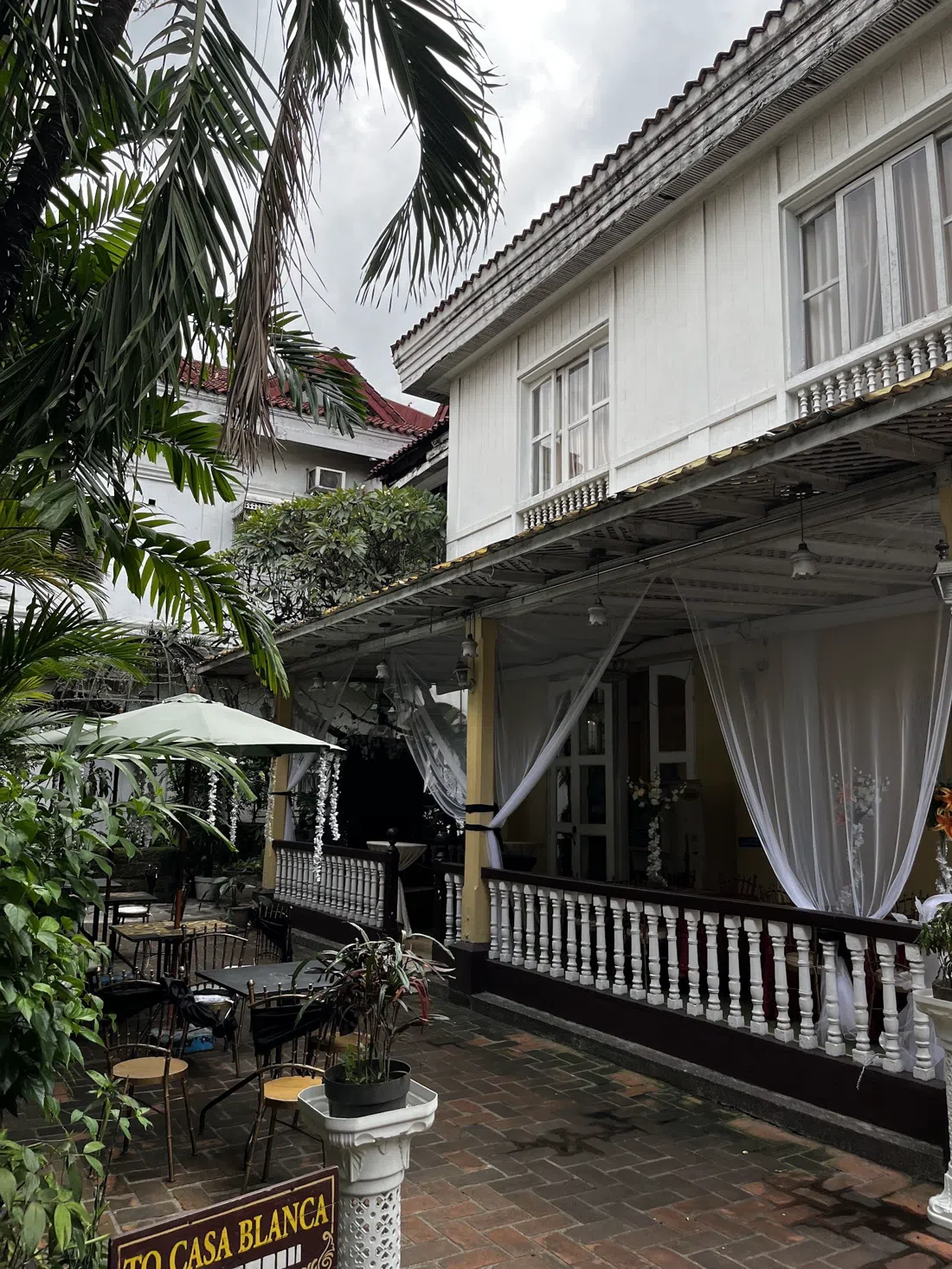
White Knight Hotel Intramuros (Intramuros) does the same thing with more atmosphere: 29 rooms in a reconstructed colonial house looking across at the church, from about ₱2,500–4,000 (roughly $45–70). It suits a group of six or eight taking most of a floor, but it cannot absorb a coach party, and nobody should arrive expecting five-star finish. What you get is creaky wooden charm and a location no amount of money buys in a glass tower. Couples who care about waking up inside the old city will forgive the thin walls. Light sleepers, and anyone who wants a gym, should look elsewhere.
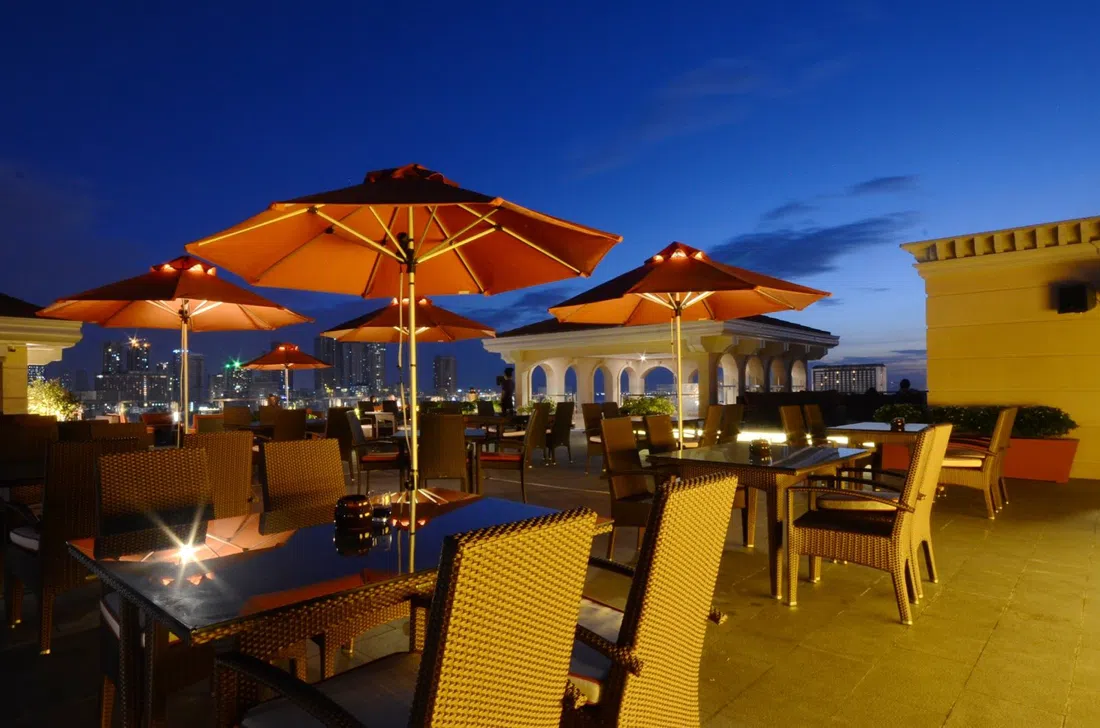
Along the bay from Rizal Park to the casino lights
The bay strip is where Manila does its evenings in public. Rizal Park marks the ground where José Rizal was executed in 1896, the seawall promenade fills up an hour before sunset, and south of it the reclaimed land carries the big integrated resorts and the Mall of Asia complex. It is a flat, wide-boulevard part of the city, long on views and short on street life, which for some travellers is exactly right.
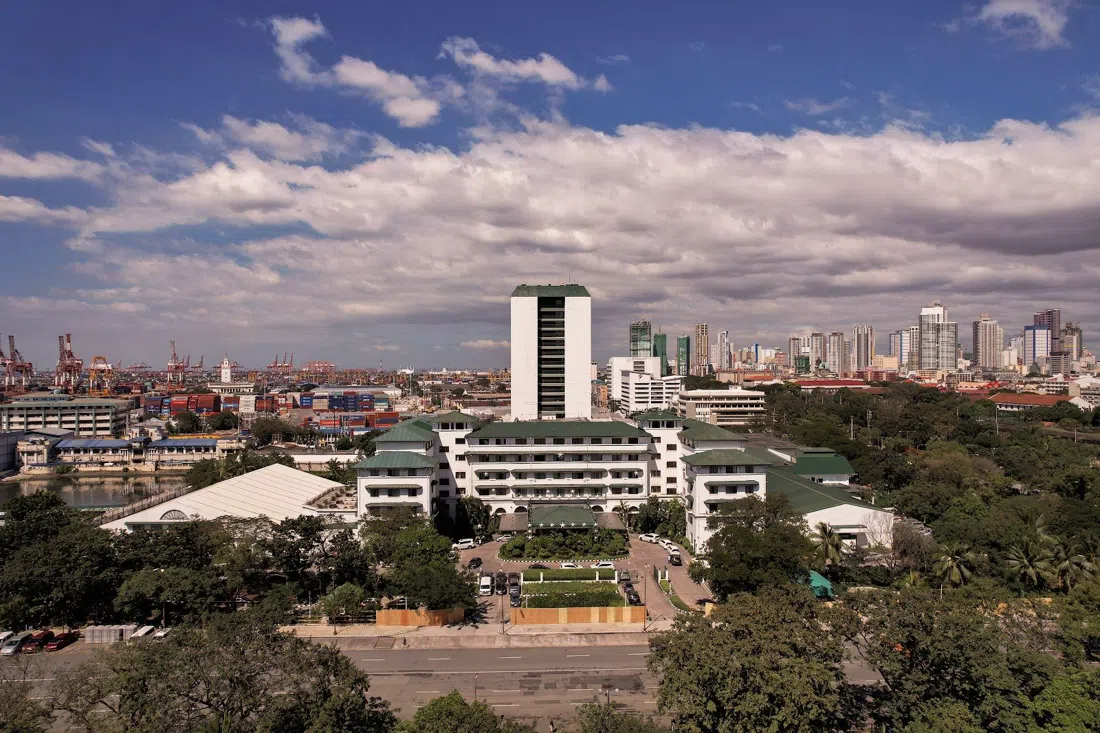
The Manila Hotel (Ermita) opened in 1912 as the country's first five-star house and still trades on it, with a heritage museum off the lobby and ballrooms sized for weddings and conferences. Expect roughly ₱6,300–10,000 (about $110–180). It is the closest large hotel to Intramuros, Rizal Park and the bay walk, so a morning in the walled city is a ten-minute ride rather than a commute. The surroundings are the thing to know about: the streets nearby go quiet and empty after dark, and a late return should be a taxi journey rather than a stroll.
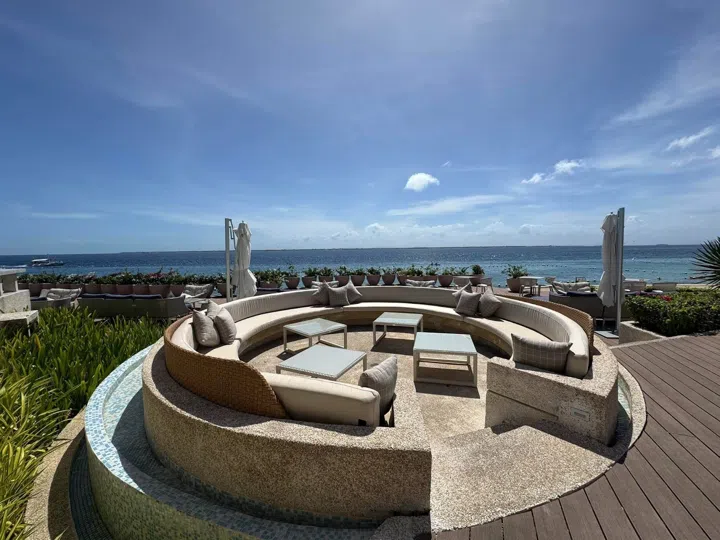
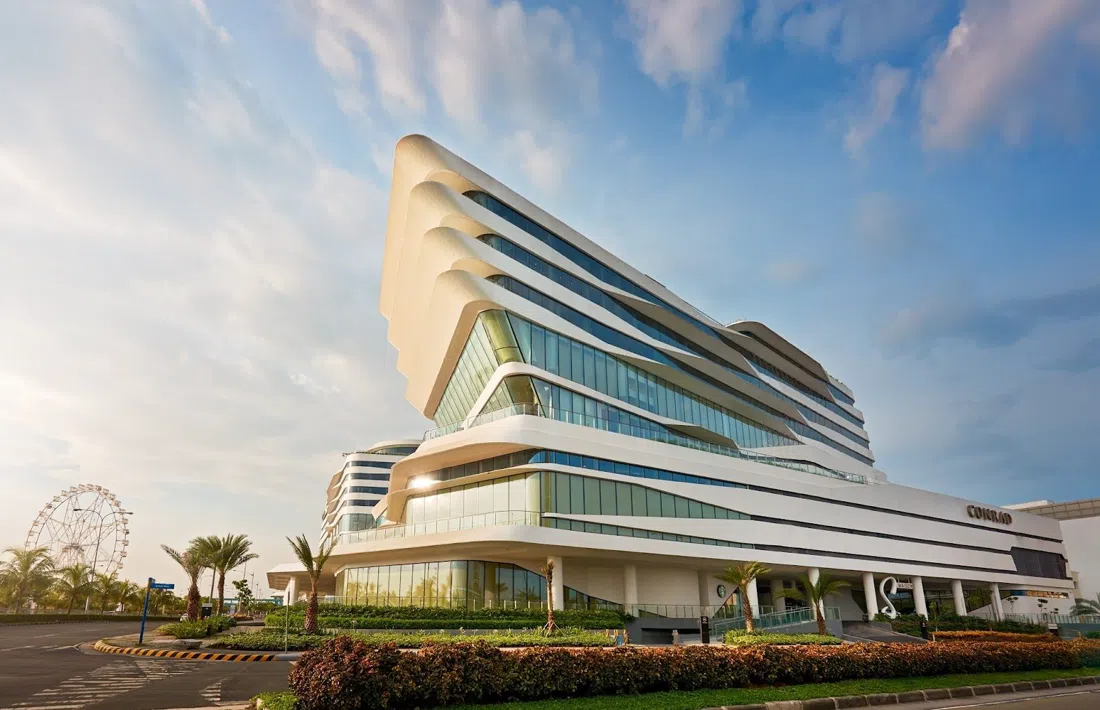
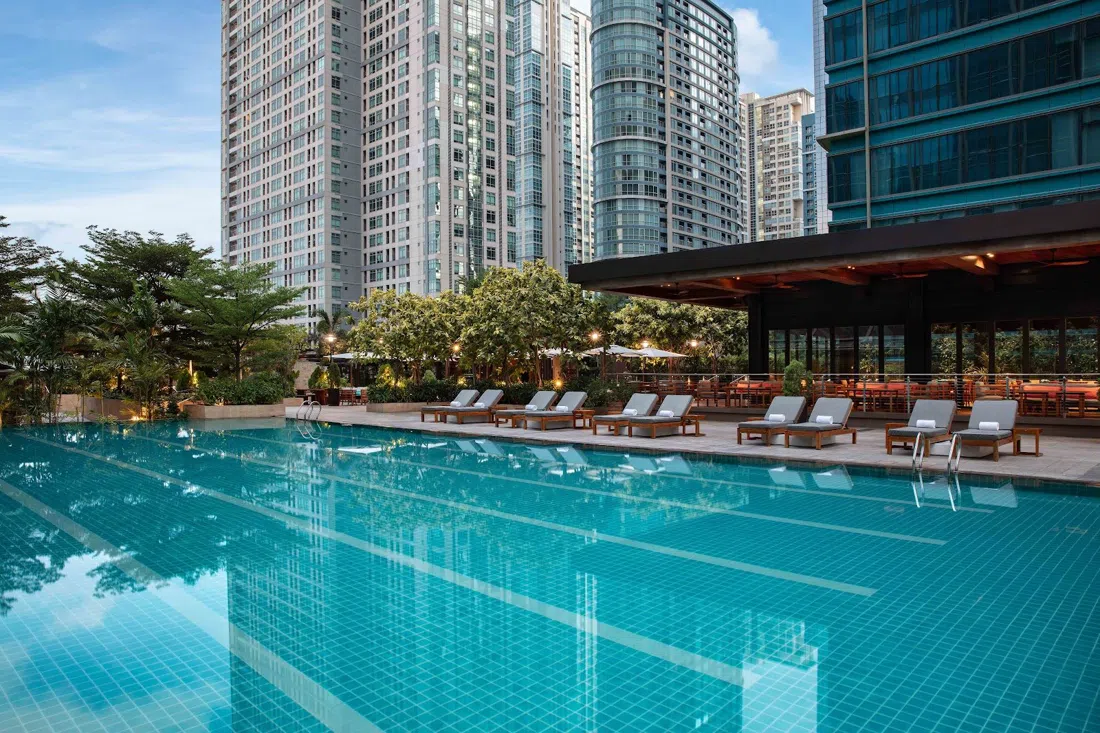
Conrad Manila (Bay City, Pasay) is the practical choice for families and for anyone who has decided that weather and traffic are not going to be their problem. Bay-facing rooms give you the sunset from bed, a covered walkway connects you to the mall complex, and after ten years of running conferences here the staff handle groups, connecting rooms and split billing without drama. Roughly ₱10,000–16,000 a night (about $180–280). The catch is the district: malls and resorts, not a walkable quarter. You will rarely be outdoors, and whether that reads as the point or the problem depends on you.
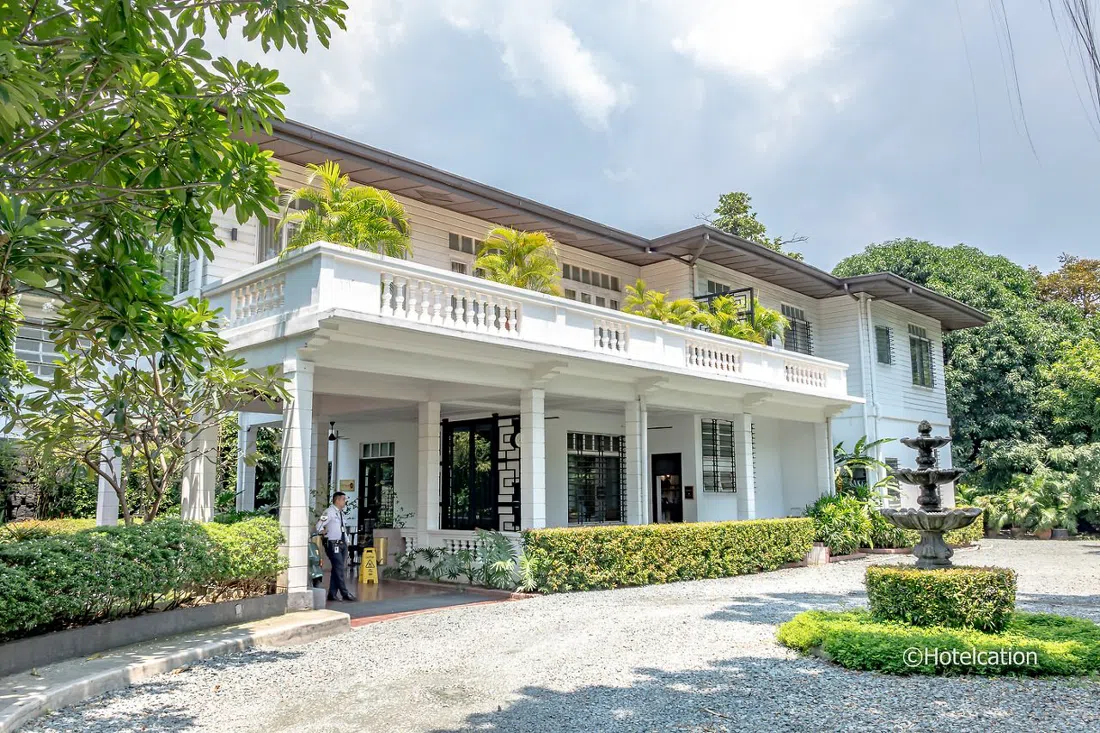
The Henry Hotel Manila (Pasay) runs against all of that: 35 rooms spread across five mid-century houses in a walled garden, from about ₱5,000–8,000 (roughly $90–140). A group of friends can take a whole house, though a party of twenty will not fit. After a week of tower lobbies and mall corridors that start to blur, this is the address that resets your sense of the city.
Makati for a soft landing
If you have never been to Manila and you want your first evening to be easy, base yourself in Makati. The malls, restaurants and bars sit within a few blocks of each other, much of it connected by air-conditioned walkways, and the taxi drivers know every landmark without needing an explanation.
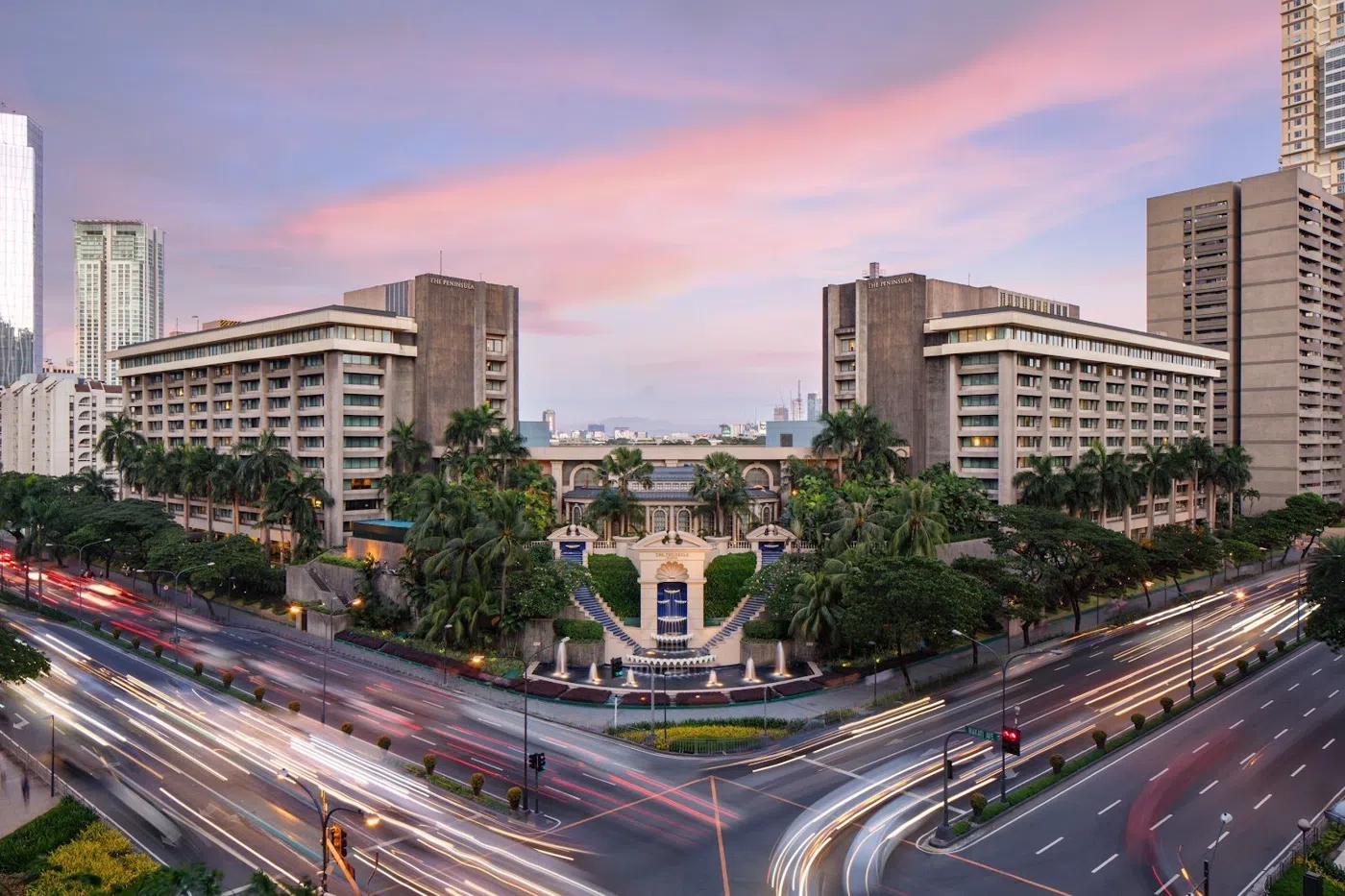
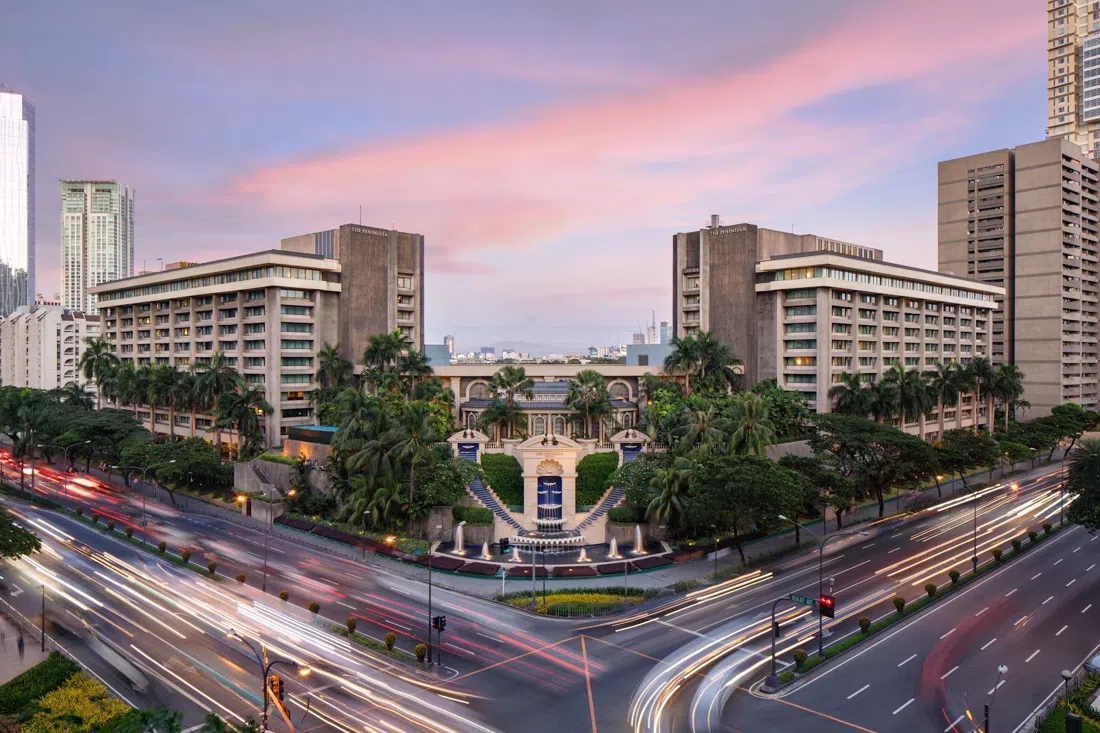
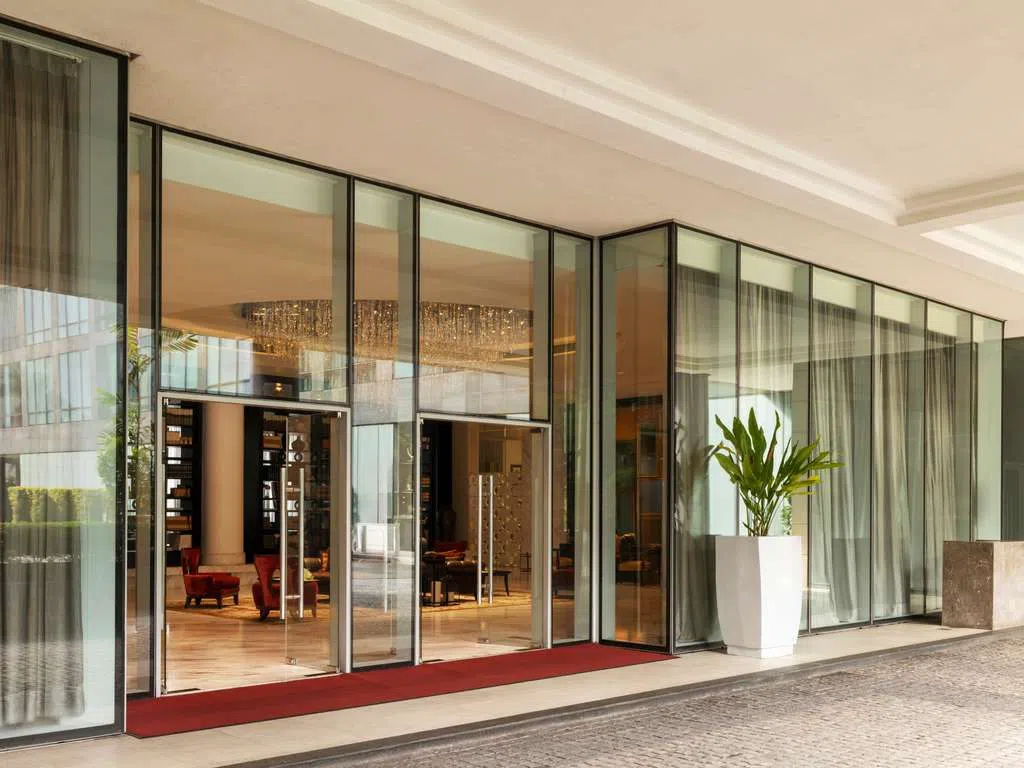
The Peninsula Manila (Makati) is the one address in the city everyone can find, which matters more than it sounds when you are directing a driver on your first night with no local SIM. The lobby works as a public meeting room, so arriving as six is unremarkable, and large blocks, connecting rooms and ballrooms are routine. Roughly ₱10,000–17,000 (about $180–300). Rooms are being refurbished in phases, so ask explicitly for a completed floor when you book and again at check-in.
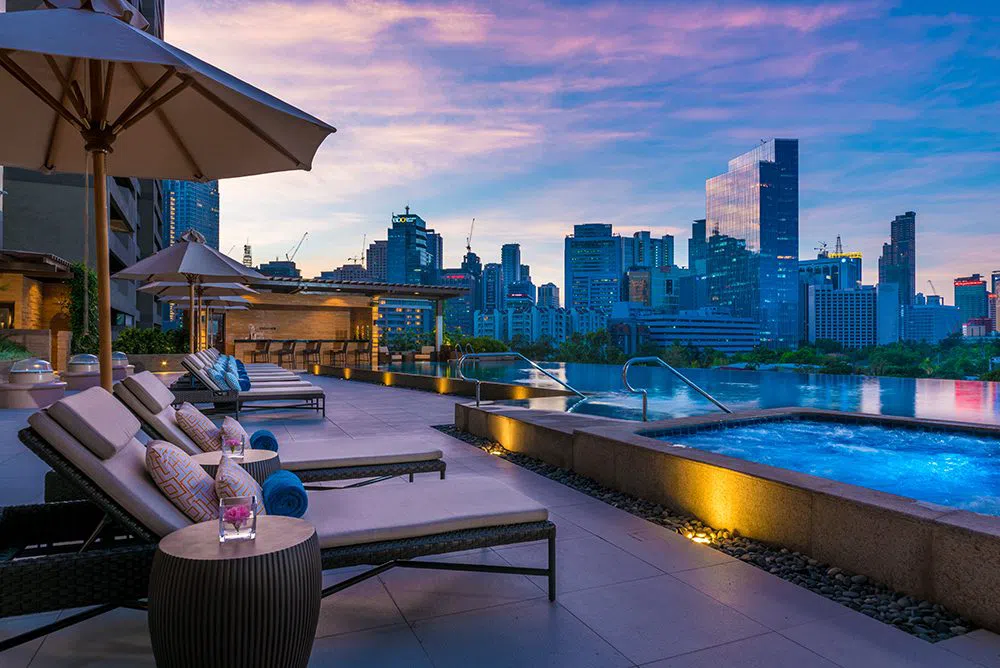
Raffles Makati (Makati) is the most comfortable landing in the city if budget is not the constraint: butler-serviced suites at roughly ₱23,000–37,000 (about $400–650), good for a family or two couples sharing. Scale is the limit. It is a 32-suite house, so a small private group works and fifteen rooms does not. It shares a tower with Fairmont Makati, which is why the spa and pool are far larger than 32 suites would otherwise justify.
Discovery Primea (Makati) is home-grown rather than imported luxury, with six restaurants and bars in-house, function space, and suites that sleep families comfortably. Roughly ₱11,000–18,000 (about $200–320). It is five minutes on foot from Greenbelt and Glorietta, which is why you came to Makati in the first place.
Ascott Makati (Makati) is the one I recommend most often to families and to four friends splitting a flat. Studios through three-bedroom apartments and penthouses, full kitchens, weekly rates, and a position that lets you walk into a mall for dinner without ever crossing a road. On a humid first evening with jet lag, that beats a better view. Roughly ₱7,500–15,000 (about $130–260).
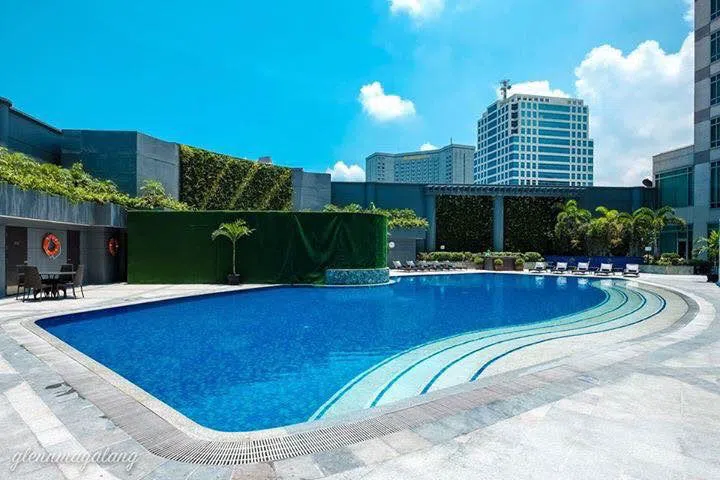
Poblacion when the point is the evening
Poblacion is Makati's oldest quarter and now its bar-and-restaurant grid: low buildings, narrow streets, rooms above kitchens. It is what makes Makati worth more than one night. The doors are worth understanding before you arrive as a group. Most of these places are small, capacity is limited, and a party of six turning up at ten on a Saturday will be split across two tables or turned away outright. Arrive before nine, book where booking is possible, or break into pairs and regroup.
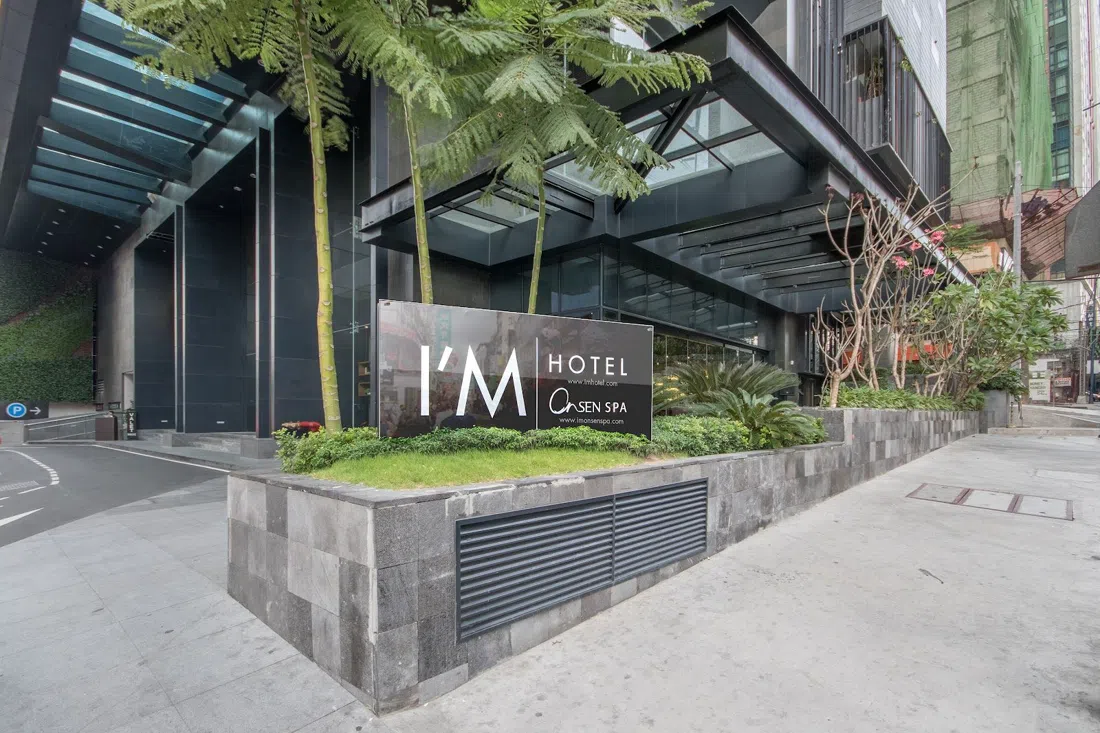
I'M Hotel (Poblacion, Makati) sits in the middle of that grid at roughly ₱5,000–8,500 (about $90–150), and is a long-standing favourite for shared stays and pre-night-out bases; the onsen spa will take bookings for several people at once. If you sleep lightly, ask for a room away from Kalayaan Avenue, where the traffic noise does not stop.
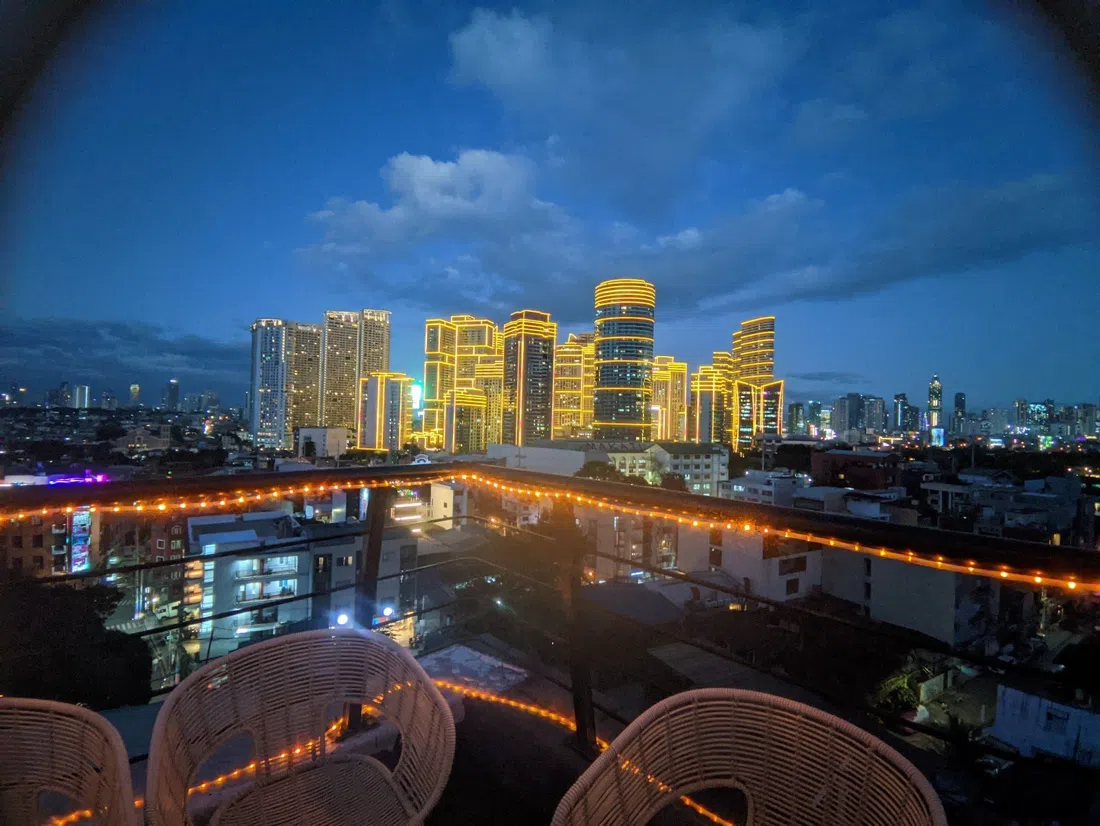
Z Hostel (Poblacion, Makati) is the cheapest way to arrive in Manila with company already built in: big en-suite dorms from about ₱850–1,400 a bed (roughly $15–25) and private rooms at ₱2,800–4,000 (about $50–70). It is set up for groups, and the free walking tour orients a first-timer faster than any map. The roof deck is open to non-guests in the evenings and hosts a sunset session, which is both the best thing about the place and the reason anyone who needs silence should book elsewhere.
Bonifacio Global City for pavements and sightlines
BGC was built from scratch on a former military base, and it shows: wide pavements, street art, crossings that cars respect. It is the easiest part of the metro to walk around at night, and the least characteristically Manila. For a nervous first trip, or with children, that is a fair swap.
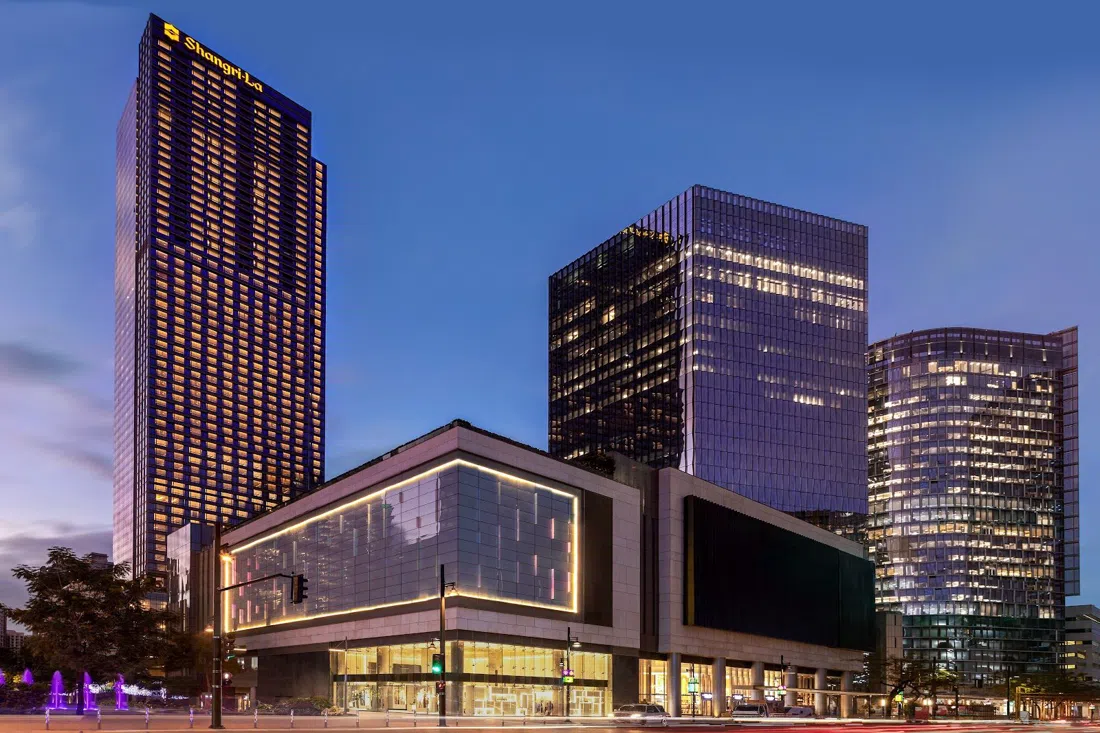
Shangri-La The Fort, Manila (Bonifacio Global City) is the most group-capable hotel in this guide: 576 rooms plus 97 serviced apartments, eight restaurants and bars, and full banqueting, at roughly ₱12,500–21,500 (about $220–380). It was named Best City Hotel in the 2026 Travel + Leisure Luxury Awards Asia Pacific, and the apartments are the reason a party of fifteen can stay together instead of scattering across four floors.
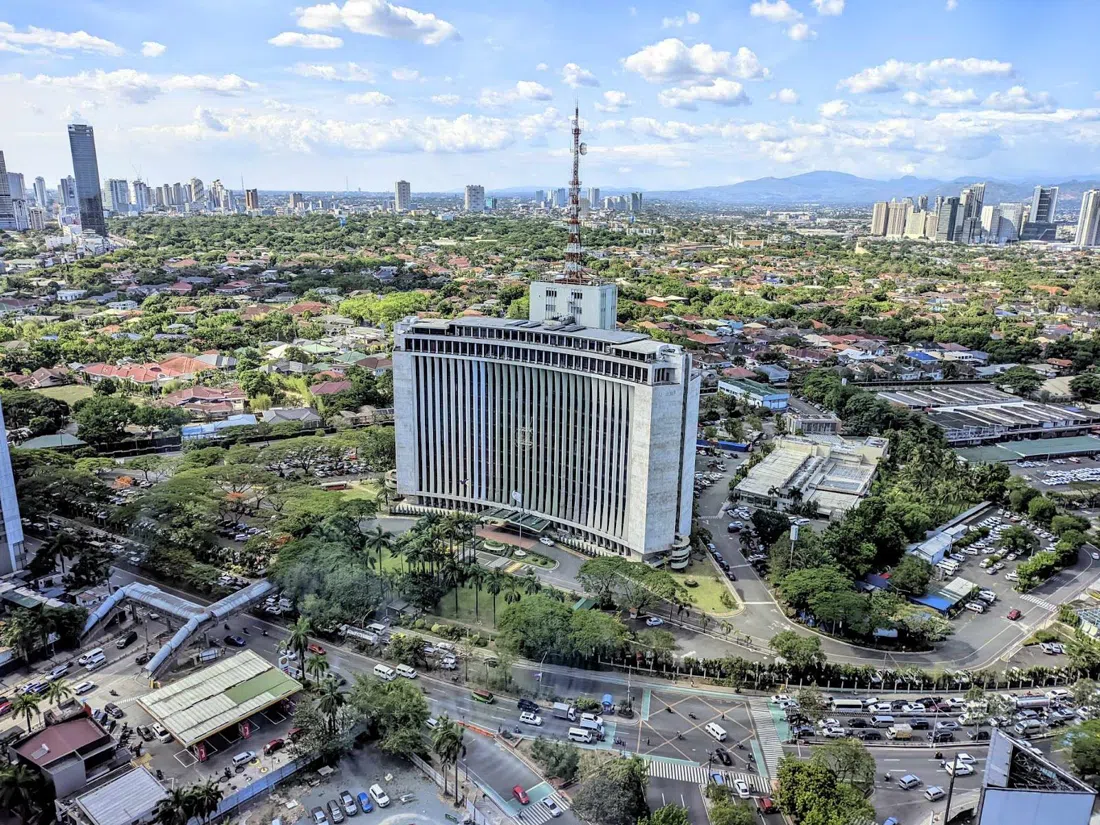
Grand Hyatt Manila (Bonifacio Global City) holds the highest guest rooms in the country across 461 keys, with six restaurants and a rooftop bar that takes reservations for parties. Roughly ₱9,000–15,000 (about $160–260). On a clear morning the view earns its keep: it shows you how far the metro goes, which corrects every travel time you were about to underestimate.
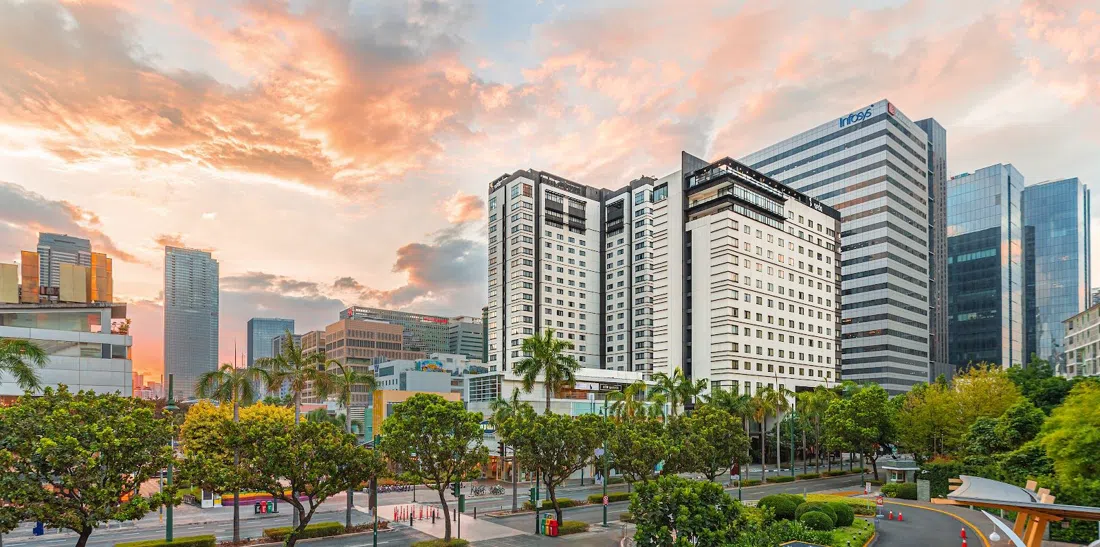
Seda BGC (Bonifacio Global City) is sensible rather than special, and that is the pitch. With 519 rooms there is usually availability, the rooftop bar is the natural meeting point for a group arriving on different flights, and you are a few minutes from High Street and the art walk for roughly a third of the luxury rate, about ₱5,000–8,000 (roughly $90–140).
Ortigas as the cheaper middle
Marco Polo Ortigas Manila (Ortigas, Pasig) is the value play at roughly ₱6,300–9,700 (about $110–170), with full banqueting and meeting floors, and Vu's upstairs taking group reservations. It was the first sky bar of its kind in the city, and it has the sweep of view to match. Ortigas sits between Makati and the districts to the north and costs less than either. The caveat is that you will be commuting to everything a visitor comes for, so this makes sense if work, family or a conference already pins you here.
Who each place actually suits
Two people, first visit, mid-budget: Discovery Primea or Seda BGC. Two people who want the old city: White Knight, with dinner planned elsewhere. A family with children: Ascott Makati for the kitchen, or Conrad for the covered mall walk. Six to ten friends: Z Hostel if the budget is tight, I'M Hotel if it is not, The Bayleaf if history is the priority. Fifteen rooms or more: Shangri-La The Fort, The Peninsula, Conrad or The Manila Hotel, the four with real banqueting and block-booking machinery. Anyone who wants to remember the building afterwards: The Henry, or The Manila Hotel. Compare live rates and dates across all of them in the Manila hotel search.
A four-night route that works
Land, and give yourself the first two nights in Makati or BGC while the jet lag burns off. You want food and a pharmacy within walking distance rather than a heritage staircase. On the first full morning, leave by seven for Intramuros; you will be at Fort Santiago near opening and out before the coaches, with San Agustin's museum next and lunch inside the walls. Move your bags on night three to either Intramuros itself or Ermita, which buys you a second unhurried morning in the old city and a short ride to Rizal Park. Spend the last night on the bay for the sunset walk and the short airport run the next day. Two moves in four nights sounds fussy; it saves you roughly three hours of traffic, which is a full extra afternoon.
Practical notes before you book
Transport. Ride-hailing through the Grab app is the default and removes the fare argument entirely; surge pricing during rain or rush hour is real, so keep a metered taxi as a backup and ask for the meter to be switched on before you move. LRT-1 runs down Taft Avenue past Ermita, MRT-3 runs along EDSA through Makati and Ortigas, and both are cheap, fast and very crowded. Buy a stored-value beep card at any station. Assume nothing moves well between roughly 7am and 10am, and 5pm to 8pm. From the airport terminals in Pasay, allow 20–30 minutes to Bay City off-peak, 30–45 to Makati, and an hour or more to BGC or Intramuros if you hit traffic.
Cash. The currency is the Philippine peso. Hotels, malls and BGC restaurants take cards without issue; jeepneys, tricycles, market stalls and small kitchens do not. ATMs mostly dispense ₱1,000 notes and charge a couple of hundred pesos per foreign withdrawal, so take out larger amounts less often, and break the big notes at a mall early, because nobody at a food stall wants to change ₱1,000.
Timing. The dry months run roughly December to May, with December to February the most comfortable and April to May genuinely hot. The wet season runs June to November, when afternoon downpours and the occasional typhoon can close roads for a day. Holy Week and the days around Christmas empty the business districts and fill every flight.
Budget. A dorm bed is around ₱1,000, a solid mid-range double ₱5,000–8,000, and international luxury starts near ₱12,000 and climbs. Add ₱500–1,500 a day for taxis, and check whether the rate you were quoted includes the 12% VAT and the service charge. Many Manila hotels list them separately, which turns a tidy headline price into an untidy final bill.
13 September 2026 · a first week before the flat: the Manila hotel directory