Tokyo · The weekend · 12 min
Walking Shibuya Crossing and Back Streets in September 2026
A street-by-street route through Shibuya for September 2026: where to stand, what each stop costs, and which ones a group can get into together.
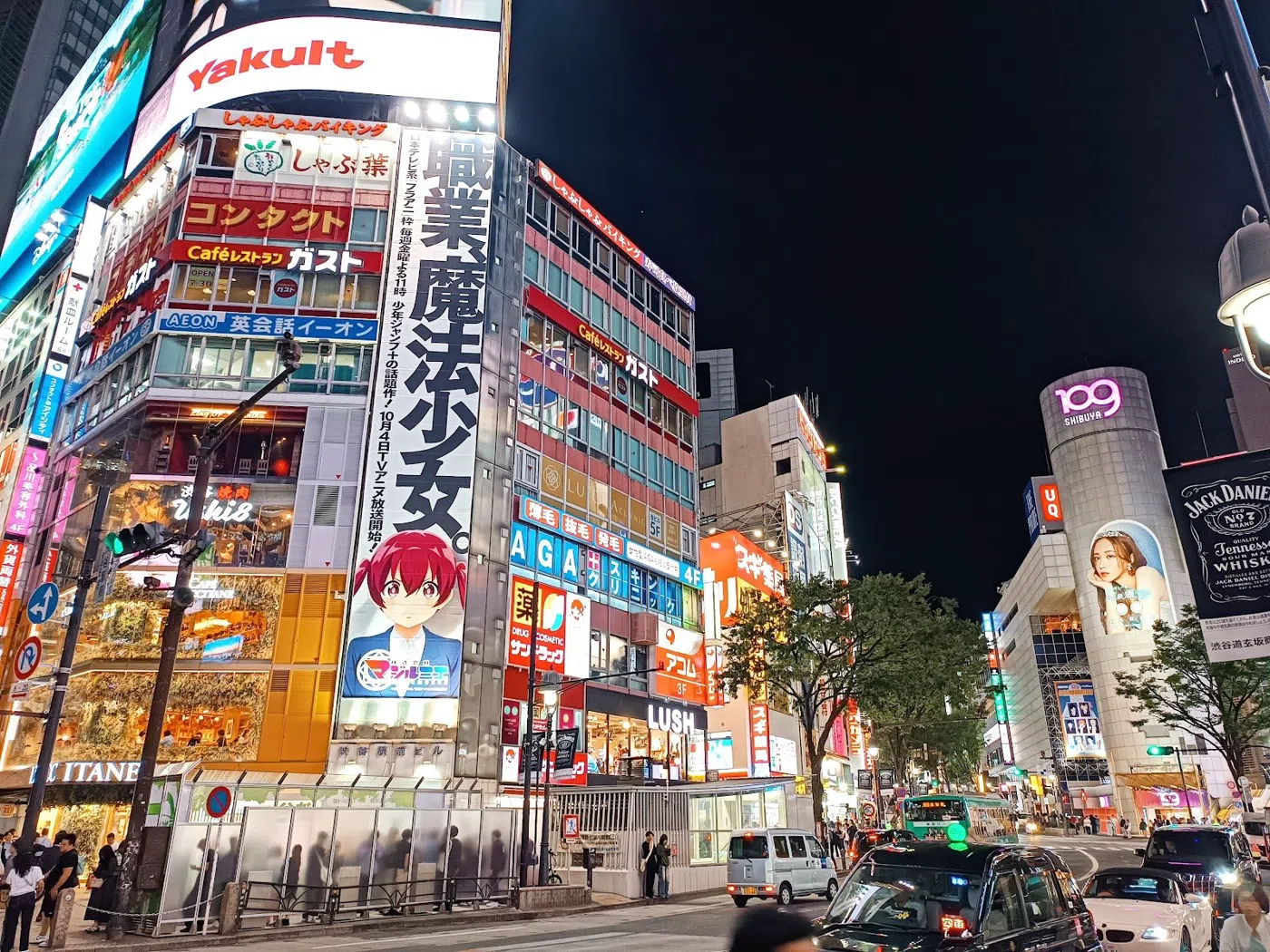
The signal on the Hachiko side runs for about a minute. In that minute several thousand people cross in five directions at once, nobody touches anybody, and then it goes red and the corners refill. September 2026 is a sensible month to do Shibuya on foot. The heat holds well into the evening, so put the indoor stops in the afternoon and take the street after dark.
What the crossing actually is
Shibuya Scramble Crossing (Shibuya, immediately outside the station's Hachiko exit) is a public street. No door policy, no ticket, no queue. The light is the only thing that stops you, and it runs roughly a minute. That timing matters more than it sounds. Guided walking groups assemble on the Hachiko side and cross in a single light cycle, and the guides keep people tight for a practical reason: a straggler waits out the next full cycle while the rest of the group is already on the far pavement.
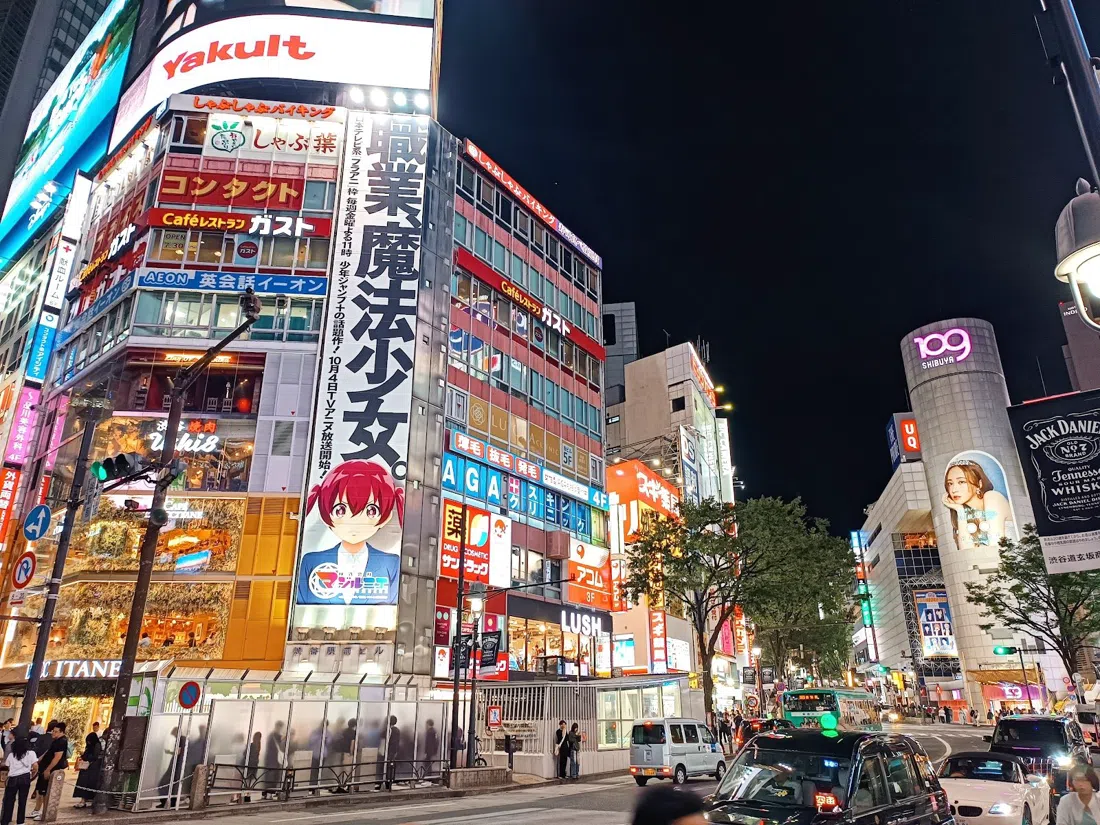
Cross it twice. Once straight over toward the QFRONT building for the flow, once on the diagonal for the pile-up in the middle. Then stop crossing. At street level you are inside the thing and cannot see it, which is why every sensible route gets above it within the first half hour.
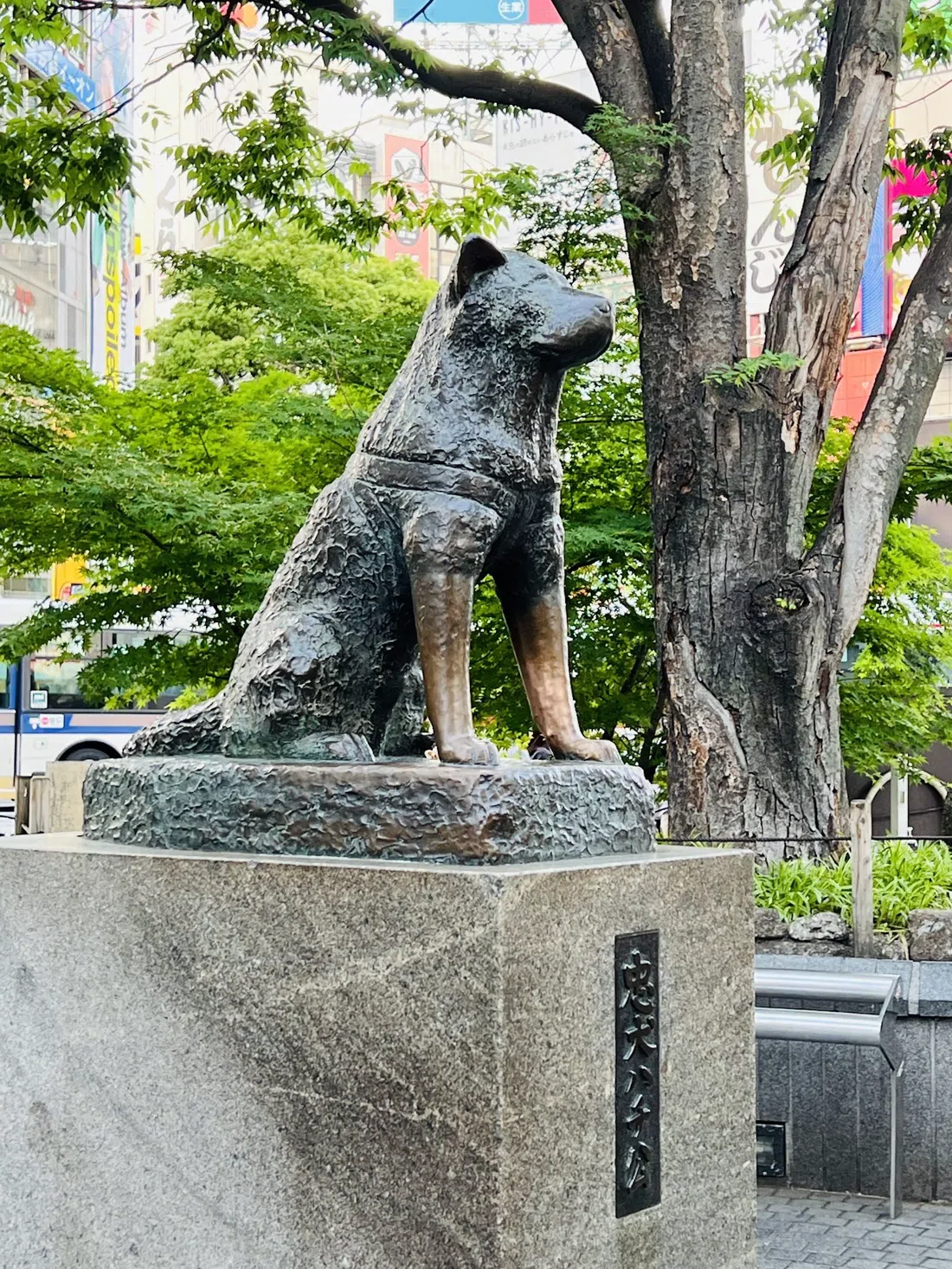
Hachikō Statue (Hachiko plaza, the north-west side of the station) is thirty seconds from the kerb and is the default rendezvous point for every group in the ward. The plaza is tight, so guides normally gather people a few metres off to the side rather than at the statue itself. Station redevelopment has moved the Hachiko ticket gate and the stairways, and the 1990 'Hachiko's Family' mural has been removed, but every version of the plan has deliberately left the statue in place. If someone says meet at Hachiko, agree on which side of it.
Three places to look down from
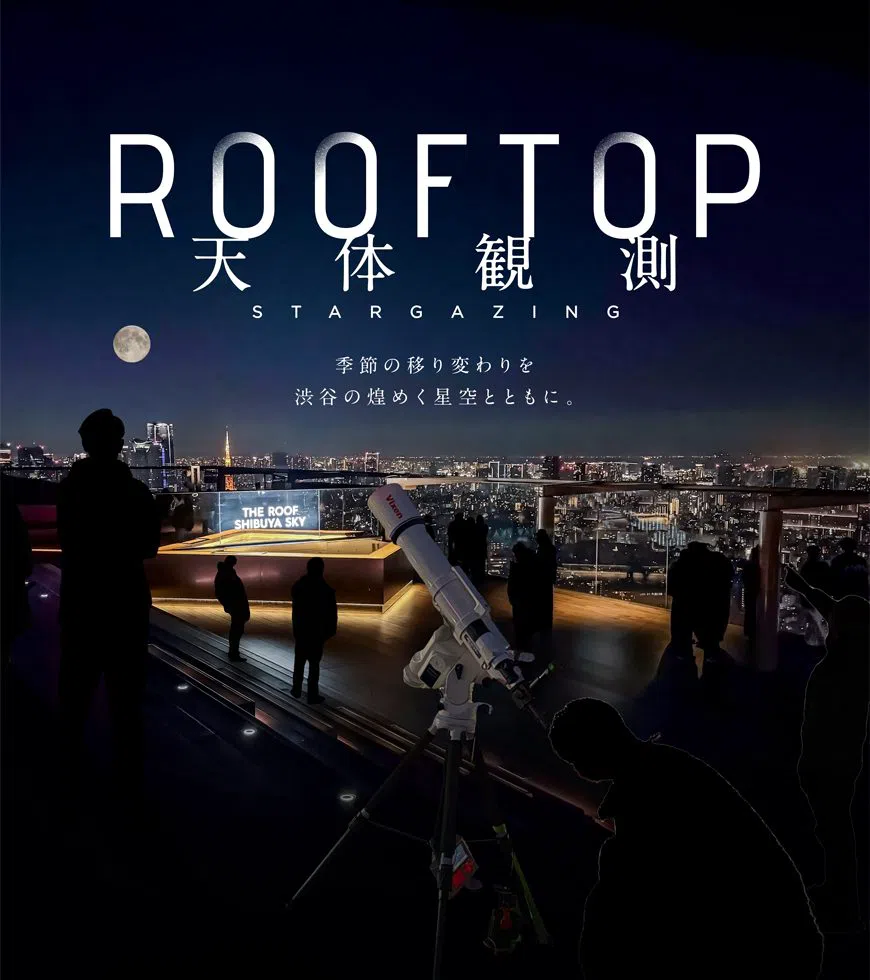
SHIBUYA SKY (Shibuya Scramble Square, directly above the station) is the best paid view in the ward and the one worth planning around. Entry is in timed 20-minute windows; web advance is ¥2,700 before 15:00 and ¥3,400 from 15:00, and if you turn up the same day the 14F counter charges ¥3,000 and ¥3,700 for the same slots. There is no time limit once you are inside, which is the detail that makes the price reasonable: people go up before sunset and stay for the switch to night. Opening is 10:00 to 22:30 with last entry at 21:20. Tickets release 14 days ahead at midnight JST, and that is when the sunset slots go, so if you want one in September 2026 you set an alarm for the midnight two weeks before your date. Groups have to book the same window together, and a party of more than four should book the moment the slots open rather than an hour later.
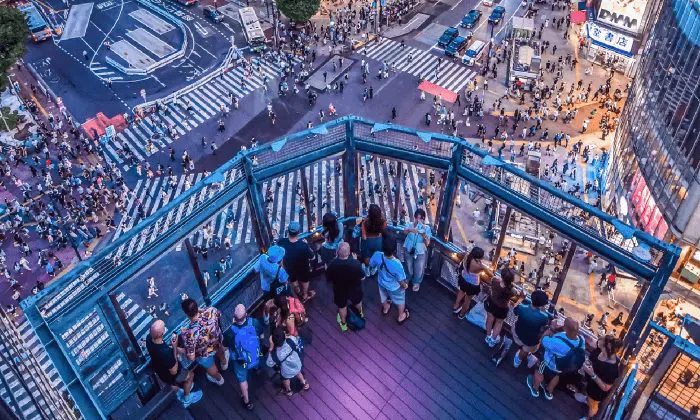
CROSSING VIEW & ROOFTOP LOUNGE MAG8 (MAGNET by SHIBUYA109, on the crossing's own corner) gives you the angle the observation deck is too high to give: head-on, low, looking straight down the scramble. Around ¥1,800 to ¥2,000 including one drink, walk-in, with indoor and outdoor areas. It is comfortable for three or four people and shoulder-to-shoulder at the glass at dusk, which is exactly when you want to be there. It reopened in its current MAG8 form in late 2023, so older write-ups describe a different place.
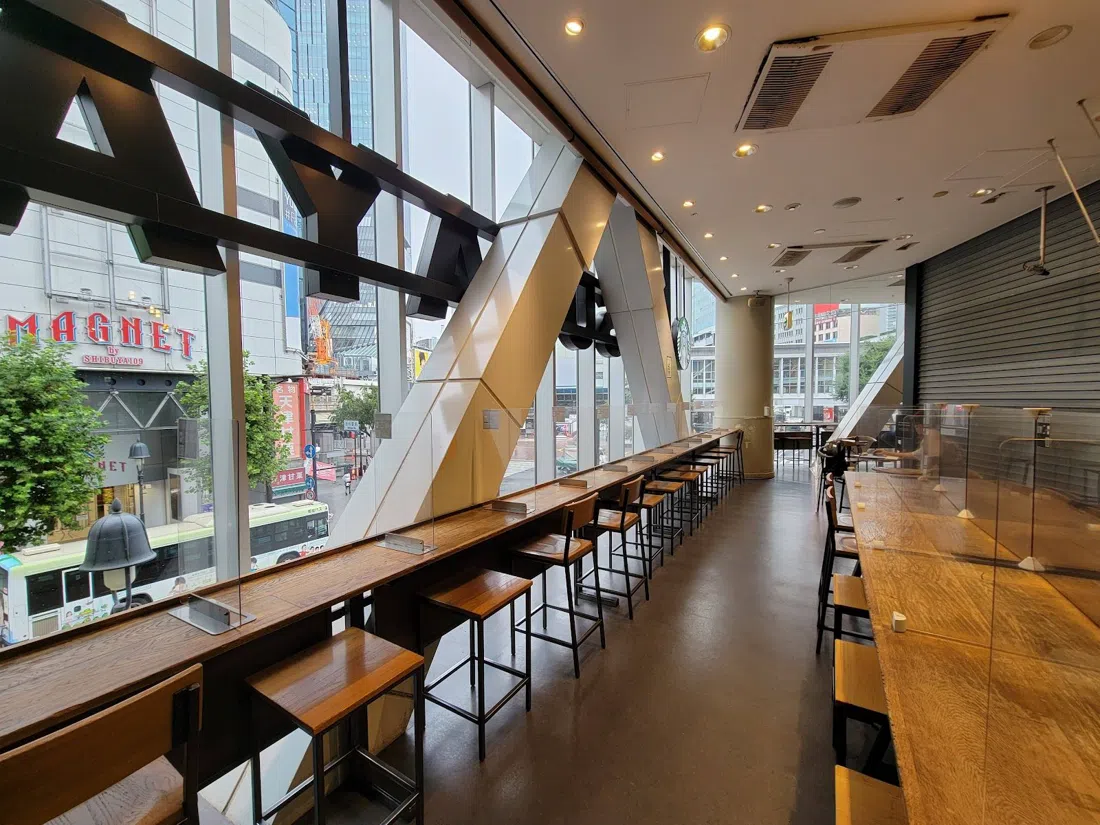
Starbucks Coffee SHIBUYA TSUTAYA 2F (QFRONT, facing Hachiko across the crossing) is the cheap version of the same view. Coffee runs roughly ¥500 to ¥800, there are no reservations, and window seats are first-come. A group of more than three or four will not get the glass together, so send one person up while the others are still at the statue. The whole QFRONT building reopened on 25 April 2024 after a ten-floor overhaul; the 2F store now has around 100 seats and the ground floor is takeaway only, so do not queue on 1F expecting a table.
The new decks nobody's guidebook has
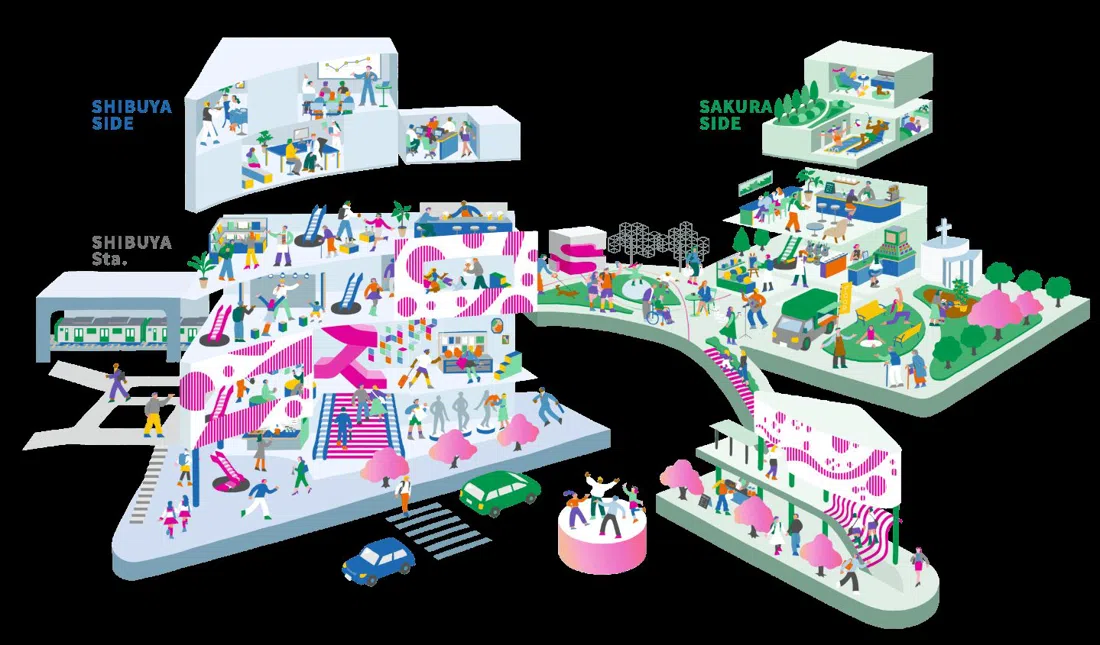
Shibuya Sakura Stage (south of the station, on the Dōgenzaka side) opened fully on 25 July 2024 and is still missing from books printed before that. Its elevated walkways are the least-crowded way to get from the station to Dōgenzaka, skipping the pavement scrum entirely, and the decks and plazas are open, public and free, with enough room that guides use them as a regrouping point when a group has spread out at the crossing.
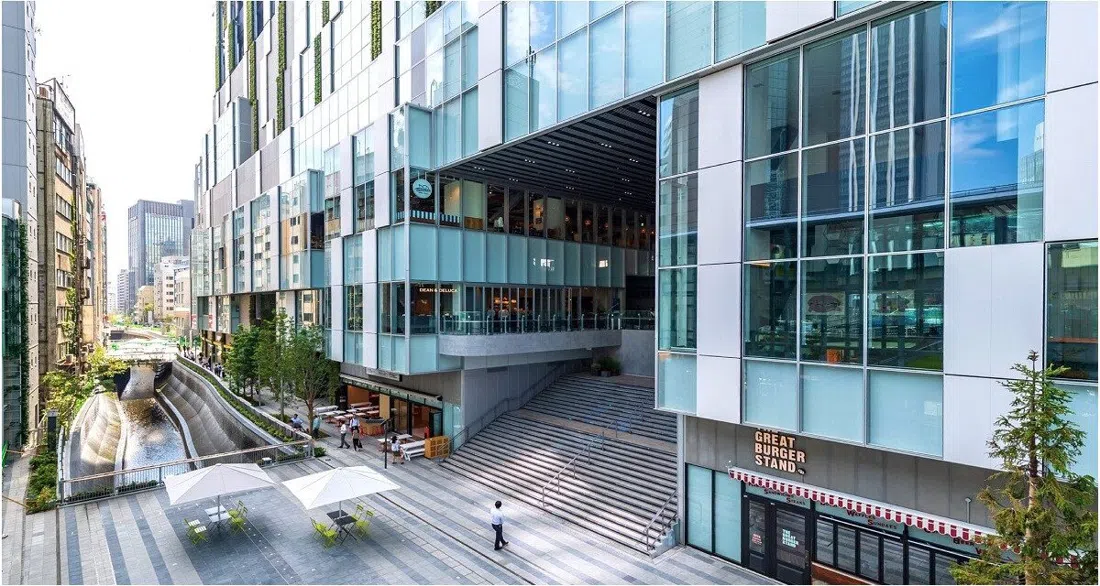
Shibuya Stream & Shibuya River Street (south-east of the station, heading toward Daikanyama) is built on the old Tōyoko Line track bed and pulls the once-buried Shibuya River back into daylight. It is an open-air public promenade, free, wide enough to walk a group two abreast, and it is the quietest way out of Shibuya on foot. Go at dusk when the illuminations come on. The restaurants along it take bookings, which is unusual in this area and worth using if you are more than two people.
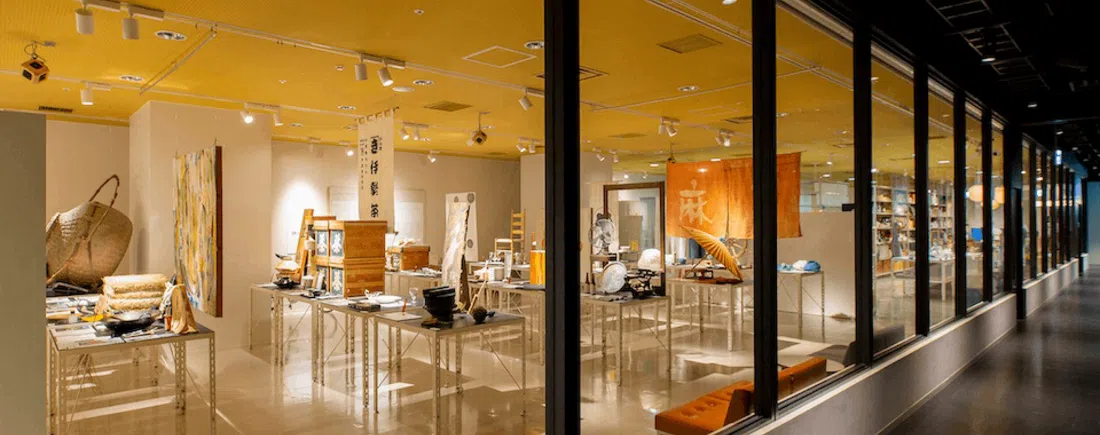
d47 MUSEUM (Shibuya Hikarie 8F, east side of the station) is a single-room gallery on a public floor, free or a small charge depending on the exhibition, and it rotates prefecture by prefecture. Twenty minutes is the right allocation. It handles a dozen people, but since it is one room a group has to rotate through rather than stand in it together. Next door, the d47 SHOKUDO canteen does regional set meals at window seats looking out over the crossing, which is the cheapest seated view in this piece.
A shrine with a September reason
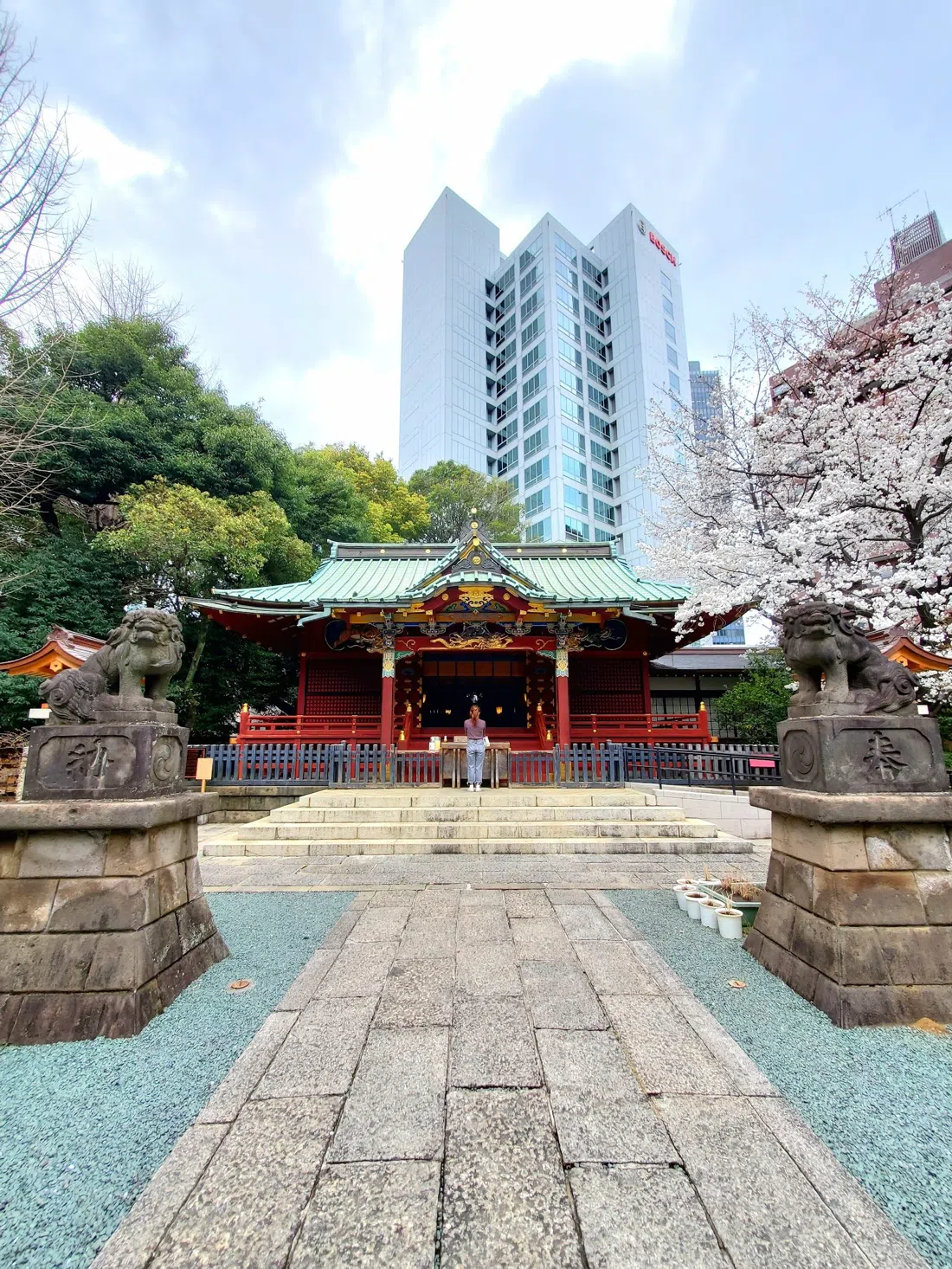
Konnō Hachimangū (Shibuya, ten minutes' walk east of the station) was founded in 1092 and its grounds are open around the clock and free. Groups are welcome to walk through; standard shrine etiquette applies and the main hall area is not the place for a loud group. Its annual festival falls in mid-September with a mikoshi parade and kagura dance, which makes it the seasonal stop if you are here in that window. Confirm the exact days on the shrine's own notice board or the ward listings before you build a day around it, because festival dates shift year to year.
Shops worth the stairs
Shibuya PARCO (Udagawachō, about seven minutes up Kōen-dōri from the crossing) is the one mandatory pop-culture stop, and everything you came for is on one floor: Nintendo TOKYO, Pokémon Center Shibuya, the Capcom Store and the Jump Shop all share the 6th. The 6F opens at 10:00. On weekends and school holidays Nintendo TOKYO runs a free ticketed entry system (tickets from 1F before opening, or from the 6F Mario statue once the store is open), which a group has to plan around rather than discover at the door. Weekday 10:00 to 11:30 is the calm window and usually needs no ticket at all.

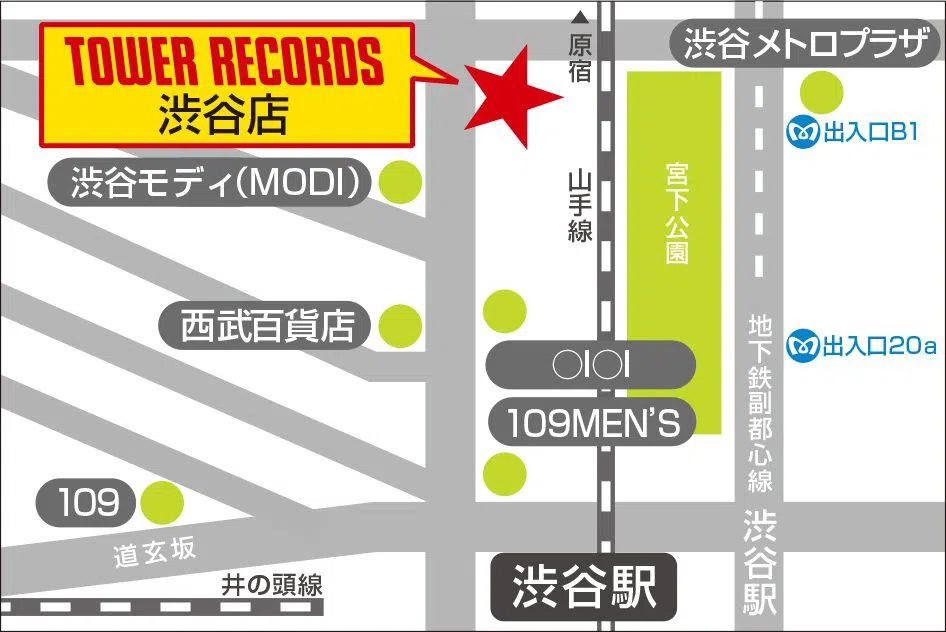
Tower Records Shibuya (Jinnan, five minutes north of the crossing) is nine floors and 5,000 square metres of physical music in a world that largely stopped selling it. Free to browse, 11:00 to 22:00. Floors 1 and 3 to 6 were rebuilt as an experiential music and fan-culture space and grand-reopened on 28 February 2026, so this is a different shop from the one in older accounts. Groups are fine on the upper floors; in-store live events and release days jam the lower ones, and there is no way to tell from the street, so send someone in to look.
Shibuya Center-Gai (running north-west off the crossing) is fully pedestrian and free to walk, and it is the artery most walking tours use for their food stops. It narrows and has no pavement, so guides take groups through single-file at peak. Follow that even without a guide. It sits inside the evening street-drinking ban zone, so whatever you buy stays inside the venue.

Eating and drinking without breaking the street rules
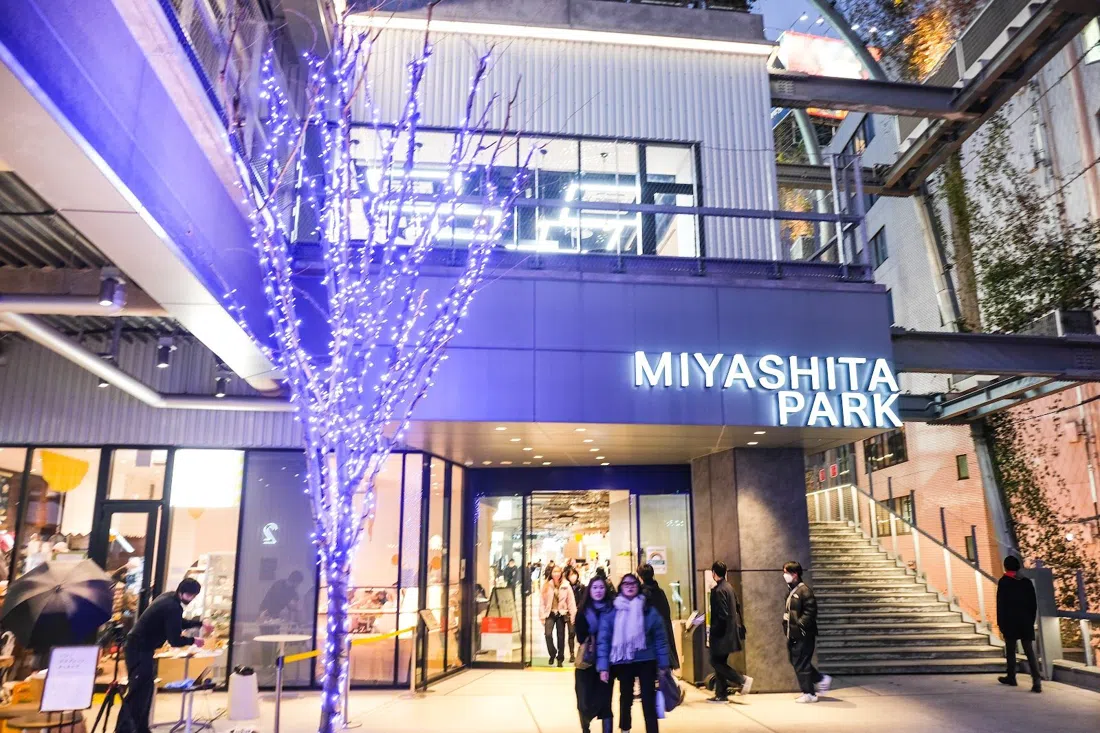
MIYASHITA PARK (along the JR tracks, about five minutes north of the crossing) is the best free elevated breather on this walk. The rooftop park is free and open 08:00 to 23:00. On the ground floor, the Shibuya Yokocho food street seats groups at long communal tables, runs to 05:00 on weekdays and Saturdays, and gives you regional food from all 47 prefectures in one strip for roughly ¥1,500 to ¥4,000 a head. It is inside the drinking-ban zone too, so stay at the table.
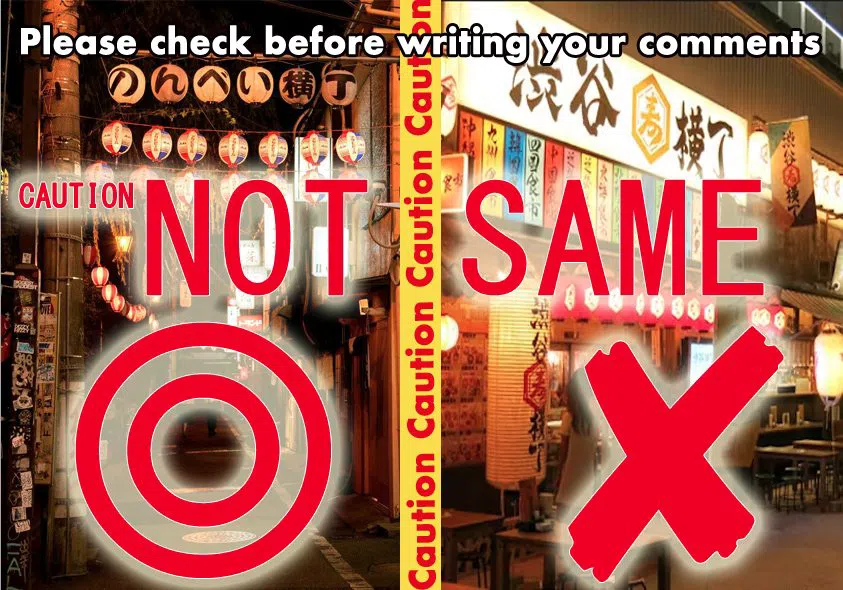
Nonbei Yokocho (against the JR tracks, a minute from the crossing) is a surviving 1952 drinking alley and the sharpest contrast with the glass towers you will find in a hundred metres. Roughly 40 bars, 4 to 8 seats each. That arithmetic is the door policy: a group of six does not go in together, it splits into twos and threes and agrees where to meet afterwards. Reckon on ¥1,000 to ¥3,000 per person per bar and expect a seating cover in many of them. A greeting and a translation app go a long way; English support varies bar to bar and you will not know which kind you have walked into until you sit down. This is where most evening walks end, and it should be.
Two ways to get quiet
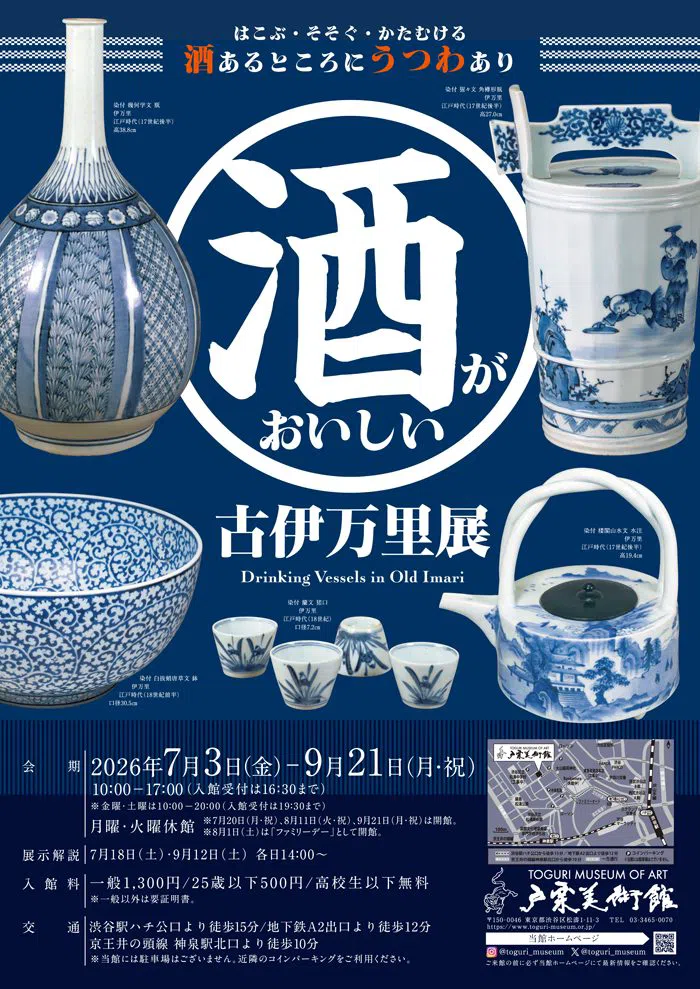
Toguri Museum of Art (Shōtō, ten minutes uphill from the crossing) is a small ceramics museum in a wealthy residential pocket and it is completely silent. ¥1,300 for adults, free for children under 15. It suits up to about ten people; larger parties should contact them ahead. It closes Mondays and Tuesdays and during exhibition changeovers, so check before you route a walk through it. A locked door at the top of that hill is a wasted twenty minutes each way.
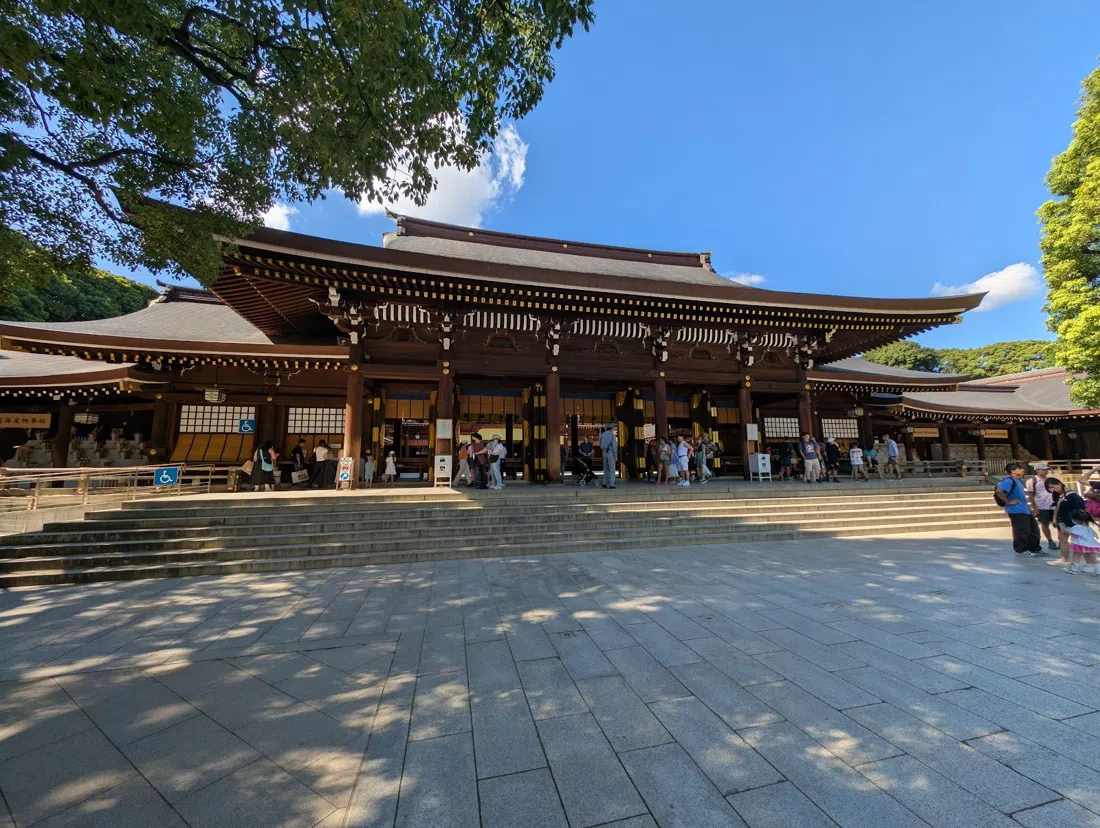
Meiji Jingū (north of Shibuya, entered from the Jingūmae side) is the standard second half of a Shibuya walk and the only genuinely quiet place in the area. Seventy hectares of planted forest, main grounds free, open sunrise to sunset. Allow real time: it is over ten minutes on foot from the entrance to the main hall, so an hour is the minimum for the round trip from the gate. The Inner Garden is ¥500 and the museum ¥1,000, both optional.
How long it takes and when to walk it
The crossing and the statue take fifteen minutes. The short version (crossing, one view from above, Center-Gai, Miyashita Park) is two hours. The route as written here, with one paid deck, one museum and a stop in the alley, is a full day of about six hours plus eating, and it covers maybe four kilometres of actual walking with a lot of standing.
In September the sensible shape is back-loaded. Do the indoor and elevated stops through the hot part of the afternoon, be at the crossing when the light goes, and finish in the alley. Early morning is the other good window: around 07:30 the crossing is legible rather than packed, the photographs are cleaner, and you can walk Center-Gai without going single-file. Weekday mornings are also when the 6th floor at PARCO is calm. Weekend afternoons are the worst combination of heat and volume, and a September typhoon tail can shut the outdoor deck at short notice, so keep the low-altitude lounge as the backup.
Turning up versus booking ahead
Almost everything in this article is free. The street, the statue, the alley entrance, the park roof, the shrine, the decks and the forest cost nothing; the deck ticket, the rooftop drink, the museum and the food are the whole budget. If you are confident with a map and happy to read a light cycle, you do not need a guide for any of it.
A guided option exists and is attached to this page as a separate card. It is worth considering in two cases: you want the ward explained rather than just walked, or you are a group that would otherwise lose people at the first crossing. There are 14,647 traveller reviews across the bookable tours here and the top one is rated 4.9 out of 5 from 4,717 reviews, so the format is well tested. They run seven days a week and start from 108 USD per person, which is real money against a walk that is otherwise nearly free. What you are buying is language, pacing and someone who already knows which Nonbei Yokocho bars will seat a visitor.
Rules that actually get enforced
The ward runs a year-round public drinking ban from 18:00 to 05:00, and it covers exactly the ground in this article: the crossing, Center-Gai and the Miyashita Park area. Drinks stay inside the bar, the restaurant or the rooftop. Separately, a ¥2,000 on-the-spot littering fine came in on 1 June 2026 and applies across the same area, which matters because street food and a lack of public bins are a standing combination here. Carry your rubbish to the next convenience store.
Is it worth it
The crossing on its own is a ten-minute novelty and it is honestly overrated as a destination. What is worth a day is the density around it: a 1952 drinking alley, a nine-floor record shop, a 1092 shrine, a rooftop park and a forest, all inside a twenty-minute walk of one intersection. It suits walkers, photographers and anyone who likes a city they can read on foot, families in the morning and couples after dark. Large groups do worst, because the two best stops, the window seats and the alley, are built for two or three people at a time.
Practical notes
Shibuya station sits on the JR Yamanote, Saikyō and Shōnan-Shinjuku lines, the Ginza, Hanzōmon and Fukutoshin subway lines, the Den-en-toshi line and the Keiō Inokashira line. The station is still a building site in places and signage changes, so allow ten minutes for any line change and aim for the Hachiko exit rather than a compass direction. An IC card covers every gate and most convenience stores.
Carry cash. The deck, the department stores and the chains all take cards, but small bars in Nonbei Yokocho often do not, and a seating cover is usually cash on top of the drinks. Budget roughly ¥3,000 to ¥4,000 a head for one paid view and a coffee, ¥2,000 to ¥4,000 for an evening of food at the communal tables, and ¥1,000 to ¥3,000 per bar after that.
For where to base yourself: the search results will push you toward the hotels clustered around the Shibuya Stream end of the station and the smaller places up Dōgenzaka, and both put you inside a five-minute walk of the crossing. Compare rates on the Tokyo hotel search and read the wider Tokyo guide before you fix a district, because staying one stop up the Yamanote line is often cheaper and costs you three minutes.
Book the deck slot first. It is the only thing here with a fixed door time, and everything else on this walk bends around it.
20 September 2026 · a first week before the flat: the Tokyo hotel directory