Gran Canaria · Where to live · 7 min
Arguineguín, Gran Canaria: The Fishing Town That Never Became a Resort
On a coast built for sunbeds, Arguineguín still takes its orders from the morning catch — a guild restaurant on the quay, a Tuesday market the length of the seafront, and a Norwegian winter colony that never left.
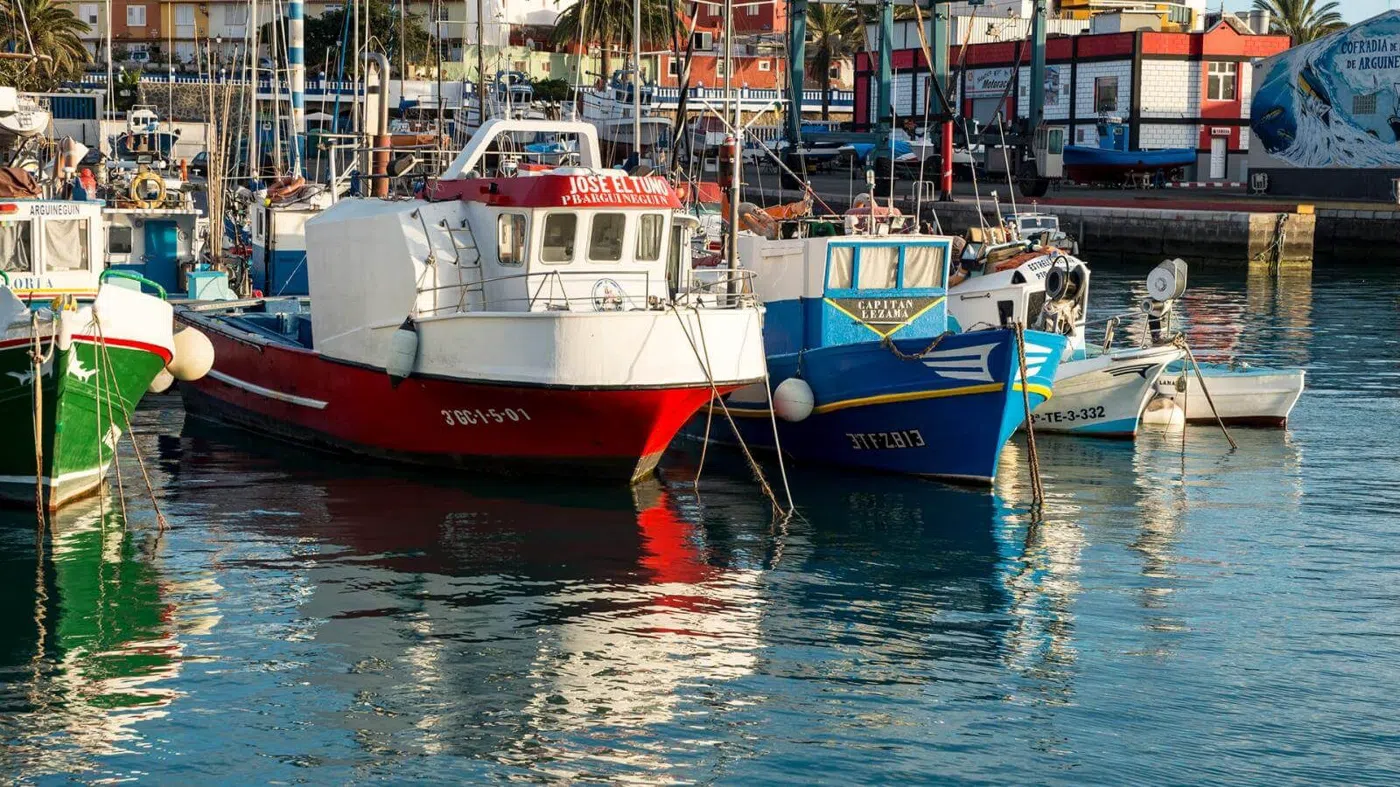
Eight in the morning on a Tuesday, and Arguineguín's seafront has already turned itself into a market — trestle tables going up along the promenade, crates of produce coming off vans, a Norwegian pensioner picking through them with the unhurried air of someone who lives here from October to April. Across the road, the Cofradía de Pescadores is selling the morning's catch a few metres from the boats that landed it. This is the one town on Gran Canaria's resort coast that still runs on a fishing guild rather than a rep desk, and you register it fast. The harbour, not a hotel strip, is the centre of gravity.
What Arguineguín is known for
The guild comes first, and everything else arranges itself around it. The Cofradía de Pescadores still runs the harbour trade here, and the restaurant the guild operates on the quay — serving whatever the boats brought in that morning, grilled plain, with papas arrugadas and mojo alongside — is the closest thing the town has to a civic institution. Nobody dresses it up. You eat fish that was in the Atlantic before sunrise, at a table surrounded by people who were also up before sunrise.
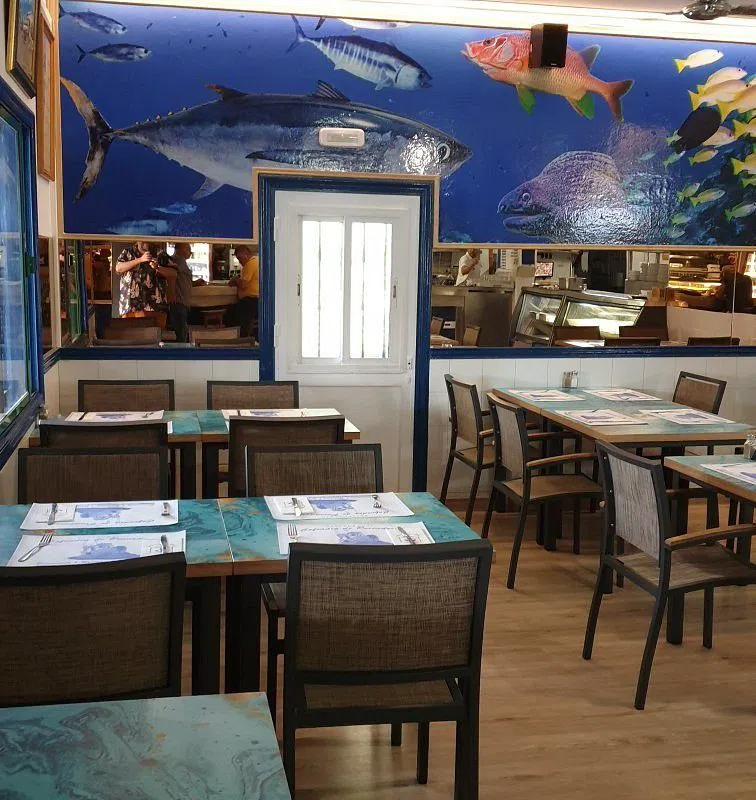
Second comes the Tuesday market, substantial enough to rank among the largest street markets in the south of Gran Canaria rather than a tourist-only setup propped up for coach parties. Third — and this is the one that catches first-timers off guard — is the Norwegian winter community, long-standing and sizeable enough that the town carries a half-joking nickname: little Norway. It shows in the apartment blocks behind the front, in the Nordic-leaning aparthotels, in the easy multilingual shrug of a bar at four in the afternoon.
What binds the three together is tone. On a coastline otherwise engineered around sunbeds, Arguineguín is a working town. Boats come in loaded at dawn, the guild sells straight off the quay, and what sits over the front is the smell of the catch and diesel rather than sunscreen. That isn't a flaw to be apologised for; it's the entire reason to come.
Where to eat and drink in Arguineguín
Eating here starts, and mostly ends, at the harbour. The Cofradía de Pescadores occupies a plain room right on the quay at Avenida del Muelle, and the gap between its décor and its cooking is the whole joke. Sole. Parrotfish, which the local menus call vieja. John Dory. A seafood paella that takes as long as it takes and justifies the wait. It holds a 4.2 rating, which feels honest — you are not here for the chairs, the tablecloths or the wine list. Arrive early or make peace with the queue, and let the day's board overrule whatever you had planned on the way down.
For a night off from fish, Los Canarios I sits just back from the front, tucked behind the shopping centre, and deals in steaks and lamb in Canarian portions — which is to say rather more than you ordered. At 4.5 it's the best-rated dining room in town, and it draws the sort of crowd that lingers over a second bottle long after the plates have gone.
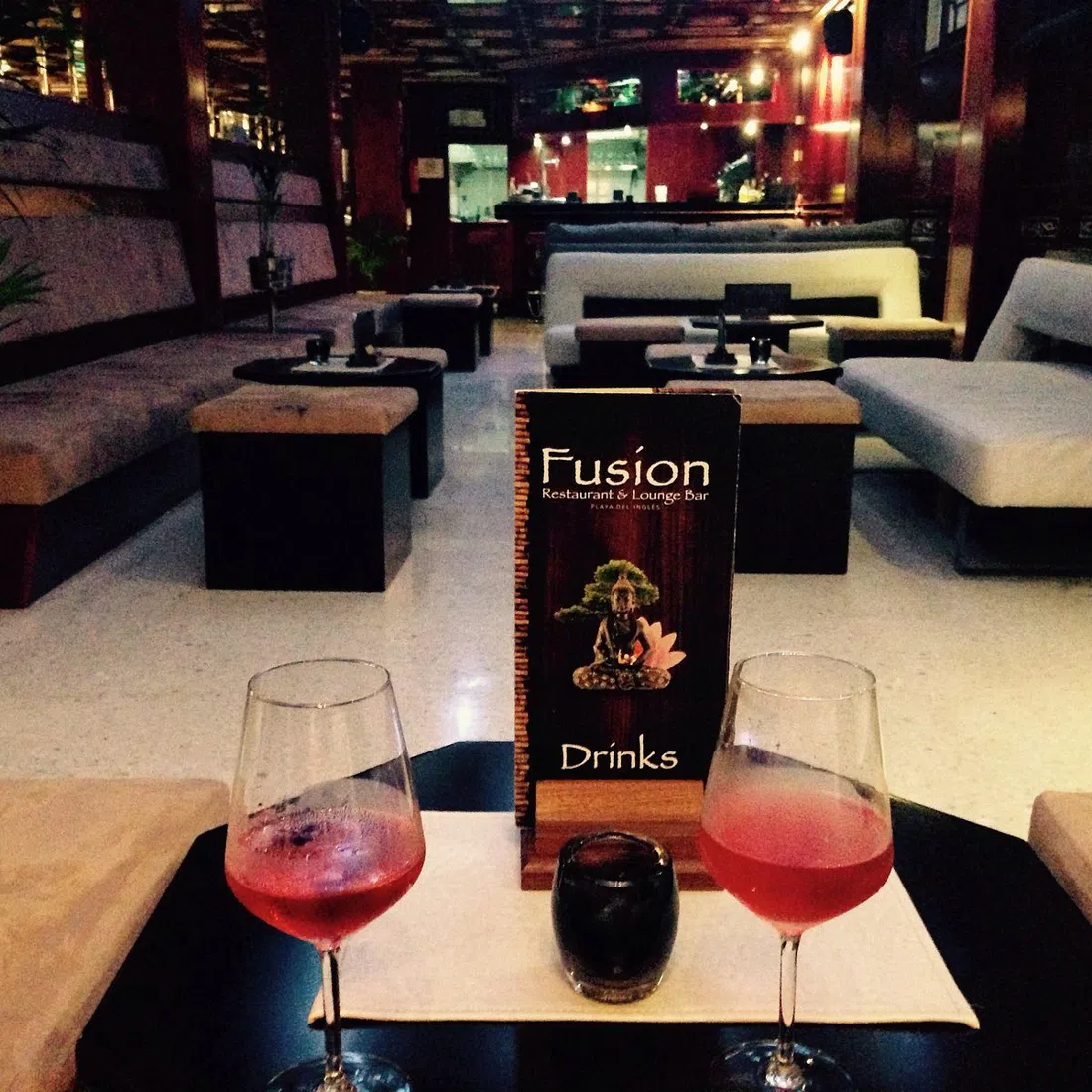
Closer to the sand, on Calle Alonso Quesada, Fusion Restaurant and Loungebar does Thai curry and burgers to a 4.4 rating, and hits its stride on market Tuesdays when stallholders, shoppers and the merely curious all come off the promenade at once looking for a chair in the shade.
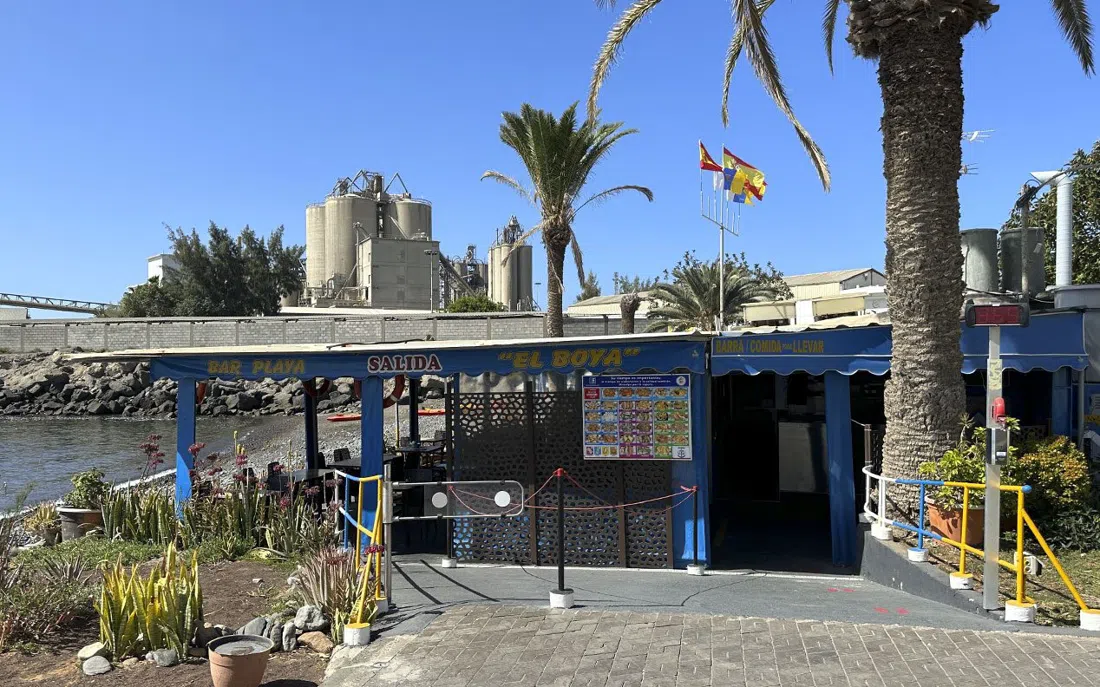
The quiet pick is a short way along the coast. Bar Playa El Boya, down at El Pajar beach, serves seafood under a fig tree with the water in front of you, and it's cheaper than the main seafront for the privilege — 4.3, and the kind of place where lunch dissolves into mid-afternoon without anyone noticing.
One broader point on money: eating out here costs noticeably less than along the Puerto Rico or Puerto de Mogán marina strips. The harbour restaurant and the market-town bars price for locals and Nordic residents who'll be back next week, not for package arrivals passing through once.
Nightlife in Arguineguín
Set your expectations honestly: there is no club scene. For that, people get the bus to Puerto Rico or Playa del Inglés and come back late. What Arguineguín has instead is a small run of bars that lean on live music rather than DJs, and they're better for it.
Mandy's Den, inside the C.C. Áncora shopping centre, is the dependable one — a pub that stays open to around 2am with live sets at weekends and a 4.4 rating earned mostly on consistency. Nye Buster Bar is the one regulars get evangelical about, with live music most nights and a reputation, among people who go out down here a lot, as the best music bar in the south of the island. It rates 4.2. Practical tip from those same regulars: ask about any band cover charge before you settle in, rather than discovering it at the door.
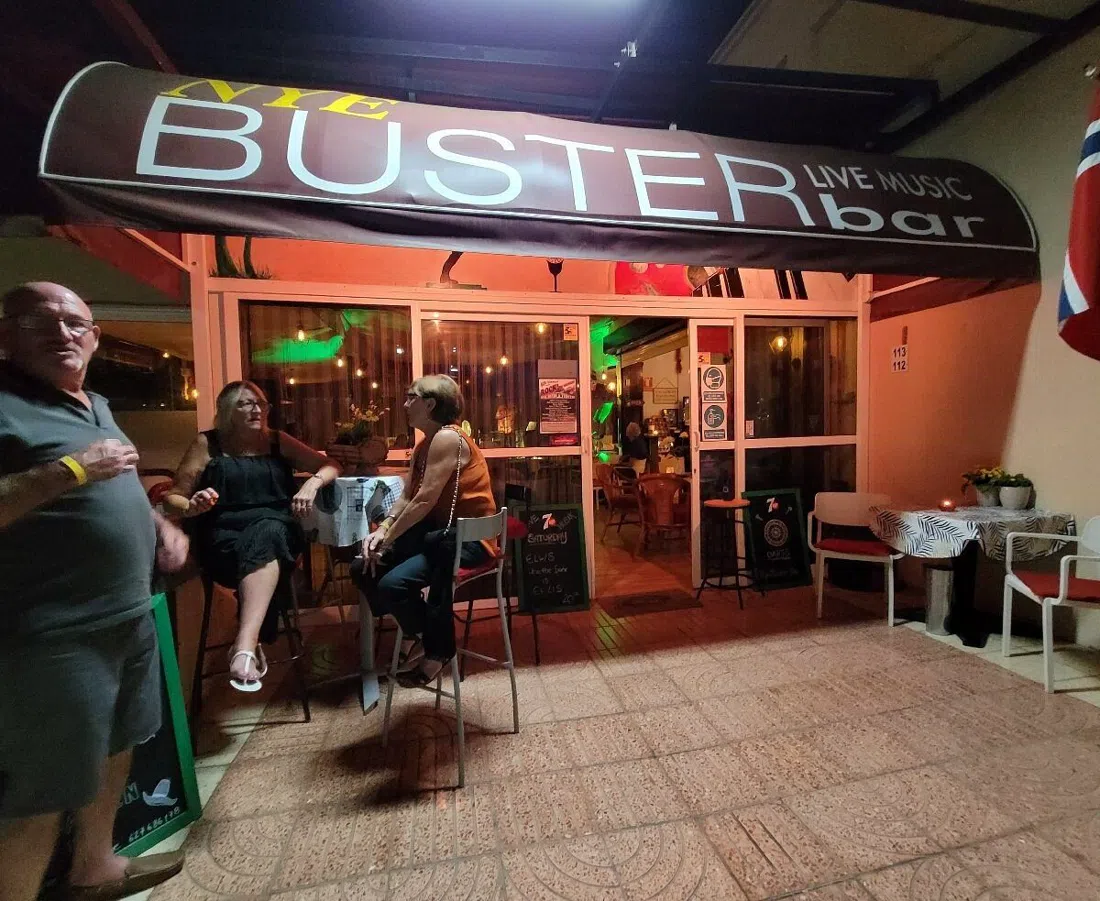
Two bars and a shopping-centre pub is not a strip, and if you need a strip you're in the wrong town. If what you want is a guitar, a cold beer and a conversation that lasts, this is a very good two hundred metres of coastline.
Things to do in Arguineguín
Start at the harbour itself. Walking the quay while the boats unload — or timing your visit for a Tuesday, when the market runs the length of the seafront promenade — is most of what makes the town worth a stop in its own right, and it costs nothing.
For the water, Playa de las Marañuelas is the main beach: a cove of roughly 400 metres, black volcanic sand, sheltered by the harbour breakwater so the water stays calm enough for families to relax about it. The snorkelling at the edges is better than the postcard-free sand suggests, and it rates 4.2.
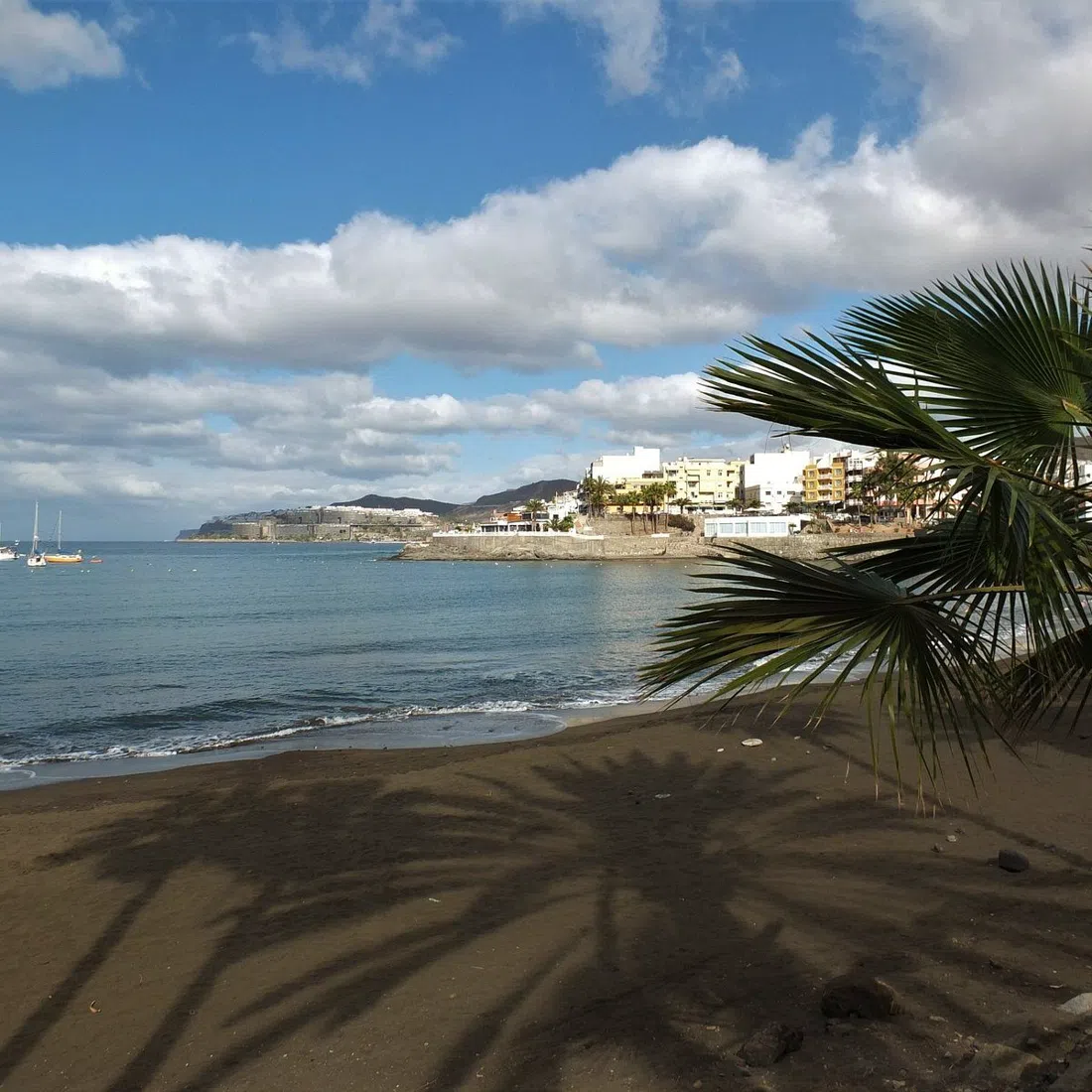
Nearby, the La Lajilla and Perchel natural pools give you a swim with rock rather than sand underfoot — worth knowing if the cove is busy.
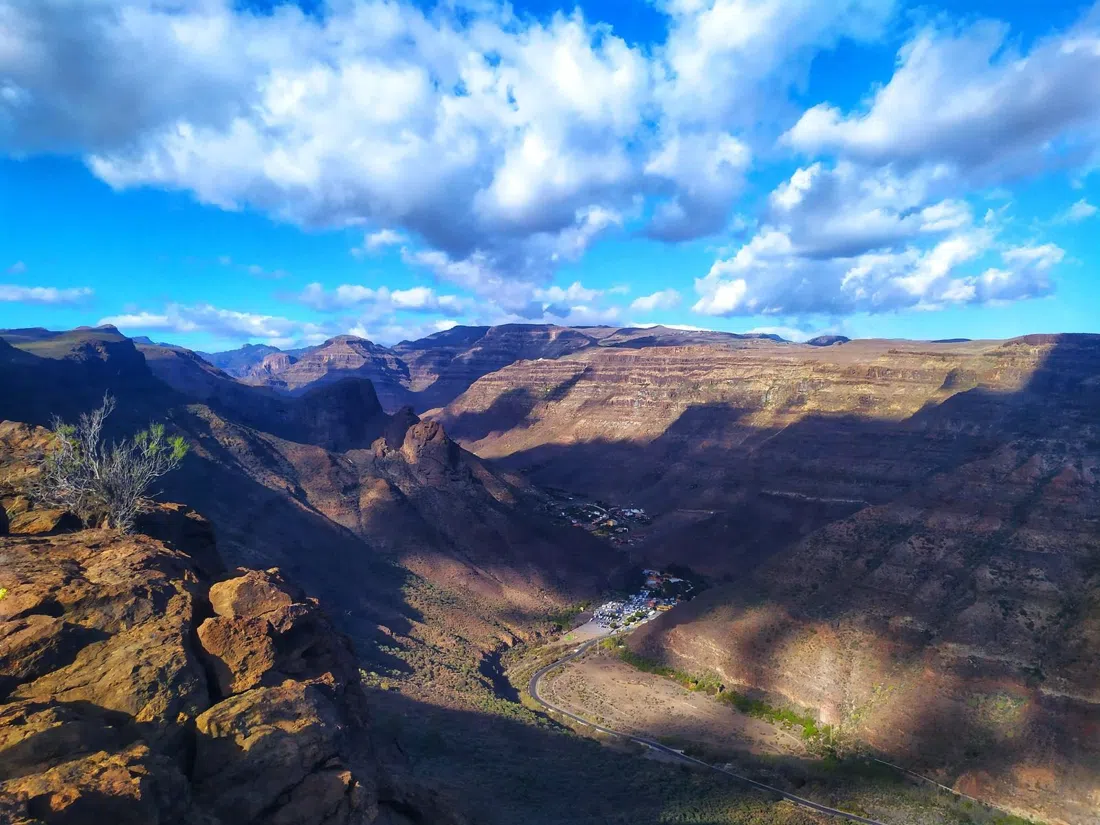
Inland, the Barranco de Arguineguín opens a volcanic ravine route that climbs toward the Soria Dam, the island's largest reservoir. It's a dramatic switch of register: twenty minutes from the beach towels you're in dry, raw, geological country with the sea shrinking behind you.
And then there's the water the boats work in. Dolphin and whale-watching boat trips leave from Arguineguín port on catamarans and yachts, departing the town's own harbour rather than Puerto Rico's busier one — a 4.8 rating and, crucially, a quieter quay to board from.
Shopping in Arguineguín
The Tuesday market is the main event, and it isn't a sideshow put on for visitors. Stalls run the length of the seafront from around 8am to 2pm: fresh produce, local crafts, clothing, the odd souvenir stand. It is genuinely one of the largest street markets in the south of Gran Canaria rather than a tourist-only setup, which means prices behave like prices rather than like performances. Come at eight for the produce and the quiet; come at eleven for the crowd and the noise. Both are worth having.
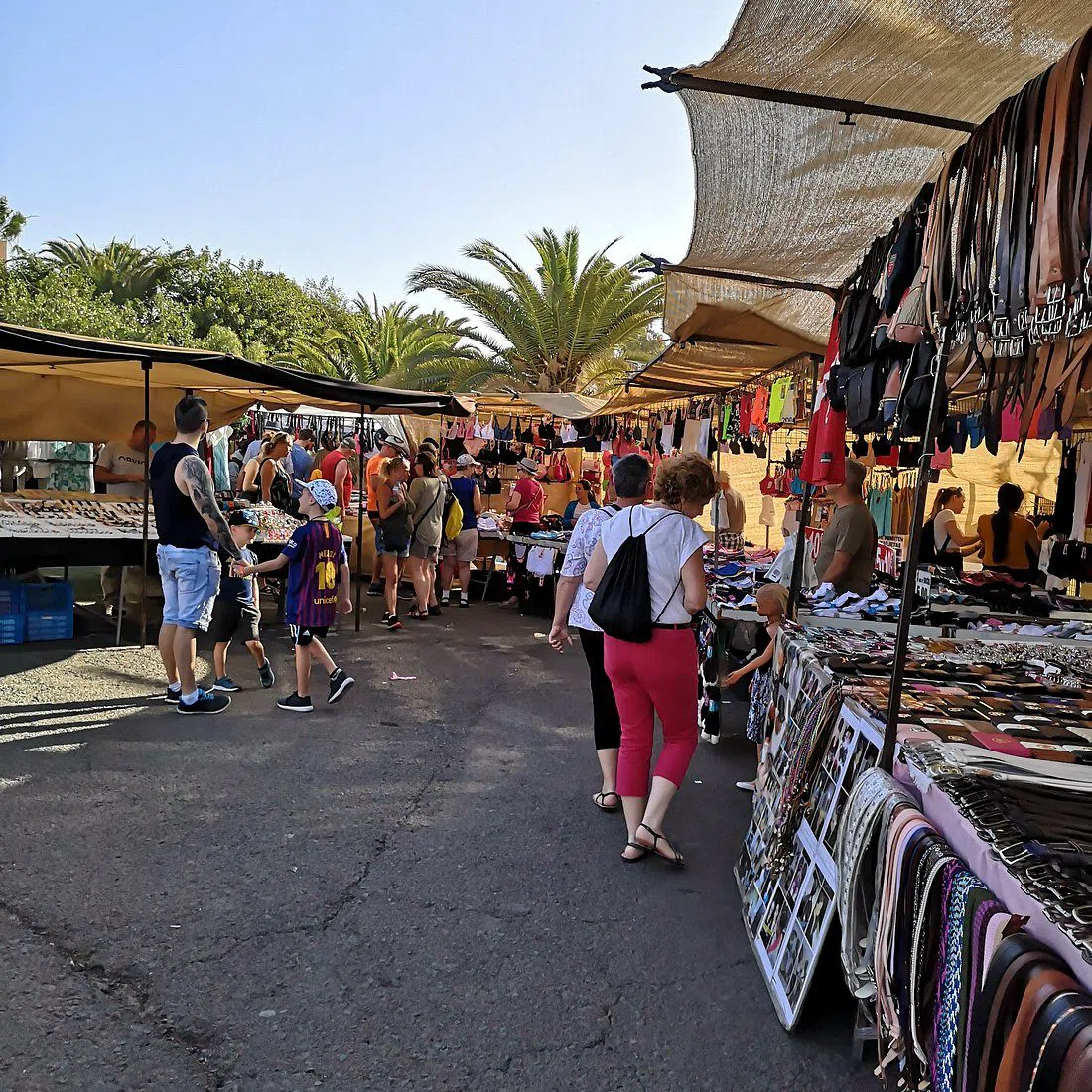
The rest of the week, shopping is practical rather than recreational — C.C. Áncora handles everyday needs, and the Cofradía de Pescadores sells fish across the road from the boats that caught it, which is about as short as a supply chain gets.
Where to stay in Arguineguín
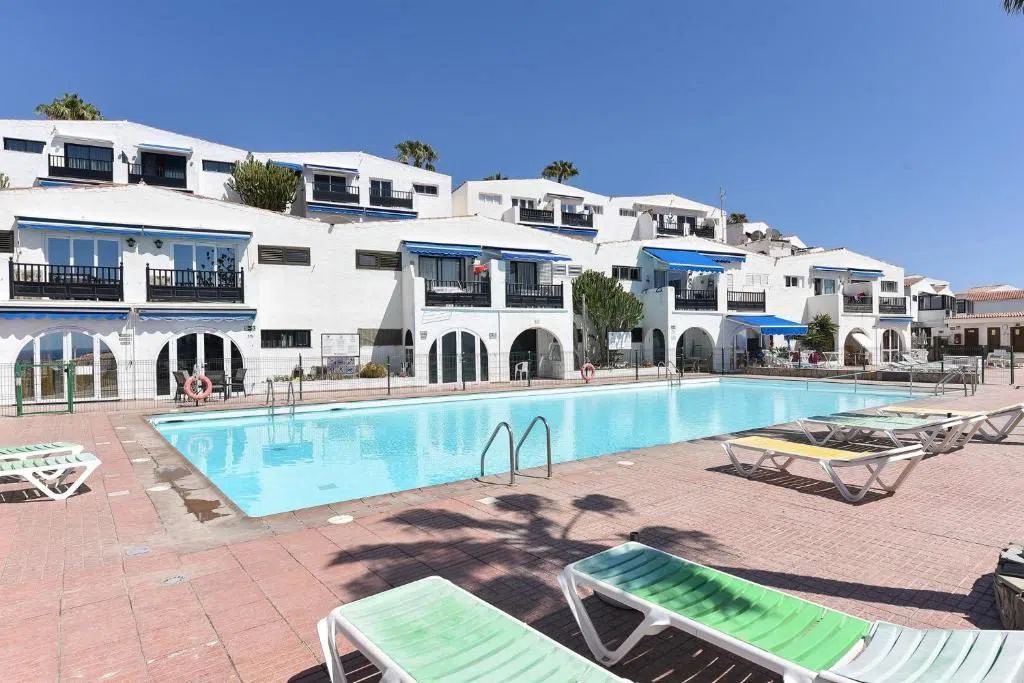
The two real options sit at opposite ends of the town's beachfront. Radisson Blu Resort Gran Canaria, in La Playa de Arguineguín, is the higher-end pick — guests consistently flag the pool service, the bar and a well-regarded rooftop restaurant — and it puts you closest to the harbour and the Tuesday market, which is the whole point of basing here. At the other end of the beachfront sits the Cordial Santa Águeda, a quieter, more self-contained proposition further from the market bustle.
Beyond the hotels, much of the town's accommodation is apartments and aparthotels, often Nordic-leaning, and that suits the way people actually use Arguineguín: market shopping, cooking the catch yourself, low prices over late nights. One honest caveat before you book — you cannot walk straight onto a long sandy beach here. The coves are small, dark-sand and partly sheltered by the harbour. If that's the holiday you're picturing, Maspalomas is down the road and you should stay there instead.
Getting around Arguineguín
The town is small and walkable. Harbour, market street and the main beach are all within ten minutes of each other on foot, downhill toward the sea from the GC-1 motorway side — which also means the walk back up is the only hill you'll fight all week.
For the rest of the island, Global's bus line 1 runs the full coast road from Gran Canaria Airport and Las Palmas, so Puerto Rico and the Maspalomas end are both cheap, frequent hops rather than expeditions. From the airport, lines 1 or 91 cost around €4.95 and take roughly 35 to 45 minutes; driving via the GC-1 is about 25 minutes. There's also the Líneas Salmón water taxi running from the harbour, which turns a transfer along this coast into something closer to a boat trip.
The town is quiet and low-risk, with the harbour and seafront well used at all hours. Hire a car if you want the ravines and the island's interior. Otherwise, the bus and your own two feet will cover everything Arguineguín is actually for.
24 October 2026