Gran Canaria · Where to live · 8 min
Arucas, Gran Canaria: The Black-Stone Town Built From Its Own Volcano
A working town 17km north of Las Palmas where the streets are quarried from an extinct volcano, the rum has been ageing since 1884, and Saturday morning belongs to forty stalls of cheese and honey.
At nine on a Saturday morning, Calle Juan de Bethencourt shuts to traffic and the awnings go up. Within the hour, forty-odd stalls of cheese, honey, fruit and cut flowers have filled Parque de La Paz, directly behind a church so improbably large that everyone in town calls it the cathedral — which it isn't, and never has been. Ten minutes away on foot, rum is doing what it has been doing in the same cellars since 1884: ageing, slowly, in the dark. That is Arucas in a nutshell. A working town 17km north of Las Palmas that happens to hold three or four things worth crossing the island for.
What Arucas is known for
Arucas is known first for its stone. The town sits on the lower slopes of Montaña de Arucas, an extinct volcano whose dark trachyte was quarried to build the streets below it — which means the place is, quite literally, made out of its own mountain. Walk the pedestrian stretches around Calle Gourié and León y Castillo and the same soot-black rock turns up in doorframes, lintels, kerbstones and the old Casa de la Cultura. In flat midday light it reads as plain grey. Late afternoon, it goes almost blue-black, and the whole centre looks heavier than a town this size has any right to look.
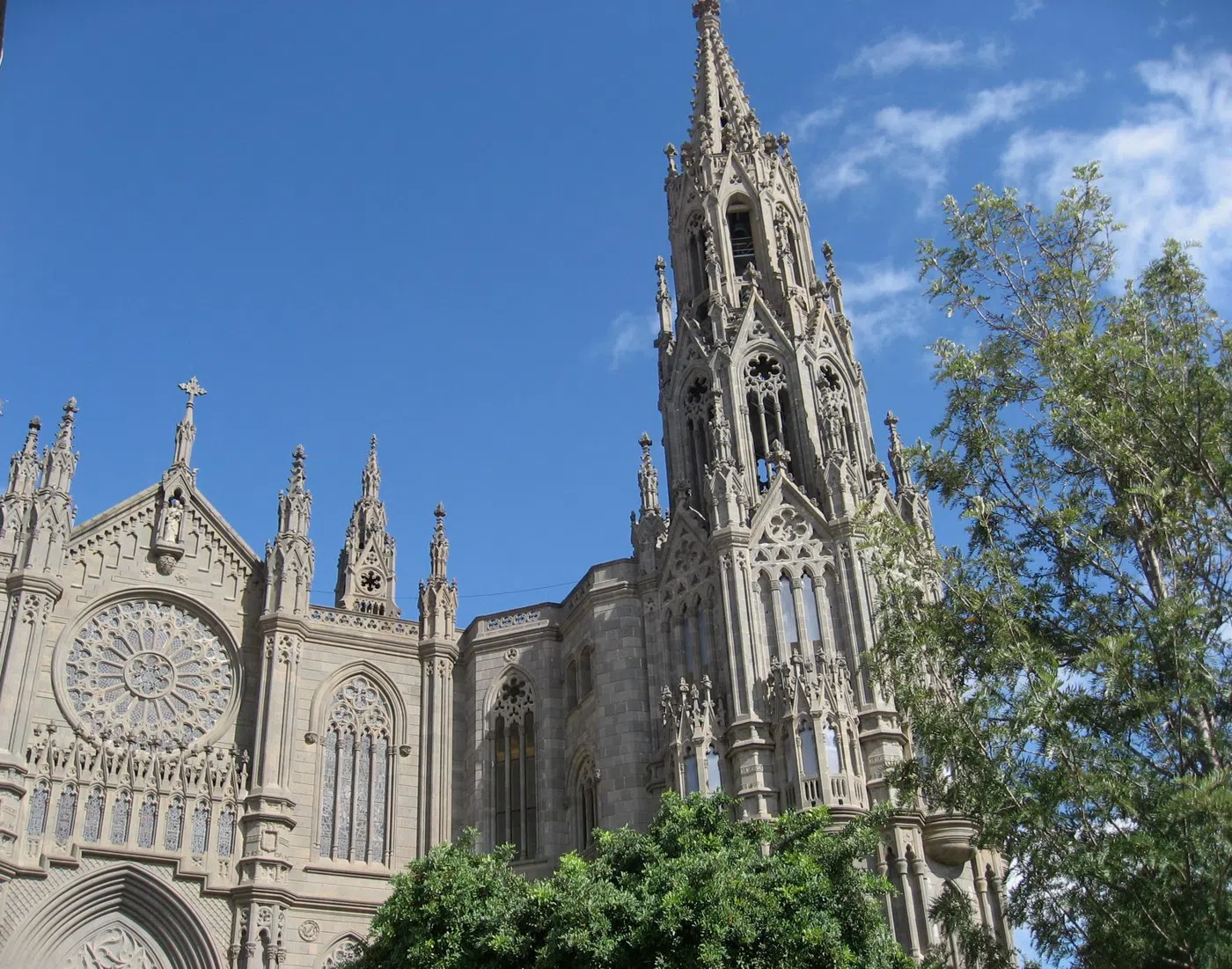
The full expression of all that stone is the Church of San Juan Bautista, an oversized neo-Gothic pile in the same volcanic rock, its spires visible from well outside town.
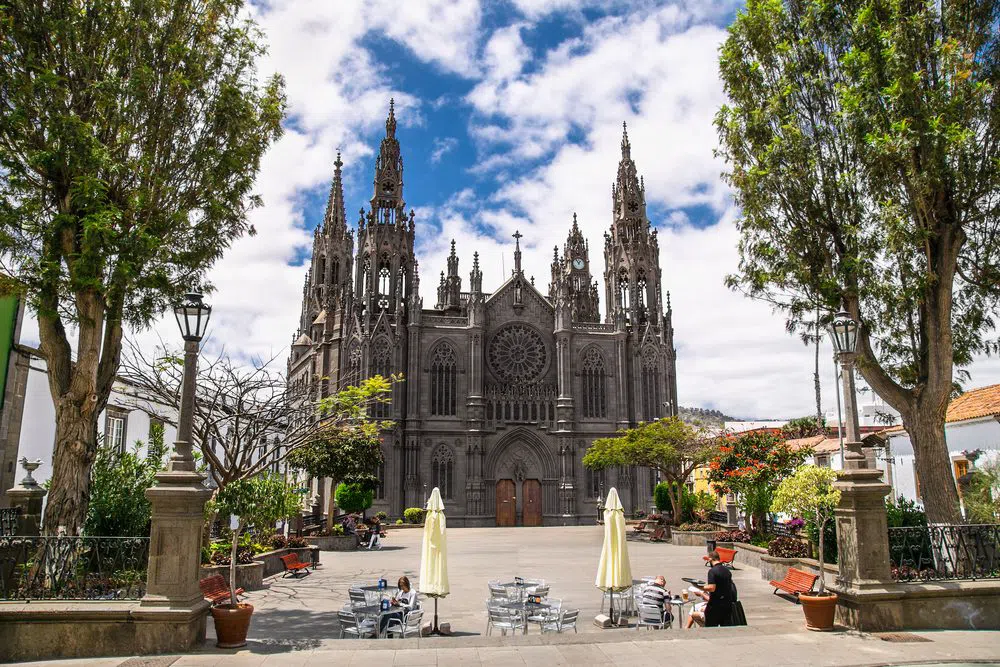
Building began in 1909 and dragged on for roughly seven decades — sources disagree about exactly when the last stone went in, which feels about right for a project measured in generations rather than years. Nobody local calls it a church, incidentally. It is la catedral, the square in front of it is the cathedral square, and no amount of pedantry about dioceses is going to change that.
The other thing Arucas is known for is what grows and what gets distilled: bananas across the terraced countryside that falls away toward the coast, and rum in the cellars at the bottom of town.
Where to eat and drink in Arucas
Arucas punches well above its size on food, with two genuinely destination-worthy kitchens a few minutes apart.
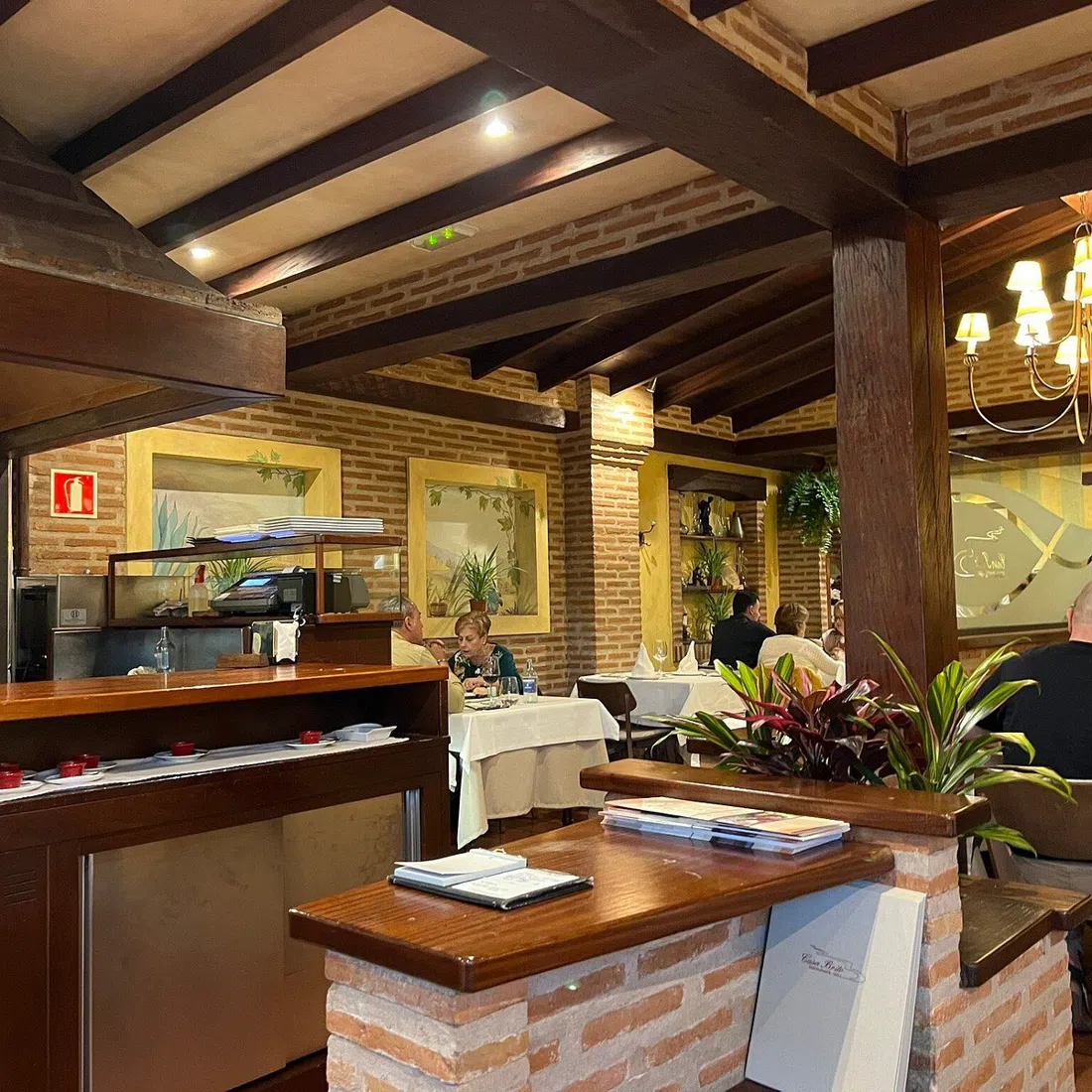
Casa Brito has been grilling over coals on Pasaje Ter since 1998, and it is the reason a steady convoy of Las Palmas residents points its cars uphill at the weekend. The beef is sourced from Castilla, Galicia and Asturias. The thing to order if you want to eat like the next table along is baifo — local young goat chops, charred at the edges. It carries a Michelin Plate and sits at 4.7, which in a town this size tells you where the ambition went.
A short walk away, La Catedral Bistró does something quieter and, to my mind, more surprising. Six tables. That is the entire room. The cooking is ambitious Canarian — gofio escaldado, red prawns, black suckling pig — at prices notably fairer than the plates suggest, which is a large part of why it rates 4.8. Six tables also means you do not stroll in at eight on a Saturday and expect a result. Call ahead.
Below that tier, Arucas eats the way working Canarian towns eat: menu del día at lunch, cheap and unceremonious, and genuinely the best-value hour of the day here. Food and attractions are inexpensive across the board. Casa Brito and La Catedral Bistró are the pricier exceptions, and both earn the detour.
Going out in Arucas
The honest version: Arucas is not a night out. There is no club scene, the bars shut early, and by eleven the black stone streets are more or less yours — noticeably calmer than Las Palmas, largely because so little stays open.
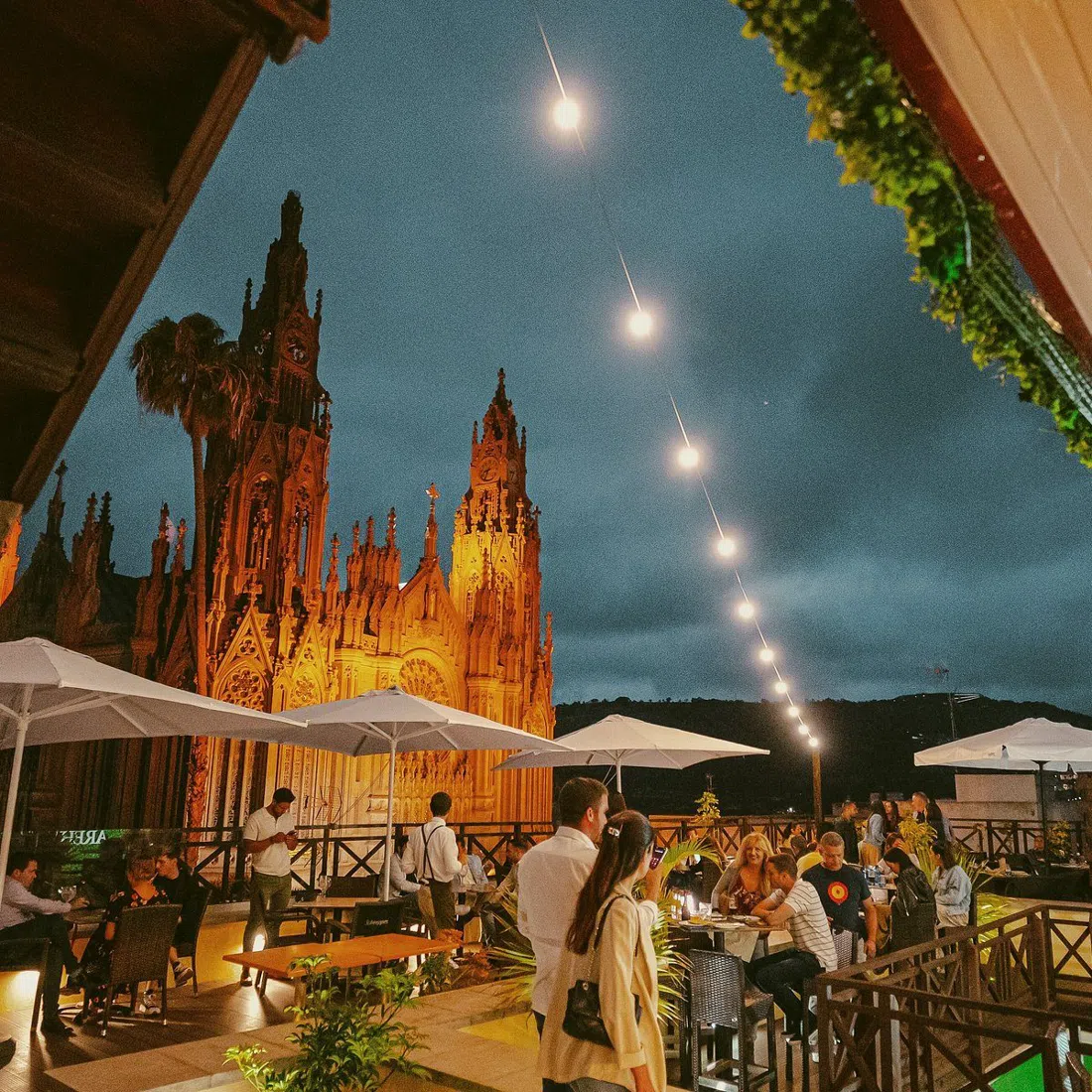
What the town does have is one very good hour. Emblemática Rooftop, the terrace above Hotel Emblemático Arucas, looks straight onto the church facade, and the stone performs its colour trick as the sun drops. A drink up there, at 4.6, is the most civilised thing available in Arucas after six o'clock.
If you came up by bus, keep half an eye on the clock — services back to the capital thin out sharply after early evening, and a lingering evening here can quietly convert itself into a taxi fare.
What to do in Arucas
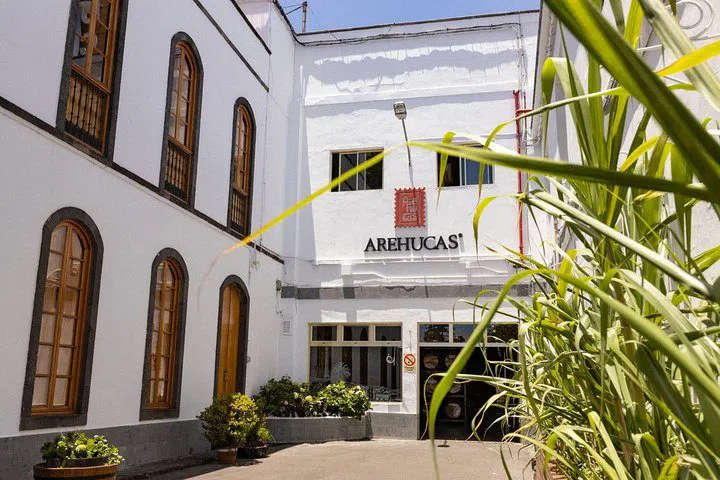
The Arehucas Rum Distillery is the obvious anchor, and the best thing about it after the rum is the price. Guided visits run on weekdays only — Monday to Thursday, 9:30am to 2pm, Friday until 6pm, closed at weekends and on holidays — and cost somewhere around €7 to €9, which includes a tasting of several rums at the end. The Canary Islands' best-known rum producer has been working this site since 1884, and the route takes you through the cellar, where the barrels are stacked and signed and the air is thick enough to taste. It rates 4.7. Go early in the week if you can; Friday is the only slot that forgives a late start.
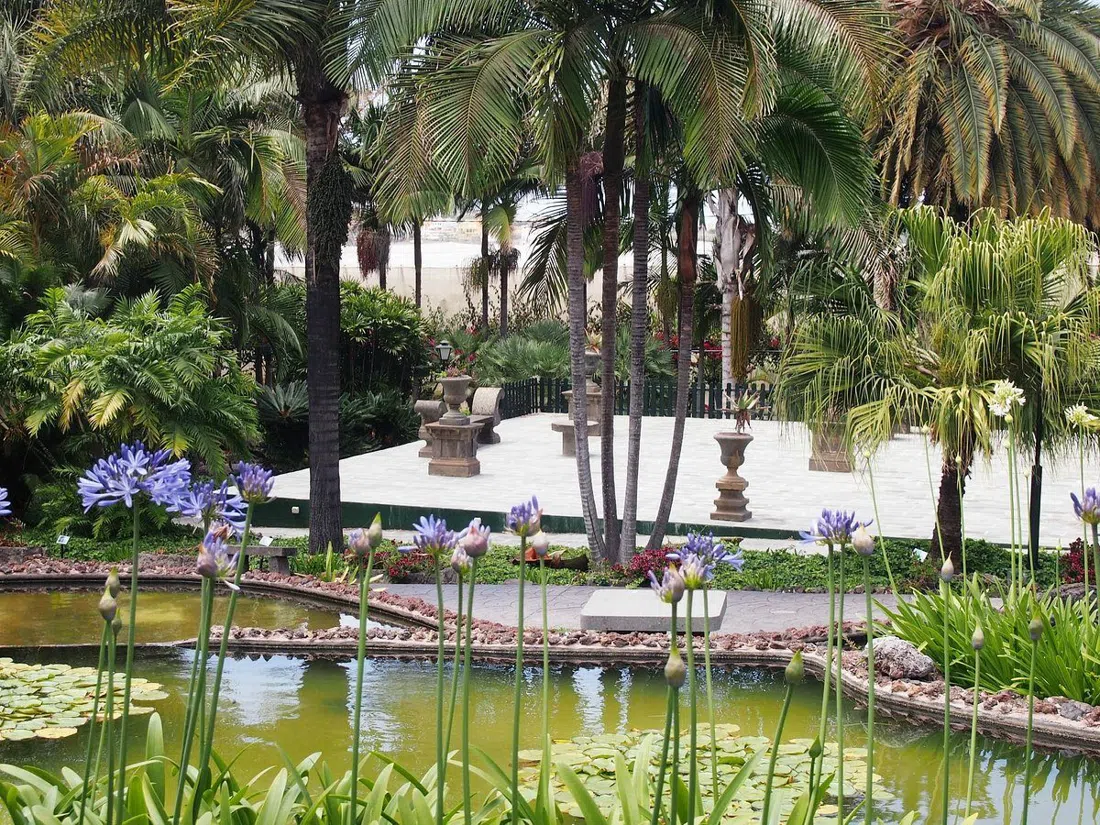
For green rather than brown, Jardín de la Marquesa is laid out around a historic villa and holds roughly 400 tropical and subtropical species, with peacocks roaming the paths as though they pay the rates. It is the softest hour in Arucas. At 4.2 the reviews run a little cooler than the distillery's, which seems fair — it is a garden, not a spectacle, and it rewards people who slow down.
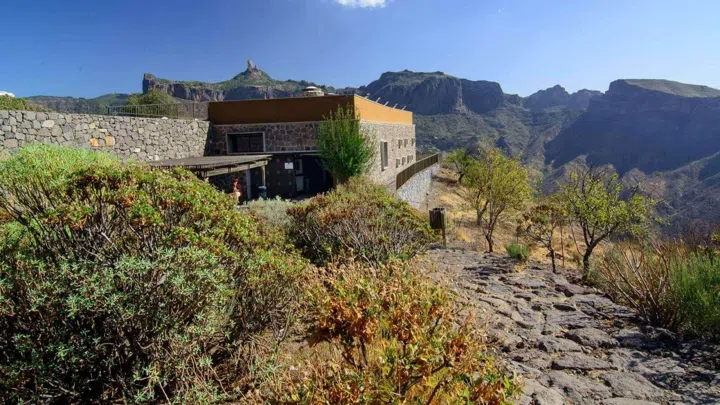
Then go up. The Montaña de Arucas viewpoint, on the summit of the volcano that built the town, reopened in late 2023, and on a clear morning it hands you Las Palmas laid out below and — improbably — the cone of Mount Teide floating across the water on Tenerife. It needs a car or a taxi. It is worth both.
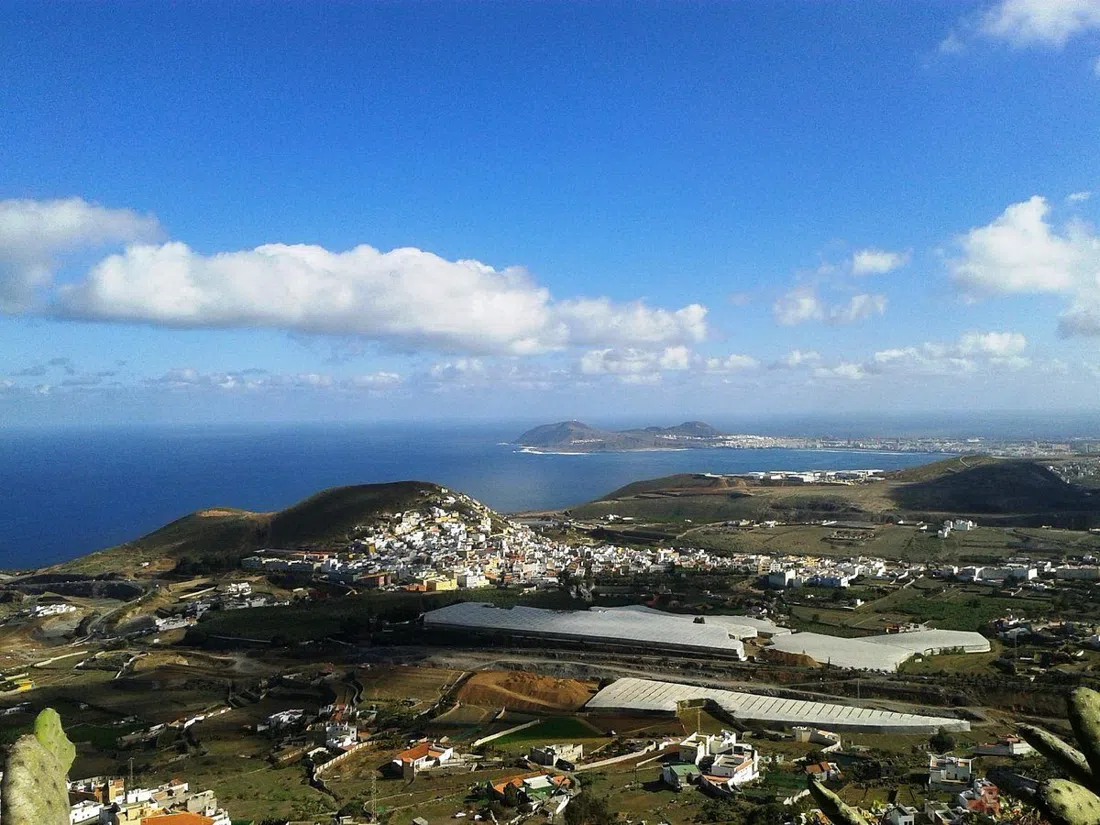
Two smaller things round out a full day. The Municipal Museum of Arucas occupies the 19th-century Casa del Mayorazgo, shows Canarian art, costs nothing and opens weekday mornings only — a twenty-minute stop that rates 4.3, which is high for a free municipal collection. And La Rekompensa Mundo del Plátano runs a guided banana-plantation tour with a tasting, which sounds slight until you grasp that this crop is the local economy; at 4.8 it is the best-reviewed visit in town.
Shopping in Arucas
Plan your week around Saturday. From 9am to 2pm the street market takes over Parque de La Paz directly behind the church, with Calle Juan de Bethencourt closed to traffic to make room. Around forty stalls of fruit, vegetables, cheese, honey and flowers. What matters here is that this is a working local market rather than a tourist one: people are buying the week's food, the real queue is at the cheese, and nobody is trying to sell you a fridge magnet.
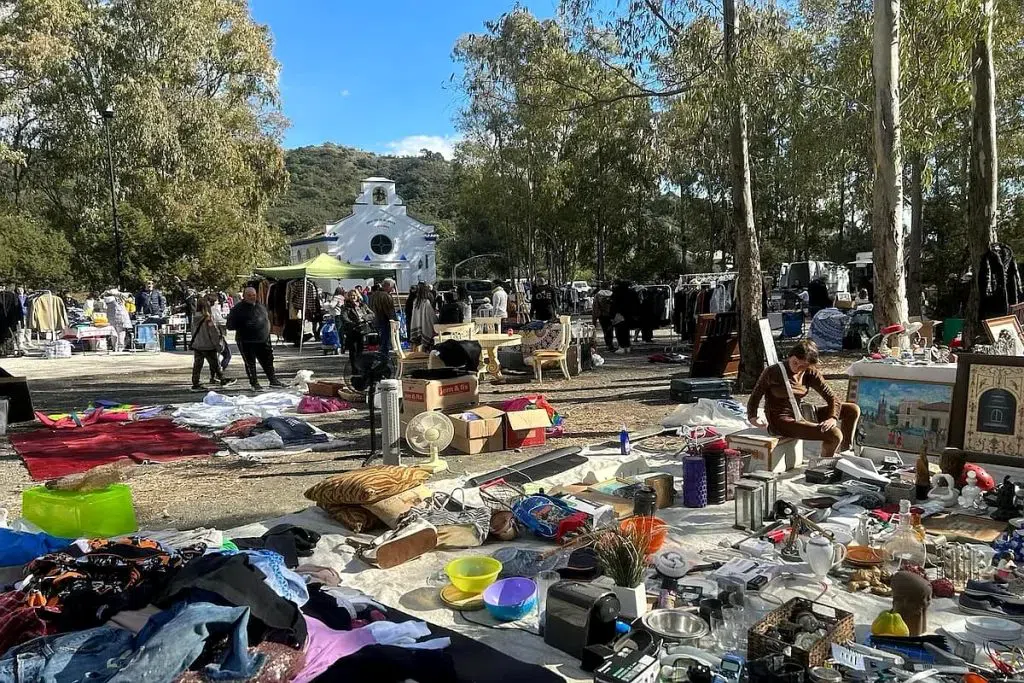
Which also means bring cash, bring a bag, and arrive closer to nine than to half past one, when the stalls begin packing down around you. If you want something to take home that is specifically of this town, the answer is edible — cheese and honey from the market, rum from the cellars at the bottom of the hill.
Where to stay in Arucas
Be honest with yourself before booking. Arucas is a small inland town and the choice of hotels is genuinely limited next to anywhere on the coast. If you want to step out of your room onto sand, this is the wrong call: Arucas has no beach at all, and the nearest is a drive. What does exist clusters in the historic centre, within walking distance of the church and the market.
The obvious choice is Hotel Emblemático Arucas, a restored early-20th-century farmhouse in the old centre, well reviewed for location and staff at 4.5, with that rooftop terrace over the church as the clincher. Stay here if you have a hire car and would rather base inland and drive out to the coast than do it the other way around. If you need frequent late-running transport, nightlife, or sand within walking distance, base yourself in Las Palmas and come up for the day instead.
Getting around Arucas and the island
Arucas sits about 17km north of Las Palmas de Gran Canaria, and the simplest way in is the Guaguas Global bus from San Telmo station in the capital. Lines 205, 206, 210 and 234 all run this corridor, roughly every 30 minutes, taking 25 to 35 minutes for a fare of around €2. By car it is about 20 minutes from Las Palmas and roughly 45 minutes from the south-coast resorts.
Once you are here, the historic centre is a walking proposition and a compact one. The church, the cathedral square, the museum, the market and the distillery are all on foot, and the pedestrianised stretches make the walking pleasant rather than merely possible. The two outliers — Jardín de la Marquesa and the Montaña de Arucas viewpoint — need wheels.
The real caveat is the evening. Buses back to the capital thin out sharply after early evening, so without a car, treat Arucas as a focused half-day or a long lunch rather than a night. It is a quiet, low-crime working town; ordinary town-centre common sense applies, and nothing beyond that.
24 October 2026