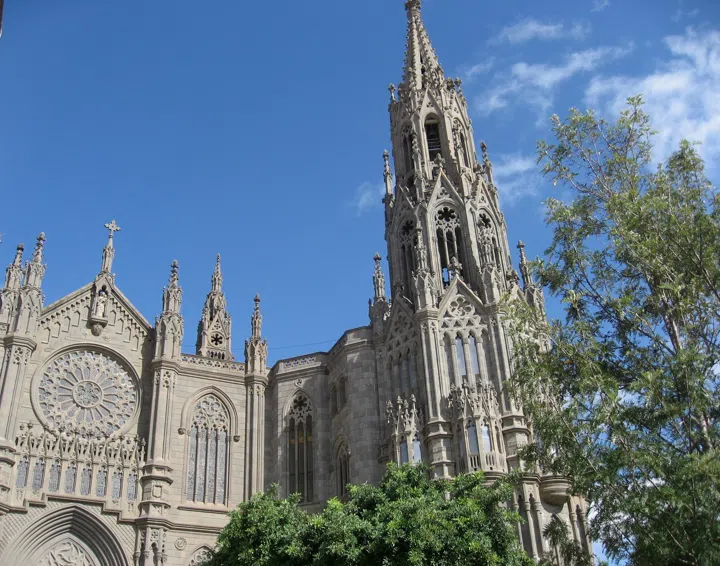
Gran Canaria · Where to live · 8 min
Tejeda, Gran Canaria: Life on the Rim of the Caldera
A mountain village 1,000 metres above the resort coast, where almond bakeries, €10-12 goat stew and the trail to Roque Nublo all sit within a twenty-minute walk.
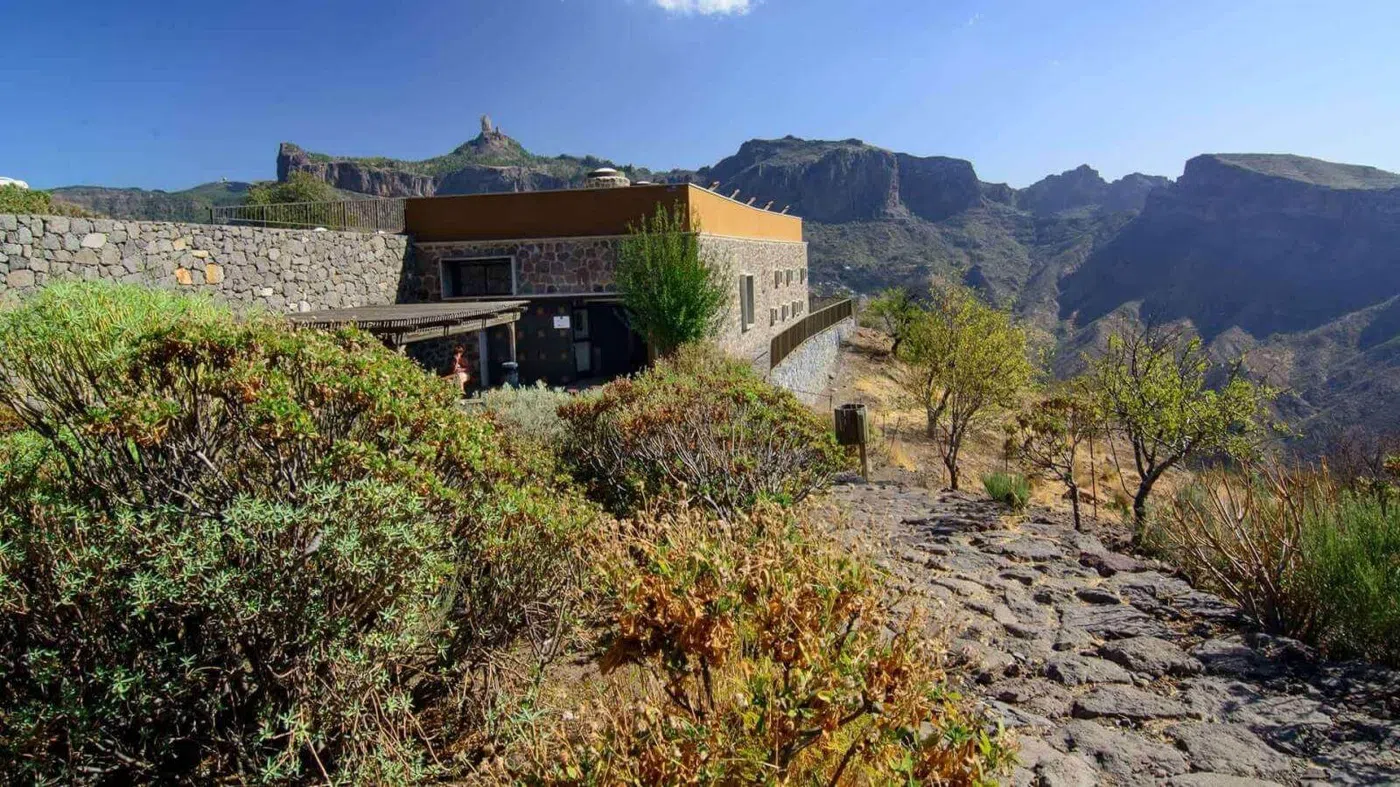
The stone cross at the Plaza del Ayuntamiento viewpoint does one genuinely useful thing: it gives your eye somewhere to start. Below it the whole village lines up in a single frame — white walls, red-tile roofs dropping away down the slope, and the jagged outline of Roque Bentayga holding the far side of the valley. You are over 1,000 metres up on the rim of an eroded volcanic caldera, with the resort coast an hour's drive south and feeling a great deal further than that. Tejeda takes about twenty minutes to cross on foot. Most visitors give it two hours, eat lunch and leave.
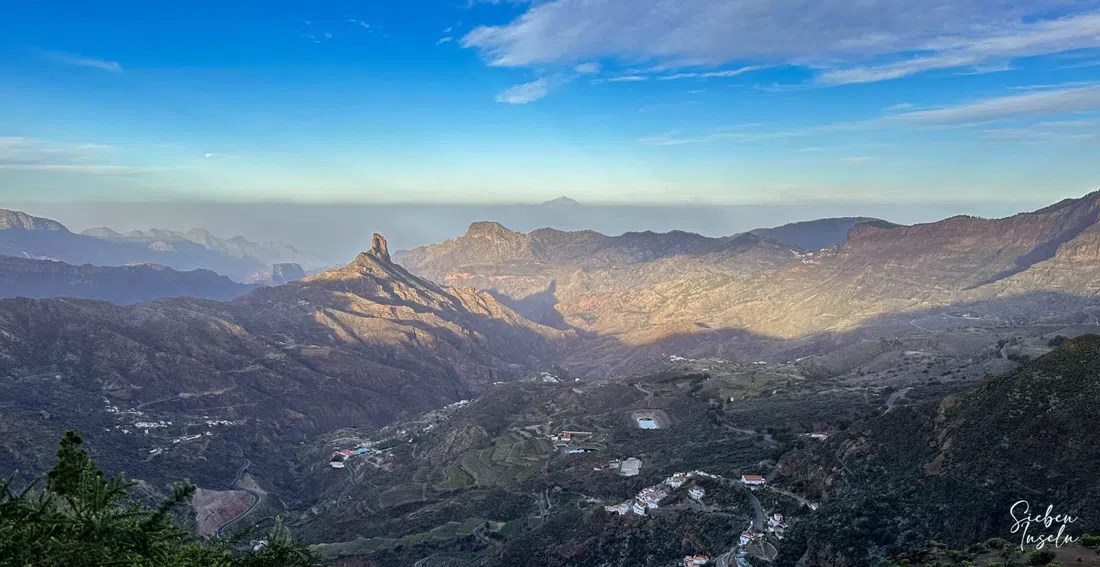
The crossroads of the caldera
Tejeda doesn't merely sit beside the caldera; it gives the thing its name. The huge eroded volcanic bowl at the centre of Gran Canaria is the Caldera de Tejeda, and the village holds onto its rim, looking straight across at Roque Nublo and Roque Bentayga — the two most photographed rock formations on the island, and the reason a good share of the cars on the mountain road are hire cars with map apps still running.
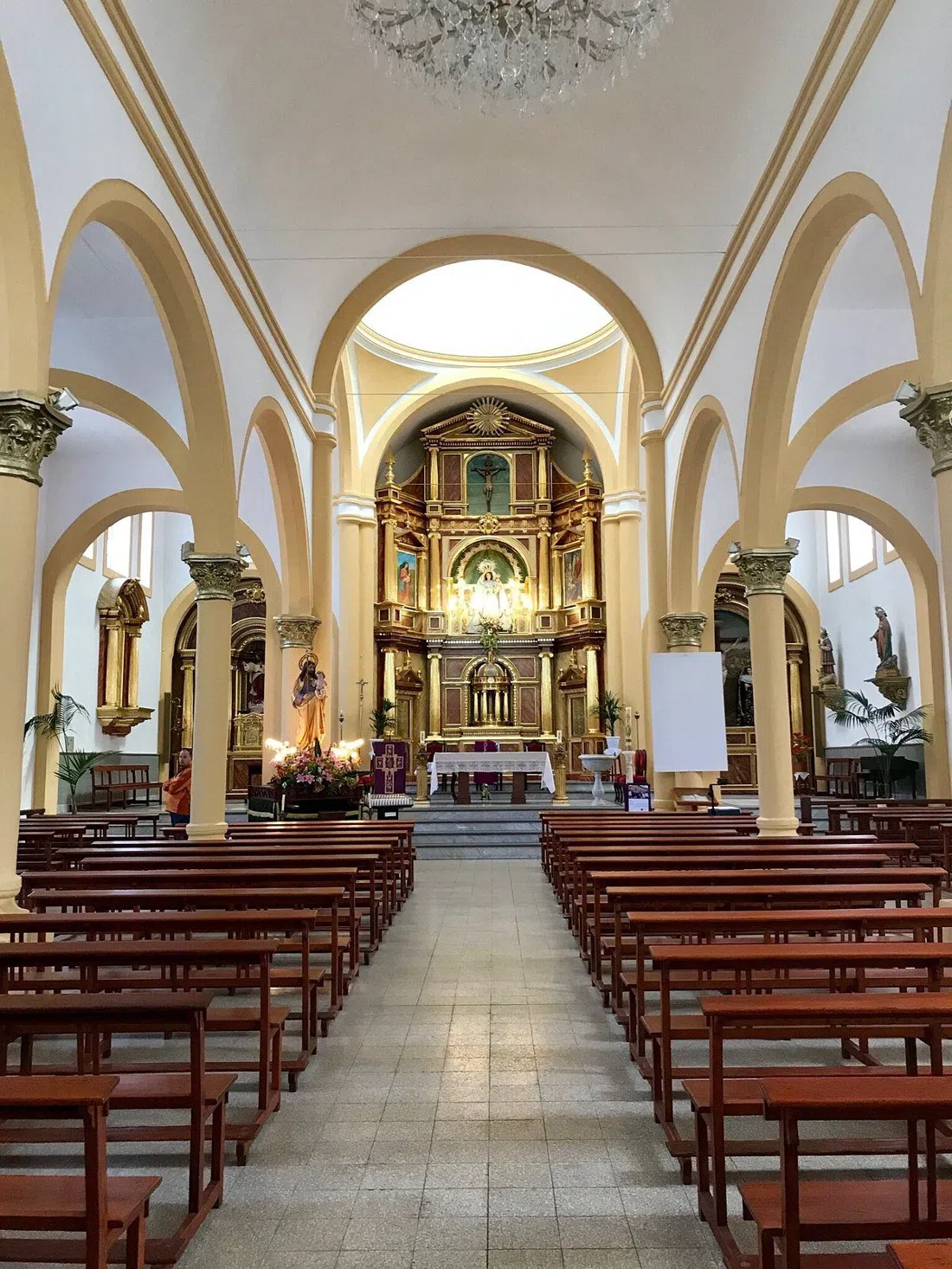
The village appears on Spain's official list of most beautiful villages, which in practice means the centre has been kept legible rather than prettified: a scatter of white, red-roofed houses along a few pedestrian streets, organised around the Church of Nuestra Señora del Socorro and the town hall. There is no sprawl to speak of. You arrive, you park, and within a minute you are walking.
That compactness shapes who the place suits. It rewards hikers using Tejeda and the Cruz de Tejeda pass as a base for Roque Nublo, Roque Bentayga and the GR131. It rewards couples and slow travellers who want a cool, quiet, scenery-first few nights with the coast deliberately out of reach. It rewards anyone with an interest in Guanche archaeology, volcanic landscape, or rural Canarian cooking and festivals. And it works perfectly for the day-tripper with a hire car looping the island's central mountains.
It is honestly wrong for other people, and the village makes no apology for it. Beach holidaymakers will spend over an hour on winding road each way to get sand. Travellers without a car who want to move spontaneously will be reading timetables instead of walking. And anyone hoping for nightlife, late dining or a lively evening scene has come to the wrong altitude.
Almond cakes, goat stew and a parador view
Tejeda eats on one schedule, and you should respect it. The lunch sitting runs roughly 2pm to 4pm, which is precisely when hikers come down off Roque Nublo with dust on their boots and the day-trip coaches from the south pull in — two very different crowds funnelling into the same handful of dining rooms at the same moment. Turn up at 1.30pm and you'll beat both.
What you're eating is a menú del día, generally around €10-12, and typically built on goat, potato-based stews, watercress soup or potaje canario. It is mountain food: slow, salty, unglamorous, exactly right after a morning on a ridge. And it finishes, almost inevitably, with almond.
Almond is the village's signature and its small obsession. Dulcería Nublo on Calle Doctor Domingo Hernández Guerra is the best-known bakery in the village, rated 4.6 and takeaway only — no tables, no fuss, just turrón, polvorones and almond cakes made from the local harvest, handed over the counter.
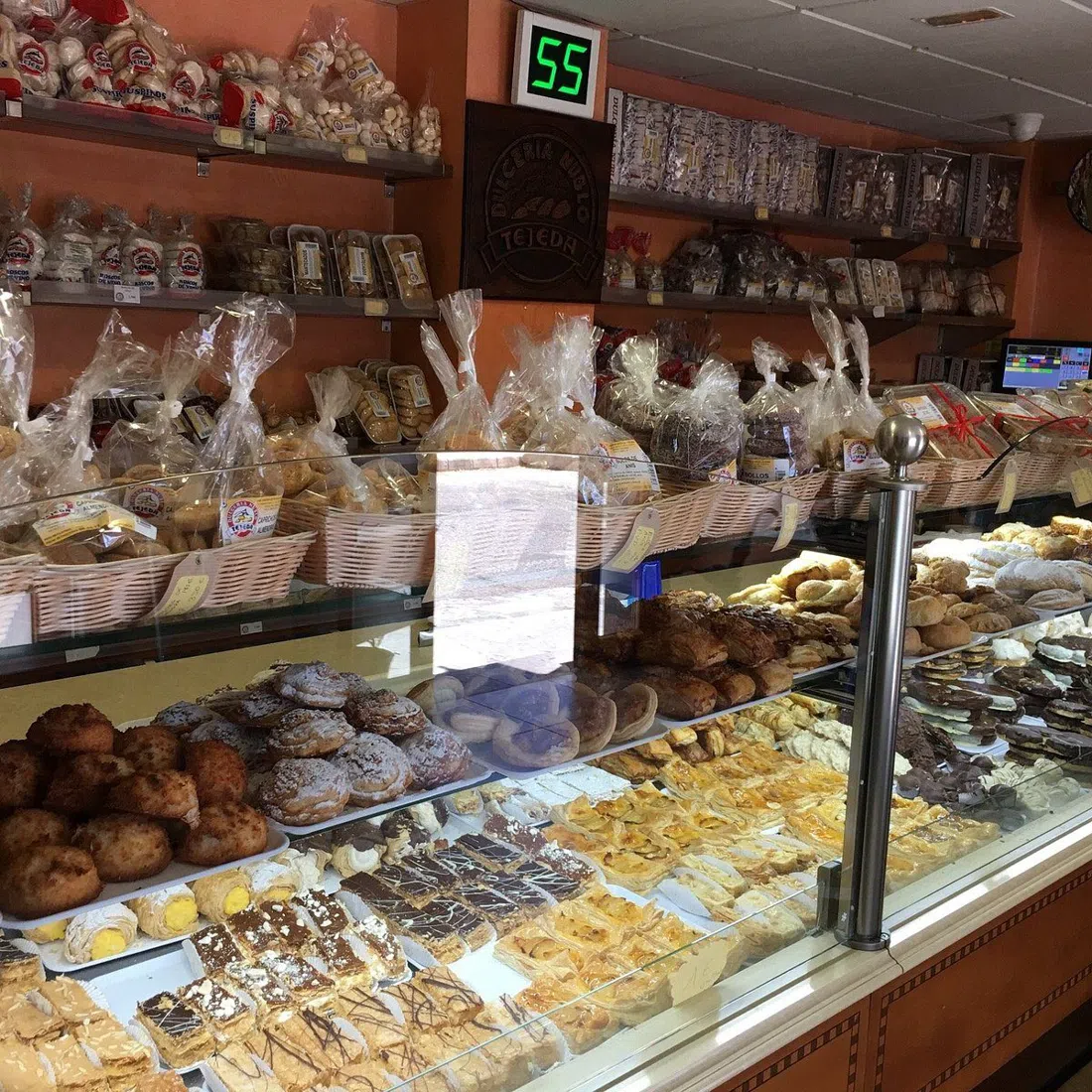
A few doors along the same street, Dulces de Tejeda (4.3) does the opposite: café seating, somewhere to sit down, almond and chestnut tarts and cakes made on site. If you want the full version, La Casa de la Almendra (4.4) is a proper sit-down spot built around the same ingredient — almond pastries and coffee for breakfast at one end of the day, almond ice cream to close a meal at the other.
For the serious post-hike lunch, Bar Restaurante Roque Nublo is the highest-rated option near the Roque Nublo trailhead at 4.7, and it earns that rating from exactly the people who have just done the walk. It is a hikers' room, and the menú del día is the reason they are there.
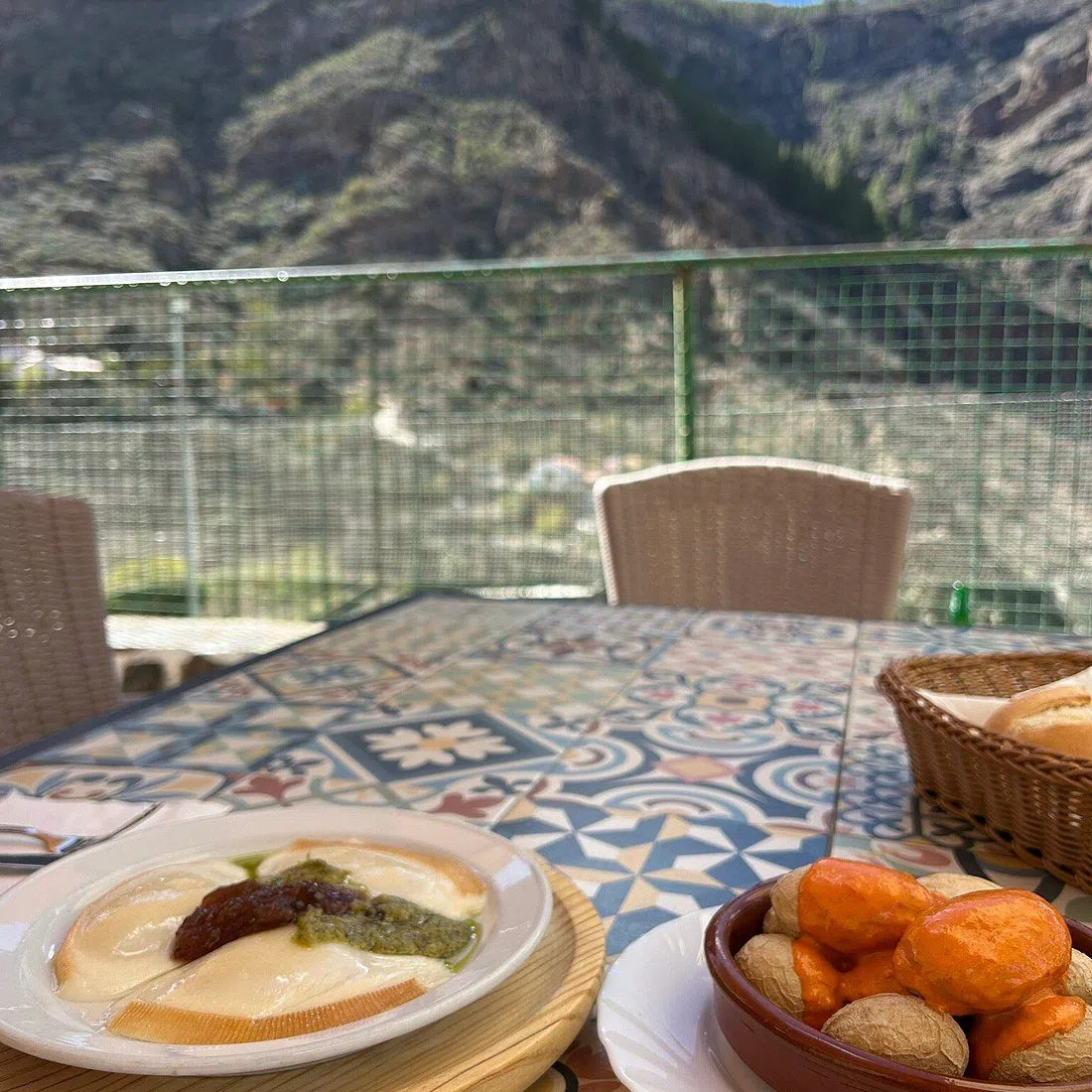
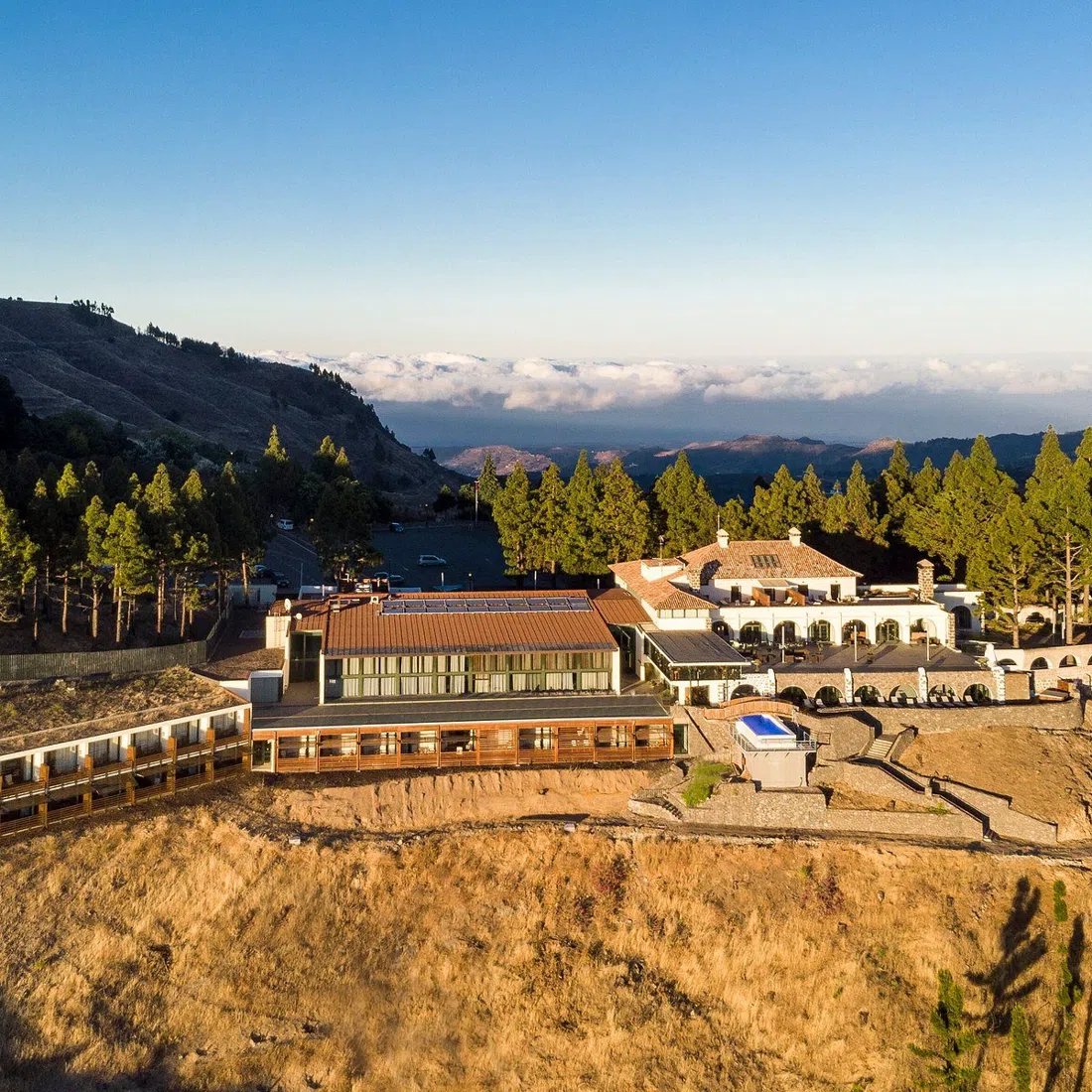
Then there's the view meal. Restaurante Parador de Cruz de Tejeda, the dining room at the Parador on the pass above the village, is the most-reviewed restaurant in Tejeda (4.2) — and what you're paying for, alongside the plate, is a window onto the caldera that holds its drama right through sunset. Order the local stew, sit where the glass is, and let the light do the work.
Evenings, and what the village does instead of nightlife
By early evening the coaches have gone and the streets empty out with startling speed. There is no late dining culture here, no bar strip, nothing that could reasonably be called a scene — and it is worth planning for rather than discovering at 9pm with an appetite. Eat early, or eat at your hotel.
What replaces it is the thing people actually come for: silence at altitude, the caldera going dark in stages, and the rim of the volcano turning into a black edge against the sky. One exception to the quiet comes in late winter, when the almond groves blossom and the Fiesta del Almendro en Flor fills the village — the one time of year Tejeda is genuinely busy after dark, and the one time beds are both pricier and booked out.
Roque Nublo, Roque Bentayga and the trails between
The hiking is Tejeda's entire reason for appearing on an itinerary, and the geography is unusually convenient. The village and the Cruz de Tejeda pass above it sit at the hub where the trails to Roque Nublo, Pico de las Nieves and the GR131 all converge, several of them running through the Inagua and Ojeda pine forest on the way. You can stand at the stone cross that marks the pass and point in three directions at three different days of walking.
Roque Nublo itself is the headline: a 90-metre basalt monolith, rated 4.7, and the silhouette that sells Gran Canaria to people who think the island is only beaches. One practical detail matters more than any other — the final approach now requires a free timed reservation on route S-70 from the Degollada de La Goleta car park, and there is no longer parking at the old trailhead. Book before you drive up, or you will stand in a car park looking at a rock you cannot reach.
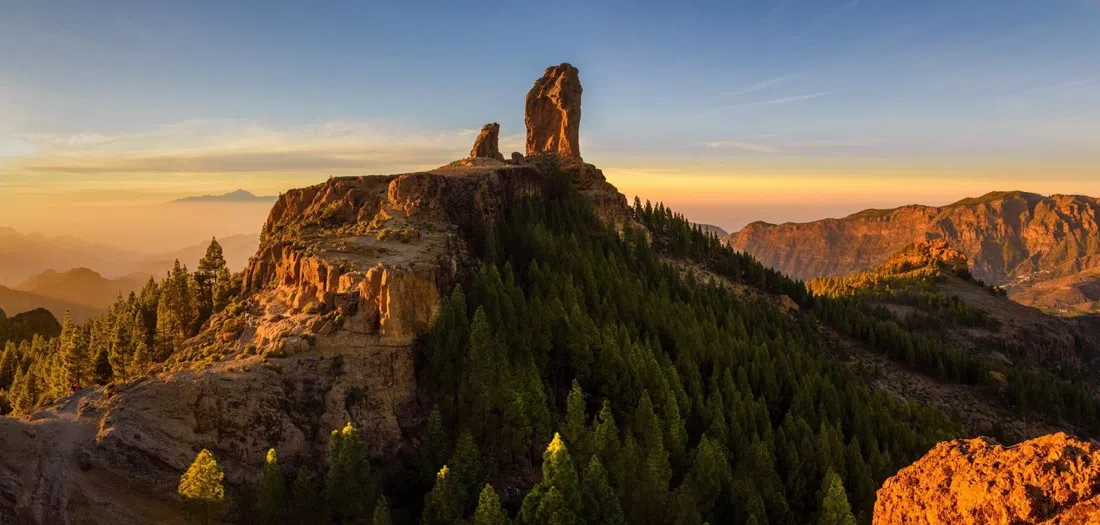
Roque Bentayga is the one more people should walk and fewer do. The second great rock of the caldera, it holds over a hundred Guanche caves and an almogarén — a pre-conquest ritual site — at its summit, and the Roque Bentayga & Centro de Interpretación at its base (4.6) explains what you're actually looking at before you climb towards it. It turns a handsome rock into a readable piece of island history, which is a very different experience.
Back down in the village, the Museo de Esculturas Abraham Cárdenes (4.3) is a small permanent collection of the Tejeda-born sculptor's work in stone and wood, right in the centre. It takes half an hour and it is the correct half hour for a day when the cloud has come in and the ridges have vanished — which, at this altitude, happens often.
Dulcerías and the almond blossom market
Shopping in Tejeda means one thing, and it is not a disappointment. Almonds — bought to eat on the spot, or boxed up for the drive home. The dulcerías along Calle Doctor Domingo Hernández Guerra sell marzipan and turrón by weight and will box it properly for travel, and unlike most village souvenirs it genuinely holds up once you've left.
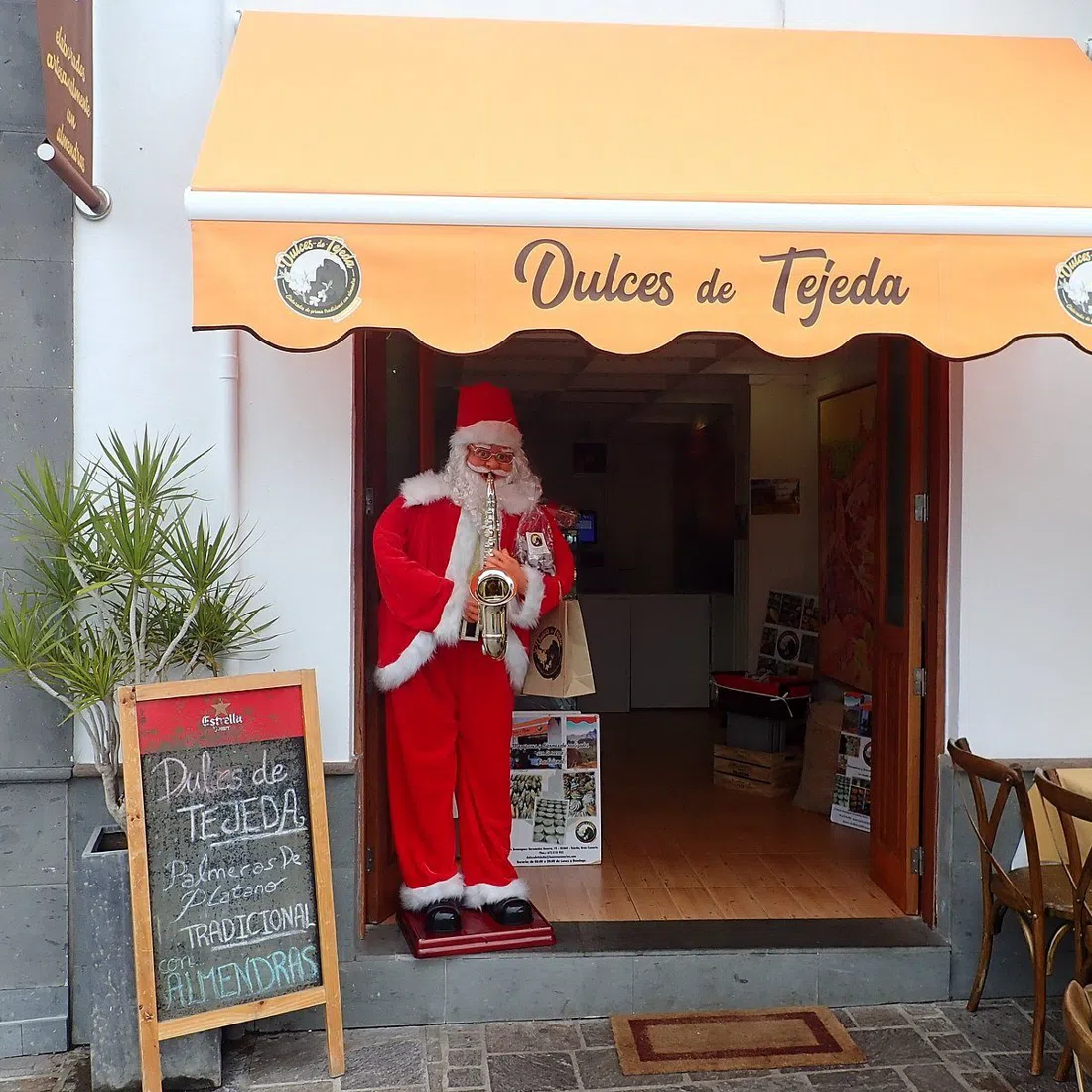
Buy by weight rather than by the pre-wrapped box, ask what came from this year's local harvest, and time it right if you can: the groves blossom in late January and February, and the Fiesta del Almendro en Flor is when the whole village leans into the ingredient it's built on.
Where to stay in Tejeda
Staying here is a mountain base, not a resort one. The appeal is waking up above the clouds and being first onto the trail to Roque Nublo while the day-trippers are still on the motorway — not evening entertainment, of which there is none. Hotel Rural Fonda de la Tea, a refurbished 19th-century building in the village centre, was named Best Rural Hotel in Spain and sets the tone for the whole offer: small, rural, quietly comfortable.
Budget-wise, expect mid-range rural: doubles roughly €70-150 a night, with menús del día at €10-12 keeping daily costs low. Prices rise and rooms vanish around the February almond blossom festival, so that one date needs booking well ahead. Two or three nights is the sweet spot — enough for Roque Nublo, Bentayga and a slow day in the village — rather than a whole-trip base.
Buses, the long drive and why you need a car
Tejeda is reachable without a car, but it takes planning rather than improvisation. Global bus line 305 links the village with Vega de San Mateo in roughly 35-45 minutes, where line 303 continues to Las Palmas de Gran Canaria — about 1.5 hours door to door, with departures every few hours rather than anything resembling a frequent service. Line 18 runs twice daily from Maspalomas. Miss one and the afternoon is reshaped around the next.
The realistic option is a hire car from Gran Canaria Airport, around 53 minutes away, and it is what unlocks the area: Tejeda plus Roque Bentayga plus Pico de las Nieves in a single day is a drive, not a timetable.
Two cautions. The village itself is very safe — a small place with little crime to speak of — but the mountain roads are narrow, winding and genuinely fog-prone, and they deserve your full attention and lower gears. And on the trails, remember the reservation: Roque Nublo's final approach needs one, and the mountain does not negotiate.
24 October 2026