Gran Canaria · Where to live · 8 min
The Lighthouse, the Dunes and the Marble Promenade: Inside Maspalomas & Meloneras, Gran Canaria
Two resorts, one beach and 400 hectares of protected sand — how Gran Canaria's southern tip splits between five-star quiet and four decades of Yumbo nightlife.
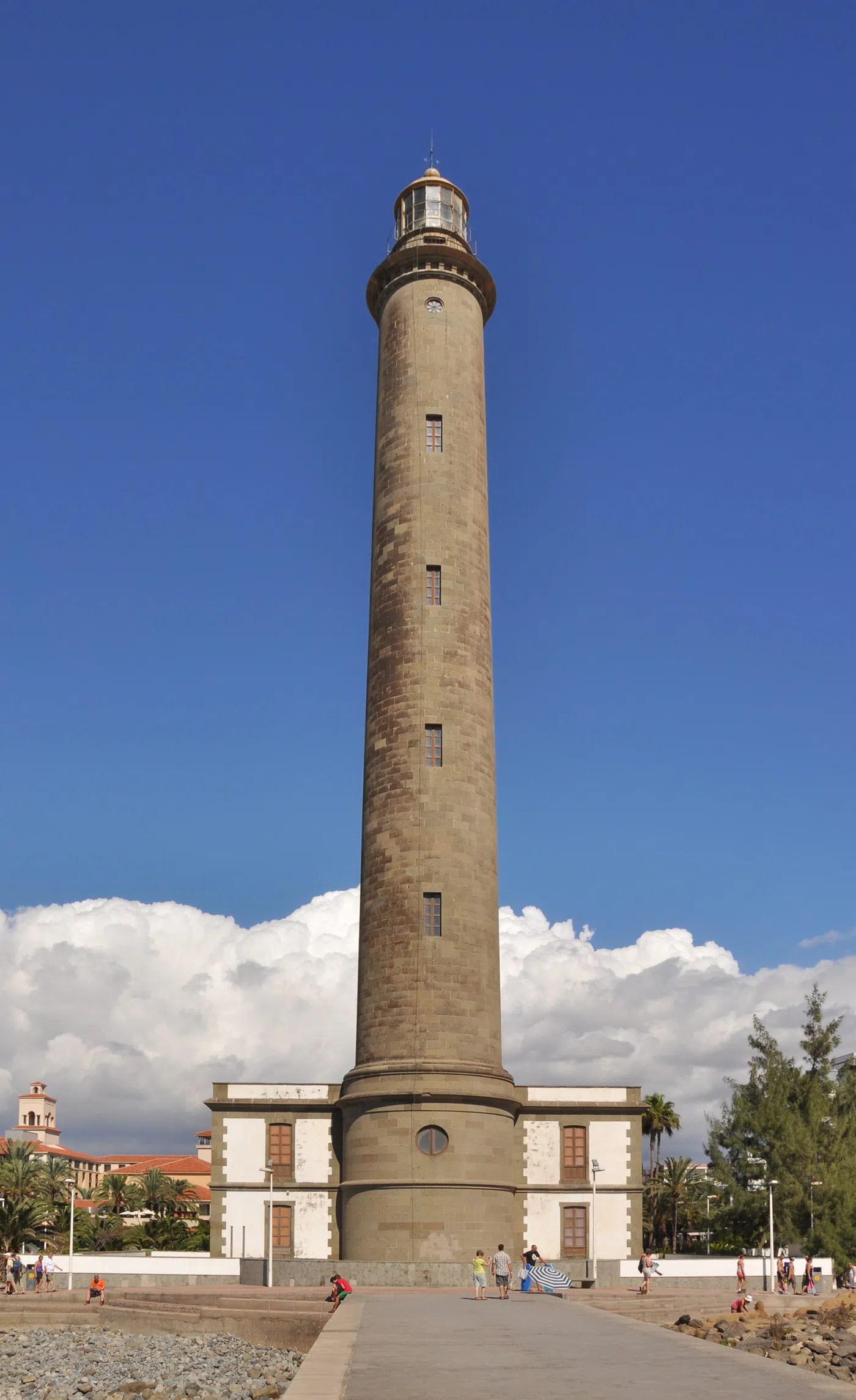
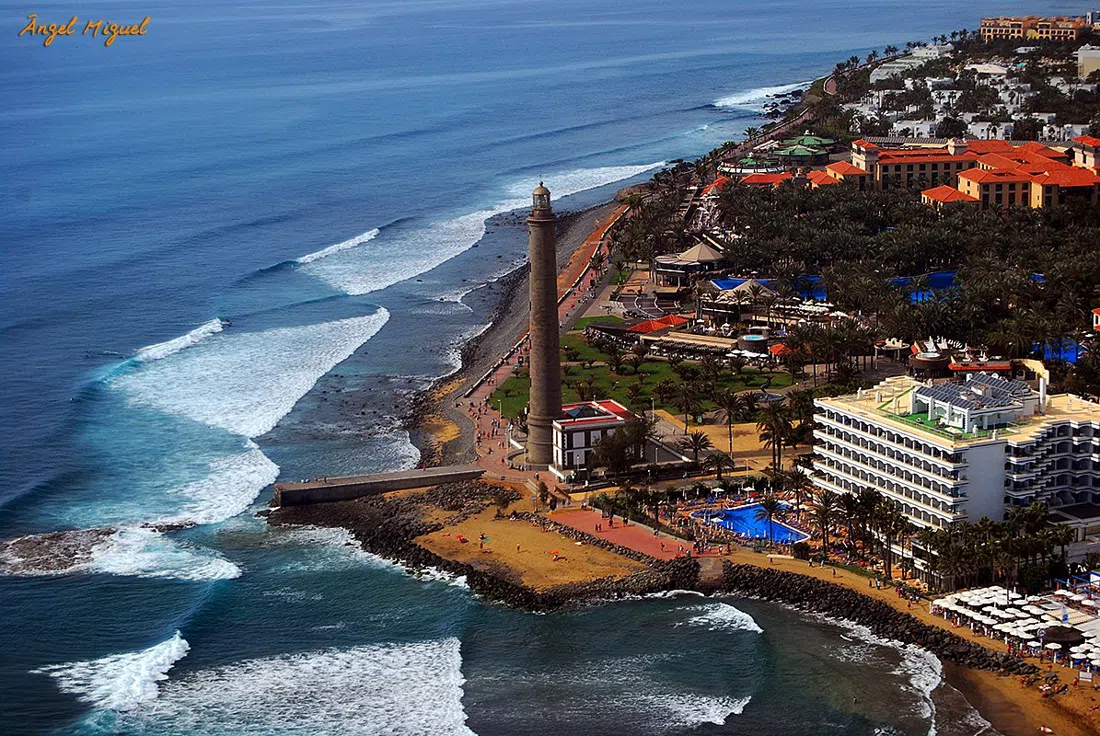
The Faro de Maspalomas went up in 1890 — 55 metres of pale stone set on a sand spit at the southern tip of Gran Canaria — and it still does the job it was built for: it tells you exactly where you are. Walk east from its base and the ground turns to marble and palm shade, a promenade of five-star hotels and Michelin-starred cooking. Turn inland instead, and within ten minutes you are standing in just under 404 hectares of wind-sculpted dune that would look more at home in the Sahara than in southern Spain. Two resorts, one beach, one lighthouse holding the seam together. Not many places in Europe change register that fast.
What Maspalomas & Meloneras is known for
The dunes are why the name travels. The Reserva Natural Especial de las Dunas de Maspalomas protects just under 404 hectares across three genuinely distinct habitats: El Palmeral, the old palm grove; La Charca, a brackish coastal lagoon sitting behind the beach; and the open dune field itself, ridged and redrawn by the wind every time it blows. All of it has been legally shielded for decades, which is the only reason the sand still runs down to the sea here instead of sitting under another hotel block.
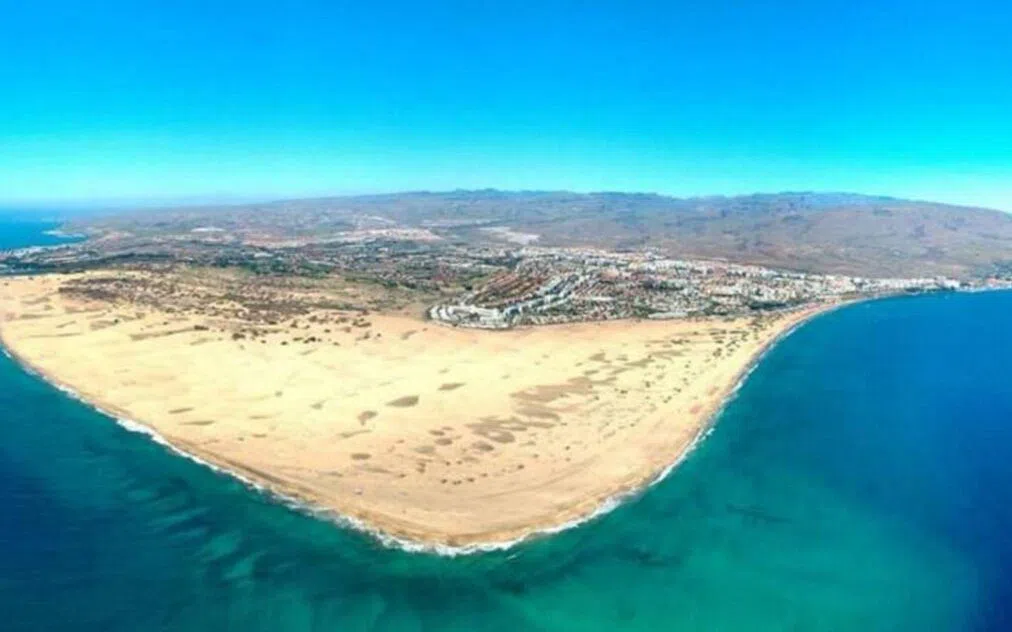
The rest of the neighbourhood makes most sense if you think of it as three resorts stitched along a single beach. At the eastern end sits Meloneras, where the promenade runs palm-lined and marble-paved from the lighthouse out to the hotel strip — Lopesan Costa Meloneras, Lopesan Villa del Conde, Hotel Faro, a Sheraton sister property, all of it unmistakably five-star money. West of the lighthouse, past the dunes, package-holiday Playa del Inglés does something completely different and considerably cheaper. San Agustín carries on beyond that again, sitting in between the two on both price and temperament.
What you will not find is an old town. The architecture here is almost entirely 1970s-onward resort-build, and anyone hunting cobbles, a parish church and a working Canarian plaza should be planning a different corner of the island. What this stretch offers instead is dependable winter warmth, a sea-front you can cover on foot, a real protected ecosystem rather than a scenic backdrop, and a choice between five-star quiet and one of Europe's longest-running gay nightlife districts — all on the same strip of sand. Couples, retirees, birdwatchers and LGBTQ+ travellers tend to understand the appeal immediately. Budget backpackers, less so.
Where to eat and drink
The Meloneras promenade carries the serious kitchens, and one of them is the reason food writers now bother flying south at all. Bevir by Lopesan, at Calle Mar Mediterráneo 1, holds a Michelin star it brought with it when it relocated from Las Palmas in 2025. The kitchen runs two tasting menus — Fortunata at eleven courses, Jacinta at fourteen — both built around Canarian vegetables and fish, with no meat on the menu whatsoever. That is a position taken seriously rather than apologetically, and the 4.7 rating suggests diners have followed the argument. Book it early in your stay; it quietly reframes everything you eat afterwards.
For something older, louder and rooted in a different tradition entirely, Rías Bajas has been serving Galician seafood here since 1986 — long enough to predate a good deal of the concrete around it. The black rice is the house signature, the seafood rice stew close behind, and the whole operation runs with the flat confidence of a kitchen that has no interest in reinventing itself every eighteen months. It sits at 4.6, and the ratio of returning diners to first-timers tells its own story.
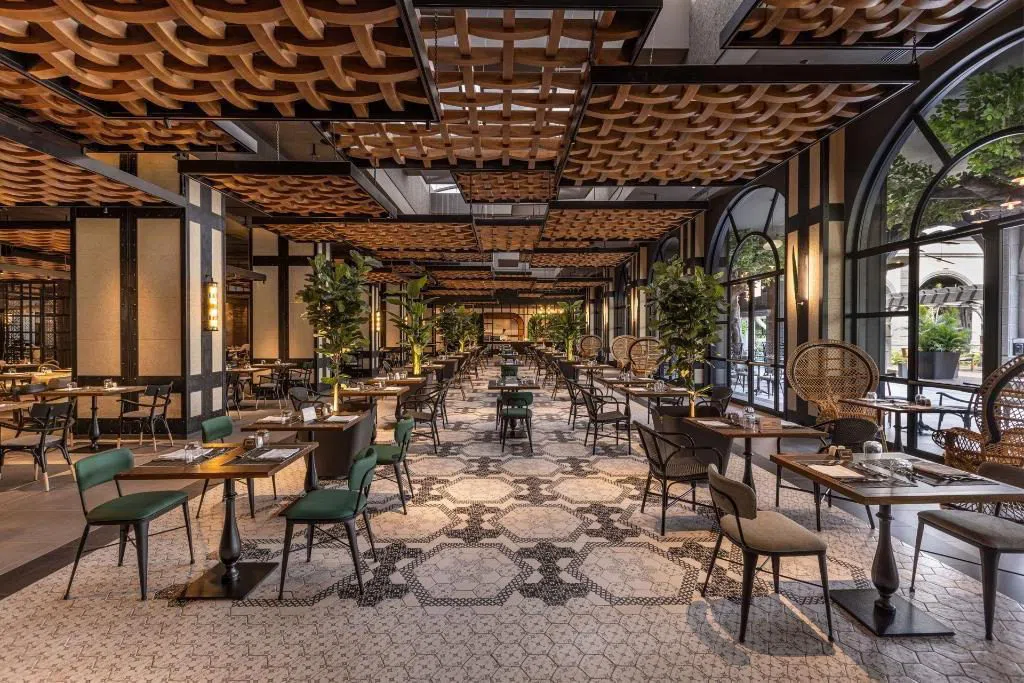
Inside the Lopesan Costa Meloneras, Kabuki Gran Canaria folds local Atlantic ingredients into classical Japanese technique — fusion in the precise sense, not the lazy one — and holds 4.4. Same hotel, entirely different register: La Toscana does traditional Italian, pasta, wood-fired pizza, fish, and at 3.7 it is the honest option rather than the thrilling one. Treat it as what it is: a reliable table at the end of a long beach day, when nobody has the appetite for fourteen courses. That spread is characteristic of the area. Prices here split by street — Meloneras charges as proper five-star Spain, while the apartment-hotels and bars a bus ride west run a great deal cheaper for broadly the same sunshine.
Nightlife
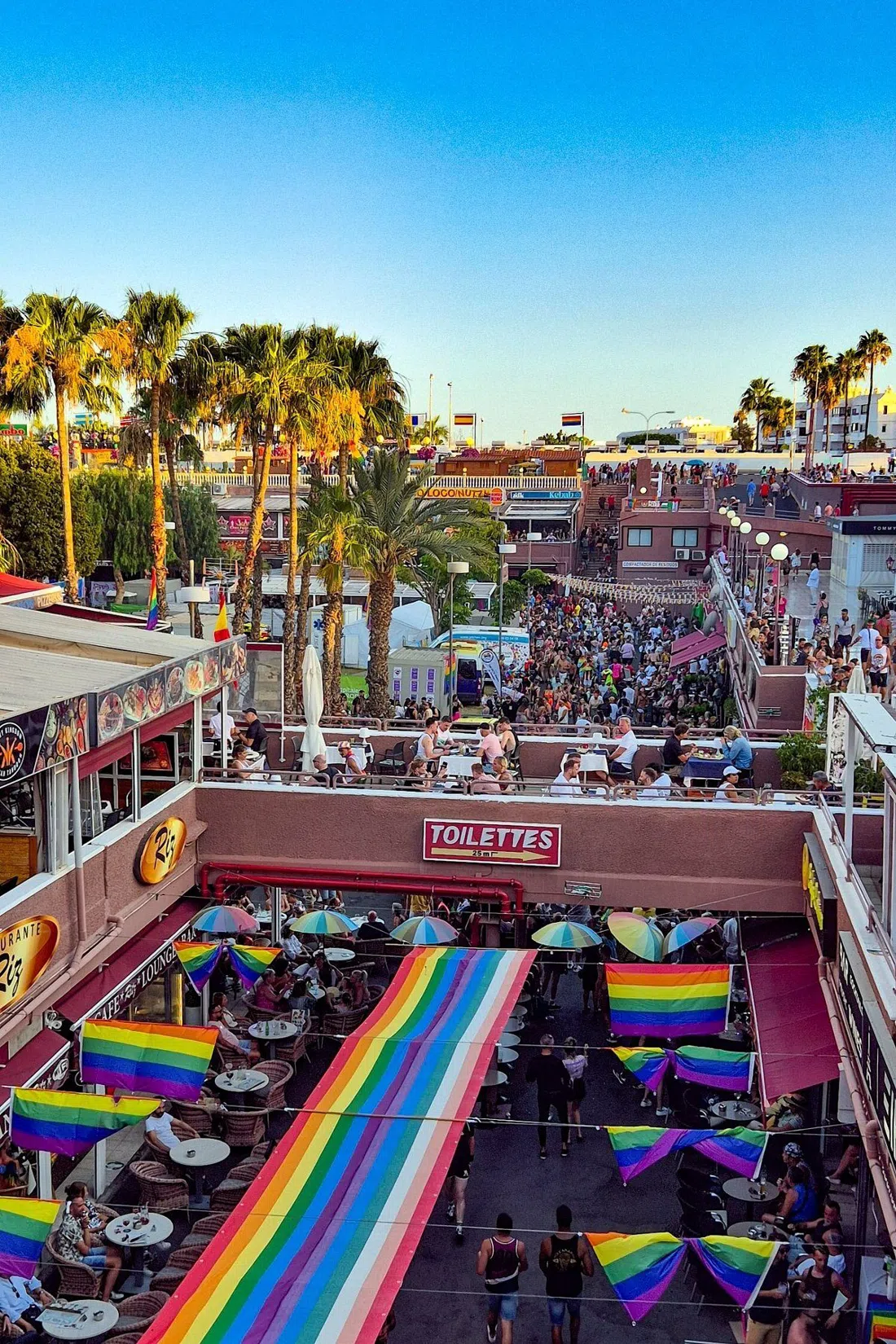
Nightlife in Maspalomas has a clear geography, and the lighthouse functions as the border post. West of it, in Playa del Inglés, Yumbo Centrum has been the hub of Gran Canaria's LGBTQ+ scene since the 1980s and is still described as one of the most concentrated gay entertainment complexes anywhere in Europe: multiple floors of bars, cabaret rooms and clubs stacked around a central courtyard, shops and cafés by day, something altogether different once the evening properly lands. Its 4.0 rating measures the wrong thing. Yumbo is a social institution with four decades of continuity behind it, and for a great many travellers it is the single reason this coast is on the map.
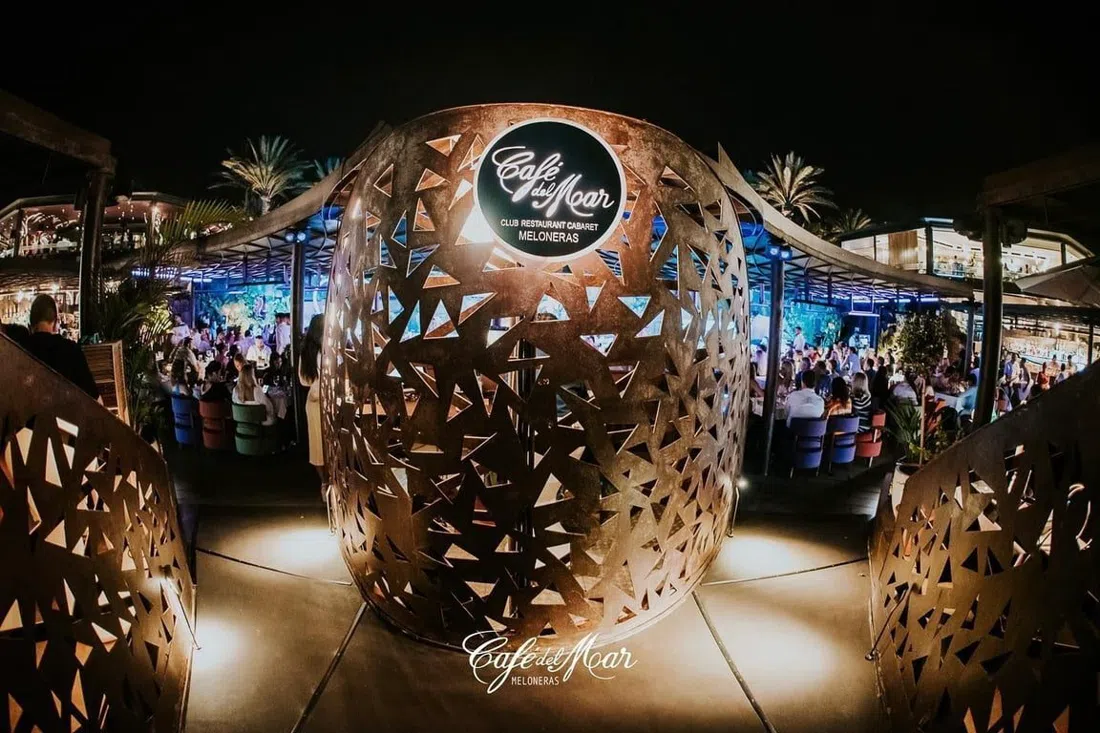
East of the lighthouse, the mood inverts. Meloneras does sundowners rather than small hours, and Café del Mar on the promenade is the clearest expression of it — a cocktail lounge pitched at the moment the light goes amber over the water, with themed evening sessions keeping the room going afterwards. It holds 4.5, which feels about right for a place where the view is doing half the work and doing it very well.
Set your expectations honestly, though. Beyond Yumbo's bars and a handful of promenade lounges, this is not Ibiza-scale clubbing, and nobody local pretends otherwise. If your holiday depends on a 4am warehouse, you have chosen the wrong island latitude.
Things to do
Start where the neighbourhood starts. The Faro de Maspalomas is free to enter, the climb is straightforward, and as a Site of Cultural Interest it is both the geographic anchor and the obvious decision point: promenade east, dunes west. It rates 4.6, and the view does the explaining.
From there, give the dune reserve the time it deserves. A marked walk takes you through El Palmeral and along the edge of the La Charca lagoon, which is a genuine birdwatching site rather than a pretty puddle — bring binoculars and some patience. The sand is wilder than first-timers expect; ridges shift, distances deceive, and shade is non-existent. Carry water, walk early or late, and treat sun and heat exposure as the real hazard here. Crime, in a low-crime, heavily tourism-dependent area, is a distant second concern behind beach-bag common sense.
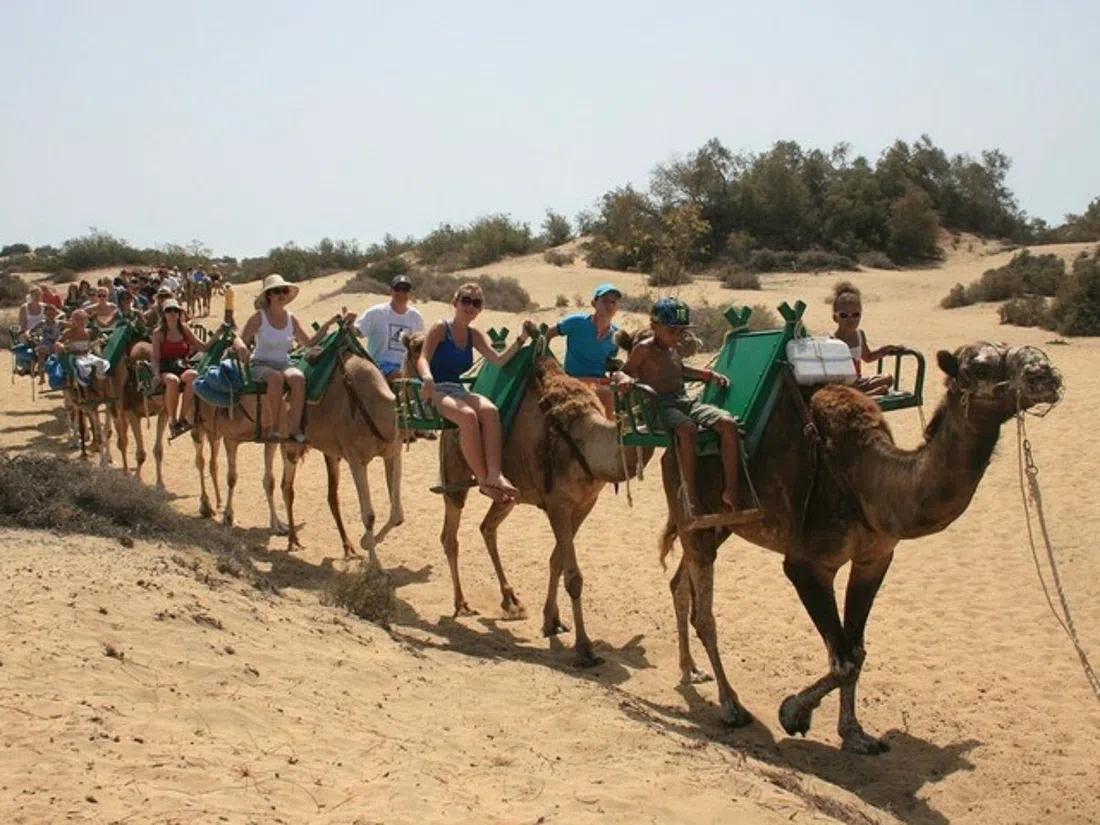
If you would rather be carried than walk, Camello Safari Duna Oasis is the concession running camel rides through the reserve, roughly thirty minutes per ride, rated 4.1. It is unapologetically a tourist set-piece — and also the easiest way to grasp the scale of the dune field from above ground level.
Families with a hire car should point it inland to Palmitos Park, a subtropical botanical garden and zoo with dolphin and bird-of-prey shows, holding 4.5 and good for the better part of a day. The same car earns its keep for the golf courses and for trips up into the island's interior, which is where Gran Canaria stops behaving like a resort coast altogether.
Shopping
Shopping is not this neighbourhood's strong suit, with one real exception. El Faro Boulevard, directly beside the lighthouse, is an open-air upmarket mall built to serve the five-star hotel guests along the Meloneras strip rather than anybody who lives here: La Perla, Burberry and Tommy Hilfiger alongside high-end perfumeries, watchmakers and jewellers, all arranged around walkways you can stroll in the evening without ever stepping indoors.
It is pleasant, polished and entirely what it says it is. What it is not is a craft scene, a market quarter, or anywhere to hunt down island-made goods — that search belongs to the interior villages and to Las Palmas, not to this coastline. Browse the Boulevard for the architecture, the air conditioning and the window-shopping, and manage your souvenir ambitions accordingly.
Where to stay in Maspalomas & Meloneras
The street you pick matters more here than the star rating. Meloneras itself is where the five-star money sits — the stretch between the lighthouse and the hotel row, with Lopesan Costa Meloneras, Lopesan Villa del Conde and Hotel Faro anchoring it. That base suits couples and retirees who want somewhere quiet, walkable and frankly expensive, with the promenade, the Boulevard and the serious restaurants all within strolling distance of the front door.
Playa del Inglés, a short hop west, is the other proposition: apartment-hotels and Yumbo's bars at considerably lower prices, livelier, less manicured, and better suited to travellers who intend to be out late or who want water-park-and-beach convenience. San Agustín sits between the two on both counts. Whichever you choose, you are sharing the same beach — you are simply choosing which version of the day you want waiting outside.
Getting around
Gran Canaria Airport (LPA) is roughly 32km north. Global's line 66 runs direct in about 35 minutes for a few euros; a taxi covers the same ground in around 20 minutes for €40–55. There is no train on Gran Canaria and no direct rail or ferry link into Maspalomas itself, so everything beyond walking distance is bus or car — Global's line 30 is the main workhorse route along this coast.
Once you are here, the core genuinely works on foot. The lighthouse, the dune reserve, the Meloneras promenade and Yumbo Centrum are all either walkable or a short bus ride from one another, which is why plenty of visitors never hire a car at all. Rent one for the golf courses, for Palmitos Park, and for the day you decide the interior is calling. For everything else, the promenade and a pair of comfortable shoes will do.
24 October 2026