Gran Canaria · The weekend · 8 min
Little Venice, Honestly: A Long Weekend in Puerto de Mogán, Gran Canaria
Seawater canals, a harbour that still lands fish, a Michelin star and 500 market stalls — Gran Canaria's southwestern corner rewards travellers who like their evenings quiet.
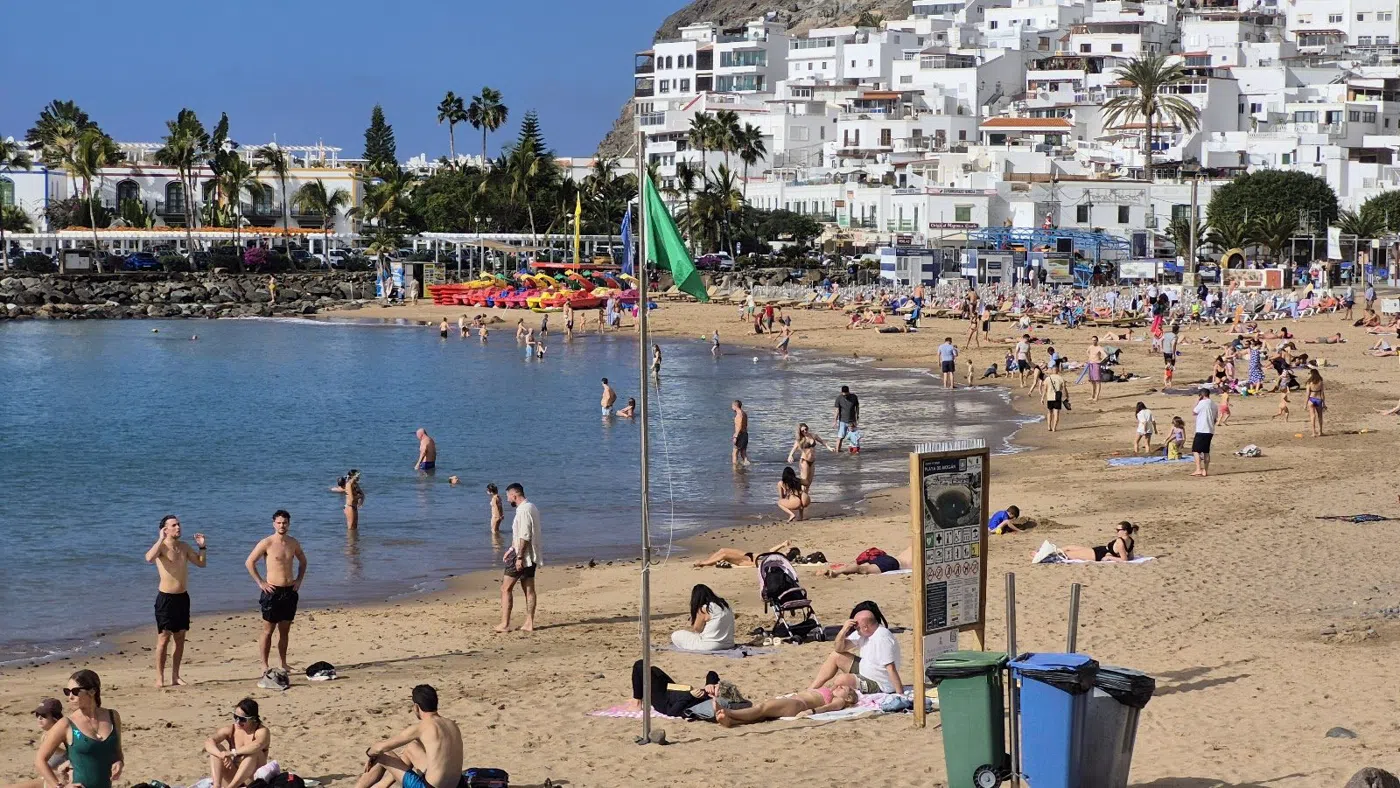
The water in the canals is seawater, and it rises and falls in channels barely wider than a car, crossed by footbridges barely long enough to deserve the name. Puerto de Mogán sits in the far southwest of Gran Canaria, a former fishing village rebuilt around a grid of those small waterways, and the nickname that followed — Little Venice — has outlived every attempt to argue with it. Fair enough: it's a tourism nickname, not a history. What's genuine is everything around it. The marina still works, the Friday market still floods the approach roads, and the sheltered sandy beach is a few minutes' walk from both.
Little Venice: canals, bridges and a working marina
The canals are the village's defining feature and its organising logic. They were built as part of the marina development, cutting narrow seawater channels through the heart of the place, and they're lined with low white houses whose balconies and stairwells disappear entirely under bougainvillea — magenta, coral, that particular dusty pink that photographs better than it has any right to.
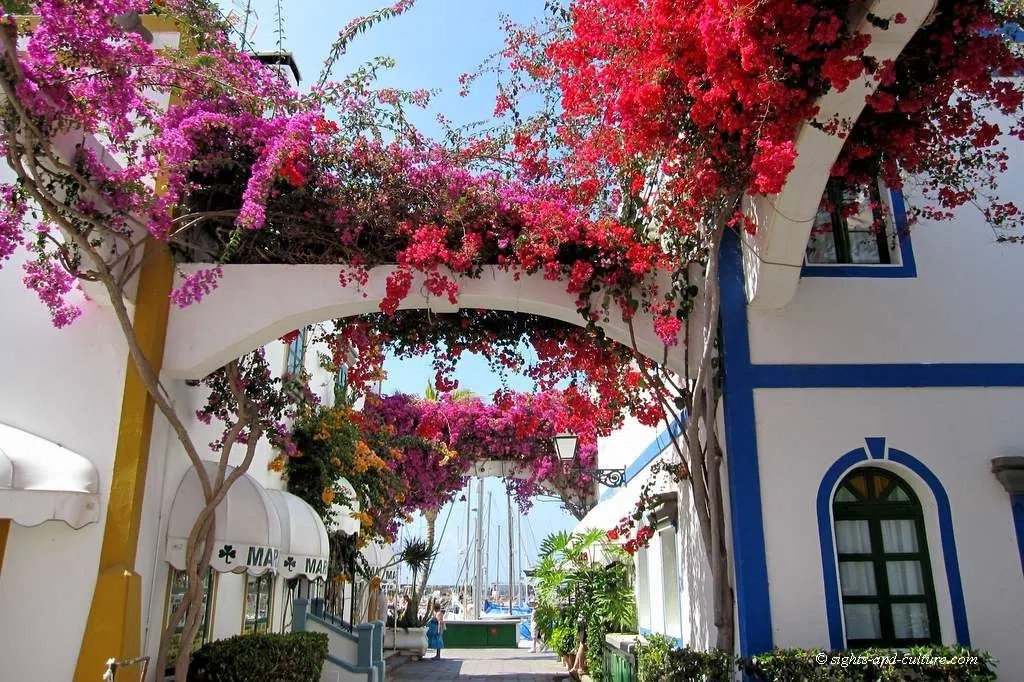
Above the waterline, white terraced apartment blocks with blue-and-pink trim step down the hillside toward the harbour. Nothing is tall. Nothing is far. You cross a bridge, turn a corner you're fairly sure you've already turned, and find yourself back at the same channel from the other side. Puerto de Mogán moves at the pace of its canals: slowly, and mostly on foot. That's the whole proposition, and it's either exactly what you want from a week in the Canaries or completely not.
The marina is what keeps the prettiness from tipping into theme park. Fishing boats and catamarans share the pontoons with yachts, and the ordinary business of a working harbour — ropes, ice, diesel, men in sun-faded polo shirts doing something unhurried with a winch — goes on a few metres from where you're eating lunch. Photographers come for the canal-and-bougainvillea shot without the long drive into the interior. Everyone else just stops halfway across a footbridge and forgets to keep walking.
Where to eat in Puerto de Mogán
The marina and the harbourside strip carry the bulk of the restaurants, and the quality band is unusually wide for somewhere this small: from €10 tapas to a Michelin-starred tasting menu inside the same few hundred metres. You can eat very well here for a week without ever repeating yourself, and without ever needing a car.
Start at the top. Los Guayres, inside the Hotel Cordial Mogán Playa, holds a Michelin star under chef Alexis Álvarez, who cooks Canarian produce with contemporary technique — the island's own ingredients put through a kitchen with real precision rather than shipped-in luxury for its own sake. It rates 4.5, it's the reason a certain kind of traveller books this village over the louder resorts up the coast, and the walk home afterwards is roughly five minutes along a canal. There are worse ways to end a Tuesday.

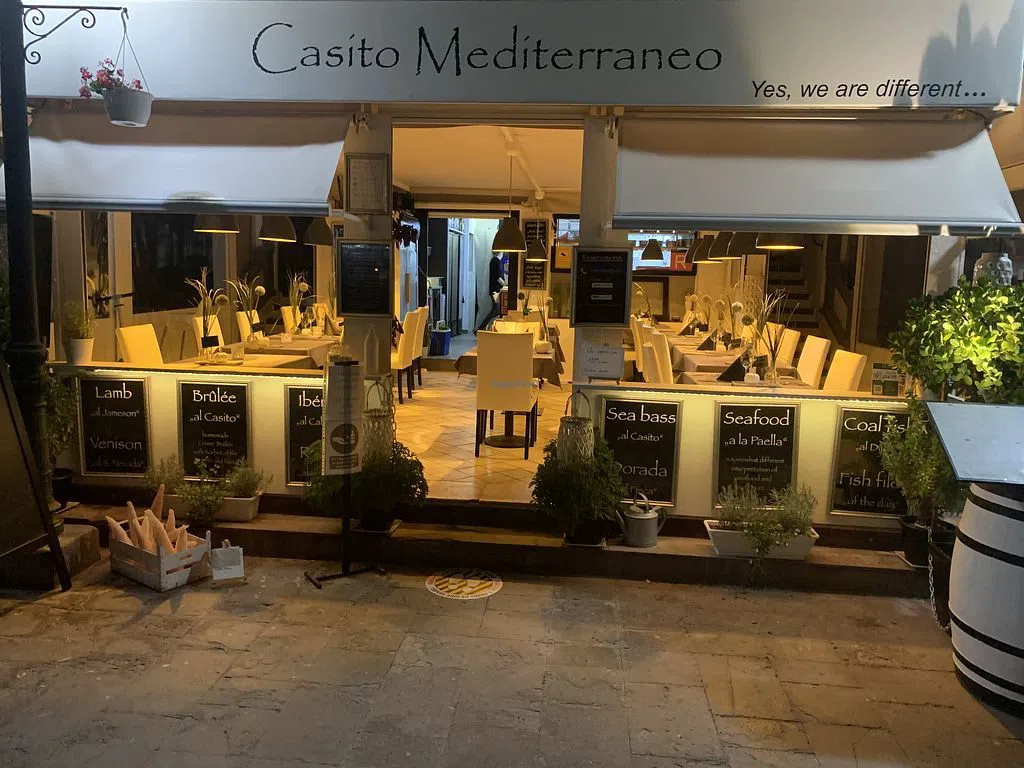
A few hundred metres away, Casito Mediterraneo does the harbourside thing properly: tapas, cocktails and Mediterranean seafood in a small contemporary room, with a 4.7 rating and a habit of being mentioned in the same breath as the port's much longer-standing names. It's the kind of place where you order three plates, then a fourth, then a second round of drinks, and let the evening take as long as it takes.
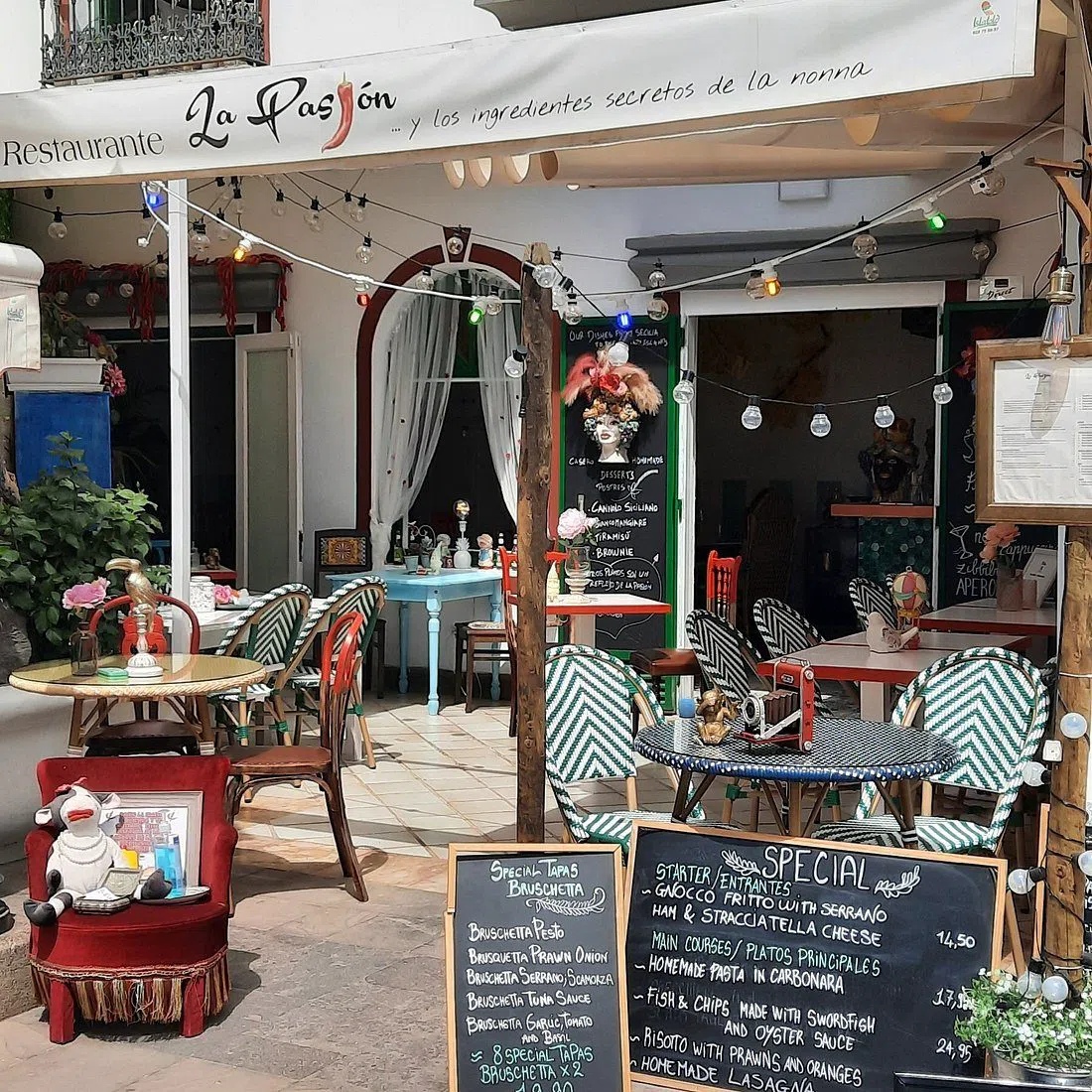
On the port's kiosk square, Restaurante La Pasión goes somewhere else entirely — Sicilian-style homemade pasta with Canarian touches, colourful and lively, also rated 4.7. It's the loudest, happiest table in the village most nights, which in Puerto de Mogán is a relative measure.
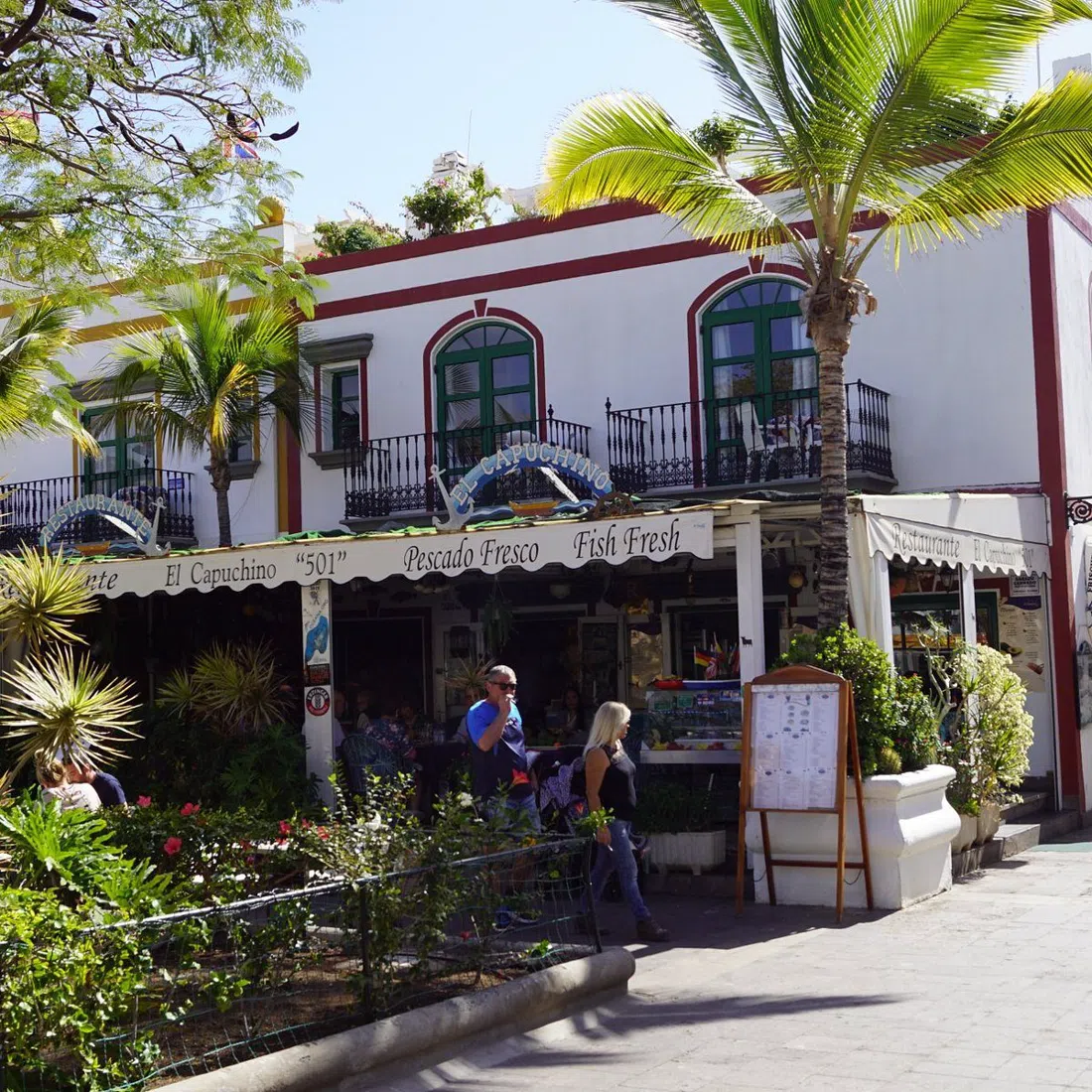
For fish, the most honest answer is El Capuchino 501, which is tied to its own fishing boat. The menu follows the day's catch, which means it changes, which means you should ask rather than read. A 4.2 rating reflects a place more interested in what came off the boat than in interior design — exactly the right priority in a harbour like this one.
And for the mid-afternoon gap, Café de Mogán handles cakes, waffles, crepes and ice cream with marina sunset views. Its 3.5 rating is a useful piece of candour: you're going for the terrace and the timing, not for culinary fireworks. Take the ice cream, take the seat facing the water, and don't overthink it.
Evenings: a quiet marina, not a club scene
Let's be direct, because this is where people get it wrong when they book. Puerto de Mogán does not do nightlife. The village is residential and family-oriented enough that most bars wind down well before midnight, and if you want clubs you'll be getting on a bus to Puerto Rico or Playa del Inglés. That's not a failing. It's the entire reason the village feels the way it does at ten in the evening, when the loudest sound on the canal paths is somebody's cutlery.
What it does brilliantly is the early-evening wind-down. Hula's Beach Bar sits on Playa de Mogán itself, built squarely around the sunset view over the water, and its 4.9 rating is the highest in the village for a reason — the timing, the angle and the sand do most of the work, and the bar has the sense not to interfere.
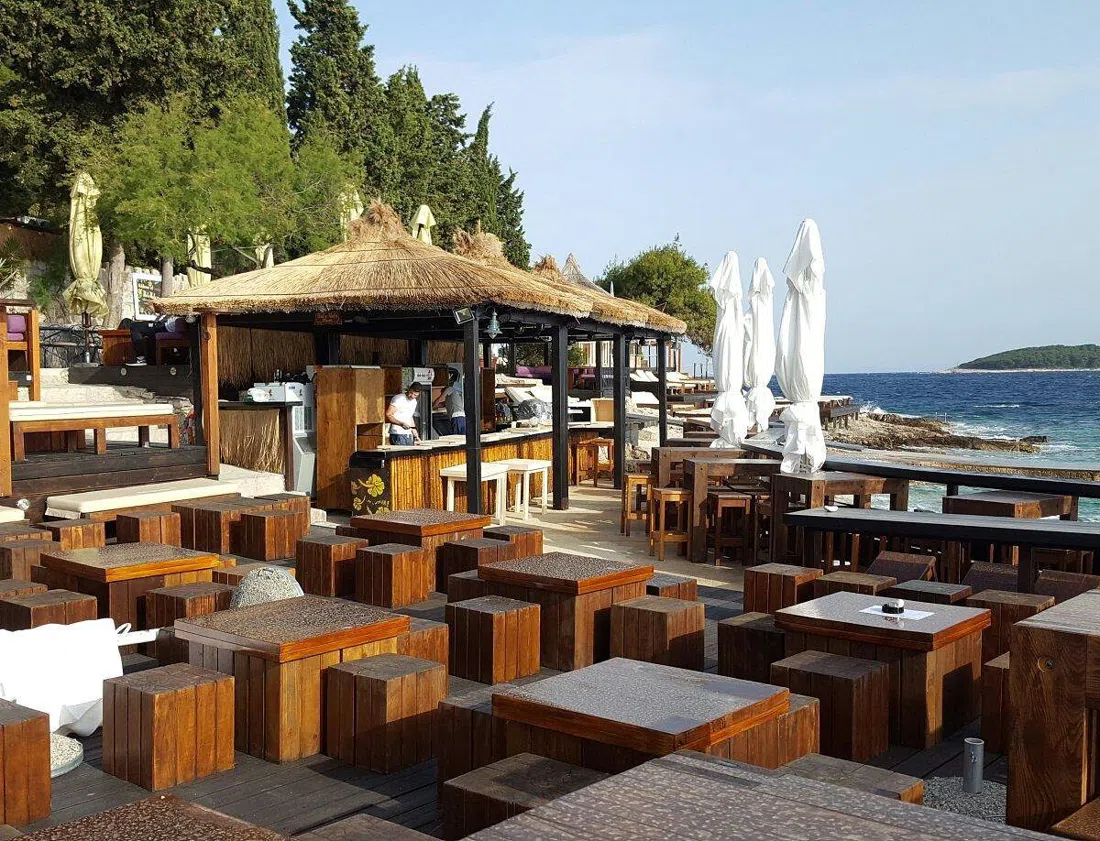
Later — which here means nine o'clock — Moods Cocktail Bar in the town centre carries the widest drinks menu that locals and repeat visitors consistently point to, rated 4.5. It's a proper cocktail bar rather than a sangria-by-the-jug operation, and it's where you go when you want one more drink and a conversation rather than a dancefloor. Then you walk home. That's the night.
Market day, the viewpoint and getting out on the water
Friday changes everything. The Mogán Friday Market runs roughly 9am to 2pm along the approach roads into the port, with more than 500 stalls: clothes, leather, accessories, and a genuinely strong food section selling fresh Canarian produce, local jams and aloe vera products. It's mornings only, and it is the village's one weekly surge of life beyond the restaurant strip — the population of a quiet harbour multiplied by coach parties from the southern resorts.
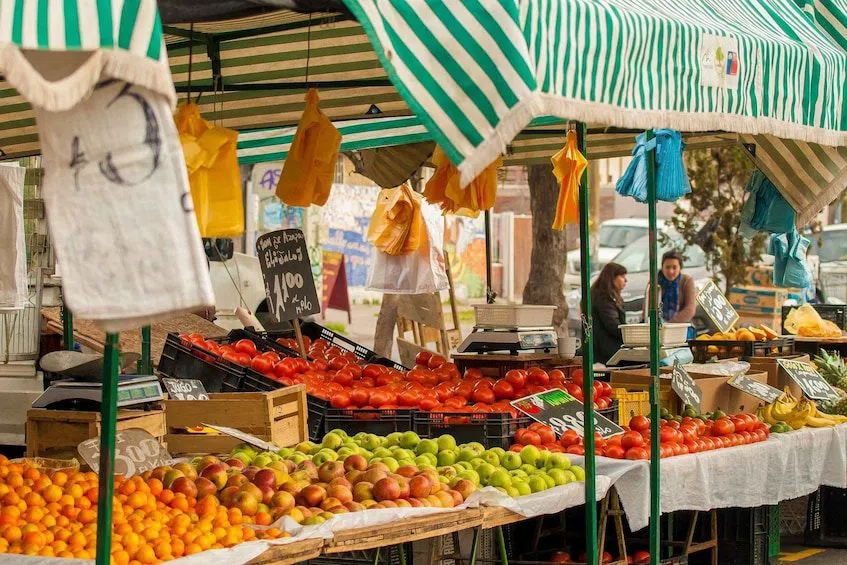
Its 3.6 rating tells you the honest story: arrive at nine and it's a pleasure, with space to look at the jams and haggle over leather. Arrive at noon and you're shuffling through a crowd in full sun. Go early, buy food rather than sunglasses, and be out by eleven.
The other must-do is vertical. The Mirador de Mogán is a 257-step climb above the port, and it pays out in a single wide view over the canals, the marina and the barranco cutting inland — the shot that explains the village's layout better than any map. Rated 4.8, deservedly. Those steps in afternoon heat are the main physical hazard in an otherwise very gentle place, so go early or go late, and take water.
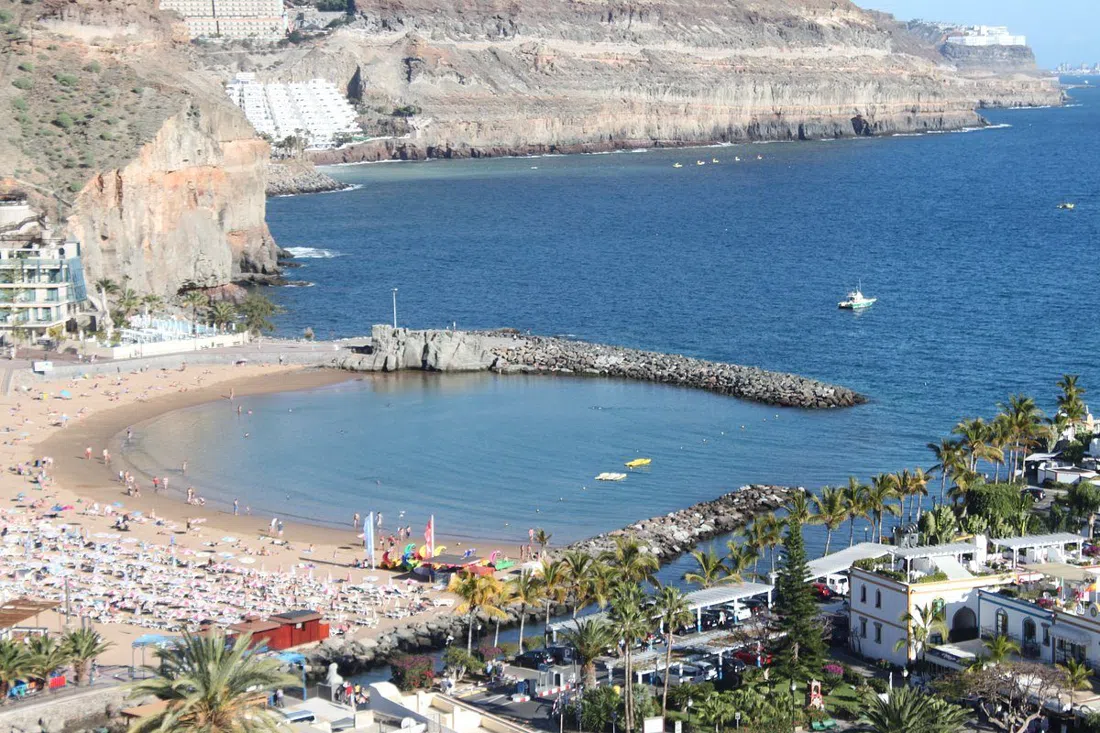
Beyond that, the water is the attraction. The catamarans moored along the marina pontoons are part of the working rhythm of the harbour, and the sheltered sandy beach — flat, calm, close — is why families keep rebooking. It's a short list of things to do, and that's the point.
Shopping: market stalls over boutiques
Outside of Friday, shopping here is deliberately low-key. There's a strip of small tourist shops around the marina and the Plaza Mogán shopping centre, selling beachwear, sun cream, souvenirs and local crafts, plus the occasional jewellery and ceramics stall. You will find a hat, a cold drink and a ceramic dish you'll regret packing. You will not find boutique shopping, designer labels or anything resembling a retail destination — for that, the island's bigger resorts and Las Palmas are where you'd point yourself. In Puerto de Mogán, the market is the shopping, and the rest is convenience.
Where to stay in Puerto de Mogán
Staying inside the village means staying within a few minutes' walk of the marina, the canals and the beach, with everything reachable on foot and no need for a car once you've arrived — which is the single strongest argument for paying village rates over resort rates nearby. The Hotel Cordial Mogán Playa is the anchor: set back from the marina with its own grounds, and with Los Guayres' Michelin star effectively downstairs from your room.
Budget-wise, be realistic. Puerto de Mogán reads mid-range to upscale by Gran Canaria standards. Tapas and market-day lunches can be done cheaply, but the marina's sit-down restaurants and the Cordial properties sit above the island's budget resort pricing. Crime is very low, the marina paths are well lit, and the streets are flat and stepped rather than steep — the only thing to watch is canal-edge paving after rain, which gets slippery.
Getting around: buses, the airport and no local ferry
The village sits at the southwestern tip of the island, roughly an hour and a quarter by road from Las Palmas and about 45–50 minutes from Gran Canaria Airport (LPA). Global's Line 1 bus runs the length of the south coast between Las Palmas and Puerto de Mogán, which makes day trips to the bigger resorts straightforward; the faster Line 91 comes direct from the airport, around €6.80 and the same 45–50 minutes. Taxis and hire cars cover the route in comparable time.
Once you're here, you walk. Everything inside the village is on foot, and a car is useful only for ranging into the island's interior — if that's your plan, hire one, because the bus network won't let you improvise. One common misconception worth killing: there is no ferry terminal in Puerto de Mogán. The nearest crossing to Tenerife leaves from Agaete, at Puerto de las Nieves, roughly 40km north — a long day without a car, and not something to build a holiday around.
24 October 2026