Gran Canaria · Where to live · 8 min
Teror, Gran Canaria: Chorizo, Pilgrims and a Mustard-Yellow Basilica in the Highlands
Thirty-five minutes above the resort coast, Gran Canaria's most devout town trades in sausage, spring water and a Virgin who appeared in a pine tree.
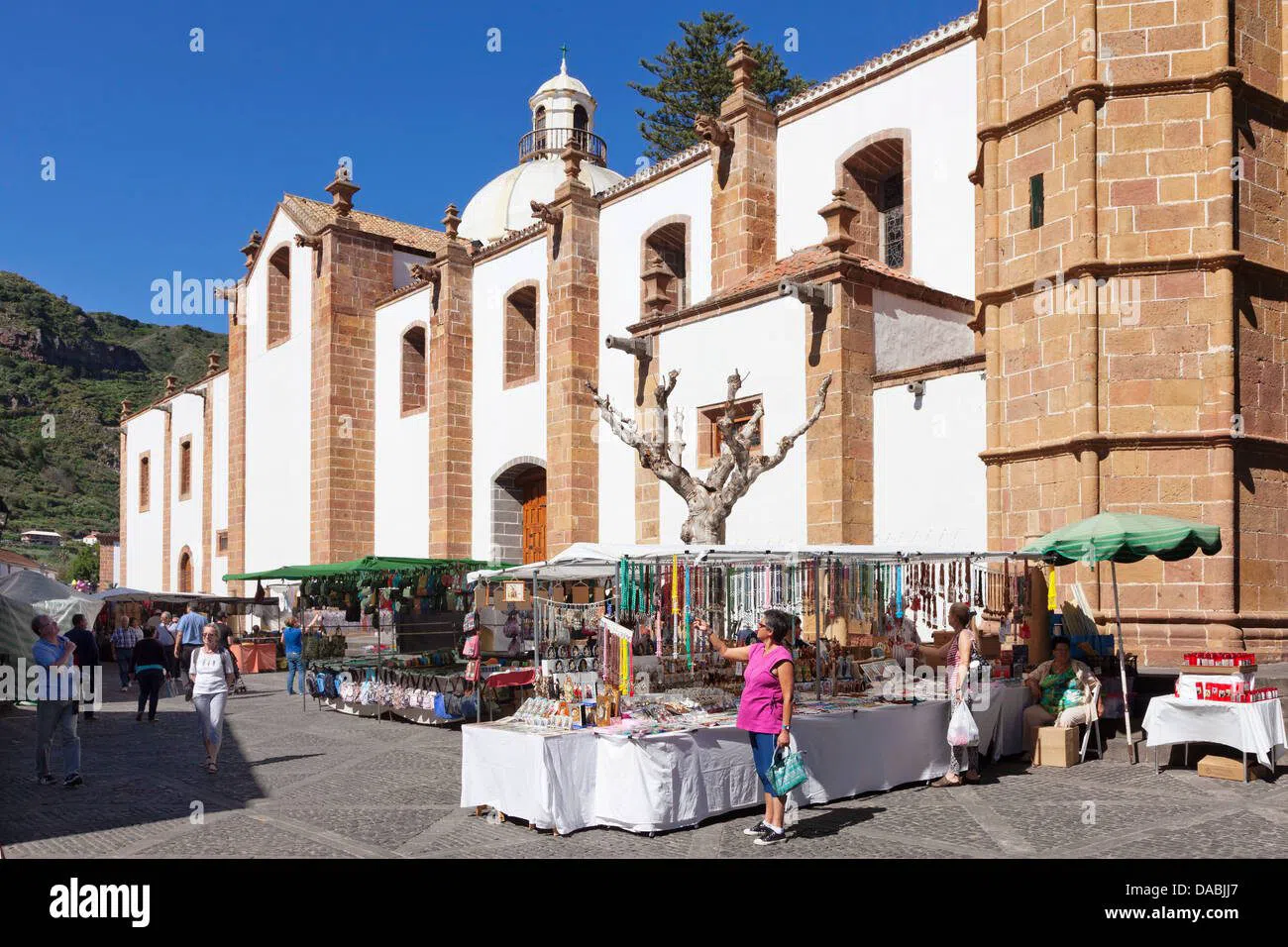
By ten o'clock on a Sunday morning, the square in front of Teror's mustard-yellow basilica smells of grilled sausage and fresh bread. The stalls go up early — more than a hundred of them on a good week — stacked with deep-red chorizo de Teror and pale wheels of queso de flor, and most of the people moving between them are islanders with shopping bags rather than visitors with cameras. Teror sits up in Gran Canaria's green highlands, roughly thirty-five minutes from the capital, and the gap between here and the resort coast feels far wider than the distance suggests. There is no sea view. There is no sunbed. What there is instead is a working highland town that happens to contain the most important church on the island, and a food culture serious enough that people drive up from Las Palmas just to collect sausage.
What Teror is known for
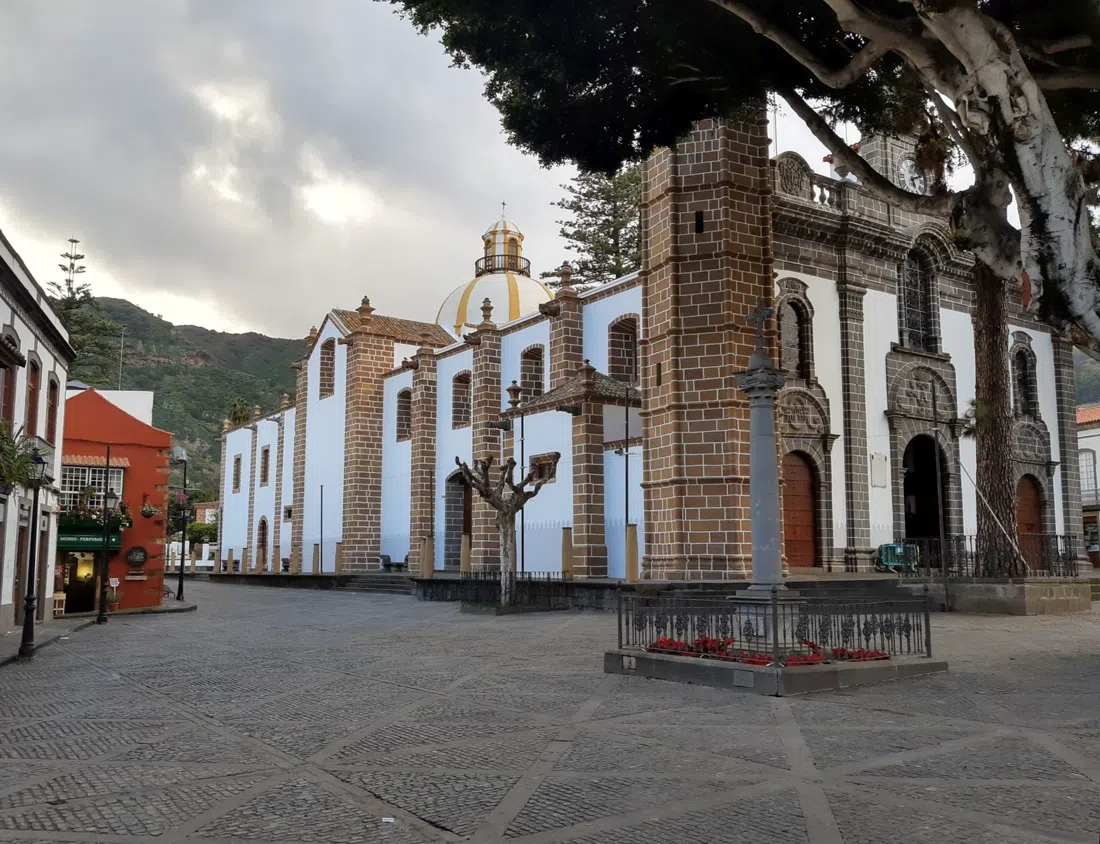
The Basílica de Nuestra Señora del Pino explains the shape of everything around it. It was built between 1760 and 1767, neoclassical and restrained, with a bell tower of yellow stone that reads differently depending on how the highland cloud is sitting that morning — buttery in full sun, almost grey when the mist comes down off the ridge.
Behind the architecture sits the story islanders learn young. In 1481, the Virgin is said to have appeared in a pine tree on the exact spot the church now occupies. She became the Virgen del Pino, patron saint of Gran Canaria, and was later formally crowned — a ceremony that ratified what the island had long since decided for itself. The gilded image inside is not a museum piece. It is the object of a live, unbroken devotion that shapes the calendar of the whole island, not just this town of balconied houses in the hills.
The clearest proof arrives on 7 and 8 September, when the Romería-Ofrenda brings tens of thousands of people up from the coast to make an offering to the Virgin. For two days the quiet streets are not quiet at all. If you have any interest in how Canarian tradition actually functions — as something performed by crowds rather than preserved behind glass — those are the dates to aim for, with the obvious caveat that everyone else will have aimed for them too.
The town's second claim is edible. Chorizo de Teror, soft and spreadable and alarmingly red, is a genuine island-wide reference point, and queso de flor — curdled with thistle flower rather than animal rennet — is the other thing people come up to buy. Both are at their best on market Sunday, roughly 9am to 3pm, when the square fills and the whole centre smells of the grill.
Where to eat and drink in Teror
Eating here means Canarian home cooking, chorizo in some form, and places that double as the town's social infrastructure. Portions lean rustic, prices stay low by coastal standards, and nobody is chasing a Michelin inspector. This is a lunch-before-the-drive-home town, and it is very good at being exactly that — a few euros a plate, eaten at a table that has probably hosted the same family for decades.
Start where the town starts. D'Fernandez, a long-running bar-café right on the basilica square, runs from breakfast through to tapas and does the local canon properly: chorizo and morcilla de Teror, ropa vieja, gofio escaldado — that warm, thick paste of toasted grain flour that outsiders tend to underestimate until the second spoonful. It rates 4.1, which feels about right for a place judged partly on coffee and partly on atmosphere.
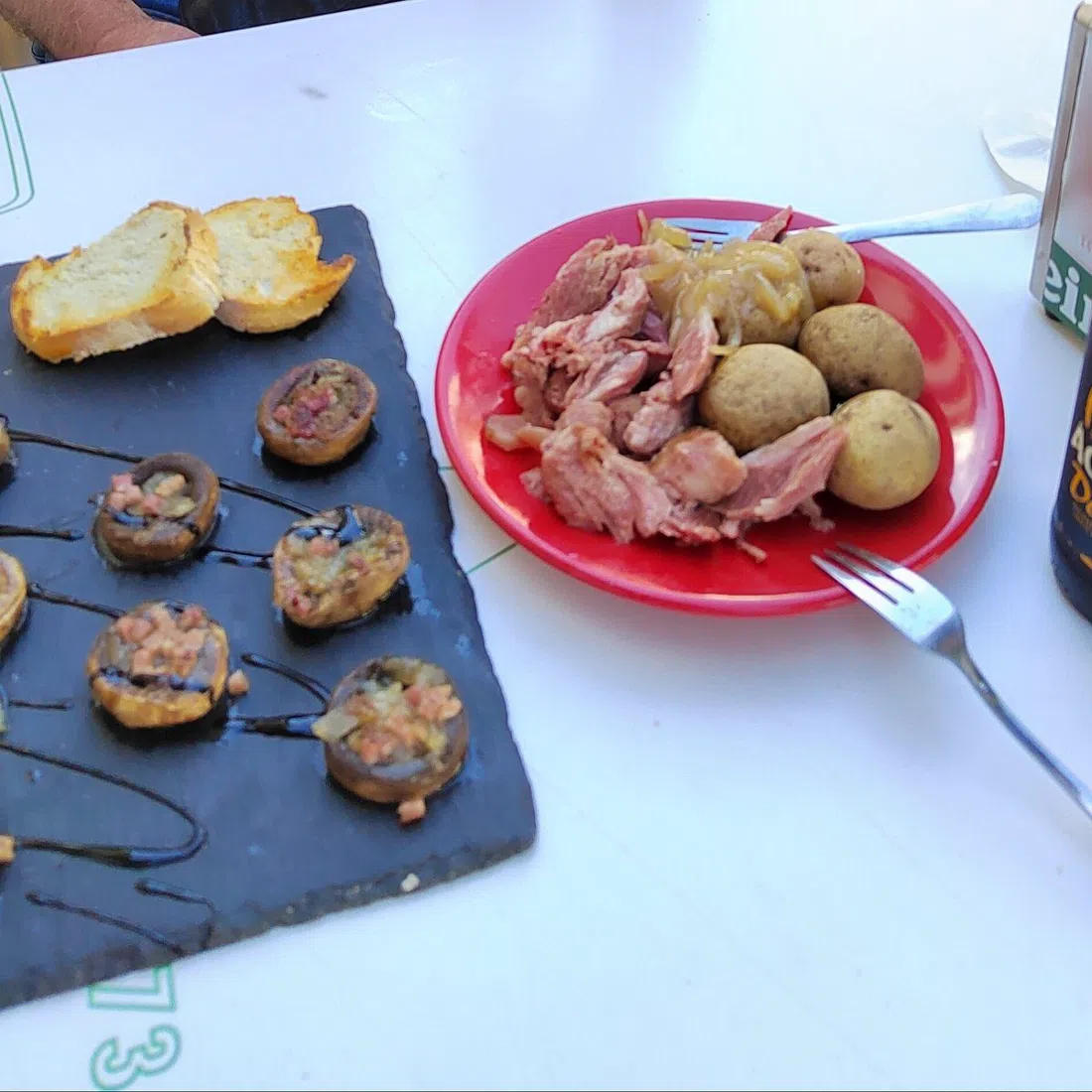
A few doors along the same plaza, Mi Balconcito is the town's most-reviewed tapas spot and sits at a 4.6 that it has earned the hard way, feeding Sunday crowds Teror chorizo and papas arrugadas without visible panic. Order the wrinkled potatoes even if you have had them fifteen times already on this island; up here, with a cold drink and the basilica filling the window, they land differently.
For something slightly off the main square, Restaurante La Fuente sits beside the Fuente Agria mineral spring and has held a locally bulletproof reputation — 4.4, consistently top-rated through 2025 — on straightforward Canarian cooking. It is the kind of address that locals recommend without flourish, the highest compliment available in a town this unsentimental.
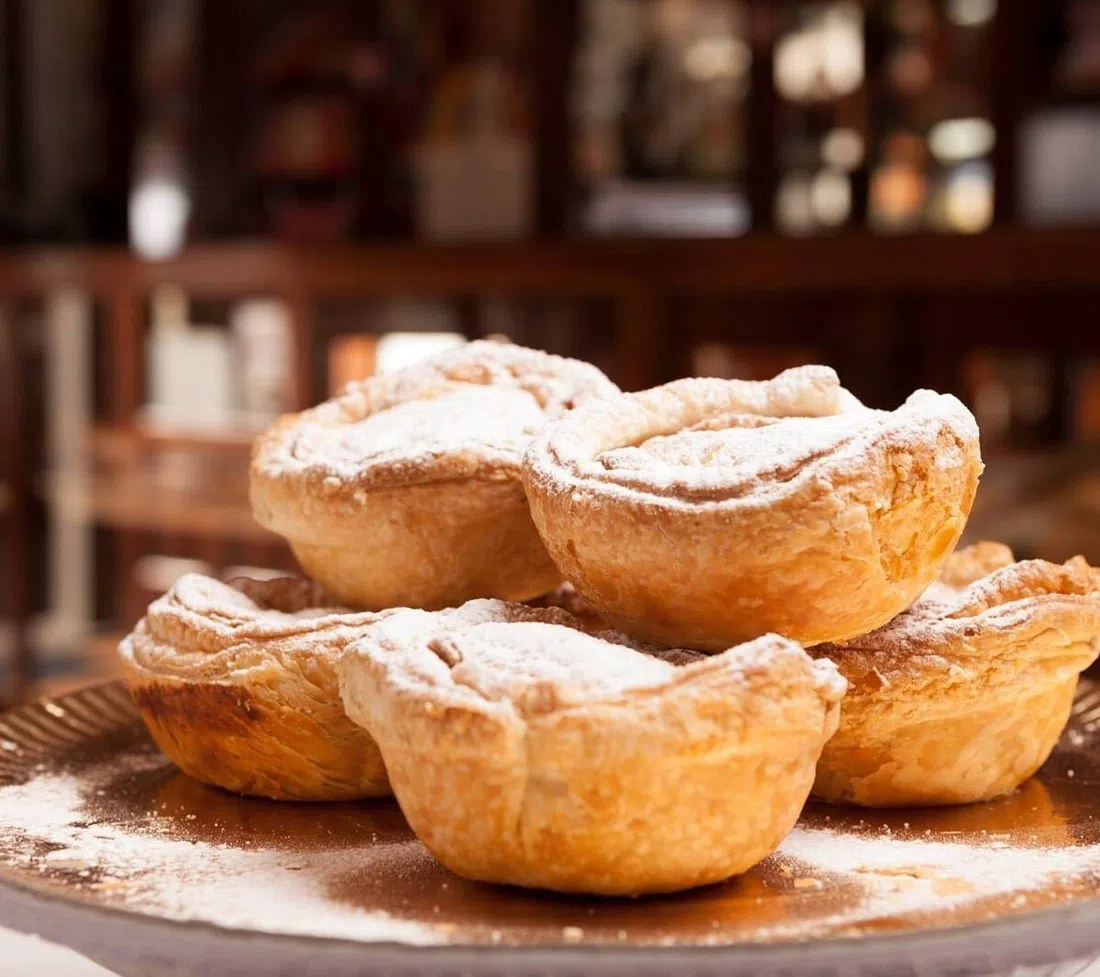
Then there is the sweet stop, and it is not optional. Dulcería Benítez has been a family pastry shop on Calle Nueva since 1940, which is to say it predates most of the hotels on the south coast by a comfortable margin. Come for truchas de batata — fried sweet-potato turnovers, properly dense — and for meringue milhojas that will not survive the walk back to the car.
After dark in Teror
Be clear-eyed about this: Teror goes close to silent after dinner. There is no bar strip, no late scene, nothing that could reasonably be called nightlife. What the town offers instead is a proper evening meal and then the particular stillness of a highland village with the cloud down.
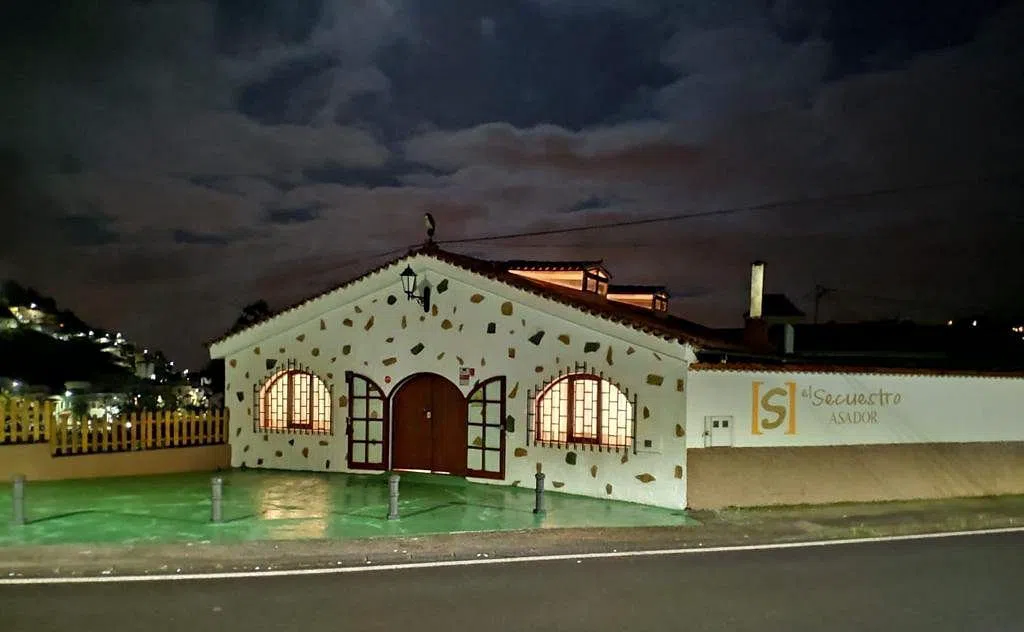
If you are staying for dinner, El Secuestro is the move. A grill restaurant open since 1979, it trades on aged chuletón — the big bone-in steak, cooked hard over coals and carved at the table — and it has been through more than most restaurants survive: storm damage forced a rebuild, and it reopened 100 metres from its original site in April 2026, still running, still rated 4.4.
Eat well, drive carefully on the descent, and accept that the entertainment after that is the dark.
Things to do in Teror
Begin inside the basilica, which is free to enter outside Mass times. Give it longer than you think you need: the gilded image of the Virgin rewards a slow look, and immediately behind the church stands the 18th-century Episcopal Palace, restored and working now as a cultural centre. Together they form the civic and spiritual core of the town, and almost everything else radiates outward from that one block.
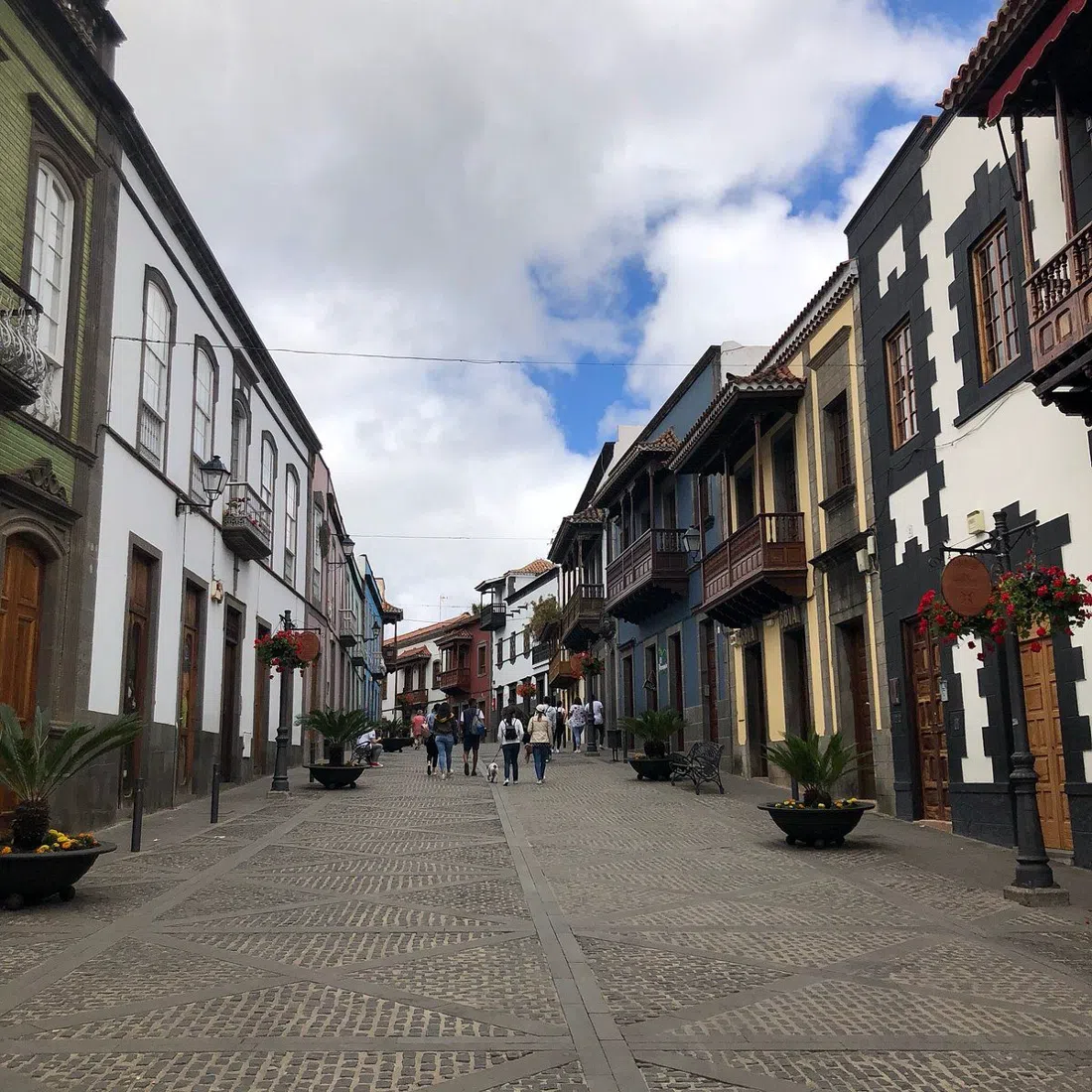
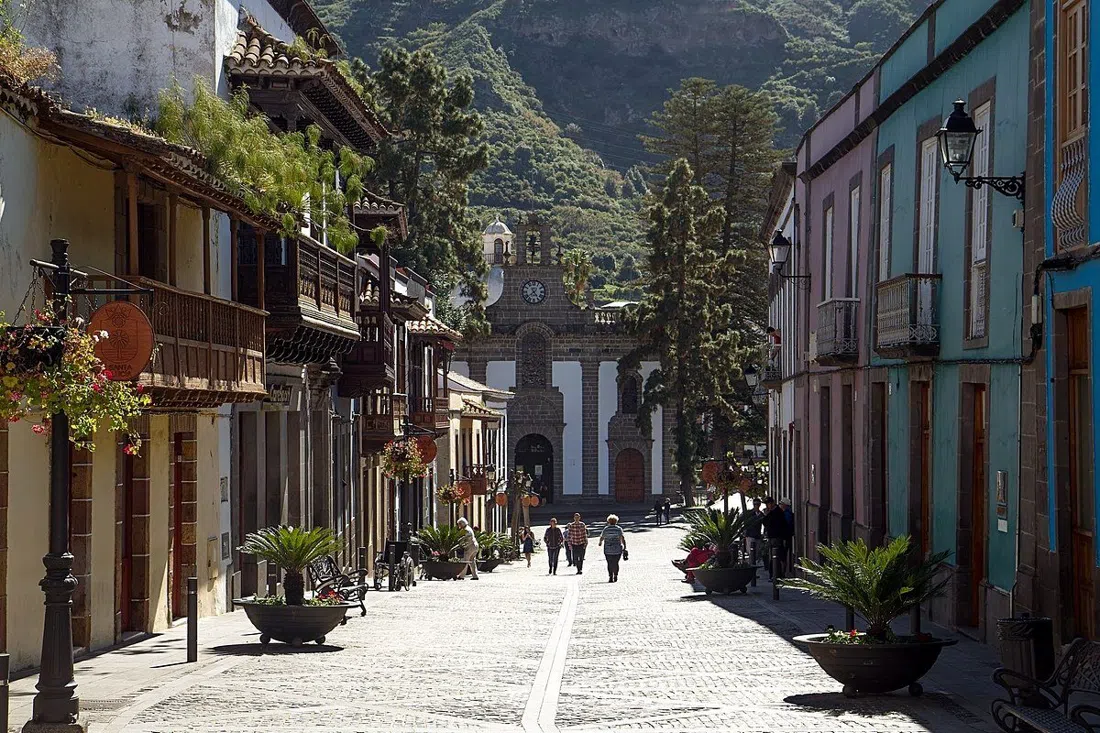
From there, the correct next move is deliberately unambitious — walk. Calle Real de la Plaza and the lanes around it carry Teror's famous carved wooden balconies, and an hour of aimless wandering under them does more for your understanding of the place than any itinerary.
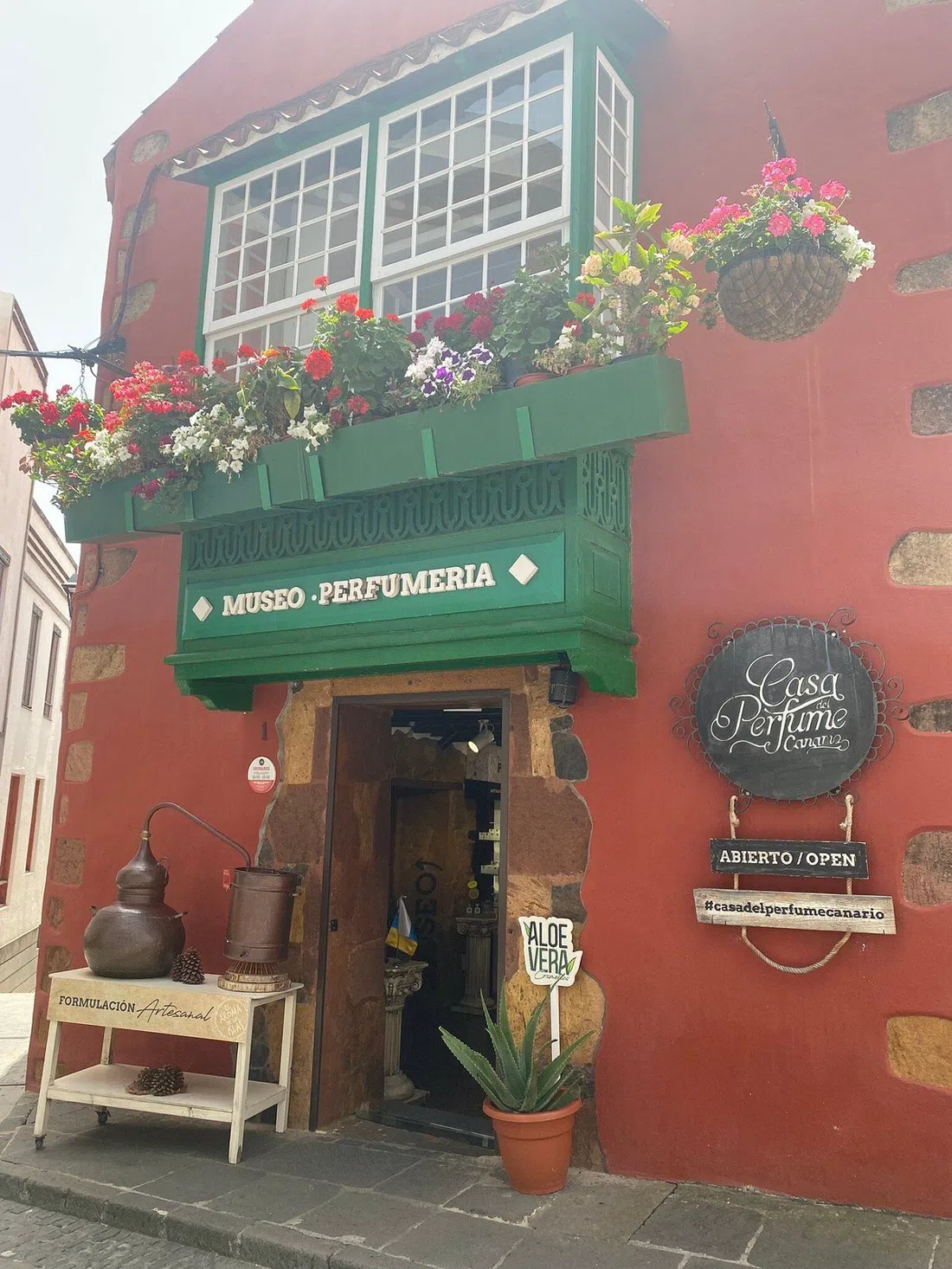
When you want something more specific, Casa del Perfume Canario is the town's genuine oddity and the Canary Islands' only perfume museum, set in a restored 19th-century house with its own ageing cellar. It visits by appointment only, which is precisely why it rates 4.9 — you get the house, the bottles and someone's undivided attention rather than a shuffling queue.
Two green escapes sit within walking distance of lunch. Finca de Osorio, 2.5km from the centre, is a laurel and cork-oak estate with waymarked trails running up toward Pico de Osorio; entry is free but requires permission booked online beforehand, so sort that before you leave the coast. Closer in, under a kilometre out, the Fuente Agria mineral spring has been in use since the 17th century and is still visited by locals filling bottles — an ordinary, unphotogenic, oddly moving piece of continuity.
Shopping in Teror
Shopping here is produce and craft rather than retail. Calle Real de la Plaza, fully pedestrianised, carries the cafés and small shops under those balconies and is the obvious browse once you have done the basilica — slow, shaded, entirely free of the tat you would find at sea level.
For the thing people actually drive up to buy, head to Chorizos Terorero, where the town's signature sausage is made and sold. Buy more than you intend to; it travels better than you expect and the regret curve is steep. On Sundays the market in the basilica square covers everything else — chorizo, queso de flor, bread, honey, pickles — across its hundred-plus stalls between roughly 9am and 3pm. Go before noon if you want to move at your own pace rather than the crowd's.
Where to stay in Teror
Teror has almost no conventional hotels. Accommodation runs to rural guesthouses and converted townhouses, and the honest truth is that most visitors to Gran Canaria sleep on the coast and treat Teror as a half-day trip. That is a reasonable choice, not a failure of imagination.
That said, there is a specific case for staying. The appeal is the quiet and the climate: cool, green, often misty, a real relief if you have spent a week in the heat of the south. A room here buys you the town before the Sunday stalls arrive and after the day-trippers have gone, which is when it is most itself. Budget-wise it is cheap — simple guesthouse pricing rather than resort rates. One practical note: heavy rain has caused localised hillside collapses in the area, so check conditions if you are visiting in a wet spell.
Getting around Teror
Once you are parked, you are done with the car. The basilica, the market square and Calle Real de la Plaza all sit within a five-minute walk of each other, and most day visitors never drive again until they leave. The centre is small, pedestrianised where it counts, and best handled on foot.
Getting here is the part that needs thought. By car it is around 37 minutes and 23 miles from Gran Canaria Airport, or 20 to 25 minutes from Las Palmas — easy, scenic, and the option that unlocks Finca de Osorio and the Fuente Agria trails. Without a car you are on the Guaguas Global network: lines 216 and 229 run up from San Telmo station in Las Palmas. There is no direct service from the airport, so an airport arrival means transferring through San Telmo, about an hour all in.
And if you can engineer it, make it a Sunday. Teror on a market morning is a different town from Teror on a wet Tuesday — louder, fuller, and smelling of chorizo from three streets away.
24 October 2026