St Julian's · The weekend · 11 min
Parks, Cliffs and Coast Paths Near St Julian's
Fourteen free places to walk near St Julian's. They run from a walled garden five minutes off Spinola Bay out to cliff rim and reedbed, and each one comes with its hours, its bus routes and its honest limits.
Paceville is about four streets wide. That is worth knowing before you write the whole of St Julian's off, because the walk out of the noise is shorter than most people expect: five minutes from Spinola Bay to a walled garden with a gate on it, twenty minutes uphill to open limestone with nothing built on it at all. What follows is where the quiet actually sits, how long each place takes to reach from a bed in St Julian's, and the hour of the day each one works.
One walk that gets you out of the noise
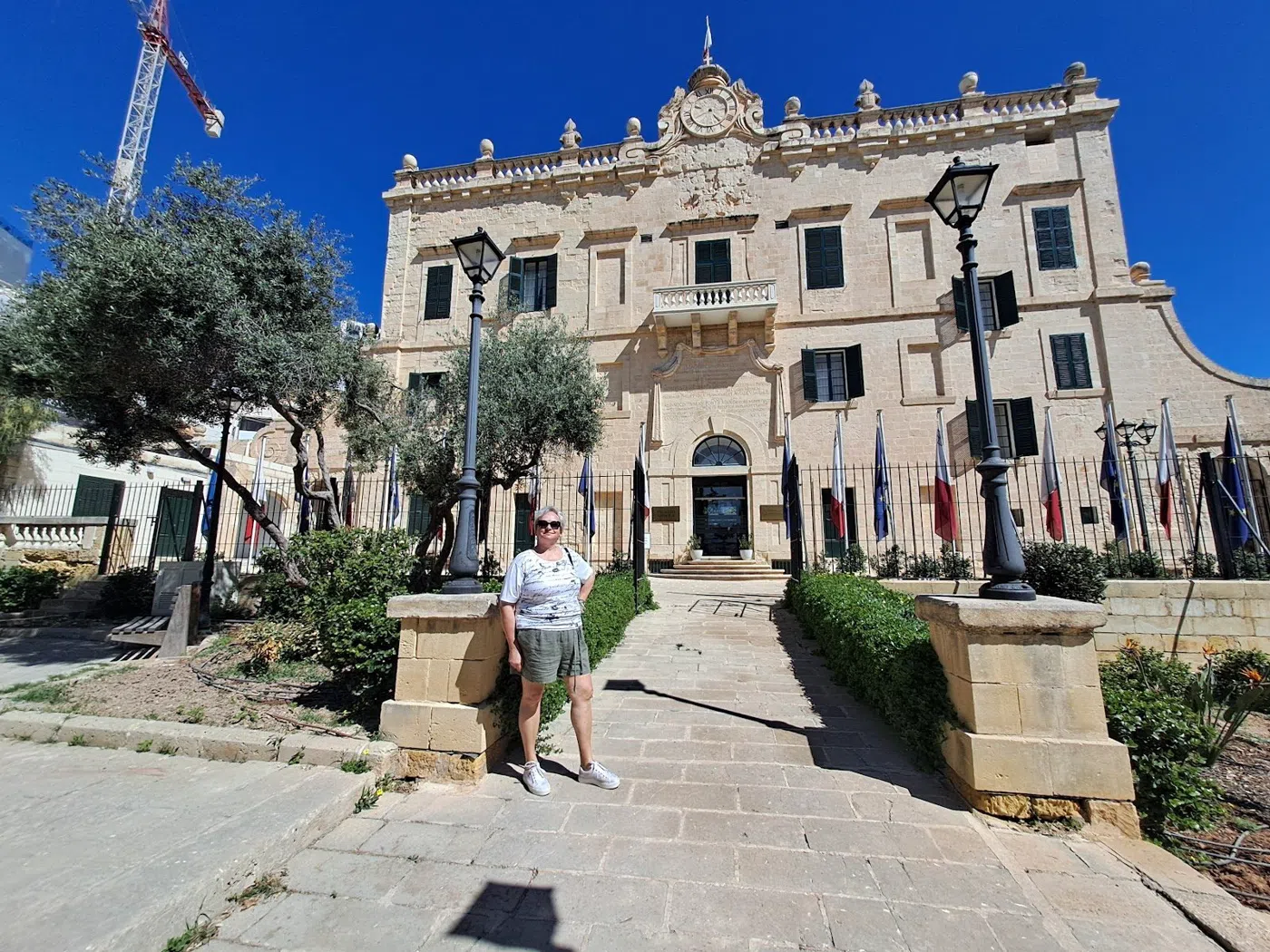
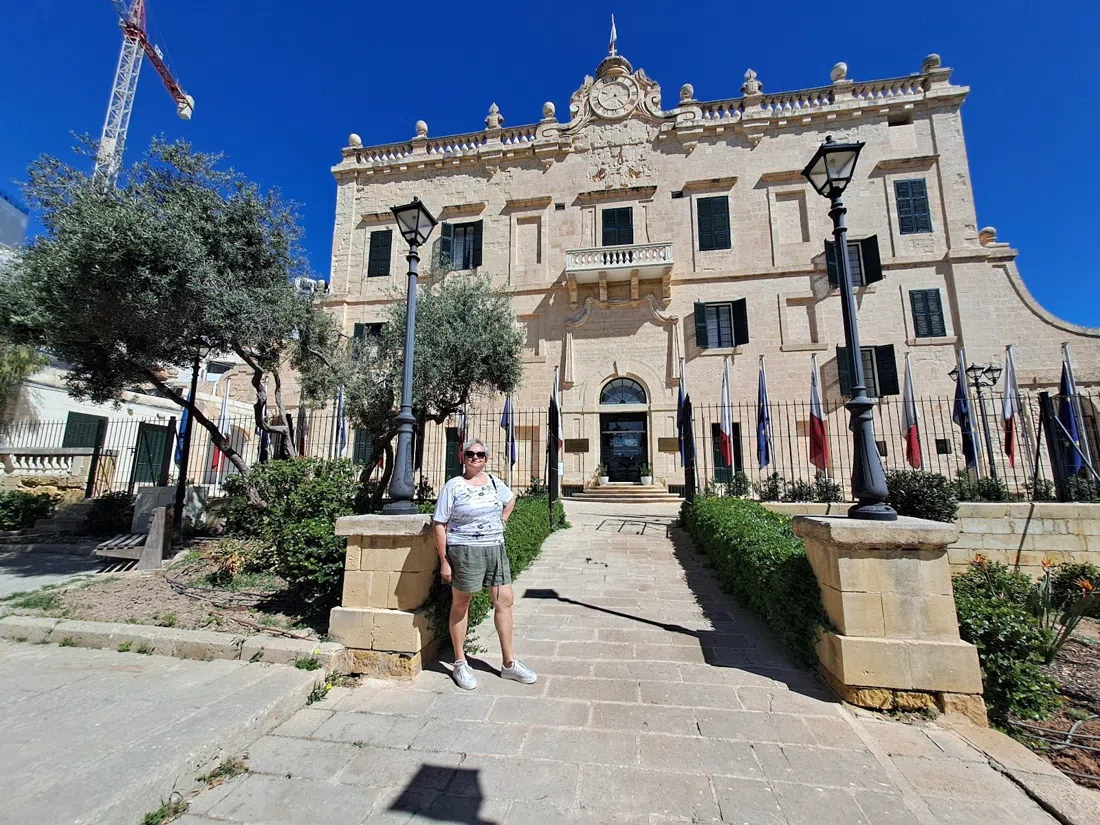
The simplest version is a single route you can do in a morning, and it starts at the head of Spinola Bay. Ġnien il-Palazz Spinola (Spinola Bay, behind the old palace at the top of the inlet) is a walled town garden, free, with no door policy and no ticket desk. It opens roughly 09:00 to 18:00, though the council does close it now and again for private functions, so it is worth a glance through the gate before you commit to carrying coffee up there. The footprint is small. Two or three of you will find a bench and hear birds instead of bass; a group of more than eight will fill the place and turn it into something it is not built for. It is the one genuine pocket of quiet inside St Julian's itself, and it is five minutes from the water.
From the garden, walk up through Paceville and keep going north until the buildings stop. Twenty minutes of that puts you at Pembroke Garigue Heritage Trail (Pembroke, immediately past the top end of Paceville), which is the closest wild ground to St Julian's and, at dawn, close to empty. Garigue is low, tough, aromatic scrub over limestone: thyme, rock and a lot of open sky. The trail is wide enough to walk two or three abreast the whole way, so it takes any group size without anyone having to file. It is free and open. The one thing to plan around is shade, of which there is none whatsoever. From May to September this is a walk for the first two hours of daylight or the last two before sunset, and you carry your own water because there is nowhere on the trail to buy any.
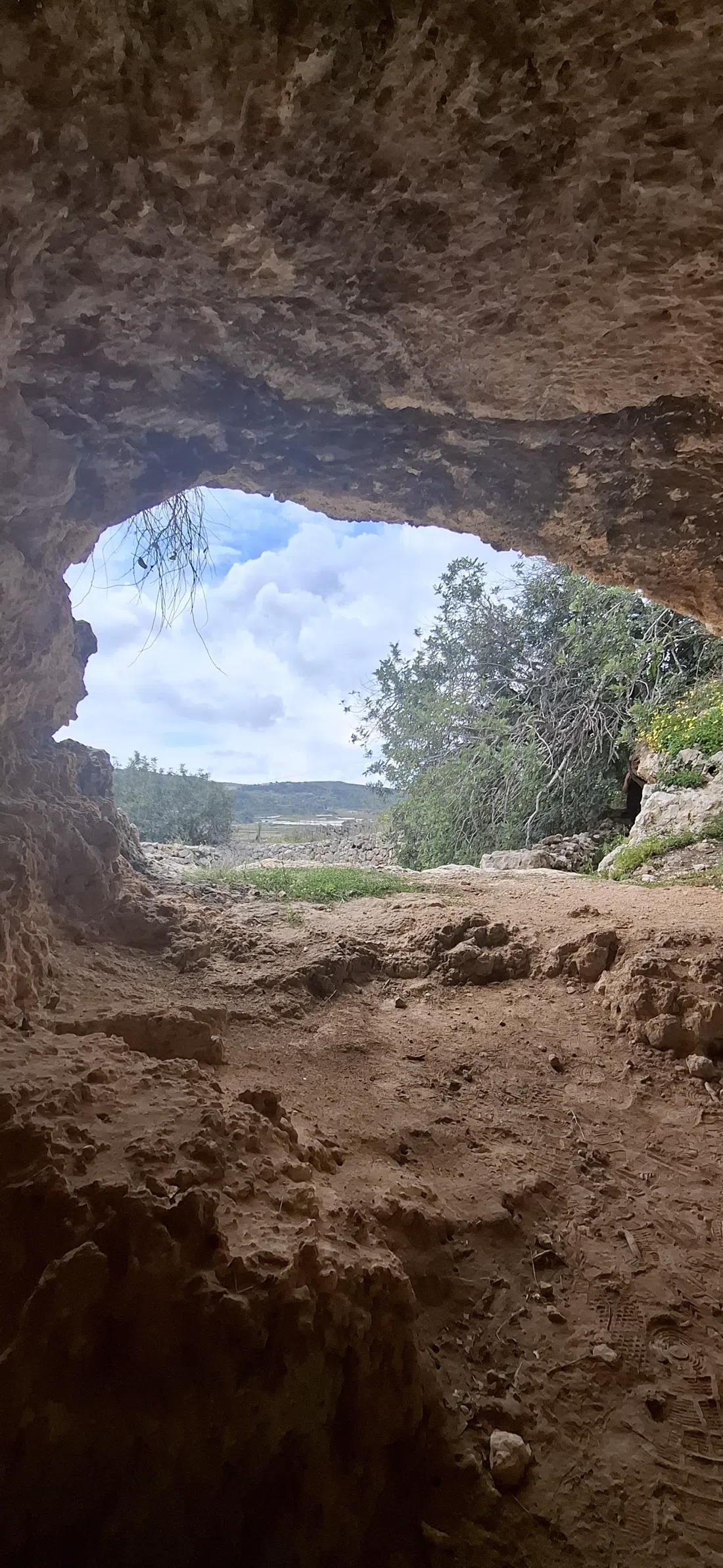
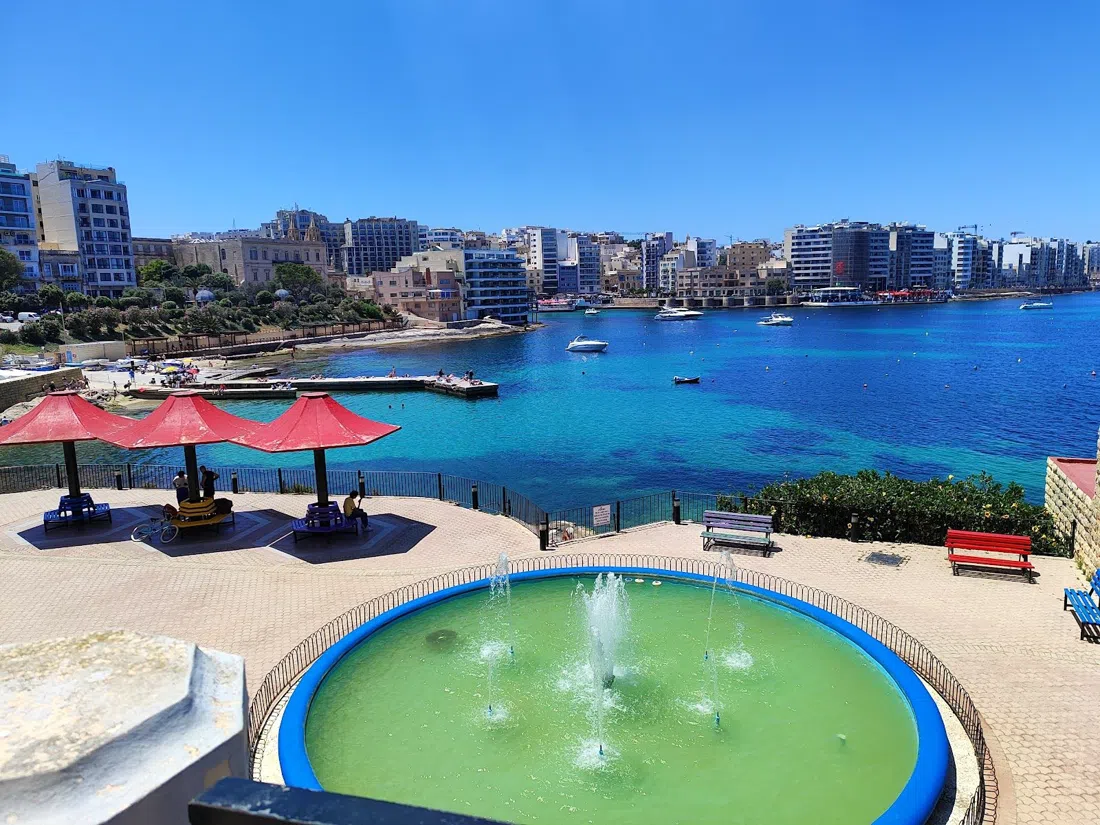
Come back down along the coast rather than through the centre and you will pass Ġnien l-Indipendenza (on the promenade, on the stretch that runs out of St Julian's towards Sliema), known locally as the cat park for reasons that become obvious within about thirty seconds. It is free, unfenced and open at all hours, with benches, lawn and a steady traffic of walkers and residents. That last part matters more than the horticulture. It is lit, it is populated well into the evening, and it is reachable on foot from almost any bed in St Julian's, which makes it the realistic answer to wanting green space after dark rather than at seven in the morning. A group of any size fits.
A rewilded valley on the way into town
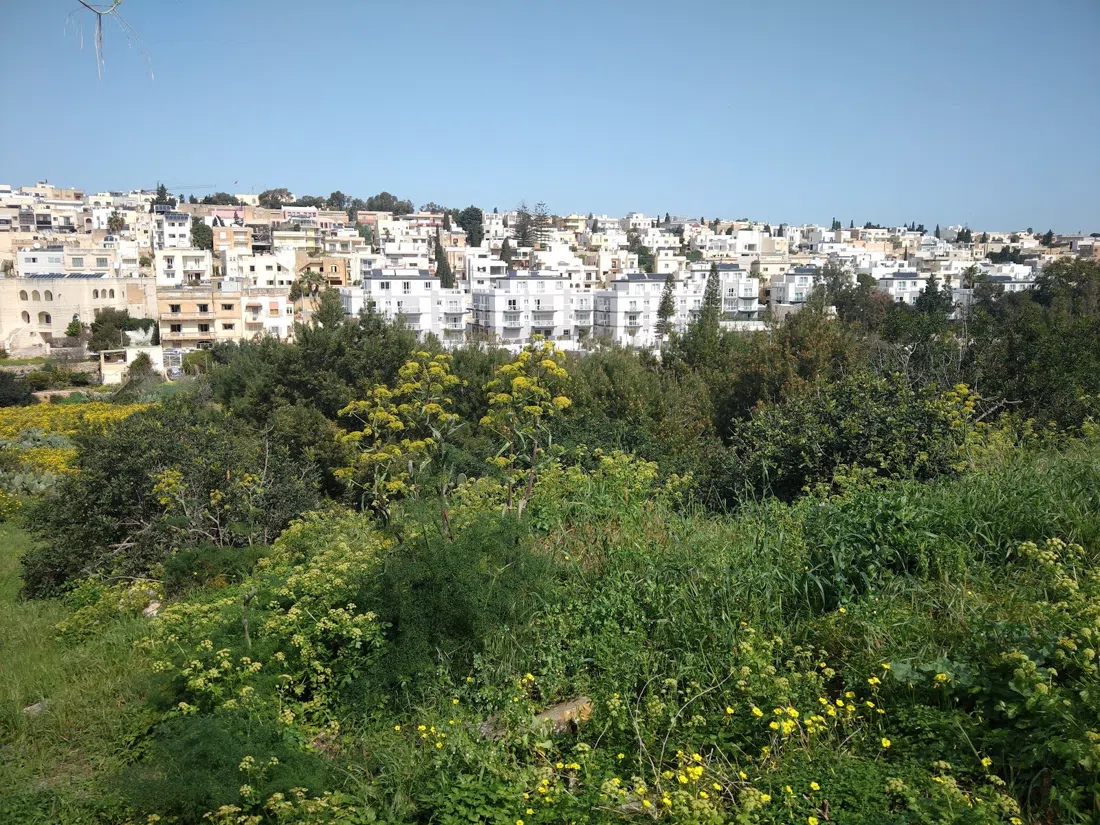
Wied Għollieqa Nature Reserve (Kappara, on the edge of the university campus) is the first place on this list that needs a bus, and only a short one. It sits on the inland side of the Sliema corridor, twenty minutes or so from St Julian's depending on traffic. The valley was slated for development in the 1980s and saved instead, then replanted; it is now thick with the għargħar, Malta's national tree, and it is the nearest thing to a proper native woodland valley you can reach without a half-day commitment. Access is free and open, either through the Kappara gateway or the university entrances, and the entrance opposite the engineering department is the one that puts you straight onto the usable stretch. Wear shoes with a sole. The ground is uneven, loose in places, and not a sandal walk. Nature Trust Malta runs guided visits for groups and schools for a small fee, which is the way to do it if you want to know what you are looking at rather than simply walk through it.
Gardens with grown trees and real shade
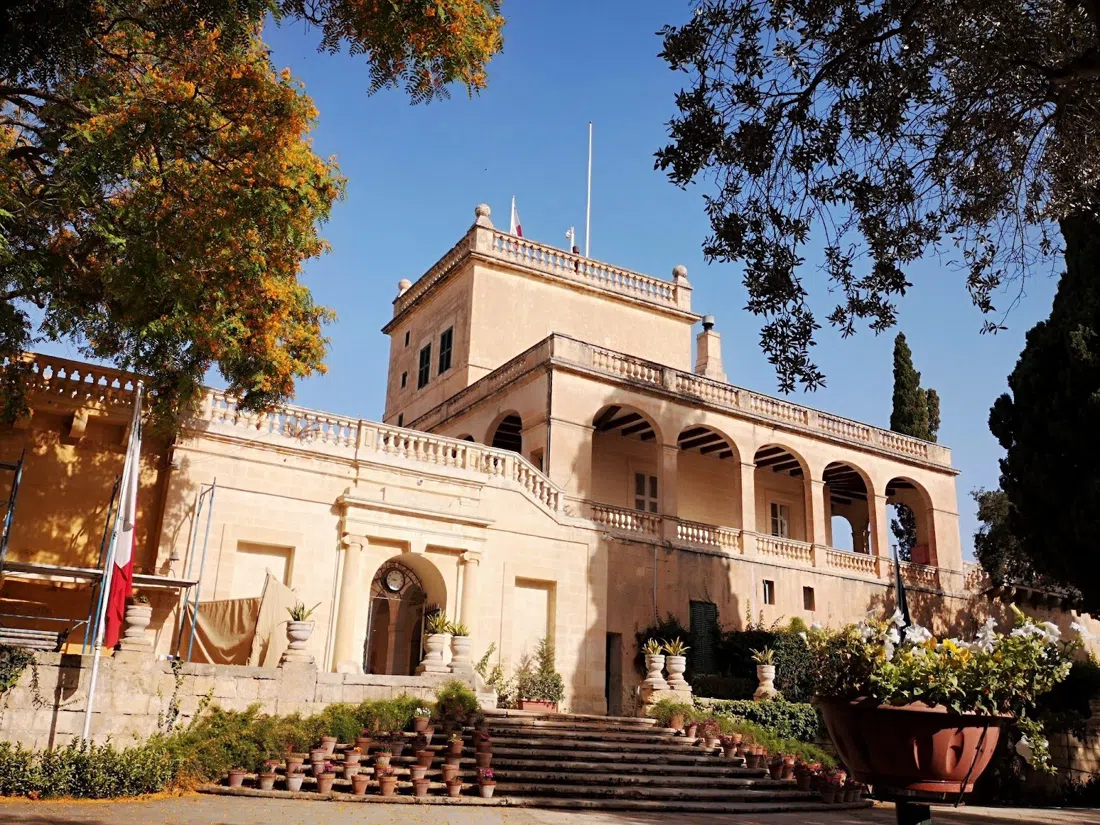
In August, shade decides the whole trip. San Anton Gardens (Attard, in the grounds of the presidential palace) has the deepest of it on the island: mature trees, old walls, water, and a temperature under the canopy noticeably lower than the street outside. Entry is free, hours run roughly 09:00 to 19:00, and there is enough room for a group to spread out without anyone feeling watched. A direct bus from the seafront corridor gets you there in well under an hour, and it is the most reliable middle-of-the-day option near St Julian's for anyone who cannot spend four hours in the sun.
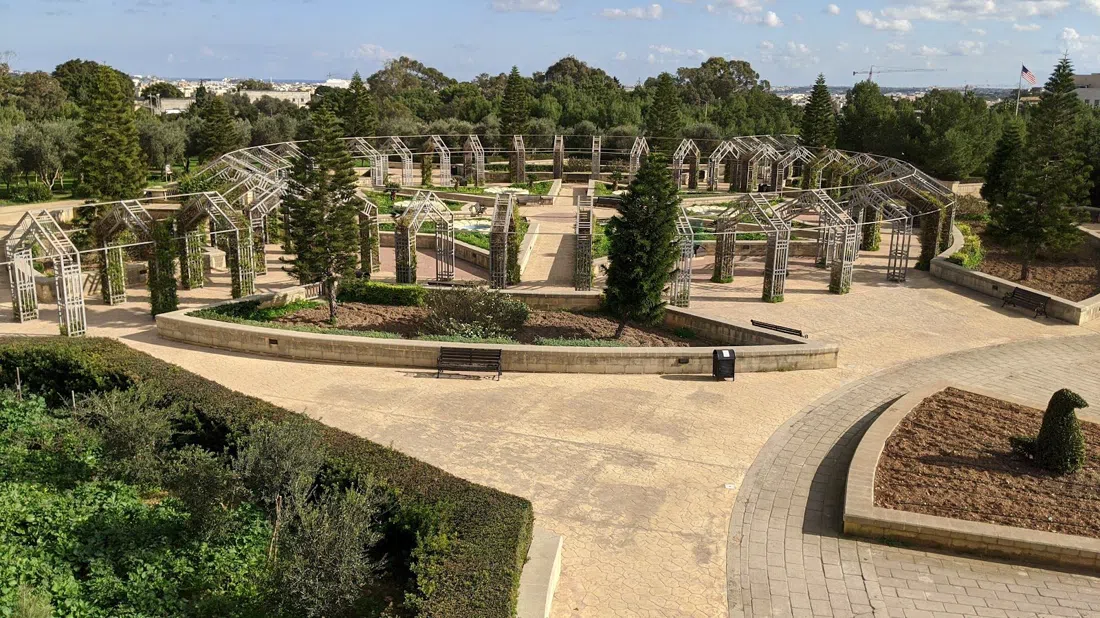
Ta' Qali National Park (Ta' Qali, beside the arena) is the opposite trade-off: space instead of canopy. Six hectares of picnic ground, free, open all year, with real toilets and parking, which sounds mundane until you are organising eight people and a cool bag. The planting is still visibly young, so do not go expecting cover at midday, but it is the largest walkable open space in central Malta and it never feels crowded except on concert nights next door. If your group wants to sit on grass and eat rather than look at a view, this is the one.
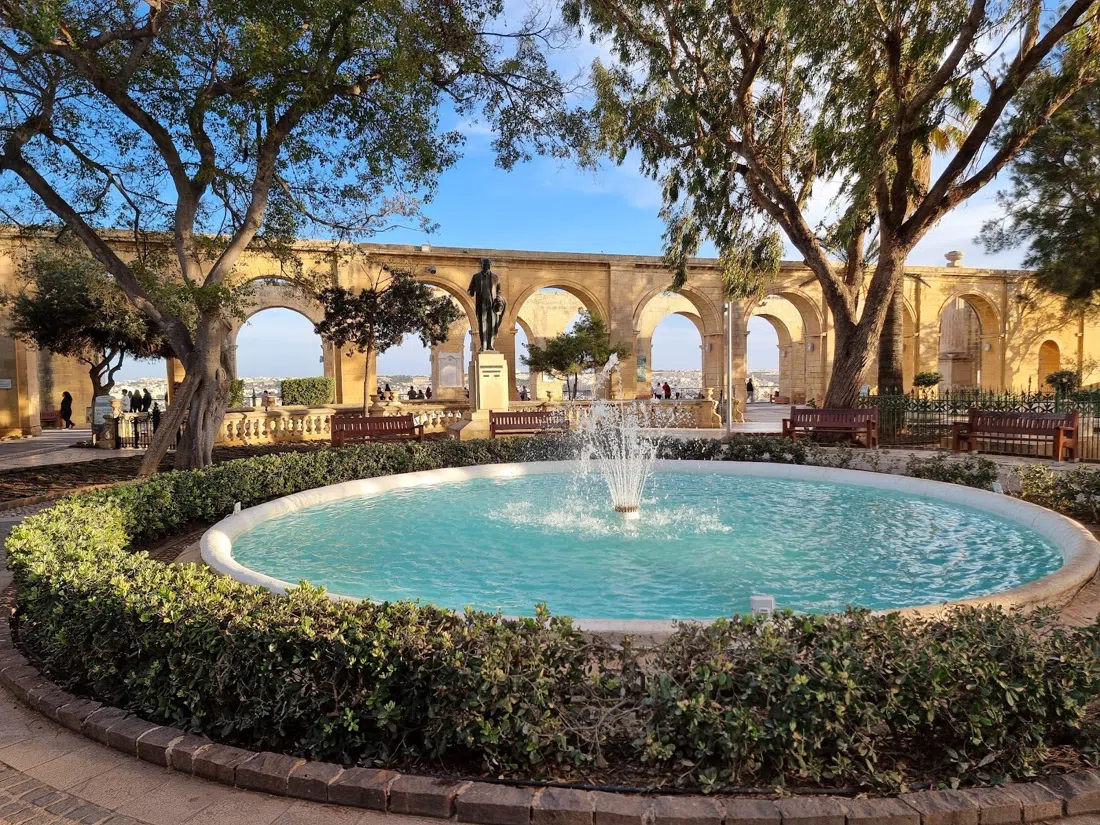
Upper Barrakka Gardens (Valletta, on the bastion above the Grand Harbour) earns its place partly through the journey. From St Julian's you take a bus down to Sliema and then the ferry across, and the crossing does as much for your mood as the destination. The gardens are free and open daily 07:00 to 22:00, the harbour lift down to the waterside is €1 return, and the terrace is large enough to absorb any group. The terrace fills for the gun salutes at noon and 16:00, so go early in the morning or after seven in the evening, when the light is on the far side of the harbour and there is space at the railing.
Reedbeds, salt pans and four thousand years on one hillside
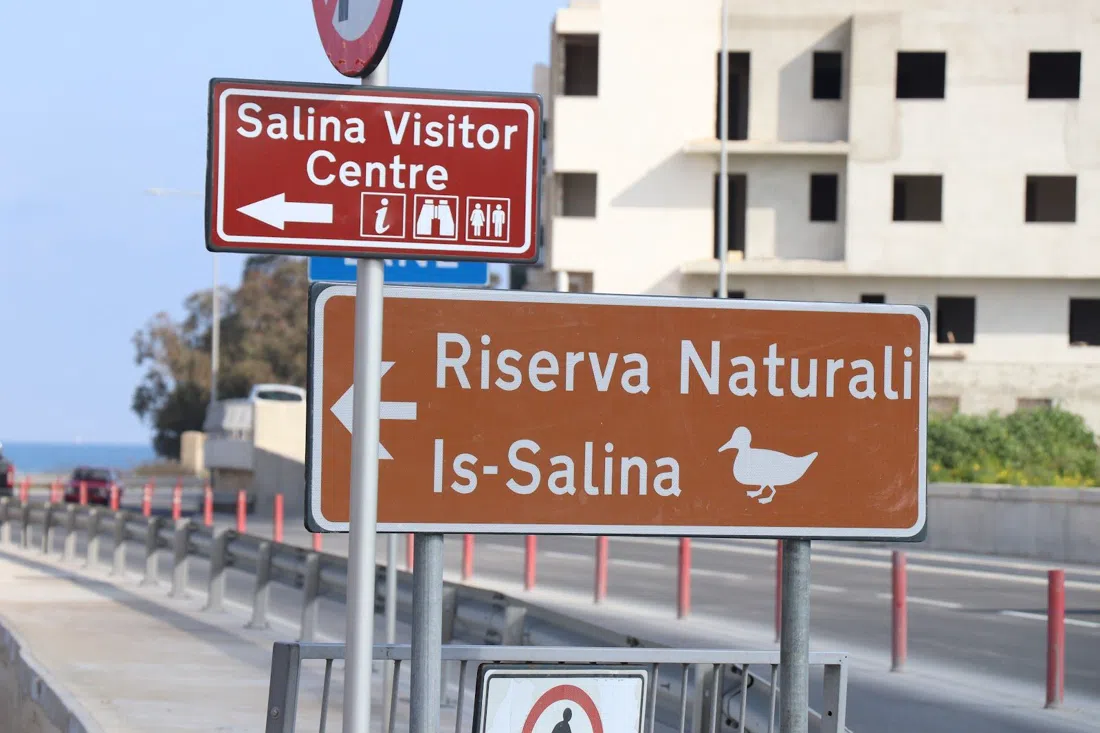
The north of the island holds the wetlands, and they run on their own timetables. Salina Nature Reserve (Salini, at the head of the bay) is the one you can simply turn up to, every day of the year: self-guided walking is free, open 07:00 to 20:00 from April to September and 07:00 to 18:00 from October to March. The salt pans give it a hard geometry you will not find anywhere else here, and the walk is flat and easy. The Visitors' Centre and Salt Museum carry a small fee. BirdLife Malta takes group and school bookings for guided birdwatching, which is worth arranging in advance if there are more than a few of you; direct buses run from the Sliema corridor to the 'Salini' stop.
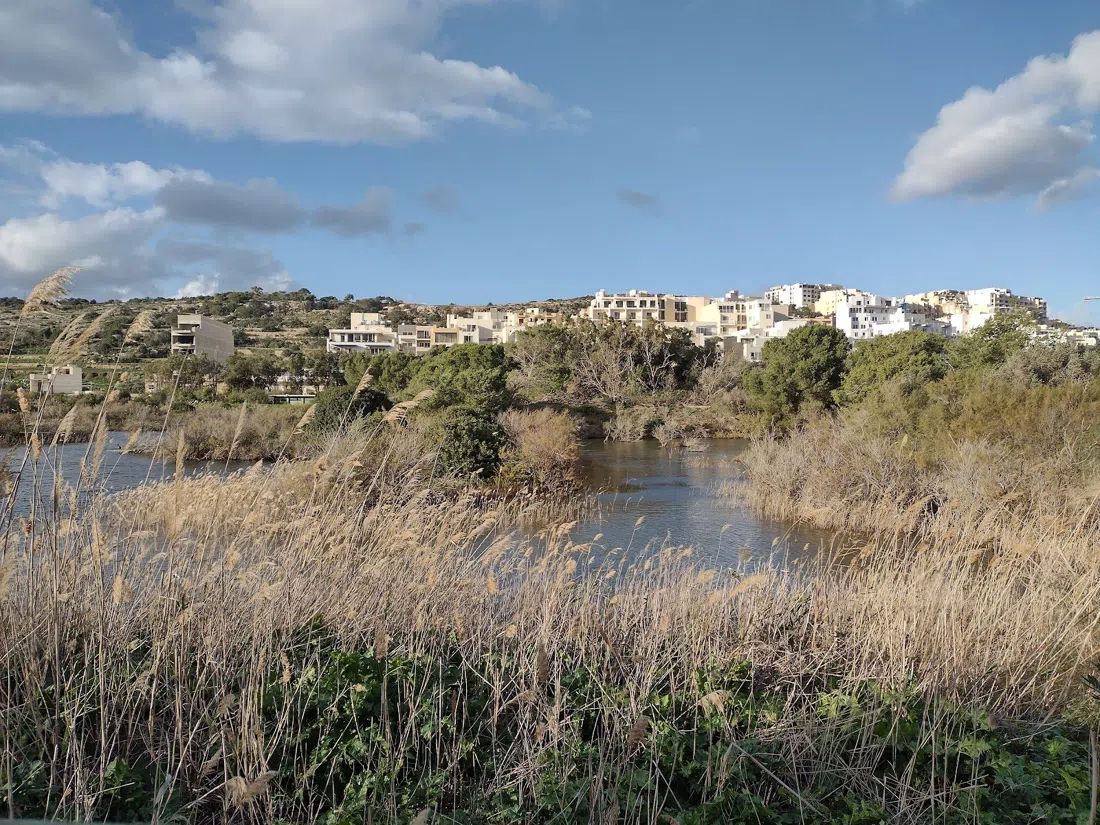
Simar Nature Reserve (Xemxija, at the back of the bay) is the quietest place on this list and the most likely to catch you out. It is a Ramsar-listed reedbed, free with donations welcome, and volunteers will set a scope up for you and tell you what is on the water. It also opens September to May only (Monday, Wednesday and Friday 13:30 to 17:00, Saturday and Sunday 10:00 to 16:00) and shuts completely through the summer. Check the calendar before you build a day around it. Guided group and school visits are by arrangement.
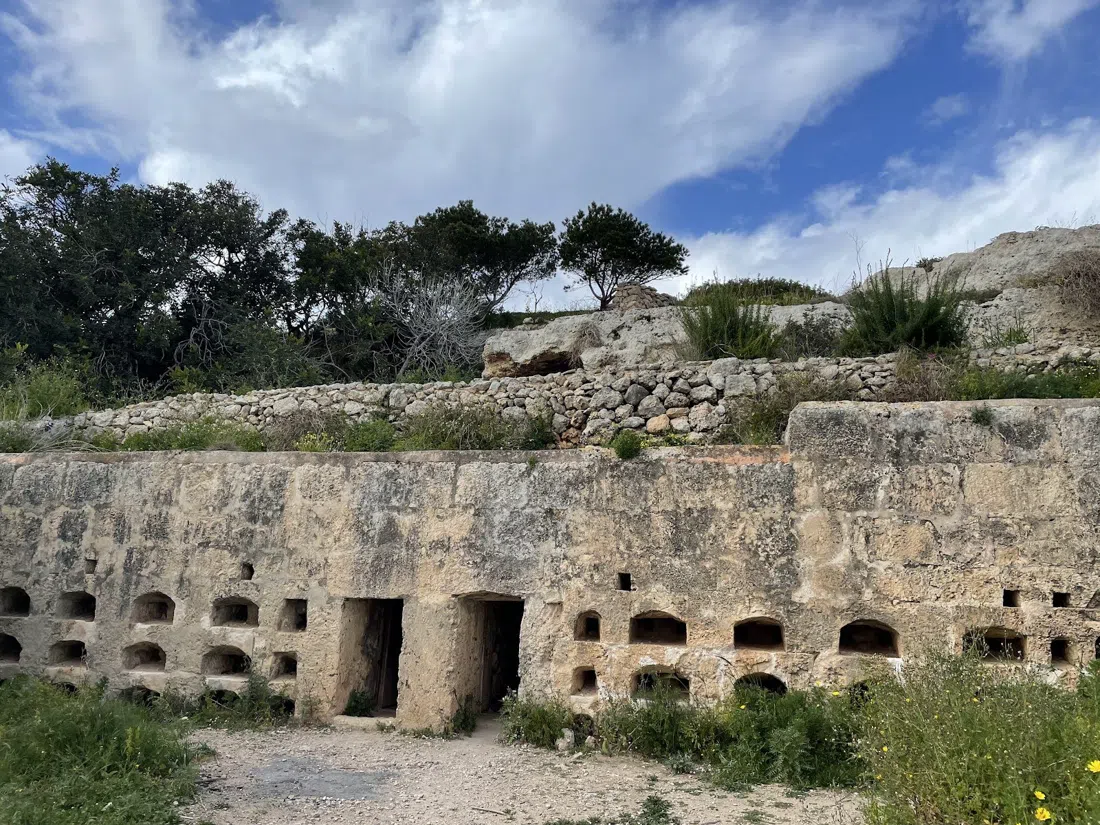
If Simar is closed, the hillside above it is not. The Xemxija Heritage Trail (Xemxija, on the slope over St Paul's Bay) is a self-guided loop with twenty marked points covering roughly four thousand years, past Punic tombs, cart ruts, an apiary and a carob tree with its own history, on ground gentle enough for most walkers. It is free, unticketed, open at any hour, and stays empty even in high season. The one practical warning is the signage, which is patchy in stretches; pick up the free map from the St Paul's Bay Local Council or the Buġibba tourist point, or load the trail app, before you set off rather than after you have lost the thread. Groups walk it unaccompanied without any arrangement.
Cliffs, woodland and running water for a full day
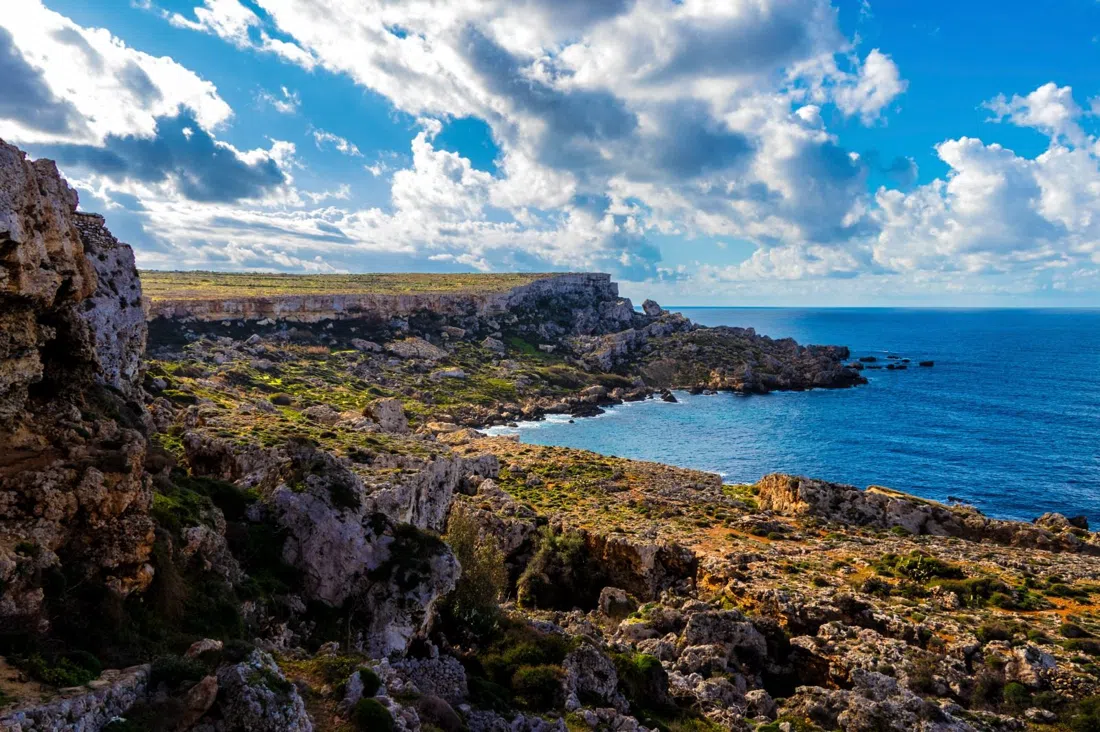
Il-Majjistral Nature and History Park (Manikata, on the north-west coast) is the largest protected landscape in the country, which in practice means you can walk for an hour here without seeing a building. Access on foot is free and the park is open 24 hours; the visitor centre runs Monday to Friday, 09:00 to 15:00. Guided nature walks go every Sunday from October to May, booked by email with minimum numbers, and the set-up suits groups well. One oddity worth knowing in advance: the park's own website currently has an expired security certificate, so your browser will complain. Email the booking rather than talking yourself out of it over a warning screen.
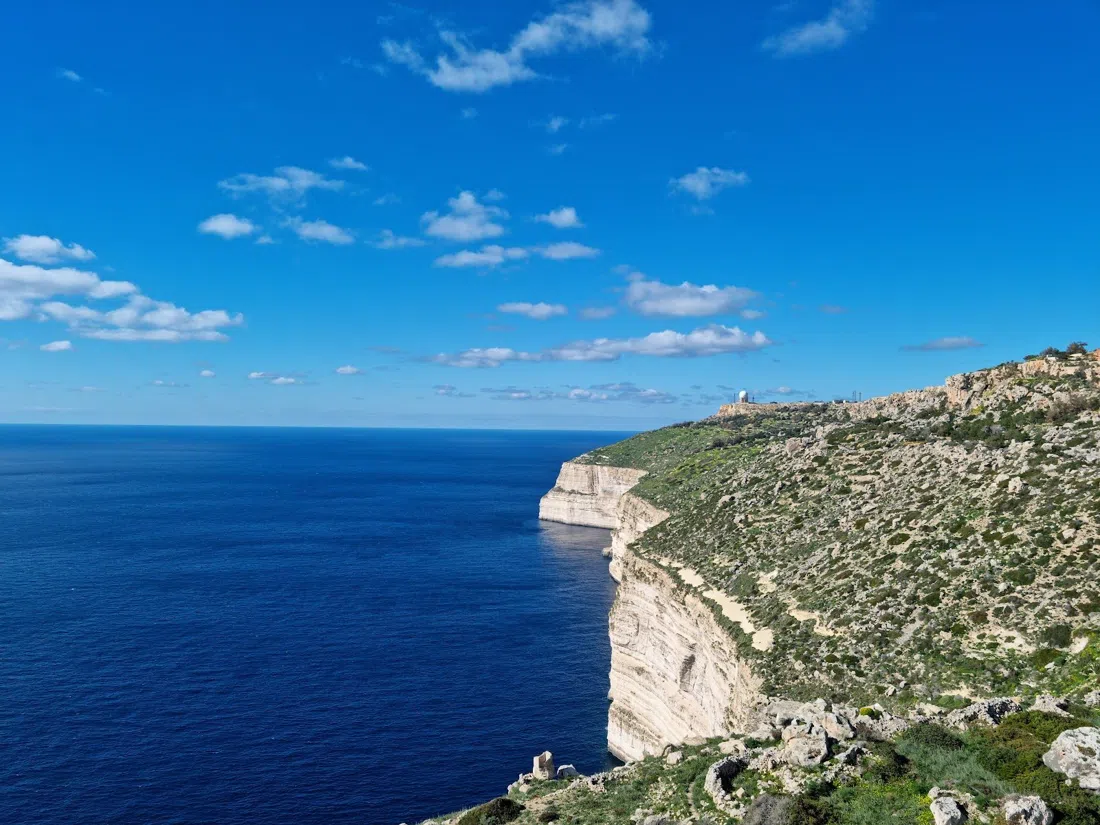
Dingli Cliffs (Dingli, on the south-west rim) is the walk people picture when they picture walking in Malta. A road and a footpath run parallel to the edge for about two kilometres with pull-offs along the way, which makes it workable for mixed-ability groups and for anyone who wants to turn back early; there is a longer 6.7km route down towards Fawwara if you want a proper afternoon of it. It is free and open at all times, and the sunset here is the reason most people come. Take the edge seriously. There are no barriers of any kind and the wind off that coast is strong enough to move you, so keep well back from the rim and keep children and dogs close.
Below the cliffs, Il-Buskett (Dingli and Siġġiewi, in the valley under the Verdala palace) is the one place on the island with closed forest shade and birdsong overhead: Aleppo pine, oak, orange trees, and a temperature drop you feel on the way in. It is free, unfenced and open at all hours. Buses 52, 56 and 181 stop at Buskett, so any group size works; the roads in are narrow and parking is genuinely miserable, so take the bus to Dingli and walk in from the south entrance rather than driving and circling.
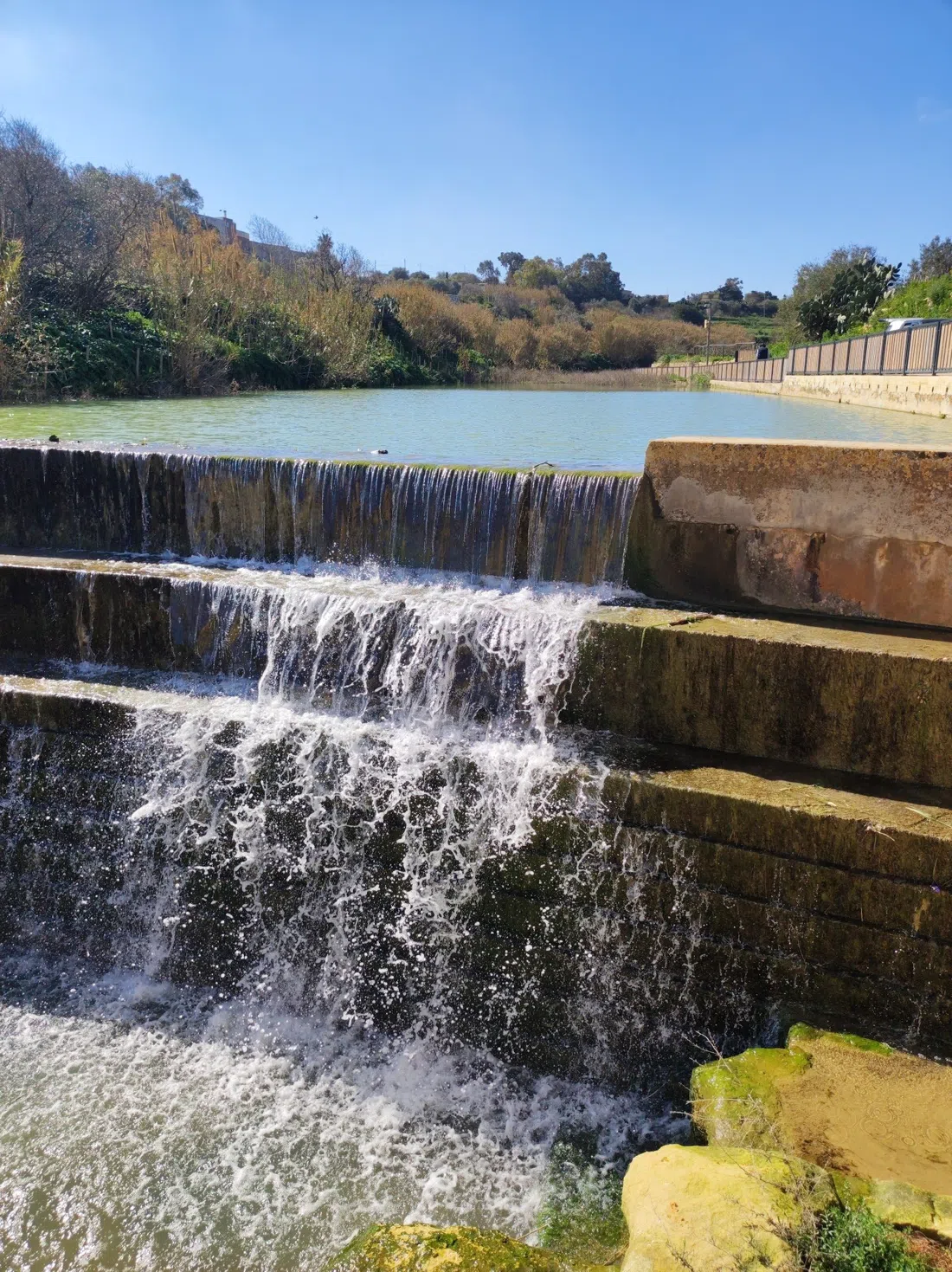
Chadwick Lakes (Wied il-Qlejgħa, inland from Rabat) is the closest thing Malta has to running fresh water: a chain of dammed pools in a valley, recently rehabilitated and now holding around 70 million litres. Open access is free from the Fiddien Box interpretation centre, which has parking and bike racks, and the trail runs about two kilometres. Two caveats. The path narrows to single file in places, which slows a large group to the speed of its slowest member, so it suits pairs and small parties better. And it is a seasonal walk: December through April is when there is water in it, and by a dry September the pools can be low to empty.
Walking alone, and walking after dark
The split that matters is between lit and populated on one side and remote and unlit on the other, and it does not map onto town against country. The promenade and Ġnien l-Indipendenza stay busy with ordinary local foot traffic well into the evening, which is why they are the after-dark option rather than anything more scenic. The garigue at Pembroke, the Majjistral coast and the Dingli rim have no lighting, no barriers and thin phone signal in the dips; they are excellent solo walks in daylight and a bad idea at night, whoever you are. For a first walk alone, Salina and the Xemxija trail are the gentlest: flat or gently sloped, waymarked, and with enough passing walkers that you are never genuinely isolated.
Where you sleep changes this more than anything else on the list. A room on the Balluta side or uphill and inland from the Paceville core puts you ten minutes from the promenade and out of range of the sound; the St Julian's hotel search is the place to filter that out before you book, and the rest of the St Julian's guide covers the bays and the eating end of things.
Practical notes
Transport is buses, and the routes out of the Sliema corridor cover almost everything above; fares are low, a stored-value travel card beats singles if you are here a week, and the operator's app is the only timetable worth trusting because published frequencies and actual frequencies diverge in summer traffic. Buses 52, 56 and 181 are the ones to remember for Buskett. The Sliema to Valletta ferry is short and runs frequently, and it is the pleasant way to reach the Upper Barrakka.
Cash barely matters here. Every place on this list is free to enter. The exceptions are small: €1 return on the harbour lift, a modest fee for the Salina Visitors' Centre and Salt Museum, a small charge for a guided visit at Wied Għollieqa, and a donation box at Simar. Carry a few euro in coins anyway, because the smallest counters do not always take cards.
From May to September, treat anything without shade (Pembroke, the cliffs, Majjistral, the salt pans) as a dawn or late-afternoon walk, and fill the middle of the day with San Anton or Buskett. From December to April the valleys are green and Chadwick Lakes has water in it, but Simar is open and Salina closes an hour earlier. Wear real shoes for Wied Għollieqa and the cliff paths. And if you are travelling with a group of more than about eight, plan around Ta' Qali, Salina, Majjistral and the Pembroke trail, all of which absorb numbers, rather than the Spinola garden or the single-file stretch at Chadwick Lakes, which do not.
17 September 2026 · a first week before the flat: the St Julian's hotel directory