El Hierro · Where to live · 9 min
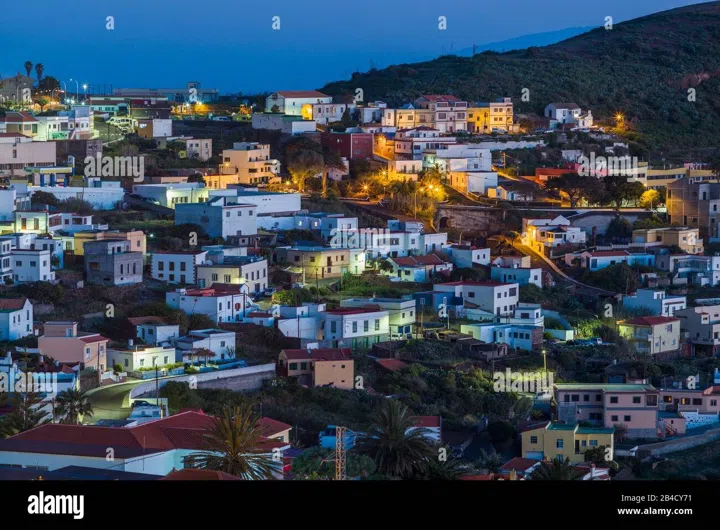
Las Puntas, the El Hierro village under the El Golfo cliffs
Five hotel rooms on a lava flow, 17th-century salt pans, three lava pools and a 5.5 km coast path, with the phone numbers you need before you go.
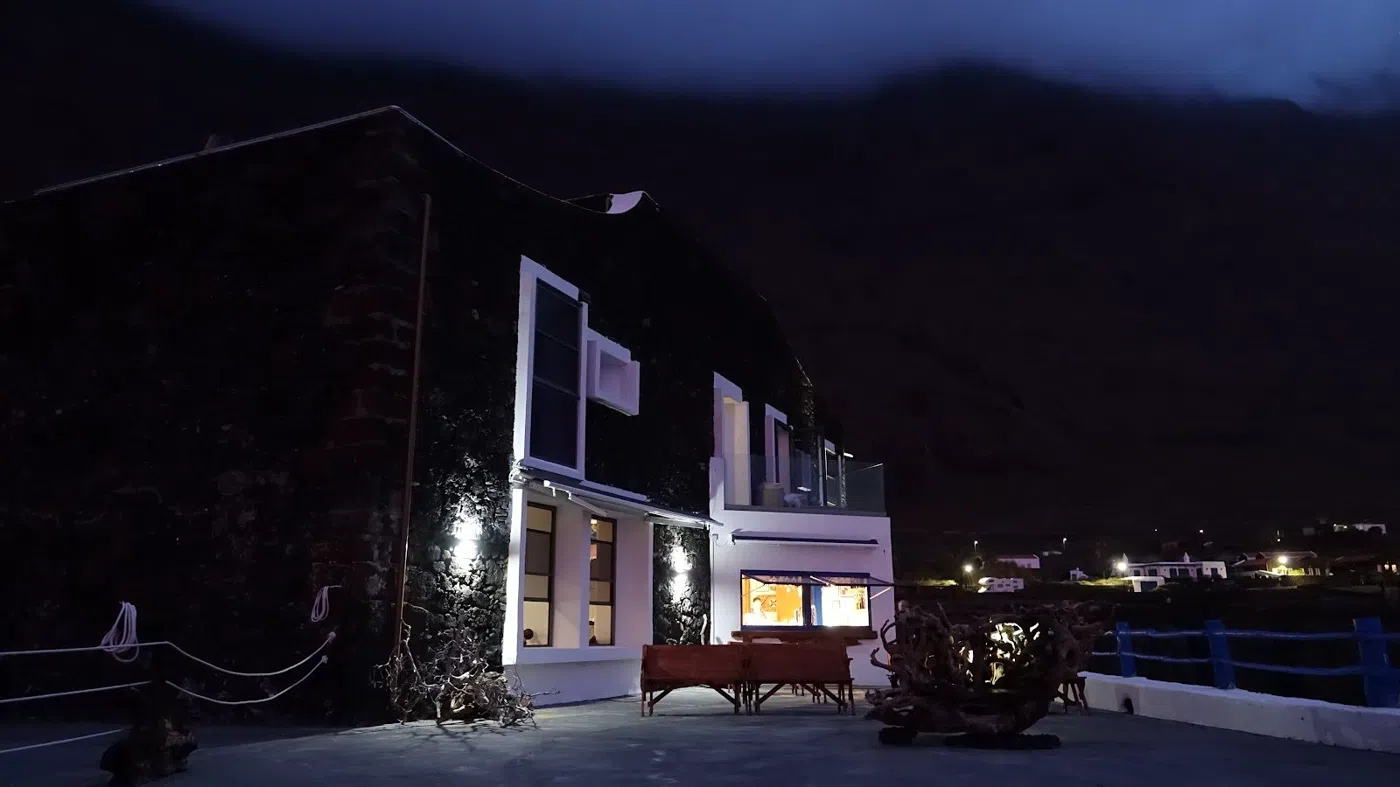
Five hotel rooms sit inside an 1884 customs warehouse on a lava tongue off the old pier at Las Puntas, the Atlantic breaking on three sides. Guinness listed it in 1984 as the world's smallest hotel. East of the pier, salt pans chiselled into the black lava shelf in the 17th century still crust white at the rims.
The old pier and the hotel on it
Hotel Puntagrande (the 1880s pier, Las Puntas) is a two-storey cube of black basalt with white window frames and a red-tiled roof, built as a customs warehouse in 1884 and standing alone on the lava where the old pier runs out. It is the building everyone photographs here, and you do not have to be a guest to do it: walk out along the pier, read the plaque, then turn and look at the El Golfo cliffs rising behind the roofline.

Staying is the hard part. The hotel has five rooms, takes adults only at 18 and up, and does not accept group bookings. Rates sit at €€. The in-house Alma Marina restaurant has run intermittently since it launched, so confirm dinner at the moment you book the room, on +34 611 285 983. The bar and terrace seat small parties, which is the easiest way to drink with the water on three sides of you.
Salt pans and lime kilns on the shoreline
Salinas de Las Puntas lie on open shoreline east of the pier: shallow rectangular pans cut by hand straight into the lava shelf, rims crusted white, with two squat round stone lime kilns alongside them. Spray blows across the whole site from the open Atlantic. The salt works go back to the 17th century and carry protection as ethnographic heritage.
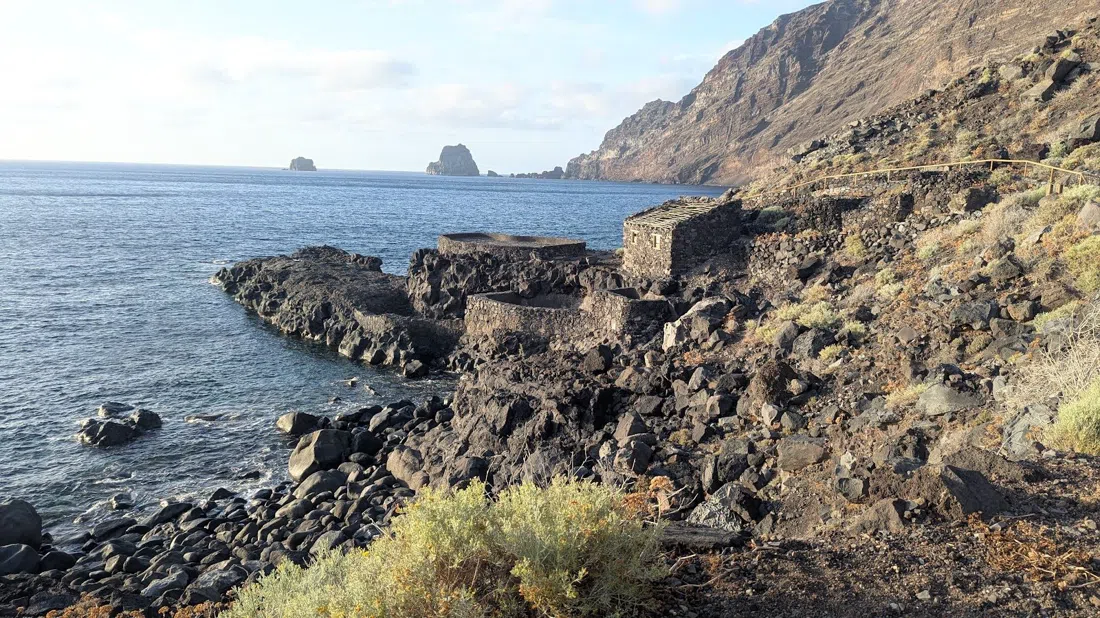
Limestone came in by sail from Fuerteventura in exchange for Herreño salt, and the lime-mortar technique used on these walls survives in only two other places in the Canaries. Entry is €0, with no gate and no ticket, at any hour you like. Watch your feet, because the rock is uneven and turns slippery as soon as it is wet.
The coast path to La Maceta
Sendero litoral Las Puntas – La Maceta covers 5.5 km out and back, 2 hours on your feet, and links the hamlet to the natural pools. The surface is dirt and lava, narrow, hugging a low cliff edge past Playa del Cantadal through agave and tabaiba scrub. Foam explodes on black reefs below you and the Roques de Salmor sit framed ahead for most of the way. It is the main reason to stay in the village.
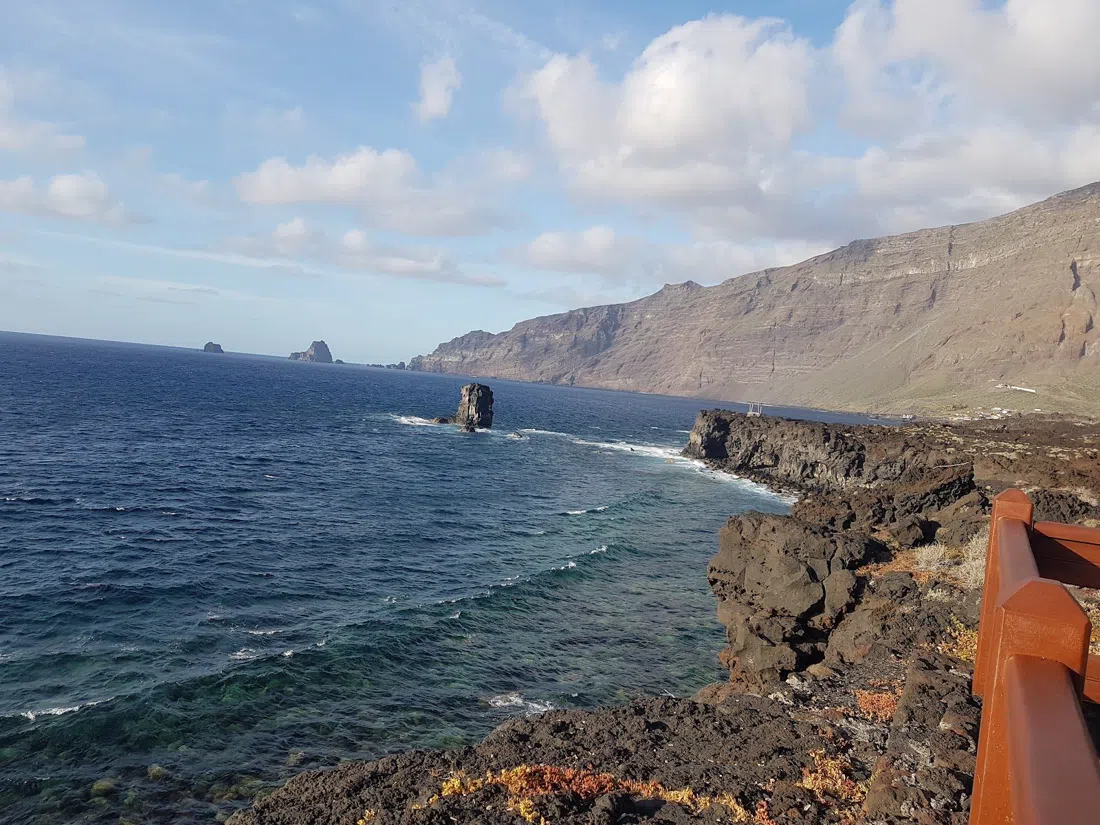
In places the path drops to single file. There is nothing en route: no facilities, no shade, and in winter nothing at all to break the wind, which is the thing that will turn you back. It is free and needs no booking, so the only decision left is when to go. Go late and walk into the light.
Looking at the Roques de Salmor
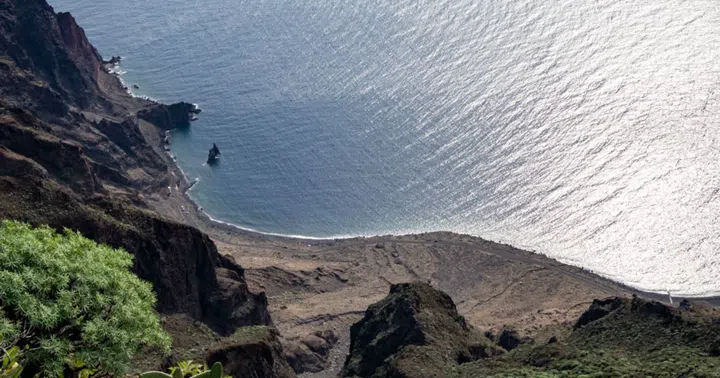
Reserva Natural Integral de los Roques de Salmor is two bare basalt stacks standing offshore like fallen dominoes, 350 m from the foot of the cliff, seabirds circling them and El Golfo's 300 m wall curving away behind. They are the island's emblem and the last refuge of the giant Hierro lizard in the wild.
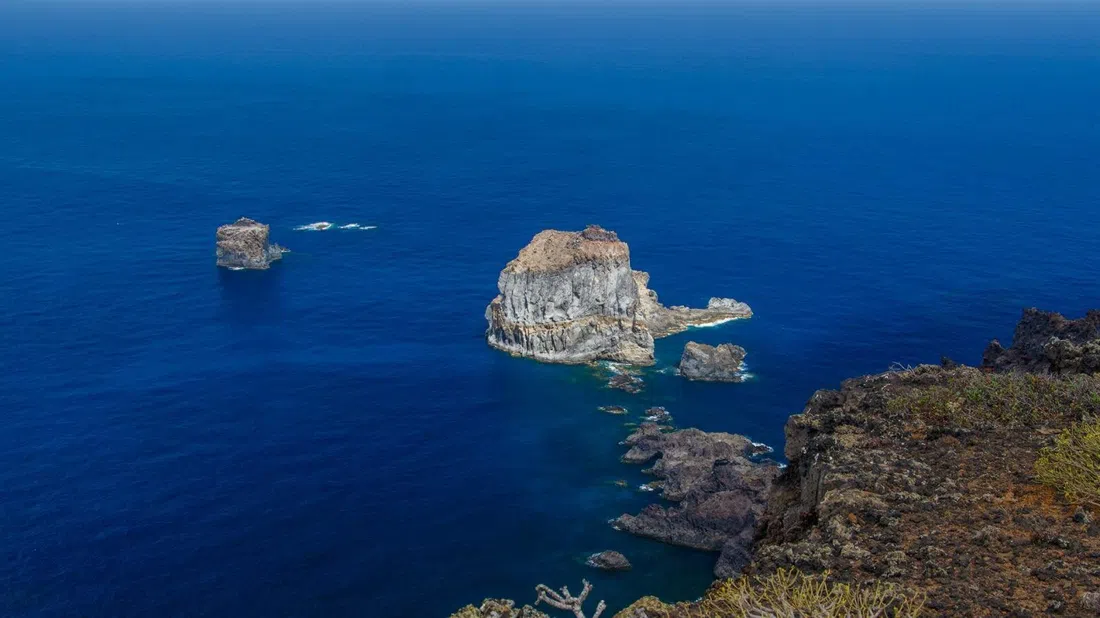
Viewing costs nothing, either from the Las Puntas shore or from the coastal path above the village, and sunset is the hour to stand there. Landing is prohibited. This is a strict reserve and no boat can legally put you ashore, so ignore anyone who offers to take you out.
Swimming at La Maceta and Charco Azul
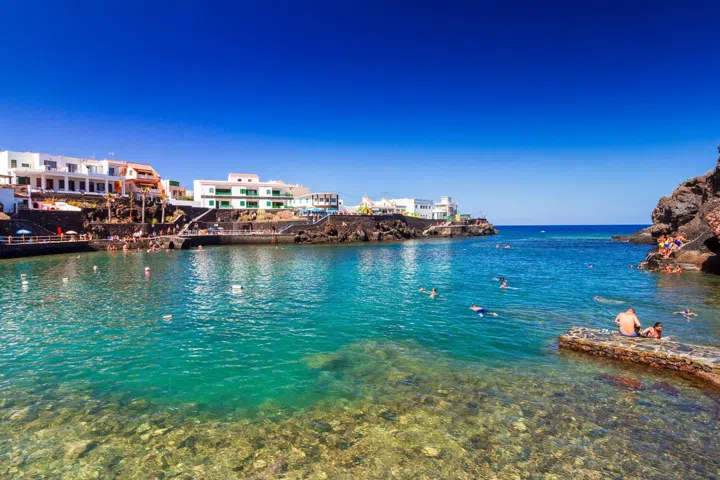
Piscinas Naturales de La Maceta are three turquoise pools scooped out of a black lava platform behind a natural rock breakwater, with concrete steps and handrails down into the water and white solarium ledges above them. One of the three is shallow and sheltered from the waves, which is why local families bring small children here. Parking, showers and toilets sit beside the pools, and picnic grills run up the slope behind. Free, unstaffed, open all year.
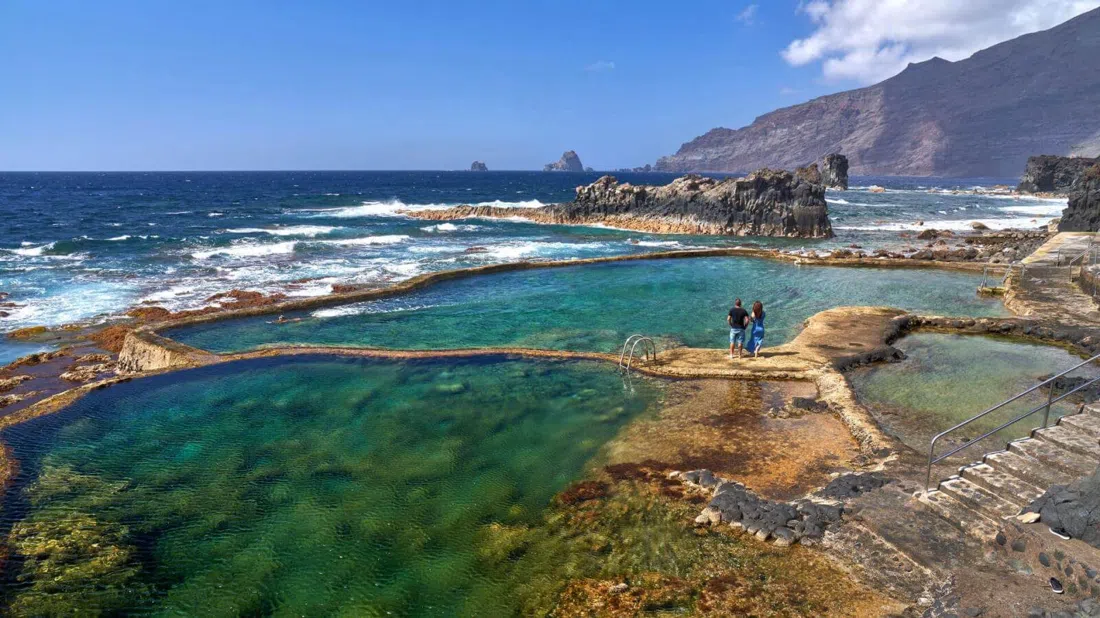
Read the sea before you get in. On big north swells it washes clean over the platform and the pools stop being pools.
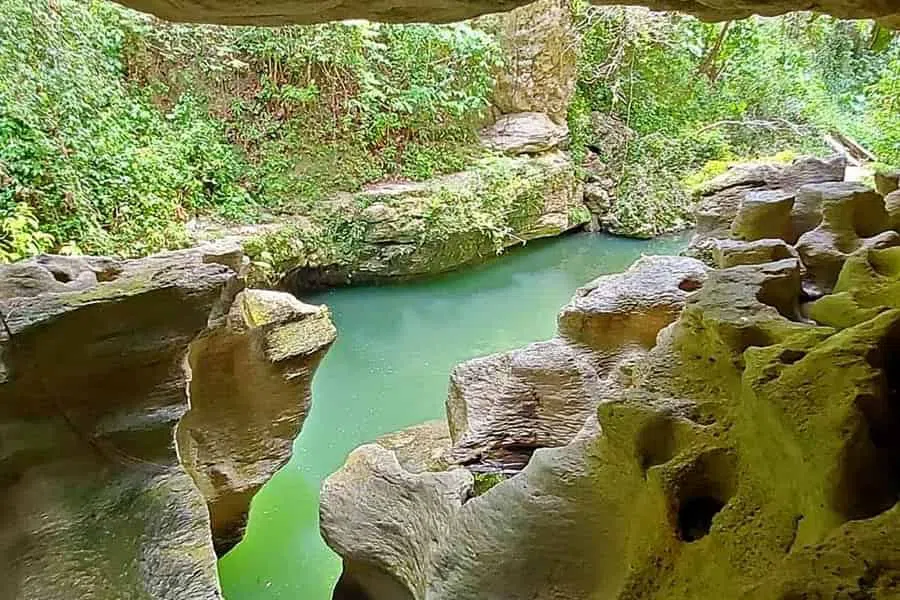
Charco Azul is 5 km west at Los Llanillos, the most photogenic swim in El Golfo: a near-circular pool of intensely blue water inside a collapsed lava arch, under an 80 m cliff, reached by a railed walkway and a staircase cut into the rock. The walkway itself is easy, including with children. The entry ladder is the danger point in swell, and there is no lifeguard. The pool is small. Go early or go late. It is free and open 24 hours, with showers and a bar-restaurant up at the car park.
Frontera, the Joapira bell tower and the Ecomuseo
Iglesia de Nuestra Señora de la Candelaria, 3 km from Las Puntas, is a long whitewashed three-nave church on the floor of the valley, built in 1818. The Campanario de Joapira stands 35 m away on top of a small cinder cone, 50 m above the roof it rings for, put up the hill so the bells carried across El Golfo. Its lower stages went up in 1880 and the top in 1957, and the parish has repaired it recently.
Walking up to both costs nothing. The mound is open whenever you arrive and the path to the tower is short and steep; the church interior depends on service times, so take whatever is open when you are there. Stand at the tower and you can read the whole valley below you, which is useful before you drive anywhere else.
Ecomuseo de Guinea y Lagartario is the only museum close to Las Puntas: a row of restored dry-stone houses with flat lava-slab roofs set against the El Golfo cliff, each interior furnished for a different period, plus a 90 m volcanic tube and glass-fronted terraria holding metre-long Hierro giant lizards. These are the animals the Roques de Salmor made famous, and this is the one place you will see them.

Entry is by compulsory guided tour at set times between 10:30 and 16:00 daily, and the full circuit runs 1 hour 30 minutes to 2 hours. Adults pay €9.50 and under-11s go free; the €17.95 island pass covers this site plus other centres. Ring +34 922 55 50 56 to book, and ring early if you are more than a handful of people, because tour times shift to fit booked parties. Shop, toilets and parking are on site.
Up the cliff road to Mirador de la Peña
Mirador de la Peña at Guarazoca is 14 km from Las Puntas, 25 minutes up the cliff road. Treat it as a half-day out. César Manrique's low stone-and-glass pavilion is built into the cliff rim, and its full-height window wall looks 700 m straight down onto the El Golfo valley, Las Puntas and the Roques de Salmor. This is his only work on El Hierro, and the view explains the valley you have been walking around at sea level.
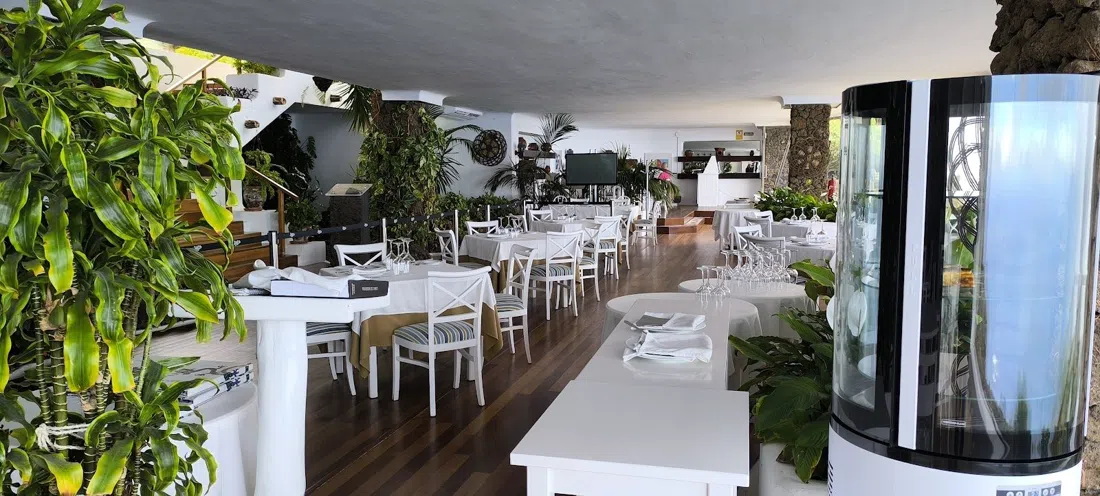
The viewpoint and the garden are free, and the garden is where to sit if you are not eating. The restaurant runs at €€; reserve in season on +34 922 55 03 00.
Eating in the village
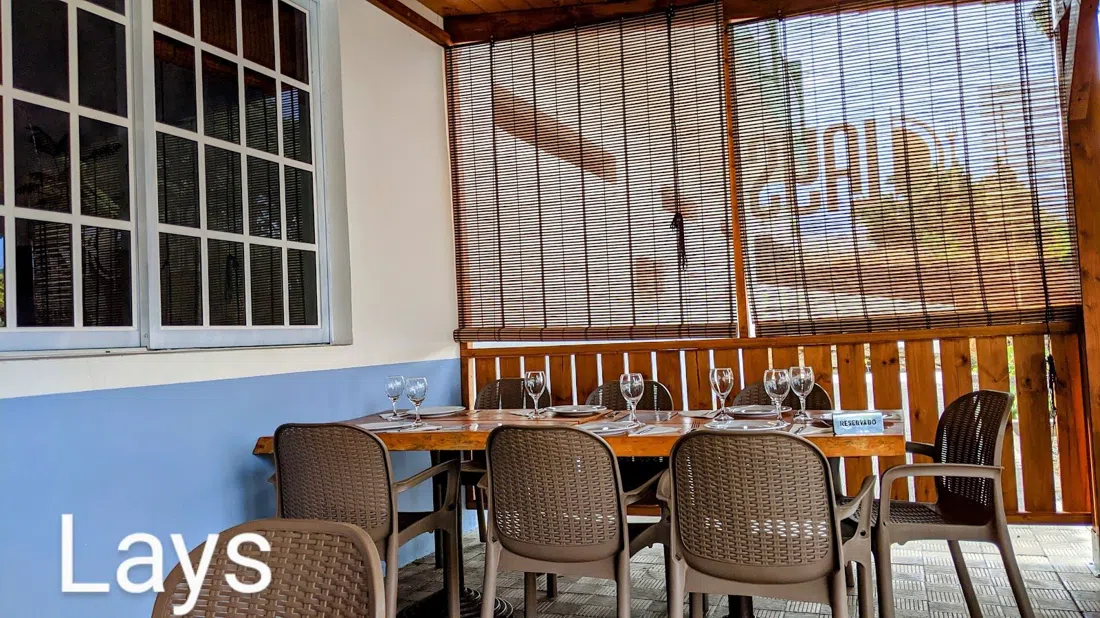
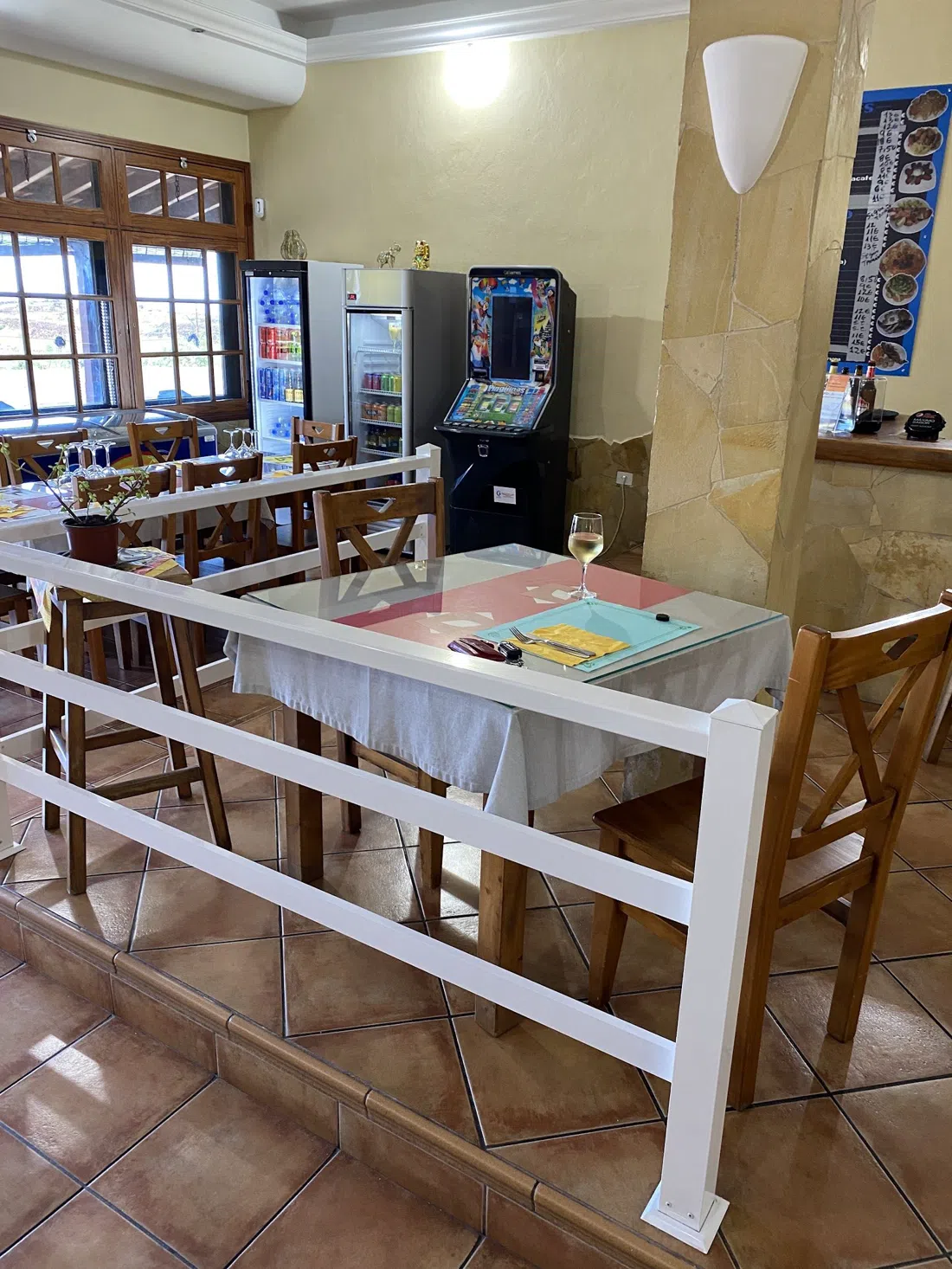
Restaurante Lays on the main street of Las Puntas is the dependable kitchen that runs all year, 12:00 to 16:30 and 19:30 to 23:00, every day. The room is plain and tiled, the kitchen works through an open hatch, and platters of fried vieja and limpets land on paper-covered tables with bottles of Hierro wine beside them. Order the battered fried cheese. Portions are built for sharing, at €€, and a table for more than six needs a call first on +34 922 55 12 23.
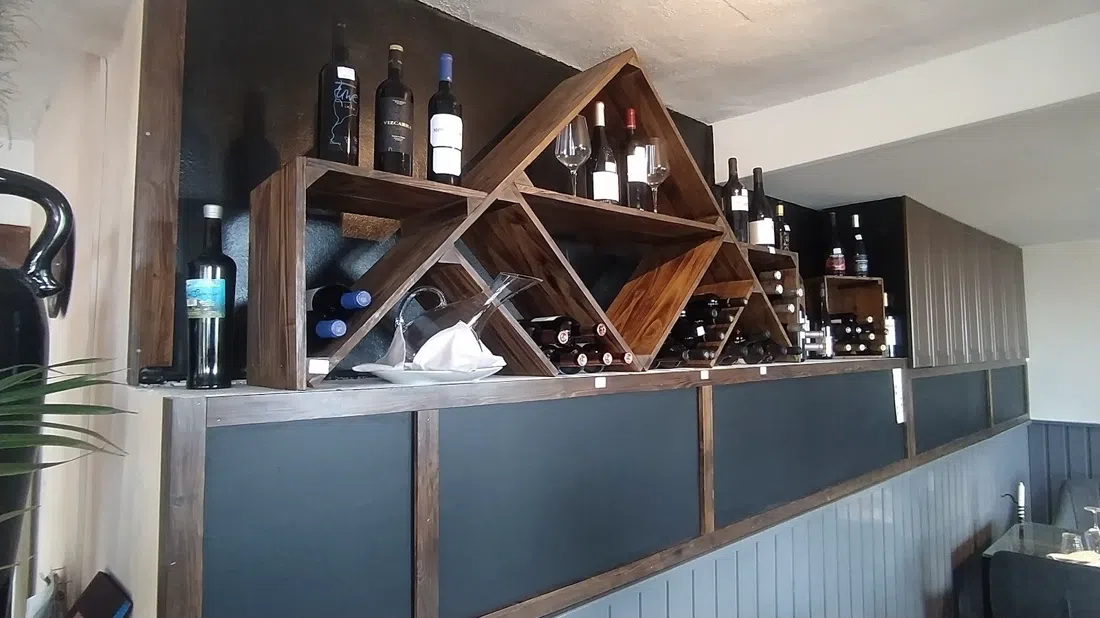
Con Fusión on Calle Tres does the most interesting cooking in the hamlet, Canarian produce run through a Swedish kitchen. A chalkboard carries the tapas list, a guitar is set up in the corner for the nights there is music, and the street terrace takes the overflow from a tiny room. It opens from early afternoon until 23:00 and closes Mondays and Tuesdays. Prices are €€. The room is small enough that booking decides whether you eat, on +34 659 09 49 23.
Bar Restaurante Arena stands by the tunnel mouth on the Las Puntas road, the largest dining room in the village: a long counter, bare tables, thick wahoo steaks and fried fish coming out of the kitchen at €15 a head. It opens late, Tuesday to Sunday, at €, and it is the fallback when the sea-view places are full or shut. The food is solid. The number is +34 608 72 58 38.
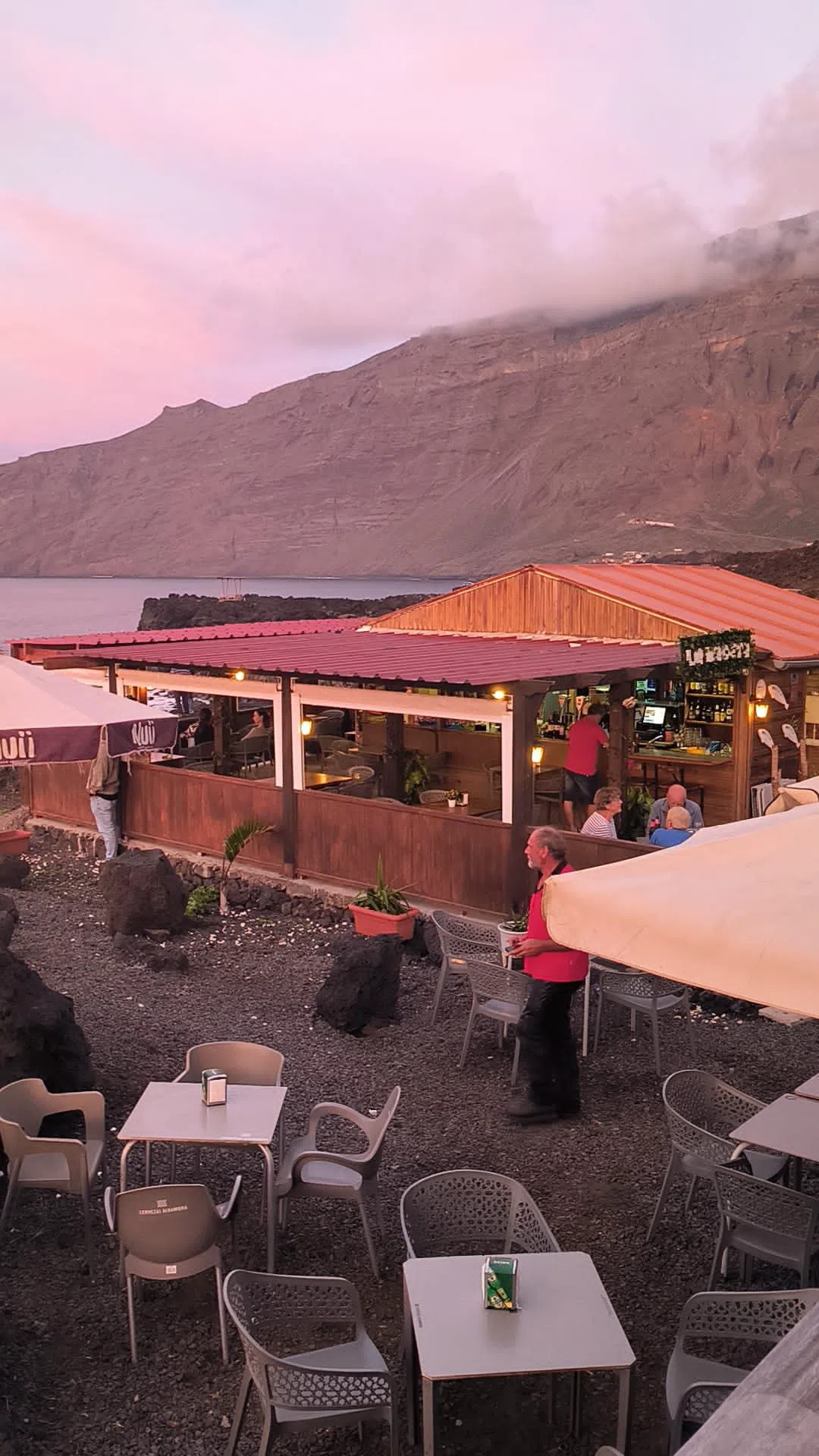
Kiosco La Maceta sits on the lava shelf 50 metres from the pools, a small flat-roofed building with plastic chairs and parasols on a concrete terrace and the Roques de Salmor dead ahead across the water. Grilled cheese, carne fiesta and scrambled squid and prawns come out at €, so you can swim and eat without moving the car. Seating is walk-in. Hours flex with weather and season, so call +34 671 638 985 before you drive down.
Where to stay
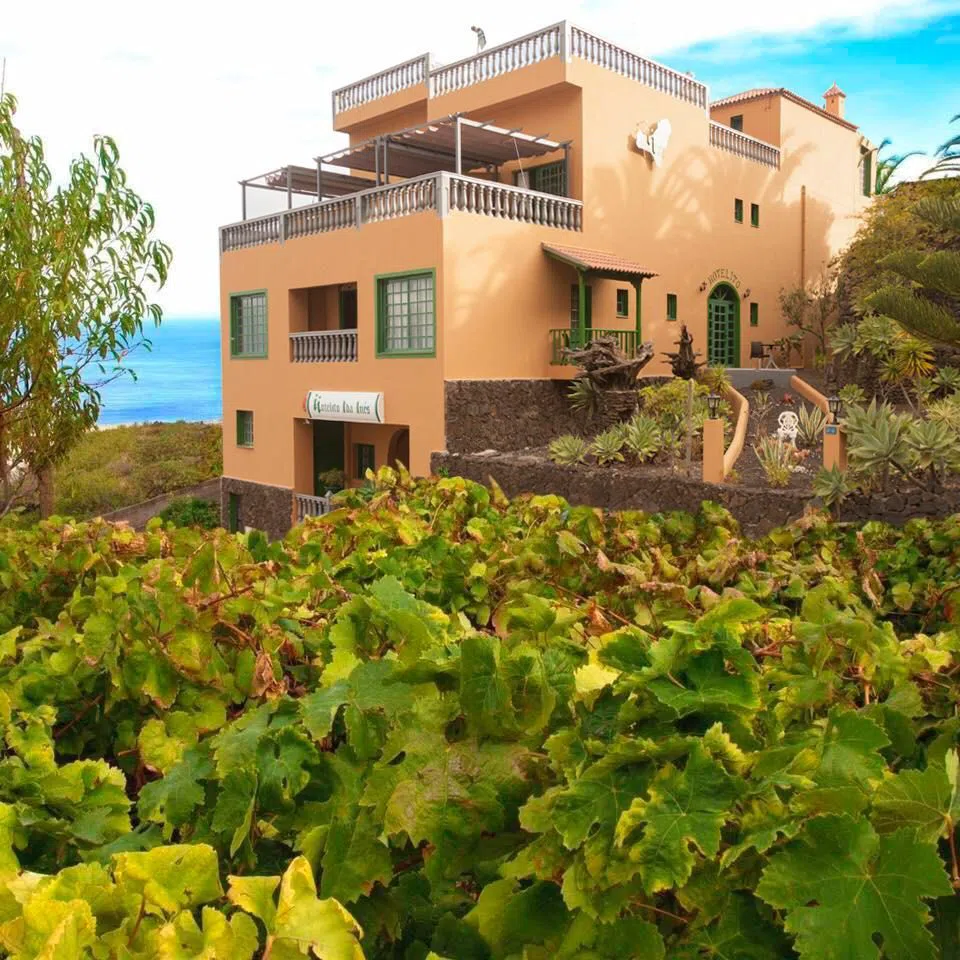
Hotel Ida Inés in Frontera is the practical base once Puntagrande's rooms are taken: a compact three-storey hotel with balconies on every room, banana and pineapple plots around it, and the full El Golfo cliff wall filling the view inland. It is family-run with 12 rooms, five minutes from the coast and within walking distance of the church and the bell tower. Rooms start at €62 a night with breakfast included. Book direct on +34 922 559 445.
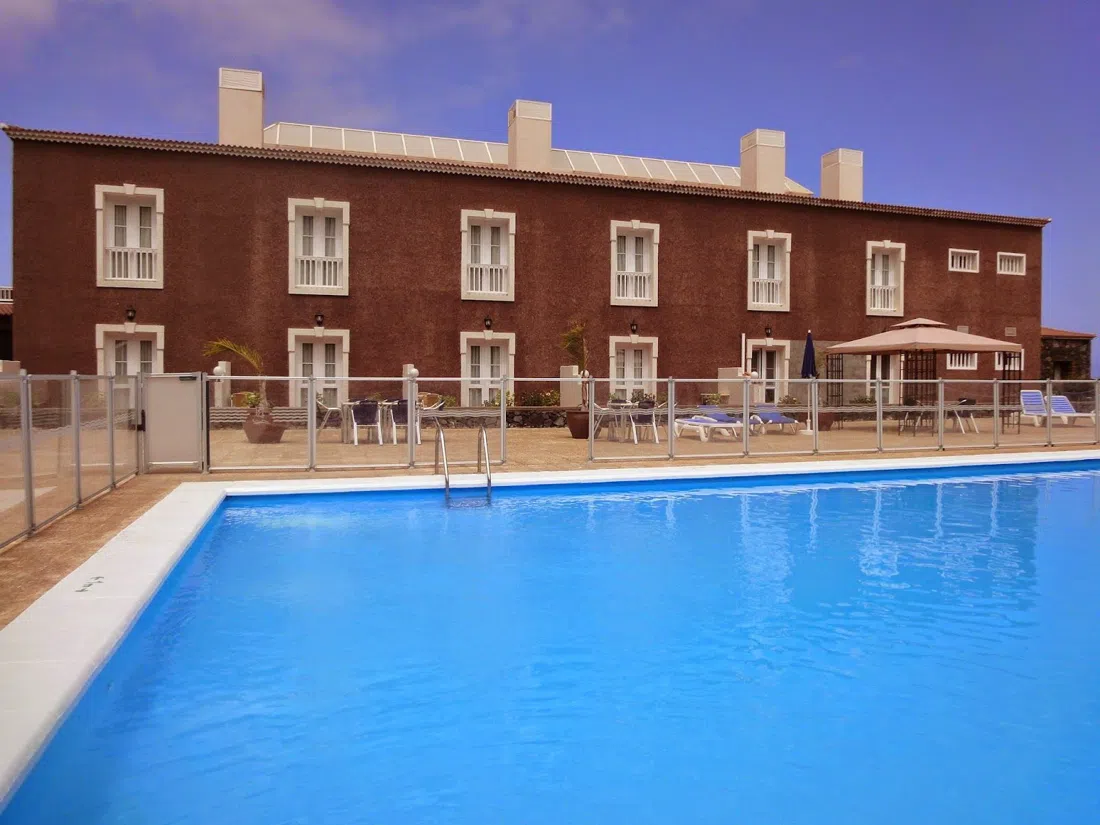
Hotel Balneario Pozo de la Salud is 12 km west at Sabinosa, a low white block on bare lava coast with the stone wellhead of the 1702 mineral spring beside it and nothing but Atlantic to the west. It is the only working spa in the Canary Islands and the westernmost hotel in Spain, built on a mineral-medicinal spring declared of public utility in 1949. The hotel has 22 rooms at €€, from €62 to €80, a spa circuit and treatments you can book, and a restaurant on site; reserve through the hotel's own site. A car is essential out here.
Days, bookings and the sea
Monday narrows the village down to Lays. Phone ahead for dinner at Puntagrande, a table at Con Fusión and your Ecomuseo tour, and look hard at the water before you climb into either pool.
See the El Hierro guide and the El Hierro hotel search.
4 November 2026