El Hierro · Where to live · 8 min
Tamaduste and the North Coast: El Hierro's Village Built Around a Lava Pool
On El Hierro's north coast, a near-circular lagoon punched into an old lava flow is the whole point of Tamaduste — and the start of a string of fishing hamlets that swim rather than entertain.

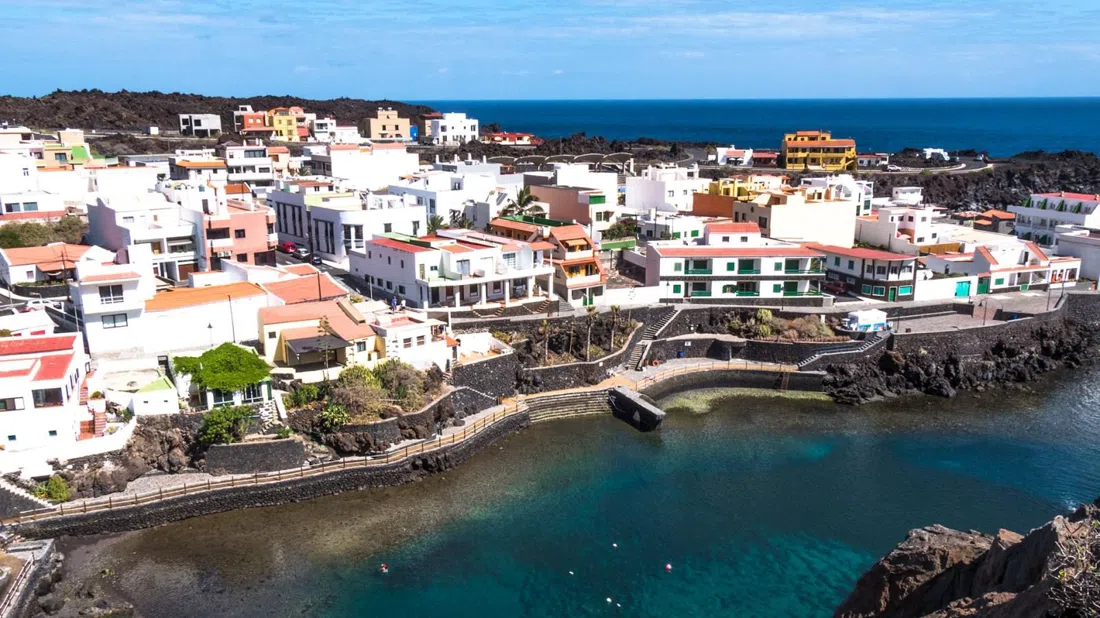
At five on an August afternoon, the lagoon at Tamaduste holds more people than the village has front doors. Cars from Valverde fill the slope above the water. Towels cover the black sand at the shallow end. A line of teenagers waits on the stone platform for the tide to rise just enough to make jumping worth it. The pool itself is almost a circle, punched into an old lava flow where the rock met the Atlantic and then walled off from it, so that the water inside sits flat while the sea works away outside. The airport is ten minutes down the road. This is El Hierro at its most sociable — and, by nine in the evening, at its quietest.
What Tamaduste and the north coast are known for
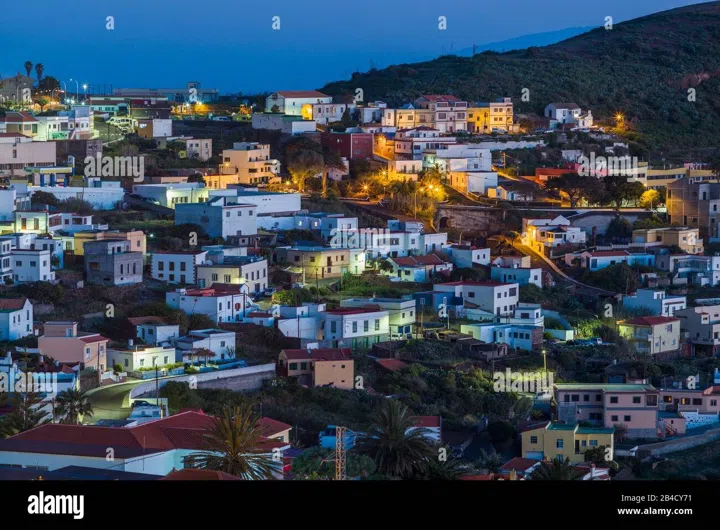
The identity here is a single piece of geology. A lava flow ran down to the sea, the sea pushed back, and what was left is a basin of water that behaves nothing like the ocean twenty metres away: no swell, no current, no shelf dropping away beneath you unless you deliberately swim out to find it. The village grew around the rim rather than the other way round. Whitewashed houses stand close to the water, their doorsteps a dozen paces from where you would drop a towel, and black volcanic sand gathers at the shallow end, which is exactly why every herreño family with a toddler ends up here instead of on some exposed shingle.
Call it a resort if you like — in July and August it is the closest thing the island has to one — but on El Hierro that means a bar, a pizza terrace and a great many wet children. The rest of the year Tamaduste reverts to what it actually is: a small, salt-stained residential village with an extraordinary swimming pool at its centre and almost nothing else competing for your attention.
Go north and the rhythm repeats in smaller doses. La Caleta, Pozo de las Calcosas and Charco Manso are fishing hamlets rather than destinations, each with its own arrangement of rock, concrete and water. At La Caleta the pools are landscaped, gentler and shallower than Tamaduste's, and the open Atlantic lies immediately beyond them with snorkelling good enough to justify packing a mask. Saltwater and volcanic rock, unhurried, repeated along the coast: that is the whole proposition, and it is a better one than it sounds.

Where to eat and drink
Be clear-eyed about this: options are genuinely limited. A handful of houses around a pool is not a dining destination, and anyone who arrives expecting a choice of terraces will spend the week driving. What exists, though, is real and locally run, which counts for more than variety.
Bar Tamaduste — everyone calls it Casa Pujo, and you should too — sits right by the lagoon and functions as the village's default stop for anybody who has just been in the water. It is the place where the swimming and the eating are part of the same afternoon: tapas, bocadillos and burgers for the undemanding, and then the things worth ordering properly, which are grilled tuna straight off the plancha, choco, and queso herreño. Ask for the cheese and you are eating the island itself; ask for the tuna and you are eating what came past the north coast. The register is family restaurant rather than anything studied, and that is the point — it is where locals eat, not where locals send visitors.

The other address is Pizzeria Harina y Tomate, a small Italian place near the village centre with three outdoor tables and a business model built mostly on takeaway. Three tables is not a typo. If you want one of them on a warm evening, turn up early or accept that your pizza is going back to the apartment in a box, which is what most of the street does anyway. Note the closing day: Wednesdays it does not open, and in a village with two eateries that is a piece of information worth writing down.

Nightlife, in the sense the word usually carries, does not exist here. There is no strip, no late bar, no cluster of shops to browse after dinner. Evening entertainment is the colour going out of the water, a last swim when the crowd has gone, and whatever you brought back from the supermarket in Valverde. For some travellers that is the single best thing about the place. For others it is a dealbreaker, and better discovered now than on arrival.
Things to do
Swimming is the main event, and the only real daily decision is which pool suits the conditions and the company.
Tamaduste's own lagoon is the most complete of them. Shallow and sandy at the black-sand end for children, deep enough off the stone platform for the high-tide jumpers, with basic showers and toilets on hand and an accessible entry for anyone with reduced mobility — a detail that is rarer along this coast than it should be, and which makes Tamaduste the obvious base for mixed-ability groups. Families settle in for whole days here, which is why the bar does the trade it does.
La Caleta is the next stop up, and the trade-off is clear: the landscaped pools are calmer and shallower, better for very small swimmers, while the open-water side just beyond gives you something to explore with a mask. Treat the line between the two seriously. The sea outside the sheltered pools is the one genuine hazard on this whole stretch — currents and rock at La Caleta's open side, the same story at Charco Manso — and the signed swimming areas exist because people have misjudged it.
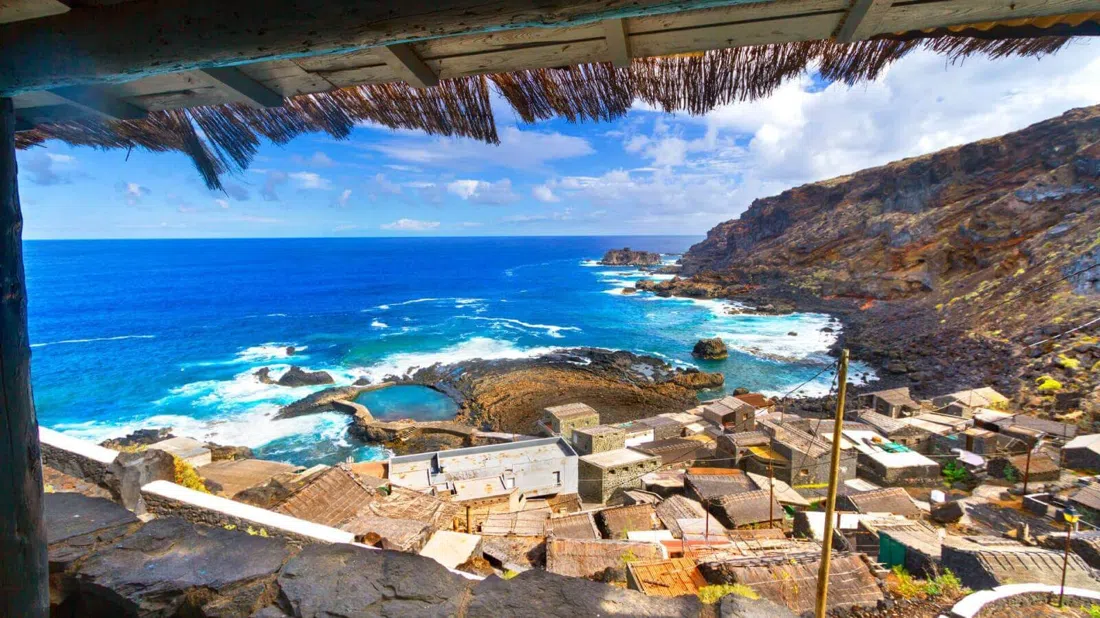
Pozo de las Calcosas is the one you will photograph. The pool is sheltered and perfectly swimmable, but what lifts it is the setting: a row of eighteenth-century stone fishermen's huts standing beside the water, low and dark and still in use as a hamlet rather than restored into a museum. Architectural Digest singled it out, and for once the attention is deserved — there is nothing else quite like it on the island, and nothing that so plainly explains how people lived off this coast.
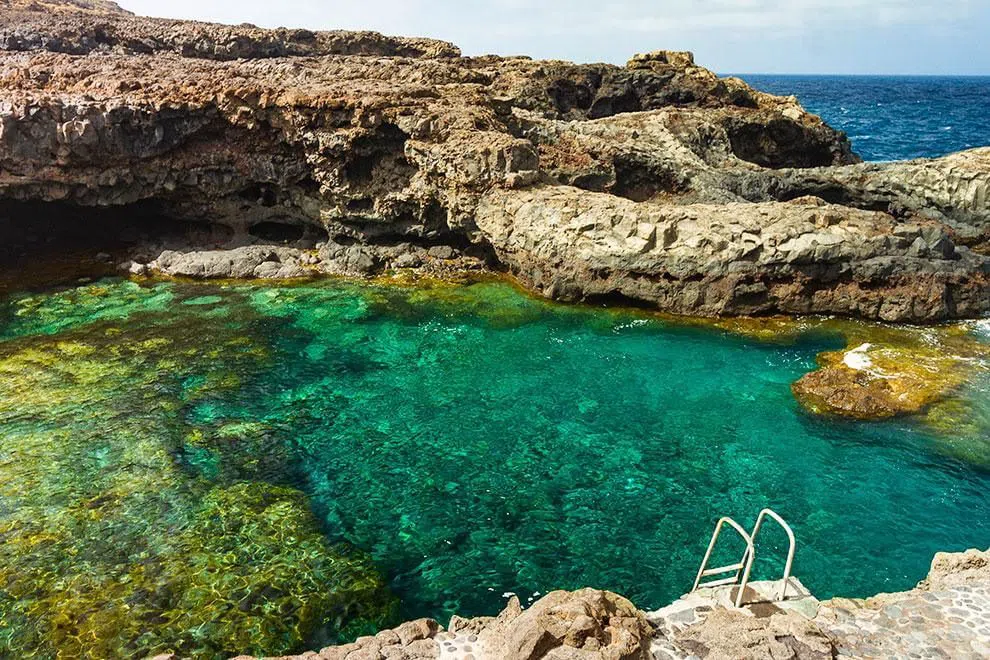
For solitude, take the track down from Echedo to Charco Manso. It is larger and wilder than the rest, a proper basin broken into several separate swimming areas, and there is a chiringuito for when you climb back out. The narrow approach road filters out most casual traffic, which is precisely why people who have been coming here for years keep it at the top of their list. Go on a calm day; the Atlantic has more say in this one than in the others.
When you want a day out of the water, the GR 131 Camino Natural starts right here: Stage 1 runs Tamaduste–Valverde, way-marked all the way, climbing off the coast to the island capital. It is the old relationship between village and town made walkable — the route people used before the road existed — and doing it on foot in the morning, then coming back down to the lagoon in the afternoon, is about the most satisfying way to spend a day on this coast.

Where to stay in Tamaduste and the north coast
Nothing here is a hotel in the conventional sense. Accommodation is almost entirely self-catered — apartments and houses, most of them either facing the lagoon or a short walk from it — and that shapes the kind of holiday you have. Apartamentos Boomerang is the best-known of them, and the pattern it follows is the local norm: your own kitchen, your own terrace, the water in sight or close to it.
That suits families, and it suits anyone perfectly happy to cook, which in practice means anyone sensible, because the village has two restaurants and one of them shuts on Wednesdays. Plan a proper shop in Valverde on the way in. Expect budget to low-mid prices across the board; beyond fuel, groceries and a couple of inexpensive family-run meals, there is genuinely very little here to spend money on. The payoff is a village where you can walk from bed to swimming in under a minute, and where the loudest thing after dark is the sea on the far side of the rock.
Getting around
Tamaduste is one of the easiest places on El Hierro to reach without a car. El Hierro Airport (VDE) is only a few kilometres away — well under ten minutes by road — which makes this the closest coastal base to arrivals and departures, and a short, cheap taxi ride is all it takes. Bus line R06 runs Valverde–Tamaduste–La Caleta roughly six times a day, enough to get you to the island capital for shops, services and the rest of the network. If you are arriving by sea instead, the island's only ferry dock is Puerto de la Estaca, on the far side of Valverde, with connections to Tenerife.
The honest caveat is the coast beyond the bus route. Pozo de las Calcosas, Echedo and Charco Manso have thin or no public transport, so seeing the best of this shoreline means a hire car or a taxi arrangement. Walkers have one fine alternative in the GR 131 up to Valverde. Everything else north of La Caleta really does want four wheels and a willingness to drive slowly down narrow lanes — which, given what waits at the bottom of them, is a fair price.
24 October 2026