El Hierro · Where to live · 8 min
San Andrés and the Central Highlands: Inside El Hierro's Foggy Rooftop
At 900 metres on the Meseta de Nisdafe, El Hierro's highest village trades beaches for cloud, cattle fields, three honest kitchens and a sacred tree that drinks the fog.

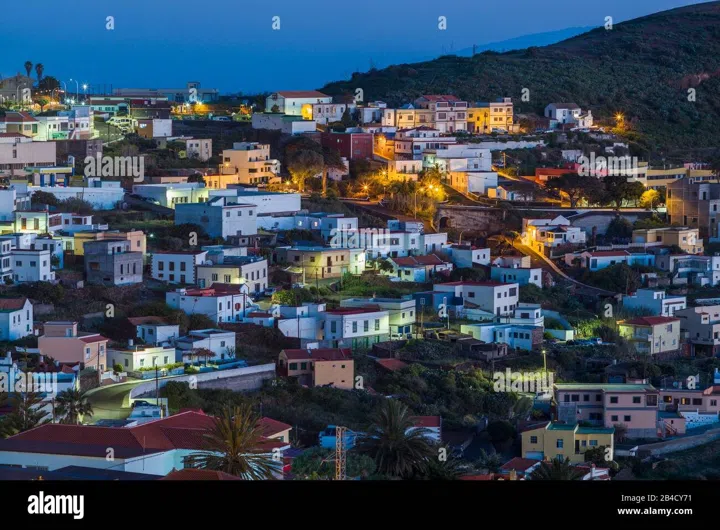
The cloud comes in sideways here. On the Meseta de Nisdafe — the farming plateau that splits El Hierro down its middle — the alisio trade winds hit high ground and unload, and San Andrés, at roughly 900 metres, spends long stretches of the day inside the weather rather than under it. Two hundred and thirty-seven people live here. There's a 16th-century church, a handful of streets, cattle fields behind low walls, and no sea view in any direction. It is the highest permanently inhabited village on the island. It also feels less Canarian than Atlantic-northern, closer to a hill town in Galicia than to the coast that lies a drive away in every direction. That fog is the reason: it's the whole explanation for why anyone settled this plateau in the first place.
The island's foggy rooftop
San Andrés is known first for its altitude and second for its weather, and those are really one fact. The plateau catches the trade-wind cloud as it slides off the Atlantic and holds it, so the fields stay wrapped in mist for hours at a stretch. Mornings go one of two ways. Some days the light comes in low and clean over wet grass, cattle standing in it like a Dutch painting; other days the mist closes down to thirty metres and the road up from Valverde becomes a crawl with headlights on at noon. Both are the real San Andrés. Neither is the Canary Islands anyone sells you in a brochure.

That climate is why the village works as the island's hiking and stargazing base rather than its holiday base. Walkers come for the Camino de Jinama, the Mirador de Jinama and the climb to Pico de Malpaso. Travellers who have spent a scorching day at sea level come up for a cool highland night and the novelty of needing a jumper in the Canaries. History people come for the Garoé, a short walk from the last houses, where El Hierro's pre-conquest story turns out to be a story about condensation. Astronomers come because the Malpaso area has close to no light pollution.
Be honest about the flip side. There is no beach on the doorstep; the coast is a drive away in every direction. Without a hire car you're at the mercy of a timetable with five or six buses a day. And nothing in the village stays open past early evening — if your idea of a night out involves a second bar, San Andrés will disappoint you quickly and permanently.
Three kitchens on Calle Jarera
Eating in San Andrés means one short street. Calle Jarera holds effectively all of the village's restaurants, and all of them do the same honest thing: home-style Herreño cooking at prices well below the coastal resorts, with a full meal landing around €10–15. The menu vocabulary is worth learning before you sit down. Garbanzada, the chickpea stew with pork that is the plateau's cold-weather answer to everything. Carne fiesta, pork marinated and then fried. And cheese, in more forms than you'd expect.
Casa Goyo is the best-known kitchen on the street and the one to plan your appetite around. Its signature move is grilled local cheese with honey and blueberry jam — salt, smoke and sweetness arriving together — served alongside croquetas and carne fiesta done properly. It gets busy at weekends, so a wait for a table isn't unusual. It isn't a disaster either, given where you're standing.

A few doors along, Mesón Jarera is a grill and barbecue house that regulars will tell you — quietly, loyally, and often — is the better of the two. The argument is about value and char: meat that comes off the fire with an actual crust, at prices locals point to as proof that the Canaries aren't all getting more expensive. Both positions are defensible. Eat at both on consecutive nights and settle it yourself.

The third is the most traditional, and for some travellers the most interesting. Bar Restaurante La Igualdad is a plain, family-run dining room with a menu that reads like an inventory of the island's old kitchen: chickpea stews, octopus vinaigrette, fried cheese, cheese broth, and stuffed chicken breast, which is a San Andrés speciality rather than a generic plate. No flourishes, no concessions, open all seven days.
After dark: dinner, then the sky
Here is the honest framing of nightlife up here. Dinner is the night out. La Igualdad's seven-days-a-week dining room is the closest San Andrés comes to a late venue, and late means early evening; there are no bars open past then. Arrive expecting otherwise and your only option is the drive back down to Valverde, which on a foggy night is not a drive you'll enjoy twice.

Stay instead, and look up. The compensation here is overhead. Push a little way south on the highland road and the sky does the job a bar would do elsewhere: this is Starlight country, with near-zero light pollution across the Malpaso area, and on a clear high night the Milky Way reads as a structure rather than a smudge. Bring the jumper. At 900 metres, once the cloud clears, it gets properly cold.
The plateau, the viewpoints, and the sky
This is hiking and viewpoint country rather than sightseeing-by-car country, though the roads are good enough for a slow scenic drive if walking isn't on the agenda.
Start with the Árbol Garoé, because it explains everything else. The Garoé is a til tree whose dense leaves comb water out of the fog that so regularly covers the Nisdafe plateau, condensing it into drinkable drips, and the Bimbaches — El Hierro's pre-conquest inhabitants — relied on it as a water source. The original tree fell in a storm in 1610; what you visit now is a replanting on the sacred site, with a small interpretation centre and an easy 500-metre path from the car park. Go in mist if the day offers it. Watching the mechanism work beats reading about it.

The signature walk is the Camino de Jinama, waymarked PR-8: roughly 8km of historic path that leaves the plateau and drops off its edge, threading down through laurisilva — the dripping, moss-hung laurel forest the fog feeds — and past the Ermita de la Caridad. It is the island's best-known trail, and it has a destination with real theatre. At the Mirador de Jinama, 1,230 metres up, the cliff simply ends and you look straight down into the banana and pineapple terraces of La Frontera, laid out across the El Golfo valley like a map of itself.

Then there's the roof of the island. Pico de Malpaso, at 1,501 metres, is reached by the highland road running south from the village, and on a clear day it hands you three neighbouring islands sitting on the horizon. It doubles as the stargazing spot: the same altitude and darkness that make it a Starlight site after midnight make it the island's single best panorama at noon.

Cheese, not souvenirs
Don't come to San Andrés to shop. There is no shopping street, no gift-shop row, nothing resembling retail as a leisure activity. What there is is better: the Central Quesera El Herreño, the island's livestock co-operative dairy, founded in 1972 and incorporated in 1981, based right here in the village. Queso herreño is smoked over prickly-pear stalk, fig wood and dry rockrose — an ingredient list that tells you precisely which plants grow on this island — and the cured version has taken gold at competition. If you carry one thing home from El Hierro, carry this. If you'd rather taste before you commit, order the grilled cheese at Casa Goyo first; the supply chain is about four hundred metres long.

Where to stay in San Andrés and the central highlands
San Andrés has no hotels in the usual sense. What it has is a small cluster of casas rurales — traditional stone farmhouses converted for whole-house rental, mostly along or just off Calle Jarera — from around €16–20 per person a night, which makes this one of the cheapest places to sleep in the Canary Islands, full stop. Thick walls, cool rooms, and a village that falls quiet at a serious hour.
The case for basing yourself up here is geography. You're in the middle of the island, roughly equidistant from everything, with trailheads close by and a night-time temperature that feels like mercy after a day on the coast. The case against is just as clear: you'll drive to the sea, you'll drive for any restaurant variety beyond three kitchens, and you'll want the car regardless. Weigh that against what you actually came for.
Getting around: you need a car, or patience
El Hierro Airport (VDE) sits on the coast near Valverde, about 10–15 minutes by road from the capital, with a further climb up onto the plateau after that — allow 25–30 minutes door to door. Arriving by sea, Puerto de La Estaca is roughly 15–20 minutes from Valverde on the east coast, which puts San Andrés about 30–40 minutes from the boat.
Public transport exists, and it is genuinely useful for one specific purpose: TransHierro's Línea 2 climbs up through Tiñor to the village five or six times a day, which is fine for a run into Valverde. It is no help at all for reaching the Jinama trailhead or the Malpaso road on your own schedule, which is the reason most people come. Hire a car.
A word on the driving, because it is the one real hazard in an otherwise very safe, very rural place. Crime isn't the risk here; weather and road geometry are. Fog can cut visibility to almost nothing with little warning, the cliff roads are narrow, and conditions at altitude turn cold and wet while the coast stays in shirtsleeves. Go slowly, use your lights in the murk, and keep a jacket in the boot even if you left sea level in a T-shirt.
24 October 2026