
El Hierro · Where to live · 8 min
Valverde, El Hierro: Twenty Minutes End to End in Spain's Only Inland Island Capital
A capital at 600 metres with no coastline, a Saturday market that's gone by two, and the island's only real concentration of kitchens, shops and late bars — all within a twenty-minute walk.
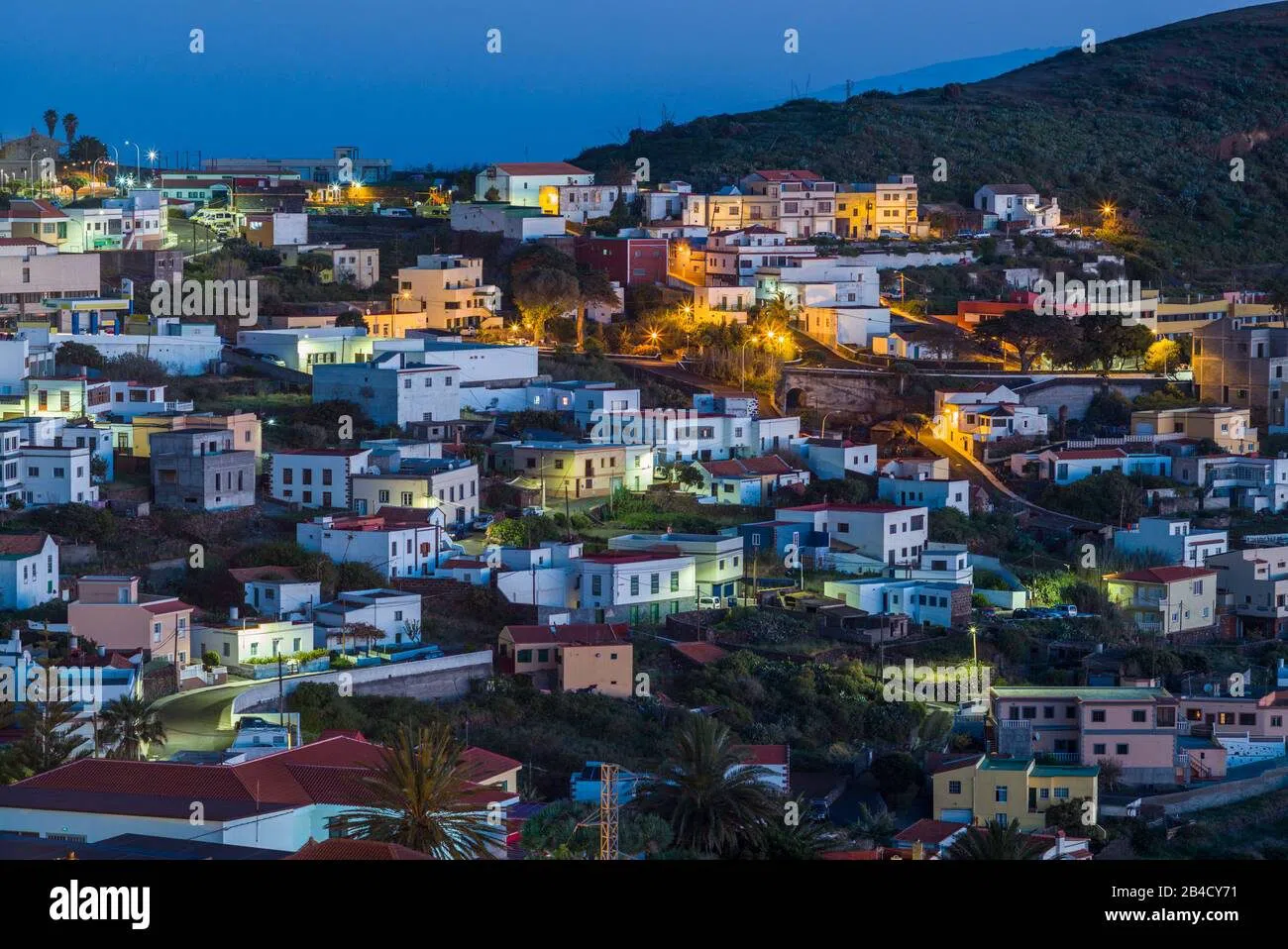
Valverde is the only capital in the Canary Islands with no coastline of its own. It sits at around 600 metres, on the shoulder of a hill where the trade-wind cloud rolling off the Atlantic snags and breaks, so a morning can begin in wet grey mist and finish with hard sunlight and a view clean across the Gulf of El Hierro. You can walk the town end to end in twenty minutes. It is also the one base on the island where you can park the hire car for a night and not need it again until breakfast — which, on El Hierro, counts as a genuine luxury.
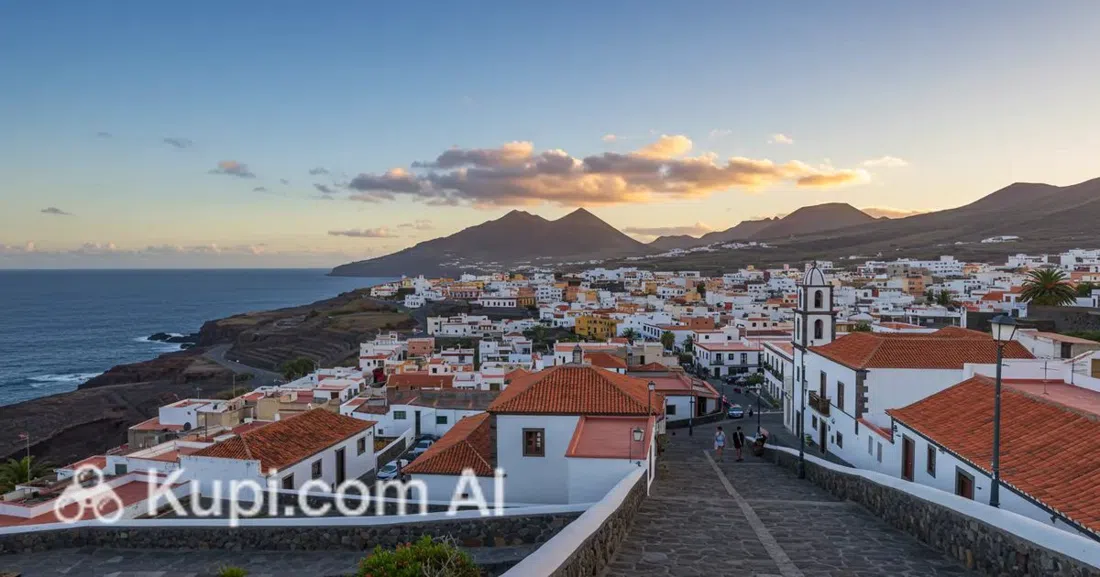
Spain's only inland island capital
Valverde's defining fact is geographic rather than architectural: it is the sole capital of a Spanish island or province that sits away from the sea. The Bimbaches who first settled this shoulder of hill had two sound reasons for the altitude. Pirate raids came from the water, and water itself came from the sky — specifically from the moisture carried in on the Atlantic trade winds, which gives itself up when the cloud hits the slope. Both logics have outlived the people who applied them. The cloud still comes in, and the town still feels oriented inward and upward rather than out towards a horizon.
That altitude also sets the pace. Valverde runs on a different clock to the rest of the Canaries. Shops shut for a long midday break and stay shut exactly when a visitor wants them open. The Saturday market on Calle Pérez Galdós has emptied out by two. By nine in the evening most of the island has gone quiet, bar a handful of places around the centre. The town itself is a tight grid of steep streets, and the gradient is not decorative — your calves will keep a record of it, and some of those lanes are poorly lit once the light goes.
The Iglesia de Nuestra Señora de la Concepción is the fixed point the rest of the grid arranges itself around: eighteenth century, a Baroque altarpiece inside, and the most venerated religious image on El Hierro.
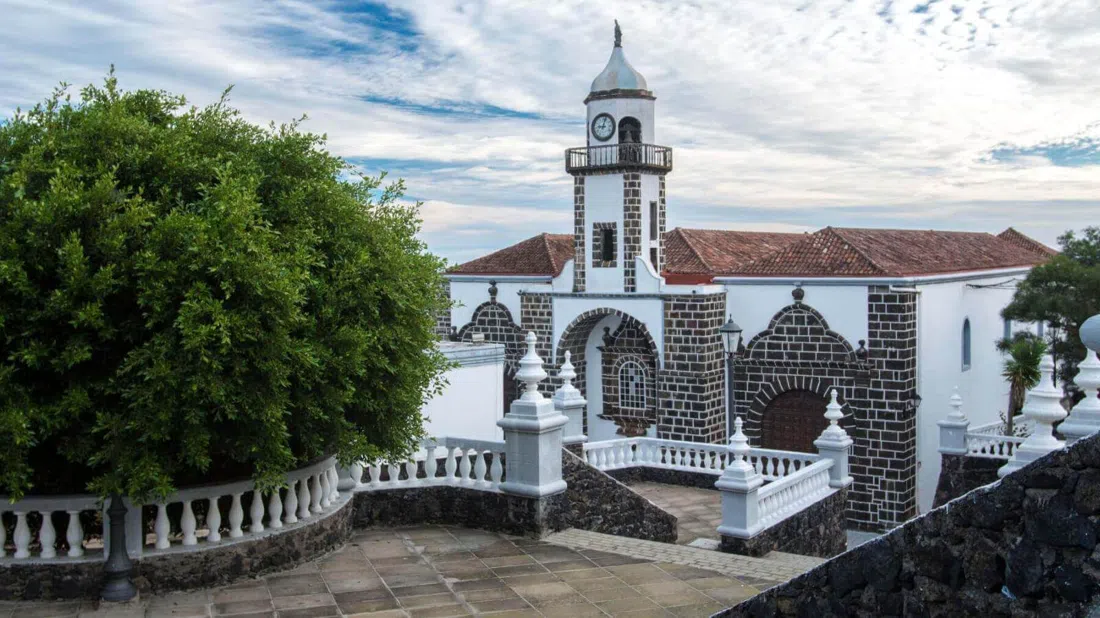
Spend one morning crossing and recrossing the streets around it and the town's real scale becomes clear. The same dozen faces, the same four corners, the same pharmacy queue. This is a working island capital of a few thousand people, not a stage set, and that is most of its appeal.
Where to eat in Valverde
Eating here splits roughly in two. On one side, family-run casas de comidas turning out honest Canarian plates with no interest whatsoever in impressing you. On the other, a small number of more ambitious kitchens working with the island's small-producer cheese, wine and fish. Whichever direction you go, order vieja — parrotfish — boiled or fried, with papas arrugadas and mojo, and a plate of queso herreño goat's cheese alongside. That is the combination locals actually order, as opposed to the one written down for visitors.
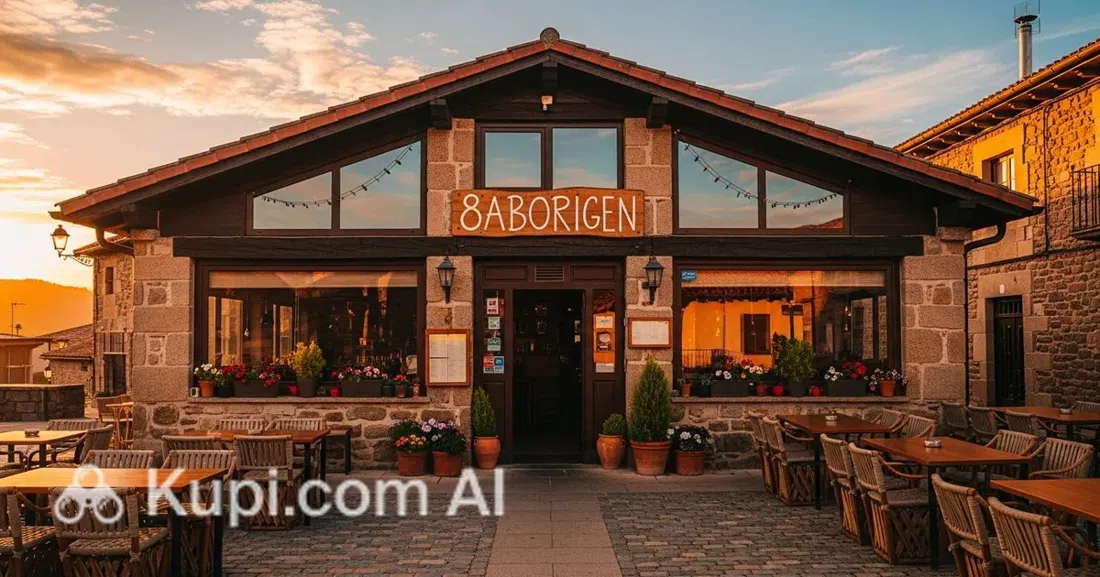
The most serious cooking in town is at 8Aborigen, a tasting-menu restaurant inside the Casino de Valverde that builds its courses around Canarian and Bimbache food history. The seating is at an open kitchen, so you watch the plates assembled a metre from your elbow. Booking is essential, and not as a formality — the room is small and the menu is a single sitting's worth of work.
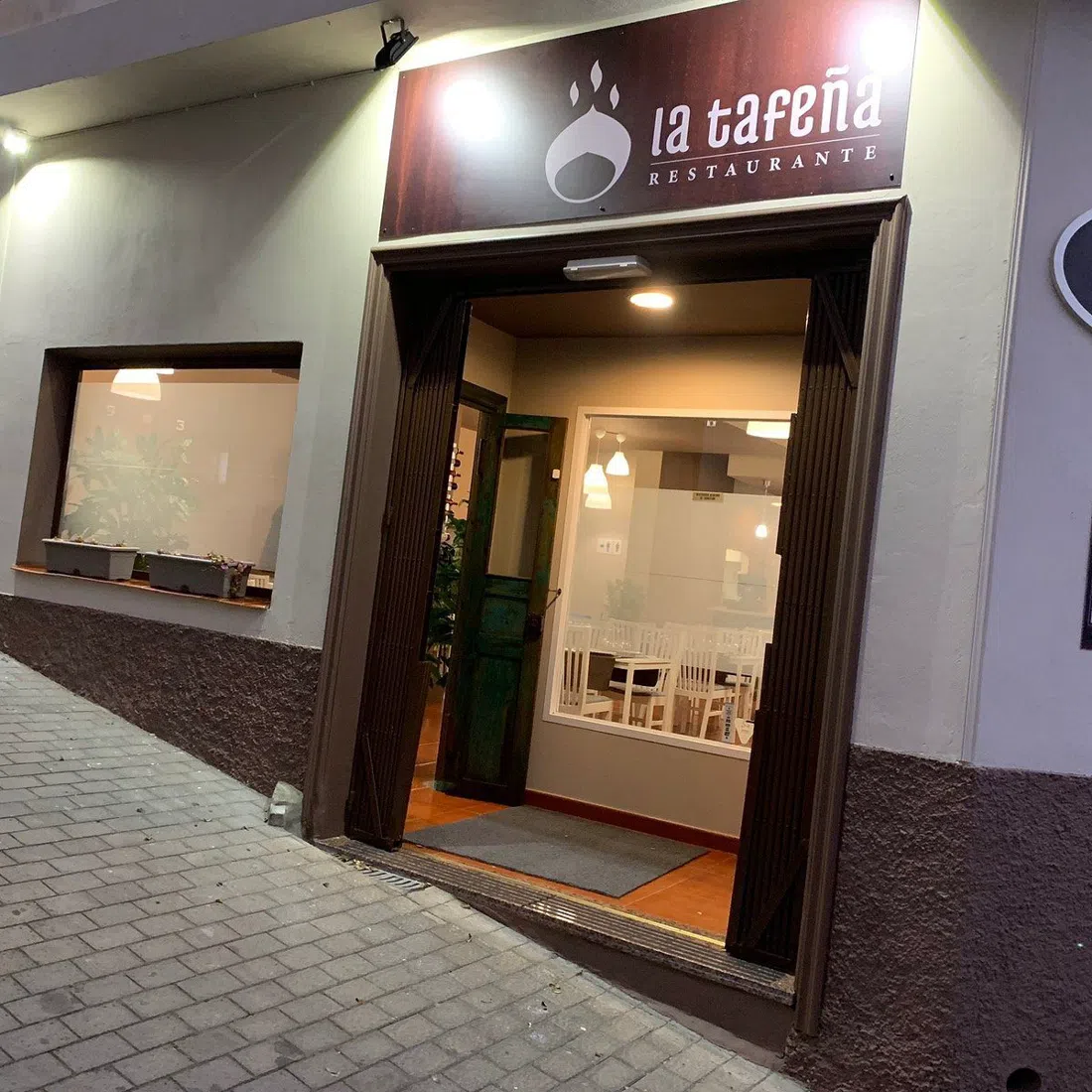
For the exact opposite experience, La Tafeña Restaurante on Calle Doctor Quintero Ramos is the town's busiest table: grilled meat, seafood, octopus, and the ambient volume of a place that has never needed to advertise. Go early or expect to wait on the pavement.
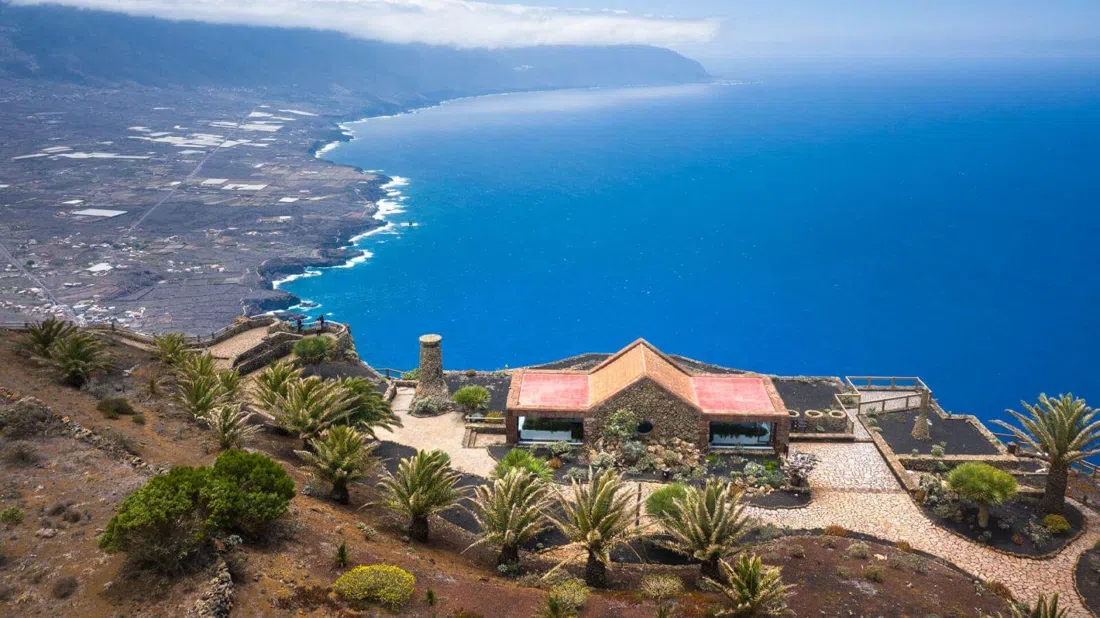
Restaurante La Pasada trades on a valley-view terrace and a Mediterranean and Spanish menu, with gluten-free options — worth knowing on an island where a dietary request can otherwise be met with a sympathetic shrug. El Charquete Tasca is smaller and more informal again: straightforward local plates at local prices, the sort of bar-restaurant where half the menu arrives verbally. And if you will drive for lunch, the restaurant at Mirador de la Peña in Guarazoca serves traditional Herreño cooking out of a César Manrique-designed clifftop building and opens daily from 9am to 10.30pm, which makes breakfast above the Gulf a defensible use of a morning.
Prices stay reasonable throughout. Valverde is inexpensive to mid-range by Canarian standards, noticeably cheaper than Tenerife or Gran Canaria, and a sit-down meal with wine usually lands somewhere between €15 and €30 a head once you step outside the tasting-menu restaurants.
After dark
Be honest with yourself about this part before you book. Valverde's nightlife is minimal. Most restaurants have closed their kitchens by 10 or 11pm, and the streets empty fast on a weeknight — not in a sinister way, simply because everyone has gone home. The closest thing the town has to a late bar is Bar El Chavelazo, which puts on music and clears a dance floor from Thursday to Saturday and functions as the informal end point of a Valverde weekend.
For something gentler, Los Reyes Bar Cafetería is the low-key option for an early-evening drink before dinner, when the light is going and the cloud has usually lifted off the hill. If you are the sort of traveller who needs options at 1am, Valverde will frustrate you. If you are the sort who finds a near-silent town at 11pm restful, this is close to ideal — just watch your footing on the way back to the room, because those steep streets and their patchy lighting are the main practical hazard in an otherwise extremely safe place.
Things to do in and around Valverde
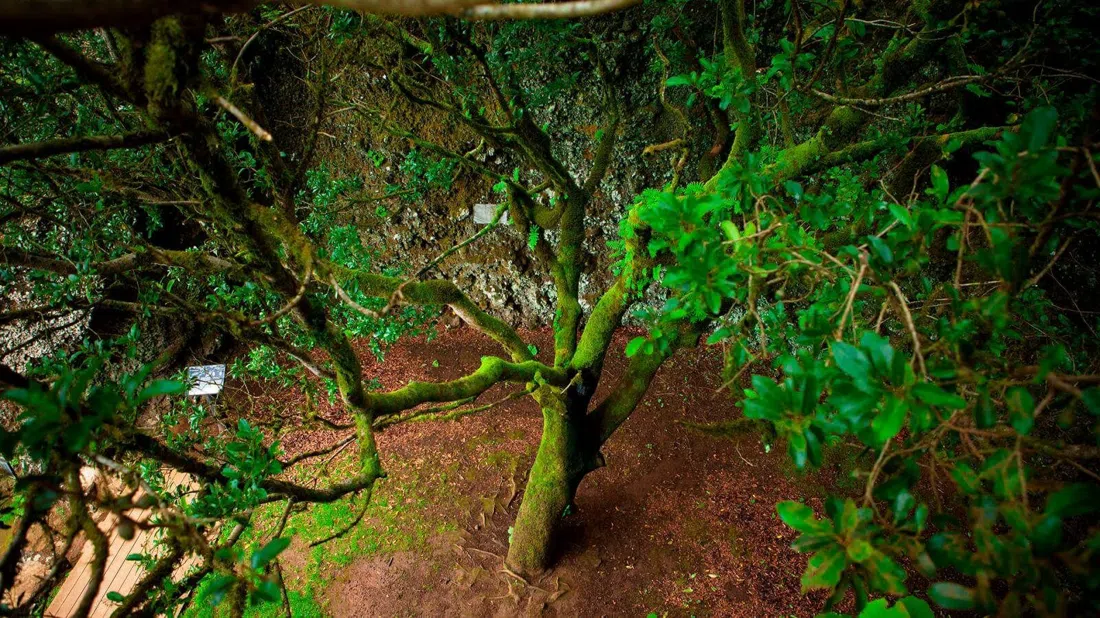
The municipality's headline sight is the Árbol Garoé, the island's mythologised sacred tree, out near San Andrés and a 20 to 30 minute drive from town. The legend is specific and lovely: the tree's leaves condensed enough moisture from the trade-wind clouds to supply the whole Bimbache population with drinking water. There is an interpretation centre and a short trail to walk, and standing there in the damp upland air, with cloud moving through the laurels, the story stops sounding like folklore and starts sounding like hydrology.
In town, the Iglesia de Nuestra Señora de la Concepción is worth the ten minutes it takes to step inside for the Baroque altarpiece alone. And then there is Mirador de la Peña, the César Manrique clifftop viewpoint over the Gulf of El Hierro and a protected cultural heritage site — the single most photographed thing in the municipality, and for once the reputation is earned. Manrique's instinct was to frame rather than compete, and the drop below the glass does the rest.
What Valverde cannot give you is a swim. There is no coast here at all. The salt-water pools at Tamaduste and Charco Azul, and the long volcanic shoreline at Las Playas, are all a drive away — which is the fundamental trade of basing yourself up here.
Shopping in Valverde
This is the only real concentration of shops on El Hierro, which gives an ordinary errand run a certain significance. What you get is a scatter of small family-run general stores, a pharmacy, a couple of supermarkets and the Centro Comercial Valverde cluster of local businesses, most of it strung along Calle Doctor Quintero Ramos and the streets immediately around the church. Stock up here before heading to the south or the Gulf, because options thin out dramatically the moment you leave town.
The weekly market on Calle Pérez Galdós is the one fixed social event in the shopping calendar, and it rewards early arrival — by two o'clock the stalls are coming down and the street is back to being a street.
Factor the long midday closure into any plan involving a purchase. Mid-afternoon Valverde has a shuttered, slightly dreaming quality that is pleasant to walk through and useless for buying batteries.
Where to stay in Valverde
Staying in Valverde means trading beach access for competence. The town holds the island's only concentration of banks, a pharmacy and the hospital, plus the shortest run to both the airport and the ferry port at La Estaca — which matters a great deal on an island where mountain roads are slow and badly lit. If you are arriving late by flight or ferry, or leaving early, a night here spares you a dark drive over the ridge.
Treat it as a staging town rather than a holiday in itself: one or two nights as a base for day trips across the whole island, or a first and last night bracketing a stay somewhere with a view of the water. Rooms, like menus, run cheaper than their equivalents on the bigger islands.
Getting to and around Valverde
El Hierro Airport (VDE), served mainly by connections through Tenerife, sits about 10km from town. TransHierro's Line 10 guagua covers the run in roughly 15 minutes for a single fare of about €1.35, which is excellent value and entirely dependent on the timetable — buses run only every few hours, so for anything time-sensitive, a taxi or hire car is the reliable answer. The alternative arrival is by sea: the Fred. Olsen or Naviera Armas ferry from Los Cristianos in Tenerife into Puerto de la Estaca, 10 to 15 minutes from Valverde by road, with guagua routes 7 and 11 linking port and town in about a quarter of an hour.
Within Valverde you need nothing but shoes with grip. For the rest of the island — the Garoé, Mirador de la Peña, the south coast, the pools — you need a car, because island bus services run only a few times a day and the distances look much shorter on the map than they feel on the switchbacks.
24 October 2026


