Fuerteventura · Where to live · 8 min
Betancuria, Fuerteventura: The Ravine Village That Was Once an Island Capital
Fuerteventura's first capital hides in a volcanic ravine in the island's dead centre — one historic street, a roofless convent, goat stew at lunchtime, and total silence after dark.
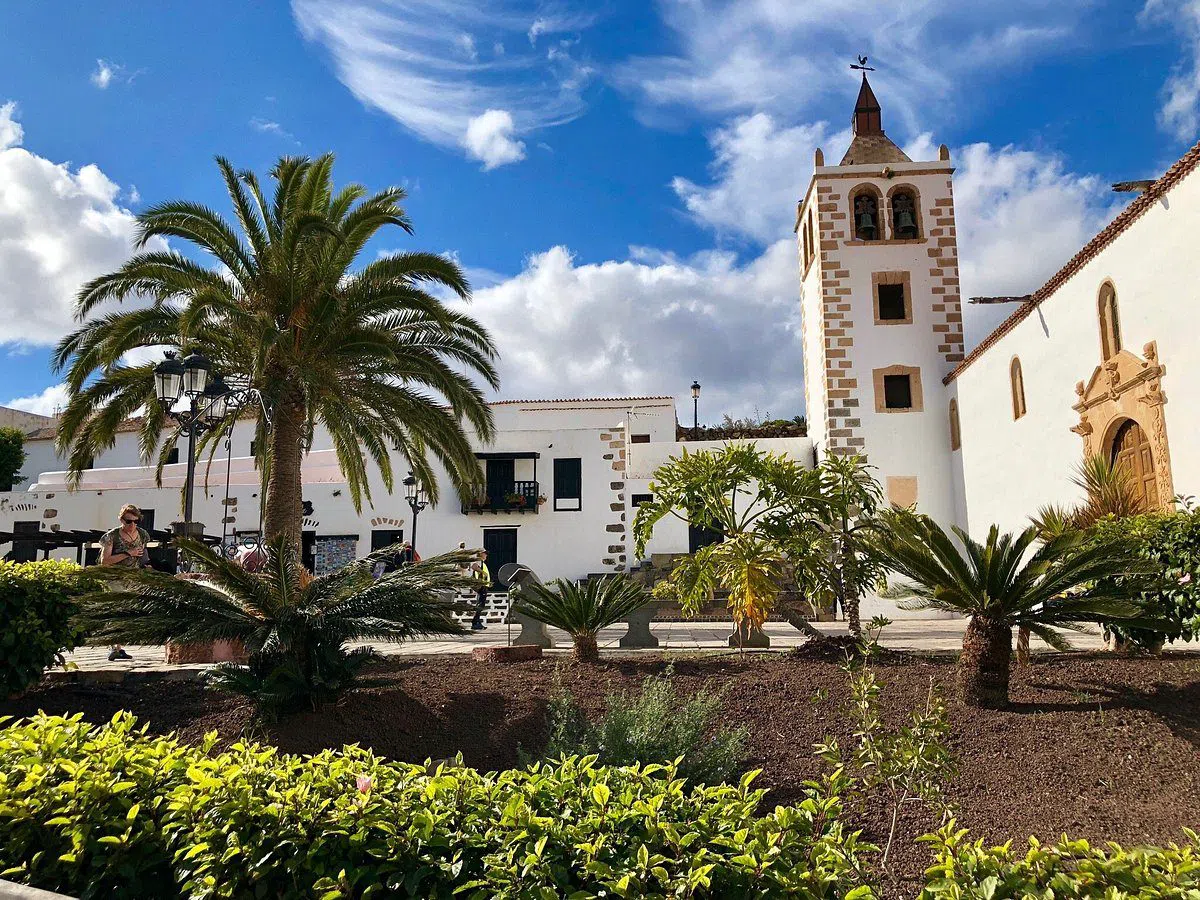
Pirates burned Betancuria at least twice. That one fact explains the village better than any brochure could: a knot of stone and whitewash wedged into a volcanic ravine in the dead centre of Fuerteventura, sited inland on purpose so it couldn't be seen — and therefore couldn't be sacked — from the sea. The plan failed, twice over. What survived the burnings is what you walk today: a church whose roots go back to the island's first decades under Castile, a roofless convent, a free archaeological museum, one genuinely historic street, and roughly 700 residents who are not remotely in the resort business.
Fuerteventura's first capital
Jean de Béthencourt, the Norman who led the Castilian conquest of the Canaries, founded Betancuria in 1404 and made it the island's capital. The reasoning was defensive and, on paper, sound: tuck the seat of power into a fold of the interior where no raider scanning the coastline would spot a roofline or a plume of cooking smoke. It didn't hold. Pirates reached the ravine and torched it at least twice, which is why the village reads today as a sequence of rebuilds and ruins rather than an intact medieval town. Betancuria's history is legible precisely because it was interrupted.
Arriving still feels like a decision rather than a drift. You climb in on the FV-30, through the switchbacks of the Betancuria Rural Park, with the land going bare and brown and then suddenly green-ish in the ravine bottom where the water used to run. Park near the church and the village resolves itself into a single thread: Calle Roberto Roldán, lined with lime-washed houses, their window frames picked out in dark paint, doors opening straight onto the road.
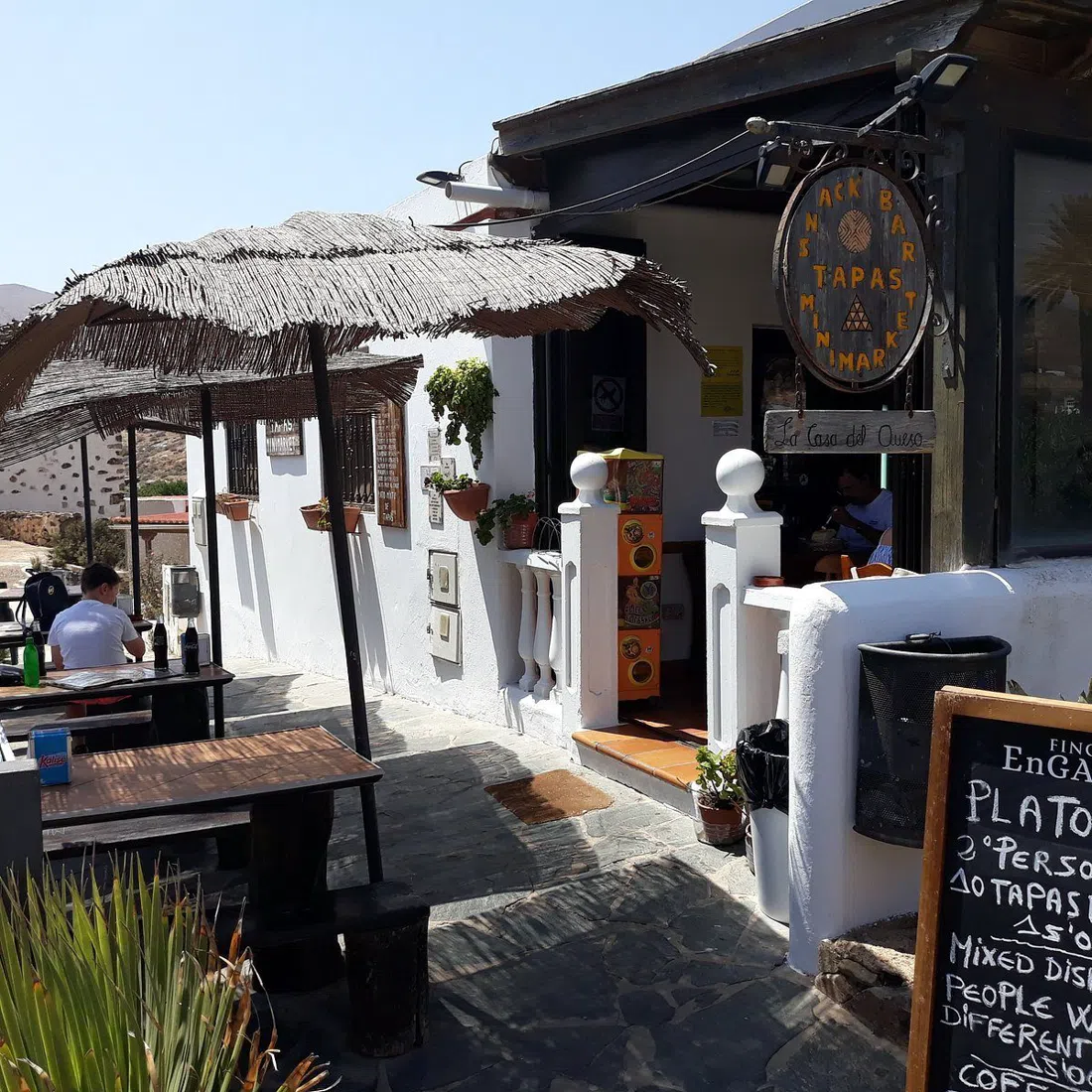
That street is the whole urban experience, and it is enough. Betancuria is a day-trip village, not a base — on an island otherwise defined by dunes, wind and resort strips, it is the one place that offers an old town in the European sense. History and architecture fans get Fuerteventura's only proper historic core. Drivers doing an inland loop get a slow lunch far from the coast. Photographers get stone, shadow and ravine viewpoints instead of yet another beach. And anyone who wants absolute quiet after dark gets more of it than they bargained for.
Goat stew by lunchtime, not much after dark
Eating here is a daytime activity, and it pays to internalise that before you arrive hungry at seven. Kitchens in and around the village tend to shut in the early evening; the practical risk in Betancuria isn't crime or crowds, it's being stranded after 6pm with no dinner plan and no car. Plan your main meal for midday, then either drive out or stay somewhere that feeds you.
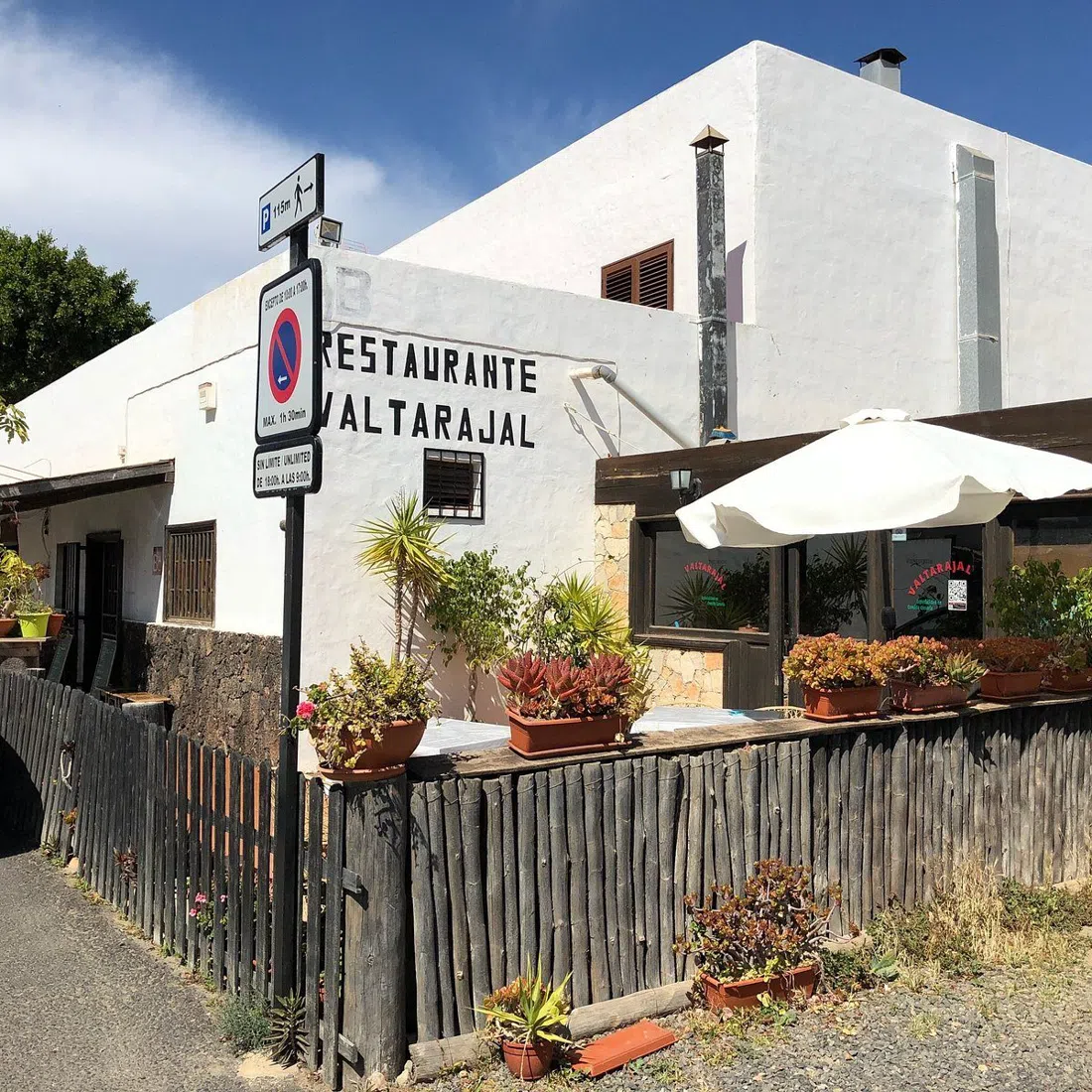
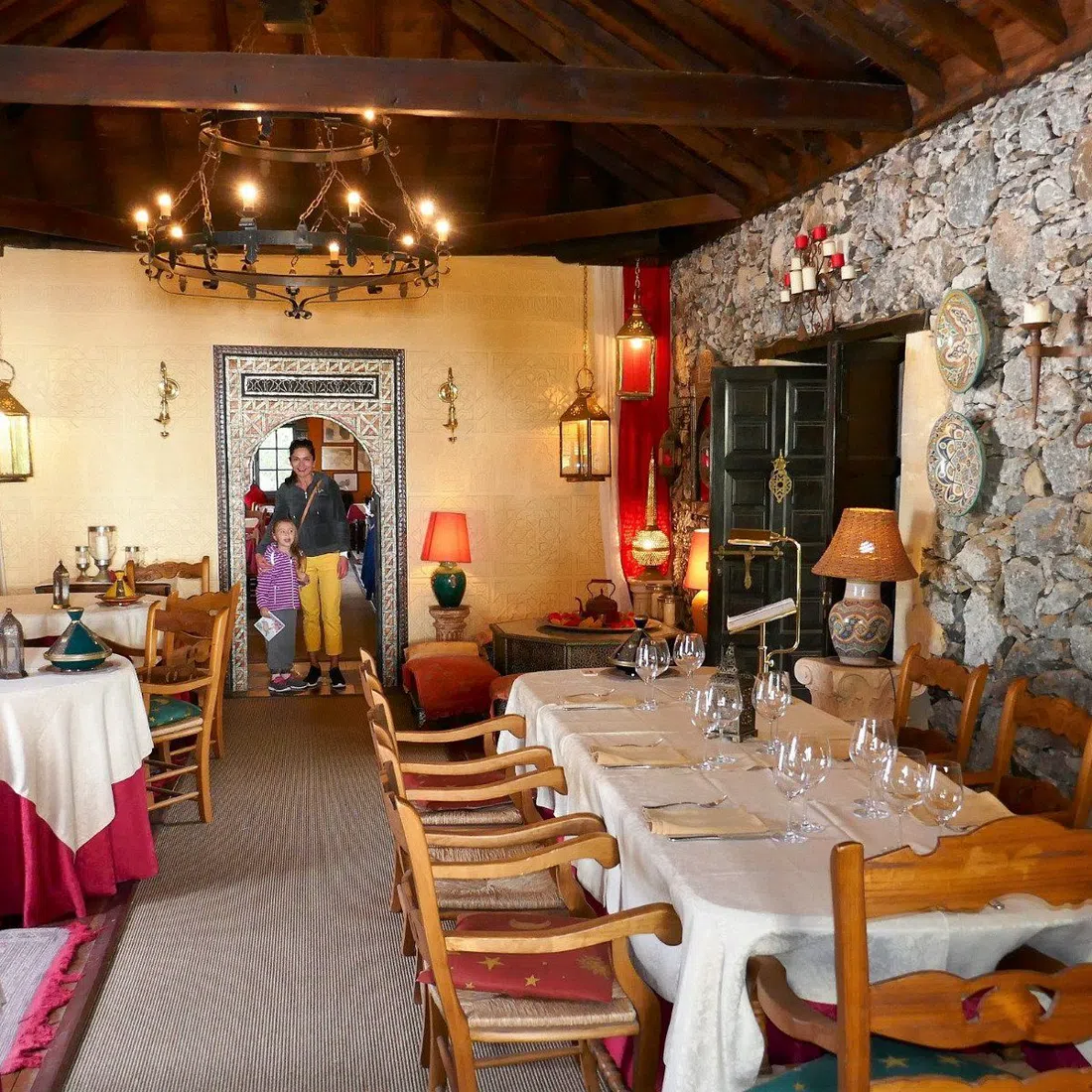
The anchor is Restaurante Valtarajal, a long-running Canarian kitchen on the main street that is known island-wide for its goat stew — the slow, dark, bone-in kind that tastes of a place where goats outnumbered people for centuries. It holds a 4.8 rating, which on an island full of competent tourist restaurants is not a number handed out casually.
Right on the church square, Casa Santa María does double duty: a traditional house restaurant serving kid, lamb and seafood, and a daytime coffee stop when all you want is a cortado and ten minutes in the shade before the museum. Rated 4.3, it's the kind of courtyard where lunch stretches well past its intended length because nobody is hurrying you anywhere.
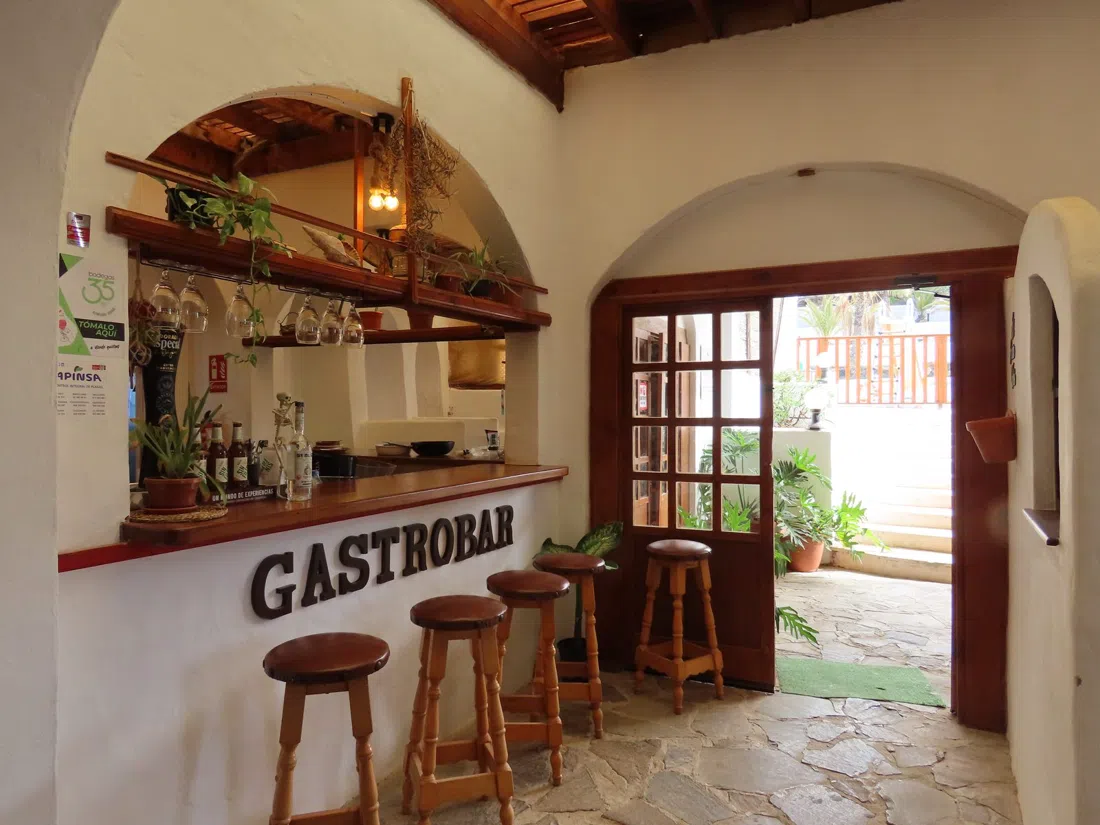
For something more contemporary, drive the short hop to Valle de Santa Inés and Gastrobar El Pirata Verde, a plant-filled terrace with sunset views and a 2026 Travellers' Choice award to go with its 4.8 rating. This is the closest the area gets to a scene: modern gastrobar plates rather than grandmother cooking, and a terrace built to watch the light go orange over the interior.
La Sombra, meanwhile, is the pressure valve — a casual patio of cacti and shade canopies doing burgers and falafel bowls, with live acoustic music on some weekends and a 4.4 rating. If you've been walking stone streets all morning in the island sun, the name alone will sell it.
The cooking across all of it leans island rather than international: goat and kid, local cheese, papas arrugadas with their salt-crusted skins. Budget accordingly — these are mid-range lunches, not cheap eats, and the bill reflects a village that cooks slowly for a small number of tables.
A morning of church, museum and viewpoints
Betancuria rewards a slow half-day on foot far more than a checklist, and the natural starting point is the Church of Santa María de Betancuria. It is the village's core monument, a 17th-century rebuild — the earlier structure having gone the way of everything else the pirates reached — with a Baroque altarpiece inside and an attached museum of sacred art. Rated 4.4, it is also, mercifully, cool and dim at exactly the hour you need it to be.
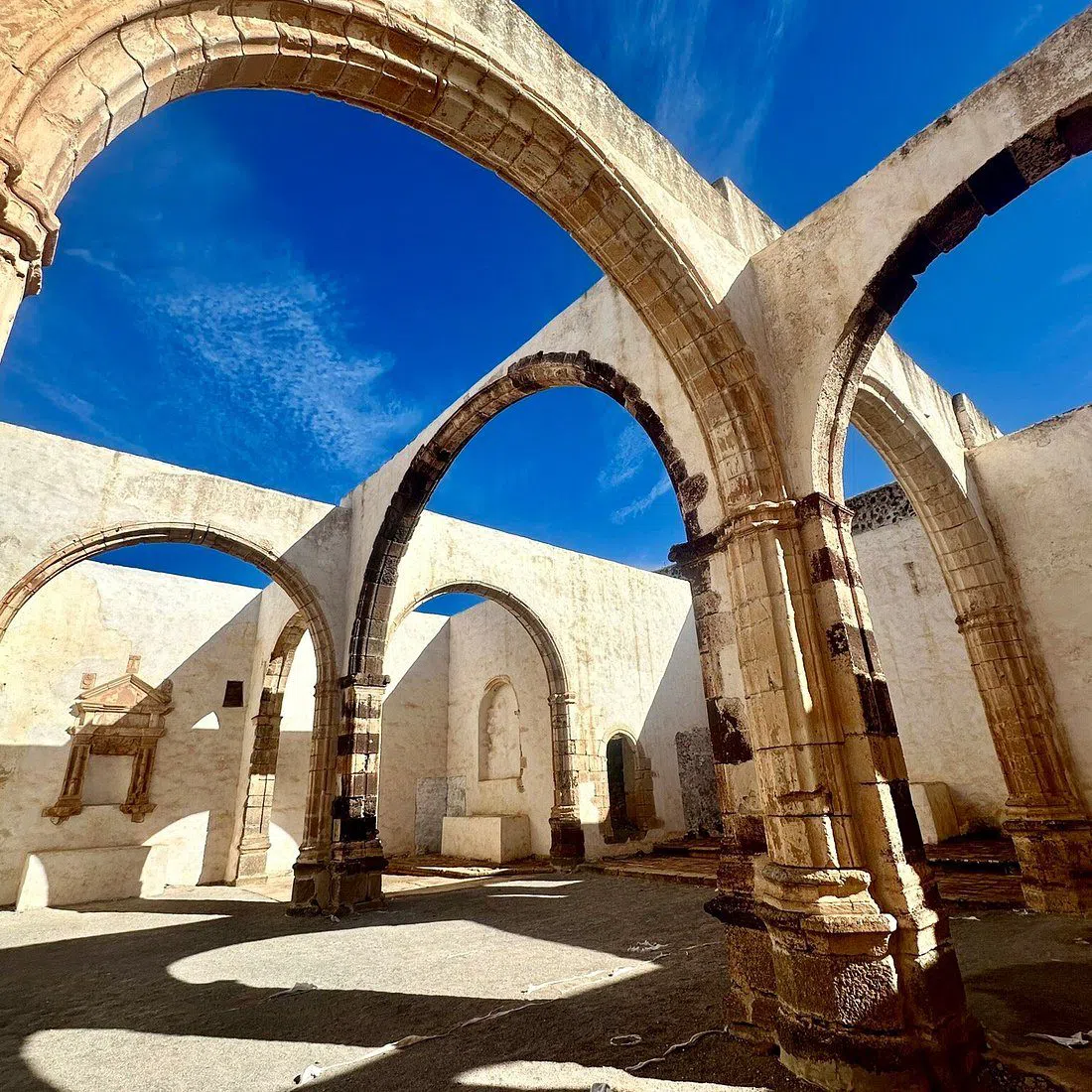
From there it's a few minutes' walk to the Convento de San Buenaventura, the roofless shell of what was the island's first Franciscan monastery, protected since 1979 and rated 4.3. There's no ticket barrier and no interpretive circuit: you simply walk into the open ruin, look up at sky where the roof should be, and read the building through its surviving arches and wall lines. It's the most atmospheric thing in the village and costs nothing but the walk.
The Betancuria Archaeological and Ethnographic Museum is free and, at 4.6, the best-rated indoor stop here. Its subject is the Mahos, the island's pre-conquest inhabitants — the people who were already living on this rock when Béthencourt's ships appeared. Visiting it after the church and the convent reorders the whole day: the 1404 foundation stops feeling like a beginning and starts feeling like an interruption of something much older.
Then go up. Mirador Morro Velosa sits at 669 metres, a César Manrique-designed viewpoint rated 4.5, and from its windows the north of the island unrolls in long dry ridges and distant pale sand. Manrique's instinct — framing landscape rather than competing with it — works especially hard here, where the view is all horizontal distance and the building does nothing to interrupt it.
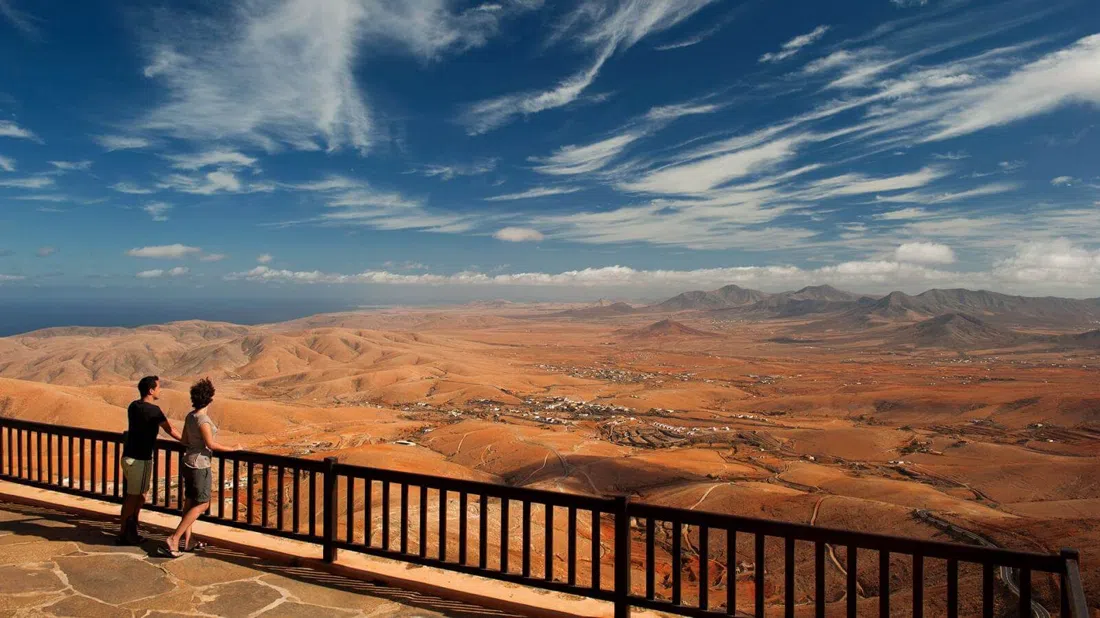
Closer to home, the Mirador de Las Peñitas looks down into the ravine that Betancuria sits in, and at 4.7 it's the highest-rated viewpoint of the lot. It is the shot that explains the village's geography in a single frame: the gorge, the palm-dotted floor, the cluster of white walls that was supposed to stay invisible.
If you only have half a day, do church, convent, museum and lunch. A full day lets you add both miradors and still drop down to Ajuy's black-sand cove afterwards.
One street, real crafts
Shopping in Betancuria is a single proposition: the official craft shop on Calle Roberto Roldán, stocking handmade leatherwork, ceramics, textiles and basketry from artisans across Fuerteventura. What distinguishes it from the coastal souvenir trade is the paperwork — each piece carries an official quality mark stating its origin. You're buying a documented object made on this island rather than a generic sun-and-sand keepsake, and the prices and the pace of the shop both reflect that.
Pair it with something edible. Granja La Villa is a working cheese farm and shop producing majorero goat's cheese with designation of origin — the hard, faintly peppery cheese that is Fuerteventura's single greatest culinary export, made from the milk of the same breed of goat that has been grazing this interior since before the conquest. Rated 4.3, it's the one souvenir that genuinely improves the drive home.
Where to stay in Betancuria
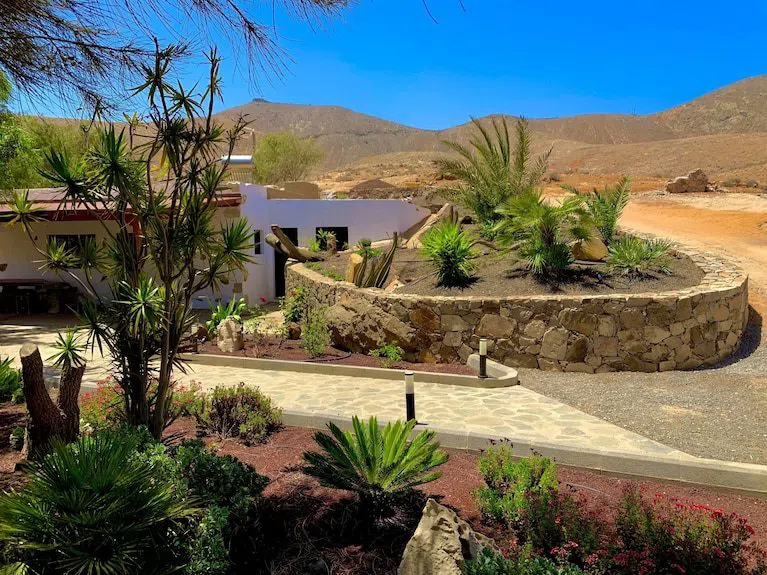
Staying here is a deliberate choice for quiet over convenience. Betancuria sits in the island's geographic centre, which means everywhere — every beach, every nightlife strip, every supermarket of any size — is a drive. The village itself has very few rooms. The standout is Casa Princess Arminda, a roughly 600-year-old stone estate right in the centre, which also solves the dinner problem: staying somewhere that feeds its own guests at night matters more here than almost anywhere else on the island.
Expect rural-house and small-hotel pricing rather than resort-strip rates. What you get for it is a village that goes silent after the last day-trip car leaves, stars over the ravine, and the church and convent to yourself before the first tour bus climbs the FV-30 in the morning. What you don't get is a beach, a bar crawl, or a late kitchen.
You need a hire car
There is no gentle way to put this: Betancuria without a car or a booked tour is a frustrating day. The village is reached by the FV-30 through the switchbacks of the Betancuria Rural Park, a genuinely enjoyable drive with enough bends to keep both hands busy and enough pull-offs to keep a photographer happy.
Public transport does exist. TIADHE bus line 2 runs Puerto del Rosario–Tefía–Betancuria–Vega de Río Palmas, so the village is technically connected to the capital. In practice, services are infrequent and timed for day-trip connections rather than for anyone building a flexible itinerary — check the live timetable at tiadhe.com before you commit to it, and have a fallback.
Once you're in, the village is entirely walkable; park near the church and you won't need the car again until you leave. Everything else — the miradors, Valle de Santa Inés for dinner at El Pirata Verde, Ajuy's black sand — is a short drive on empty inland roads. Betancuria is extremely safe and extremely quiet. The two things that will actually ruin your visit are arriving without wheels and arriving without a dinner plan.
24 October 2026