Fuerteventura · Where to live · 7 min
Lajares, Fuerteventura: The Surf Village That Refuses to Pick a Coast
Inland between Corralejo and El Cotillo, Lajares trades beachfront for volcanic-stone lanes, a Saturday craft market and a surf crowd that never left.
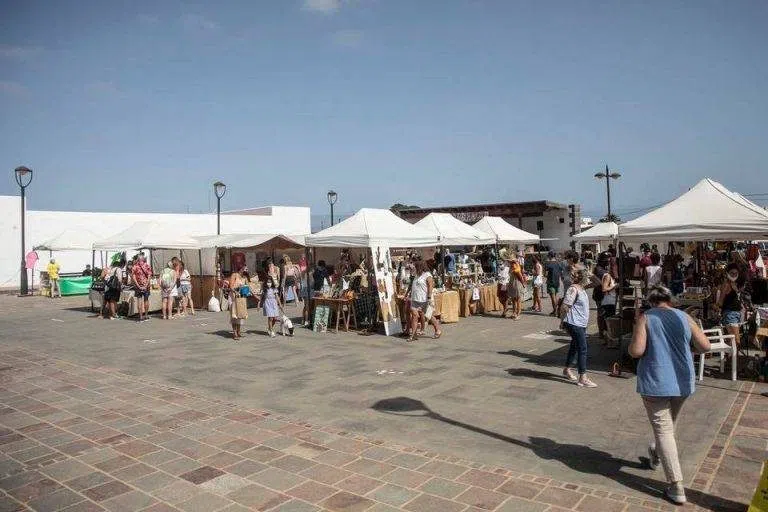
By nine on a Saturday morning the trestle tables are already up in the square beside Lajares' Cultural Centre, and the cork bags, ceramics and silver jewellery come out of their cardboard boxes in an order the stallholders stopped having to think about years ago. Three doors down a queue builds at Canela Cafe: bare feet, salt-stiff hair, a wetsuit still dripping in the back of somebody's van. This is Fuerteventura's surf-and-craft village, and it sits inland, between Corralejo and El Cotillo, touching no sea at all.
What Lajares is known for
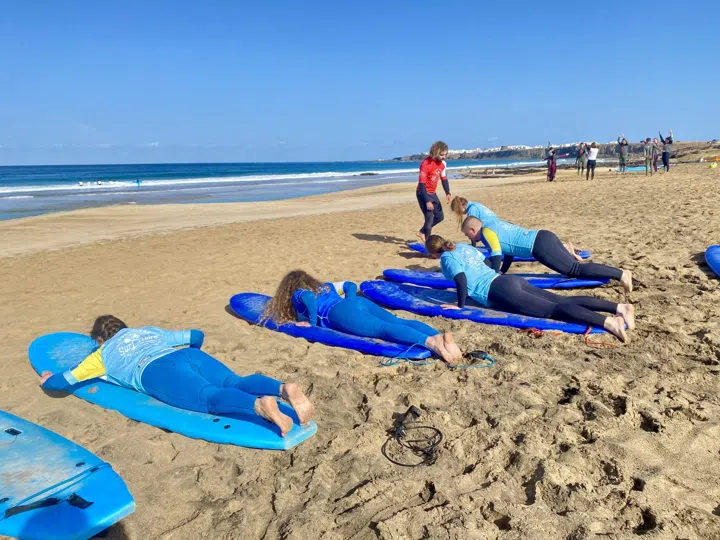
The thing everyone eventually says about Lajares is that it's the island's surf village and it doesn't have a beach. Both halves are true, and the second one explains the first. The village sits almost exactly between the north shore's reef and beach breaks, the wave-rich east coast near Corralejo, and the lagoons and points around El Cotillo — which means it never has to choose a coast. Wake up, check the wind, drive fifteen minutes in whichever direction the forecast points. That calculation, repeated every morning by a few hundred people, is the whole reason this place exists in its current form.
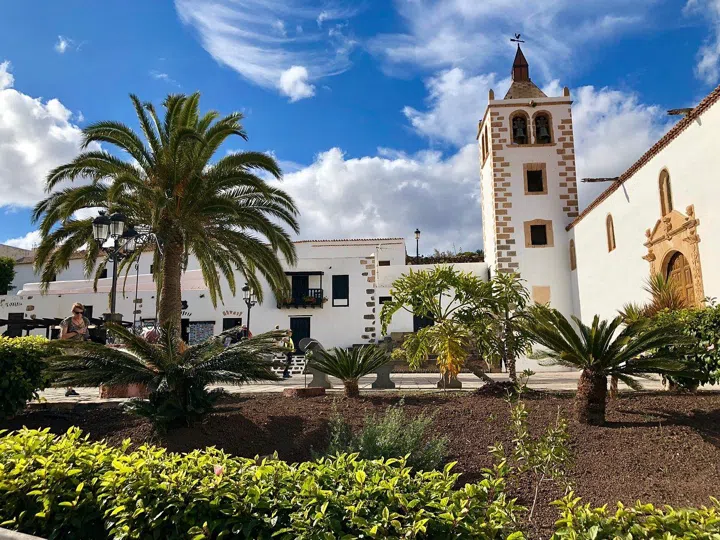
Underneath the surf economy there's still a working Majorero farming village. Surfers colonised it in the 1990s and never left, but they moved into somebody else's street plan: low whitewashed houses, dry volcanic-stone walls stacked without mortar, lanes laid out for donkey carts rather than hire cars. The pace follows the architecture. Boards strapped to bike racks outside the bakery, wetsuits drying over balcony rails, a conversation in the middle of the road that nobody honks at.
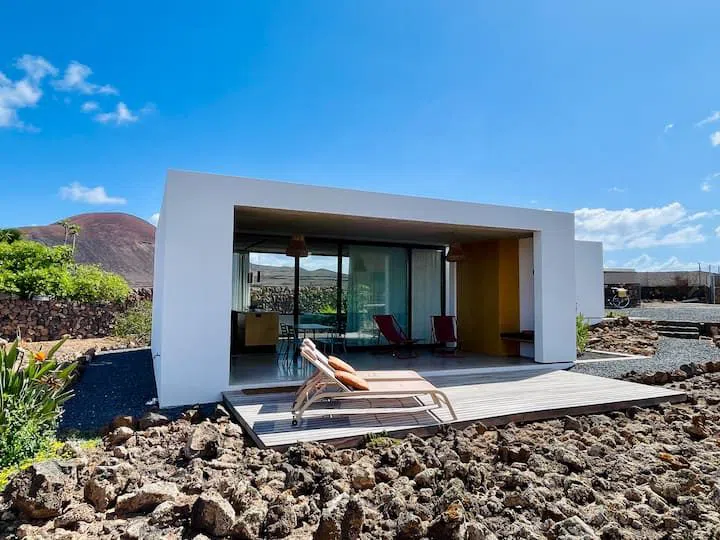
It's not a resort and makes no attempt to pass as one. If your holiday involves walking from a room to a sunbed, this is the wrong village. If it involves a car key, a towel and a vague plan, it's close to ideal.
Where to eat and drink in Lajares
The food here splits into two fairly honest camps: breakfast-and-recovery cafes for the surf crowd, and a short list of proper dinner addresses that pull people in from Corralejo and El Cotillo. Reckon on roughly €10–20 a head for cafes and casual dinners, with a few sit-down places sitting above that.
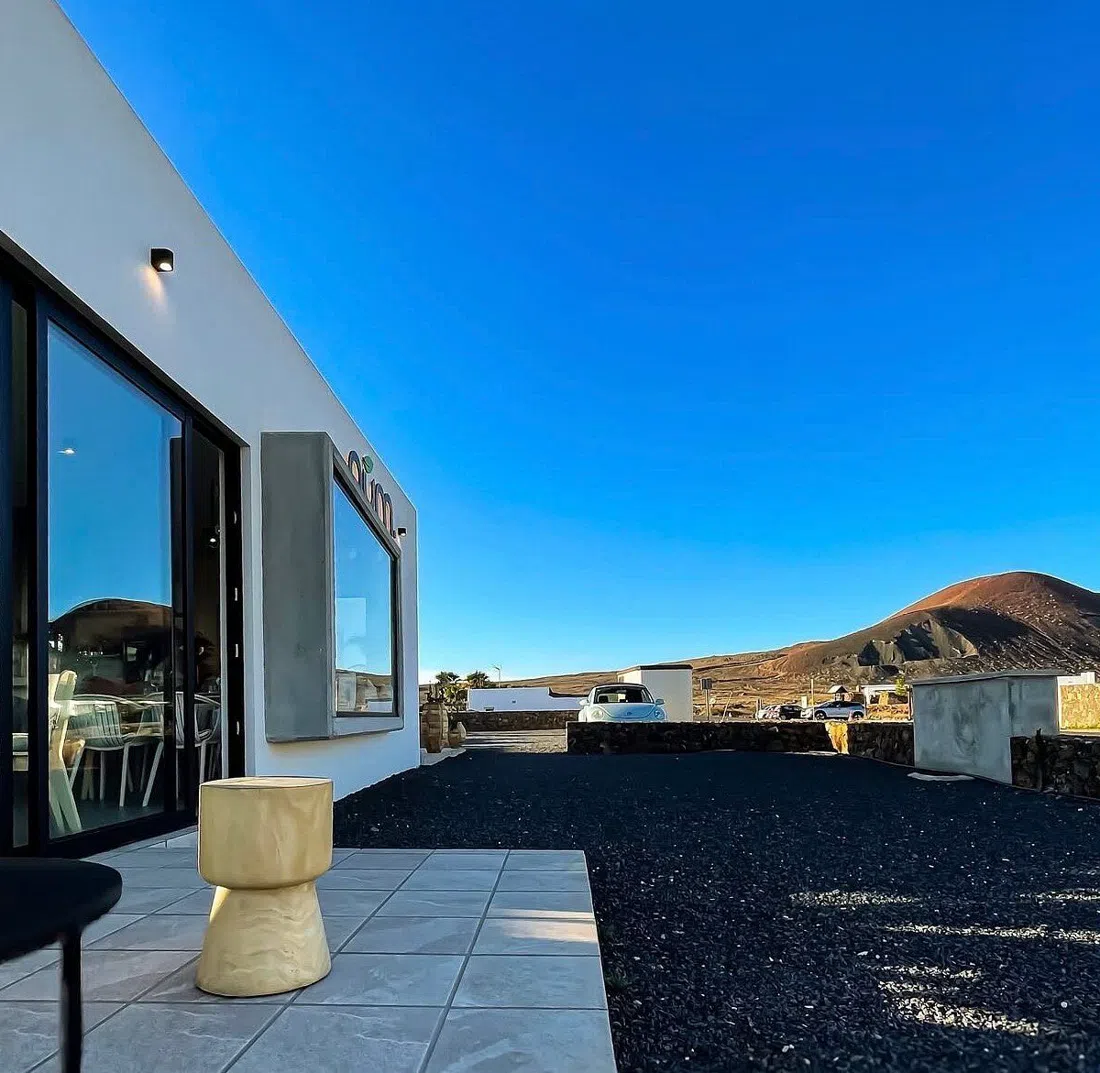
Oum is the one outsiders actively travel for. It's out on the road toward Majanicho, a little removed from the centre, serving Lebanese mezze and skewers in a garden setting — and it holds a 4.9 rating as Lajares' top-ranked table on Tripadvisor, which in a village this size is less a statistic than a local fact everyone repeats. Go hungry, order across the table, let the mezze arrive in waves.
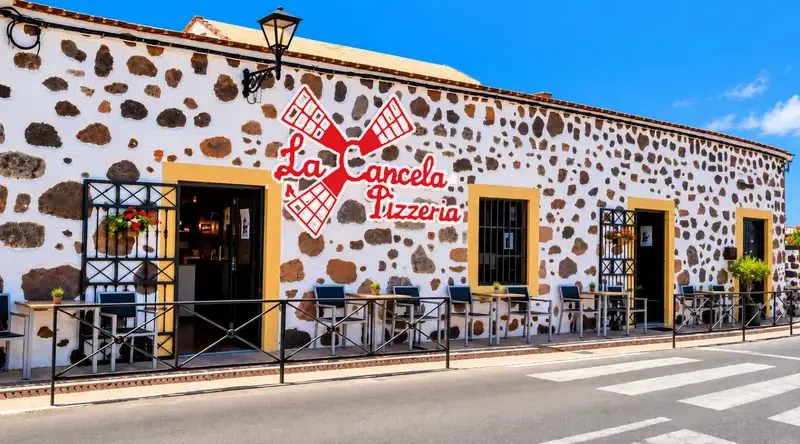
For something less ceremonial there are two pizzerias doing similar work to different congregations. La Cancela is the long-standing Italian: a short wine list, a regulars' crowd, the kind of 4.5-rated place where the staff clock your face on the second visit. Rojo Tomate covers much the same ground with its own loyal following and the same rating, and the choice between them is usually decided by whichever is nearer your villa.
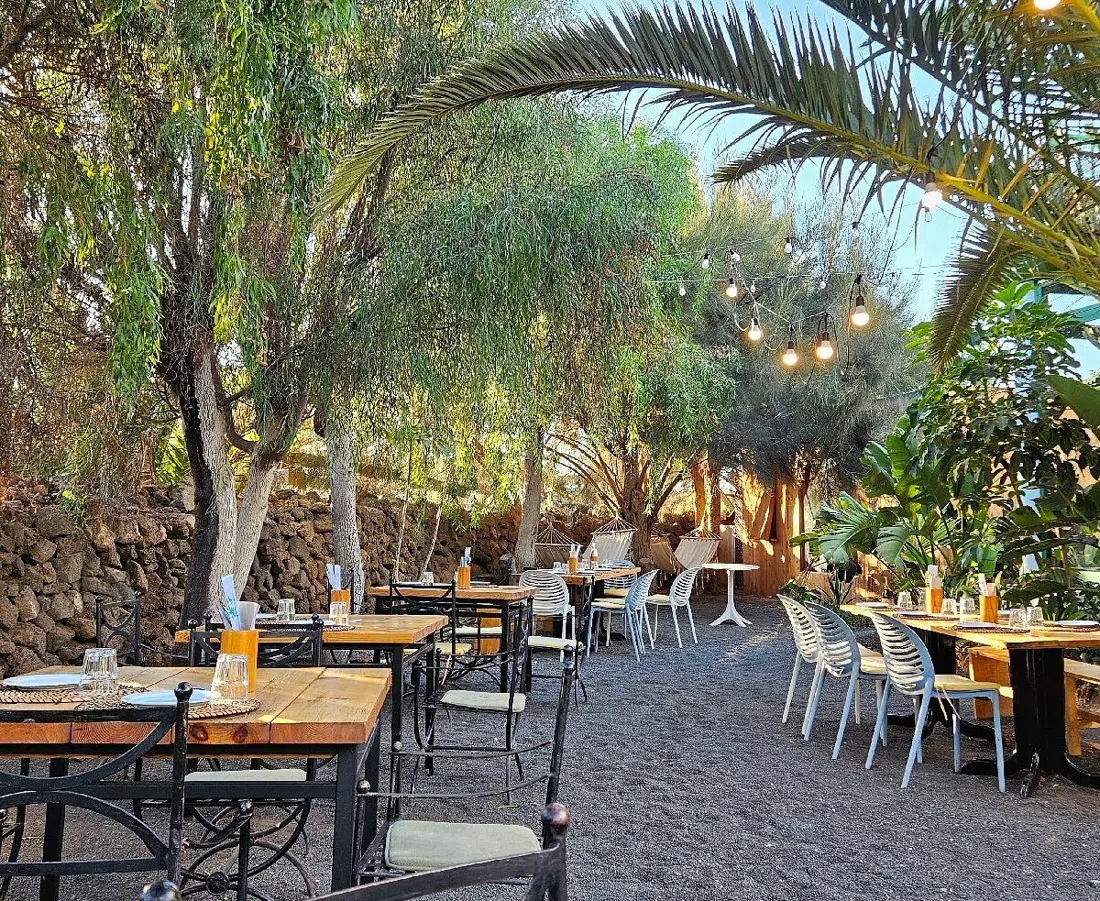
Secret Garden by Surfescape is the most Lajares thing on the list: an Asian-leaning menu and well-regarded cocktails sharing an address with a coworking space, rated 4.6. It's a place where the laptop crowd closes the lid at six and the drinks list takes over without anybody changing seats.
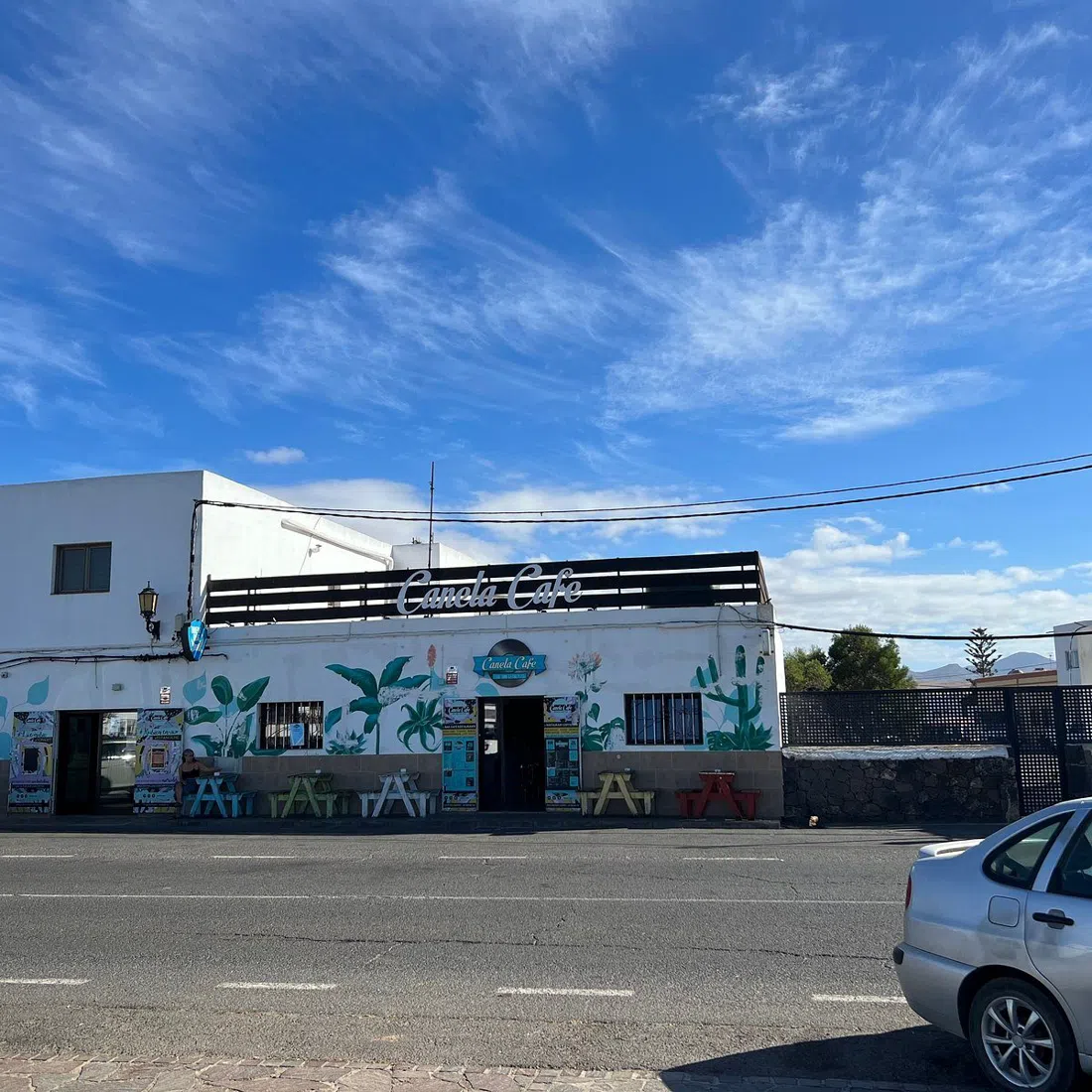
And then there's Canela Cafe, the daytime anchor on the main square — bar food, reasonable prices, a terrace that fills up the moment the market packs away. It's where a Saturday morning turns into a Saturday afternoon without any deliberate decision being made.
Nightlife in Lajares
Nightlife in Lajares is real, small and finishes early, because this is a village of people with a 7am wind check rather than a strip of clubs. Treat that as a feature.
Canela Cafe is the main live-music address, running a Wednesday jam session that gets going after 11pm and bringing in rock, surf and retro bands at weekends. It's loose, loud enough, and the crowd is a straight cross-section of the village — instructors, stallholders, the Dutch couple three weeks into a coliving booking.
The Return Restobar comes up again and again as the other evening-drink-with-music spot, rated 4.6, and Fuerte Vida doubles as a sundown hangout for the hour when everyone's still in flip-flops and nobody has eaten yet. Beyond that, the village genuinely closes. Nightlife-first travellers should base themselves in Corralejo and visit Lajares for dinner instead.
Things to do in and around Lajares
Strip away the eating and Lajares is built around three things: the market, the volcano and the wind.
The Saturday craft market in the main square runs roughly 10am–3pm and is worth timing a whole trip around. Fifteen to twenty stalls of cork goods, ceramics, jewellery and organic produce, children's activities on the first Saturday of the month, and a reputation as one of the best craft markets on the island. Arrive at ten and you'll watch it assemble; arrive at two and you'll get the end-of-morning conversations instead, which are arguably better.
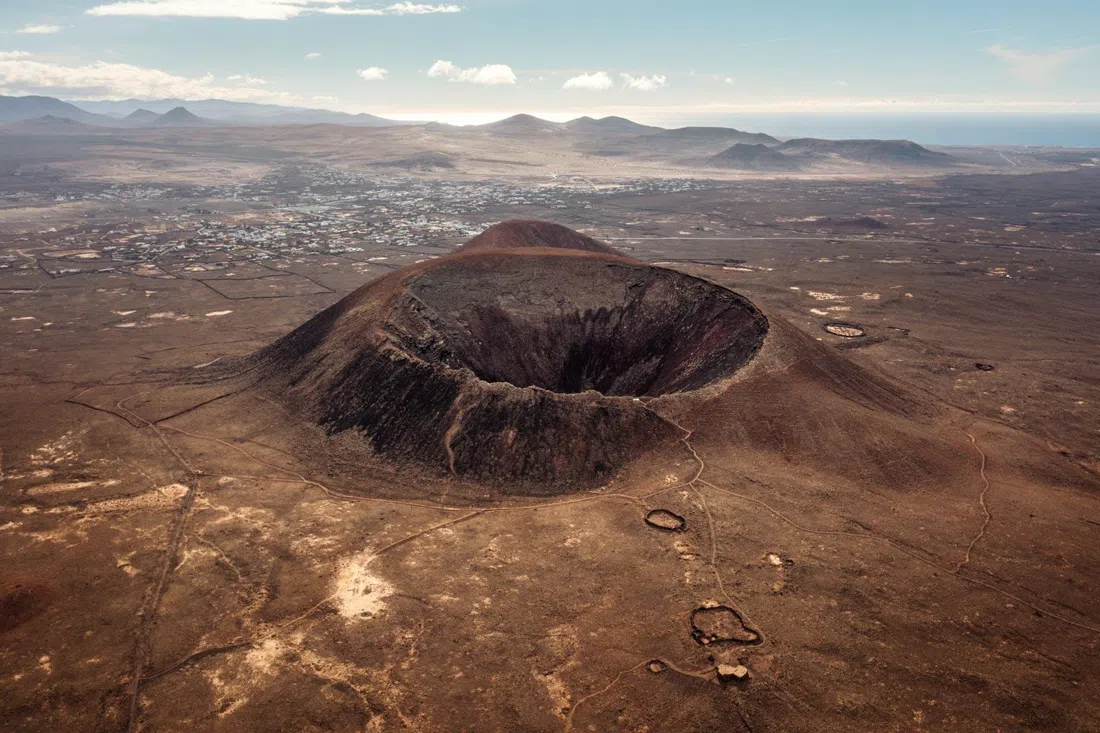
The volcano is Calderón Hondo, and the remarkable part is the trailhead's proximity — a short walk from the village centre gets you onto an easy 5km round-trip crater hike, rated 4.7. It's not a mountaineering day. It's the kind of walk you do before breakfast, standing on a rim of red-brown scoria with the lava field spread out below and the north coast glinting somewhere beyond it.
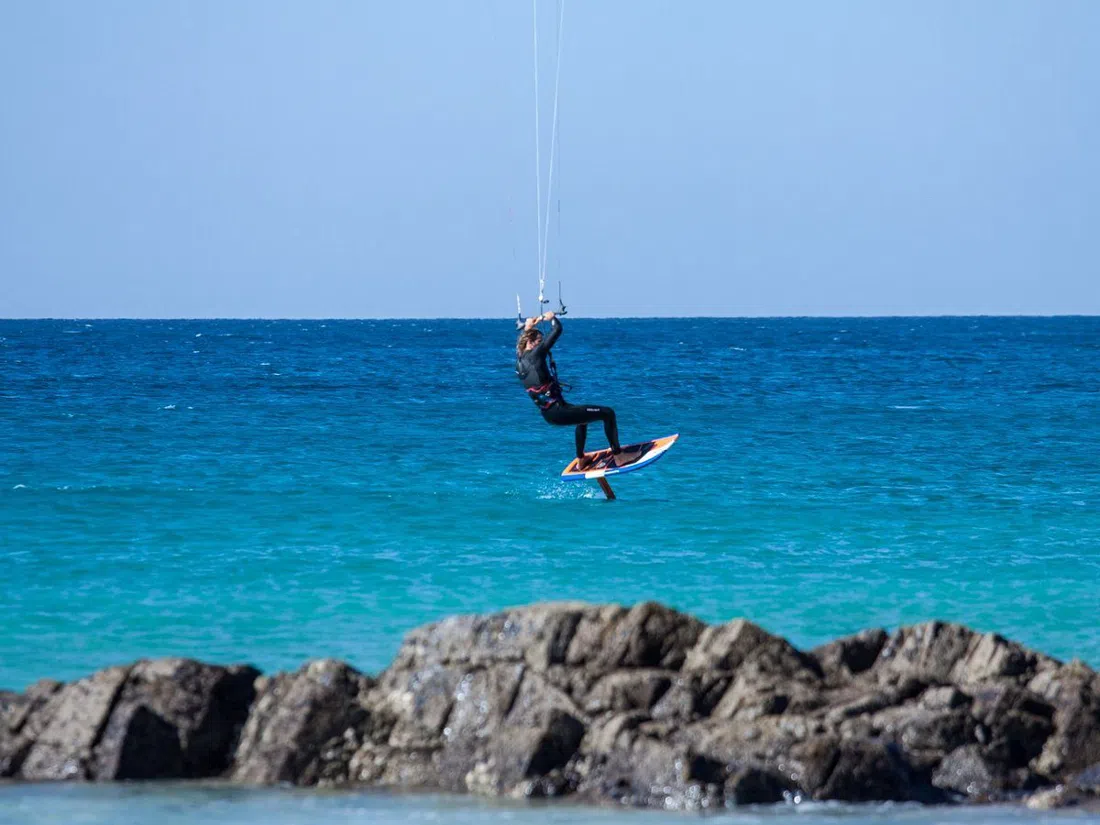
The wind is the third pillar, and MAGMA Kitesurf School is how most people meet it. Lajares-based, rated 4.9, running kitesurf and wingfoil lessons and — crucially — moving students to El Cotillo or Corralejo depending on conditions rather than pretending one spot works every day. That flexibility is the village's whole philosophy applied to a lesson plan.
Shopping in Lajares
Shopping is almost entirely a Saturday proposition, plus a scatter of small independent stores that keep the lights on the rest of the week. Surf and board shops stock boards, wax and wetsuits — the practical end of the trade, where a snapped leash on a Tuesday is a solvable problem. A few craft and ceramics stores have grown directly out of the market stallholders' trade, which means the thing you admired on a trestle table in the square may well have a permanent address around the corner. There's a bakery or two for the rest.
It's a short list by design. Nobody comes to Lajares to shop, but plenty of people leave with a cork bag they hadn't planned on.
Where to stay in Lajares
Lajares has almost no hotels in the conventional sense, and setting expectations here matters more than anywhere else in the village. Staying means one of three things: a surf-camp bed, a shared coliving villa, or a private finca-style villa with a pool and a roof terrace — and much of it is run by or for the surf schools. Prices for camp beds and villa shares start from a few hundred euros a week.
That suits solo travellers and small groups here to surf, work or both. It suits anyone who wants to be among people on the same rhythm. It does not suit anyone expecting a reception desk, a buffet or a beach on the doorstep, because none of those exist here. Book with a car in the plan and the whole arrangement makes sense; book without one and you'll spend the week negotiating with a timetable.
Getting around Lajares
There's no train and no tram — this is bus-and-car-or-bike territory. Bus line 8 runs Corralejo to El Cotillo via Lajares roughly once an hour, with the hop from Corralejo taking about fifteen minutes. Line 7 connects Puerto del Rosario to El Cotillo via Lajares around four times a day in each direction, which is thin enough that most visitors rent a car, or at minimum a bike.
Getting here in the first place: there's no airport or ferry of its own, so you fly into Fuerteventura Airport, about 35–40 minutes' drive away, or pick up that hourly bus 8 from Corralejo or El Cotillo. A hire car is the practical choice and the one the village is quietly built around.
On safety, Lajares is a quiet rural village with low crime, and the genuine risks are the unglamorous ones. Country roads are unlit at night, which is a real consideration after dinner at Oum or a late jam session at Canela Cafe — and a reason to think twice about driving after a few drinks. In the water, the hazard is ambition: the north shore breaks reward people who know their level and punish people who don't. Ask at your surf school. They've had the conversation before.
24 October 2026