Fuerteventura · Where to live · 8 min
Puerto del Rosario: Inside Fuerteventura's Working Capital
The island's only real town — a port, a parliament, a fish market and more than 100 public artworks — and why it rewards the travellers who stop instead of driving past.
The fish market by the harbour opens every day, and nobody in it is performing for anyone. Crates, ice, a short queue of people who already know exactly what they came for. Three streets inland, outside cafés that have never printed a laminated tourist menu, men in their seventies play dominoes with the gravity of paid work. This is Puerto del Rosario: capital of Fuerteventura since 1860, home to roughly a third of the island's population, and the town most visitors fly straight past on the way to the dunes of Corralejo or the surf breaks of Jandía. It is not a resort, and it has never pretended to be one. That, more than anything, is the argument for stopping here.
What Puerto del Rosario is known for
The island's seat of government moved here from inland Betancuria in 1860, and the town still carries itself like an administrative centre first and a holiday destination a distant fifth. You can read it straight off the street plan. Calle León y Castillo is lined with banks and government offices, the sort of frontages that fill in the morning and empty by mid-afternoon. There is a port. There is an airport, close enough that you quickly learn which way the planes are turning. Put all of that together and you get the one place on Fuerteventura that functions as a town rather than an arrival lounge for a beach — a place with a council, a bus station, a school run, a market.
What lifts it above the merely functional is the art. More than 100 works of public sculpture and mural painting are scattered through the old quarter and along the seafront, and tracking them down is the closest thing the town has to a signature activity. Some are monumental and sit where you cannot miss them; others wait around a corner on a residential street, on a wall you would otherwise walk past without a glance. If you would rather hunt specific pieces than stumble on them, the tourist office hands out a map of the collection.
The waterfront is the best of the whole town. A promenade runs for 1.3km along the water, wide and unhurried, and in the hour before dinner it fills with the entire social cross-section of the capital: runners, pushchairs, teenagers on the railings, retirees walking at a pace that suggests they have done this every evening for thirty years.
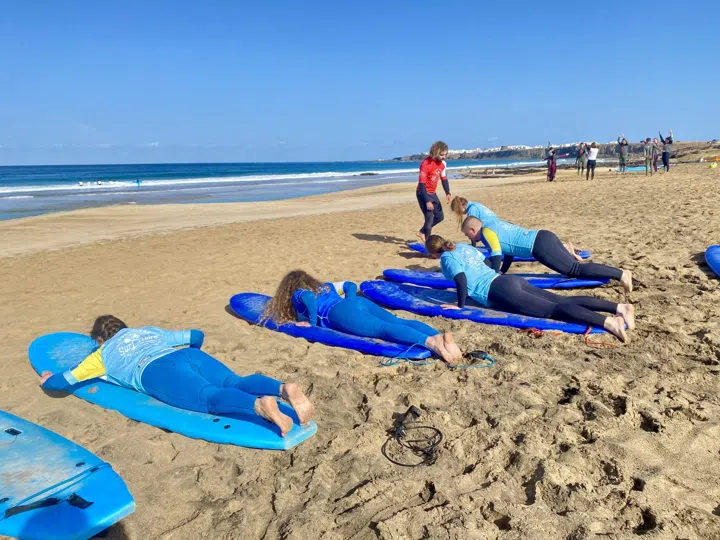
Be clear-eyed about what it isn't. The in-town beach is small, and Fuerteventura's famous sand — the stuff that sells the island — is forty minutes or more away by car or bus. Come here for a real Spanish town with a harbour and a market, and the trade works. Come expecting dunes from your balcony and it won't.
Where to eat and drink
Eating in the capital is tapas-led, informal and genuinely cheap by Canary Islands resort standards. There is no restaurant strip to parade down; instead a scatter of small family-run kitchens does all the heavy lifting, which means you need addresses rather than a wander. Timing matters more than booking. Locals eat late by UK standards: lunch runs roughly 2–4pm, dinner from around 9pm, and a menú del día here sits near the €10 mark, a number the resort towns abandoned a long time ago.
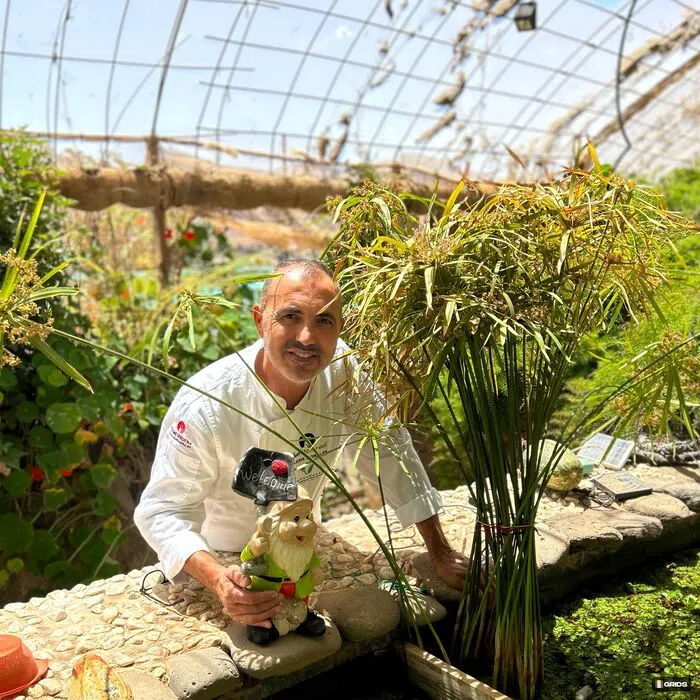
The most unexpected table in town belongs to El Invernadero Restaurante, where owner-chef Alexis Morales cooks a vegan menu that is largely own-grown, in a small and carefully designed room. On an island built almost entirely around meat and fish, that is close to a quiet act of defiance — and at 4.9 it holds the best rating of anywhere in this feature, which tells you the locals have decided it works.
For the opposite instinct — smoke, fat, fire — go to La Jaira de Demian, a tapas restaurant built around a wood-fired grill and widely rated among the best tapas kitchens on the island. The smoked cheese fondue is the dish people talk about, with the Russian-Andean salad close behind; order both, share them, and let the grill decide the rest. It rates 4.7, and on a weekend evening you will understand why booking is a kindness to yourself.
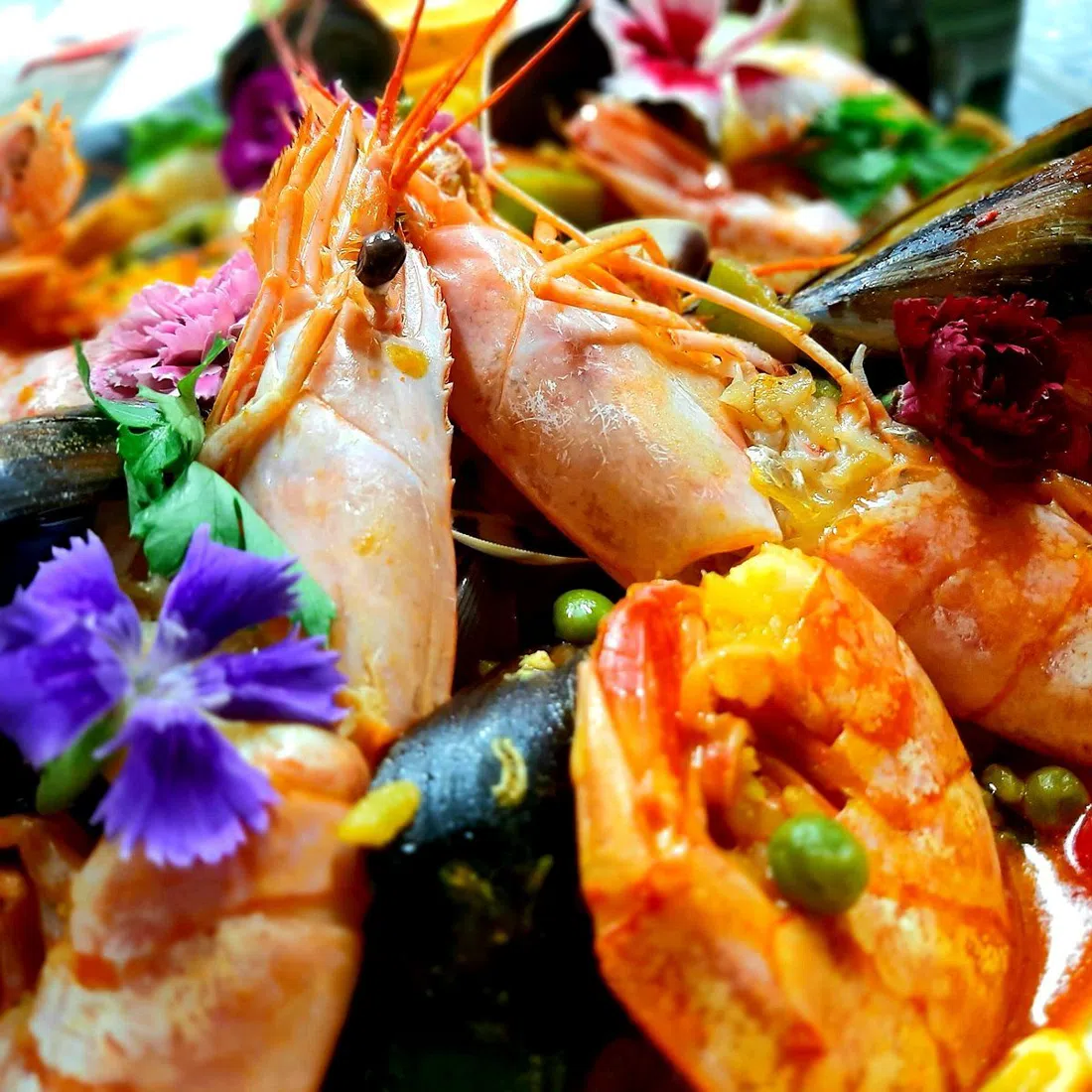
Down on Avenida de la Constitución, DiVino Bounty does the harbourside version: family-run, around twenty covers, and built on seafood tapas and octopus. The paella needs ordering ahead — this is not a kitchen with trays of it sitting under a lamp waiting for you — and the Italian desserts at the end are a small, deliberate swerve away from flan. Also 4.7, and small enough that turning up on spec on a Saturday is optimistic.
Nightlife
Nobody should come to Puerto del Rosario for the nightlife. That title belongs to Corralejo, and the capital doesn't contest it. What it has instead is small, largely Latin-leaning and centred on Calle Secundino Alonso, a few streets back from the harbour — a handful of rooms that stay dark and quiet until late and then fill very suddenly with people who live here.
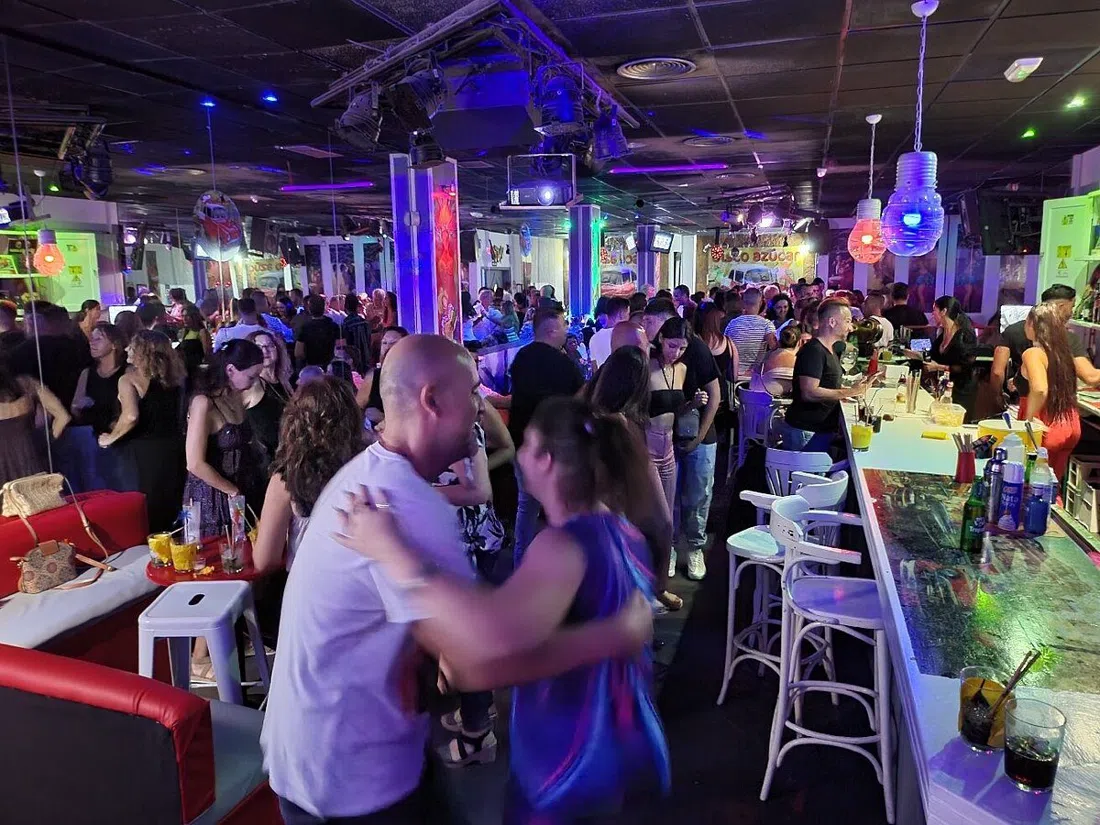
Disco Azúcar is the heart of it: a Latin American club on Secundino Alonso built around salsa, bachata and kizomba, popular with young locals rather than package tourists. If you can dance, you will have a far better night than you expect from a town this size. If you can't, nobody will mind much, but you will notice the difference in competence around you.
MAGMA Disco Lounge opens Thursday to Saturday and is one of the very few places in town running through until dawn. It also has the more useful trick of a quieter terrace, for those who would rather talk over a drink than shout over a speaker. Between the two, you have a weekend. Mid-week, the capital goes to bed, and there is no point pretending otherwise.
Things to do
The best thing to do here costs nothing: walk the old quarter mural trail, then walk the 1.3km promenade, ideally in that order and ideally finishing as the light goes. Give it a morning and an evening and you will have seen the town properly, which is more than most visitors to Fuerteventura can say about anywhere.
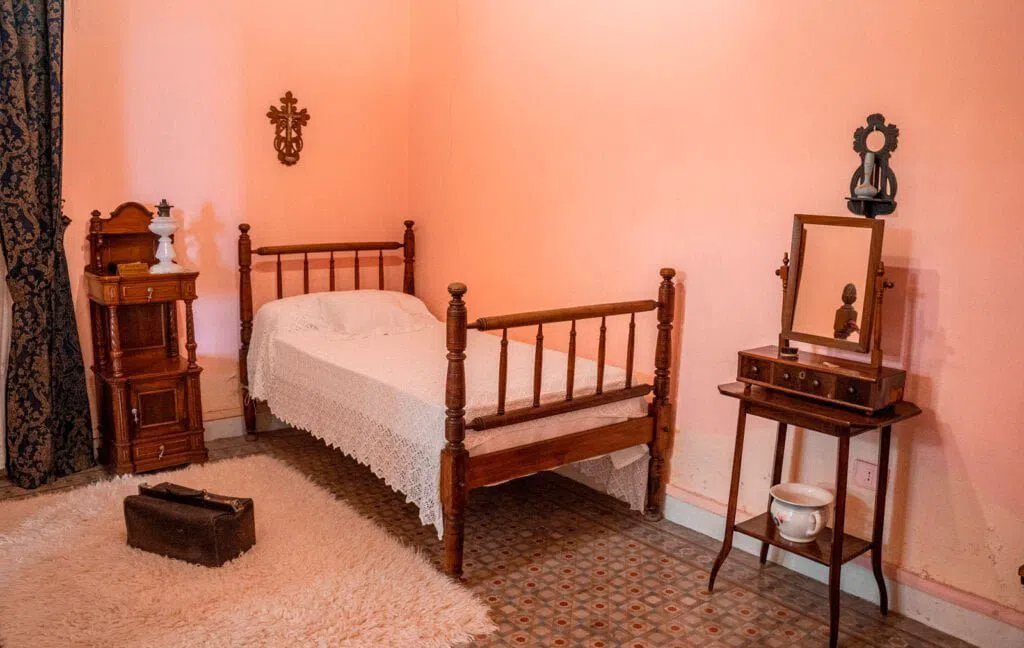
The town's literary claim is Casa Museo Unamuno, the house where the writer and philosopher Miguel de Unamuno lived during his 1924 political exile under Primo de Rivera's dictatorship. It is now a small museum, open Monday to Friday mornings only, and it rewards a slow half-hour: a reminder that this island was once a place the Spanish state sent people to be forgotten in. Check the hours before you walk up — the mornings-only rule catches people out.
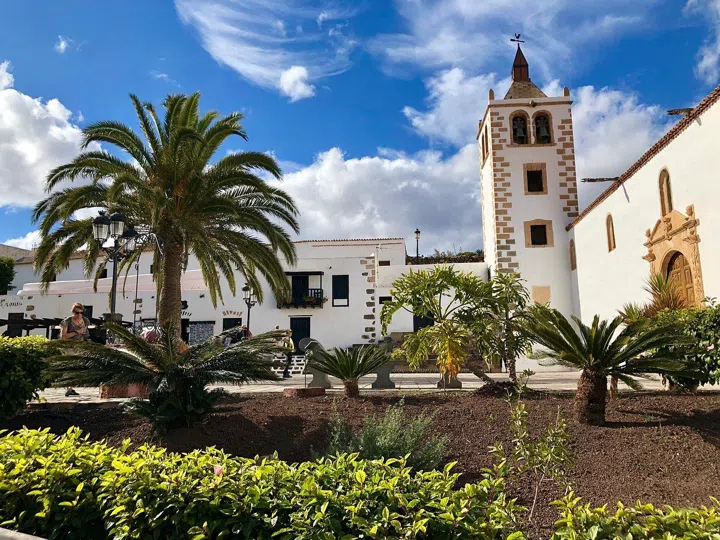
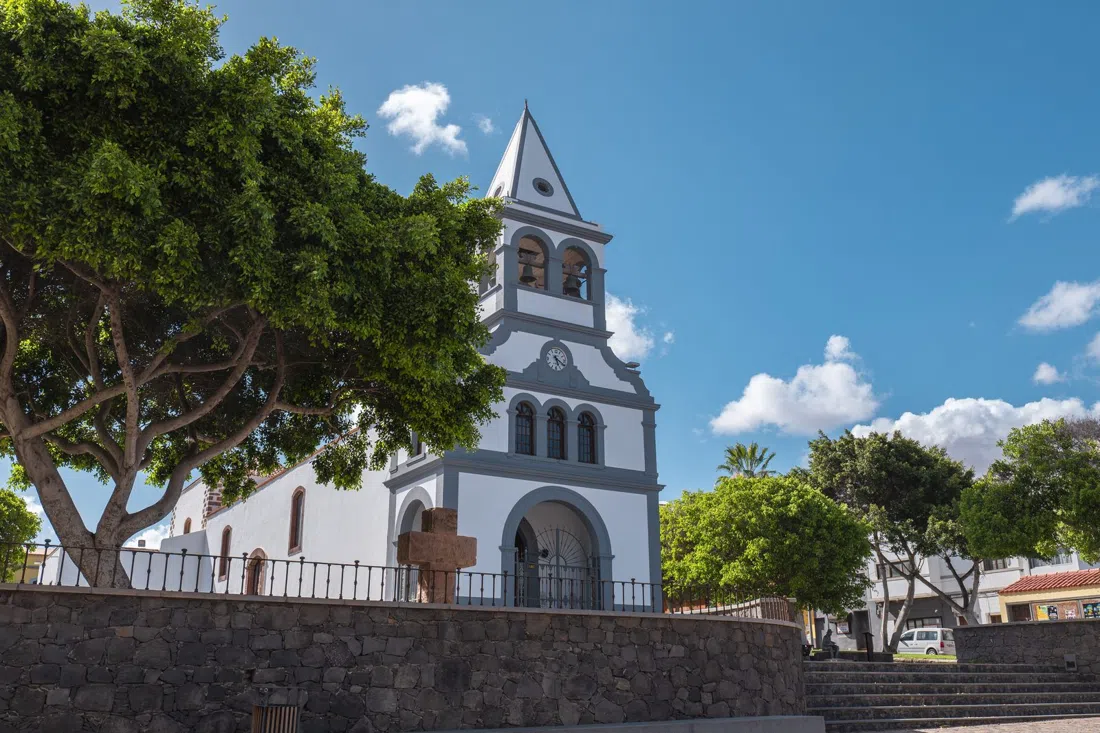
The old quarter's anchor is the Church of Nuestra Señora del Rosario, built between 1824 and 1835, with bells brought from Marseille. It gave the town its name, and it still sets the geometry of the streets around it — everything in the old centre reads as either towards it or away from it.
If you are travelling with teenagers, or with children who have run out of patience for murals and museums, Fuerteventura Gran Karting sits on the edge of town and does exactly what it says: a straightforward half-day on a go-kart track, rated 4.6, no interpretation required.
Shopping
Centro Comercial Las Rotondas is the town's main shopping centre and, by most accounts, the best general shopping anywhere on Fuerteventura — which is less a boast about the capital than a statement about the island. Zara, Bershka, C&A and H&M sit under one roof with a Hiperdino supermarket, and the food court runs to Indian and Chinese buffets if the tapas timetable has defeated you. It is also where islanders come from the resort towns to buy things they can't get there, which makes it a surprisingly good place to watch ordinary Fuerteventura life.
For something with more character and less air conditioning, go back down to the harbour and the daily fish market, where the shopping is whatever came in that morning and the pricing conversation happens in Spanish.
Where to stay in Puerto del Rosario
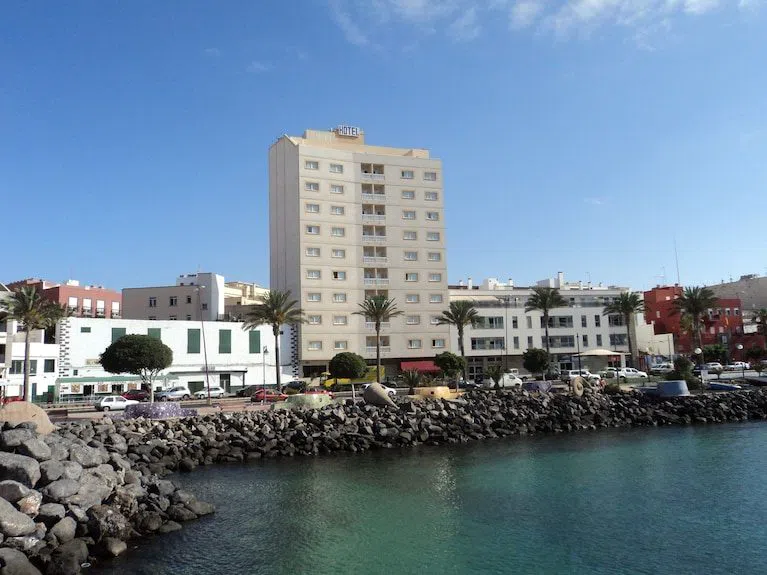
Staying here means trading beach-on-the-doorstep for sheer convenience, and the maths is more persuasive than you might assume. This is the only part of the island where you can land, take a five-minute taxi, and then reach a restaurant, a supermarket and the ferry port on foot without a hire car. Room rates undercut the resort towns, and the historic centre around the harbour is where you want to be.
JM Puerto Rosario faces the port in the historic centre, close to the town hall and Las Rotondas, with its own restaurant and bar — the pick if you want everything on foot and nothing negotiated. Hotel Tamasite is the budget option, simple and well reviewed, just uphill from the harbour; there is no breakfast and no pool, and it can pick up noise from the town's one discotheque on weekend nights, which is worth knowing before you book a Friday.
Getting around
Fuerteventura Airport (FUE) sits around 5km southwest of the centre, a 10–15 minute taxi, and it is the shortest airport-to-town run anywhere on the island. That single fact is the main practical reason to base here, especially on a dawn departure. Arriving by sea works too: the ferry terminal serving Naviera Armas and Trasmediterranea connects to Gran Canaria and Tenerife, and the port is about 2km from the centre.
The town itself needs nothing but your feet. The rest of the island is another matter. Island buses leave the central Estación de Guaguas for Corralejo, Jandía and the north coast, but on a limited timetable that will shape your whole day if you let it — so for beach trips, hire a car. One last note: this is a working port town with some rough edges around the harbour and the bus station after dark. Nothing resembling real danger, just a place less polished than the resorts, and honest about it.
24 October 2026