Fuerteventura · Where to live · 8 min
El Cotillo, Fuerteventura: The Fishing Village That Never Became a Resort
On Fuerteventura's north-west corner, El Cotillo still lands its own fish, fills its lagoons twice a day and treats sunset as the main event — a neighbourhood guide to its harbour tables, surf breaks and the tower on the headland.
The fishing boats at the Muelle Viejo are hauled up on bare rock, blue and white, close enough to the tables that a diner could put a hand out and touch a hull while eating what those same boats landed this morning. That is El Cotillo's whole proposition in one image. A few hundred metres north, the tide fills the lagoons of Playa de La Concha until they are warm, waist-deep and clear enough to count your own toes. A few hundred metres south, at Piedra Playa, the identical ocean arrives with no manners whatsoever. Between those two moods sits a village on the north-west corner of Fuerteventura that simply never got around to becoming a resort.
A fishing village with the island's best sunset, not a resort
El Cotillo built its reputation on being the thing Corralejo and the southern resorts aren't: a real fishing village that never knocked down its harbour to build a strip. Boats still land their catch at the old pier every day, and that single fact sets the rhythm of everything else. The terraces ringing the water are organised around what came in on the boats rather than around what photographs well on a laminated menu. Expect Spanish first, English second, and the fish specials chalked on a blackboard rather than printed. When the blackboard says the octopus has gone, the octopus has gone.
Above the village, on the headland, stands the round 18th-century Torre del Tostón — a squat drum of dark volcanic stone that has watched this stretch of Atlantic since the 1700s. It is the village's one monumental gesture, and even that is defensive rather than decorative, which feels about right for El Cotillo.
The other thing to understand is the orientation. This coast faces west, which means the sun goes down into open ocean rather than behind a hill or a hotel block, and the entire evening economy here is built on that. Sunset is not a photo opportunity in El Cotillo. It is a daily appointment, kept by surfers still in half-peeled wetsuits, families with sandy children, and couples who have worked out that the good seats fill up early.
Who thrives here: surfers, kitesurfers and windsurfers who want an actual wave rather than a resort lagoon; couples and families after calm, shallow water and fresh seafood instead of nightlife; anyone content with a hire car or the island bus rather than a walk-everywhere strip. Who will hate it: anyone hunting nightclubs, late bars or an all-inclusive promenade, and anyone arriving without a car who needs frequent, fast transport.
Harbour seafood, menú del día, no chains
Eating in El Cotillo means the harbour. The old pier is ringed with terraces built around the day's catch, and the menú del día — three courses and a drink for roughly €10–14, served 2–4pm — is still how most people eat lunch here. That window matters. Turn up at one and the kitchens are quiet; turn up at three and the tables are full of people who finished work at the pier.
La Vaca Azul is the old-harbour institution, unmistakable and unmissable, a terrace set out over the water where the seafood rice, the lobster and the octopus are what people come back for year after year. It rates 4.4, which undersells the experience of eating arroz with the swell slapping the rock below you.
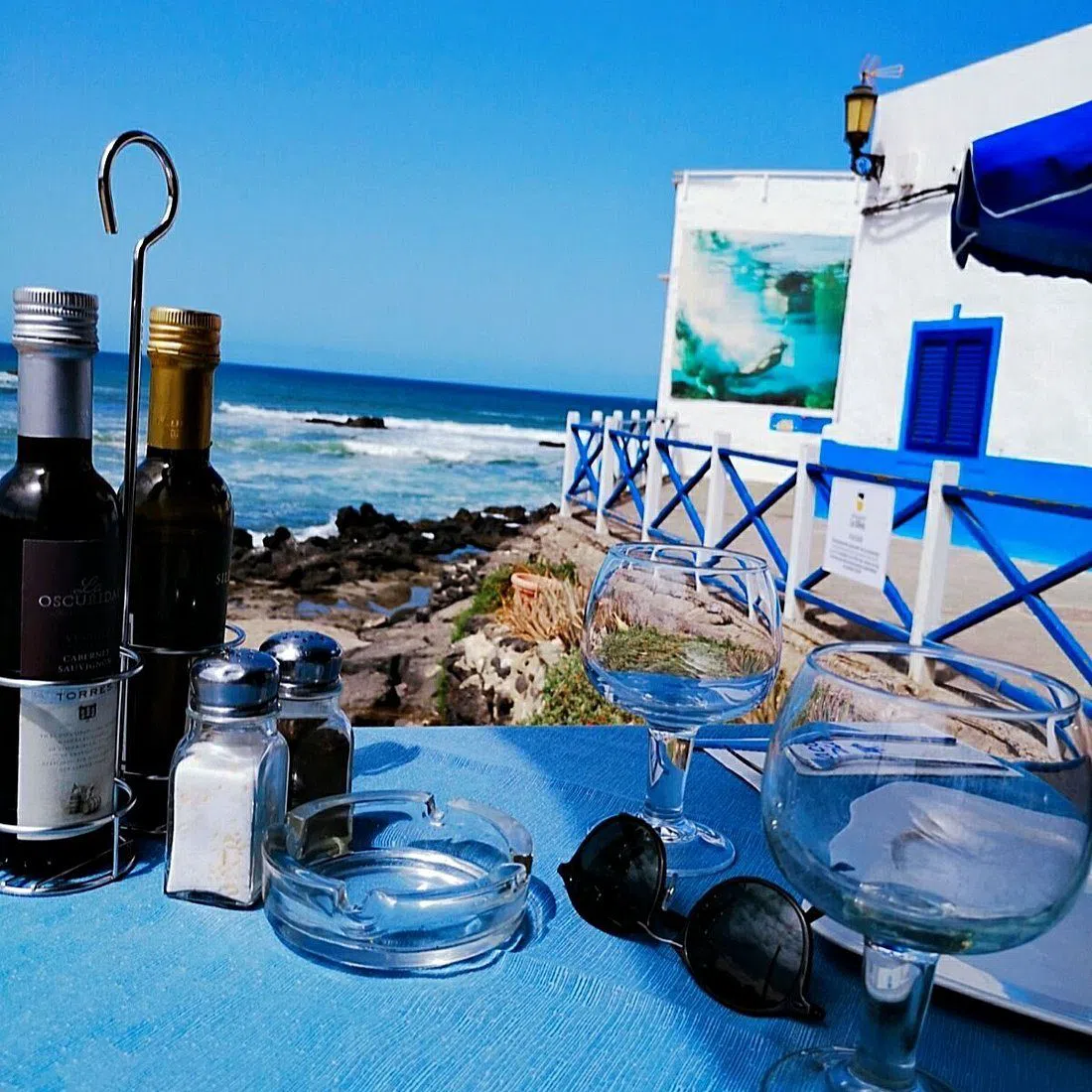
Round at the new harbour, El Roque de los Pescadores (4.5) does the same trick with less ceremony — a seafood terrace next to the Seahorse bar, the menu assembled around whatever came in that morning. It is the kind of place where ordering "the fish" is a complete sentence.
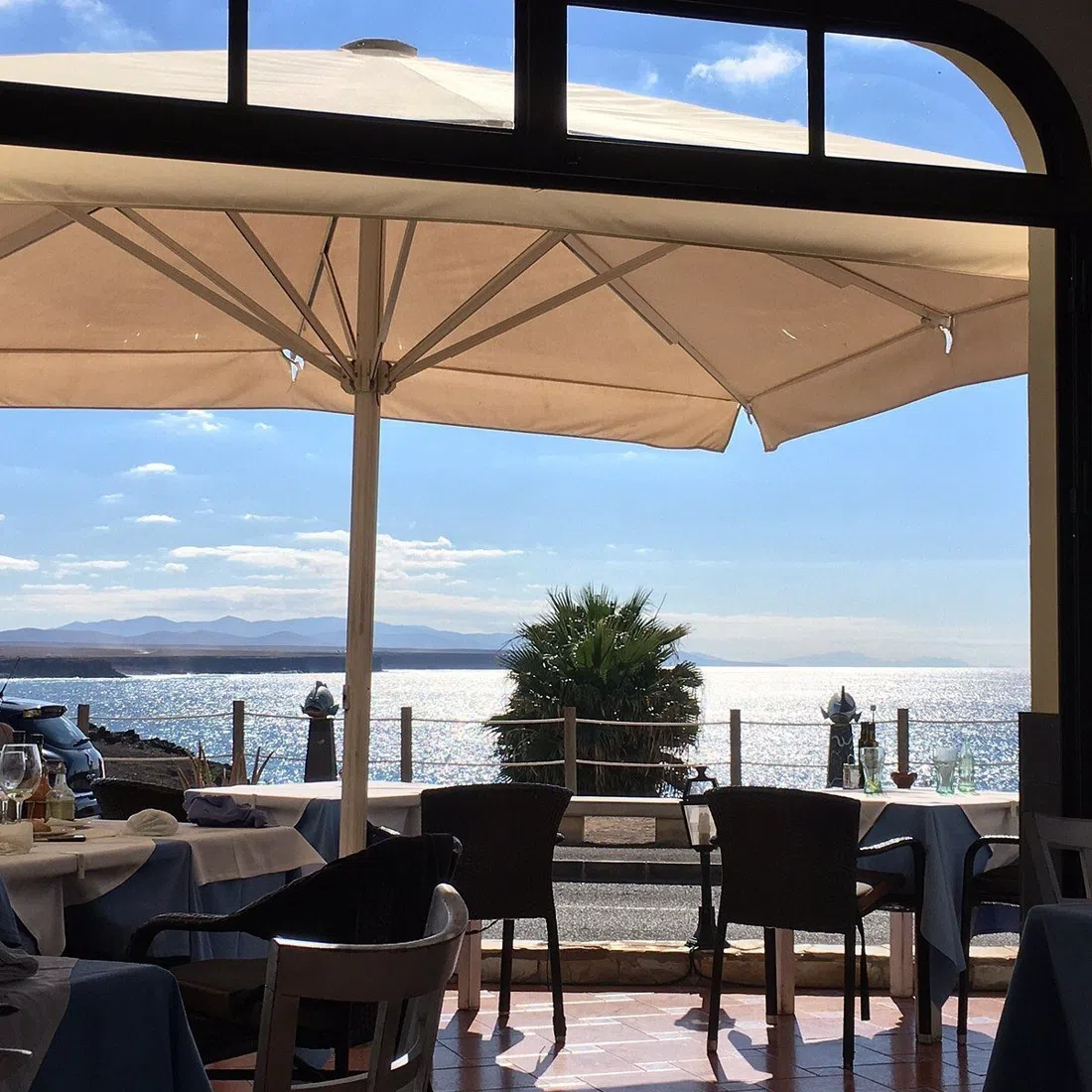
Inland — and "inland" in El Cotillo means a short walk — Azzurro Chill Out (4.6) is family-run and refuses to pick a lane, running Italian, Spanish and seafood dishes side by side with the confidence of a kitchen that has been getting away with it for a while. Olivo Corso (4.6) is the serious booking: it rates consistently among the best tables on the island, not merely the best in the village, which is a meaningful distinction on Fuerteventura. And Pez Gordo carries a 4.8, the highest score in the village, for a European-fusion menu that locals rate every bit as highly as the dedicated seafood houses. If you have four nights here, that is four dinners sorted without once eating in a chain, because there isn't one.
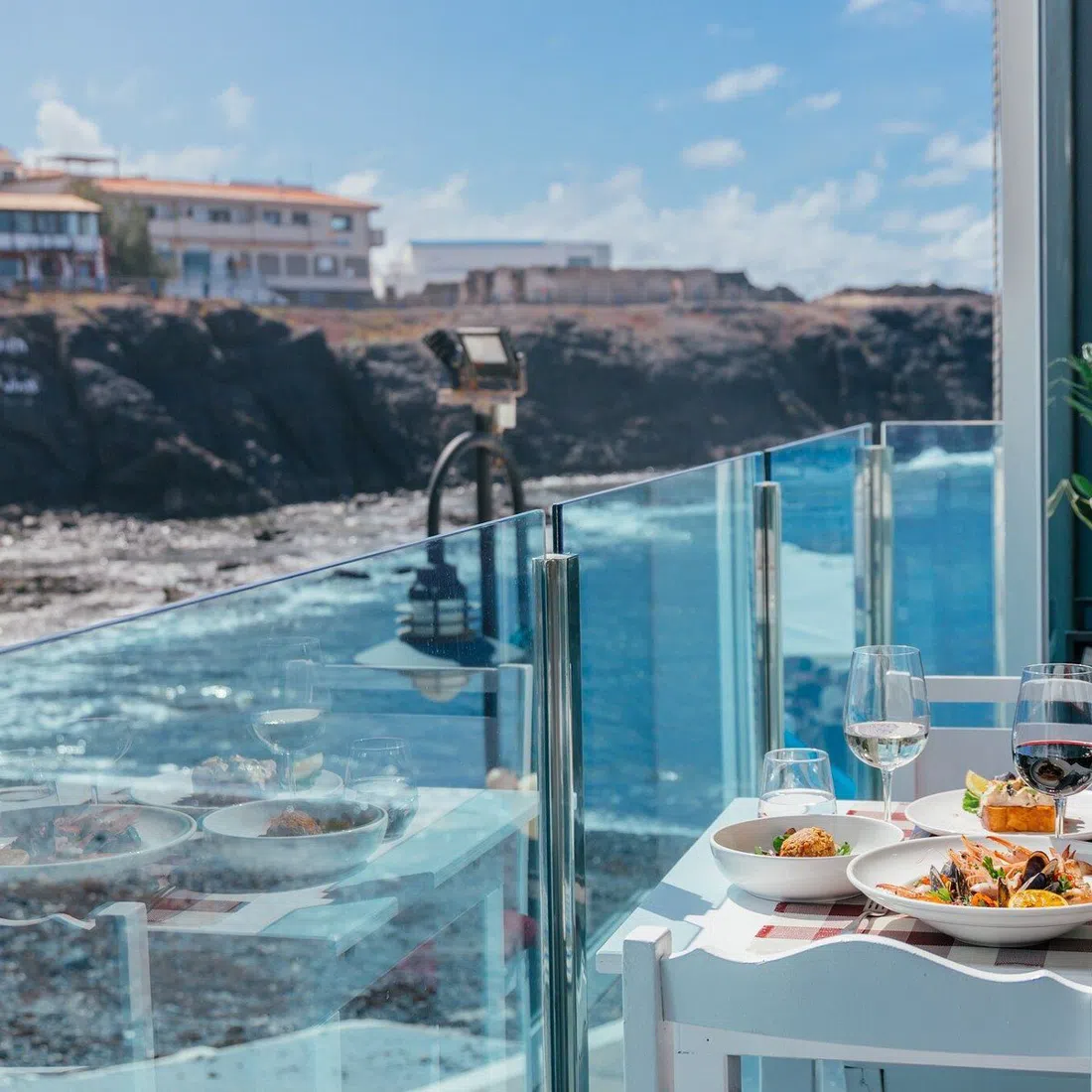
Budget-wise, the harbour restaurants sit in €€–€€€ territory for dinner. Lunch, via the menú del día, is almost comically cheap by comparison. Eat big at three, drink at sunset, graze at nine — that is the local shape of a day.
Sunset bars, live music, no clubs
There are no clubs in El Cotillo, and nobody here is trying to build one. The whole evening scene is built on watching the sun drop into the Atlantic with a drink in hand, and then — crucially — going to bed at a reasonable hour.
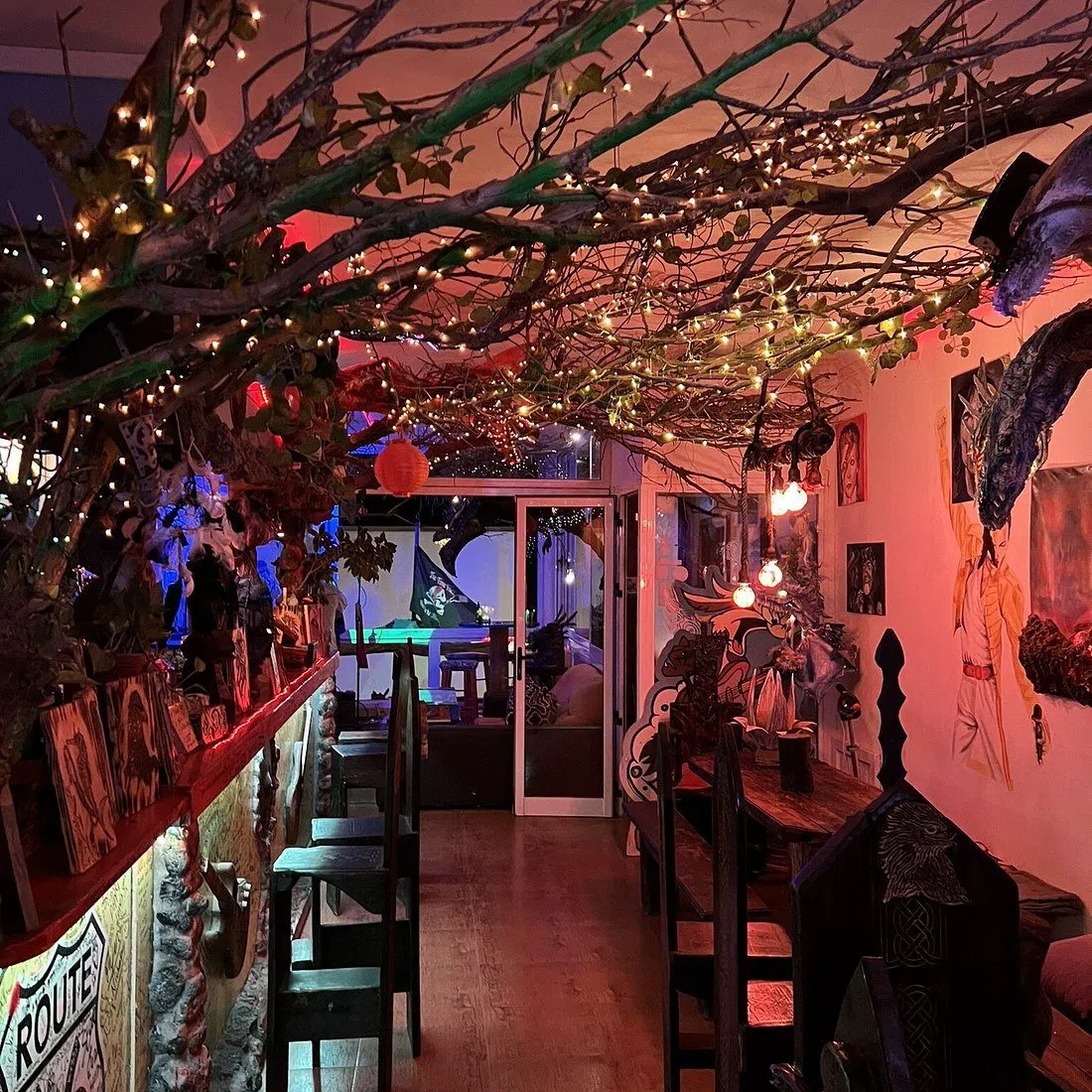
Coyote Bar, fitted out like a pirate ship on Calle Del Muelle de Pescadores at the old harbour, is the village's social anchor: nightly live music, a 4.6 rating, and a view straight over the old pier as the light goes orange and then briefly, improbably, pink. It should be naff. It isn't. The rigging and the timber work because the harbour outside the door is genuinely a harbour.
For altitude, Solar Restaurant & Rooftop Bar up on the headland is widely reckoned to hold the best sunset seat in El Cotillo — a rooftop, a cocktail, and nothing between you and the horizon. Its 3.9 rating suggests the service can be patchier than the panorama, so go for the view and the first drink rather than a long, demanding evening. Either way, the ritual is the same: everyone faces west, conversation drops for about four minutes, and then the village exhales and gets on with dinner.
Things to do: surf schools, lagoons and the Tostón tower
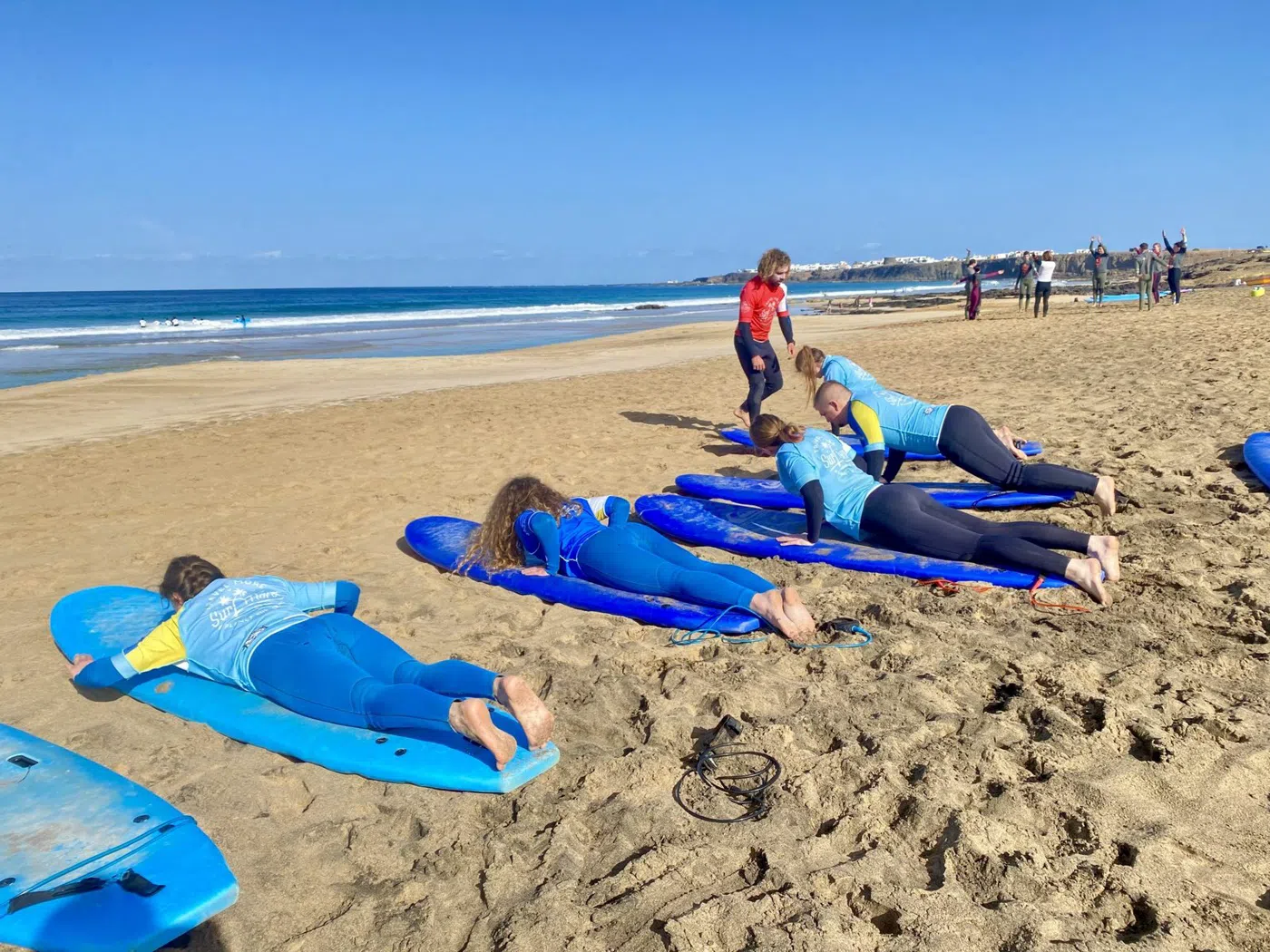
Surfing is the organising activity here, and El Cotillo has more surf schools per street than anywhere else on the island. El Cotillo Surf School is the small, family-run option — years of local teaching behind it, a perfect 5 rating, and a particular strength with juniors and absolute beginners. Wave & Chill, also rated 5, runs daily lessons pitched at any level, from people who have never stood on a board to those ready for the stronger swell at Piedra Playa.
That swell is the thing to respect. Piedra Playa, south of the harbour, has real Atlantic currents and is not a beach for inexperienced swimmers — the village is calm and low-key, and the only genuine risk here is the sea rather than crime. The counterweight is the lagoons: Playa de La Concha and Los Lagos to the north go shallow, warm and almost pool-like, which is precisely why families with small children end up staying a week longer than planned.
When you have had enough salt, walk up to the Castillo de El Tostón — the Torre del Tostón — the 18th-century defence tower on the headland, now a viewpoint and small gallery, rated 4.3. Climbing it reframes the village: from up there you see how little of El Cotillo there actually is, and how much coastline.
Surf shops and small local stalls
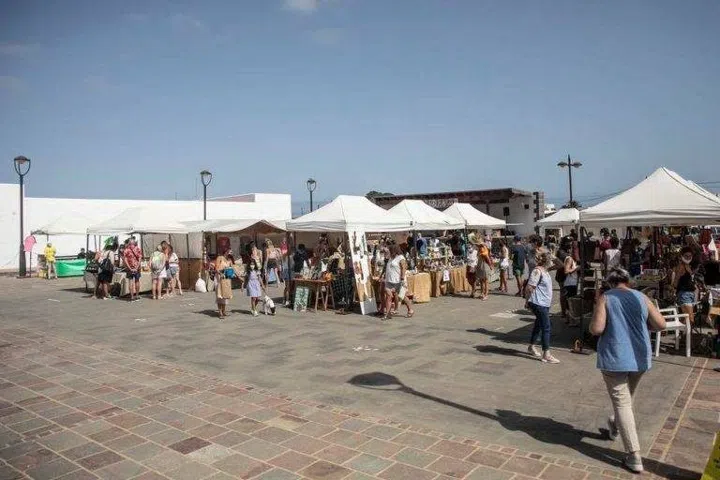
El Cotillo does not have a shopping street in any real sense, and anyone arriving from Corralejo's run of surf malls and souvenir shops down the coast should recalibrate. What exists here is small and practical: a cluster of surf and skate shops along the road into the village and near the harbour, selling boards, wax and wetsuits to people who will be using them within the hour, plus small local stalls. You buy here because you need something, not because you are browsing — and there is something quietly restful about a holiday where retail simply isn't on the agenda.
Where to stay in El Cotillo
Stay in the village centre, around Calle Reyes Católicos and the harbour, and you are within walking distance of the seafood terraces, Coyote Bar's sunset crowd and the surf schools. The stock is low-rise aparthotels and holiday rentals rather than big hotels — there is no major resort chain in the village itself, and the absence shapes the atmosphere more than any single building could. Accommodation leans toward apartments and small aparthotels, which suits the way people actually use El Cotillo: long stays, a kitchen for breakfast, wetsuits drying on the balcony.
Buses, the airport, and why you'll want a car
El Cotillo sits in the island's north-west corner, and arriving without a car takes real planning. By road it is 35–40 minutes from Fuerteventura airport at Puerto del Rosario, and about 20 minutes from Corralejo. By bus, allow roughly an hour and a half: from the airport you need two services, line 3 or line 10 into Puerto del Rosario, then line 7 out to the village — that line runs Puerto del Rosario – Tetir – Tindaya – La Oliva – Corralejo – El Cotillo.
It is doable, and plenty of people do it. But the honest advice is to hire a car. Not because the village needs one — the harbour, the lagoons and the tower are all walkable — but because the rest of Fuerteventura doesn't come to you, and because the best thing about staying here is being able to leave for the day and still be back in time for the sunset.
24 October 2026