Fuerteventura · Where to live · 8 min
Caleta de Fuste, Fuerteventura: The Resort the Reef Built
A shallow lagoon, two 18-hole courses and a pub strip with the football on — an honest walk through Fuerteventura's most frictionless family base.
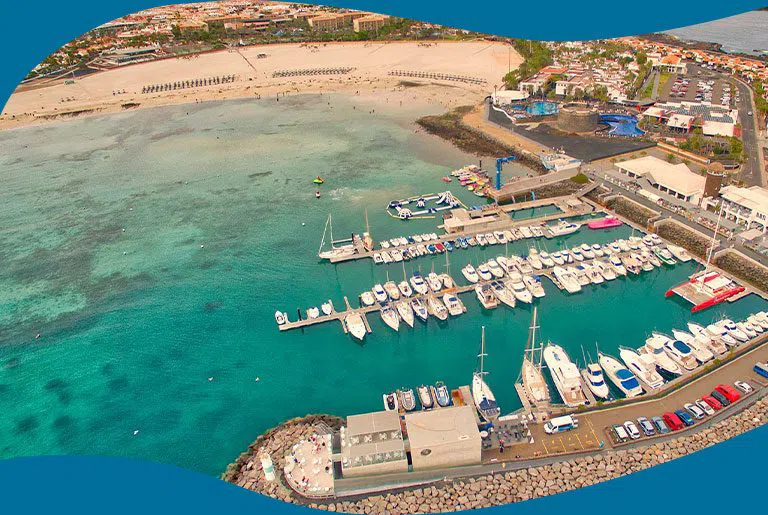
A reef sits a short swim off Playa del Castillo, and more or less everything else in Caleta de Fuste follows from it. It breaks the Atlantic before the Atlantic reaches the sand, which leaves a lagoon that stays shallow and almost wave-free — the kind of water where a small child can wade a long way out and still be in it up to the knees. Package operators read that piece of geography correctly decades ago and built accordingly: two 18-hole golf courses, a marina at the south end of the beach, a shopping centre a kilometre inland, and roundabout after roundabout stitching the lot together. This is a resort that was planned rather than one that grew, and it rarely pretends otherwise.
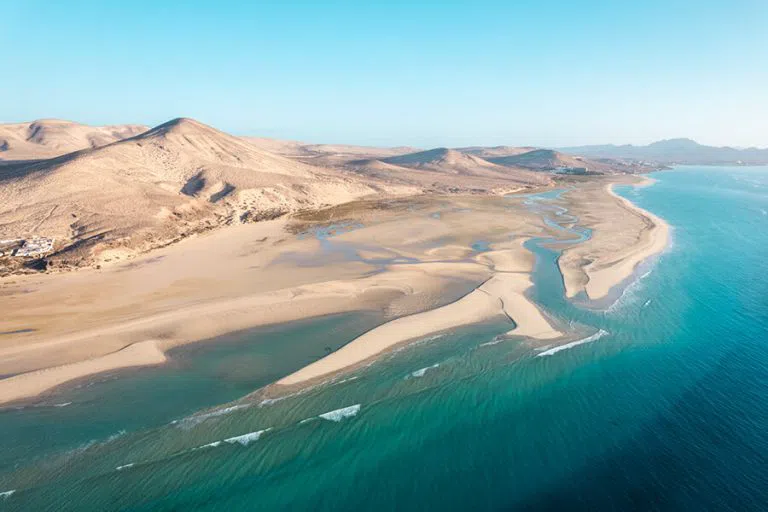
A calm lagoon, two golf courses, and a lot of roundabouts
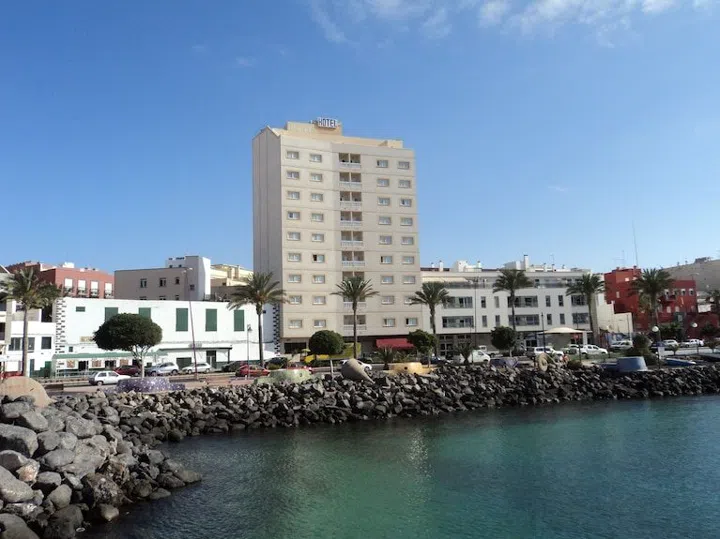
Stand on the sand in front of the Barceló and the old Castillo hotel block and the appeal is immediate and slightly unglamorous: water that behaves. No shore dump, no rip to worry about, no long walk to find a sheltered corner. That single fact is the resort's founding document. The courses, the marina, the hotel blocks and the dual carriageway all exist because the lagoon made the place viable for families who wanted a week without incident.
What you get in exchange for that calm is a townscape that reads suburban rather than scenic. There is no old quarter here, no tangle of Spanish streets, no plaza where the afternoon slows down. There are roundabouts, a dual carriageway, low white blocks and generous pavements. If you came to Fuerteventura for weathered character, you will find Caleta de Fuste thin — and you should know that before you book rather than after.
The soundtrack tells you who the place is for. Pub quiz questions drift out of open doors in the early evening. A Tiadhe bus idles at the roundabout. Water slides crank up around eleven in the morning and the shrieking carries. Golf buggies hum past on their way to the course. The crowd is overwhelmingly British, and the businesses have long since stopped resisting that. For families with young kids who want shallow water and flat, walkable streets, for golfers on a dedicated golf trip, and for anyone who wants a week with essentially zero logistics, it works. For anyone chasing a club night or Spanish-speaking town life, it will feel like a very pleasant mistake — Corralejo is where that holiday lives.
Where to eat and drink
There are well over a hundred restaurants, cafés and bars spread between the seafront strip and the Centro Comercial Atlántico a kilometre inland, which is both the good news and the bad. Volume on that scale means quality shifts block to block, sometimes door to door. The survivors tend to be the places that picked one thing and learned to do it properly, and they are easy enough to pick out once you know what you're looking for.
El Patio is the seafront fixture, a few steps from the marina, and the one I'd send someone to on a first night. It trades on catch-of-the-day paella and grilled fish served under a vine-covered terrace, with live music on some evenings — the kind of room where dinner stretches an hour longer than planned because nobody wants to be the one to stand up. It holds a 4.3, which in a resort this saturated is a meaningful number rather than a polite one.
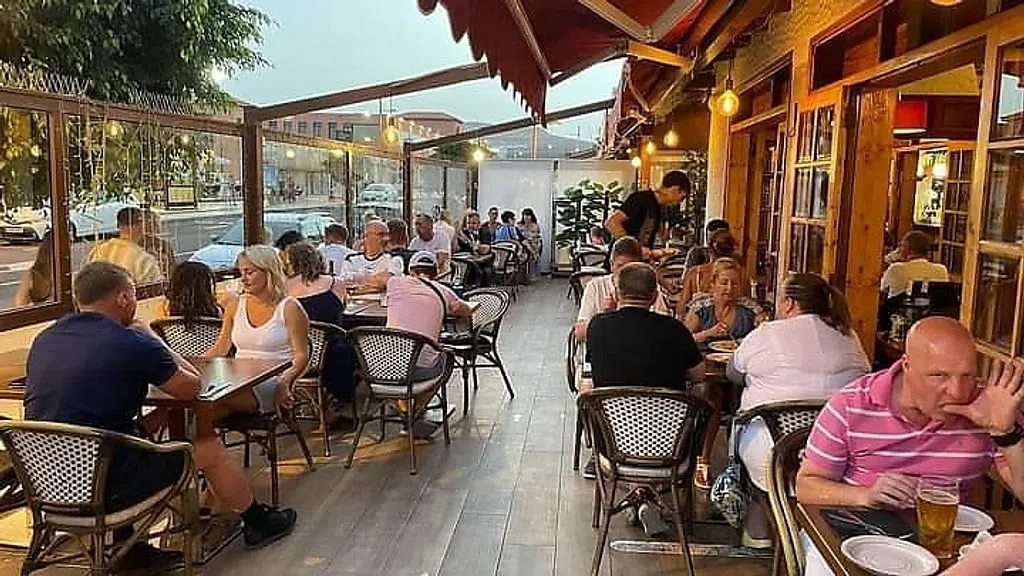
Oliver Restaurant and Tapas Bar is the other end of the register and the highest-rated of the three at 4.7. The format is Mediterranean small plates — ricotta cannelloni, garlic prawns — and a cocktail list that pulls in an evening crowd who clearly have no intention of moving on anywhere afterwards. Order a few things, order a few more, let the table fill up. It is the closest thing in Caleta to a proper sit-down evening out.
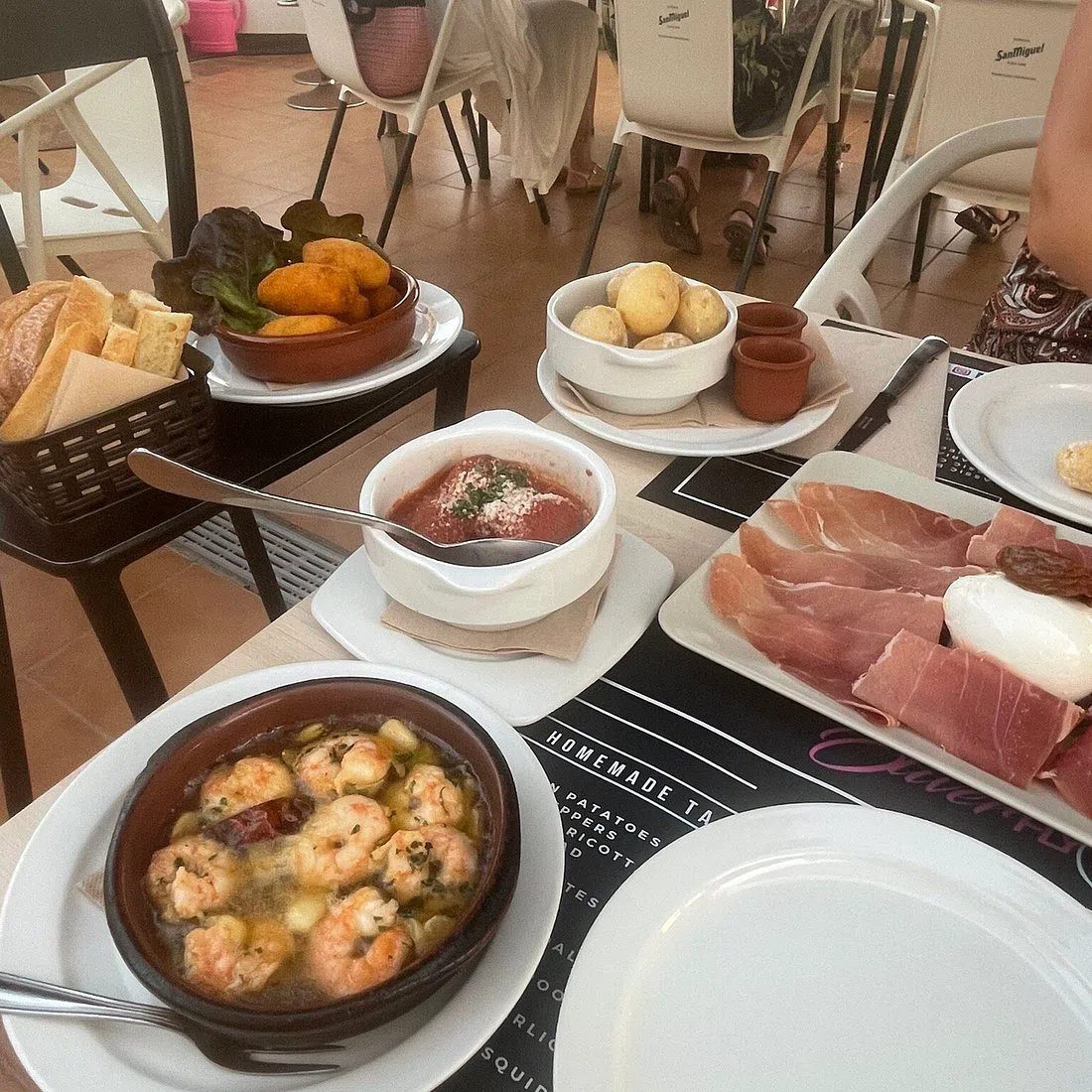
Fado Rock, rated 4.5, solves the problem every parent on this island eventually runs into. Grilled meats and Canarian classics come out of the kitchen in a vintage-rock room, and the children's menu is unusually long — long enough that a seven-year-old gets an actual choice rather than the universal nuggets-or-pasta ultimatum. That combination, decent adult food and a kids' list with some thought behind it, is rarer here than it should be.
Budget-wise, à la carte runs roughly €10–35 per person depending on where you sit and how much fish is involved. Most of the big hotels are all-inclusive, so eating out is a choice rather than a necessity — which means the restaurants that fill up have genuinely earned it.
Piano bars and pub-strip evenings
After dark, Caleta de Fuste aims squarely at the all-inclusive crowd walking down from the Barceló and the Elba hotels, and it makes no secret of it. Irish- and Scottish-themed pubs with football on every screen line the stretch around the Centro Comercial El Castillo, built for a pint and a singalong rather than anything that requires a guest list. Evenings here peak around ten and wind down not long after.
The standout is Piero's Music Cafe, next to the Barceló in the El Castillo centre, a long-running live-music bar and the resort's top-rated nightlife venue at 4.3. Singers work through film and musical numbers nightly to a room that knows most of the words and is not shy about proving it. It is unapologetically crowd-pleasing, and on a warm Tuesday with the doors open it is also genuinely good fun. Go in expecting a piano bar, not a club, and you'll have the right evening.
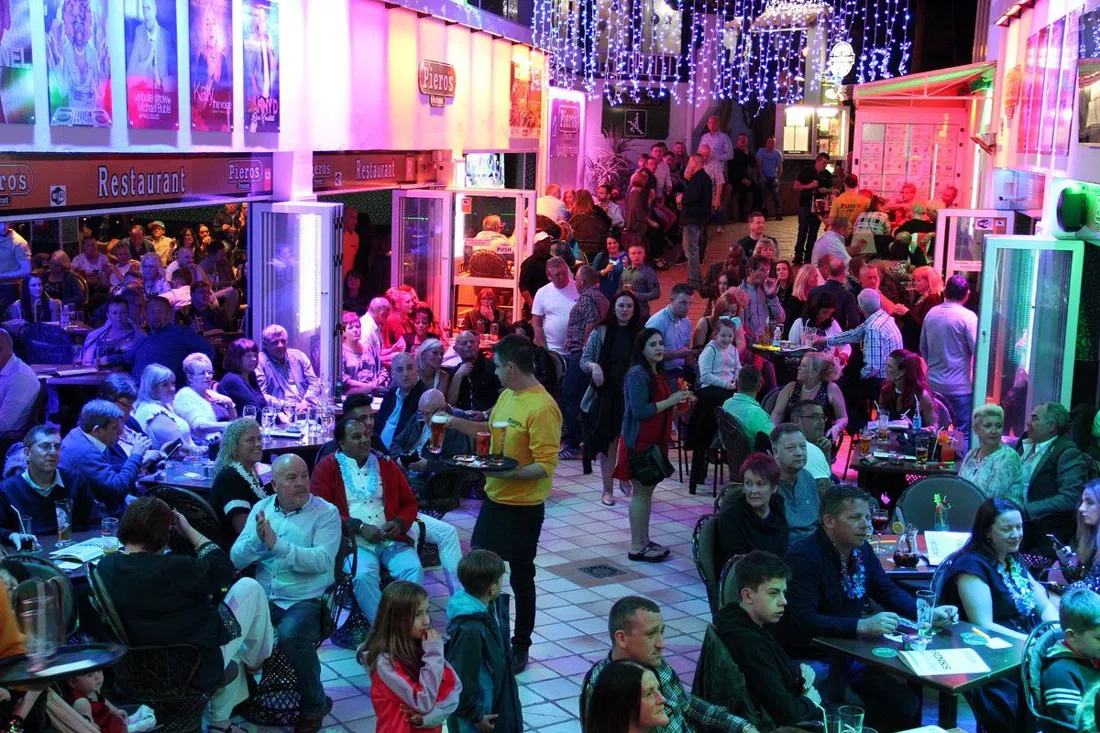
If you want more than that — actual clubs, actual late nights — that is a bus ride and a different resort. Corralejo has it. Caleta doesn't, and isn't trying.
Golf, diving and the salt flats
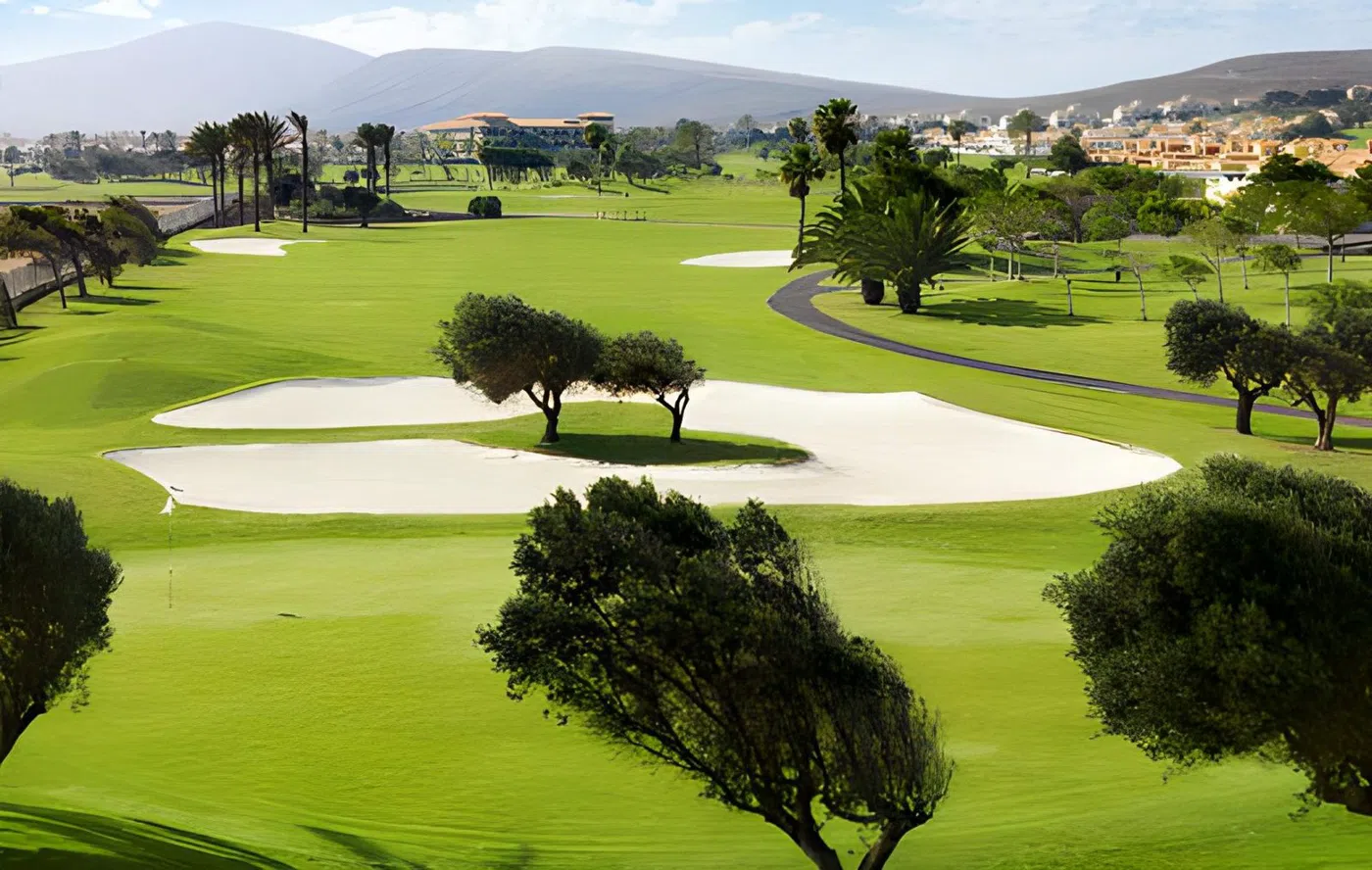
Golf is the headline. Fuerteventura Golf Club is the older of the resort's two 18-hole courses, with sea views from several holes and a driving range and practice green attached. It's well maintained, and reviewers hold it at 4.3 — but they consistently flag the same thing, which is the price. Figure on roughly €130 for a round with club hire, which makes it the one genuinely expensive line item in an otherwise mid-range week. Budget for it deliberately rather than discovering it on day three.
At the south end of the beach, Puerto Castillo is the small marina that handles everything happening on the water: diving schools, snorkelling trips, glass-bottomed boat tours for anyone who wants to look at fish without getting wet. It's also simply a pleasant place to walk at the end of the afternoon, when the boats come back and the light goes long. It rates 4.3.
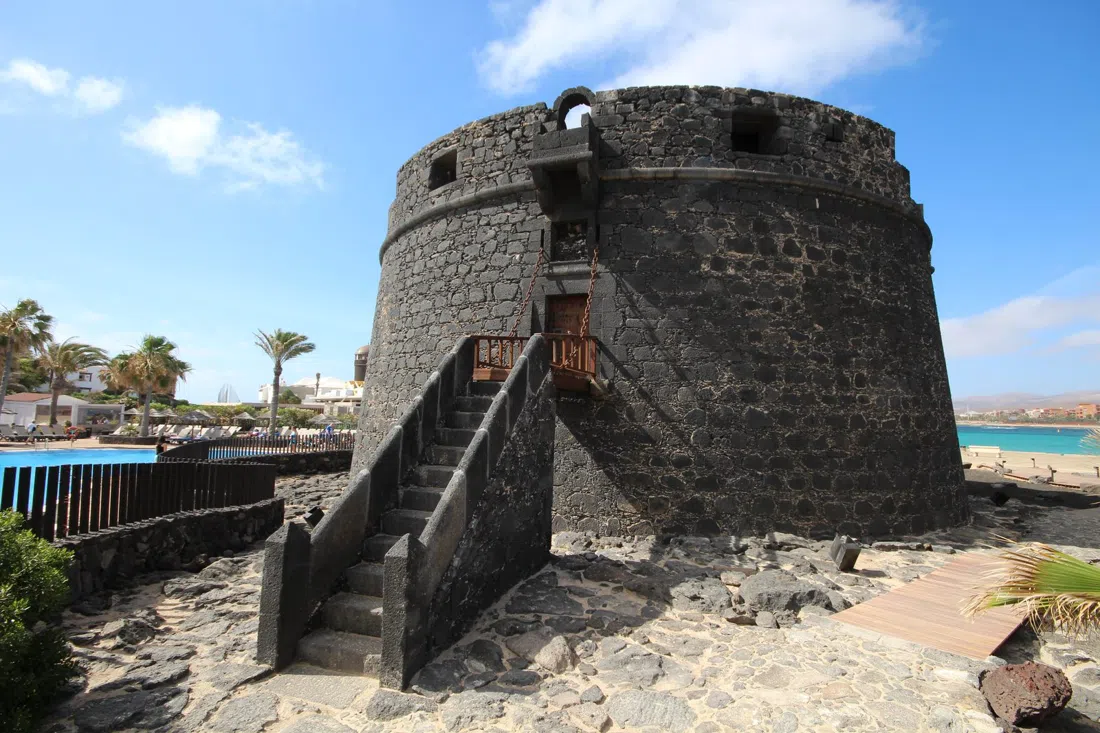
The one piece of pre-tourism history in the area is the Torre de San Buenaventura, an 18th-century watchtower with six-metre-thick walls, thrown up against Berber pirate raids back when this coast was a liability rather than an asset. Those walls are the detail worth standing next to — six metres of stone says more about what life here used to be than any plaque could. It's a short visit, and also a useful corrective to the roundabouts.
Beyond that, the salt flats out along the coast road are the classic half-day add-on; Tiadhe line 3 runs out that way, so you don't need a car to reach them.
Atlántico and the seafront strip
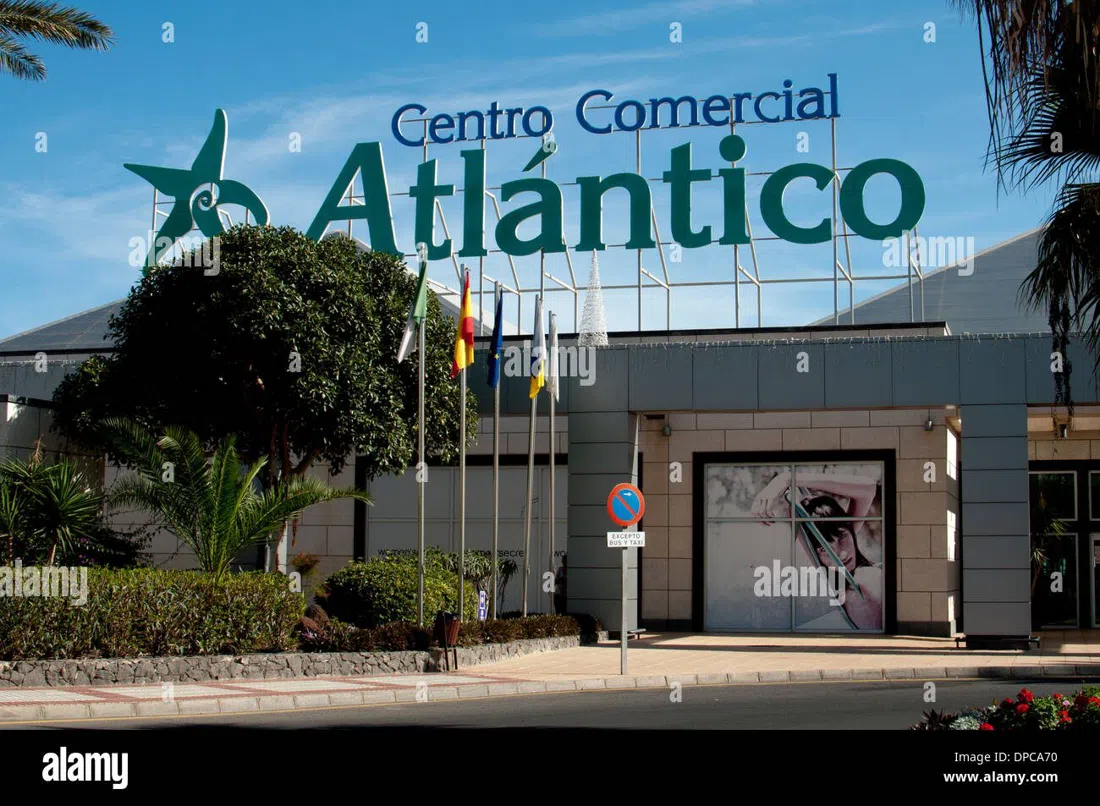
Centro Comercial Atlántico, about a kilometre inland from the beach, is the resort's real shopping centre — clothing chains, a supermarket, a pharmacy, a small cinema and an arcade floor, plus its own run of restaurants, all at a scale the seafront strip simply doesn't match. It is functional rather than charming, and nobody involved would claim otherwise, but it solves problems: forgotten sun cream, a rainy-ish afternoon, teenagers who need somewhere to go that isn't the pool, a food shop that doesn't cost resort prices.
The seafront strip near El Castillo is the browsing option instead — smaller units, more souvenirs, more passing trade. One note that applies to both: the area is very safe and low-crime, built end to end around tourism, and the only real risks are sunburn and the usual pickpocket caution in a busy shopping centre. Nothing more serious than that.
Where to stay in Caleta de Fuste
The rule here is simple. The closer you are to Playa del Castillo and the marina, the more you pay and the less you need a car. The big-name all-inclusives sit directly on or just behind the sand, and from any of them the beach, the El Castillo centre and Piero's are a flat five-minute walk — flat being the operative word if you're pushing a buggy or managing tired legs at the end of a day.
That pocket suits families with young children best, and it's where the resort's zero-logistics promise actually holds. Stay further inland, nearer Atlántico, and you'll trade a walk of fifteen or twenty minutes for a lower nightly rate, which is a perfectly reasonable deal if the beach isn't your whole day. Pricing across the board is mid-range package-holiday territory, with all-inclusive boards dominating the market.
Buses, the airport, and why you'll want a car for day trips
Fuerteventura airport (FUE) is about seven kilometres away. A taxi runs roughly €15–20 and takes 10–15 minutes, which for a family with luggage is money well spent. The alternative is Tiadhe bus line 3 — Puerto del Rosario–Caleta de Fuste–Las Salinas — which stops right outside the terminal on the arrivals level and runs every 15 minutes on weekday daytimes, every 30 minutes otherwise. Same line gets you into Puerto del Rosario in about 25–30 minutes; there's no direct ferry into Caleta, so the capital's port is your connection if you're island-hopping.
Within the resort you will not need a car. The beach, marina, both shopping centres and most hotels fall inside a 15–20 minute walk, and the terrain is forgivingly flat. Where a car earns its keep is the rest of the island: Corralejo, Betancuria, the southern peninsula. The bus network barely touches those, and Fuerteventura is a far better island than Caleta de Fuste alone would suggest. Book the hire car for two or three days rather than the full week — park it, use it hard, and spend the other days doing exactly nothing more strenuous than crossing the road to the sand.
24 October 2026