Fuerteventura · Where to live · 8 min
Costa Calma, Fuerteventura: The Quiet Beach Resort With a World Championship Next Door
Two kilometres of shallow, Blue Flag-standard sand on one side of the Jandía neck and Sotavento's championship wind nine kilometres south — a slow family resort with a fast edge.
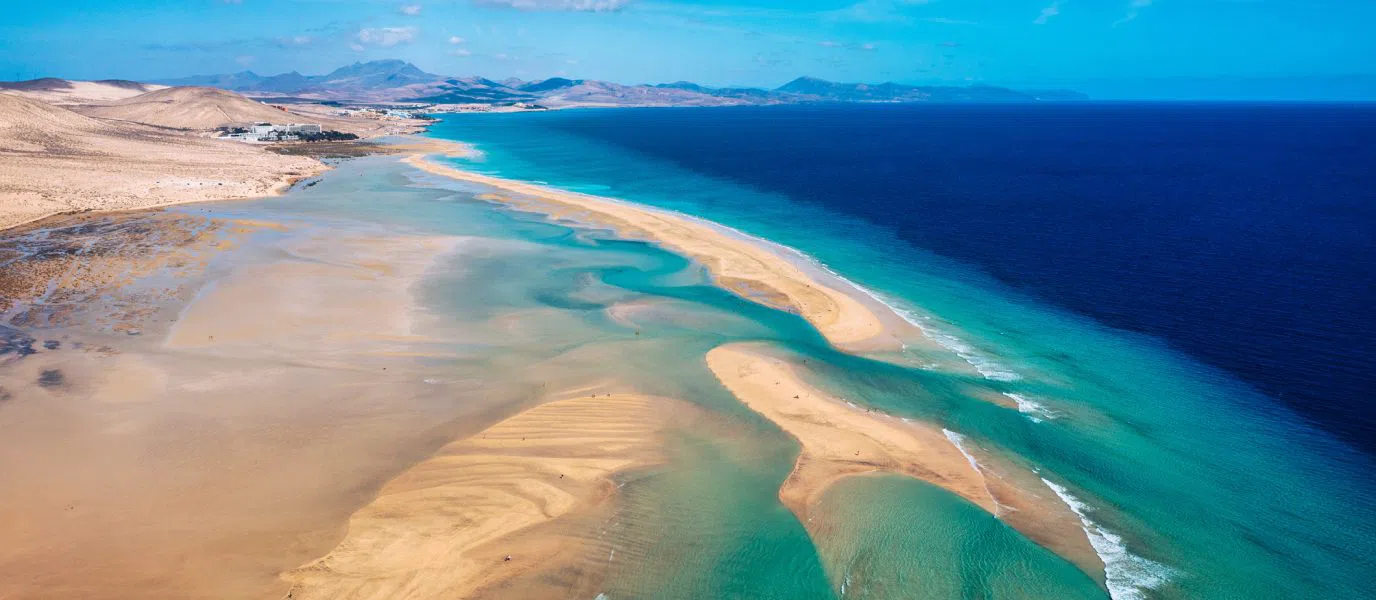
The Jandía Peninsula pinches to a narrow neck near the southern end of Fuerteventura, and Costa Calma is laid out across it: two kilometres of pale-gold sand along the east flank, protected dune and scrubland rising behind. Wade in off the central beach in August and the water takes its time getting past your knees. Drive nine kilometres south to Sotavento in July and you may find a world windsurfing championship under way, sails tilting across the lagoon in formation. Same peninsula, same trade winds, two completely different holidays. Working out why those two things sit so close together is most of what you need to know about this resort.
What Costa Calma is known for
The beach. Everything else here runs downstream of it. It's a wide arc of pale-gold sand with a gradient so gentle that the water shifts through three or four shades of turquoise before it gets seriously deep, and it is maintained to Blue Flag standard — sun loungers and parasols in tidy ranks, beach-bar service within easy reach, lifeguard cover on the main stretch. For families with toddlers or primary-school-age children, that combination of flat, shallow and supervised is the entire argument, and it's the reason Costa Calma has become one of the island's most dependable family bases.
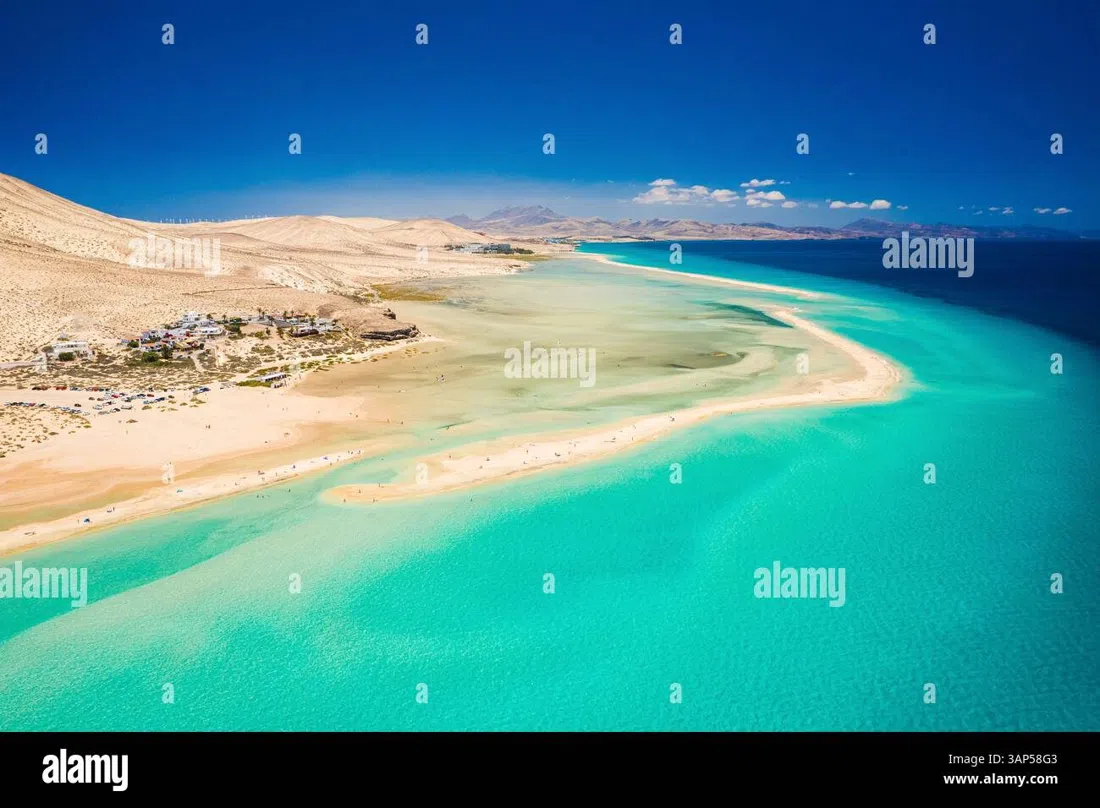
Width matters as much as length. Even in the first fortnight of August, with the hotels behind at capacity, the sand is generous enough that nobody ends up elbow to elbow with a stranger's windbreak. The town itself reads unhurried the moment you arrive: low-rise hotel terraces stepping back from the sand, bougainvillea spilling over whitewashed walls, people in flip-flops walking slowly in the middle of a hot afternoon because there is no reason to walk any faster.
Be clear-eyed about what Costa Calma is not. It was purpose-built for holidaymakers rather than for its own residents, which means no old town, no historic churches, no tangle of lanes worth getting lost in. If you've come looking for Corralejo's late bars or anything resembling an Ibiza night, you will have figured that out before your first dinner. And while the resort itself is easy on foot, the rest of Fuerteventura isn't reachable without wheels. What you get instead is a short walk from hotel door to parasol, and a very slow pace in between — which, for couples, older travellers and anyone travelling with small children, is precisely the point.
Where to eat and drink in Costa Calma
The best kitchens here don't line up along a single restaurant row. They hide in plain sight in otherwise unremarkable shopping parades, behind frontages you'd walk past twice without a second look. That makes Costa Calma a place that rewards booking ahead over hopeful wandering, and it means the resort's food scene is consistently better than its low-rise skyline suggests.
The most ambitious of them is El Pellizco by Rigoberto Almeida, where Canarian cooking is treated with real technique rather than served up as folklore, backed by a deep wine list and live music on selected nights. It holds a 4.7 rating and it is the dinner you plan a day around — book it before you fly, not on the afternoon you fancy it.
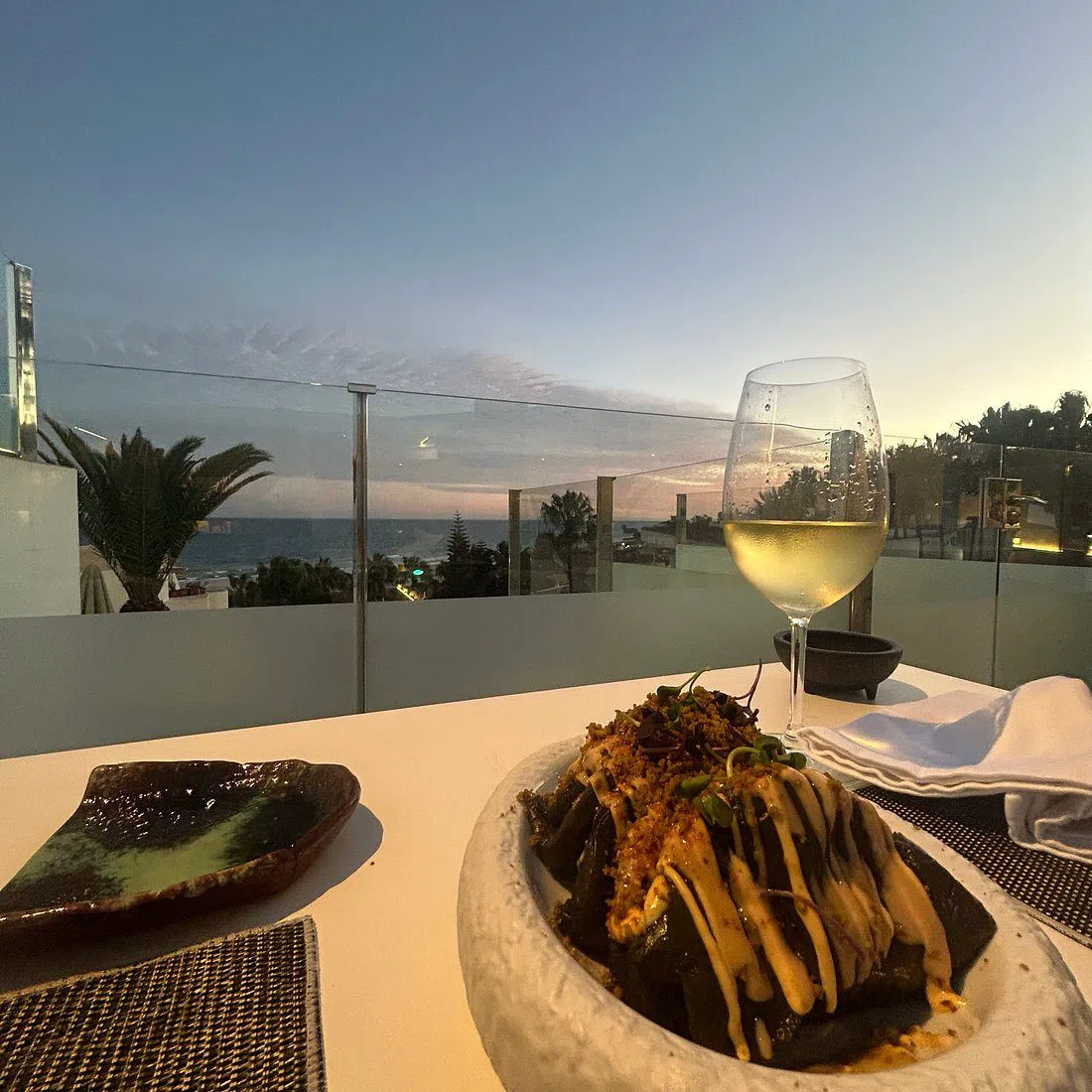
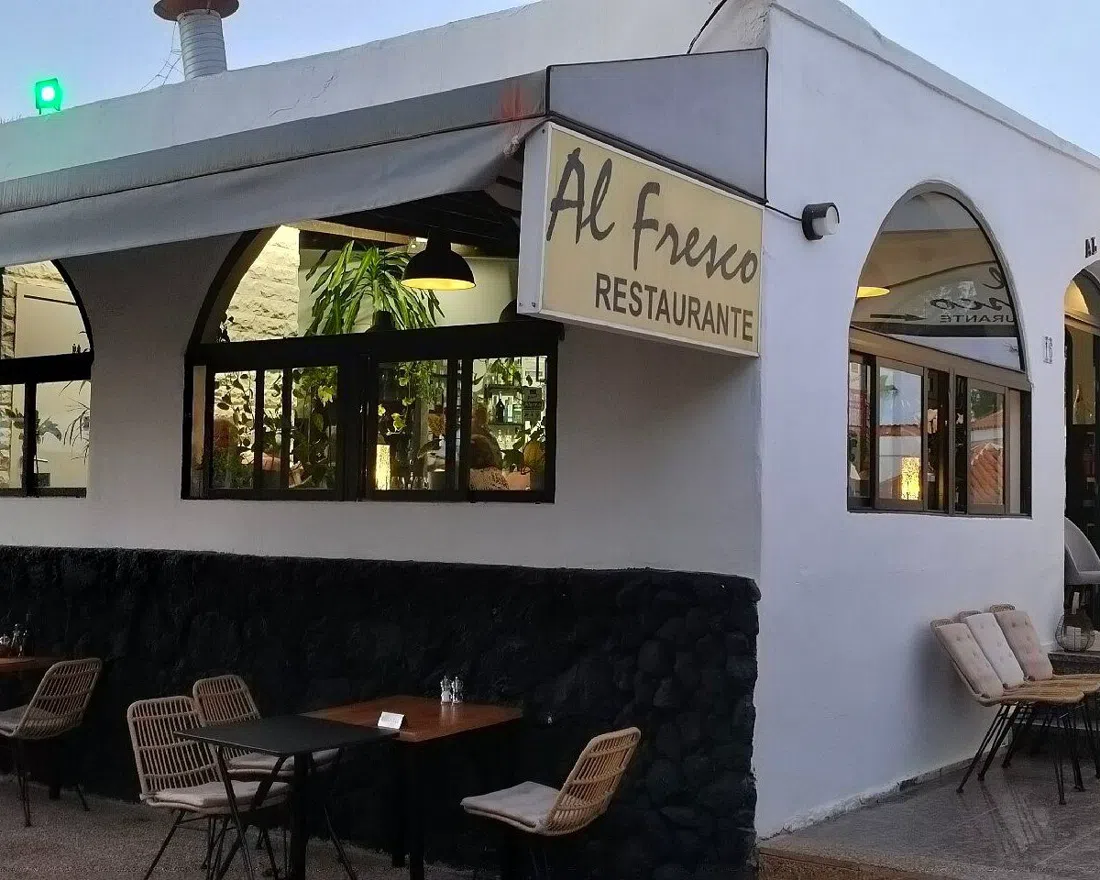
Al Fresco Restaurante works from the opposite direction: small, family-run, a strictly limited number of tables, and the owner at your shoulder telling you what's worth ordering tonight. Seafood and Spanish cooking, a 4.8 rating, and personal service that only works because the room stays deliberately tiny. A reservation isn't a courtesy here, it's the mechanism by which you get fed.
Restaurante San Borondón takes the broader approach — a varied menu and the best-regarded wine cellar in Costa Calma, with live music some evenings and a 4.4 rating. It's the choice when your table can't agree on anything except that everybody wants a decent bottle. For something closer to the water, Terraza del Gato does traditional Canarian cooking and fresh fish on a sea-view terrace, rated 4.2; order the fish, sit facing the horizon, let the afternoon dissolve.
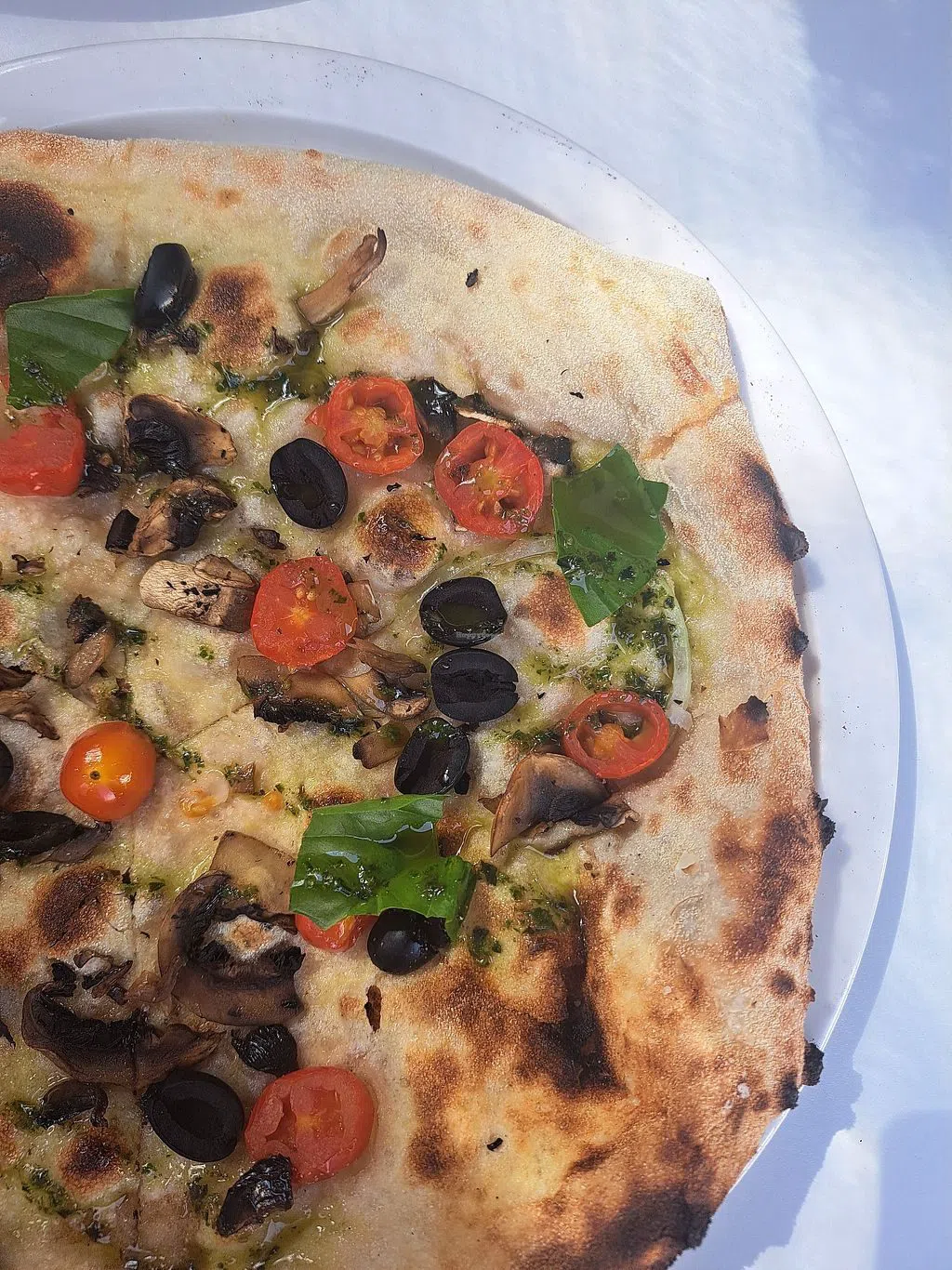
And then there are the nights when nobody in the party wants a tablecloth. L'Aperipizza, in the Centro Plaza, is the resort's go-to pizzeria, with vegetarian and veganisable pies at casual prices and a 4.7 rating to show for it — proof that the shopping-centre address tells you nothing useful about the kitchen behind it.
One practical note on money: Costa Calma prices at mid-range package-resort level, with all-inclusive hotels dominating the accommodation. The handful of genuinely higher-end restaurants sit well below what their mainland Spanish equivalents would charge, which is why the ambitious tasting-menu end of town is worth stepping outside your board basis for at least once.
Nightlife in Costa Calma
Evenings here are built around dinner and a few drinks afterwards. There is no late-night strip to compare with Corralejo, and most bars wind down well before the small hours — a fact that reads as a flaw or a feature depending entirely on who you're travelling with. What exists is low-key, reliable and genuinely sociable.
Los Piratas is the one that puts some energy into it: a cocktail and chill-out bar with regular DJ nights plus salsa and Caribbean theme evenings, rated 4.5. Go for the theme night and you'll find the crowd skews cheerfully mixed-age, which suits the resort.
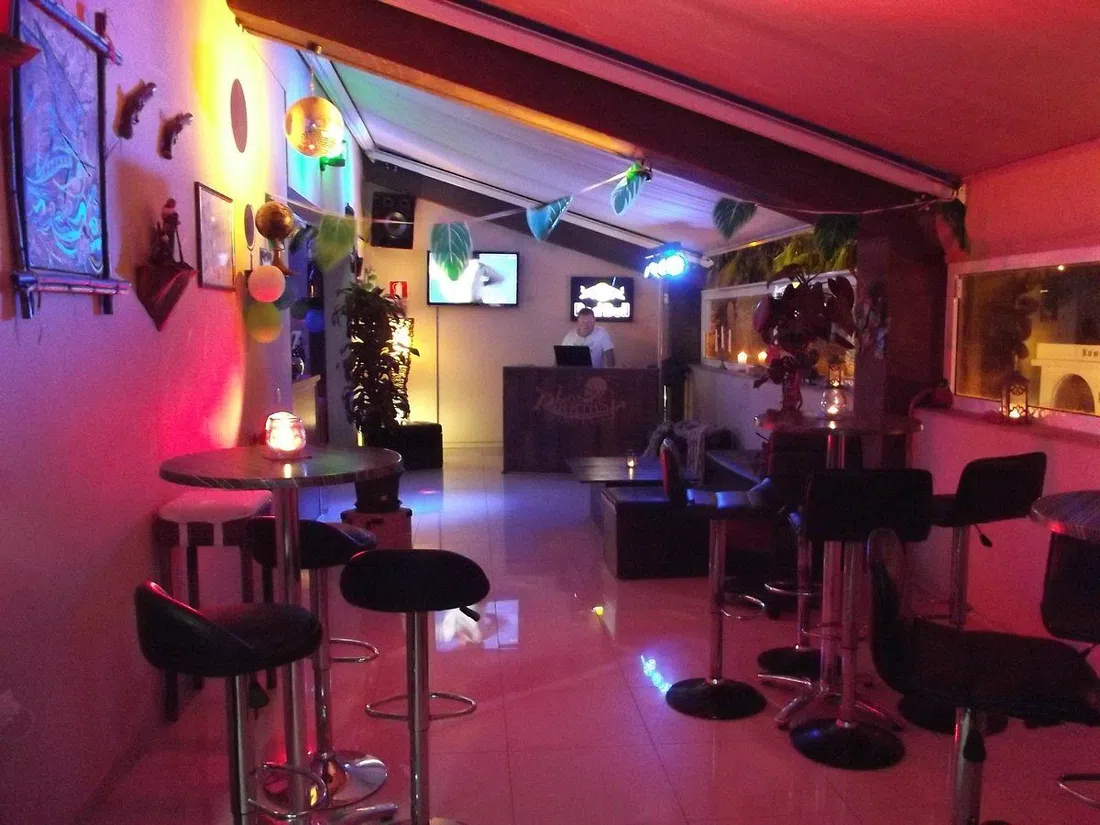
Musikbar Cheers, at 4.7, is the pub-style alternative — casual, unpretentious, popular with returning regulars who come back for the themed nights and recognise half the room. Waveguru Surf Bar draws a looser, board-shorts crowd, 4.6, and it's where the water-sports contingent reconvenes to compare notes on the day's wind. If you want the latest finish the resort offers, that's Pub DVN, a rooftop terrace bar with music and dancing and a 4.2 rating. Beyond that, the honest answer is that Costa Calma expects you to be on the beach by ten the next morning.
Things to do in and around Costa Calma
For most visitors the beach is the activity — swimming, paddling, reading, sunbathing on sand shallow and calm enough that small children can be let loose with only ordinary supervision. But Costa Calma is also a serious base for wind sport, and that's where it earns a second reputation entirely.
Rene Egli Fuerteventura, based at Sotavento, is one of the longest-established windsurf, kitesurf and wingfoil schools on the island, used by riders at every level from never-stood-up to competent. It's rated 4.0, and its real value is institutional memory: these people have been reading this lagoon for decades.
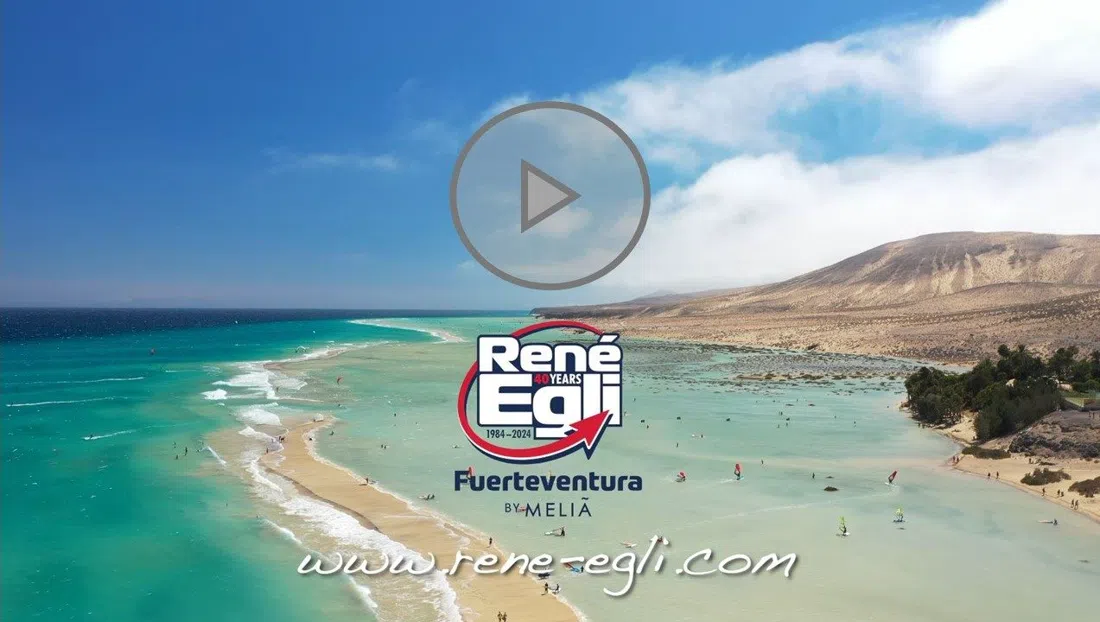
Sotavento sits nine kilometres south, and its shallow lagoon and dependable wind are reliable enough to host a world windsurfing championship every July. Worth saying plainly: the currents further south toward Sotavento are strong, and the same water that makes a playground for world-tour professionals is not the water you let a seven-year-old drift around in. Costa Calma's own beach is the sheltered option, and the right place for first lessons before anyone graduates south.
Inland, the Jandía Nature Reserve — protected dune and scrubland stretching behind the resort, rated 4.7 — is good for a short walk or a slow drive, and it recalibrates your sense of where you actually are: not in a resort, but on a dry Atlantic peninsula that happens to have a resort on one edge of it.
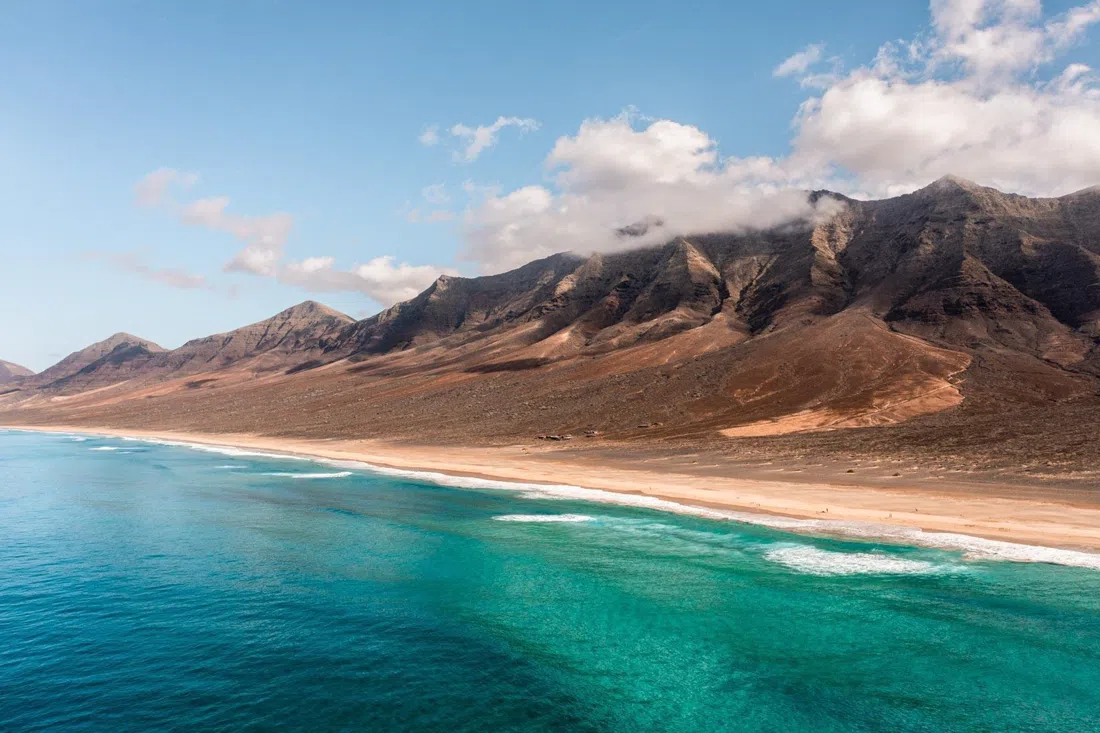
The bigger day trip is Cofete, a dramatic, entirely undeveloped twelve-kilometre beach on the peninsula's wild west coast, reached by mountain road and rated 4.8. Treat it as a viewpoint rather than a swimming spot — the drive and the view are the experience, and the sea there is emphatically not for paddling.
Shopping in Costa Calma
Shopping is resort-scale here rather than a destination in its own right, and it helps to arrive with expectations set accordingly. Two main centres carry most of the trade — El Palmeral and Bahia Calma — with standalone boutiques strung along the main roads filling the gaps between them.

What you'll find is beachwear, perfume, souvenirs and groceries: replacement flip-flops, another bottle of factor 50, wine and fruit for the apartment balcony, a hat to replace the one the wind took at Sotavento. Anything more specialist calls for a trip elsewhere on the island. It's an entirely functional landscape, but a useful one — and on the kind of holiday Costa Calma is built for, functional is mostly what you want from an air-conditioned hour out of the midday sun.
Where to stay in Costa Calma
Almost everything in Costa Calma sits within a few minutes' walk of the beach, which means the real decision is less about location than about hotel style. The stretch directly behind the central beach is the most convenient for families — flat, short walks to the sand, close to both shopping centres and to the restaurants. All-inclusive properties dominate the supply, so the question to ask yourself is how much of your week you actually intend to spend eating on site, given how good El Pellizco and Al Fresco are a short walk away.
Getting around Costa Calma and the island
Inside the resort you can forget about transport. Hotels, the beach, the shopping centres and most of the restaurants and bars sit within a 10–15 minute walk of one another, and a hire car adds nothing to daily life here beyond a parking problem.
The rest of Fuerteventura is a different proposition. There's no rail network, and island buses run infrequently enough that relying on them will cost you half a day per excursion. For Sotavento, the Jandía Nature Reserve or Cofete, you'll want a hire car, a taxi or an organised trip.
Getting here, you fly into Fuerteventura Airport (FUE) and head roughly 65 kilometres south — about 45 minutes by car or taxi, or up to an hour and a half to two hours on the Tiadhe network, with Line 10 the service to look for. There's no direct rail or ferry link to the resort. Once you've arrived, the main risks are the unglamorous ones: this is a low-crime, tourist-oriented resort, and what actually catches people out is sun and wind exposure on an open beach, and the currents south of town.
24 October 2026