La Gomera · Where to live · 7 min
Agulo, La Gomera: Twenty Minutes Wide, and the Best-Kept Village on the Island
A whitewashed village wedged between a sheer cliff and the Atlantic, with a glass-floored viewpoint, four family tascas and Mount Teide across the water — here's how to spend a half-day or a quiet night in Agulo.
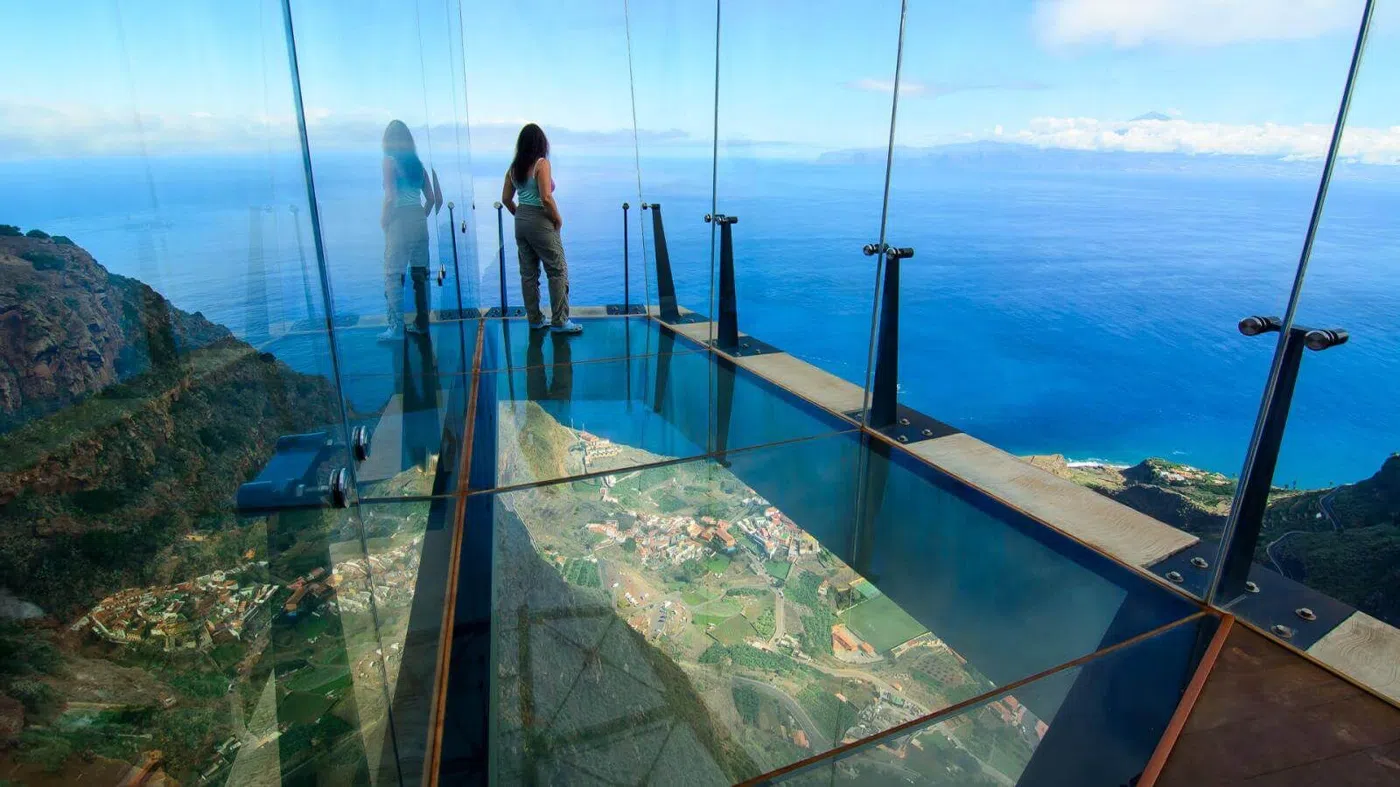
Stand on the glass panel bolted to the cliff edge at the Mirador de Abrante and Agulo lies directly beneath your shoes: red-tiled roofs, whitewashed walls, a grid of lanes barely wider than a car, then banana terraces stepping down towards the Atlantic. On a clear day Mount Teide floats across the strait, close enough to feel like a neighbour leaning over the fence. The village itself occupies a narrow volcanic shelf on La Gomera's north coast, pinned between a sheer grey cliff behind and open water in front. You can walk it end to end in twenty minutes. That constraint isn't a shortcoming — it's the entire character of the place.
The green balcony of La Gomera
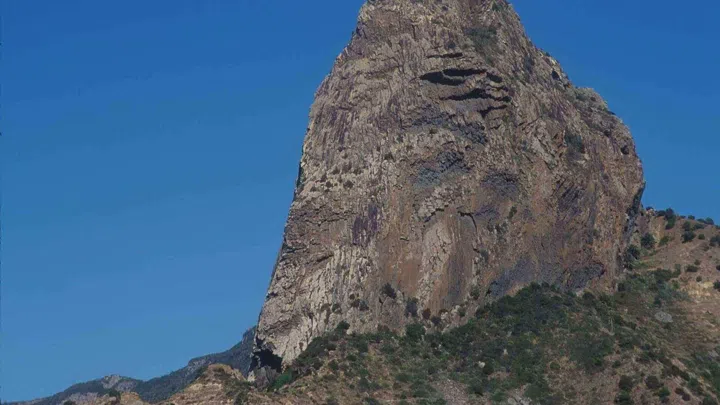
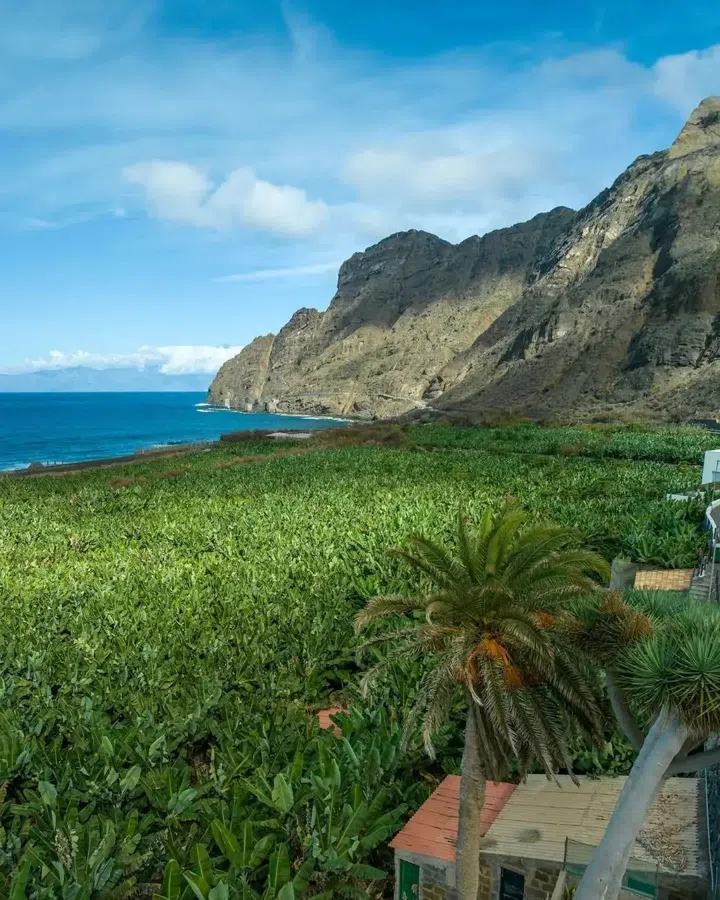
Locals call Agulo the island's green balcony, and the nickname is doing descriptive work rather than marketing. Banana terraces and small vine plots cascade from the village edge down toward the sea, a layered green apron set against the grey volcanic cliffs that rise sheer behind the rooftops. Seen from above, the colour scheme is almost diagrammatic: black-grey stone, green terraces, white houses, red tile, blue water. Nobody designed it. The shelf simply didn't leave room for anything else.
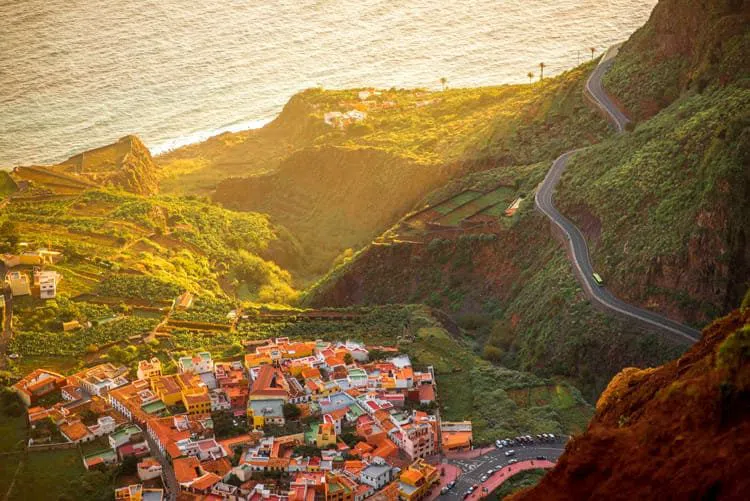
Agulo is also widely considered the best-preserved historic centre on La Gomera, and that claim holds up the moment you start walking. The core is a tight grid of cobbled lanes around Plaza de Leoncio Bento, where the town hall of 1739 faces the neo-Gothic twin spires of the Church of San Marcos across the square — two centuries of architectural argument staring each other down over a few metres of paving. There's no sprawl to dilute it. Step two streets out of that plaza and the village stops almost at once: houses give way to terraces, terraces give way to the drop.
Who does this suit? Travellers after one of La Gomera's classic viewpoint-and-village day trips, certainly. Hikers, very much so — Agulo is the natural hinge between the Mirador de Abrante and the Juego de Bolas trail that runs up into Garajonay National Park. And anyone who wants a quiet, genuinely un-touristy overnight a long way in spirit from the south-coast resorts. The caveat is logistical rather than aesthetic: without a hire car you're at the mercy of infrequent buses, and the island's own airport sits an hour away on the far side.
Where to eat in Agulo
Eating here means Canarian home cooking, not fine dining. The whole village runs on a handful of family-owned tascas clustered around Calle Pedro Bethencourt and the plaza, and the menus rhyme with each other: papas arrugadas with mojo, and almogrote — the Gomeran cheese-and-pepper spread that lands on every table almost before you've sat down. Budget accordingly, which is to say barely: a tasca meal here runs well under €20 a head.
La Vieja Escuela is the village's most-reviewed kitchen and the one most visitors end up in, installed in Agulo's former schoolhouse. The almogrote is the thing to start with; the goat meat is what the regulars come back for, slow and dark and unimpressed by fashion.
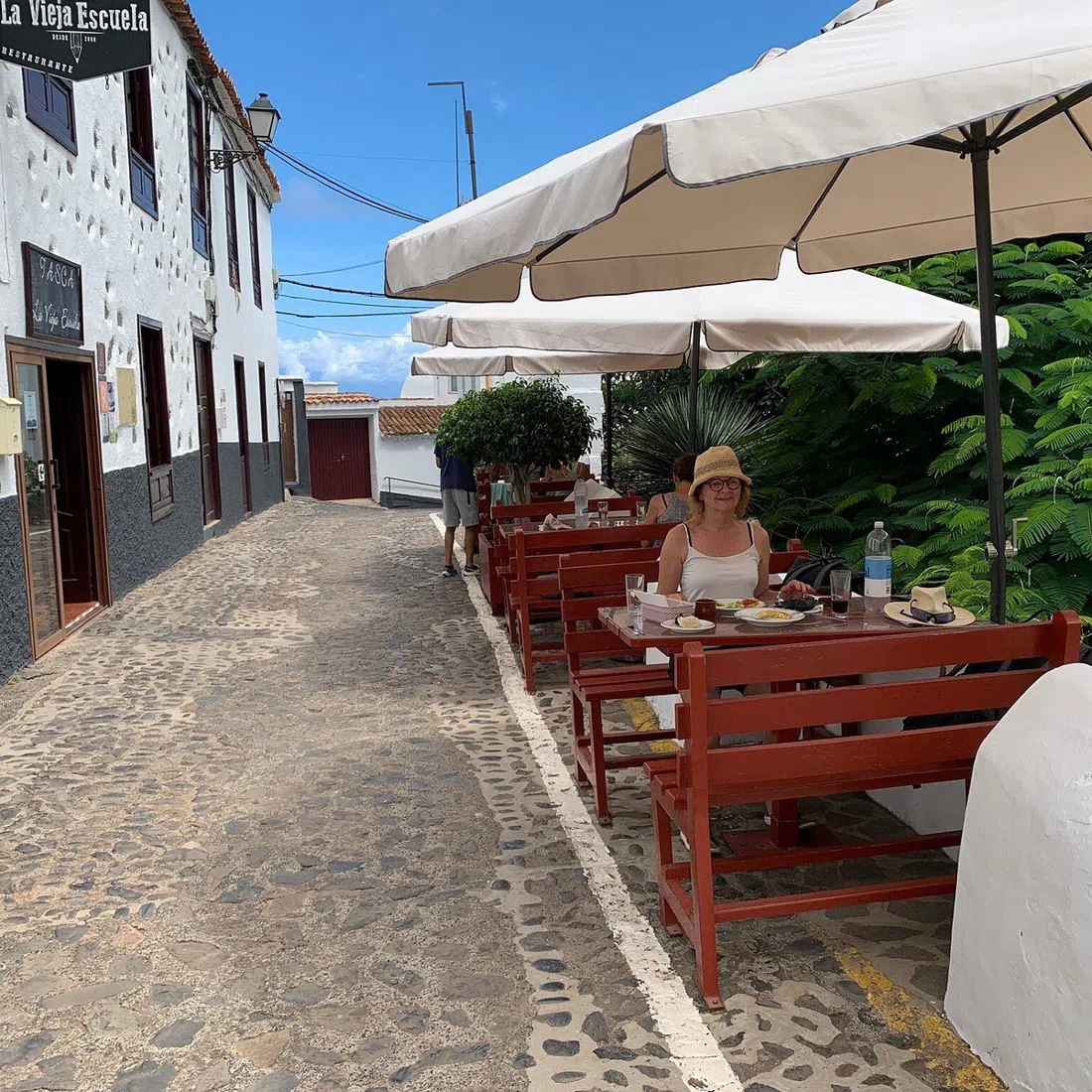
A short walk away on Calle Pedro Bethencourt, Tasca Las Cruces is the smaller, quieter proposition — a proper little tavern with a terrace where the loudest thing is usually cutlery. It's strong on tuna in mojo, and the avocado tortilla is the kind of dish that sounds like a compromise and arrives as the best plate on the table.

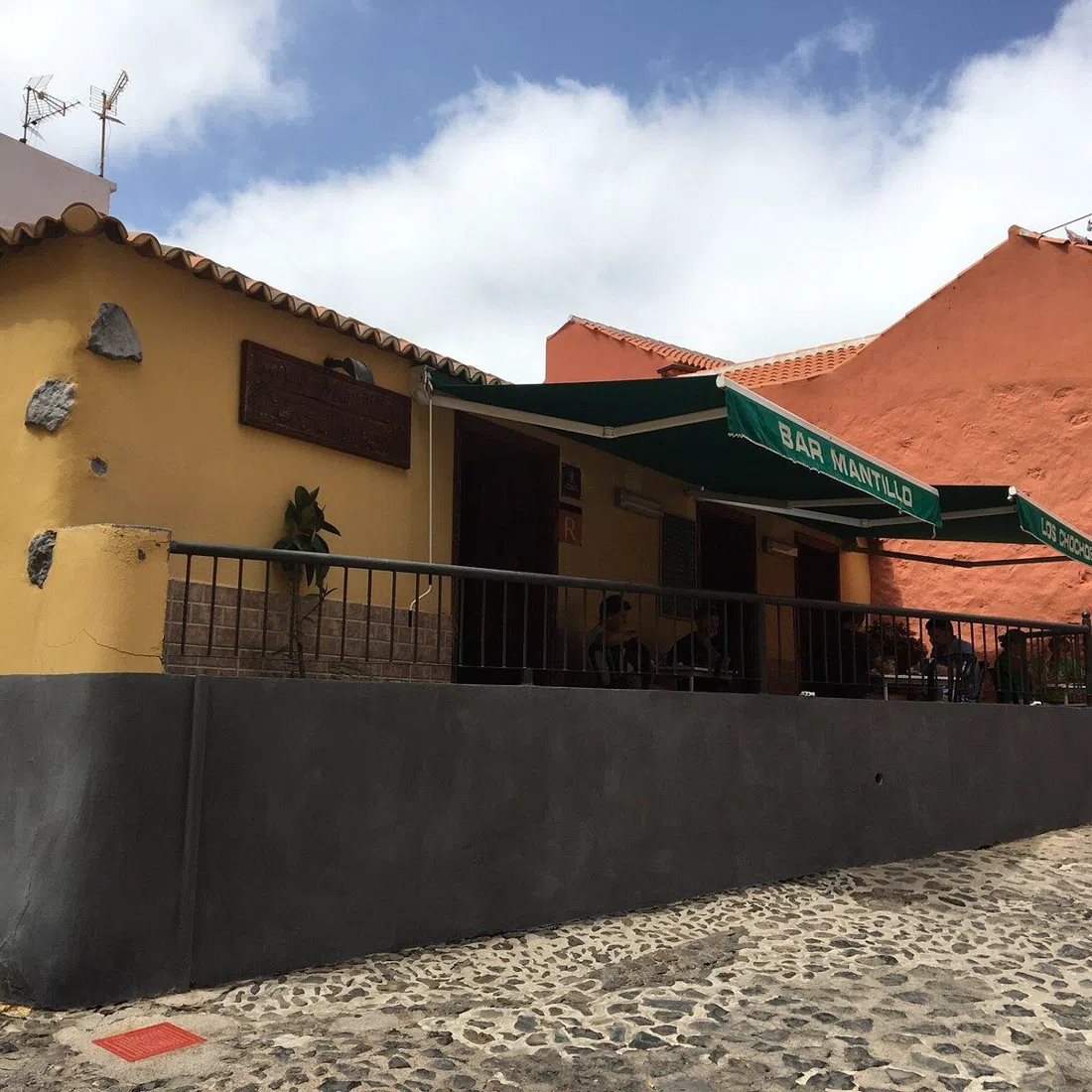
Then there's Bar-Restaurante El Mantillo, which everyone in Agulo calls Los Chochos and nobody calls by its full name. This is the no-frills, owner-run village bar: carne fiesta, homemade croquettes, prices low enough to feel like a clerical error. Go for the carne fiesta and the sense that you've wandered into somebody's front room.
The fourth option is a view with a kitchen attached. The Mirador de Abrante restaurant serves a full Canarian menu from the glass-floored viewpoint's dining room, cliff-edge, with Tenerife laid out across the water. It's also, usefully, the way in — the glass floor is reached through the restaurant, so lunch and the main attraction can be the same errand.
Nights out, and the shopping you won't do
Be clear-eyed about this: Agulo has no nightlife and no shopping, and pretending otherwise would do you a disservice. There are no boutiques to browse, no late bars, no strip of anything. What the village offers after dark is the tascas until they close, the plaza, and the particular quiet of a place with a cliff at its back and no through traffic. If you want noise, the south-coast resorts exist and they are not far by island standards. If you want to hear the sea from your bed, stay put. Travellers who need nightlife, shops or an easy sand beach should treat Agulo as a half-day stop and sleep elsewhere — that's not a flaw in the village, just an honest read of what it is.
What to do in Agulo
The Mirador de Abrante is the reason most people stop at all. Built in 2014, it's a glass-floored platform cantilevered off the cliff above the village, and the drop beneath the glass goes straight down to Agulo's rooftops, with Mount Teide across the water when the haze cooperates. Access is through the attached restaurant, generally open 10:30am to 4pm and closed Mondays, so time your visit rather than trusting to luck. The road up is signposted and narrow — genuinely narrow, the kind where meeting a van becomes a negotiation — and it's the one real hazard in an otherwise very safe village.
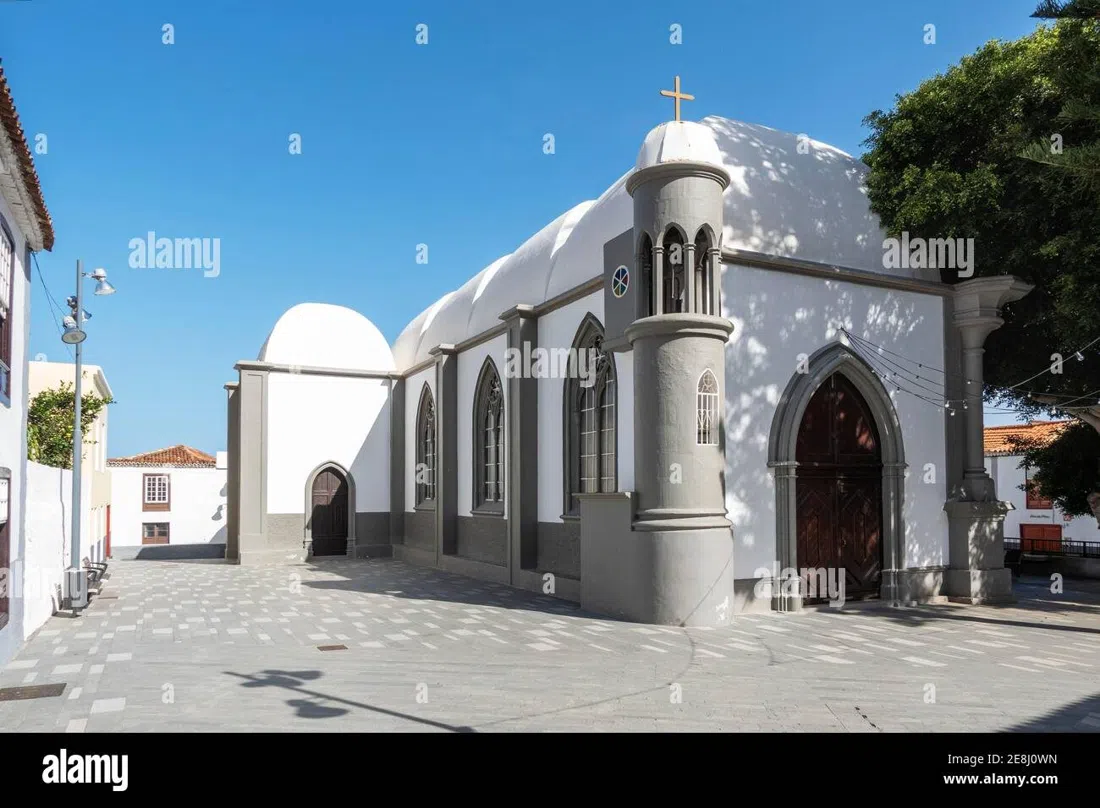
Back down in the village, the Church of San Marcos does the anchoring. Its white twin spires are the first thing you pick out from above and the thing you keep circling back to on foot, neo-Gothic and slightly grander than a village of this size has any business being. It's also the centre of Agulo's April 24th fire-jumping tradition, when the square stops being a postcard and becomes a working piece of local ritual.
On the edge of the village sits the Juego de Bolas Visitor Centre, the gateway to Garajonay National Park and the best half-hour of context you'll get anywhere on the island. The laurel-forest exhibits explain what you're about to walk into up on the ridge — ancient, dripping, prehistoric-feeling woodland — and there are demonstrations of Silbo Gomero, the whistled language that carried conversations across these ravines long before anyone had a phone signal. Hikers use the centre as the trailhead; everyone else should still stop in.
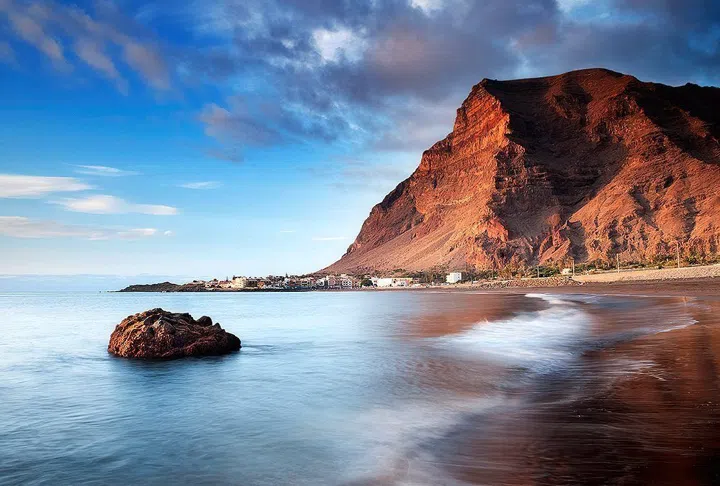
For the sea, there's Playa de Agulo, a black volcanic-sand cove reached by a path of 15 to 20 minutes that threads down through the banana terraces below the village. The walk is half the pleasure: close-up terraces, irrigation channels, the sound of the Atlantic arriving before you see it. The swimming is a different calculation. The cove is open to the ocean and there's no lifeguard, which makes it fine for confident swimmers and a poor choice for young children. Shoes with grip, water, and no fixed timetable.
Where to stay in Agulo
There are no large hotels in Agulo, and there won't be — the shelf the village stands on simply doesn't have the room. Staying here means a handful of restored village houses and casas rurales, which suits travellers who'd rather have the cliffside views and the silence than a pool deck and a buffet. Hotel Rural Casa Lugo, a renovated old manor house a short walk from the church, is the closest thing the village has to a conventional hotel, and the most straightforward booking if you want a bed with a front desk attached.
Prices undercut the south-coast resort hotels, sometimes substantially. The honest framing is that Agulo works beautifully as a quiet overnight or a day trip and less well as a main base for the island: one real hotel, a few casas rurales, no nightlife, and a hire car required for everything beyond walking distance.
Getting to and around Agulo
Agulo sits on the north coast about 13km from San Sebastián de la Gomera — a 20 to 25 minute drive — and San Sebastián is where the ferry port is, which makes it the hinge of any trip here. Fred. Olsen Express and Naviera Armas both run the crossing from Los Cristianos on Tenerife, roughly 50 minutes of open water. From the ferry terminal, GuaguaGomera's buses handle the run north, and a drive or a bus of 20 to 25 minutes puts you in the village. Note that La Gomera's own airport is on the far side of the island, about an hour away, so flying in is rarely the efficient option.
Once you've arrived, the car becomes almost ornamental. Twenty minutes gets you from one end of Agulo to the other on foot, the cobbled lanes around Plaza de Leoncio Bento are better walked than driven, and the only stretch worth taking the car for is the climb to the mirador — on that narrow, signposted cliff road, slowly. Buses exist but are infrequent, so if your plan involves Garajonay, the beach path and lunch in the same day, a hire car stops being a luxury and starts being the plan.
25 October 2026