La Gomera · Where to live · 8 min
Hermigua, La Gomera: Life in the Valley of a Thousand Terraces
A green ravine on La Gomera's north coast where banana terraces climb both walls, three kitchens carry the whole village, and the swimming is a salt-water pool built into a ruined crane.
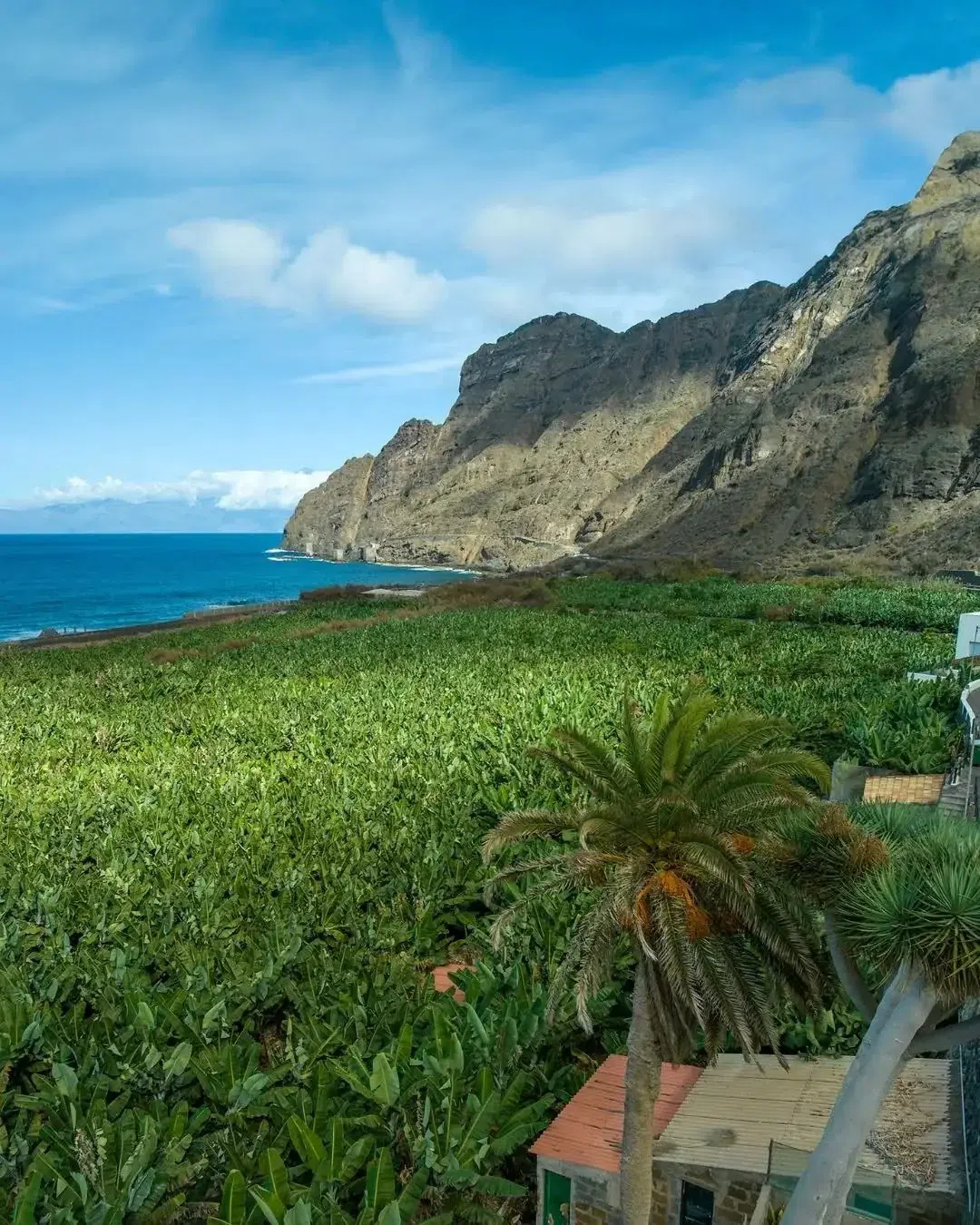
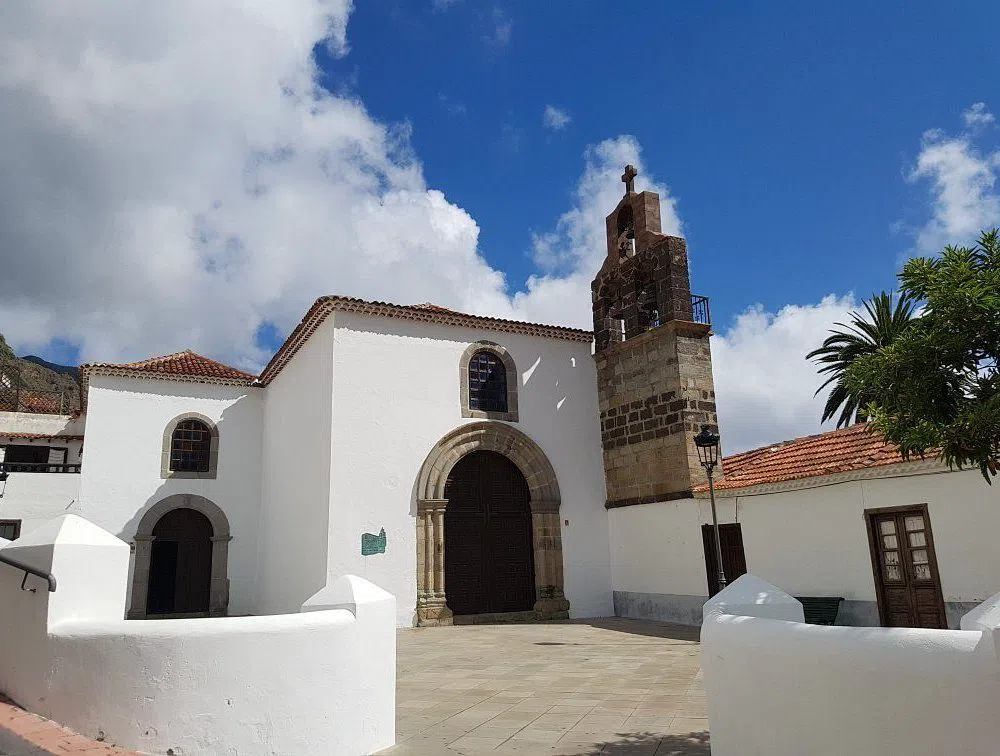
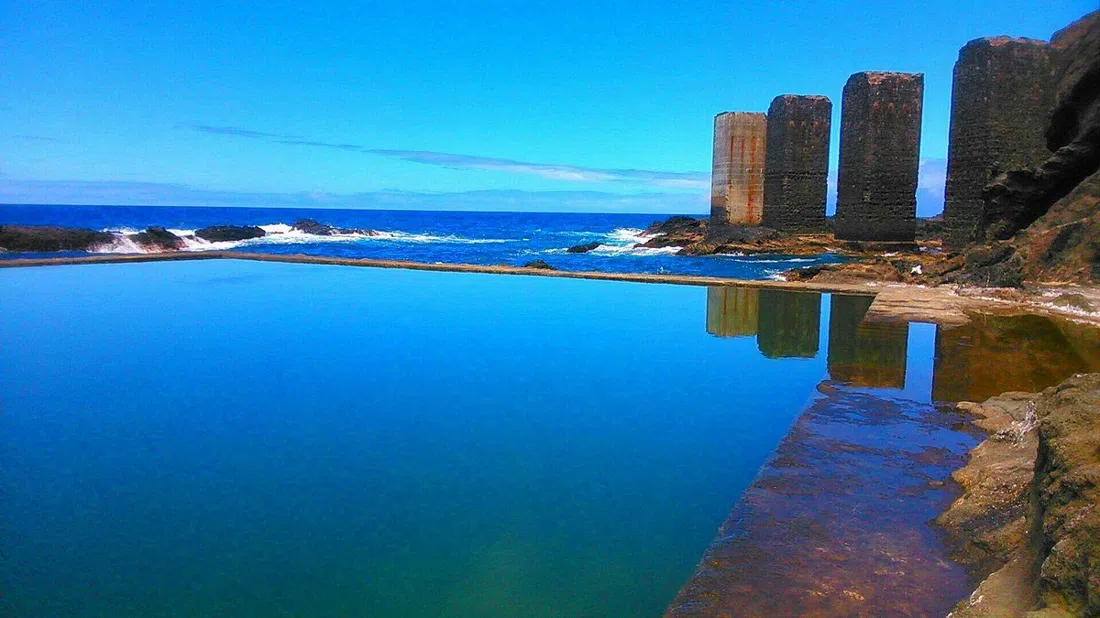
Stand at the top of Hermigua, up by the Convento de Santo Domingo in the part of the village locals call Valle Alto, and the valley does the one thing no brochure can fake: it falls away beneath you in steps. Terraces, hundreds of them, cut into both walls of the ravine and planted thick with banana, dropping past a church built in 1650 all the way down to a salt-water pool hacked into volcanic rock at the shore. There is no seafront strip here. There are no bars that outlast the kitchen. What Hermigua has instead is a working agricultural valley with a river that doesn't dry up, three restaurants worth planning a whole day around, and some of the oldest stonework on La Gomera.
What Hermigua is known for
La Gomera likes to call itself the terrace island, and Hermigua is the argument it leads with. The stacked platforms on either side of the village aren't heritage theatre or a restored showpiece — they are farmland, and they have been farmland since the 16th century. Sugar cane came first. Bananas followed and became the valley's signature, the broad leaves that give the whole ravine its particular shade of green from a distance. Papaya, mango, avocado and vines fill in the gaps. What makes it all possible is water: the valley's river runs year-round, a genuine rarity in the Canaries, and that single fact explains why a village this remote became one of the island's most productive places rather than one of its emptiest.
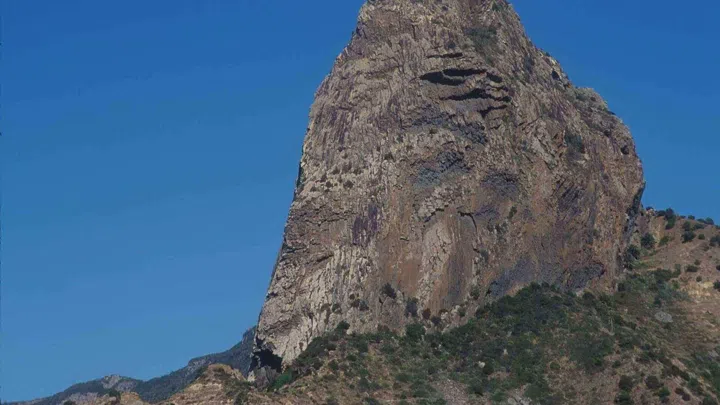
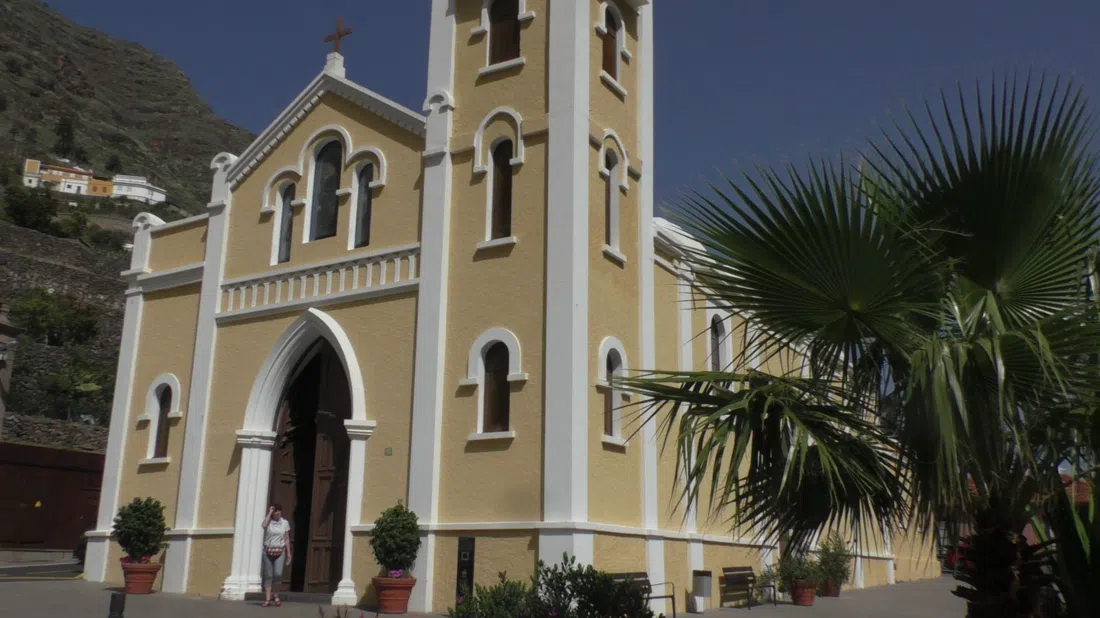
The other thing to understand about Hermigua is that it isn't really one village. It reads as two, stitched together by the terraces between them. Valle Alto sits high, gathered around the Convento de Santo Domingo, where the air is cooler and the views run straight down the ravine to open water. Valle Bajo lies lower, closer to the coast, organised around the 1650 church of Nuestra Señora de la Encarnación and its plaza. Between the two, the Roques de San Pedro stand over the valley like a pair of sentries — the sort of landmark you stop the car for without meaning to, and the reason half the photographs of Hermigua look staged when they aren't.
That split geography shapes how the place feels to a visitor. Nothing is far, but everything is uphill or downhill. You don't stroll Hermigua so much as climb and descend it, and the village rewards the effort with a view that changes every fifty metres.
Where to eat and drink in Hermigua
Forget the idea of a competing row of terraces with menus in four languages. Hermigua's dining scene is small, fixed and locally run — a handful of kitchens that the whole valley relies on, which means the best plan is to know them by name before you arrive.
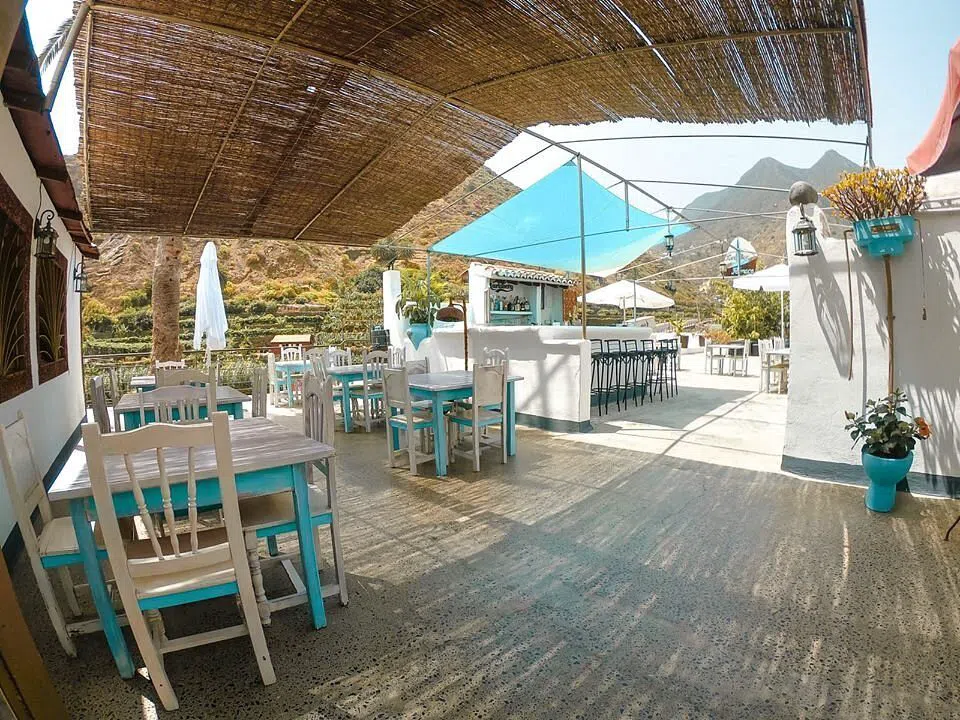
Tasca Telémaco, on Plaza de la Encarnación, is the one with personality, and it earns the word. Mismatched chairs. Moroccan lamps hanging low over the tables. A mural of musicians on the wall. The cooking is uncomplicated Canarian with an Asian twist — a combination that sounds like a stretch on paper and makes perfect sense once a plate lands in front of you. It's a lively terrace in a village that is otherwise very quiet, so it functions as Hermigua's social centre as much as its restaurant. Note the one hard rule: it's closed on Tuesdays, and in a village with this few kitchens, that matters to your planning.
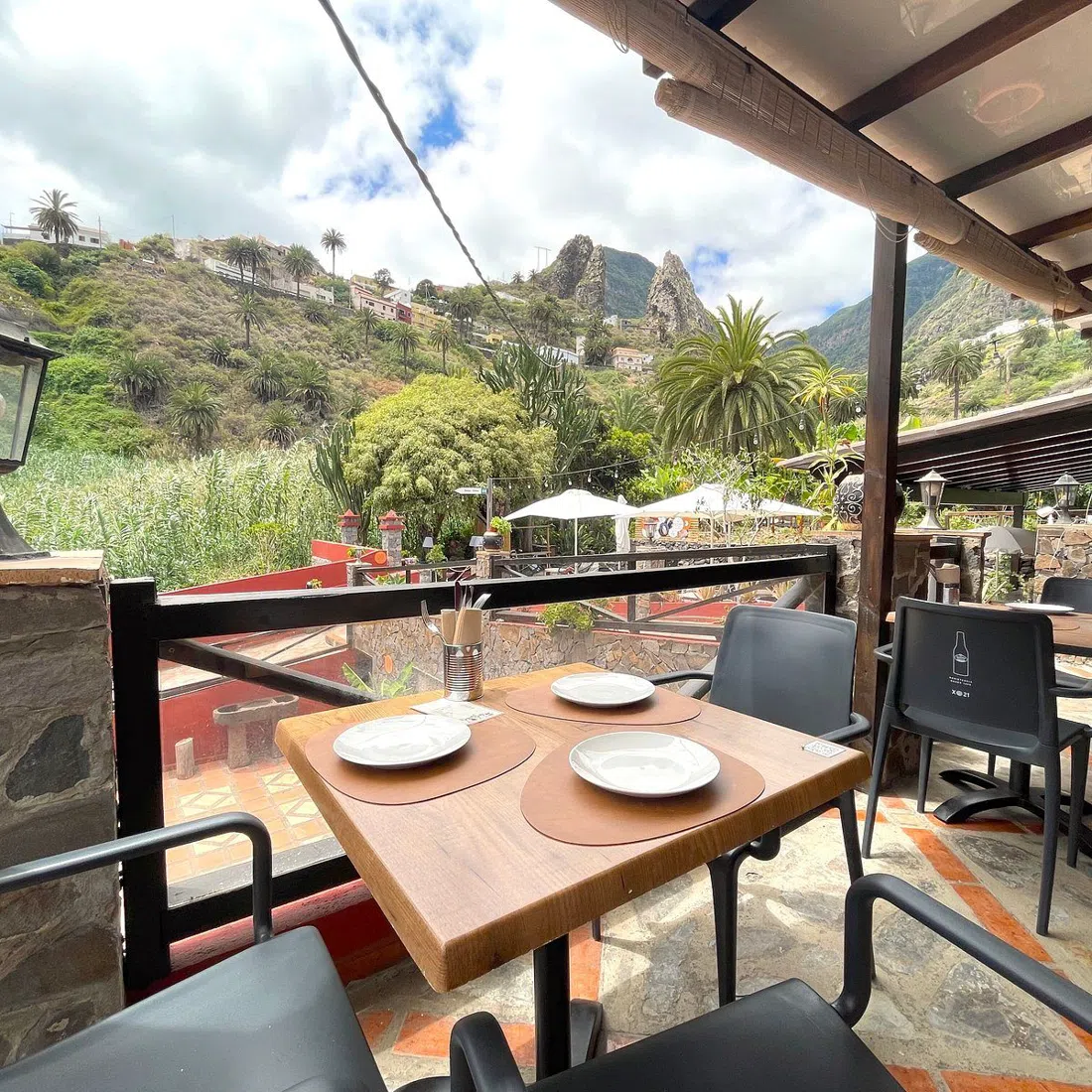
For the most serious cooking in the valley, walk up to the Terrace Restaurant Los Telares at the ethnographic park. It is Hermigua's top-rated kitchen, and the sourcing is about as short as a supply chain gets — eco-farm produce from the park's own land, served on a terrace that looks out across the valley terraces toward the Roques de San Pedro. Lunch here has a way of expanding. You sit down intending forty minutes and leave ninety minutes later, having watched the light shift down the ravine.
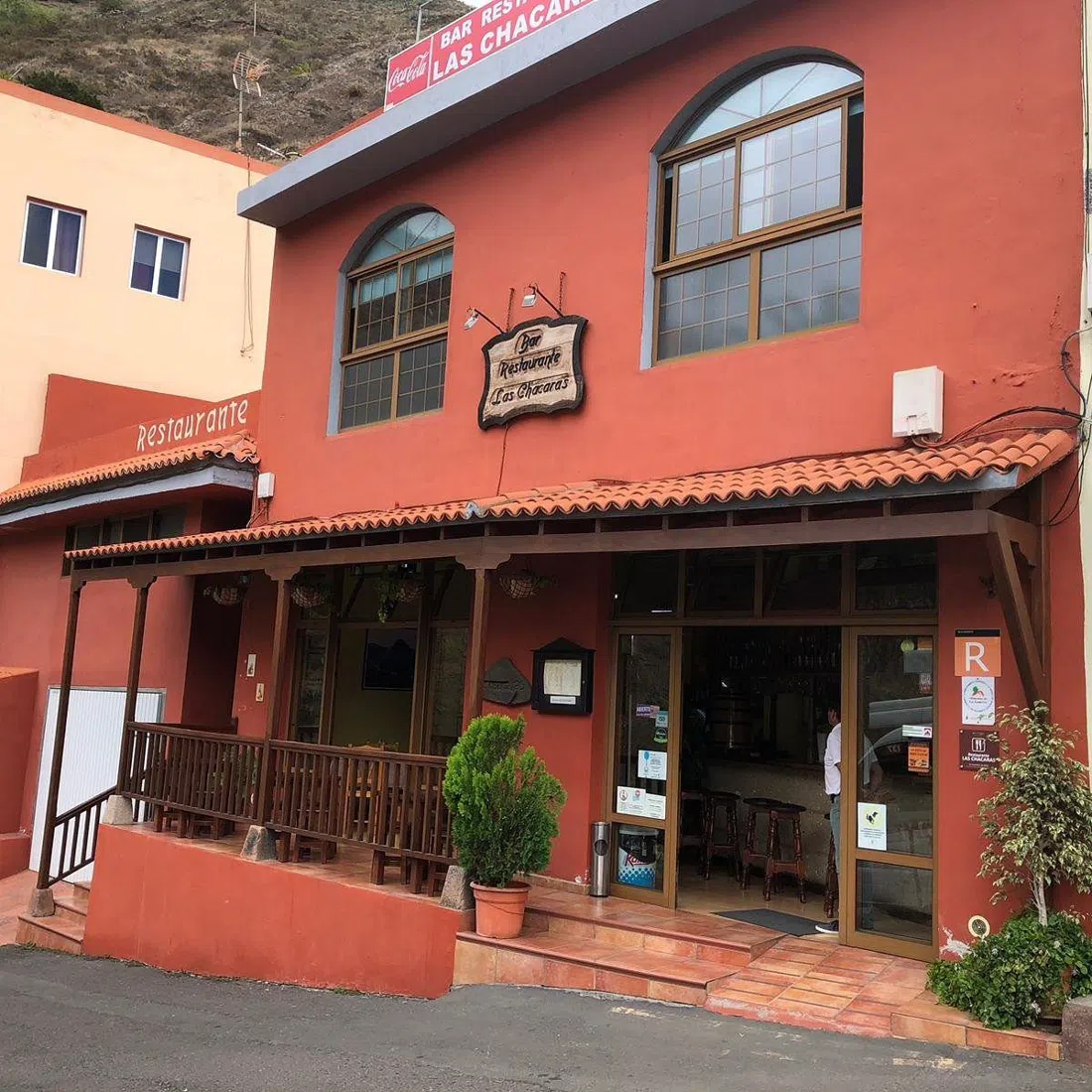
Down at El Cabo, Bar Restaurante Las Chácaras has been run by the same family for 27 years, which in a village this size makes it an institution rather than a business. Meat is the strength — traditional Canarian dishes alongside more modern treatments — and the room has the unhurried confidence of a place that stopped needing to prove anything a couple of decades ago. This is where you go when you want to eat the way the valley eats.
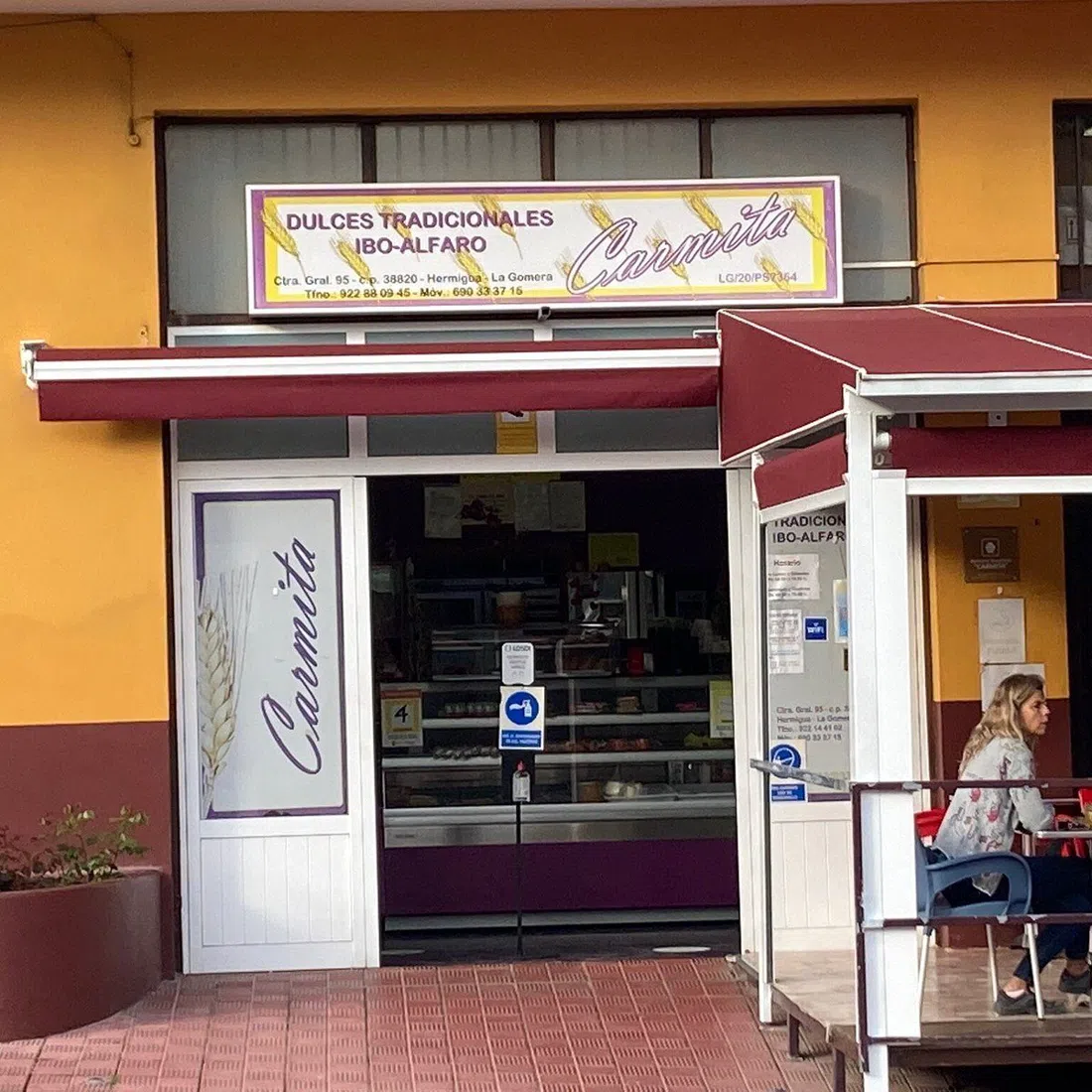
Breakfast, meanwhile, belongs to Dulcería Ibo-Alfaro Carmita on the main road: fresh bread, pastries and traditional Gomeran sweets, bought early and eaten on a wall somewhere with a view of bananas. Build your hiking days around it.
Going out in Hermigua
Here is the honest version, and it should be read as a feature rather than a failing: Hermigua has no nightlife. There are no bars that stay open past the kitchen. When dinner service ends, the valley ends with it.
So going out here means something different. It means a long evening on the terrace at Tasca Telémaco with the plaza emptying around you, the conversation getting louder because there's nothing else competing with it. It means walking back up through Valle Bajo in near-total darkness, the terraces invisible but audible — water moving somewhere in the irrigation channels, dogs answering each other across the ravine. It means a sky that is genuinely dark, because there is no resort strip throwing light at it. Hikers heading into Garajonay at first light tend to be grateful. Anyone hoping for a late bar should base themselves elsewhere on the island and visit Hermigua by day.
Things to do in Hermigua
Start high. The Convento de Santo Domingo in Valle Alto is a 16th-century church and monastery and one of the oldest religious buildings on La Gomera — a stone bell tower outside, and inside an intricately carved Mudéjar ceiling that is the single most surprising thing in the valley. You come up expecting a modest rural church and find craftsmanship that would hold its own in a cathedral city. Give it longer than you planned.
A few minutes away is the Parque Etnográfico de La Gomera, which everyone calls Los Telares, and it is far better than the words 'ethnographic park' suggest. There's a working gofio mill — gofio being the toasted grain flour that underpins Canarian cooking — plus an eco-farm and the island's largest private ethnographic collection. The point of the place is that it isn't preserved behind glass: things are still milled, still grown, still made, and the restaurant upstairs eats what the farm produces.
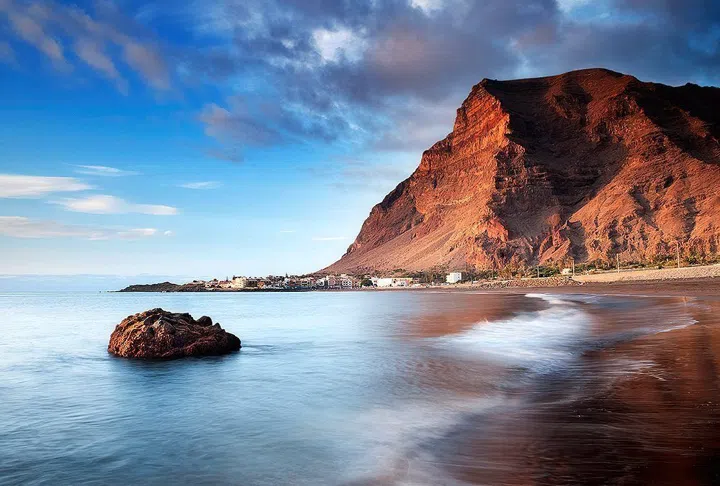
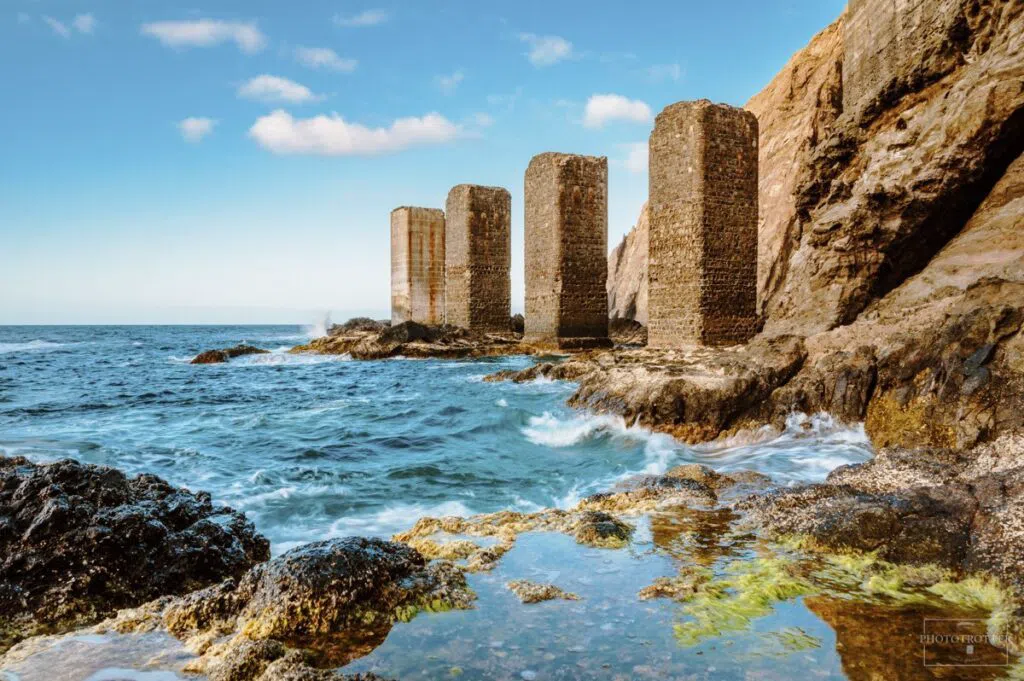
Then go down to the water. The Piscina Natural de Hermigua is the valley's most photographed spot and its most misunderstood: a salt-water pool built into the ruins of a 20th-century banana-loading crane, a monument to the days when the valley's fruit left by sea. On a calm day it's a remarkable swim, volcanic rock on one side and the Atlantic breaking on the other. It is also genuinely hazardous in rough seas or wind, with no facilities of any kind, so check conditions before you commit and don't swim alone if the water looks choppy. Nearby there's a dark-sand cove — handsome, but not a sunbathing destination, and nobody should arrive expecting loungers.
The valley's other role is as a base. Garajonay National Park's laurisilva trails — that dripping, prehistoric-feeling cloud forest — are the reason many visitors choose Hermigua in the first place, and walking out of a working banana valley into ancient laurel forest in the same morning is the island's best single contrast.
Shopping in Hermigua
There is no retail strip, and pretending otherwise would be a disservice. Shopping in Hermigua is two addresses. The craft shop at the Los Telares ethnographic park sells local handicrafts, gofio and goods tied directly to the museum's collection and its own farm — the most honest souvenir on this coast, because you can usually see where it came from. And Dulcería Ibo-Alfaro Carmita, on the main road, handles the edible end: bread, pastries and traditional Gomeran sweets, boxed up to take away.
Buy sweets from Carmita and gofio from the park, and you've bought the valley.
Where to stay in Hermigua
Hermigua's accommodation is almost entirely rural hotels and converted farmhouses rather than conventional hotels, and that is precisely the appeal: you wake up inside the agriculture instead of driving in to look at it. Hotel Rural Ibo Alfaro, an old manor house set in the heart of the valley, is the best-known of them and sets the tone — thick walls, terraces below, mornings that start with the sound of water rather than traffic.
Pricing sits in the inexpensive to mid-range band, with rural doubles and farmhouse stays rather than resort rates. Choose Valle Alto if you want the views and the convent on your doorstep; choose lower down if you'd rather be a short walk from the church, the plaza and dinner.
Getting around Hermigua and La Gomera
Hermigua sits on La Gomera's north coast, roughly 34km from the capital, San Sebastián de La Gomera, along winding mountain road. Line 2, the Vallehermoso–San Sebastián service, covers the Hermigua–San Sebastián run in around 34 minutes, leaving from the Casa de la Cultura stop about five times a day. That's workable for a day trip to the capital and no more; check the current GuaguaGomera timetable, because rural schedules change.
Getting to the island at all means either the ferry from Los Cristianos on Tenerife to San Sebastián de La Gomera, about 50 minutes, followed by the half-hour-plus road transfer, or a Binter Canarias flight into La Gomera Airport in the island's south and a longer drive north.
Within the village you don't need a car: the convent, the church and the ethnographic museum are a short walk apart, albeit a steep one. For the coastal pool, the neighbouring valleys or the Garajonay trailheads, you do — bus frequency is low, and a hire car is what most visitors end up relying on. Drive it with respect. These are narrow mountain roads that demand your full attention, and the valley is quiet and low-crime in every other respect, so the only real hazards in Hermigua are the sea on a rough day and the bend you took too fast.
25 October 2026