La Gomera · Where to live · 8 min
Vallehermoso, La Gomera: Life Under Roque Cano
La Gomera's old banana capital trades nightlife for palm honey, laurel forest and a 400-metre volcanic plug standing over the rooftops — here's how to spend time in it.
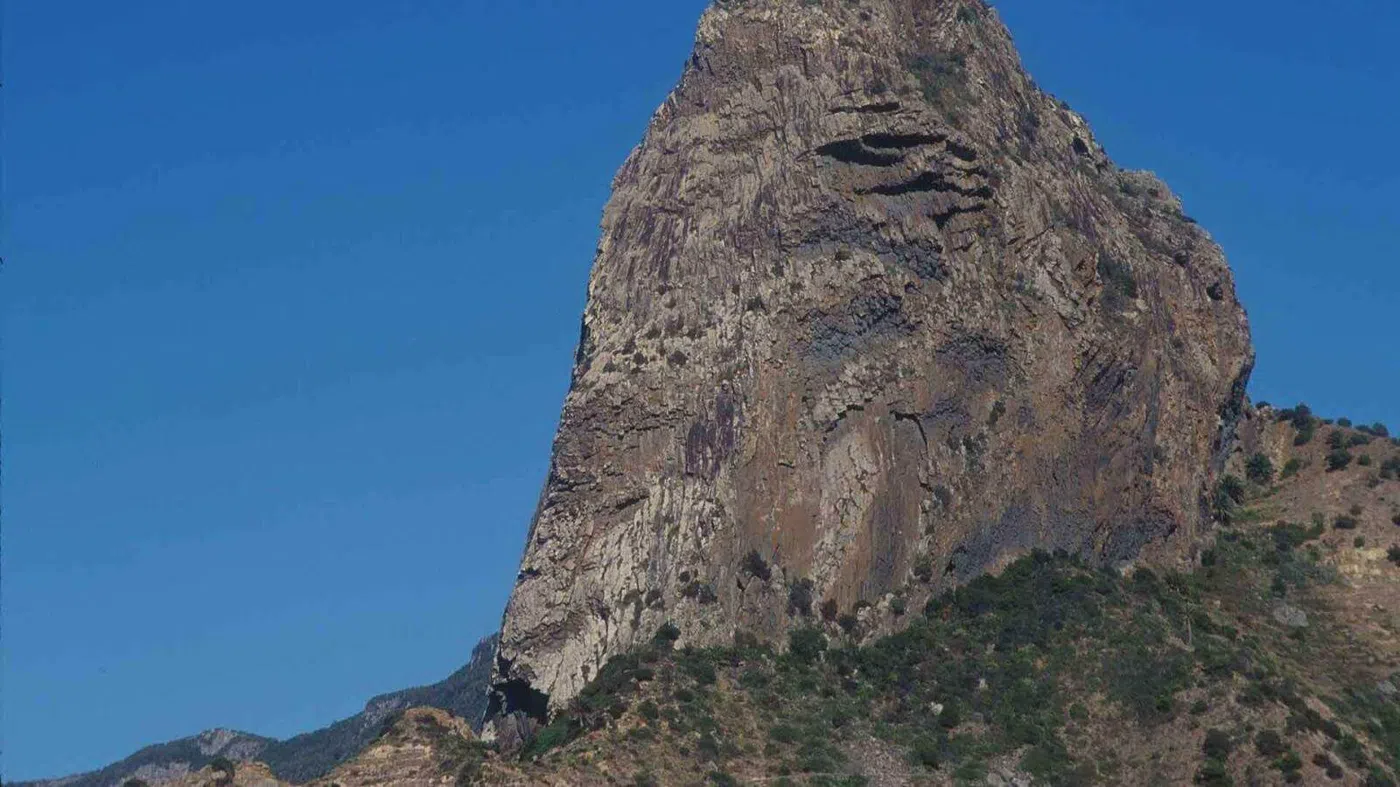
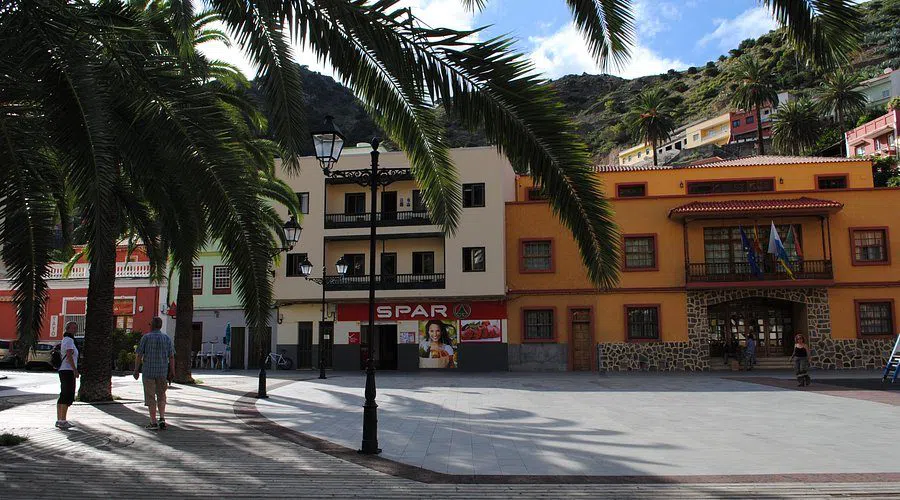
The rock gets the evening light before the town does. Roque Cano — a volcanic plug of roughly 400 metres standing directly behind Vallehermoso's rooftops — holds a warm colour long after the streets below have gone blue, and the best seat for watching the handover is the kiosk in the middle of the Plaza de la Constitución, where the trees, the Town Hall and a few regulars at Bar Amaya nursing a last beer make up most of the evening's programme. This is La Gomera's old banana capital, and it does not perform for visitors. It works, it closes early, and it happens to have one of Europe's strangest forests on its doorstep.
A banana valley under a volcanic plug
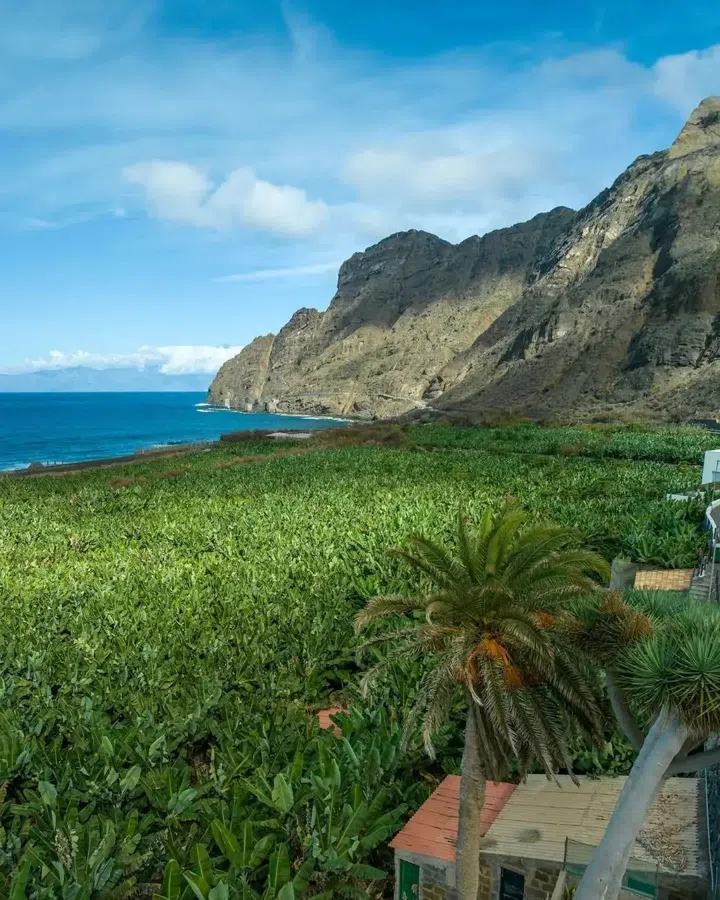
The name is a plain description rather than a boast: beautiful valley. The town sits in a green gorge on the island's north side, a few streets of whitewashed houses with wooden balconies stepping down towards a ravine, small enough that you can walk the centre in a quarter of an hour and still not be sure where the last house ends and the terraces begin. What stays with people afterwards is the skyline. Roque Cano rises directly over the rooftops and is visible from most of the streets in town, a blunt grey neck of old volcano that changes character hour by hour — hard-edged at midday, softened and almost rust-coloured by seven.
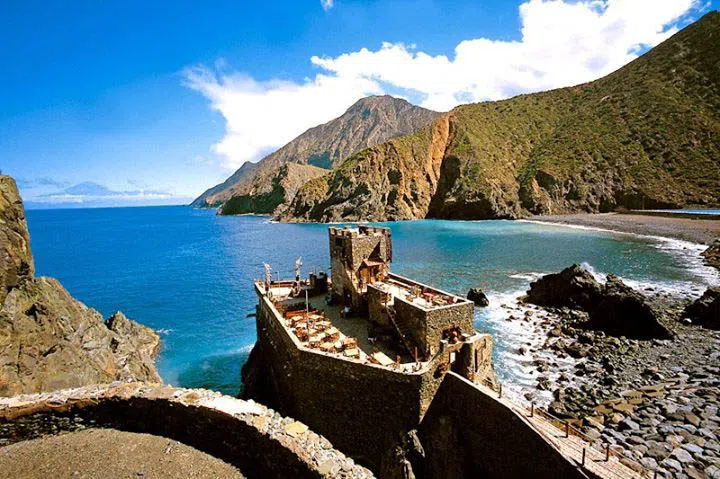
The valley floor and the terraced slopes above it were planted with sugarcane long before they were planted with bananas, and it was bananas that made Vallehermoso's name. The clearest evidence is not in the town at all but down at the coast, where the Castillo del Mar — the 1890 loading pier built on basalt columns above the beach — still stands, shuttered, a piece of industrial archaeology marooned on a shore with almost nothing else on it.
The modern rhythm is agricultural rather than touristic. Vallehermoso moves at the pace of a farming town that happens to have a famous national park next door, and the Plaza de la Constitución is where that pace is most visible: shaded, unhurried, busier at ten in the morning than at ten at night. Come expecting a resort strip and you will be baffled. Come expecting a working valley and you will be very well served.
Where to eat and drink in Vallehermoso
Eating here means Canarian home cooking, not fine dining, and the kitchens make no apology for it. The best-reviewed address in the valley is Tasca Restaurante El Carraca, up on the pedestrian street towards the church — the kind of place where mojo and almogrote, the island's pounded hard-cheese paste, arrive before you have decided anything, and where the main event is grilled local fish or meat done without ceremony. Two people eating properly, with wine, come to around €35. For a town this size, that is a genuinely good dinner at a genuinely fair price.
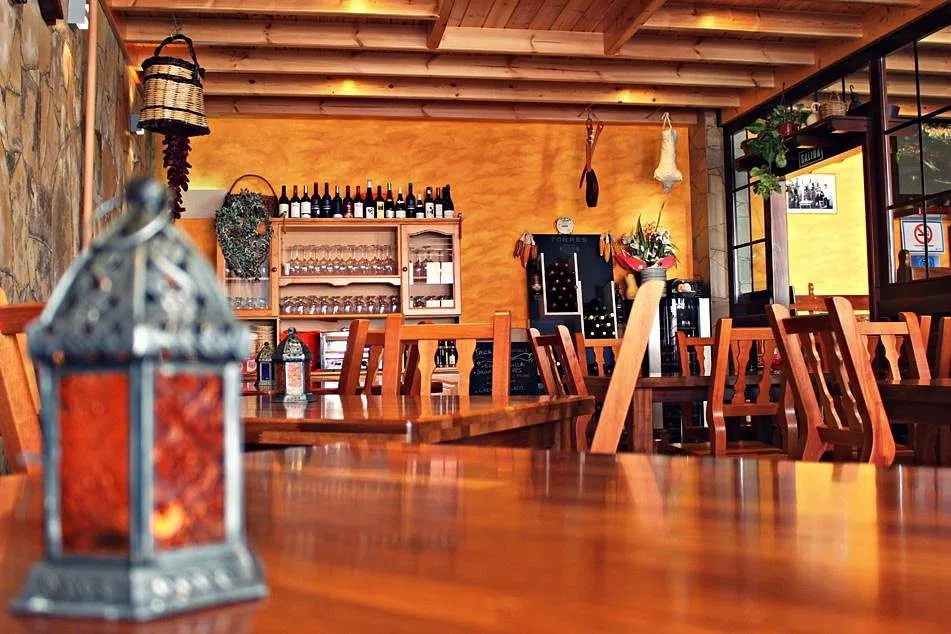
Cheaper and plainer is Bodegón Restaurante Agana on Avenida Guillermo Ascanio Moreno, where the menú del día runs about €10 and the cooking is the old island repertoire: escaldón de gofio, the toasted-grain mash that has fed Gomerans for generations, and watercress stew that tastes of the ravines it grows in. Nobody is styling anything. You eat, you pay very little, you go back to the trail.
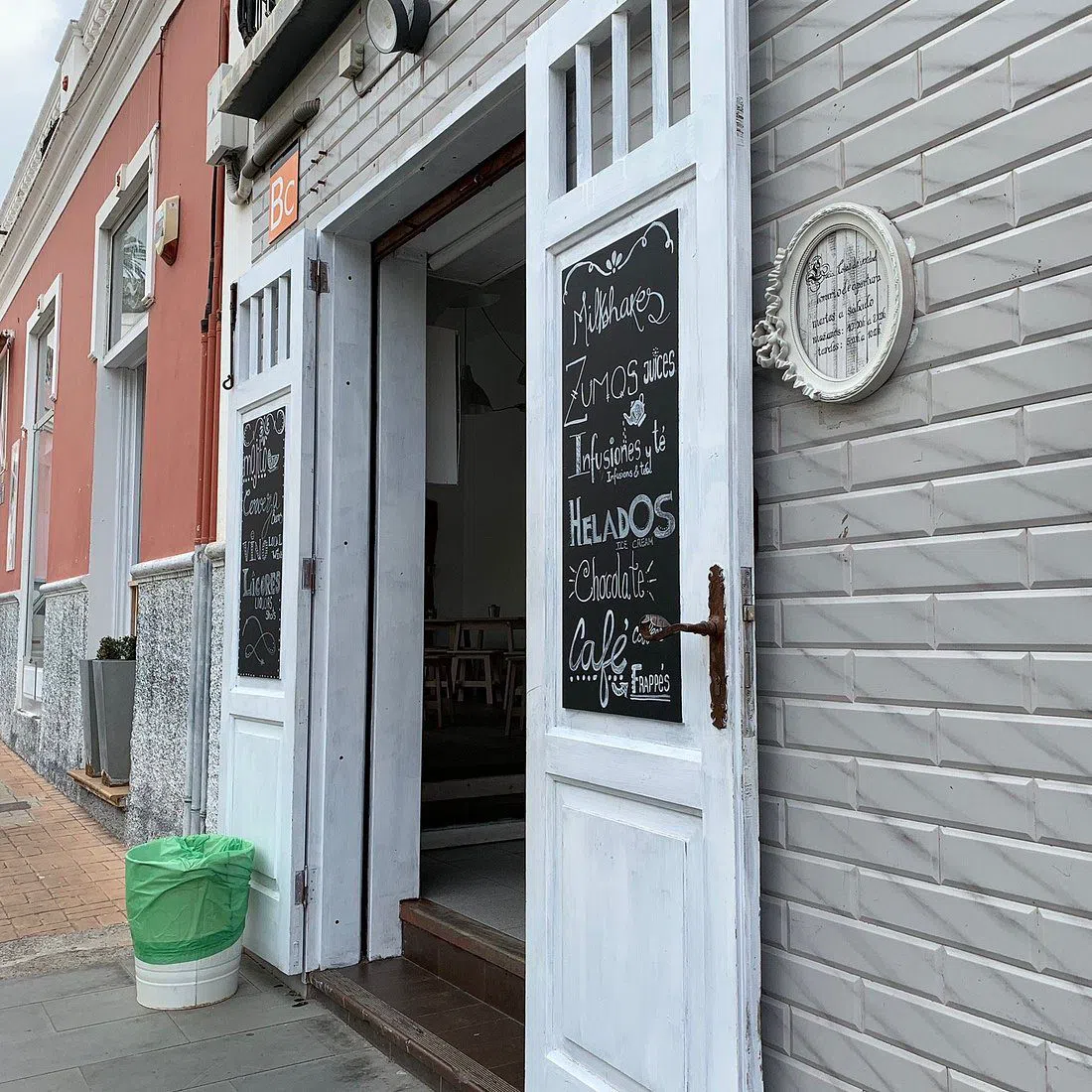
Mornings belong to Lucia Cosas de Verdad, the bakery-café on the Plaza de la Constitución, and it is the one place almost everyone in town will point you to without being asked. Homemade pastries, coffee that is actually good, a pot of rooibos if you want it, and a view of the square waking up. Build your hiking days around it; a Chorros de Epina circuit is considerably more pleasant with one of those pastries already accounted for.
An early-night town
It is worth saying plainly, rather than inflating three bars into a scene: Vallehermoso has no nightlife in any conventional sense. There is no club, no late strip, nothing resembling a beach bar. What there is, and what is entirely sufficient after eighteen kilometres of laurel forest, is Bar Amaya on the Plaza de la Constitución — the honest local option for a post-hike beer and a plate of tapas, and a place that regulars will tell you does not mark its prices up for outsiders. That last detail matters more than it sounds. In a town where tourism is a side business rather than the business, you are drinking at the same price as the man who spent the day in the terraces above you.
If you need anything past midnight, you have chosen the wrong valley. Most visitors find that within two days they have stopped minding.
Hiking, the botanical garden and the coast
This is the real reason the guesthouses fill. Vallehermoso is the standard starting point for the island's best walking, and a fair number of people who stay here barely look at the town itself beyond breakfast and dinner.
Start with the obvious one. Roque Cano has a marked path to its base, climbing through terraced fields and palm groves with the valley unspooling behind you, and it is the walk that teaches you the geography of the place — where the water runs, where the palms are tapped, how steeply the town is stacked against the gorge. It is also, unsurprisingly, where the photographers go.
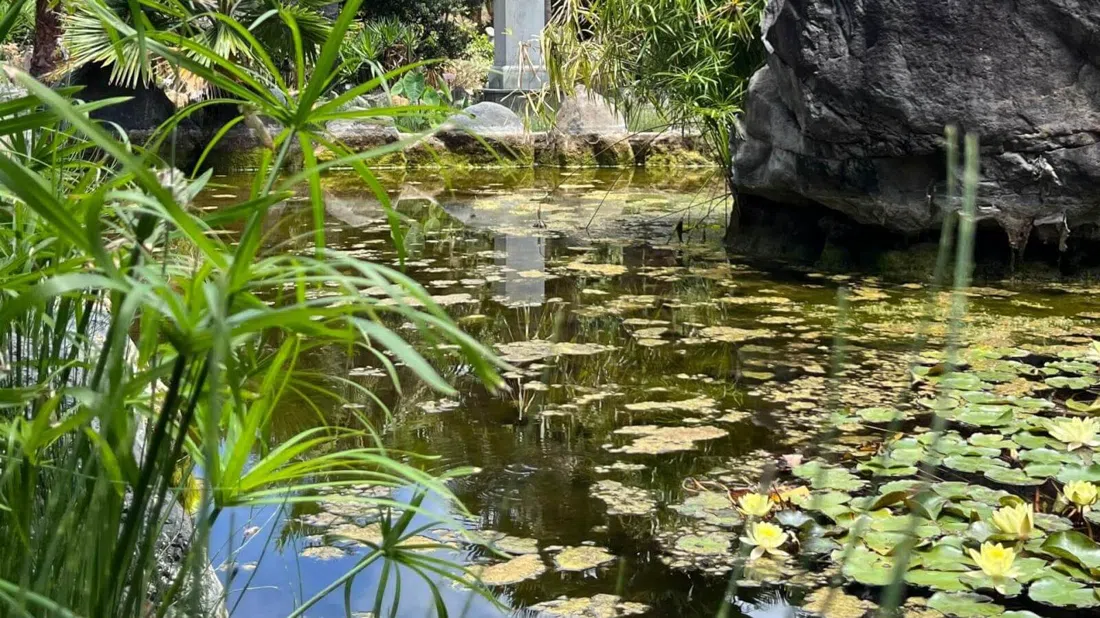
For something gentler, the Jardín Botánico del Descubrimiento de Vallehermoso covers 16,000 square metres and was built in 2000, with collections drawn from the Canary Islands and from five continents. It is a good half-morning when your legs have had enough of gradients, and a useful primer: see the endemic plants labelled and laid out here and you will read the wild hillsides better for the rest of the week.
The serious outing is the Chorros de Epina, a cluster of natural springs reached by a moderate-to-hard circuit of around 16 kilometres through the laurel forest of Garajonay National Park. The laurisilva is the point as much as the springs are — a damp, mossy, prehistoric-feeling woodland that drips even when it is not raining, and whose light is the main thing photographers come to La Gomera to chase. Treat the distance and the grading seriously, start early, and carry water.
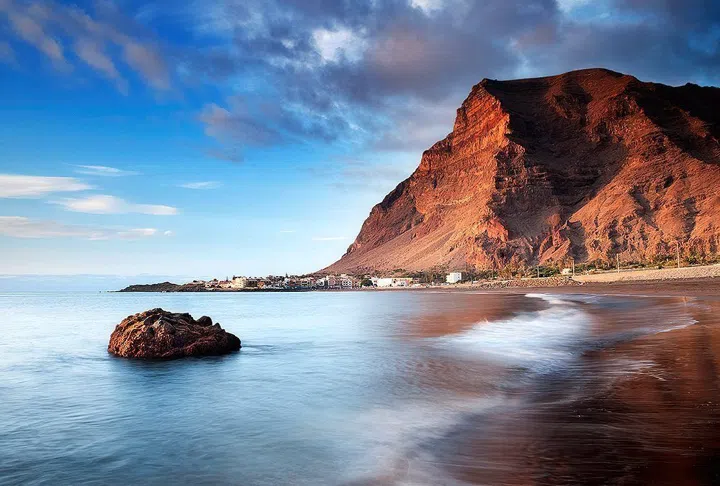
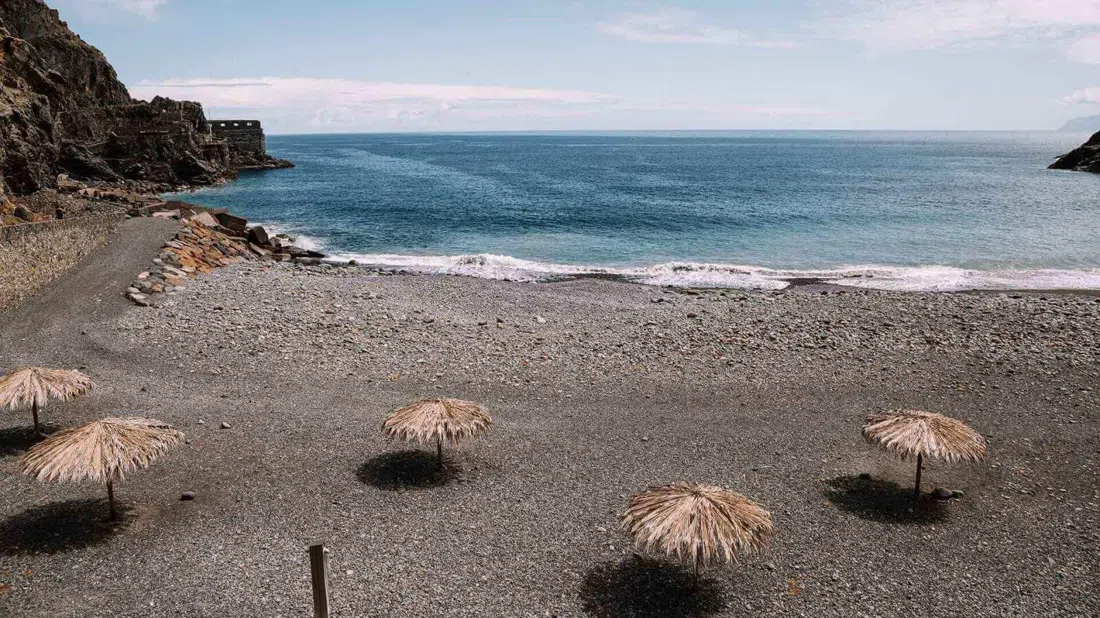
Down at the coast, the Playa de Vallehermoso is 200 metres of black sand and pebbles with seasonal natural pools and a seawater Parque Marítimo pool beside it. Be clear-eyed about the sea here: it is usually rough and current-prone, and this is a beach for confident swimmers, for the pools, or simply for looking at.
It is also where the Castillo del Mar sits, the 1890 banana-loading pier raised on basalt columns above the shore. You cannot go inside — it is closed — but from the outside it is the most striking built thing in the municipality, a monument to the trade that once filled this valley, now staring at an empty sea.
Palm honey, pottery and the farmers' market
If you buy one thing in Vallehermoso, buy miel de palma. Palm honey is not honey at all but sap, tapped from Canary palms and reduced over open fires into something dark, smoky and treacly, and this municipality produces roughly 95% of the island's entire output. It turns up on gofio, over fresh cheese, in bars and in small shops all over town, and a bottle travels home better than almost any other souvenir from the Canaries.
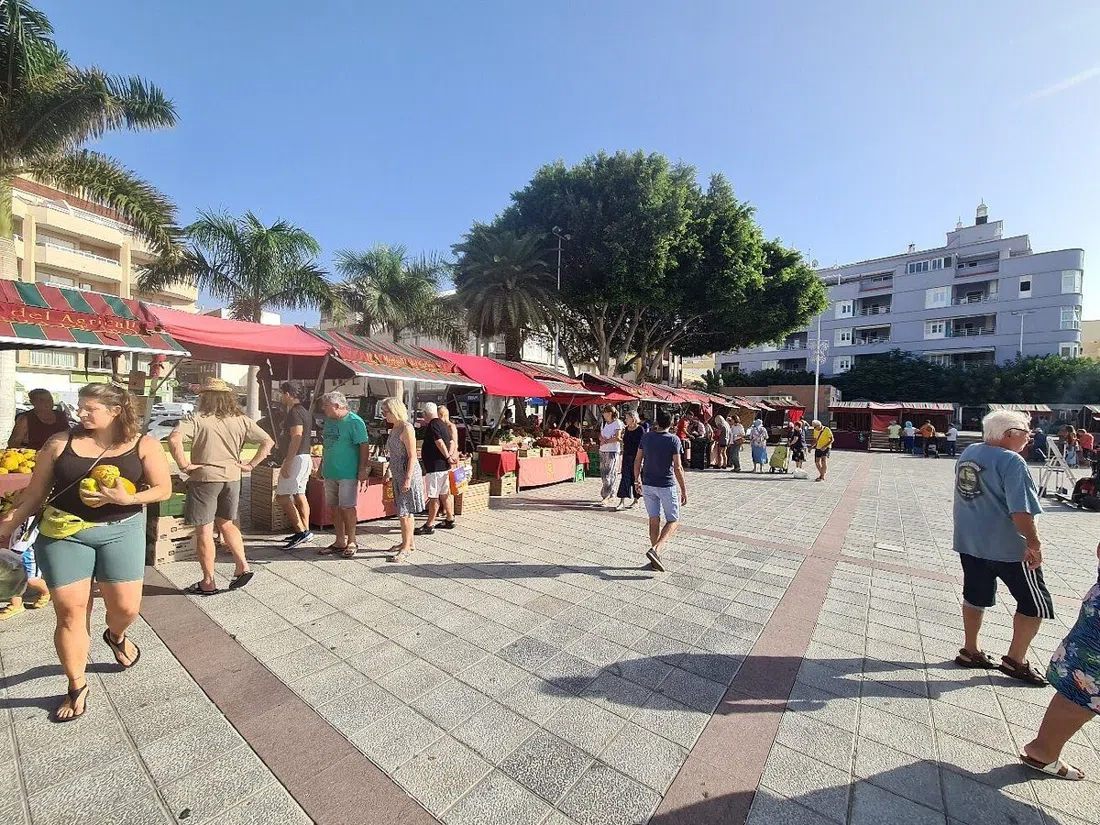
The best place to buy it, along with island pottery and whatever the terraces have produced that week, is the Mercado del Agricultor, the farmers' market held on the Plaza de la Constitución. It is a small, genuinely local affair rather than a craft fair staged for visitors, which is precisely its appeal — and it puts you in the square at the hour when the town is at its most sociable.
Where to stay in Vallehermoso
There are no resort hotels here and there is no prospect of any. Accommodation means rural hotels, hostales and self-catering casas rurales, priced the way a farming town prices things. The most hotel-like option is Hotel Rural Tamahuche, just off the Plaza de la Constitución — a converted property with a garden, a terrace, and its own restaurant and bar, which in a town that shuts early is a more useful amenity than it sounds.
Pick your base by how you intend to travel. Staying in the centre puts you within a minute of breakfast, the market and the only bar you will need; a casa rural up in the terraces gives you silence, stars and the Roque over your shoulder, at the cost of driving down for everything. Either way, budget expectations should be modest and will be comfortably met.
Getting to and around Vallehermoso
La Gomera Airport (GMZ) is the closest airport, about 40 kilometres and roughly 40 minutes away on winding mountain roads, but flight connections are limited and mostly route via Tenerife. In practice, most visitors arrive by ferry from Los Cristianos on Tenerife into San Sebastián de la Gomera, then continue by GuaguaGomera Line 2 bus or by hire car.
The car is the honest recommendation. Bus connections exist but they are not frequent enough to support a day of trailhead-hopping, and if you want to move around the island at your own pace — Garajonay in the morning, the coast in the afternoon — you will want your own wheels. Drive the mountain roads with respect; they are narrow, serpentine and the island's main genuine hazard, along with that sea at Playa de Vallehermoso. Crime is essentially a non-issue. Vallehermoso is very safe, very quiet, and entirely happy to remain both.
25 October 2026