La Palma · Where to live · 8 min
Fuencaliente, La Palma: Where the Newest Ground in the Canaries Grows Wine
At La Palma's southern tip, a three-week eruption in 1971 left bare lava running down to working salt pans — and a village above it that turns volcanic ash into malvasía.
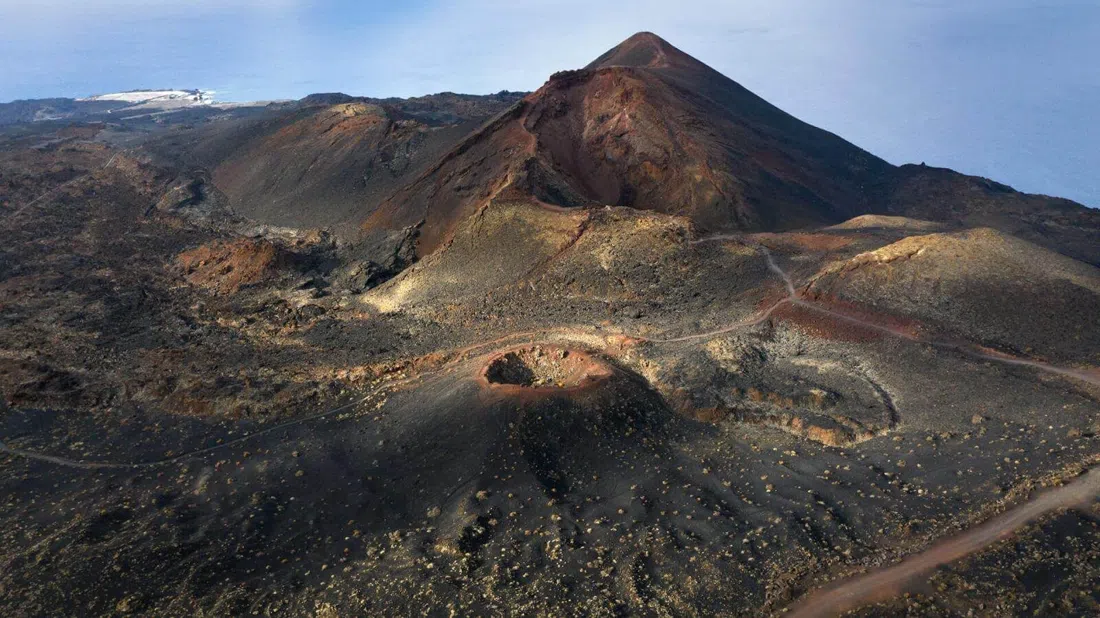
For three weeks in 1971, the southern tip of La Palma split open and built new land. Volcán Teneguía is still one of the youngest volcanoes in the Canary Islands, and the ash on its flanks hasn't had time to become soil — it lies where it fell, loose and grey-black, scattered with lava bombs. Below it the flow runs unbroken to the sea, past salt pans that are still worked and a lighthouse the eruptions themselves once damaged. The municipality takes its name, Fuencaliente, from a hot spring the island's own volcanoes buried centuries ago. A place named for something it no longer has, sitting on ground that keeps arriving.
Volcanoes, wine and salt
The geology here isn't a backdrop; it's the local industry. Volcán de San Antonio last erupted in 1677 and now has a visitor centre at its base and a walkway that takes you around the rim of the cone, close enough to read the layers in the crater wall.
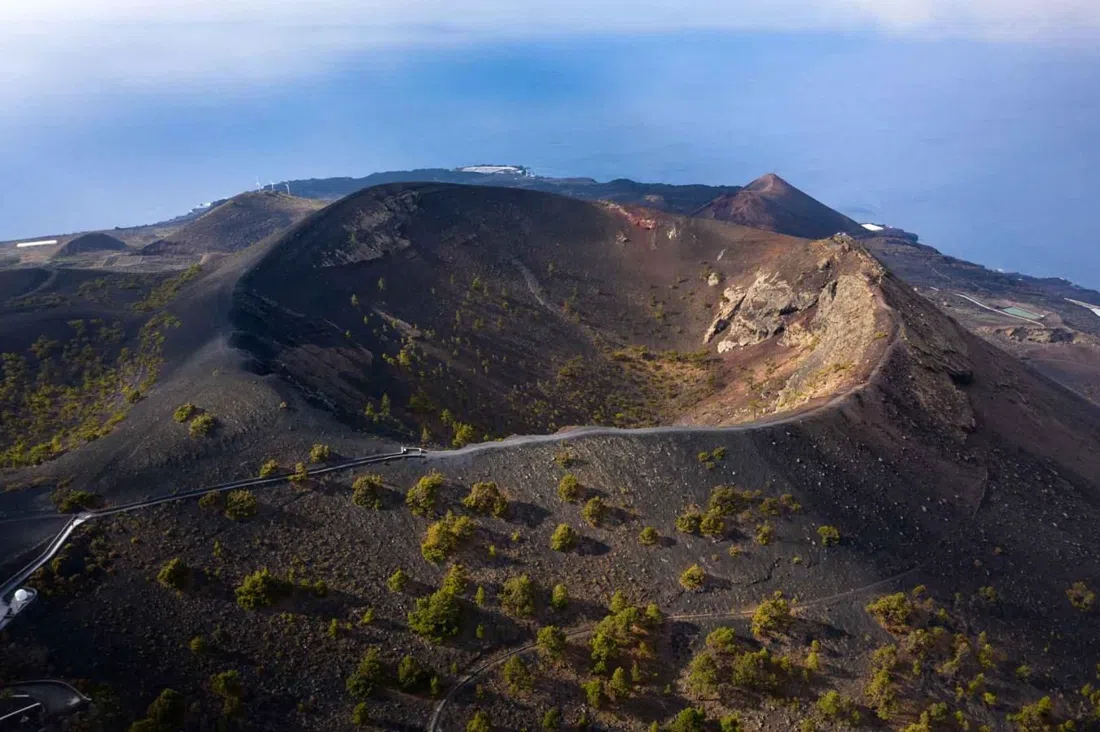
Teneguía, lower and younger, is the one that still looks raw — nearly three hundred years newer than its neighbour and visibly so, a cone of bare ash with no vegetation making any real headway on it.
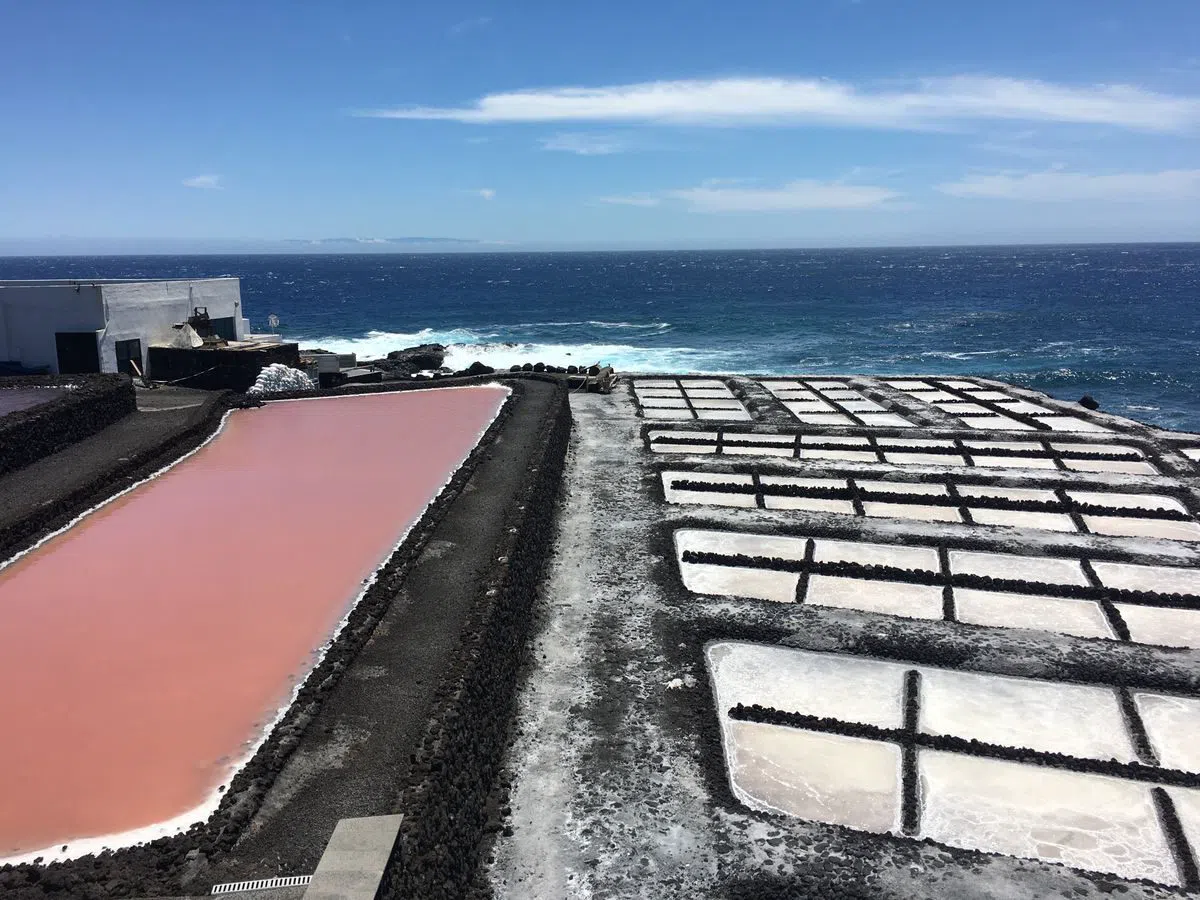
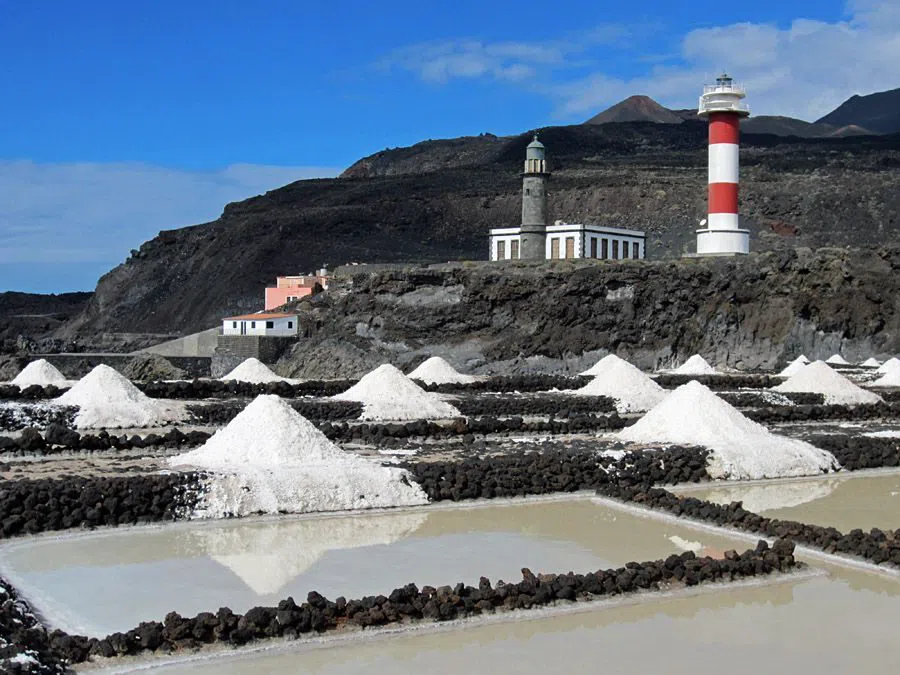
Down at the shore, the Salinas de Fuencaliente lay out their geometry beside the water: shallow pans in blocks, the salt crusting white and pink against black lava, the 1892 lighthouse rebuilt behind them. It is the most photographed thing in the municipality for good reason, and it is also simply a saltworks, doing what it has always done.
And then there is the wine. Vines grow straight in volcanic ash here, which is the whole trick: the ash holds what little moisture there is and the roots go deep for the rest. Three working bodegas cover the ground between the coast and the ridge, and the sweet malvasía they make is the area's signature — the bottle you will want to carry home in hand luggage.
Fuencaliente is also two villages wearing one name, which matters more than it sounds. Los Canarios is the highland seat at 750 metres, cooler and pine-scented, strung along the road that climbs toward the Cumbre Vieja ridge: cockerels going off at odd hours, bodega doors open to the street, old men on bar terraces arguing about the vintage. Las Indias sits lower and quieter. Between them, the volcanoes.
Where to eat and drink
The kitchen here runs on two things — fish landed at the coast that morning, and wine made a few hundred metres up the road. What it does not have is a restaurant strip. You do not wander between places in Fuencaliente; you choose one, you drive or walk to it, you eat properly, and that's the evening. Plan accordingly and the food is excellent. Turn up hoping to graze and you'll be disappointed.
The standout is El Jardín de la Sal, built into the salt pans beside the old lighthouse, a Michelin Bib Gourmand holder since 2020 and the one genuine splurge in a municipality that otherwise does home cooking. The daily catch is the thing to order, and the setting does half the work: salt, black rock, the Atlantic doing whatever it's doing that day, right outside the glass.
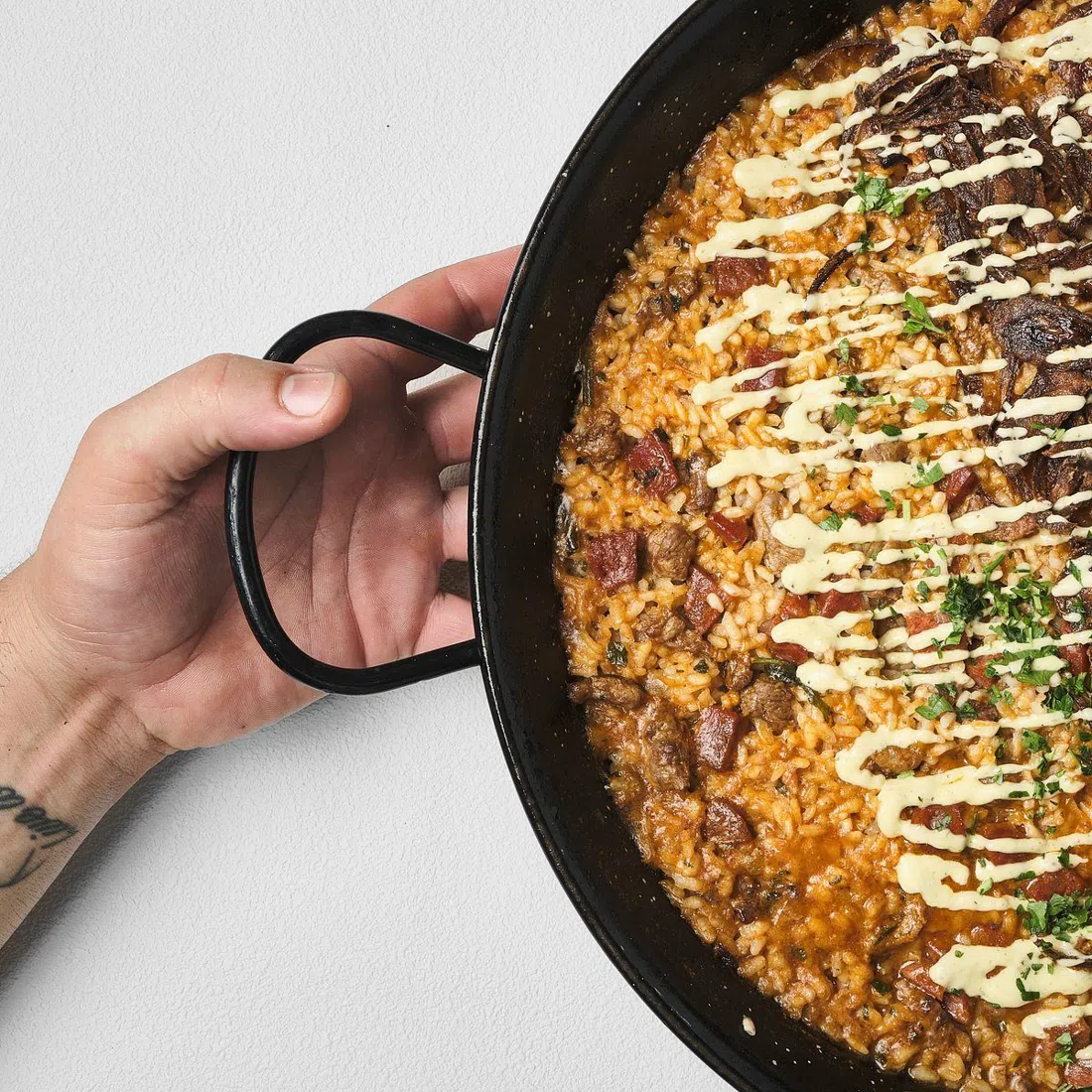
Up in Los Canarios, La Casa del Volcán sits by the national park entrance and plays a different game entirely — Canarian cooking of the kind that gets handed down rather than designed, with the morcilla and the arrope desserts the two things regulars come back for. Its 4.6 average is higher than the Bib Gourmand place down the hill, which tells you something about what people actually want from a day on the ridge: a plate with weight to it, somewhere at altitude, after the walk.
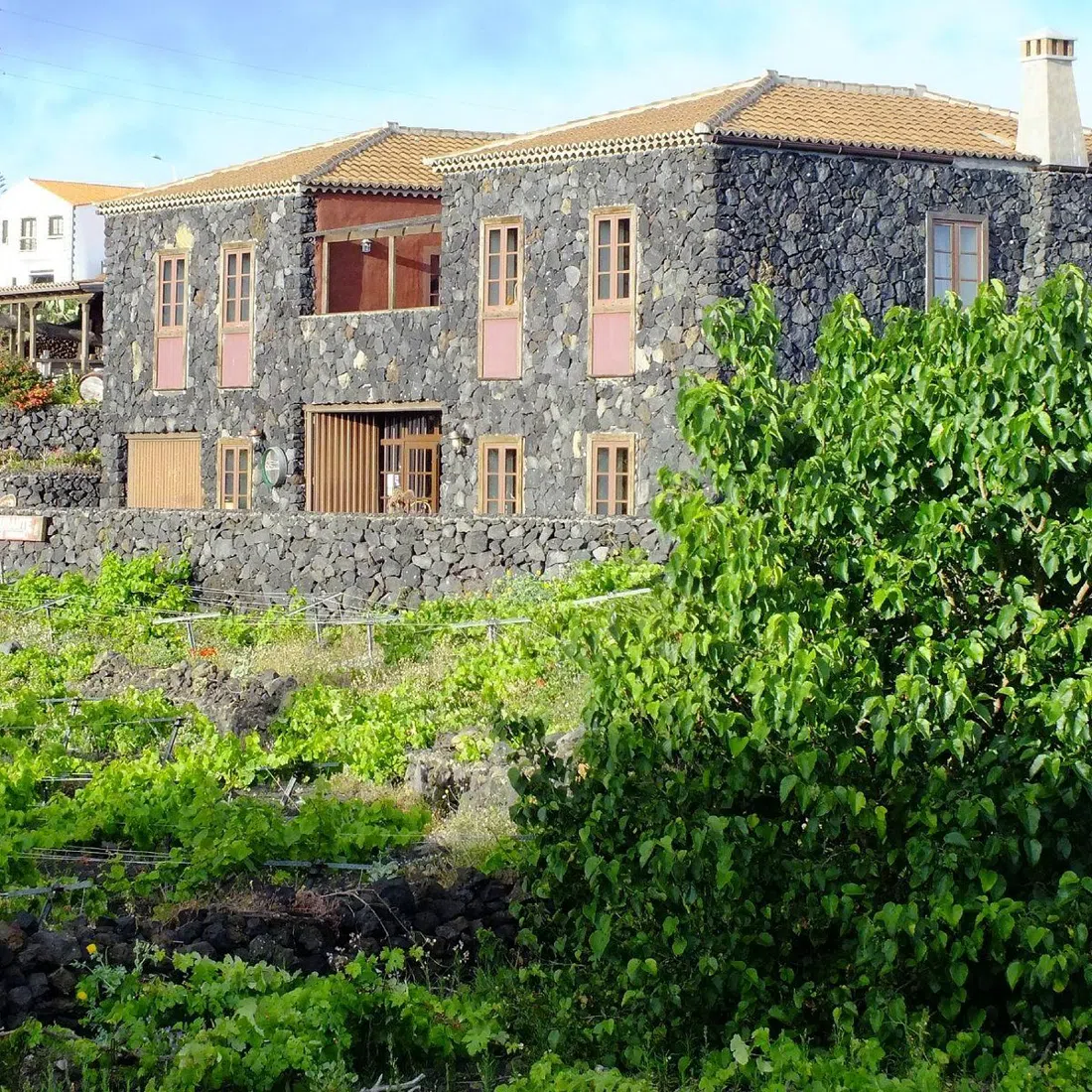
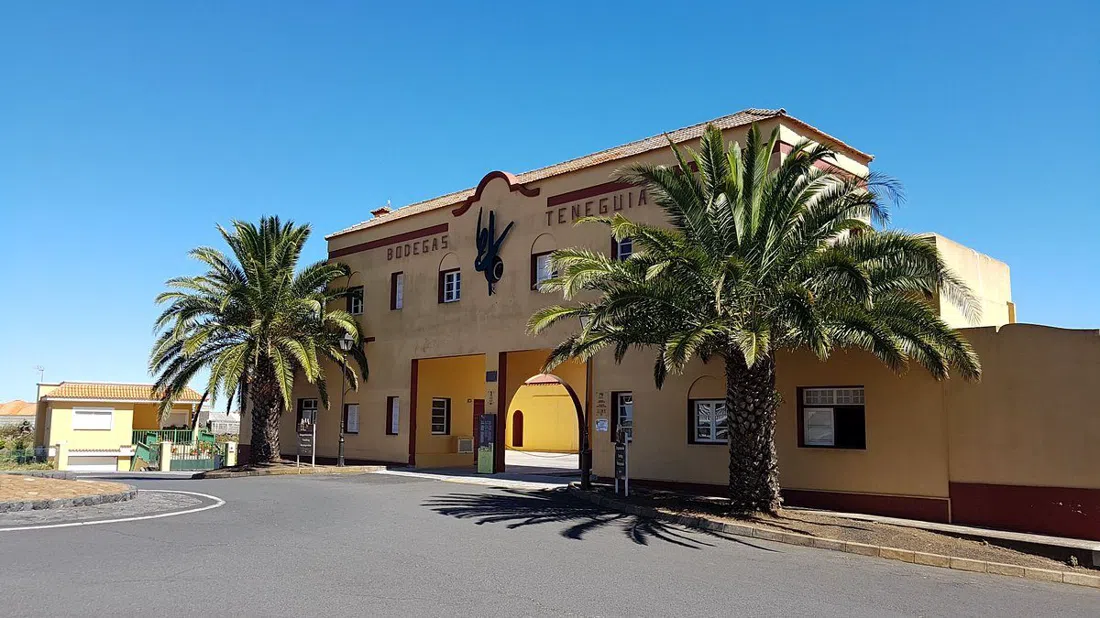
Drinking, here, means the bodegas, and they are not tasting rooms with a gift shop bolted on. Bodegas Teneguía is the 1947 cooperative, the big name on the island's wine lists, ageing malvasía in cellars that are partly underground and running tours with tastings for anyone who turns up curious. Bodegas Carballo, right by the San Antonio volcano entrance, ferments its wine inside a natural lava tube — a detail so on-the-nose for this municipality that it would read as invention if it weren't simply true.
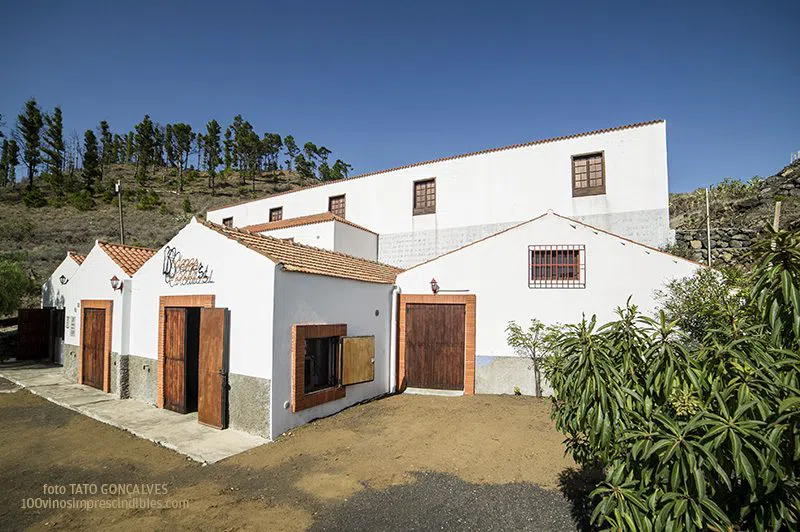
And Bodegas Juan Matías Torres, founded in 1885, is among the oldest bodegas in the Canaries, now in the hands of fifth-generation winemaker Victoria Torres — a cellar with a straight line of family memory running back a hundred and forty years. All three sit at 4.6. There is no weak link.
As for going out: there isn't any, not in the sense of bars and late music. Evenings in Los Canarios are a terrace, a glass of something made within walking distance, conversation that circles back to the harvest, and then the sky — which is the real nightlife and deserves its own paragraph below.
Volcanoes, trails and the dark sky
The big walk is the Ruta de los Volcanes, La Palma's signature hike and the reason a good proportion of visitors are here at all. It runs the spine of the Cumbre Vieja ridge from the Refugio del Pilar down into Los Canarios — roughly 18 kilometres, five to seven hours — crossing a line of craters including Hoyo Negro and Duraznero, dropping through pine forest and finishing past Teneguía. Do it in that direction and you walk the island's volcanic chronology downhill, oldest to newest, ending in the village with the bodegas in it. Few hikes are so neatly rewarded.
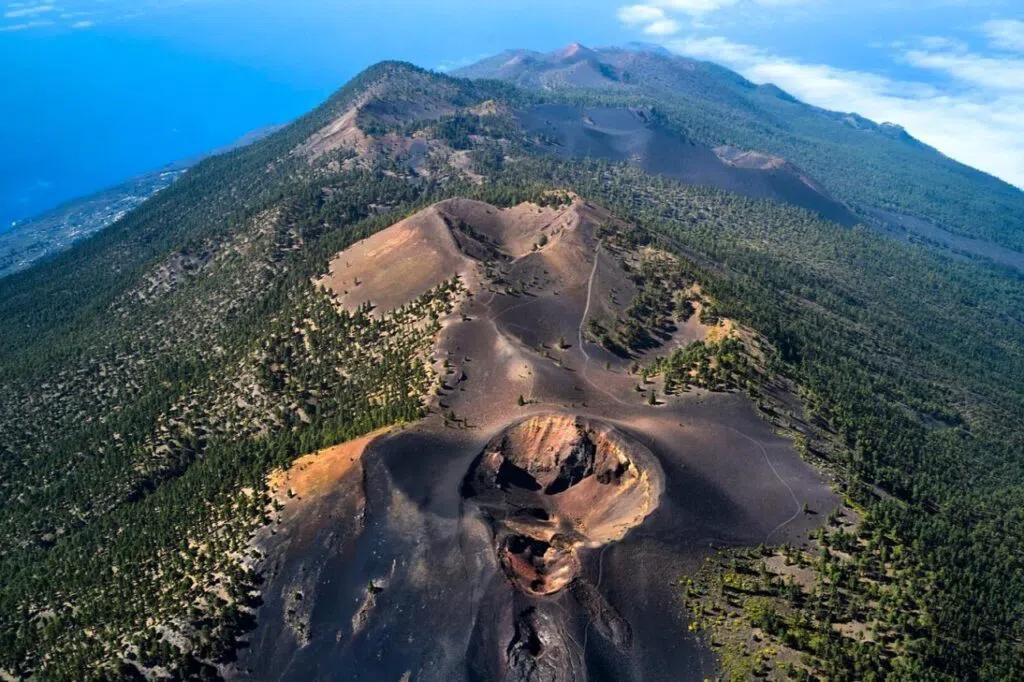
Take it seriously, though. The rock is loose, sections of the ridge are properly exposed, and phone signal is sparse to absent for long stretches. This is not a hike to improvise in trainers.
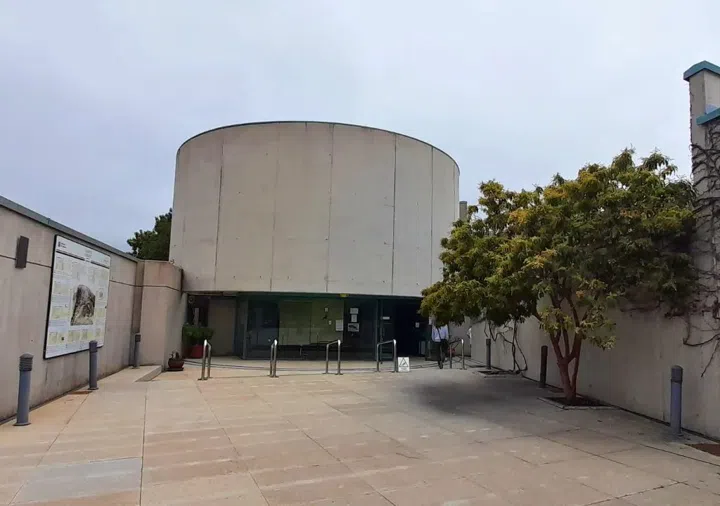
Shorter and gentler, the crater-rim path at San Antonio gives you the volcano without the day's commitment, and the visitor centre at its base explains what you're standing on. Down at the lighthouse, the Centro de Interpretación de la Reserva Marina occupies the rebuilt 1892 building — a small museum, sensibly scaled, covering the marine reserve offshore and the fishing history that fed this coast long before anyone came for the views.
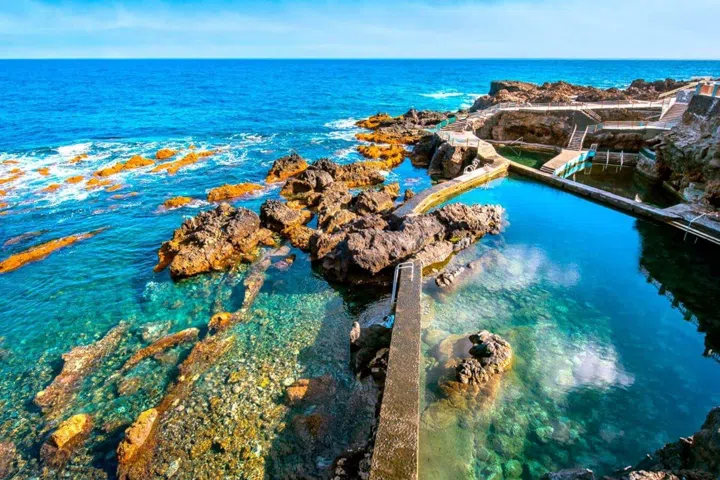
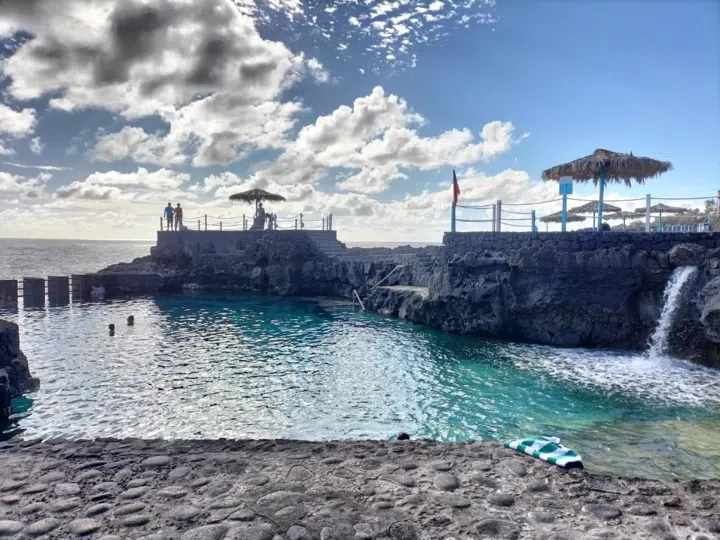
Swimming is possible but should be understood correctly: there are no resort beaches. Playa de la Zamora is black sand, there are lava pools at Echentive, and a small natural pool at Puntalarga. The surf can be strong and there are no lifeguards. Rugged is the operative word, and for some travellers that is precisely the appeal.
After dark, the municipality's other headline act arrives free of charge. These are genuinely dark skies — the kind photographers plan trips around and the kind that make casual stargazers stand outside their rental for far longer than they intended, neck aching, picking out things they've only ever seen in pictures.
Wine, salt and little else
Shopping in Fuencaliente means buying what the place actually makes. There is no high street, no boutique cluster, nothing resembling retail as a leisure activity.
What there is: three bodegas selling bottles direct from the cellar, usually cheaper and with more variety than anything you'll find off the island, the sweet malvasía very much included. Buy at the cellar door and you'll see labels that never make it to export. And there is salt from the pans at the coast — the other thing this municipality produces, which travels well and costs little.
That's the list. Honestly, that's the list, and it is a better souvenir haul than most cities manage.
Where to stay in Fuencaliente
There is no hotel strip. Accommodation is almost entirely casas rurales — rural self-catering houses — and where you choose changes the character of the whole trip.
Los Canarios, the hilltop village at 750 metres, puts you within walking distance of the bodegas, the few restaurants and the start of the San Antonio paths. It's cooler up there, which is a blessing in summer and worth a jumper in winter, and it's the right base if you're hiking. Staying lower, toward Las Indias and the coast, trades that walkability for warmth, quiet and proximity to the lava pools.
The overall budget feel is modest: casas rurales and home-cooking restaurants, with El Jardín de la Sal as the single Michelin-recognised indulgence. Crime is close to nonexistent; the genuine risks here are environmental — loose rock, strong surf, thin phone signal.
Getting to and around Fuencaliente
La Palma Airport (SPC) sits about 20 kilometres north, roughly 23 minutes by car. The island's main ferry port in Santa Cruz de La Palma, with connections to Tenerife and the other Canaries, is around 26 kilometres away — about 26 minutes' drive. Arrival is easy.
What isn't easy is going without a car. Buses to Santa Cruz run a few times a day, not hourly, and there is no local loop tying Los Canarios to Las Indias to the coast at the lighthouse. Those are the three places you'll want to move between, repeatedly, and the only practical way to do it is to drive. Hire the car at the airport.
If that sounds like a caveat, it's really a filter. Fuencaliente rewards hikers coming off the ridge, wine travellers who want the vineyard and the cellar rather than a tasting-room performance, stargazers, and couples content with a rural house over a hotel lobby. For anyone after a beach club or a walkable bar crawl, the island has other corners. This one is still busy making ground.
24 October 2026