La Palma · Where to live · 8 min
San Andrés y Sauces, La Palma: The Municipality That Water Built
Laurel forest, thirteen hand-cut water tunnels, a working rum still and La Palma's best-known volcanic sea pools — all in the island's wettest, greenest and least touristed corner.

The fishing boats at Puerto Espíndola bob in a cove of black sand, and a short walk away a working still is turning sugar cane into rum. Inland, the same Atlantic water that floods the volcanic-rock pools of Charco Azul comes back down the mountain as cloud, wrings itself out over a laurel forest older than the conquest, and finishes its journey irrigating banana groves. San Andrés y Sauces is La Palma's wettest, greenest corner — the municipality that water built. Locals mostly call the bigger of its two linked towns Los Sauces; together they spread along the island's northeast coast between Barlovento and Puntallana, and almost nothing here was designed with visitors in mind. That is precisely the appeal.

Water, rum and the island's first Biosphere Reserve
San Andrés y Sauces was the first municipality on La Palma folded into the island's UNESCO Biosphere Reserve, and the designation maps almost exactly onto what the place is actually known for. Not architecture, not a beach strip — water. The northeast flank of the island catches the trade winds first, and everything that follows is a consequence: the depth of green in the barrancos, the irrigation channels threading between plots, the banana leaves that look varnished after rain, the faint permanent smell of wet volcanic earth in the lanes above the main road.
The headline act is the laurel forest of Los Tilos, inside the Las Nieves Natural Park — one of the best-preserved stands of laurisilva anywhere, a relict subtropical cloud forest of the kind that once blanketed the Mediterranean basin. Walk into it and the temperature drops; the light goes submarine; moss climbs everything it can reach. Above the forest, the Marcos y Cordero springs are reached by a route hikers on La Palma talk about in the same breath as the Ruta de los Volcanes: thirteen tunnels hacked through the mountain to carry water, which you walk through, in the dark, with a head torch and often with water running over your boots.

The second thing the municipality is known for is what happens when all that water meets sugar cane. Cane grew here because the conditions allowed it, and the tradition survives in a working distillery rather than a museum — which tells you most of what you need to know about how San Andrés y Sauces treats its own heritage. It is a town that still does the things it is famous for.
Where to eat: Canarian home cooking and fresh Atlantic fish
Eating here means small, family-run rooms rather than menus pitched at outsiders. There is no restaurant row, no English-language chalkboard competition, no host trying to catch your eye. You find places by walking, or by being told.
In the historic centre of San Andrés, on the main square, La Placita does grilled queso de cabra with mojo — the cheese arriving blistered and squeaking, the mojo doing the rest — alongside a short, honest Canarian-Mediterranean menu. Note the closure: Mondays, no exceptions, and in a town this size that genuinely reshapes your evening plans.
A couple of doors down, Bar Restaurante San Andrés sits a few steps from the church square and builds its reputation on seafood rice, garlic prawns and squid — the kind of kitchen where the rice arrives in the pan it was cooked in and nobody asks whether you want it photographed first. Over in Los Sauces, Restaurante El Canal is the local favourite, and the orders that come out of it most often are seafood paella and black rice, the squid-ink kind that stains your teeth and is worth it.
For something with a view, Rompecabos sits above the Melonar path and serves fresh fish with papas arrugadas while the Atlantic does its work below — salt-wrinkled potatoes, a plate of whatever came in, the horizon doing the heavy lifting. Then there is Restaurante Los Roques, in Los Galguitos: a tiny room, reservations only, known for cod and for fish cooked with almost aggressive simplicity. Turning up on spec will not work. Phoning ahead will.
Down at the water, Mesón del Mar is as close to the source as eating gets in this municipality — grilled squid and octopus served at Puerto Espíndola, steps from the fishing boats that justify the whole arrangement. Charred edges, lemon, a beer, boats clinking.

And for the day you spend in the forest, Casa Demetrio is inside Los Tilos itself: rustic Canarian home cooking, carne de fiesta, gofio, quesillo to finish. Eating marinated pork and toasted grain flour in the middle of a laurisilva cloud forest, with the damp pressing in at the door, is one of those meals that turns into the memory of the trip rather than a footnote to it.

Going out: a town that goes to bed early
Be straightforward about this one: if you have come looking for nightlife or a beach-bar scene after dark, you have come to the wrong side of La Palma. There is no late-night strip in San Andrés y Sauces, and no pretence of one.
What exists instead is the slow version. An evening here means a long sit-down — the second bottle at El Canal, a plate of prawns at Bar Restaurante San Andrés, conversation at volume on the square outside La Placita — and then the walk home through streets where the loudest thing is water moving in a channel. The nearest thing to a proper night out is a booked tasting at the distillery, taken in daylight. If you want bars until 3am, Santa Cruz de La Palma is the place and a hire car is the prerequisite, because the bus will not wait for you.
What to do: pools, forest tunnels and a rum still
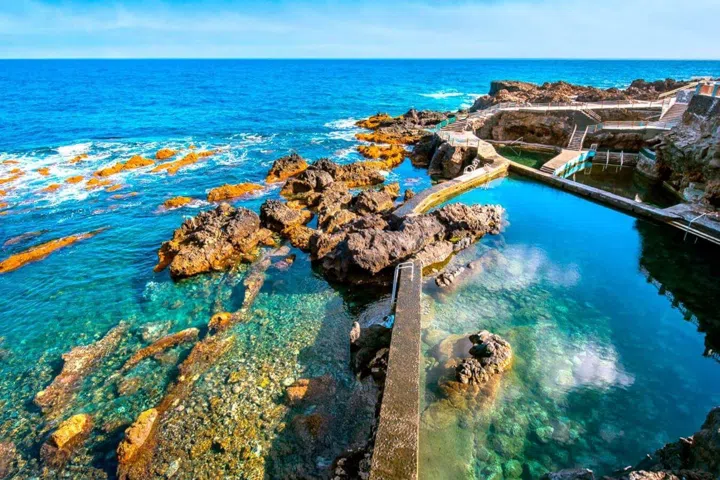
Charco Azul is the reason most day-trippers detour here at all: a set of volcanic-rock pools near Puerto Espíndola, with a sheltered swimming basin protected from the open swell, sun terraces for afterwards, changing rooms and a kiosk. It reopened to the public following access and capacity works, and you reach it on a flat, signposted coastal path from San Andrés — which means you can walk off lunch, swim in seawater held in black rock, and walk back without ever needing the car.
A short walk from the pools, Destilería Aldea is the working sugar-cane rum distillery that anchors the municipality's drinking culture. Tours and tastings run on booking, and the appeal is that this is a functioning production site rather than a visitor attraction wearing a distillery costume — cane in one end, rum and guarapo out the other.

Above all that sits the main event: Los Tilos laurel forest and the Marcos y Cordero springs. The forest is UNESCO-listed laurisilva and walkable at almost any fitness level; the thirteen-tunnel spring hike above it is one of La Palma's signature walks and a different proposition entirely — proper boots, a working head torch, and respect for the weather, because tunnels and cliff-edge paths are no place to improvise.
Puerto Espíndola rewards an hour even if you do not plan to swim: a small working fishing port with a black-sand cove, and sheltered-bay diving close enough to shore that you are underwater within minutes of kitting up. Watching the boats come in, with Mesón del Mar grilling behind you, is a perfectly adequate way to lose an afternoon.

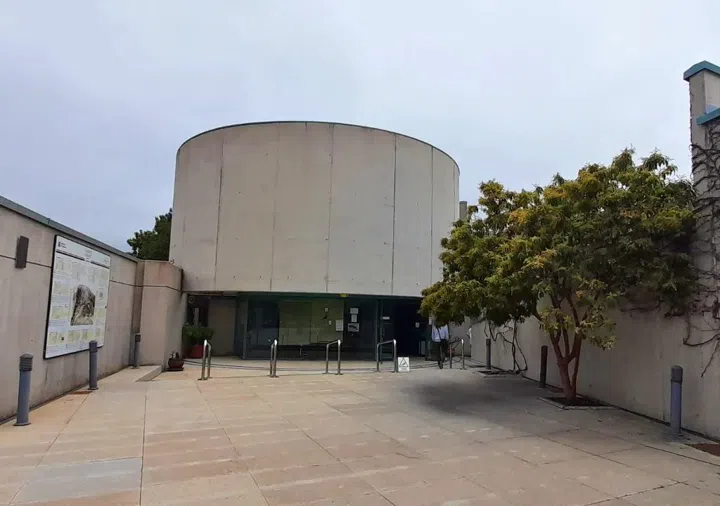
And for the island's deep past, the El Tendal Archaeological Park documents the Benahoarita — La Palma's pre-conquest inhabitants — across a 60-metre cave complex. It is a quiet, unshowy site, and it reframes everything you have walked through: people were living off this water long before anyone thought to channel it through a mountain.
Shopping: rum, bananas and roadside produce
There is no shopping street here, and anyone looking for one will spend a frustrating morning. This is a working agricultural municipality, not a boutique town, and the best thing you can buy is bottled at source: Destilería Aldea sells its own rum and guarapo — sugar-cane spirit — direct from the distillery shop next to Charco Azul, with tastings alongside, which is the sensible order of operations.
Beyond that, shop the way residents do. Along the main road you will find roadside produce and small local shops rather than anything curated: bananas from the plantations you have been driving past, local cheese, whatever is in season. Bring cash. Bring a bag. Budget for the bottle you did not plan to carry home.
Where to stay in San Andrés y Sauces
This is a base for travellers who want La Palma's green, wet north rather than the sunnier south, and the accommodation reflects that honestly: small casas rurales and self-catering cottages set among banana plantations, not resort hotels. The budget feel is low-cost and unpolished — cash-friendly family restaurants, rural houses, no tourist-priced menus.
Staying in or around the historic centre of San Andrés puts you within walking distance of the square's kitchens and the flat coastal path to Charco Azul, which is the single best argument for choosing it over anywhere else on this coast. Los Sauces gives you more everyday infrastructure; the plantation cottages give you silence and a terrace. Note the practical risk profile too: this is a quiet, low-crime corner of rural La Palma, and the real hazards are unlit mountain roads at night and trails that demand proper footwear.
Getting around: buses, the airport and why you need a car
San Andrés y Sauces sits on the northeast coast, roughly 24 minutes by public bus from the island's capital on Line 100, which runs between Santa Cruz de La Palma and Barlovento; the same line links San Andrés with Los Sauces and the villages further north. Locally, Line 12 covers San Andrés, Los Sauces and Puerto Espíndola — useful, and worth checking before you rely on it.
There is no train or tram on La Palma, so the realistic choice is bus or car. Arriving, you fly into La Palma Airport (SPC) south of Santa Cruz de La Palma, or come in by ferry from Tenerife to Santa Cruz's harbour; from either, it is about an hour by public bus with a change.
The honest advice: take the car. The buses genuinely work for the core — town, port, pools — but services are infrequent, and some of the best of San Andrés y Sauces, Marcos y Cordero especially and parts of Los Tilos, is far easier with your own wheels. Drive the mountain roads in daylight, and accept the trade-off that comes with the whole municipality: fewer people, more rain, better water.
24 October 2026