La Palma · Where to live · 8 min
Los Cancajos, La Palma: Black Sand, Blue Flag and the Island's Easiest Base
La Palma's one proper resort strip trades drama for calm water, a flat promenade and a house reef 150 metres offshore — and knows exactly what it is.
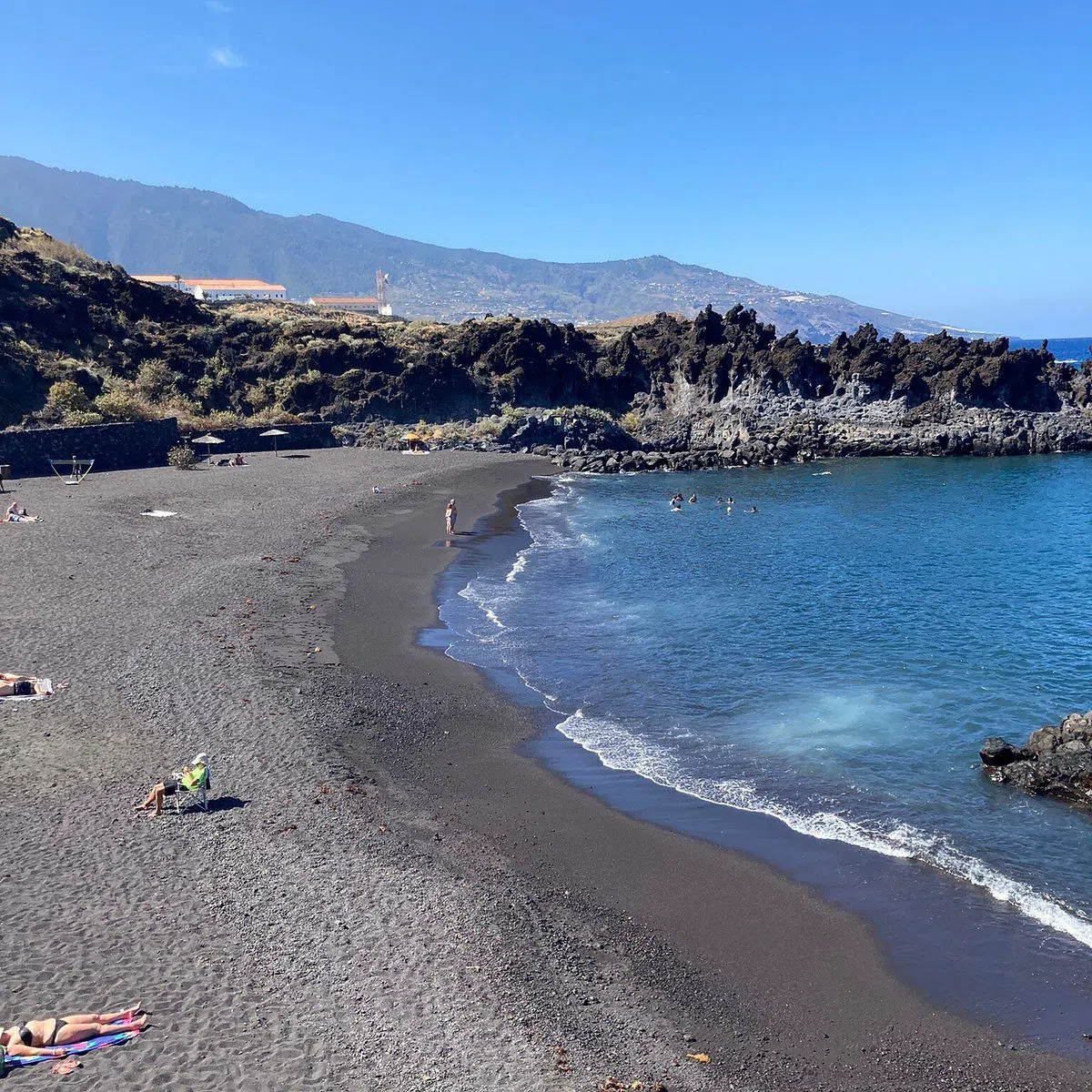
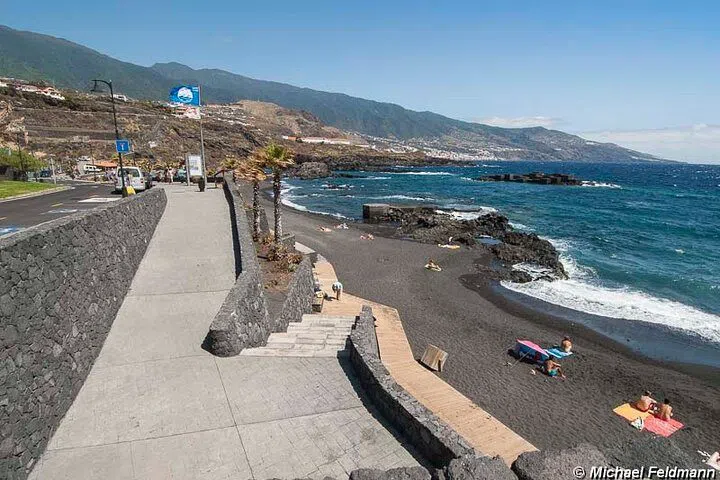
Stand on one of the stone breakwaters at Los Cancajos and the water does two things at once. Inside the arm of rock it goes glassy and shallow over black volcanic sand, the kind of water nobody flinches entering. Outside, the Atlantic gets on with being the Atlantic. That engineered split is the entire premise of the place: a Blue Flag beach cut into coves by man-made stone, four kilometres from Santa Cruz de la Palma and two from the airport, built around a palm-lined promenade rather than a high street. On an island that otherwise runs on hire cars and hiking boots, Los Cancajos is the easy, organised answer.
What Los Cancajos is known for
Everything here orbits one beach. The sand is volcanic black — properly black, not grey-brown — and it's broken into a run of coves by those artificial breakwaters, which is the detail that makes the whole resort work. Most of La Palma's coastline faces open swell. This stretch doesn't, or rather it does and then the stone absorbs the argument before the water reaches the shore. The result is a beach where small children can stand up in the shallows and weak swimmers can relax, which is genuinely unusual on this island.
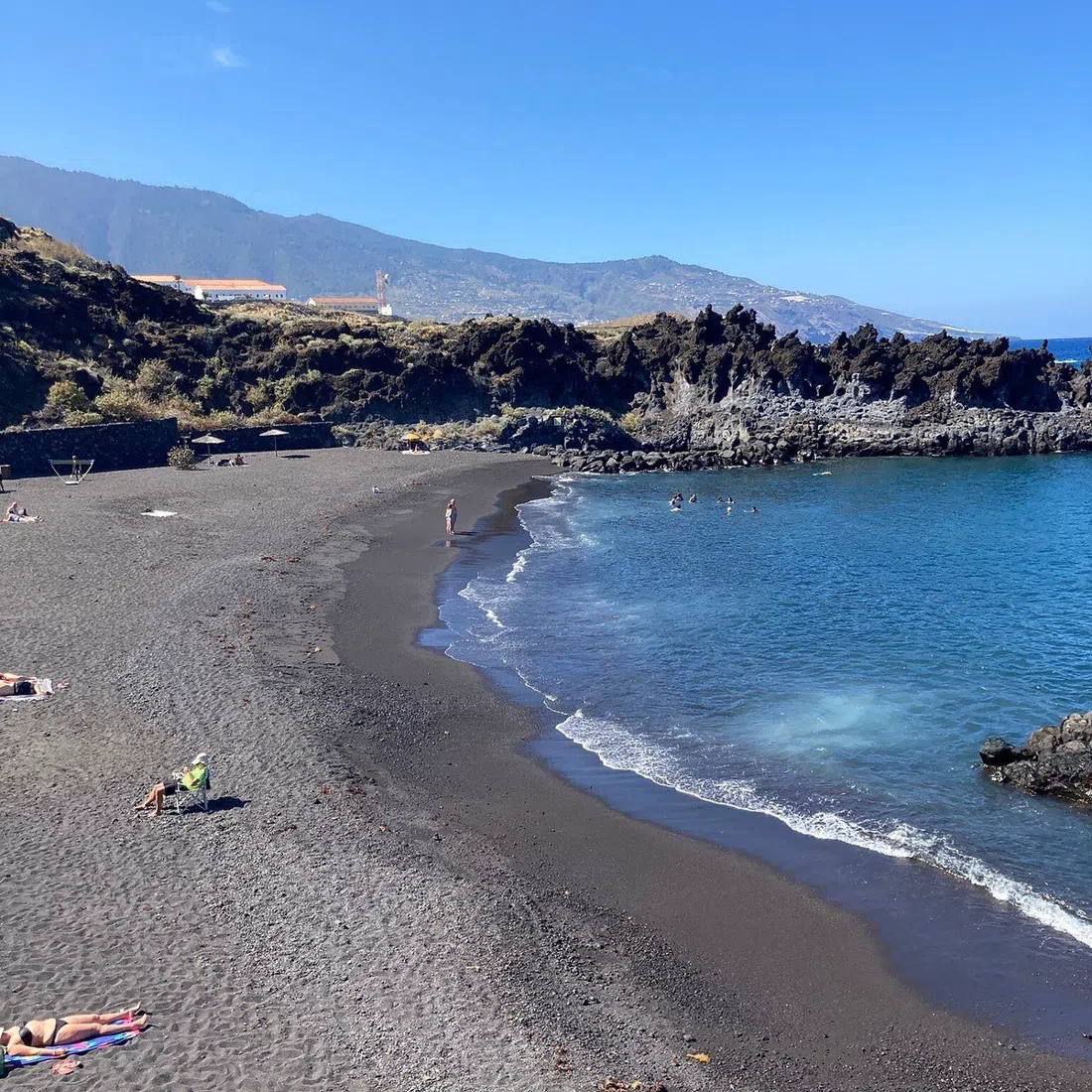
The promenade is the other half of the appeal. It runs the length of the strip, lined with palms, flat the whole way, and you can cover it end to end in about fifteen minutes at a wandering pace. Restaurants and hotel terraces open onto it rather than onto a road. Los Cancajos reads as La Palma's concession to package tourism, and it wears that role lightly — there's no neon, no touts, no strip of identical bars. It's a resort that seems faintly surprised to be one.
Where to eat and drink
The seafront mixes Canarian tascas with Italian kitchens that have clearly settled in for the long term rather than chasing a single season. That combination tells you something honest about the clientele: repeat visitors, families, divers back from a morning in the water, all wanting dinner within walking distance of where they're sleeping.
If you eat one serious meal here, make it El Altillo GastroBar. It's the standout for anyone who wants more than holiday-standard food — a small, creative menu built on local and seasonal Canarian produce, and the ratings back it up: 4.7 across hundreds of reviews, which in a resort strip is close to a statistical anomaly. The menu is short because it's actually cooked, and the Canarian leaning isn't decorative.
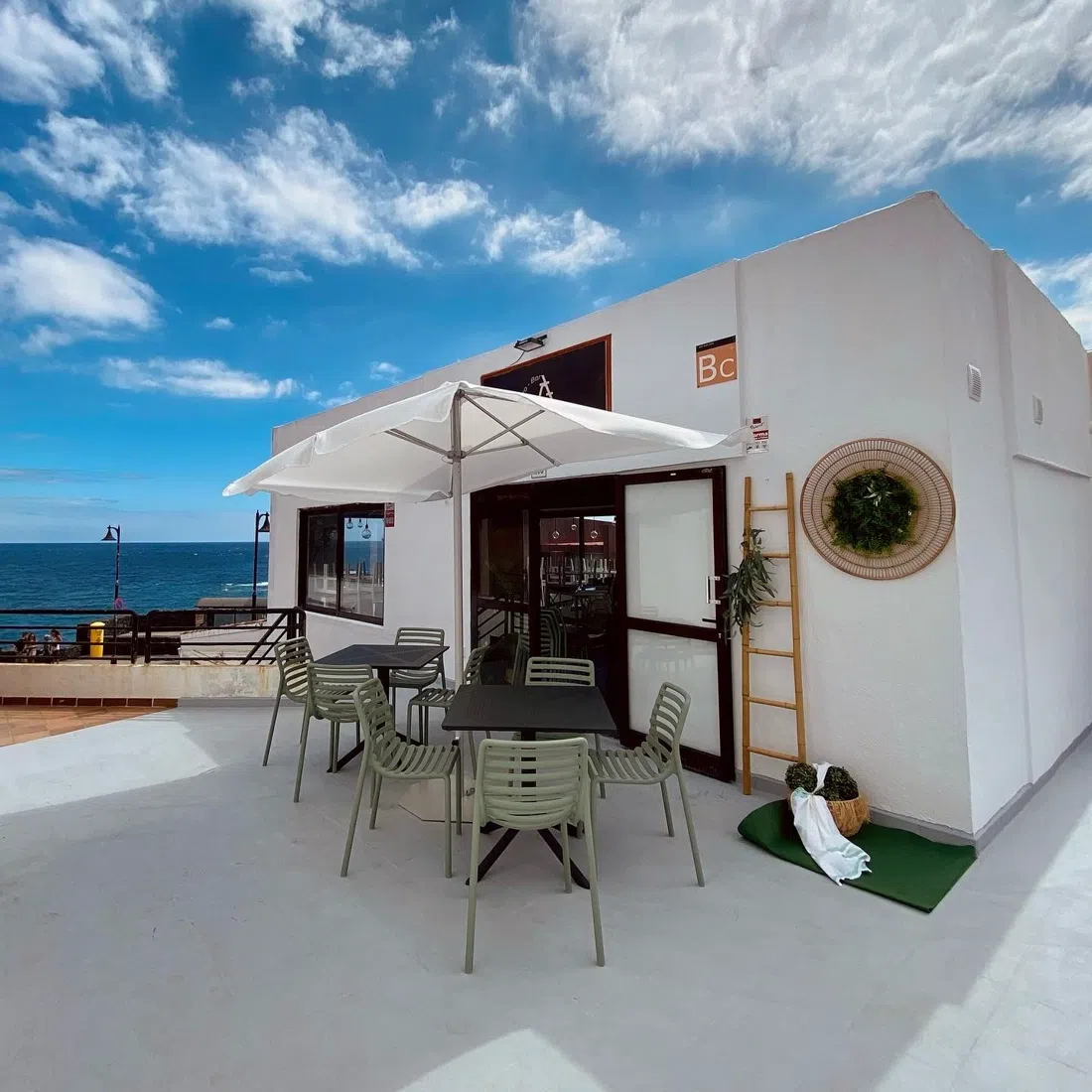
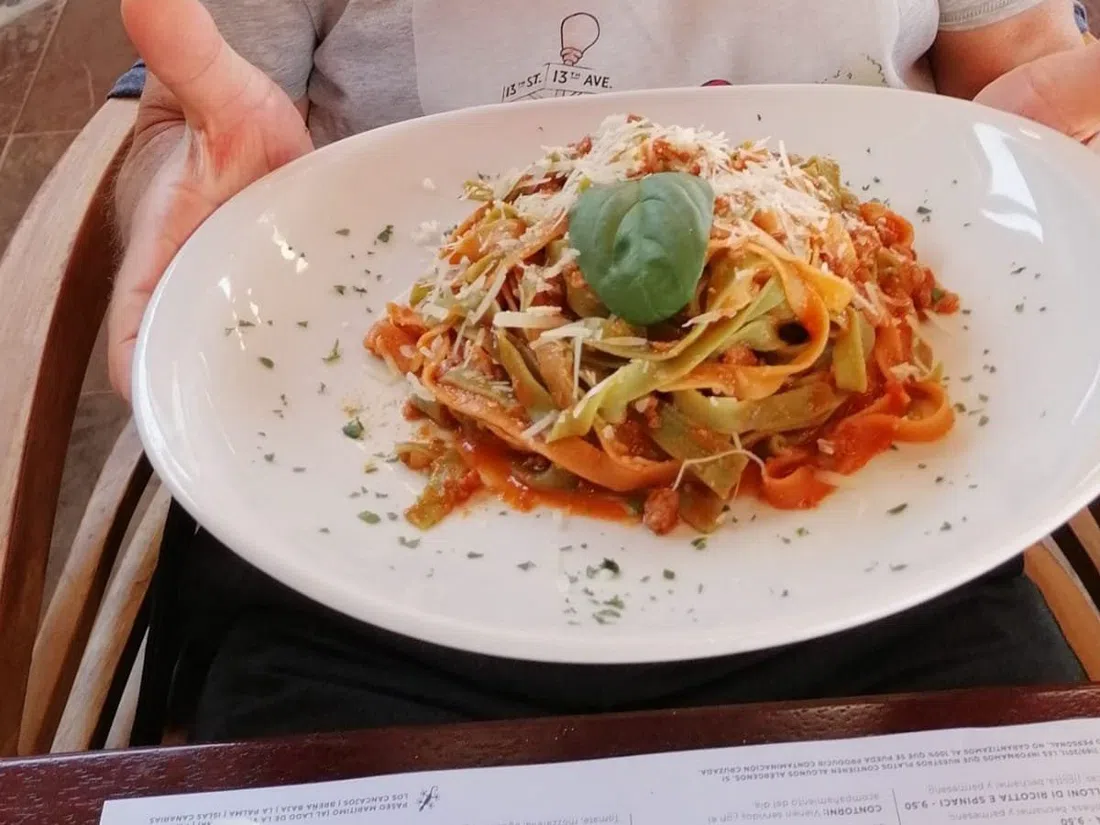
For the other kind of evening — the one where nobody wants to think — L'Osteria del Geco is the seafront's long-running Italian, a pizzeria and pasta kitchen that holds a consistent 4.4 to 4.5 across review platforms. Consistency is the achievement here. Plenty of resort Italians coast; this one has stayed good long enough that locals and returning holidaymakers treat it as a fixture.
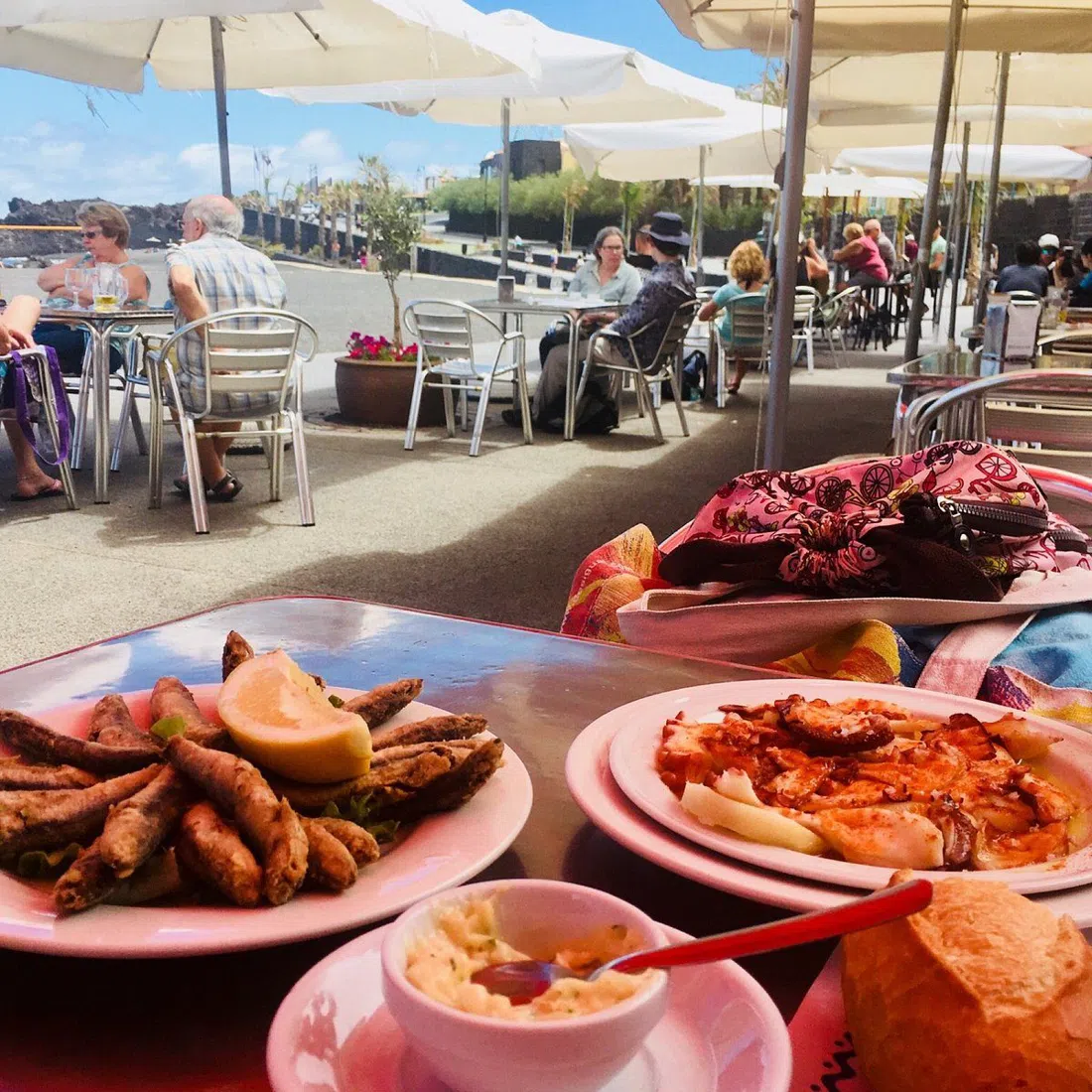
Midway along the promenade, Bar Restaurante El Pulpo does Canarian tapas and fresh fish from a waterfront terrace, and it's the one that catches the most casual trade — you sit down because you walked past, and then you stay. It sits at 4.0, which feels about right: not a destination kitchen, but the terrace is doing a lot of the work and doing it well.
Then there's Restaurante Tiuna, which is a different proposition entirely. It's a long-serving local spot, known for its tortilla and for prices that haven't drifted into resort territory, and its recent reviews are mixed but mostly positive — a 3.4 average that rewards going in with the right expectations. This is the kind of place where the value is the point and the room is incidental.
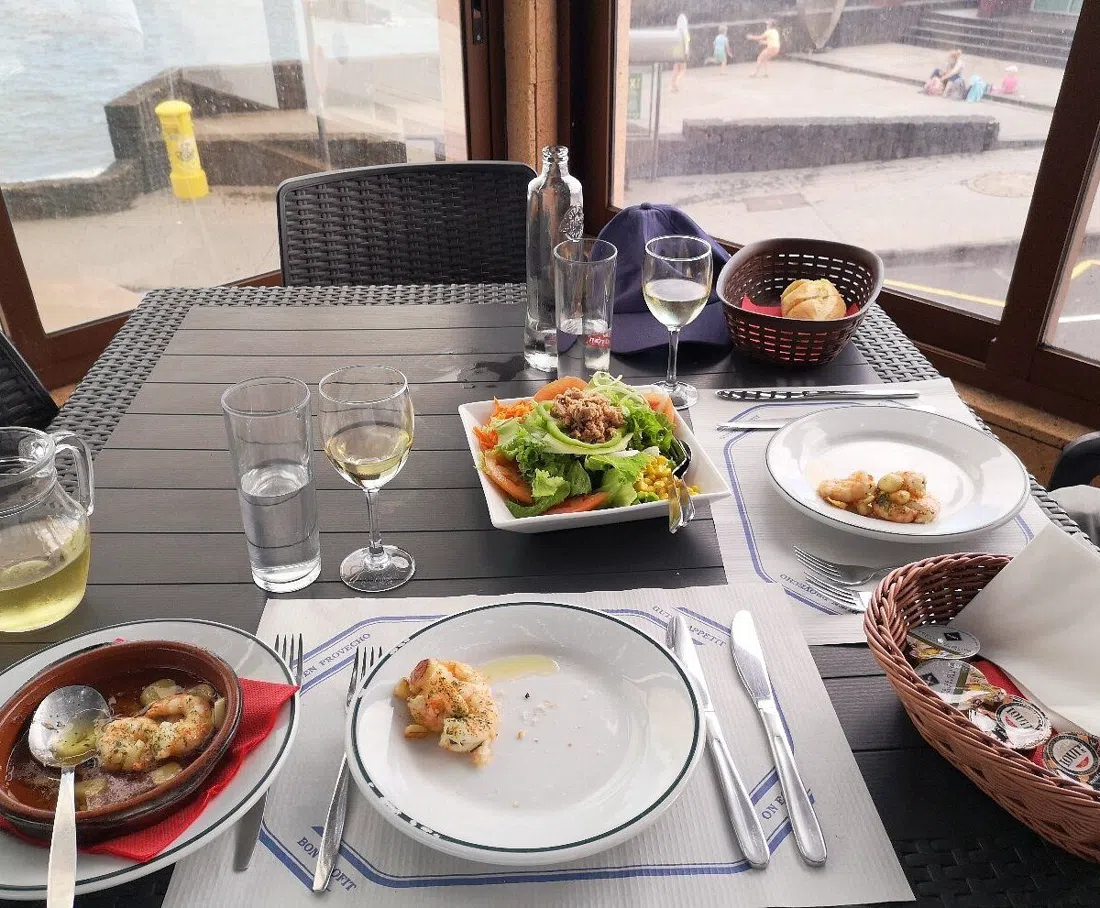
Budget-wise, the strip sits comfortably mid-range: tapas and pizza dinners land in the €15–30 per head bracket. One practical note worth more than it sounds — carry cash. The smaller tascas don't all take cards, and discovering that at the end of a long lunch is a tediously solvable problem you can simply avoid.
Nightlife
It's better to say this plainly than to dress it up: Los Cancajos is not a late-night destination. There's one low-key club, and the area empties out around midnight. Anyone wanting bars-till-dawn energy should base themselves elsewhere on the island, or honestly reconsider the Canaries' quieter outposts altogether.
What exists instead is the after-dinner drink, and the best version of it is the terrace at Bar Restaurante El Pulpo, which keeps its outdoor tables going into the evening with the water a few metres away. That's the shape of a night here: a second drink at a waterfront table, the promenade lamps on, a slow walk back along the palms to the hotel. For a lot of people — particularly anyone with an early dive briefing or a mountain road to drive the next morning — that's not a compromise. It's the actual plan.
Things to do
Diving is the headline, and it's the reason a meaningful slice of the people on this beach are here at all. There's a house reef roughly 150 metres offshore — a couple of minutes' swim from the sand — and it's shallow and sheltered enough that two PADI 5-star centres run full programmes directly off the beach, no boat required.
Dive Community La Palma is a PADI 5-star IDC centre sitting right on that reef, training year-round from absolute beginner through to instructor level; it holds a flawless 5.0 rating. Buceo Sub La Palma, at 4.9, has been operating in Los Cancajos since 2001 and runs everything from family-friendly try-dives to advanced courses — the sort of track record that matters more than marketing when you're handing someone a regulator for the first time.

That same sheltered, current-free water makes this one of the easiest places on the island to snorkel if you've never properly done it — you can wade in from the cove, float out, and be over structure within a few minutes without ever fighting a swell.
For a wholly different register, head inland to Ojos al Cielo in Los Rosales: a small interactive astrophysics-and-art museum run by a career astrophysicist from the Roque de los Muchachos observatory. It rates 4.8, and the appeal is the person behind it as much as the exhibits — this is an island whose summit hosts world-class telescopes, and here you get the science explained by someone who has actually worked up there. It's the ideal primer before a stargazing night, or a graceful indoor fallback when the clouds win.

Diving and the museum are the main paid extras in the area; beyond that, the beach and promenade cost nothing.
Shopping
There is no retail scene here, and pretending otherwise would be a disservice. What you get is what a resort beach needs: a small shopping centre set back from the promenade covering sun cream, beachwear, a supermarket-sized grocery that self-caterers will be glad of, and the odd souvenir stall — plus the handful of shops attached to the bigger hotel complexes. It's enough to replace a lost pair of goggles or stock a fridge, and that's the brief.
For anything resembling real browsing — the colonial old town, the balconied houses, the markets — you want Santa Cruz de la Palma, fifteen minutes away on the bus. Treat it as a separate outing rather than an errand, because it is one.
Where to stay in Los Cancajos
This is La Palma's main hotel strip, which makes the choice unusually simple for the island: beachfront hotel complexes, or apartment blocks a short walk back from the sand. The headline address is H10 Taburiente Playa, which sits directly on the beach with three outdoor pools — one of them heated — an attached dive centre, and a buffet restaurant with show cooking. That combination of pool, sand and air cylinders inside one footprint explains a lot about why divers and families keep converging on the same few hundred metres of coast.
The apartment blocks set back from the promenade trade the sea view for a lower rate and a shorter walk than you'd fear — nothing here is far from anything. Overall the pricing feel is mid-range, in the 3- and 4-star band, and it's a genuinely organised hotel-and-pool base rather than a self-catering village stay. If what you want is a rural finca with a volcano view, that's a different part of the island entirely.
Getting around
Los Cancajos is flat and walkable, and that's not a throwaway line on La Palma. The whole promenade and beach strip is a fifteen-minute walk end to end, the pathways are accessible, and buggies and wheelchairs manage it without the improvisation that steeper corners of the island demand.
For everything beyond the strip, the number 500 bus run by Transportes Insular La Palma is the route that matters. La Palma Airport (SPC) is about 2km away — roughly an 8 to 14 minute ride on the 500, or a very short taxi — and Santa Cruz de la Palma is about fifteen minutes in the other direction. The capital is also where the ferries dock: Fred Olsen Express and Naviera Armas both serve its port, so inter-island travel plugs into the same short bus hop.
What the bus won't do is deliver you to the island's best days out. The volcano routes, the Roque de los Muchachos stargazing sites and the western coast all need a hire car or a booked excursion. Many visitors split the difference — hotel and beach without wheels for part of the trip, a car for the days they're heading up into the pines. Given that the airport is two kilometres down the road, picking one up and dropping it off mid-stay is less hassle here than almost anywhere else you could base yourself on La Palma. That proximity is quietly the strongest argument for the whole neighbourhood.
24 October 2026