La Palma · Where to live · 8 min
Los Llanos de Aridane: Inside La Palma's Mural-Covered Working Town
La Palma's most populous municipality trades postcards for real life — more than 35 street murals, a Sunday market off Plaza de España, and a black-sand beach ten minutes downhill.
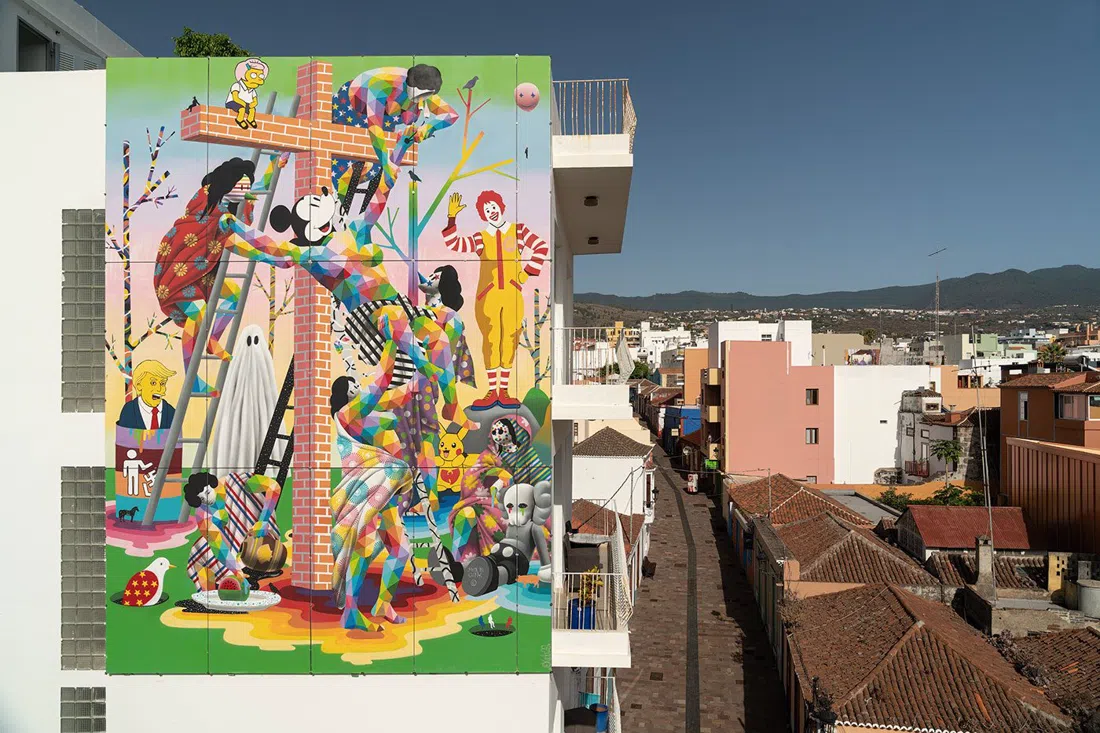
More than 35 large-format murals are painted directly onto the facades of Los Llanos de Aridane, and nobody hands you a map. You walk, and the town delivers them — a wall on Calle Fernández Taño that is suddenly all colour, a gable on Calle Calvo Sotelo carrying work by names like Okuda San Miguel, Boa Mistura and Javier Mariscal. This is La Palma's working capital rather than its postcard: a banana-valley town where the Sunday market still runs off Plaza de España, where people do their banking and their shopping long before anybody thinks about a beach. The postcard part happens ten minutes downhill, where the black sand of Puerto Naos meets the Atlantic.
What Los Llanos de Aridane is known for
It is the island's most populous municipality and its commercial engine, and it wears both facts lightly. The money here came from bananas, and in a sense still does — the valley below town is ribbed with plantations, and the whole place keeps time with an agricultural calendar rather than a tourist season. What Los Llanos absorbs is the island's working population, not its holidaymakers, and that single distinction explains almost everything about how the centre feels: a flat grid of low Canarian houses, shutters half-down in the afternoon, a hum of errands.
The defining feature of that grid is the Museum on the Street — CEMFAC — an open-air mural project that has been running since 1999–2000 and now counts more than 35 large-format works painted onto building facades through the historic centre. It is not fenced, ticketed or signposted into a trail. The murals live on ordinary streets, above ordinary shops, which means you come across them while looking for a pharmacy.
The other thing the town is known for now is harder to photograph. The 2021 eruption rewrote the valley's southern edge: the Tajogaite lava field is still there, visible and raw, and the village of Todoque that stood in its path was buried entirely. Parts of Puerto Naos only finished reopening through 2025–2026 because of residual volcanic gas, and some plots remain fenced. Travellers come curious about all of this, and the town answers honestly rather than theatrically.
Where to eat and drink
The centre's dining splits cleanly in two. On one side, old-school Canarian tascas where the tapas come off a grill and the bill is a local bill. On the other, a newer wave of smarter kitchens that have moved into restored townhouses, cooking with more ambition than a town this size has any obligation to.
La Colonial 25 Restaurante is the clearest expression of that second wave, and it is repeatedly singled out as the best meal in town. It occupies a high-ceilinged old house whose original Moroccan-style floor tiles have been kept, with a roof terrace upstairs for the evenings when the valley air finally cools. The cooking is Canarian-Mediterranean fusion — cod, sirloin, octopus — and it rates 4.6, which in a town where locals do the reviewing is a meaningful number.

For something more elemental, Los Argentinos is a patio steakhouse set inside a traditional Canarian house, built around grilled meat and the particular pleasure of eating it outdoors under a courtyard sky. At 4.7 it is the highest-rated kitchen in this feature, and it earns that the old-fashioned way: fire, salt, time.

El Geco Libero handles the nights when nobody wants ceremony — wood-fired pizza, fresh pasta, a 4.4 rating and one of the heaviest review counts in the centre, which tells you it is where families and hikers off the Caldera trails actually end up. And then there is Bar Augusto on Calle Velázquez, family-run since 1936. Grill-cooked tapas, a 4.6 rating, and a weekend queue that forms on the pavement because the room is small and the town knows exactly what it has.
Nightlife
Set your expectations before you set out: this is not a late-night town. Most places wind down by midnight and there is nothing resembling a club scene inland. What exists instead is sociable rather than nocturnal.
La Luna covers the bar-with-live-music end of things — Thursday night sets, a Wednesday tapas buffet, a wide beer selection and a crowd that mixes locals with whoever is in town that week. It is the one address where an evening can genuinely turn into a night out.

Bar Augusto, meanwhile, runs to midnight on Fridays and Saturdays, which makes a tapas bar from 1936 the town's closest thing to a late-night fixture. Nobody is pretending otherwise. If you need 3am, you are on the wrong island; if you want a loud, warm room and a last beer, Los Llanos has you covered.
Things to do
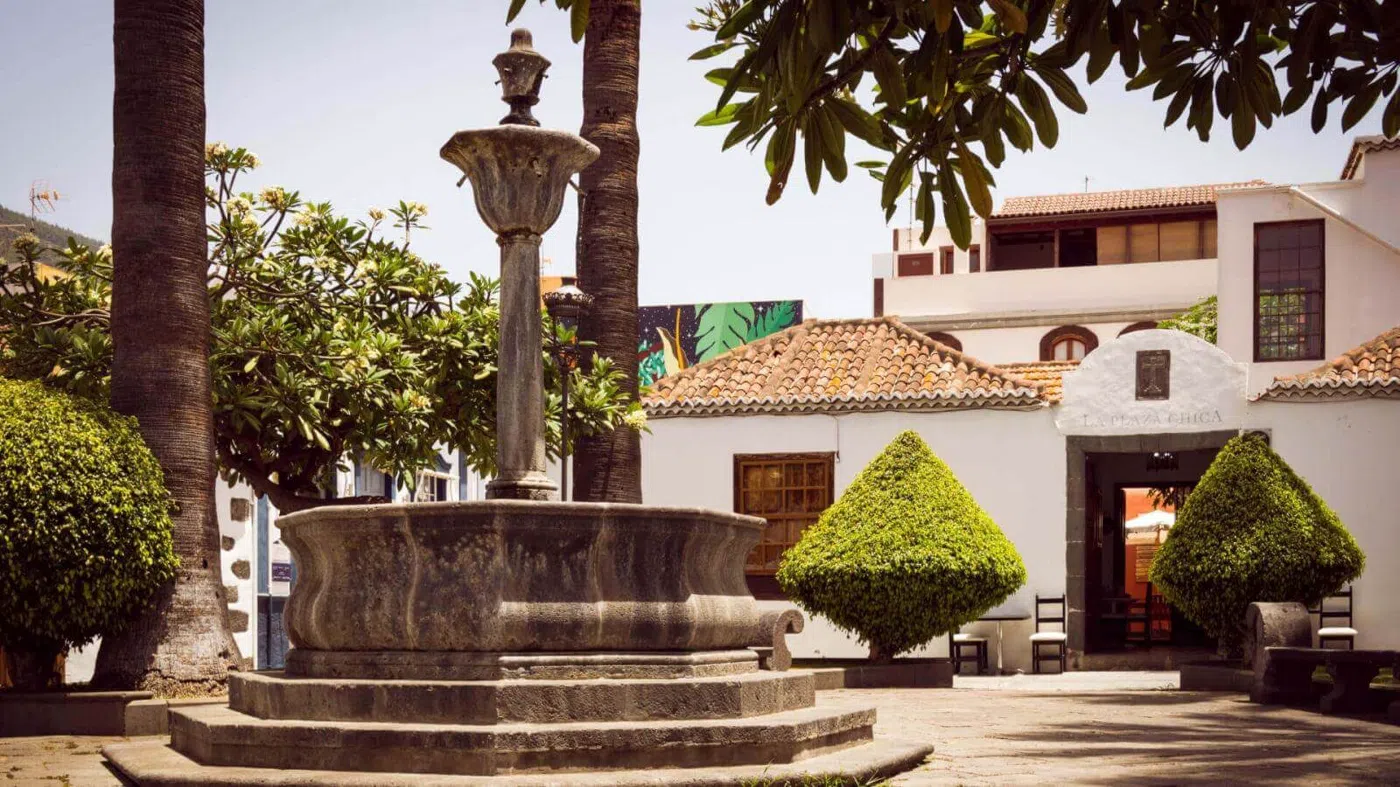
Start at Plaza de España, which is the town's hinge. The Church of Nuestra Señora de los Remedios stands here, with the Museum of Sacred Art adjoining it, and the plaza is also where the Sunday market spills into the surrounding streets. Sit on a bench for twenty minutes and you will have seen most of the town pass through.

From there, walk. The CEMFAC murals are the best unstructured afternoon in town — Calle Fernández Taño and Calle Calvo Sotelo among the streets that carry them, with no single map required, because the point is that they are worked into the ordinary fabric of the place rather than curated away from it.
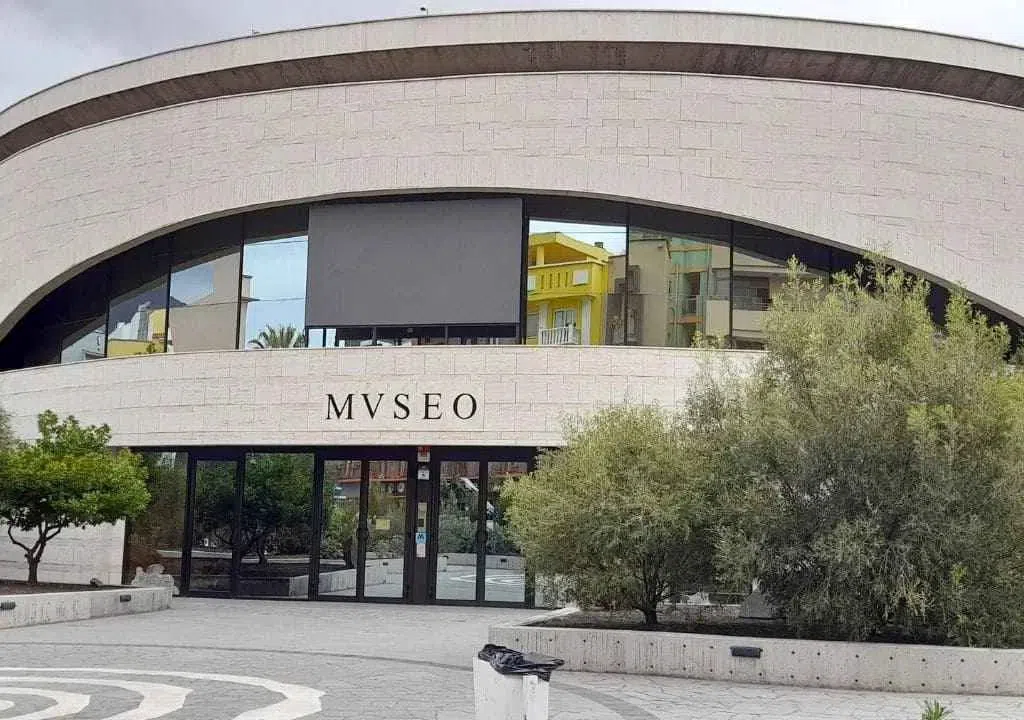
For deeper time, the Benahoarita Archaeological Museum is a three-floor circular building devoted to the island's pre-conquest Benahoarita settlers, the people who were here long before anyone drew a plaza. It rates 4.2 and it reframes the whole valley: the volcano that defined 2021 is only the most recent chapter in a very long volcanic argument between island and ocean.
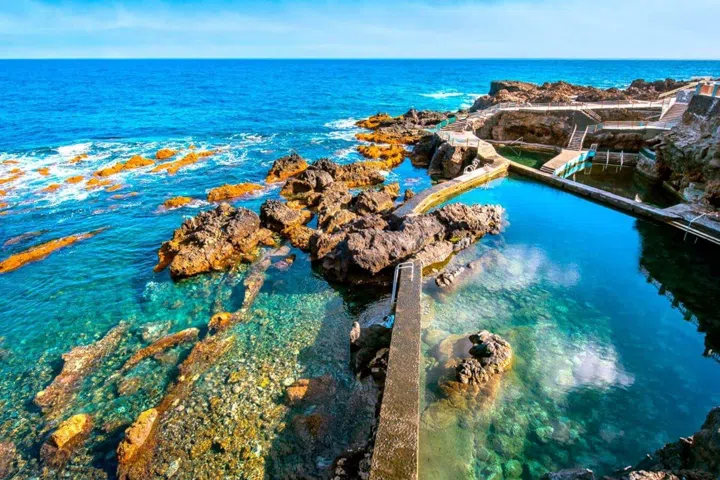
The coast is the other half of the day. Puerto Naos is the island's largest beach — black volcanic sand, blue flag status, lifeguards year-round — and it sits ten minutes downhill from the centre, which is close enough to make the inland base feel clever rather than compromised.

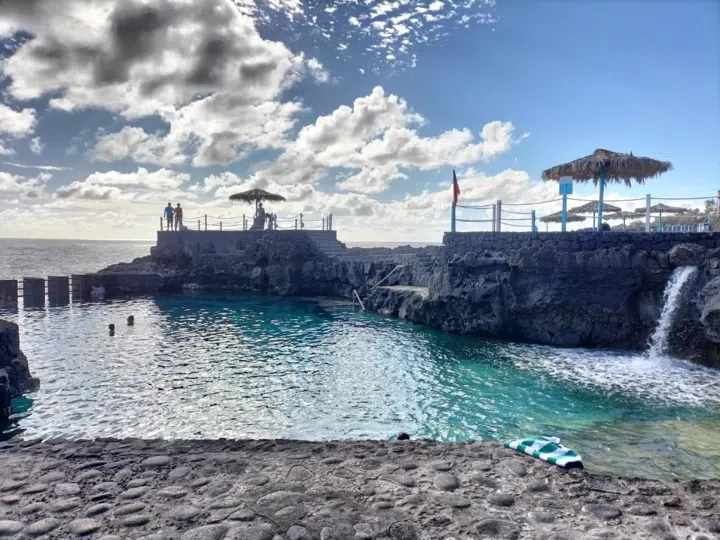
If you want something smaller and quieter, Charco Verde is a compact volcanic cove with a natural green lagoon, calmer than Puerto Naos and better suited to an afternoon with a book. Inland, the town works as a launchpad for easy runs up into the Caldera de Taburiente, which is why you will see so many boots drying on balconies here.
Shopping
The commercial spine is Avenida Doctor Fleming and the grid of streets around it, and the retail here is refreshingly uninterested in you. Bazaars, phone shops, pharmacies, bakeries, small clothing stores — a genuine high street rather than a souvenir strip. There is no cluster of artisan candle boutiques waiting to convert your holiday mood into a carrier bag.

The Sunday market is the exception and the highlight, running off Plaza de España and pulling the surrounding streets into something closer to a town event than a shopping trip. Go early, go hungry, and treat it as the week's most reliable piece of theatre.
Where to stay in Los Llanos de Aridane
Two very different bases sit inside the same municipality, and choosing between them decides the shape of your trip. The town centre — the streets around Plaza de España, Calle Fernández Taño and Avenida Doctor Fleming — suits travellers who want banks, pharmacies, bars and mural-hunting on foot, with day trips out to the Caldera de Taburiente or down to the coast. It is also where the budget stretches furthest: inland Los Llanos is genuinely affordable, with local-priced tapas and simple hotels.
Puerto Naos is the other option, and it costs noticeably more — resort hotels, beachfront dining, and the significant advantage of being directly on the sand. If your holiday is fundamentally about the beach, book there and accept the premium. If it is about the island, stay inland. One caveat worth knowing before you book the coast: parts of Puerto Naos only finished reopening through 2025–2026 because of residual volcanic gas, and some plots remain fenced off.
Either way, give it a few unhurried days. Los Llanos does not reward a single afternoon — it is a town that reveals itself through repetition, the same café twice, the same mural in different light.
Getting around
There is no metro and no tram. This is bus-and-car-or-nothing territory, and the honest advice is to hire a car. The town centre itself is walkable — flat, gridded, compact — but Puerto Naos, the Caldera de Taburiente and the rest of the island all assume you have wheels or a lot of patience with timetables.
The bus station in the centre is run by Transportes Insular La Palma, the island operator everyone calls TransPalma, and its key route is line 300, which crosses the island's spine to Santa Cruz de la Palma. It is the single most useful bus on the west side, and it is also how you reach the ferry port without a car.
Arriving, you fly into La Palma Airport (SPC) and drive or taxi 25–35 minutes to the town centre. The Santa Cruz de la Palma ferry port is roughly 40–45 minutes away by road, or the same trip on line 300. One last practical note: the town is calm and low-crime by any standard, and the only real caution here is volcanic rather than criminal — respect the fencing and the gas-venting restrictions around the 2021 lava field, and the rest of the valley is yours.
24 October 2026