La Palma · Where to live · 8 min
Puerto Naos, La Palma: The Black-Sand Village That Came Back
Lava stopped a few hundred metres short of the seafront in 2021 — here's how La Palma's biggest resort village reopened, and how to spend your days in it.
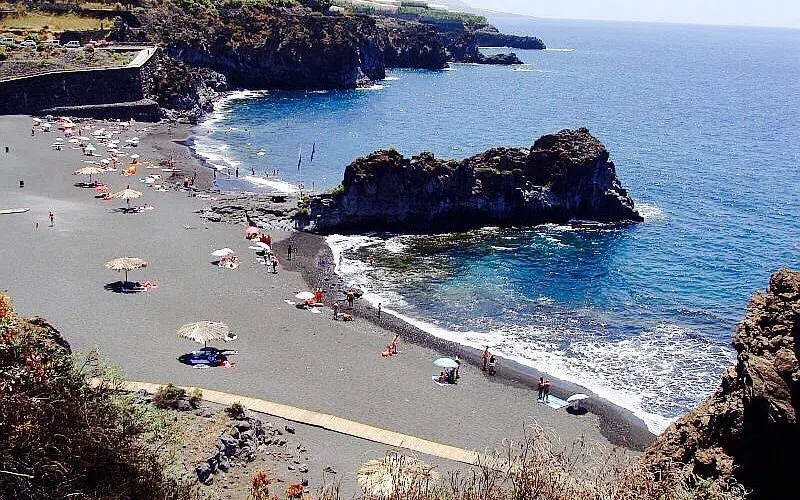
The sand at Puerto Naos is not quite black. Pick up a handful on a bright afternoon and hold it to the light, and you'll catch a faint green running through the grains — olivine, milled out of the island's own volcanic rock — so that the 120-metre beach keeps changing its mind about its colour depending on where the sun is sitting. In 2021 there was nobody on it. Lava from the Tajogaite eruption came to a stop a few hundred metres short of the seafront, and the village behind the sand was sealed off under a toxic-gas cordon: not for a fortnight, but for years. Shutters down, apartments dark, the promenade empty. Puerto Naos is open again now, lifeguarded year-round and flying a blue flag, and the plain strangeness of that return is as much a reason to come as the beach is.
What Puerto Naos is known for
The village is named for its beach and shaped entirely by it. It's a single long stretch of green-black volcanic sand running the length of the settlement, backed by a palm-shaded promenade and watched by licensed lifeguards all year — not a seasonal arrangement, but a permanent one, which tells you something about how much of the island's beach life is concentrated here. This is La Palma's dry, sunny west coast, a different climate from the misty laurel-forest north, and the weather on the seafront is reliably better than the weather twenty minutes inland.
What keeps Puerto Naos from reading as a built-for-tourists resort is agriculture. Banana plantations run almost to the sand on both sides of the village, their irrigation pipes ticking away between the rows in the heat, and the packing sheds a few streets back are still a working part of the local economy rather than scenery. You notice it most in the early morning, before the beach fills: tractors, hoses, the smell of wet soil. It's a village that happens to have a famous beach, not a beach that grew a village around itself.
The eruption is still a live fact here rather than a historical one. Most of Puerto Naos has reopened and the air is monitored around the clock, but a patch near Playa Chica remains fenced off while engineers vent residual volcanic CO2 out of the ground. Nobody hides this — the barriers are there in plain sight, a few streets from people eating lunch.
Where to eat and drink in Puerto Naos
Dinner here means seafood and a sunset, usually from the same table, and the competition between restaurants is less about cooking than about the angle they get on the Atlantic. El Rincón del Pescador sits above the rocks south of the main beach, and its terrace catches the evening light head-on. Ignore the printed menu and ask what came in that day — the fresh-caught fish of the day is the reason to be there, and the kitchen treats it accordingly.
Down at water level, Bar Restaurante Playa Chica is built right beside the Playa Chica cove, close enough that the sound of the sea is part of the meal. It rates 4.1 and it's the local pick for sunset rather than the visitors' one, which usually means the same view for slightly less ceremony. Get there before the light goes.
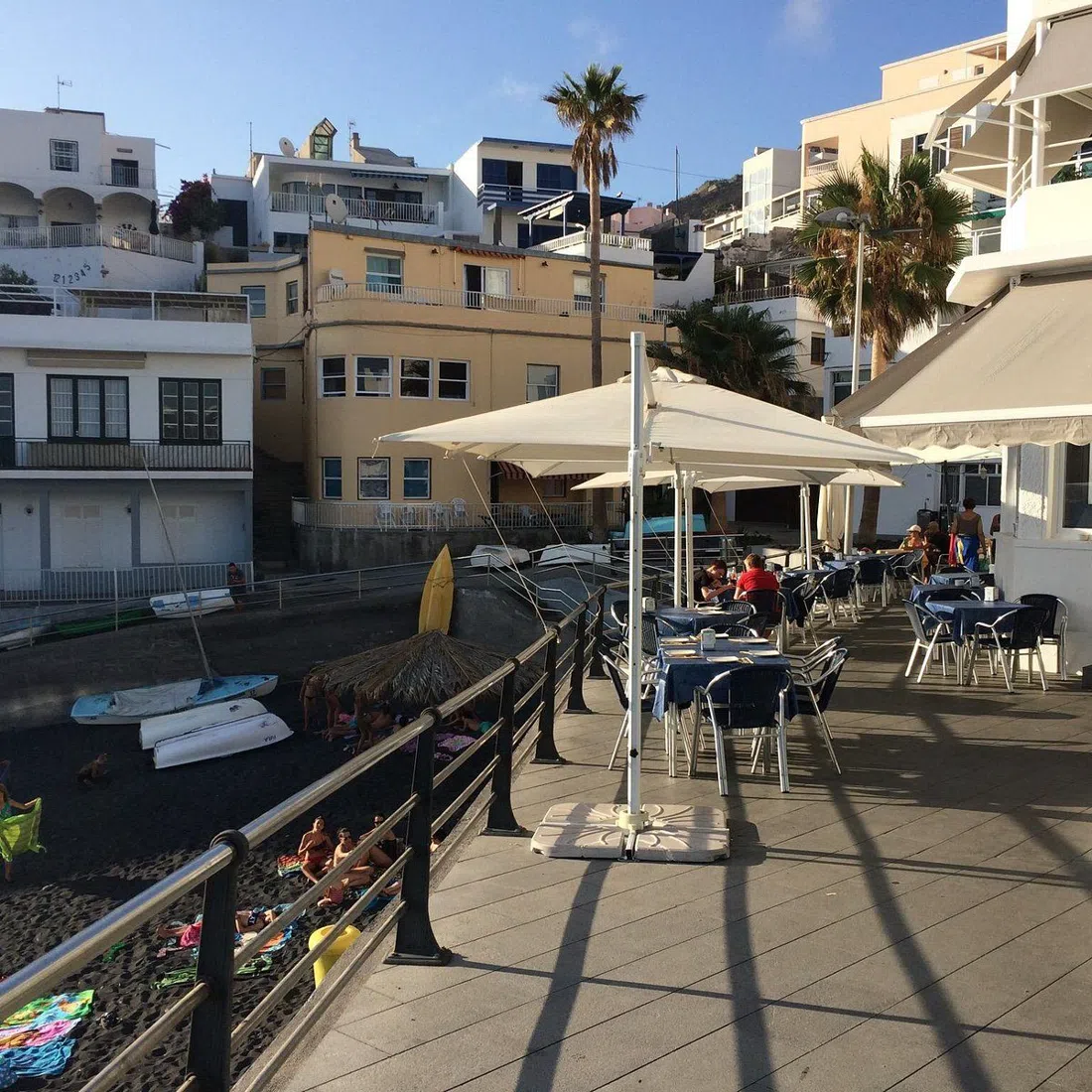
If the front row is full — and in high season it will be — Restaurant La Nao does straightforward fish plates from much the same angle, in a quieter room than the seafront tables, with a 4.0 rating that fairly reflects what it is: dependable, unfussy, no queue. For something that isn't the resort's default coastal-international menu, Restaurante Las Olas cooks home-style Palmero food with the sunset thrown in; it sits at 3.9, and you go for the cooking rather than the polish.
The best-rated place to put anything in your mouth in Puerto Naos, though, isn't a restaurant at all. Sabores, on Avenida de la Cruz Roja, is a café and local-produce shop in one, rated 4.7 — coffee in the morning, island wine, mojo by the jar and ice cream made on La Palma. It's the kind of small double-purpose place that ends up being the room you keep walking back into.
Nightlife in Puerto Naos
Be honest with yourself before you book: this village closes down by ten, not at two. There are no clubs, no late bars crawling with a crowd, and on an island that goes quiet after dinner that absence is much of the appeal rather than a flaw to be worked around.
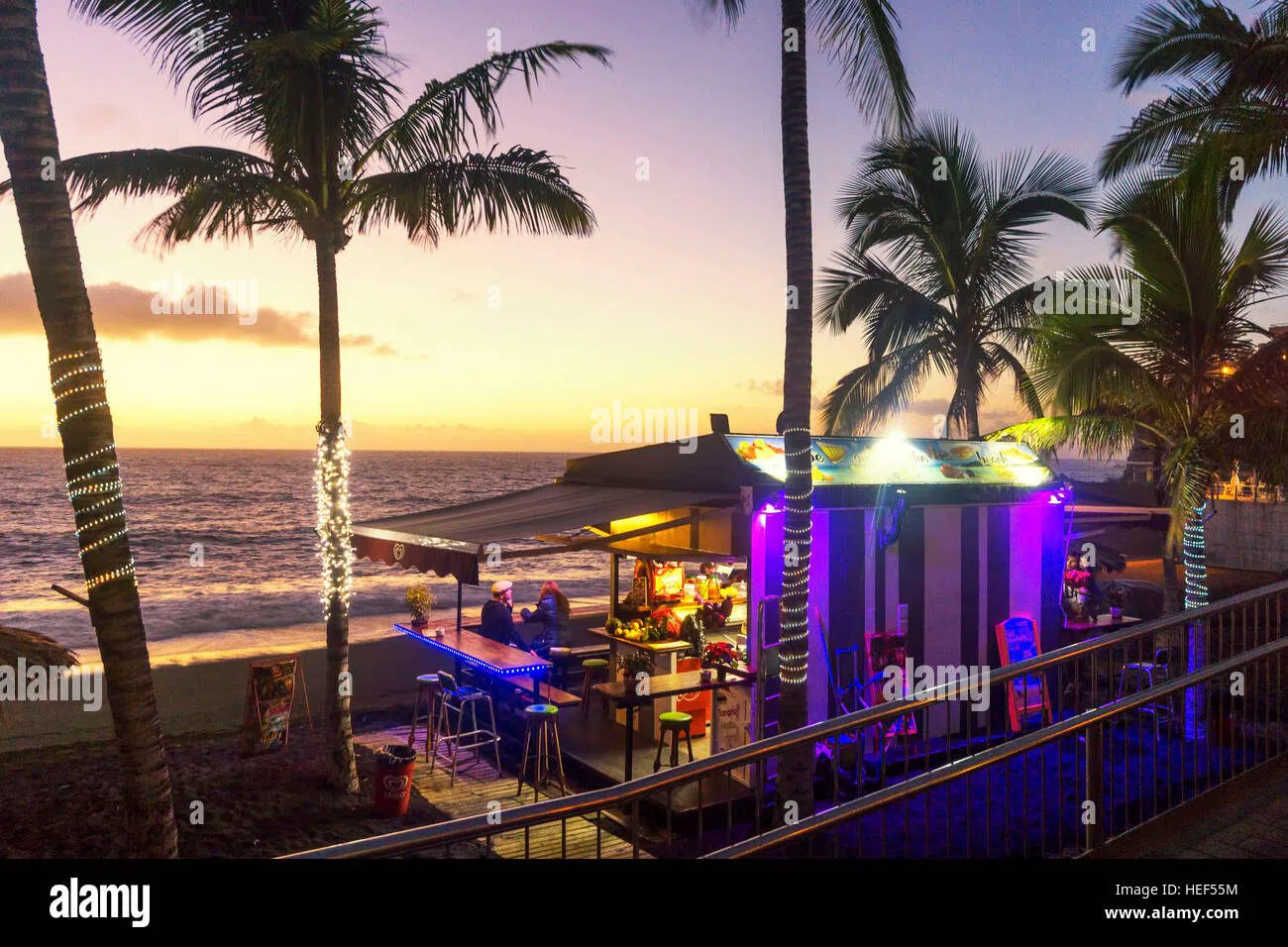
What stands in for a night out is the beachfront bar scene, and its centre of gravity is Beach Bar Puerto Naos, planted dead in the middle of the promenade. It's the established sunset spot, rated 4.2, and the tables facing the water go early — arrive before the sky turns if you want one, or accept a standing spot at the rail with everyone else who left it too late.
For the one stop that keeps going after the seafront has drifted off, there's Bar Caótico: pool, darts and pinball, a 3.9 rating, and the distinction of being open later than the rest. It is not a club and doesn't pretend to be. It's a bar with a cue rack where you can still get a drink when the promenade has gone dark, and on a west-coast evening that's enough.
What to do in Puerto Naos
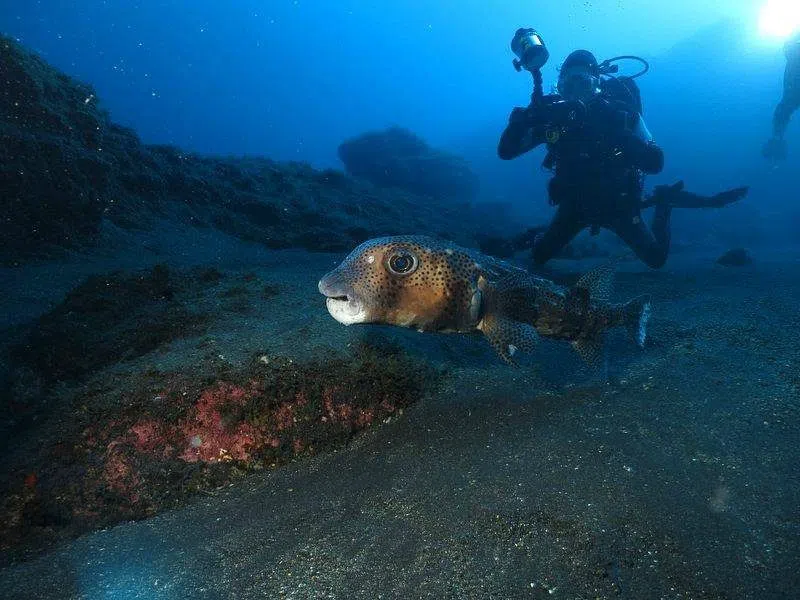
The beach is the main event, but the village earns its keep as a base for getting into the water or the air. Centro de Buceo Tauchpartner La Palma is a CMAS/PADI dive centre right on the Paseo Marítimo, holding a flawless 5.0, and it runs everything from try-dives for people who have never breathed off a regulator to guided dives out to the lava arches and swim-throughs that make this coastline so good underwater. The volcanic geology that shaped the island above the surface keeps going below it — arches, channels, sudden drops — and the walk from shop to shoreline takes about a minute.
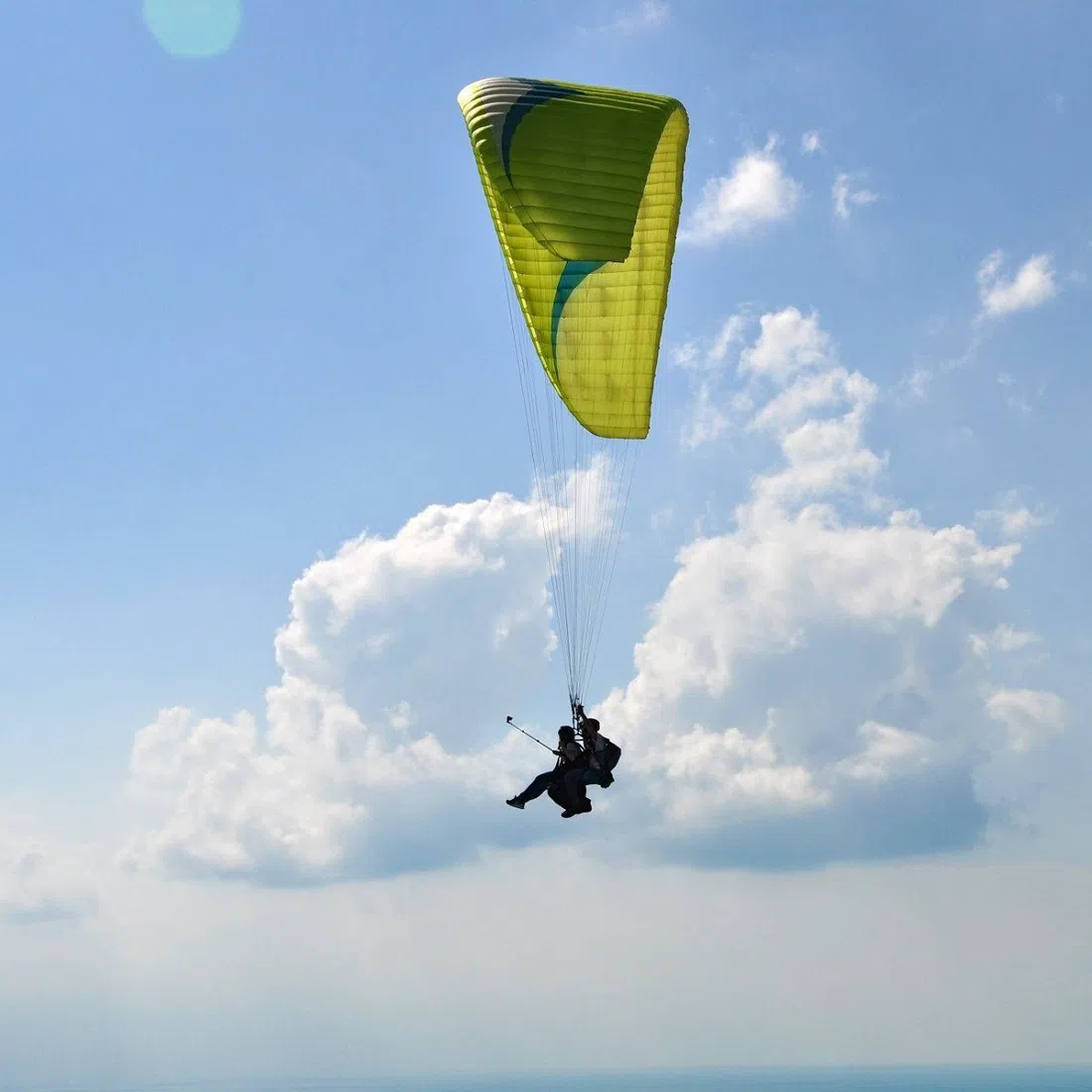
The other direction is up. Tandemfly, also rated 5.0, launches tandem paragliding flights from Los Campanarios up in the hills and lands them on Puerto Naos beach — you get the whole west coast laid out beneath you, banana terraces stepping down to the water, before your feet touch volcanic sand in front of an audience of sunbathers. Few resort beaches anywhere double as a landing strip.
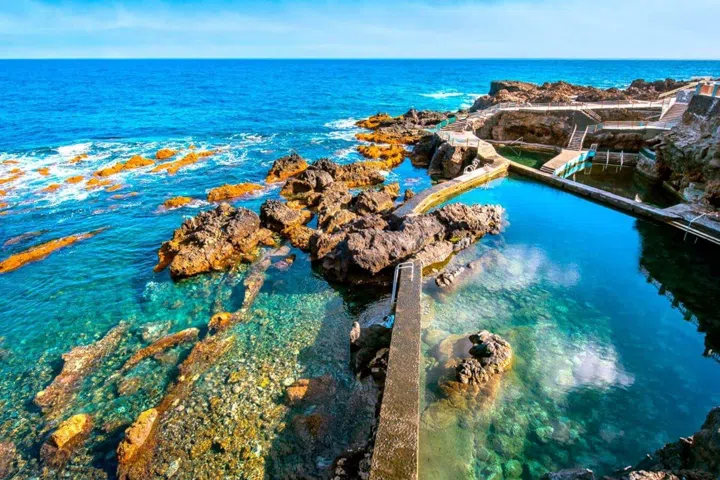
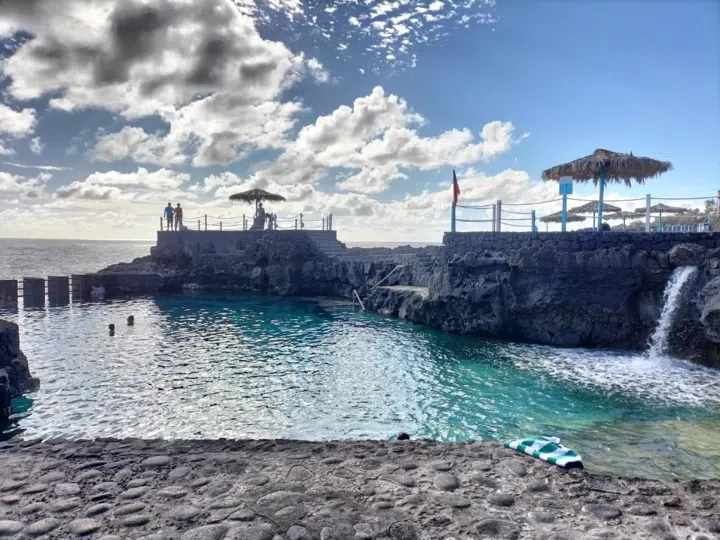
For a slower day, Ecofinca Platanológico runs tours of an organic banana plantation — the farm's ecosystem, how the crop actually works on a volcanic island, and a tasting at the end — and it holds a 4.8. It's the obvious way to make sense of the green walls you've been walking past all week. And when the main beach feels too busy, head south to Charco Verde, a sheltered cove with a natural lagoon scooped out of volcanic rock. It's quieter than the village beach by some margin and worth the short trip for that alone.
Shopping in Puerto Naos
Nobody comes here to shop, and the village doesn't pretend otherwise. The promenade runs to a handful of souvenir stalls, a jeweller, and the daily SPAR that covers everything a self-caterer needs — sun cream, bread, beer for the terrace. That's the extent of it.
The exception, again, is Sabores. If you want to take something home that isn't a fridge magnet, this is where it is: island wine, mojo, marinated olives, ice cream made on La Palma, all sold out of the same small room on Avenida de la Cruz Roja where you had your morning coffee. Buy the mojo in pairs — red and green — and don't leave it to the last afternoon, because the shop keeps village hours, not airport ones.
Where to stay in Puerto Naos
Almost everyone stays on the beachfront or a street behind it, and the choice comes down to how much service you want. Meliá La Palma anchors the north end of the resort, set among the banana plantations with direct beach access, pools and the most polished rooms in the village — the obvious pick if you want a proper resort stay rather than a kitchen and a balcony. At the other end of the scale, Sol La Palma and the apartment blocks around it handle the self-catering crowd, and they're the reason Puerto Naos works for families who'd rather cook than eat out twice a day.
Overall this is mid-range package-holiday pricing, a clear step cheaper than Tenerife's main resorts, with promenade meals at standard Spanish seaside rates. You are paying for a black-sand beach and a quiet village, not for a scene.
Getting around Puerto Naos
The village is small and flat enough to cross end to end in about fifteen minutes on foot. The beach, the promenade restaurants, Sabores and the SPAR all sit within a few minutes of any hotel in Puerto Naos, and once you've parked you can reasonably leave the car alone for days.
The rest of La Palma is a different problem. The island has no train and no tram, so it's buses or a hire car. Line 24 runs to Los Llanos de Aridane roughly every half hour and takes about 22 minutes, and from there you can connect onward to Santa Cruz de la Palma and the airport — fine for day trips to the main towns. For the Caldera de Taburiente or the volcano trail, a hire car is close to essential.
Arriving, you fly into La Palma Airport (SPC) near Santa Cruz, then face a 35–40 minute transfer by car or taxi, or around two hours by bus via Los Llanos. There's no direct airport bus to Puerto Naos, so if you're landing late, book the transfer in advance and don't count on improvising.
24 October 2026