La Palma · Where to live · 8 min
Balconies, Cigars and Volcanic Light: Inside Santa Cruz de La Palma
The Canaries' most intact colonial port is a single curve of merchant houses between the Atlantic and a volcanic cliff — and you can walk the whole of it in fifteen minutes.
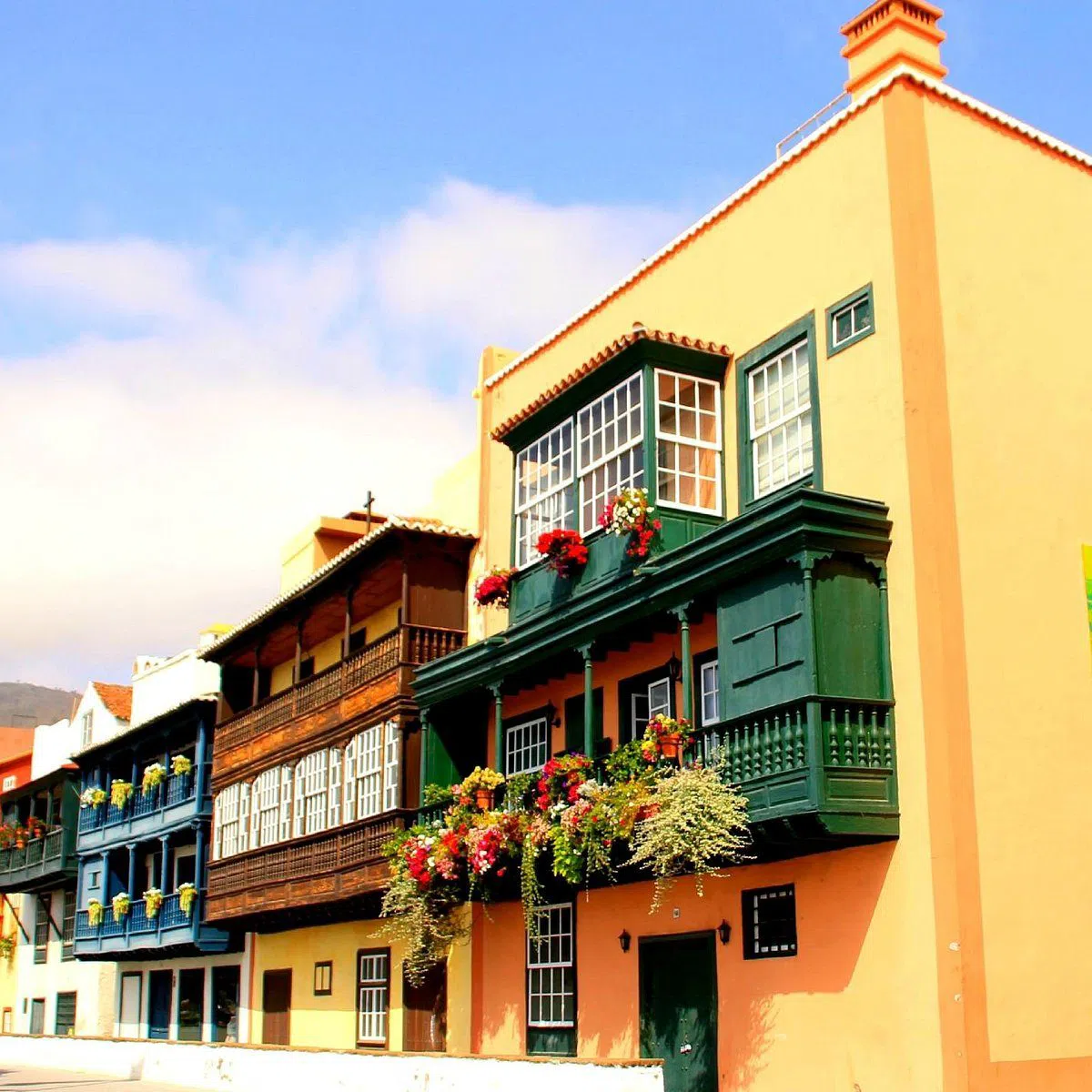
The ferry from Tenerife still docks hard against the old town, which means most visitors get their first look at Santa Cruz de La Palma from the water rather than from a road: a run of 16th- to 18th-century merchant houses in ochre, teal and white, their carved wooden balconies cantilevered out over Avenida Marítima, and behind them a wall of volcanic cliff that stops the town dead. There is no room to sprawl here, and that is the whole point. The island capital works a single curve — Atlantic on one side, rock on the other — and everything worth your time sits in the strip between, close enough that you can cross it end to end in about fifteen minutes and still be late for dinner because you stopped to look up at a balcony.
A colonial port that outlived its own empire
The money came from sugar and wine, shipped out to the Americas across the 1500s and 1600s, when this small harbour was a genuine Atlantic crossroads rather than a stop on an inter-island ferry timetable. Empires move on. Towns don't always get the chance. What makes Santa Cruz unusual is that the town that money built is still standing almost entirely intact — not scrubbed up into a heritage theme park, just never demolished for anything taller or more profitable.
Avenida Marítima is both the proof and the postcard. Locals call this seafront run Los Balcones, and it is the single most photographed street on the island: tier after tier of dark carved wood hanging over the road, salt-bleached on the seaward face, the Atlantic slapping at the wall below.

It helps to know what this place is for. Santa Cruz suits slow travellers who want a real island capital rather than a resort strip; hikers and stargazers who use the town as a base for the Caldera de Taburiente and the island's observatories; and cruise and ferry passengers who want a walkable historic centre with everything inside a quarter of an hour. It does not suit anyone after beach-club nightlife or a big pool scene — that is a different island, or at least a different coast.
One more thing visitors often arrive uncertain about: the 2021 Cumbre Vieja eruption, which destroyed around 3,000 buildings, struck the south and west of La Palma and never reached the capital. The historic centre came through untouched, and in fact served as a base for journalists and evacuees across the 85 days the volcano ran.
Canarian plates and a seafront terrace or two
Eating here means wrinkled potatoes with mojo, fresh Atlantic fish, and — more often than you'd expect — Cuban-inflected plates that trace the island's emigration history back from Latin America. La Palma sent people west for generations; the food came home with them.
La Isla de Goya has held its stretch of Avenida Marítima since 2015 and does both halves of the job: a seafront terrace for grilled fish, and a tapas menu with proper vegetarian options rather than an apologetic afterthought. It runs at a 4.4, closes Sunday and Monday, and fills up — book ahead rather than chancing it on a cruise day.

For the best-reviewed cooking in town, walk back a few streets to Calle Juan Mayor and Andares La Palma, which holds a 4.7 on contemporary small plates — ceviche, prawn croquettes, slow-cooked meats that have clearly had hours of someone's attention. Tasca Luis (4.6) is the more traditional counterpoint: a tapas bar whose chalkboard changes with whatever is fresh and in season that week, which is the correct way to read a menu on an island this size. Restaurante El Casino, near the centre and rated 4.5, is the wood-panelled dining room locals book ahead for, and it is quietly famous for something nobody expects — salmon lasagne. Order it. Arguing with a dish that has outlived every trend is a waste of a holiday.
And for the cheapest good eating in the old town, there's La Recova, a hole-in-the-wall café at Plaza de Mercado turning out arepas and empanadas for under €4 — the Latin American connection served over a counter rather than explained on a wall panel. It runs a 4.6, which tells you the locals agree.

Low-key, not loud
Santa Cruz is not a nightlife town, and the restraint is deliberate — this is an island capital, not Tenerife's south coast. What exists is a handful of cosy bars rather than clubs, and the evening tends to drift between two or three of them before dissolving well before anything resembling a late hour.
El Cuarto de Tula, just back from the seafront, is the worn-in neighbourhood bar of the set: tapas and croquetas alongside the drinks, a 4.1 rating, and the unhurried air of a room that has seen the same faces for years. Banana Garden La Palma, a minute from the town beach, is the one to time properly — a café-bar with a rooftop terrace looking out over the old-town roofs and the sea, and a 4.8 that is almost entirely earned by what happens up there in the last hour of light.

La Papirusa rounds it out: a long-running local terrace bar, good-value drinks and tapas, a solid 4.0 and no pretensions whatsoever. Three bars is not a scene. In a town this scale, three bars is plenty.
Volcanoes, forts and a full-scale caravel
Start high. The Castillo de Santa Catalina, a 17th-century star fort on the hill above the harbour, was rebuilt by the military engineer Miguel Rosell, and it still holds the best panoramic view of the town and bay going — the whole curve laid out beneath you, ferry wake included. It carries a 4.1, and the climb is short enough to do before breakfast.

Back at sea level sits the town's strangest sight and its most endearing. The Barco de la Virgen is a full-scale, walk-through replica of Columbus's Santa María, built in stone and permanently landlocked, and inside it the island's Naval Museum fills six themed galleries. A 4.3-rated ship that will never sail: the kind of civic decision no committee would approve today, and the town is better for it.

The Museo del Puro Palmero (4.5) is the deep cut, and worth an hour even if you've never smoked anything in your life — it covers the island's handmade cigar tradition and the hand-rolling technique in real detail, which recasts every cigar shop you'll pass on Calle O'Daly afterwards. And for the view that locals send visitors to, there's the Mirador de la Concepción, one of roughly 45 official viewpoints on La Palma, looking straight down over the capital and the Atlantic beyond it. At 4.6, it is the island's standard answer to the question of where the capital looks best from, which is: slightly above it.
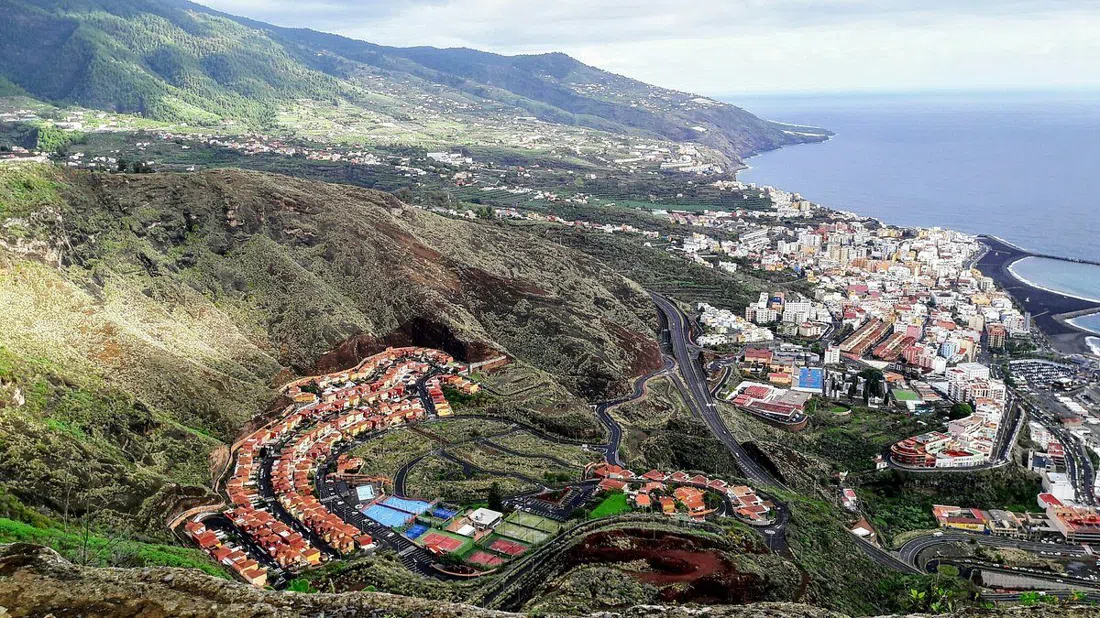
Beyond town, the Caldera de Taburiente, the northern volcanic trails and the Roque de los Muchachos observatory are the reasons many people base themselves here in the first place — all of them requiring a hire car or an organised tour, since island bus routes to those run on limited schedules.
Calle O'Daly and the Mercado Municipal
Calle O'Daly is the spine of the whole place: flat, pedestrianised, 400 metres running from Plaza de España up to Avenida Marítima, and lined with boutiques, cigar shops and bakeries rather than the chains that have flattened high streets everywhere else. Walking it twice in a day is normal. Walking it four times is also normal, because it is the shortest route between most things you'll want.
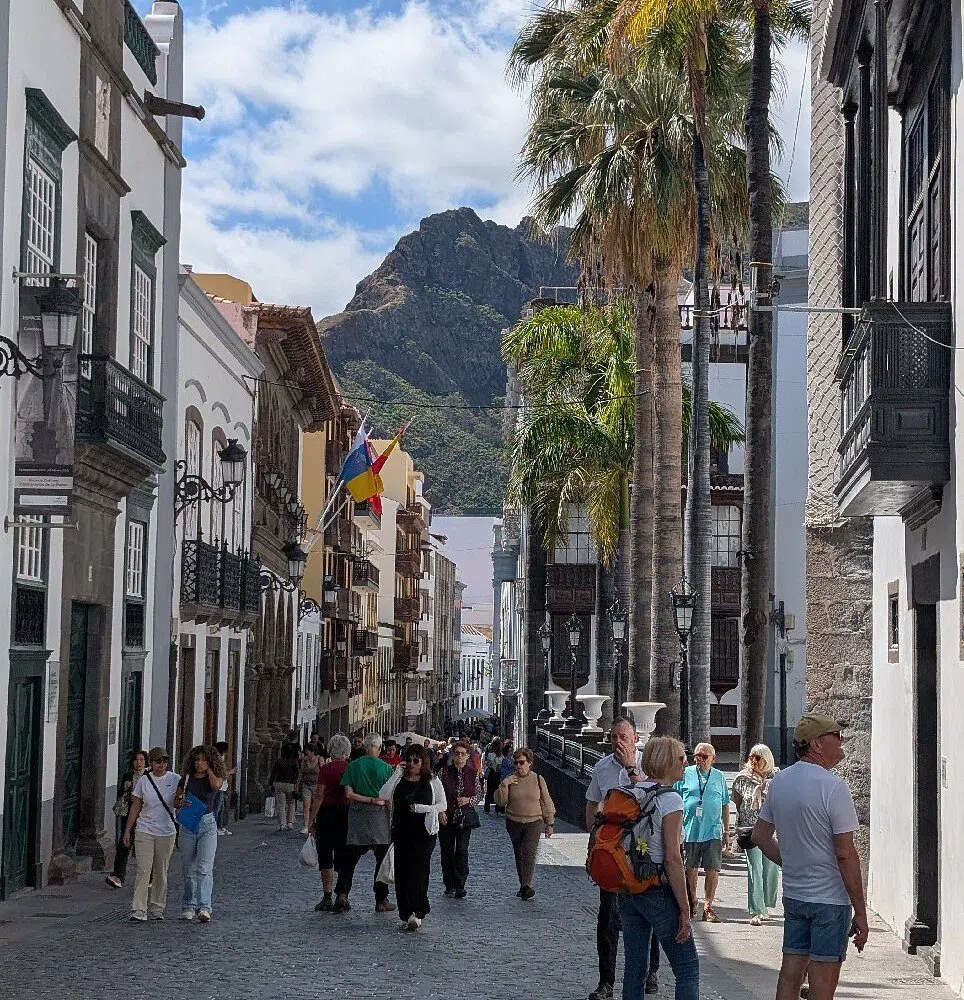
This is where to buy a genuine Puro Palmero — a cigar actually rolled on the island, rather than the souvenir-grade approximation sold to people who don't know to ask. The Mercado Municipal is the other anchor, and the better errand if you're self-catering or just want to see what the island grows. Go in the morning, when the stalls are properly stocked, and treat lunch at La Recova round the corner as the natural conclusion.
Where to stay in Santa Cruz de La Palma
The old town around Calle San Telmo and Plaza de España is the obvious base: it puts you inside the 400-metre historic core, walking distance from the ferry terminal, the Castillo and every restaurant mentioned here. Hotel San Telmo, in a restored 17th-century house with a rooftop terrace over the old-town roofs, is the pick of the small places — the building itself does most of the work.
Budget-wise this is a mid-range island capital, and noticeably cheaper than mainland Spain for food and tapas. Old-town boutique rooms run roughly €80–150 a night in high season, with distinctly cheaper options a few streets back from the water. If you want pool bars and bigger beaches instead, Los Cancajos and Puerto Naos are better placed — both a short bus ride from the capital, which is a reasonable compromise if you can't decide.
Getting around Santa Cruz de La Palma
The old town is flat and crossable end to end in about fifteen minutes. Plaza de España, Calle O'Daly, Avenida Marítima and the port all sit a few minutes apart on foot, and this is the one part of La Palma where you genuinely don't need a car. La Palma Airport (SPC) is 8km south, a short taxi ride away, and the ferries from Tenerife, Gran Canaria and La Gomera come in at the port directly below the old town — you can be at a lunch table twenty minutes after disembarking.
A car only becomes necessary when you leave, and if your plans include the caldera, the north or the observatory, you should hire one. The town itself is very safe by any normal standard — low crime, a well-lit old town — and the genuine risks here are underestimating the sun, or the volcanic terrain outside it.
24 October 2026