La Palma · Where to live · 8 min
Tazacorte, La Palma: The Two-Clock Town of Black Sand, Bananas and Late Light
A hillside Villa of 16th-century lanes, a working fishing harbour two kilometres below, and the longest black-sand beach on La Palma — Tazacorte rewards anyone willing to walk the hill between them.
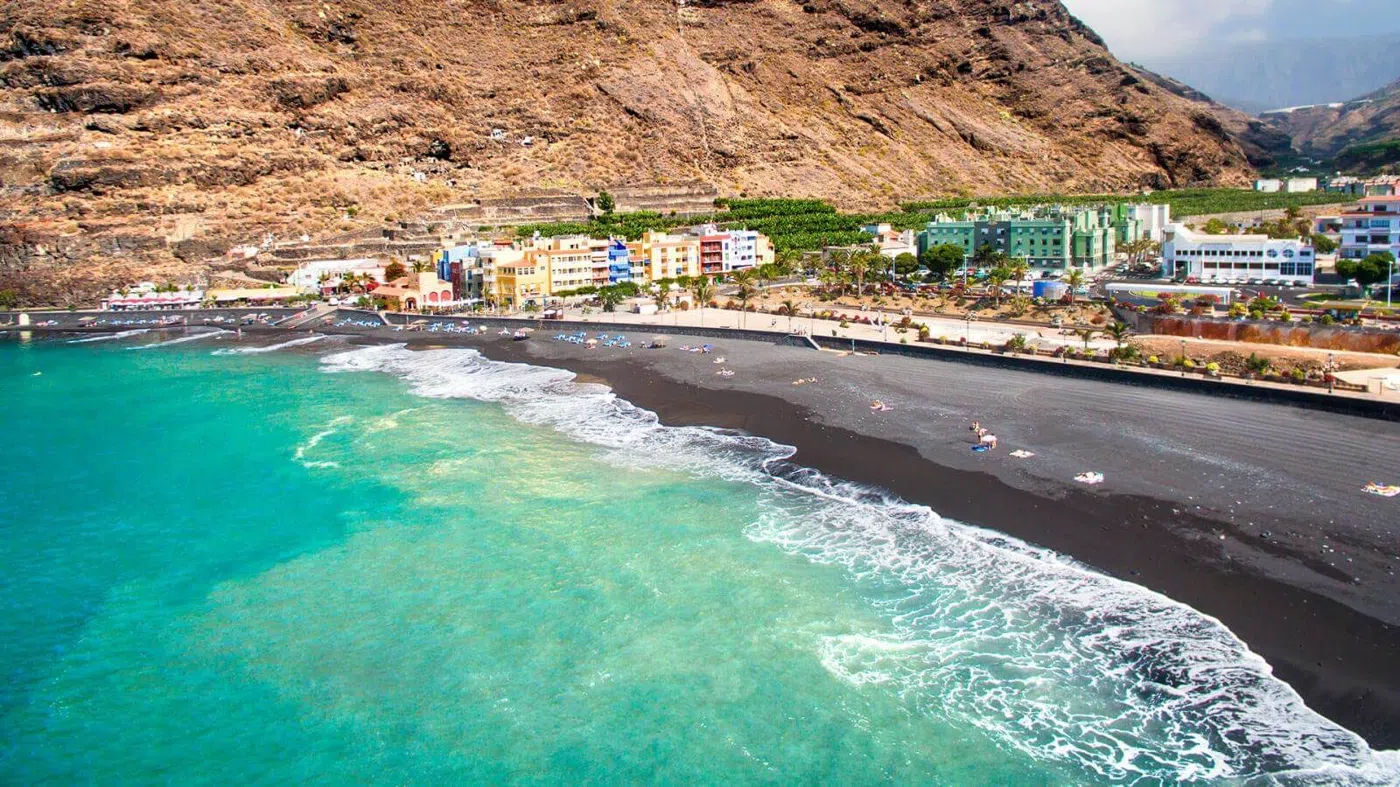
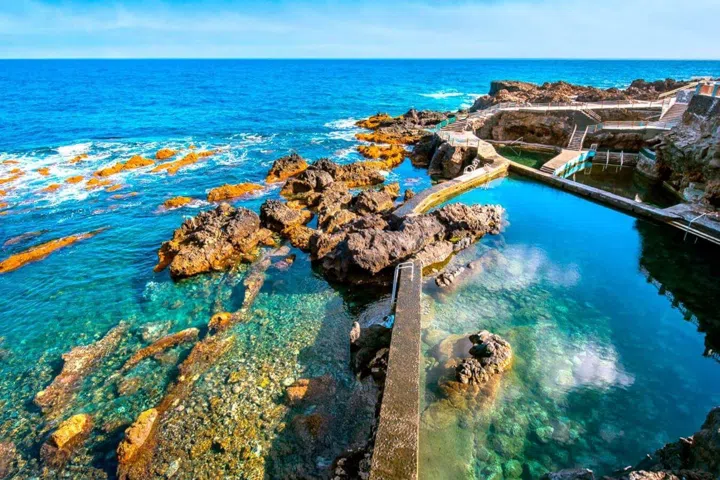
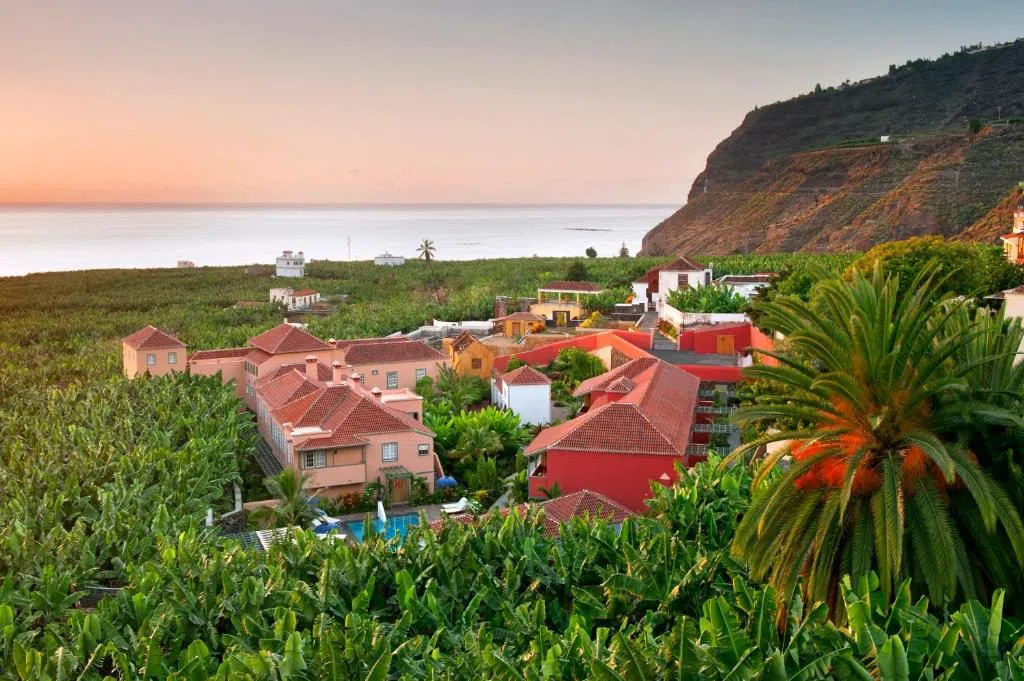
Two kilometres of road separate Tazacorte from itself. Up top sits the Villa, the original hillside town, where 16th-century lanes thread between colourful Canarian houses and the Ermita de San Miguel Arcángel holds one side of a plaza while a banana warehouse holds the other. Down below, at the bottom of a steep, switchbacking descent, is the Puerto: fishing boats, a breakwater, a marina built in 2000, and nearly two kilometres of fine black volcanic sand — the longest beach on La Palma. Locals will tell you this is the sunniest corner of the island. Spend a few days here and you stop arguing with them.
What Tazacorte is known for
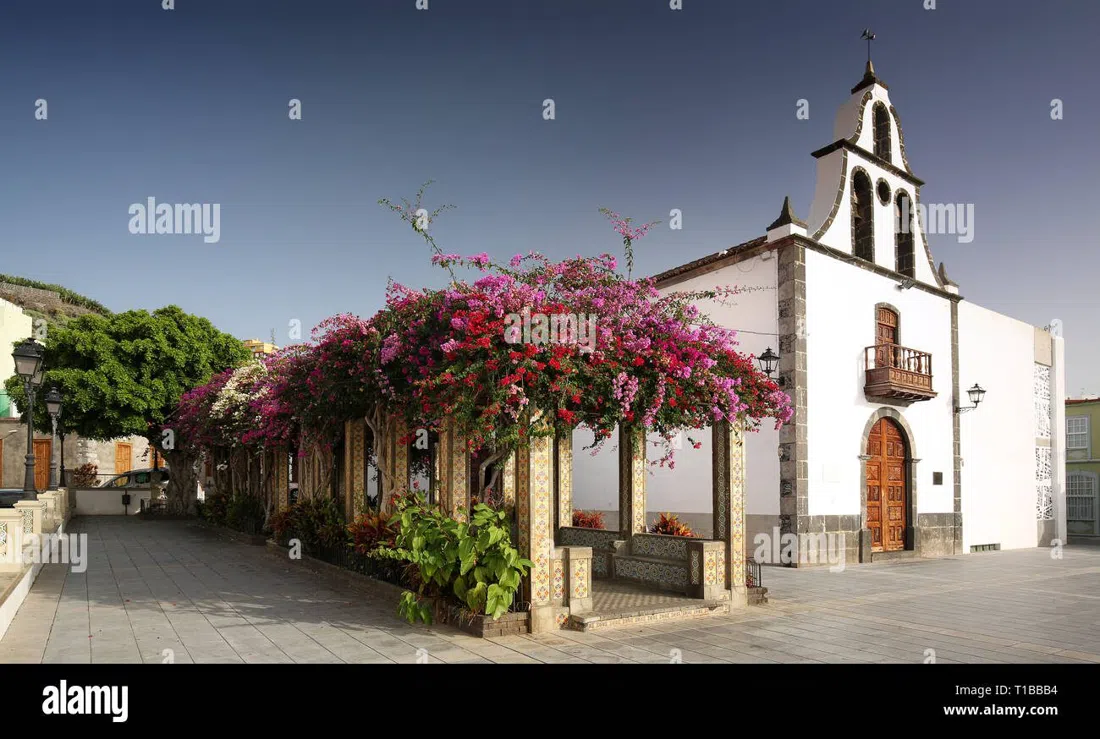
Tazacorte runs on two clocks, and locals treat the Villa and the Puerto as almost separate places. They're not wrong to. The Villa is the older half: a tight hillside centre of narrow streets, wooden balconies and houses painted in the colours Canarian towns reserve for themselves — ochre, oxblood, a particular chalky blue that only makes sense under this light. The Ermita de San Miguel Arcángel anchors it, a 16th-century hermitage facing a plaza whose opposite flank is a working banana packing shed. That single view is the whole town explained: devotion on one side, agriculture on the other, and no sense that either finds the arrangement strange.
Bananas here are not a decorative local curiosity. They are the economy, the landscape and the reason the hillsides below the Villa are terraced into green shelves all the way down to the sea. Tazacorte has gone one step further than every other banana town on earth and built a museum about it — the only museum in Europe devoted to the banana. More on that below, but keep it in mind as you walk: those glossy, broad-leaved plots pressing up against garden walls are the point of the place, not the backdrop.
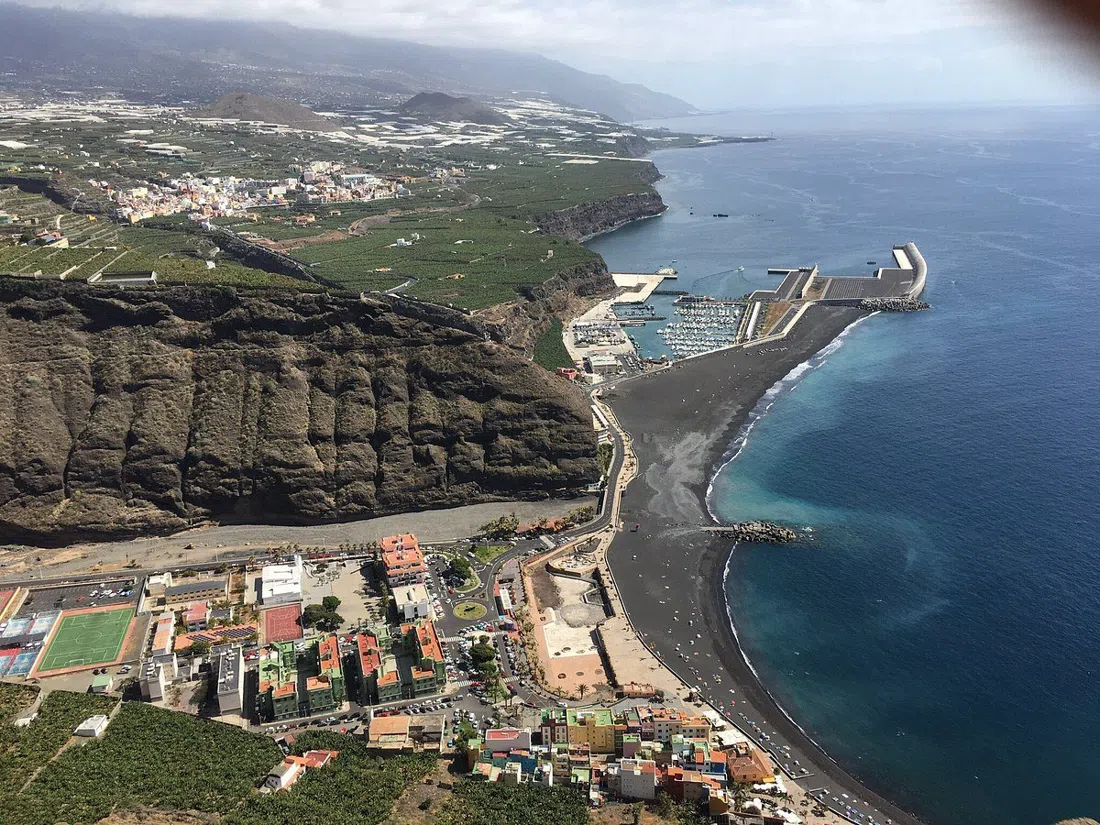
The Puerto, two kilometres and a few hundred metres of altitude down, is the other half of the personality. It's a genuine working fishing harbour that happens to have a marina attached and a beach beside it, rather than a resort pretending to have a harbour. The sand is black — properly black, volcanic, fine enough to run through your fingers — and it stretches for almost two kilometres, split by the mouth of the Barranco de las Angustias, the great ravine that drains the island's interior. A breakwater shelters one section, which keeps a calm, lifeguarded swimming area workable even when the Atlantic is busy elsewhere.
One absence is worth naming, because people still arrive looking for it. The surf break at Playa de Los Guirres, just north of town, no longer exists. It was buried by the lava flow of the 2021 Tajogaite eruption, which rewrote this stretch of coast entirely. Tazacorte's own beach was never a surf beach; it's built for swimming, and that's what it still does.
Where to eat and drink in Tazacorte
The best table in Tazacorte is inside the Hotel Hacienda de Abajo, a restored 17th-century sugar plantation estate wrapped in banana groves at the edge of the Puerto. Its restaurant, El Sitio, holds a Repsol sun — Spain's answer to a Michelin star — under chef José Alberto Díaz, who runs Canarian ingredients through international technique without sanding off what makes them Canarian. It rates 4.7, and it is the one genuinely expensive meal in a town where most dinners land between €10 and €20 a head. Book it, dress for it, and give it the whole evening; the estate itself is half the experience.
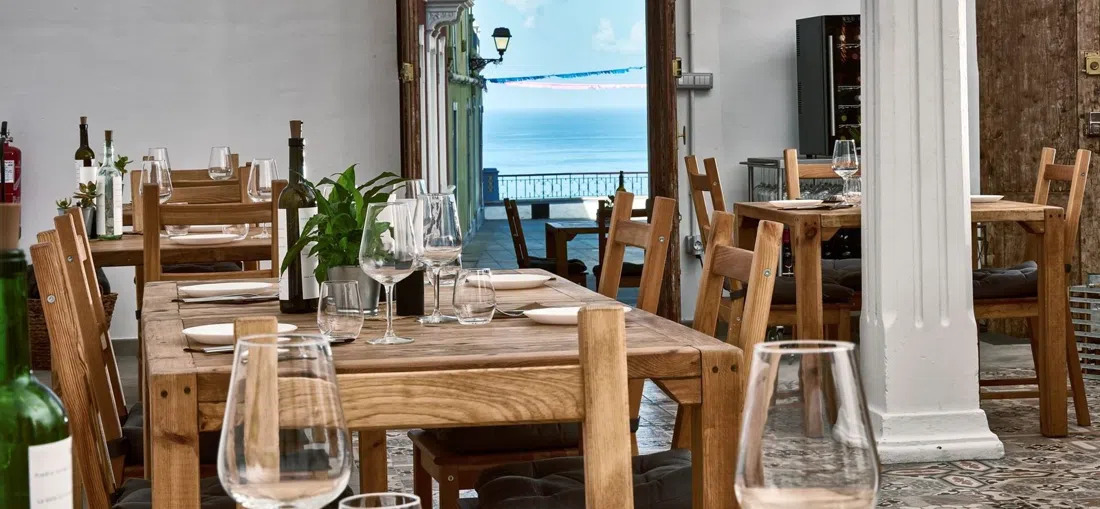
Up on Plaza de España, Re-Belle plays an entirely different game: a small room, a tight three-course tasting format that changes with what's available, and a 4.6 rating earned by not overreaching. There are only so many seats, so this is a reserve-ahead proposition rather than a wander-in one. It's also the kind of place where the menu arriving as a fait accompli is a relief rather than an imposition.
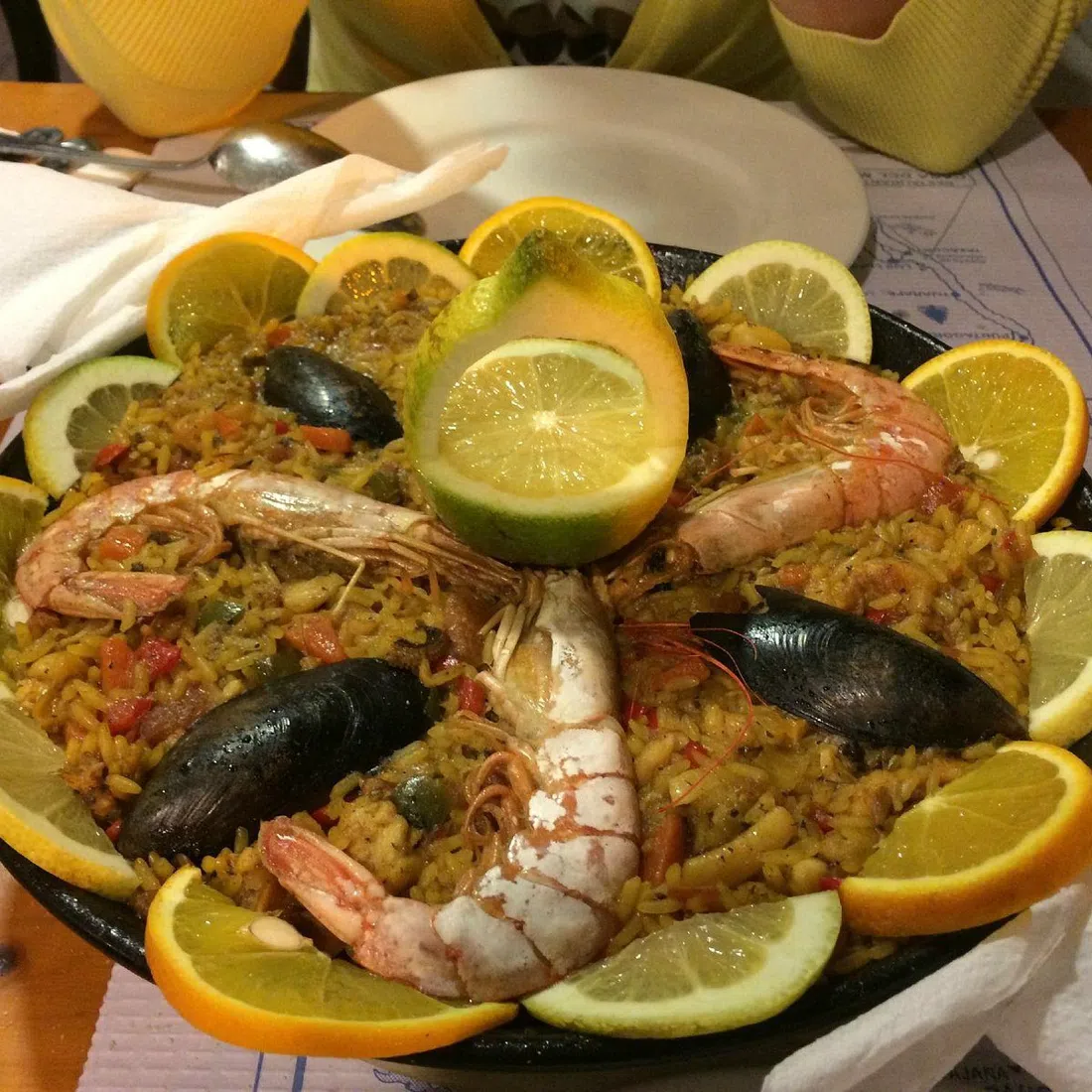
Down at the water, Restaurante Casa Del Mar does the thing this coast does best and refuses to complicate it: fresh fish, plain-grilled, at prices that still feel like a local restaurant rather than a seafront markup. It rates 4.3, it's a harbour-side favourite, and it is the honest answer to "where do people actually eat here". Order whatever came in, let it arrive whole, and don't ask for a sauce.
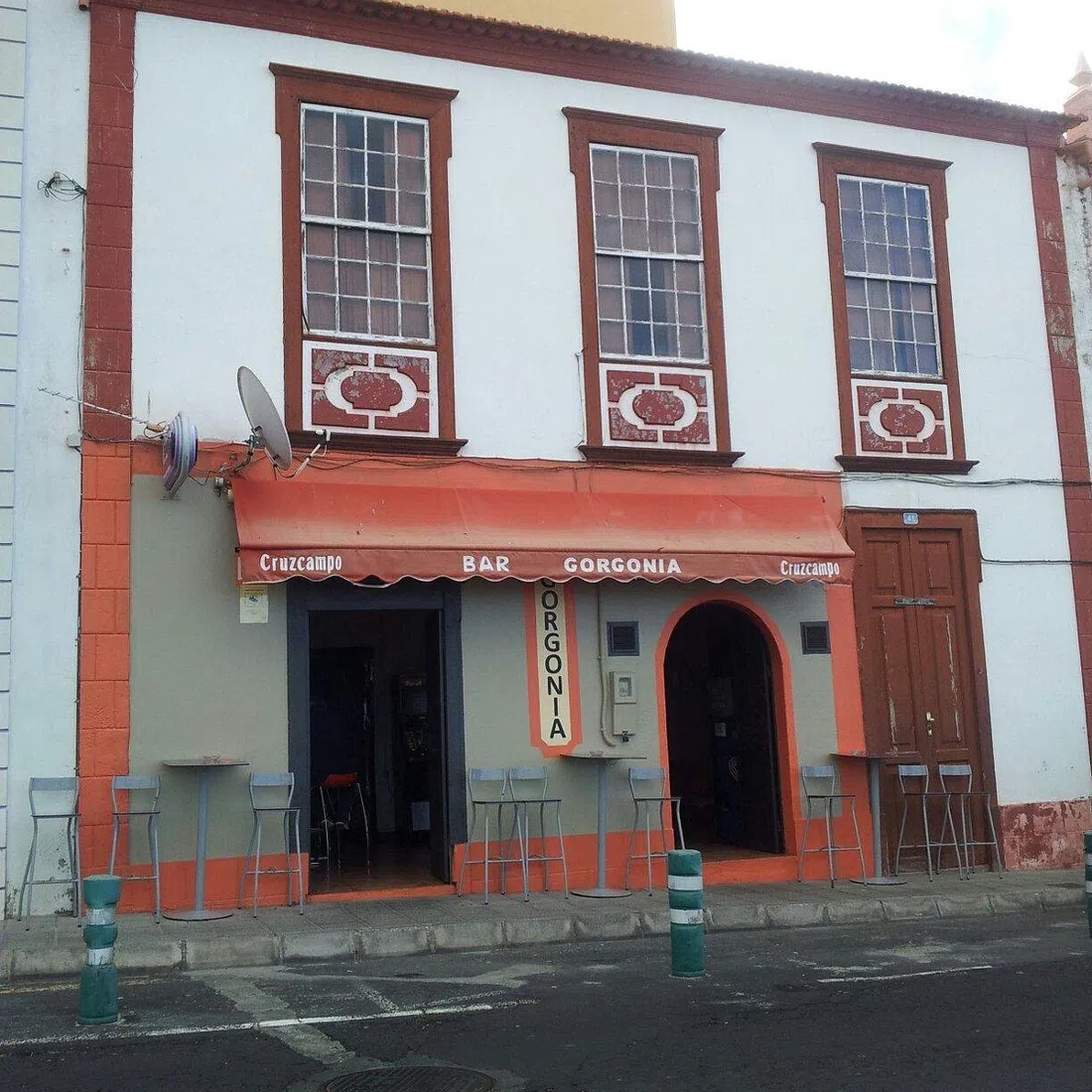
Mornings, meanwhile, belong to Bar Gorgonia on the Port's main avenue. It opens for breakfast and keeps going until the light goes, and its barraquito — the layered Canarian coffee that deserves far more fame than it has — is the reason to sit on its sea-facing terrace before anyone else is up.
Nightlife
Setting expectations honestly: Tazacorte is not a nightlife town. This is sunset-drink-then-dinner territory, and anyone hunting late bars or a club should plan to be elsewhere. The Port has a short run of bar terraces along the seafront, all of them facing west, and they fill for the evening light and the hour that follows it. Then they empty — people drift off to dinner or back up the hill — and by midnight the harbour belongs to the boats again.
Bar Gorgonia is the default, the one everybody names, and on a clear evening its terrace is the best seat in town for watching the sun drop into the Atlantic with nothing between you and it.
Things to do in Tazacorte
Puerto de Tazacorte beach is the headline and deserves to be. Nearly two kilometres of fine black sand, Blue Flag status, the longest such stretch on La Palma, with the sheltered swimming area behind the breakwater calm and lifeguarded. It rates 4.4. The caveat is a real one: outside that protected zone, currents are strong, so stay where the lifeguards can see you and treat the open water with respect.
The other reason hikers end up here is the GR131. Puerto de Tazacorte is its sea-level start — you begin with your boots essentially at the waterline and finish, eventually, at Roque de los Muchachos, the island's roof. Few trails anywhere give you that kind of clean vertical narrative. Start early; the lower, exposed coastal sections carry no shade and the heat here is not theoretical.
The trail also delivers you, or a short drive will, to Mirador El Time, a panoramic viewpoint set high above the valley. From the railing you get the Aridane valley spread out below, the enormous cut of the Barranco de las Angustias, and the Puerto itself reduced to a white line of breakwater against black sand. It rates 4.6, and it is the single best place to understand the geography you've been walking around in.
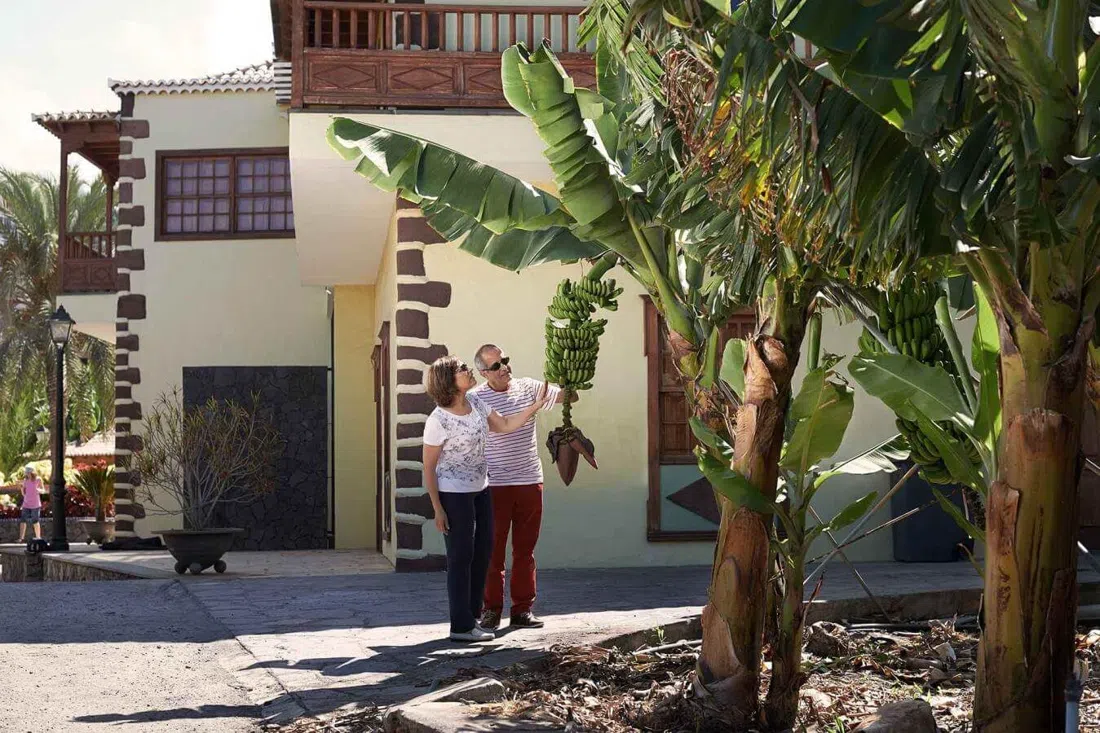
And then there's the banana. The Museo del Plátano de Tazacorte occupies a traditional two-storey Canarian house and is Europe's only museum built around the fruit — an eccentric, small, slightly homespun affair that rates 3.7 and includes a tasting. Treat it the way you'd treat a village museum anywhere: not as a blockbuster, but as a half-hour that explains the terraces, the warehouses and the trucks you've been dodging all week.
Shopping
There's no shopping district here, and pretending otherwise would be a disservice. This is a fishing and farming town, not a boutique stop. What exists is useful rather than browsable: the old town's Plaza de San Miguel has a handful of small general stores and a weekly local produce stall, which is where you'd put together a picnic or restock before a long trail day.
For anything to take home, the Museo del Plátano's shop is the obvious stop — banana jam, banana liqueur, dried banana, all of it unapologetically on-theme and all of it more interesting than an airport souvenir. If you want proper retail, Los Llanos de Aridane is the nearby town that has it.
Where to stay in Tazacorte
The Puerto is where almost everyone actually wants to be. Staying down by the beach and the marina puts you within walking distance of the fish restaurants, the sunset bars and the GR131 trailhead, with the Villa a steep walk or a short drive above you — and that hill is steeper in practice than it looks on a map, which matters at the end of a day in the sun.
The standout is Hotel Hacienda de Abajo, an adults-only conversion of that 17th-century plantation estate, set in banana groves at the edge of the Puerto and home to El Sitio. It is the one genuinely upscale address in this part of the island and the reason couples pick Tazacorte over the capital. Beyond it, expect small, simple, well-placed options rather than resort scale — which suits a town this size.
Getting around
There's no train or tram; Tazacorte is bus-and-car-or-foot territory. Bus line 110, run by the island operator Transportes Insular La Palma, links Santa Cruz de la Palma, Los Llanos de Aridane and Tazacorte. It runs hourly, which is workable if you're staying put and slow if you want to range across the island.
From La Palma Airport, there's no direct bus. A hire car or taxi is the practical choice — roughly 40 minutes and 20 kilometres. Doing it by public transport means changing in Los Llanos or Santa Cruz de la Palma and can stretch close to two hours, which is a poor use of a first afternoon.
Once you're here, the walk most visitors end up doing at least once is the Villa-to-Puerto hill, and it's worth doing deliberately rather than by accident: down in the morning light, back up before the day peaks, or drive it and save your legs for the trails. A car is what turns Tazacorte from a pleasant base into a genuinely good one. The place is quiet and low-risk; the hazards that matter are heat, sun exposure on the open coastal and GR131 sections, and the water outside the breakwater. Carry more water than you think you need and respect the hour of day.
24 October 2026