Lanzarote · Where to live · 8 min
Caleta de Famara, Lanzarote: Life Under a 600-Metre Cliff
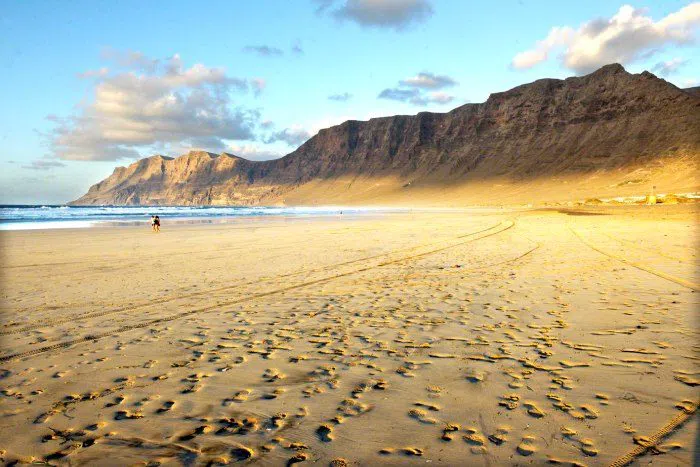
Lanzarote's surf capital is a scatter of white houses on unpaved streets beneath the Risco de Famara — six kilometres of Atlantic sand, no high-rises, and a village that runs on swell rather than a resort clock.
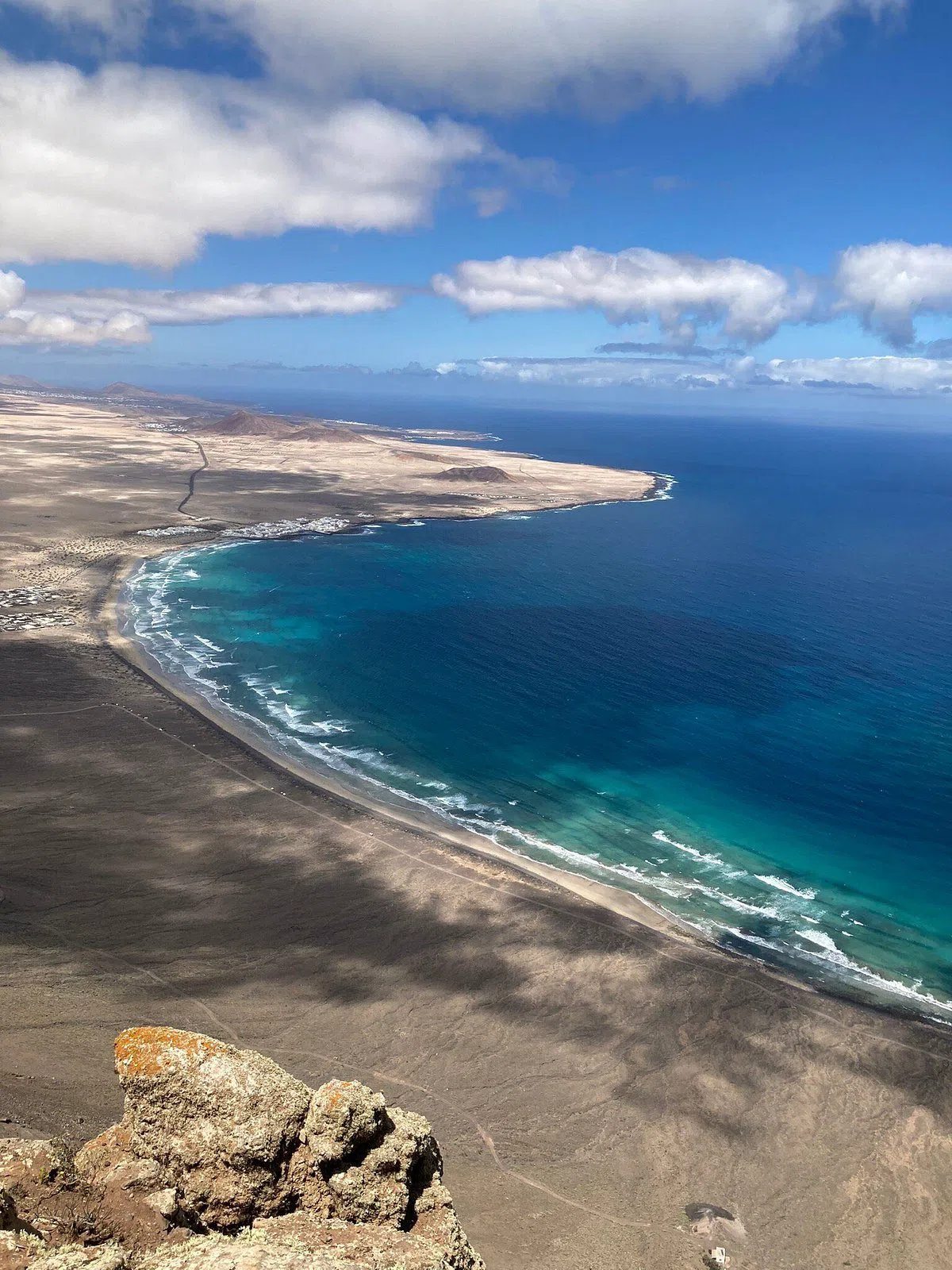
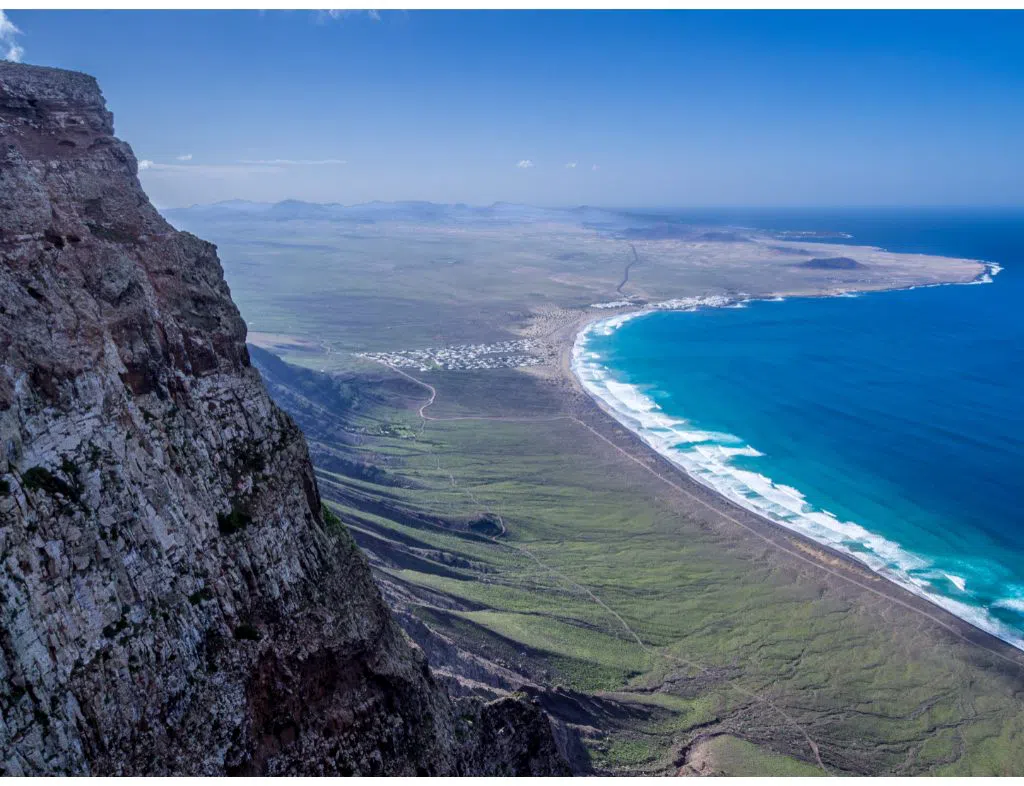
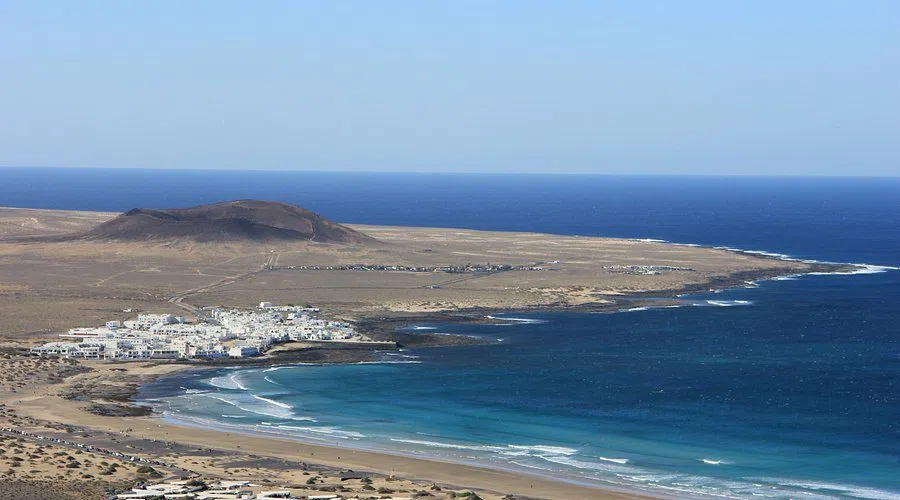
The cliff arrives before the village does. Come north and the land tilts, then buckles, and there it is: the Risco de Famara, a near-vertical wall of basalt climbing past 600 metres, with six kilometres of Atlantic sand laid out at its foot. Caleta de Famara sits at the end of that arc — a scatter of low white houses on unpaved streets, no high-rises, no resort strip. Surfboards outnumber sunloungers here by a margin that tells you everything. This is Lanzarote's surf capital, and the day's shape is dictated by tide and swell rather than by a buffet schedule.
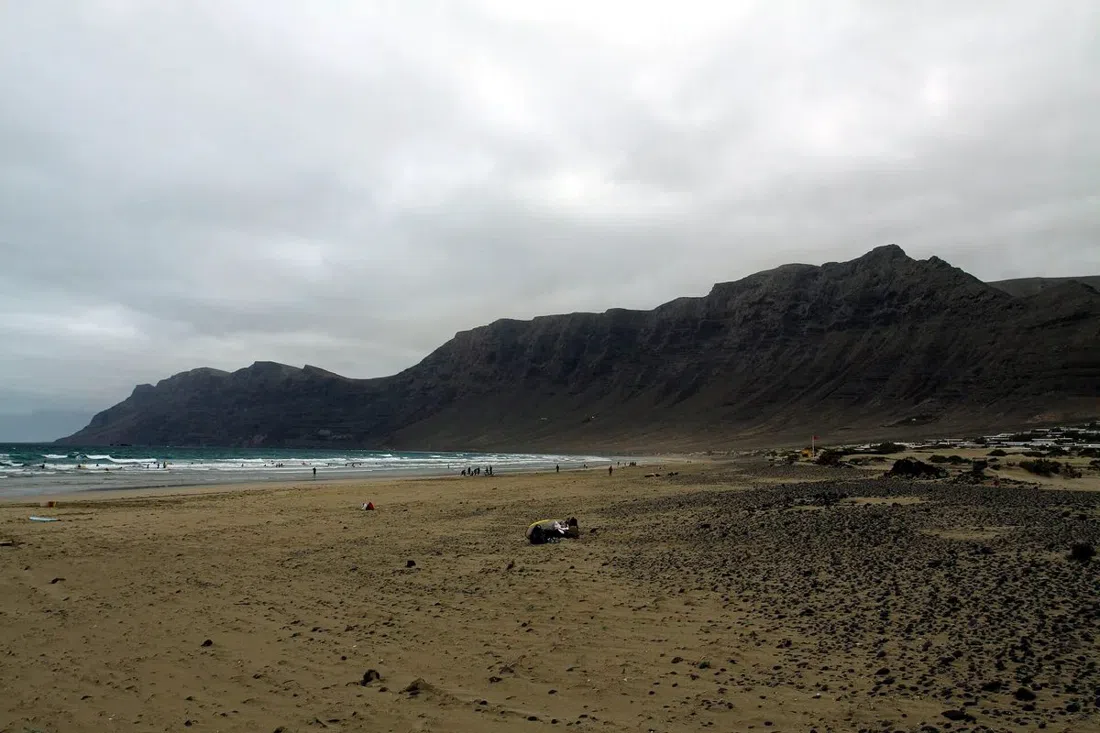
Surf, wind and the Risco cliff
Famara is built around a single geographical fact. That basalt cliff seals the village off from the rest of northern Lanzarote, and the isolation is the whole story — it is why the place was never absorbed into the island's resort economy, why the streets were never paved into a promenade, why you can still stand on the sand at eight in the morning and hear nothing but water and wind. Everything that makes Famara what it is comes out of the rock and the ocean beneath it: the exposure, the wind funnelled down the coast, the beach break that runs along the sand and that surfers here discuss with the proprietary affection usually reserved for a home ground.
Avenida San Borondón, the village's unpaved main street, is where the day declares itself. Mornings mean boards being hosed down outside the surf houses, wetsuits hung over walls and railings, the particular shuffle of people walking barefoot to check the water before they commit to breakfast.
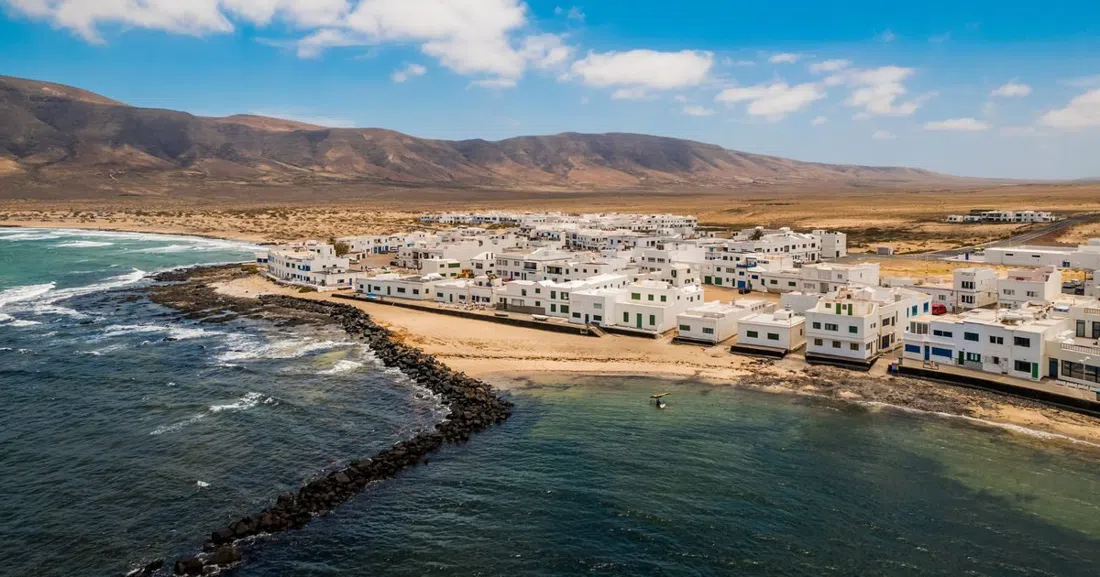
The fishing village underneath all of this hasn't vanished either. Fishermen's descendants still haul small boats up past the volcanic-pebble shoreline, and that continuity is what separates Famara from the manufactured authenticity you find further south on the island. Look north from the sand and the Chinijo Archipelago sits out on the horizon — the view that pulls hikers and photographers up onto the Risco in the first place, and arguably the single best reason to come here even if you never touch a board.
Be clear-eyed about what that exposure costs, though. The wind that makes the surf also makes sunbathing hard work; this is not a place to unfold a towel and expect stillness. The shorebreak and the currents demand real caution, and families hoping for shallow, calm swimming water will find the Atlantic here entirely unsentimental. Famara rewards people who came to be in the water with intent, not beside it.
Where to eat and drink in Famara
The eating scene runs along and just off Avenida San Borondón, and it leans hard on what comes off the boats and out of the surf: grilled local fish, octopus, Canarian rice and stew dishes. No resort buffets, no themed nights. Several restaurants trade on the view, and given what the view is, you can hardly blame them.
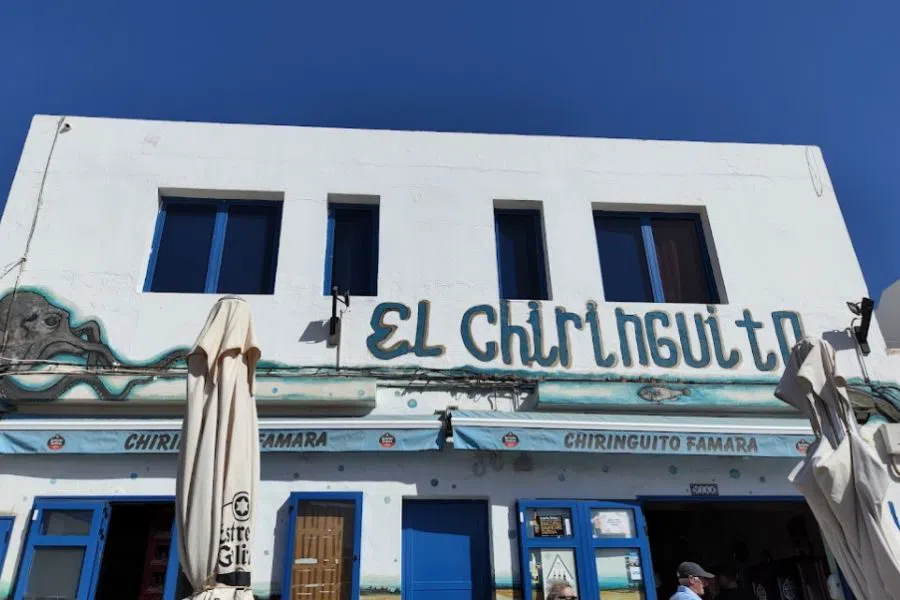
Start at the most literal expression of the place. El Chiringuito is a rustic beachfront spot sitting right on the sand, strong on grilled local fish, and a long-running local favourite — the kind of room where sand on the floor is a feature rather than an oversight, and where a 4.3 rating reflects people who keep going back rather than people who were impressed once.
For something a notch more composed, Costa Famara does seafood and Mediterranean cooking with sea views, and is known locally for its paella — order it, share it, and let the afternoon go slack around it. It rates 4.2, which in a village this small means consistency rather than hype.
Restaurante Sol Famara builds its Canarian cooking around fresh, seasonal produce, with rice and seafood dishes and a sea-view terrace that earns its keep in the hour before sunset. At 4.3 it is quietly the best-reviewed of the sit-down restaurants, and the terrace is the reason to book rather than wander.
Then there's El Risco, which shares its name with the cliff and more or less its outlook too: Canarian cuisine based on quality local produce, with views over both the water and the rock face. It's a 4.2, and the genuine pleasure of eating there is watching the light move up that basalt wall while you work through a plate of something caught within sight of the table.
Evenings and sunset drinks
Famara does not do nightlife in the club sense, and anyone hoping otherwise should recalibrate now. There's no late bar strip. Most nights the village goes quiet well before midnight, which is precisely the arrangement the surf crowd wants — dawn patrol doesn't negotiate.
What Famara has instead is a sunset ritual with real conviction behind it. Surfers and visitors drift down to the beach or to one of the handful of beach bars as the sun drops behind the Risco, and the whole village seems to pause for twenty minutes. Sunset Bar Famara is the anchor of it: a beach bar right on the sand doing homemade burgers and smoothies, and the go-to spot for watching that light go. It rates 4.6, the highest of any bar or restaurant in the village, and the explanation is not complicated — right place, right hour, food that suits a day spent being pummelled by saltwater.
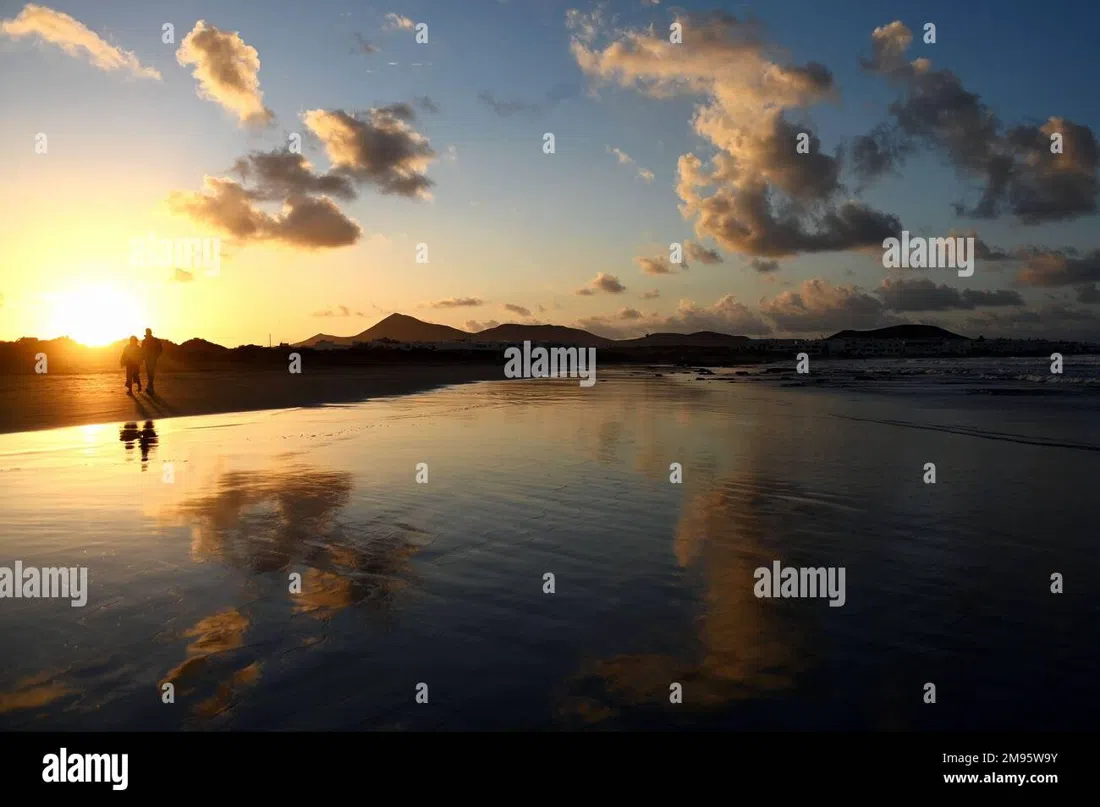
After that, evenings are conversation on a terrace, a beer with whoever you shared a lineup with, an early night. That's the deal. Take it or go south.
Surf schools, kitesurfing and the Risco
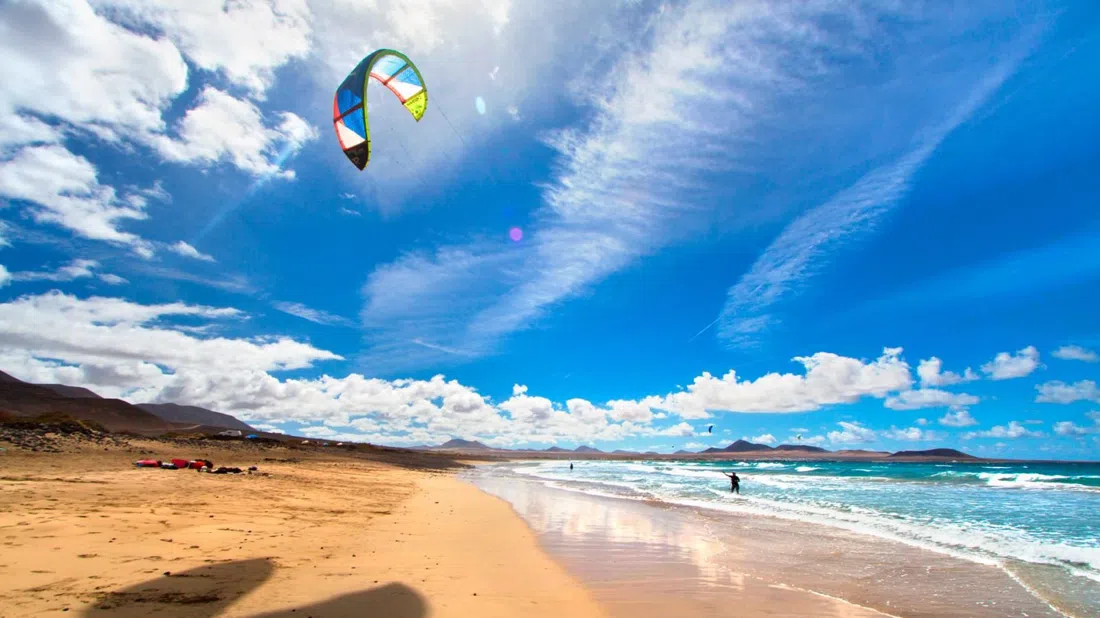
Surfing and kitesurfing are why most people come, and Famara has more surf and kite schools per street than almost anywhere else in the Canaries. Several have been teaching here since the 1990s and 2000s, running everything from a single lesson to week-long camps with board hire included — a depth of institutional experience you don't usually find in a village of this size.
Calima Surf School is one of the oldest surf camps on the island, running week-long packages that bundle coaching, lodging and optional yoga into a single booking. Its 4.9 rating is remarkable for an operation of that vintage and volume, and it's the obvious choice if you'd rather hand a week over to someone who knows which stretch of sand to be standing on given the morning's conditions.
For wind sports, Lanzarotekite has been the reference school on Famara beach since 2000, teaching kitesurfing, surfing and SUP, and holding a 4.8 across two decades of students.
Red Star Surf, on Avenida del Marinero, has taught since 2010 and also handles board and wetsuit rental, which makes it the practical stop for independent surfers who want to arrive with hand luggage and nothing more. It rates 4.8 too.
Not everything here happens in the water. The Risco de Famara itself is the other great draw — the cliff walks above the village deliver the Chinijo Archipelago laid out across the Atlantic, and photographers tend to time their whole trip around that light. If you're not a confident swimmer or surfer, this is the version of Famara to lean into: the beach for walking, the cliff for climbing, the shallows near the village for a cautious dip.
Surf shops, not boutiques
Set your expectations: there is no boutique shopping scene in Caleta de Famara, and anyone hoping to browse ceramics and concept stores should drive elsewhere. What exists instead is a cluster of surf shops along and near Avenida del Marinero and Avenida San Borondón, selling wax, boards, wetsuits and surf-branded clothing, aimed squarely at people who came here to get wet.
Red Star Surf runs a shop alongside its school on Avenida del Marinero, and it doubles as the village's informal information desk — board and wetsuit rental across the counter, plus the kind of conditions chat that no app replicates.
It's a functional retail landscape, and it's honest about it. You buy what you need to be in the water, and the rest of your money goes on lessons and grilled fish.
Where to stay in Caleta de Famara
There are no resort hotels in Famara, and that absence shapes everything about how you plan a stay. Accommodation here means surf houses, hostels, apartments and a scatter of villas, most of it clustered within a few streets of the beach. The budget feel is accordingly budget to mid-range: surf-house dorms and basic apartments dominate, and there is simply no luxury tier inside the village itself.
Staying on or just off Avenida San Borondón or Avenida del Marinero puts you closest to the water and the surf schools, which matters more than it sounds — the whole point of being here is to walk out and look at the sea before deciding anything. If you'd trade a pool and a buffet for a simple room and a shared kitchen full of other people's drying wetsuits, Famara will suit you exactly. If you wouldn't, it won't.
Getting around Caleta de Famara and the island
The village is small enough to walk end to end in under fifteen minutes, and nothing here needs a car once you've arrived. Getting to it is the real planning question.
Fly into Lanzarote Airport (ACE), near Arrecife on the east coast. From Arrecife itself it's roughly 25 minutes by car; from the airport, more like 35 to 40. Bus line 20 runs direct from Arrecife's bus station, but it goes only a few times a day, which is the single most important logistical fact about this village. Without a hire car you are committing to Famara and very little else — no quick hop to nightlife, no spontaneous shopping run, no easy day trip timed to your own schedule.
Hire a car if you want the rest of Lanzarote. Skip it if you want a week of surf, sunsets behind the Risco, and the particular luxury of not driving anywhere. Both are legitimate; just choose deliberately. One last practical note: the streets here are unpaved and unlit, so bring a torch and take care walking back from dinner. Famara is low-crime and relaxed, but the dark out here is genuine dark — which is, of course, part of why the stars above the Risco are so good.
24 October 2026