Lanzarote · Where to live · 7 min
Puerto del Carmen, Lanzarote: The Fishing Port That Grew a Seven-Kilometre Strip
From a 194-person hamlet called Tiñosa to Lanzarote's busiest resort — harbour seafood, volcanic reef diving and the loudest promenade on the island, all walkable in an afternoon.
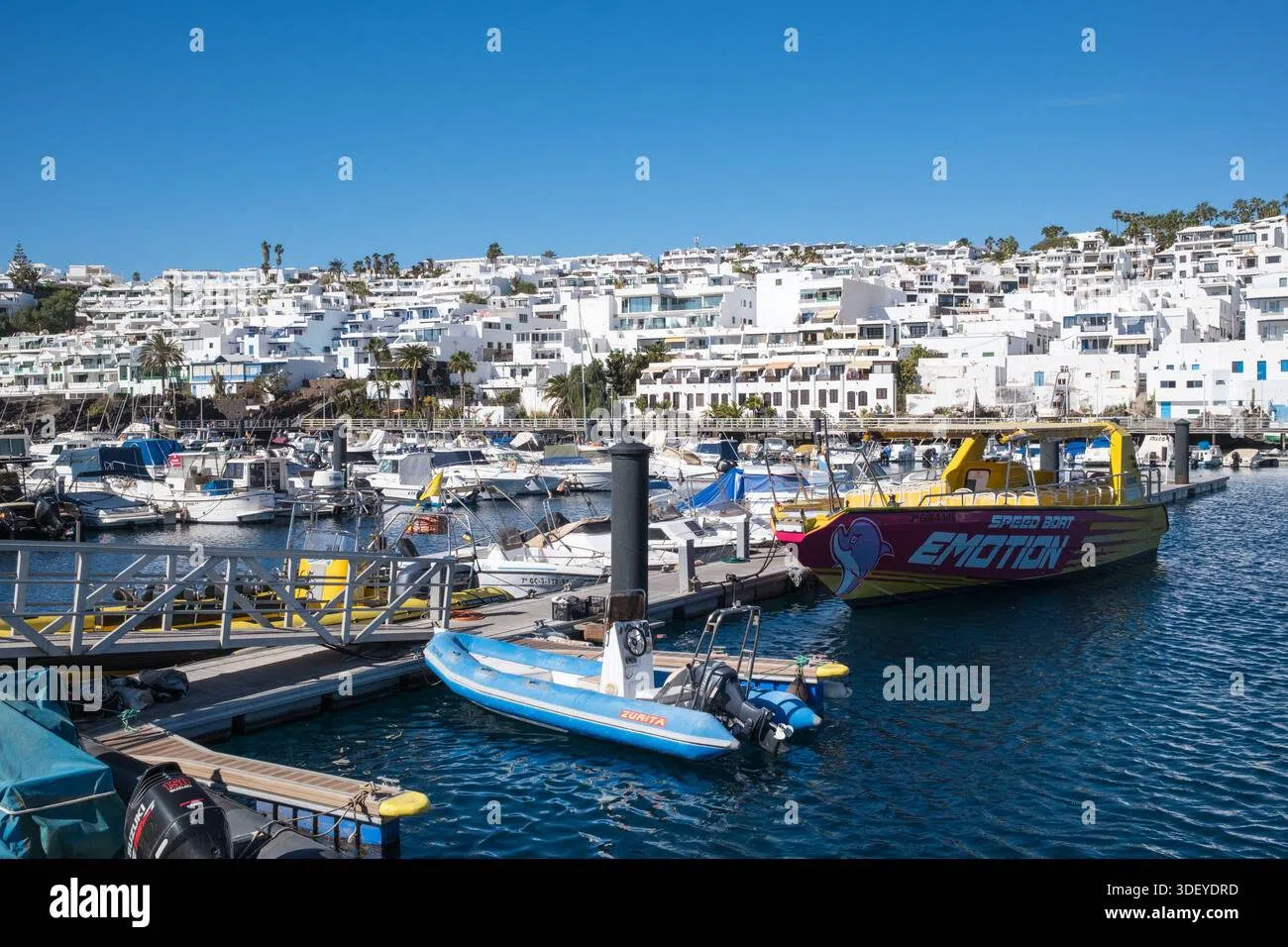
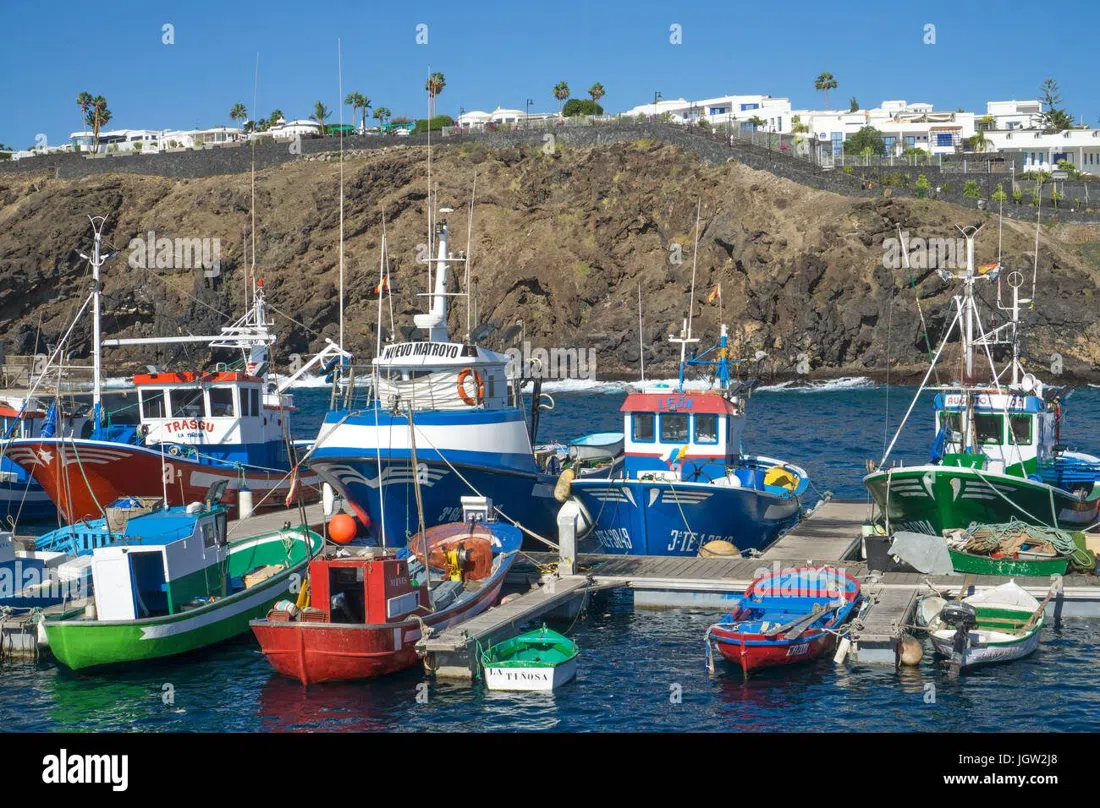
The slipway at the old harbour still works. Boats come out of the water on it, hulls crusted with salt, and the air around Puerto Tiñosa smells of diesel and the morning's catch rather than sun cream. In 1967, when Hotel Los Fariones opened on the sand a short walk from here, this was a hamlet of 194 people. Lanzarote now takes more than a million visitors a year, and the great majority of them land within a few hundred metres of that slipway — on seven kilometres of beach, bar and promenade called the Avenida de las Playas.
What Puerto del Carmen is known for
This is the island's tourism engine, and it has never pretended to be anything else. The name on the old charts was Tiñosa: Guanche, pre-Spanish, older than anything here with a sun-lounger on it. For a brief spell around 1900 the harbour even held Port of General Interest status — the island's official front door — before Arrecife took that role in 1928 and Tiñosa went back to being a fishing village with 194 residents and very good water.
The useful thing to grasp before you book is that Puerto del Carmen is two resorts wearing one name. Walk the old town around the harbour and it is still recognisably a working port: whitewashed buildings, boats hauled up on the slipway, a handful of harbourside seafood terraces where locals eat alongside the tourists who worked out they could walk this far.
A few hundred metres east the other Puerto del Carmen begins, and it runs wall to wall with English — pubs, all-day breakfasts, football, karaoke — for the full length of the Avenida de las Playas. Neither half is wrong; they serve different holidays, and the resort's real trick is that you can cross between them in ten minutes on foot.
Be clear-eyed about who that suits. Package-holiday families who want flat, walkable beaches and food their children recognise do very well here. So do divers and snorkellers, and British and Irish travellers who want their pint and their football without surprises, and the long-stay winter-sun regulars who arrive when northern Europe turns grey and leave when it stops. If what you came to Lanzarote for is quiet and architecturally distinct, this is not it — Haría or Teguise will serve you far better.
Where to eat and drink
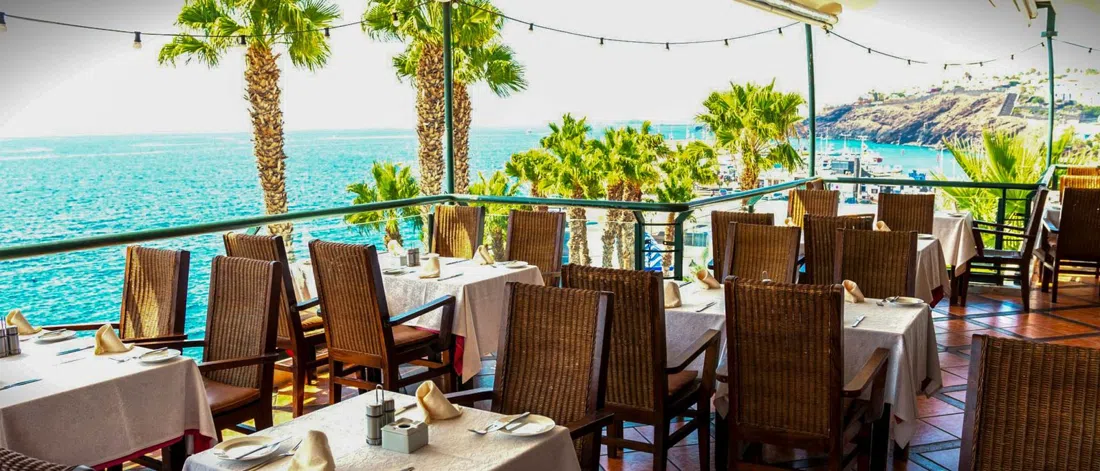
Rule of thumb: the closer you get to the old harbour, the better the fish and the less the menu shouts at you in three languages. El Cangrejo Rojo sits right on the water at the old fishing harbour and has been turning out fresh gambas, mussels and whatever the local boats brought in for long enough to collect more than 1,400 Tripadvisor reviews at 4.3 — which in a resort this size counts as a civic achievement. The waterside tables go first. Book ahead, and if you can, eat late enough that the light goes orange over the moored boats.
A few streets back, La Cascada does the Canarian end of things properly — grilled octopus, black pig among the local specialities, the kind of cooking that rewards ordering one thing you don't recognise. It holds 4.5, and it's the restaurant I'd point at if someone admitted they'd eaten nothing but burgers for four days and wanted rescuing.
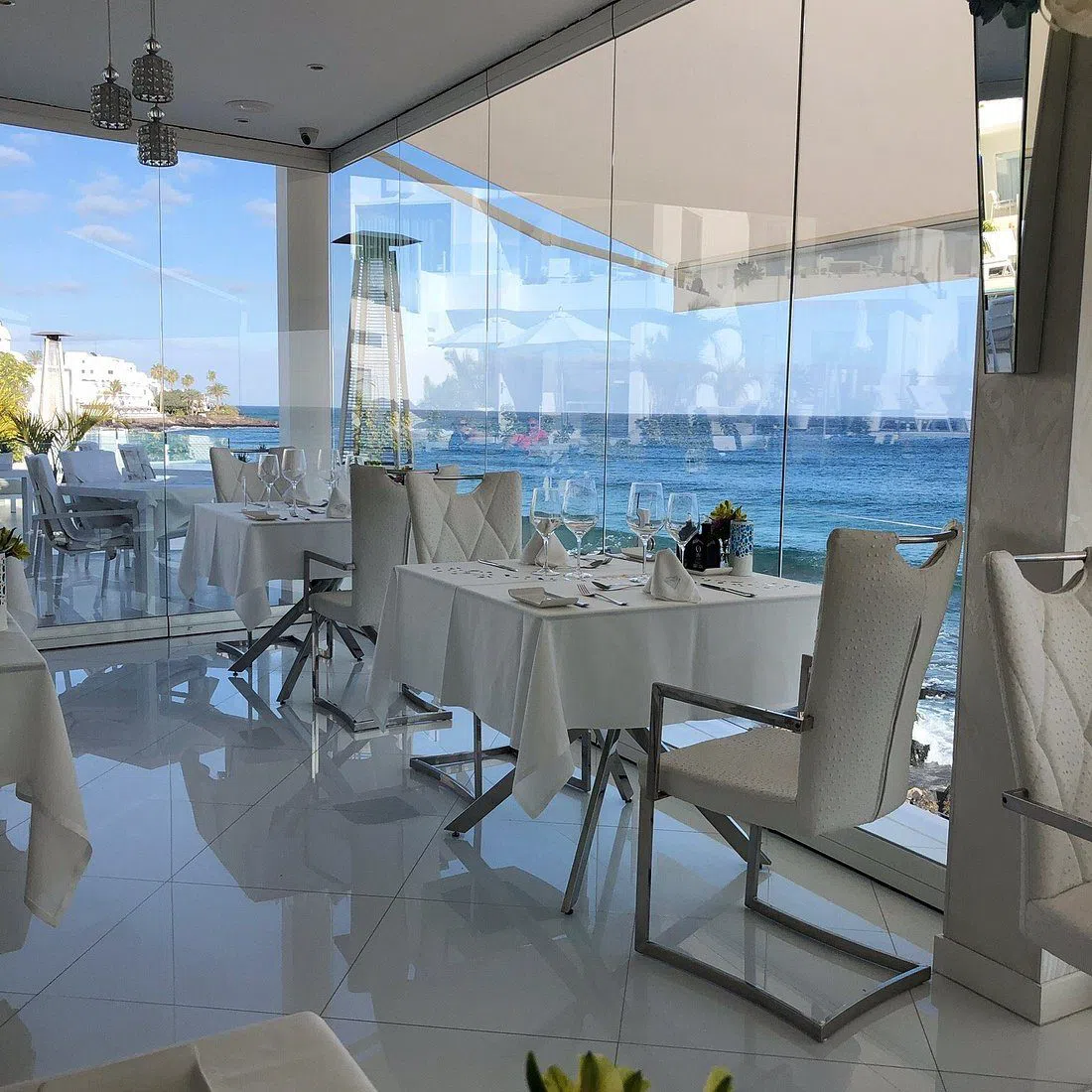
Up on Playa Grande the register changes. Lani's Gourmet Restaurant is the top-rated kitchen on that stretch at 4.7, seafood-led fine dining at roughly €40–60 a head, and it's where the resort goes when there's an anniversary involved.
Twenty metres of pavement away you can eat for a quarter of that: La Caña is a traditional tapas bar on the same beachfront at pub prices, €5–20 a head, 4.4, filling up with people ordering three small plates and a beer because that is all the evening needs to be. That gap — €15 and €55 within sight of one another — is the whole economy of Puerto del Carmen in miniature.
For the quieter version, walk east. Costa Luz, down by Los Pocillos beach, does home-cooked seafood well away from the Strip crowds, and the stroll along the promenade to get there is part of the reason it tastes better.
Nightlife
The Avenida de las Playas is Lanzarote's nightlife hub by a wide margin, and it runs on one very specific register: British and Irish pub culture, loud, cheap and entirely unapologetic about it. You will not find a speakeasy. You will find a covers band at eleven o'clock and a man in a football shirt singing along to every word of it.
American Indian Café at Avenida de las Playas 37 is far more live-music bar than café, whatever the sign says — a rock-covers band most nights, an American menu if you want feeding, and doors open from 10am straight through to 2am, which tells you most of what you need to know about the rhythm of this street.
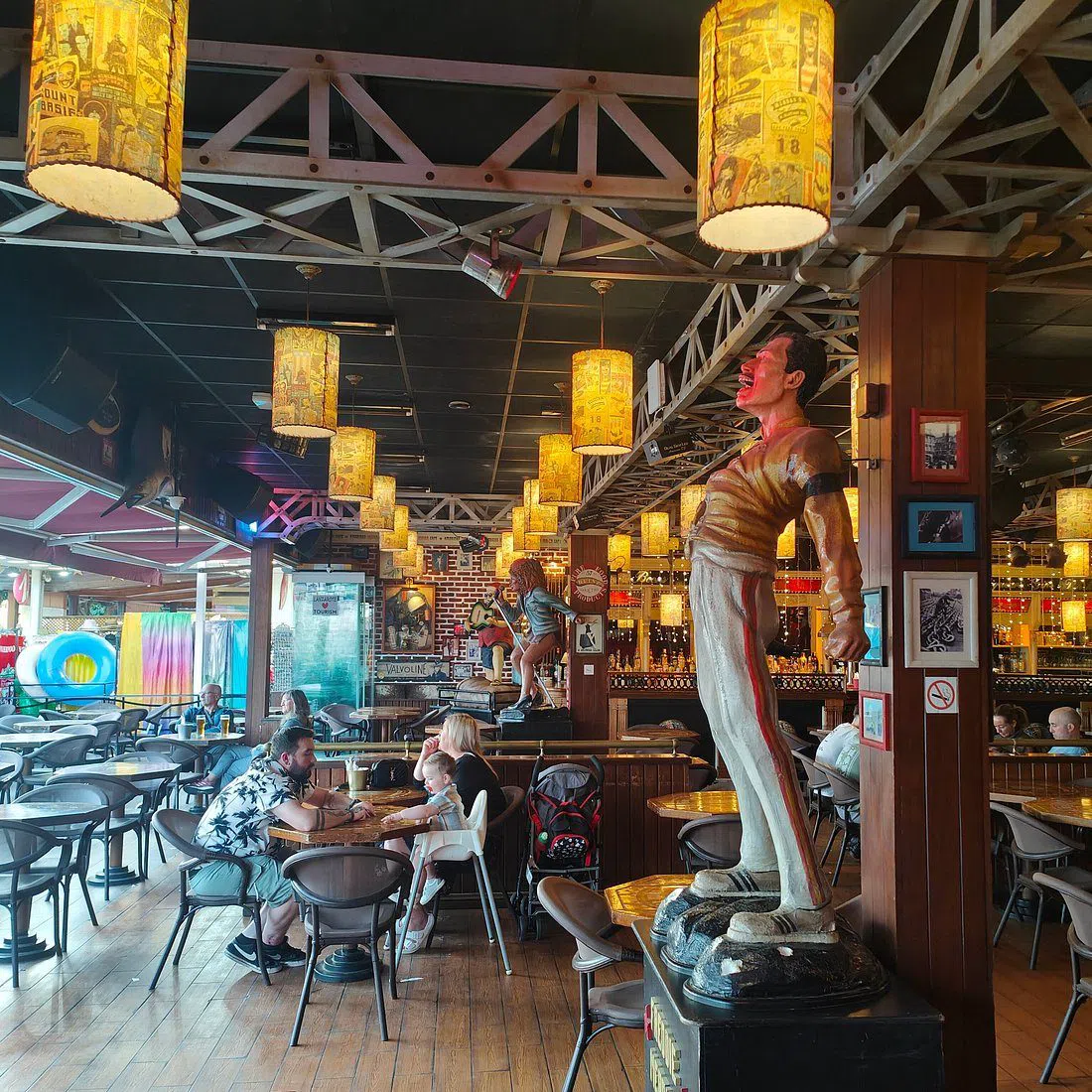
It sits at 4.3, and the crowd skews mixed-age in the best way: couples in their sixties at the front tables, stag groups at the back, everyone roughly equally delighted.
Further along, Ruta 66 has been doing the American-diner thing for years — cheap happy-hour pints, a model train running on a track mounted to the ceiling, and 4.2 from people who came for exactly that and got it.
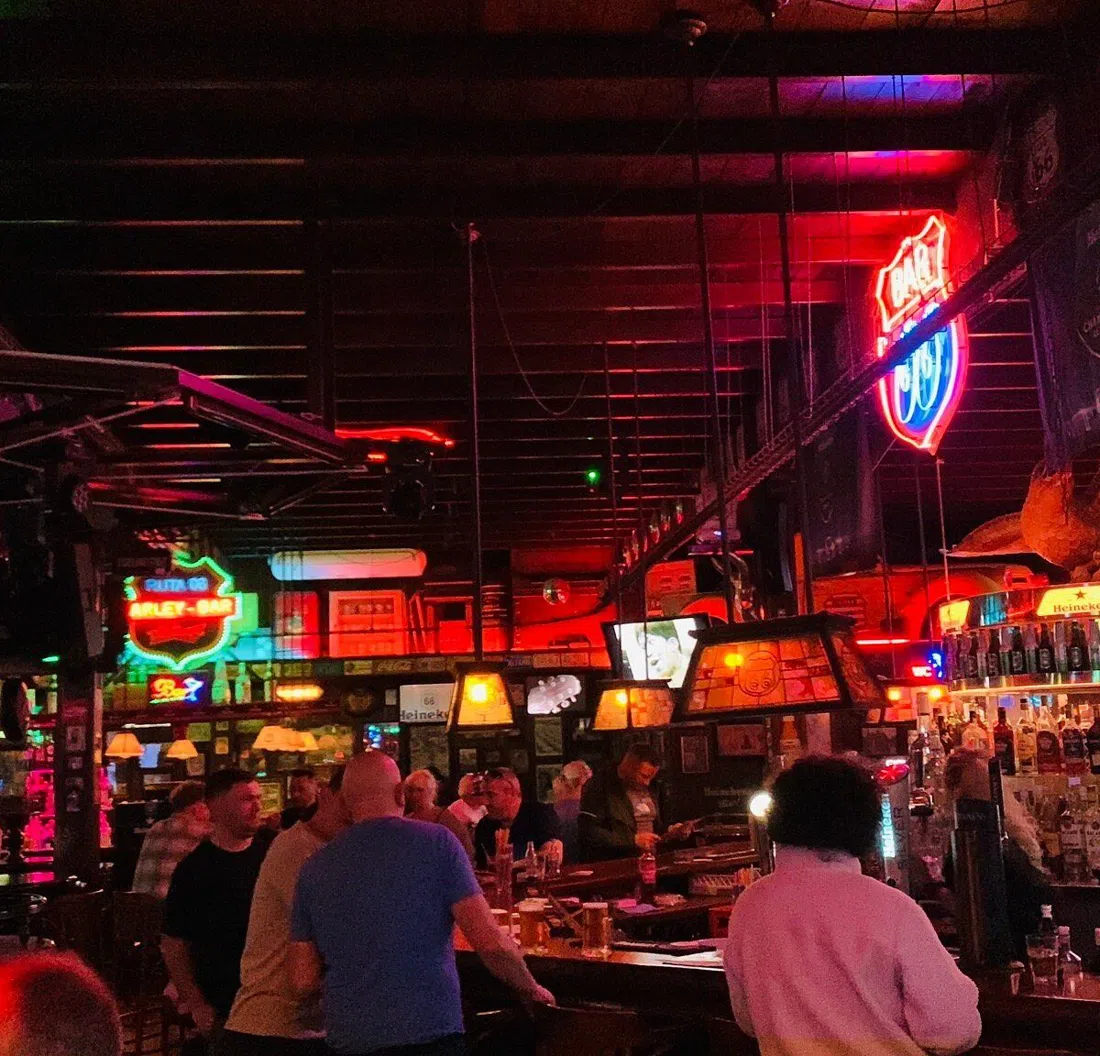
Arrive before happy hour ends and you'll understand the appeal faster than any review can explain it.
Things to do
Diving and snorkelling here are a genuine specialty rather than an afterthought. Playa Chica is a rocky cove of roughly 60 metres right in the centre of town, sheltered enough that the water forms a natural pool, and it is the standard shore-entry site for the resort's PADI schools — volcanic reef, excellent visibility, abundant fish, no boat required.
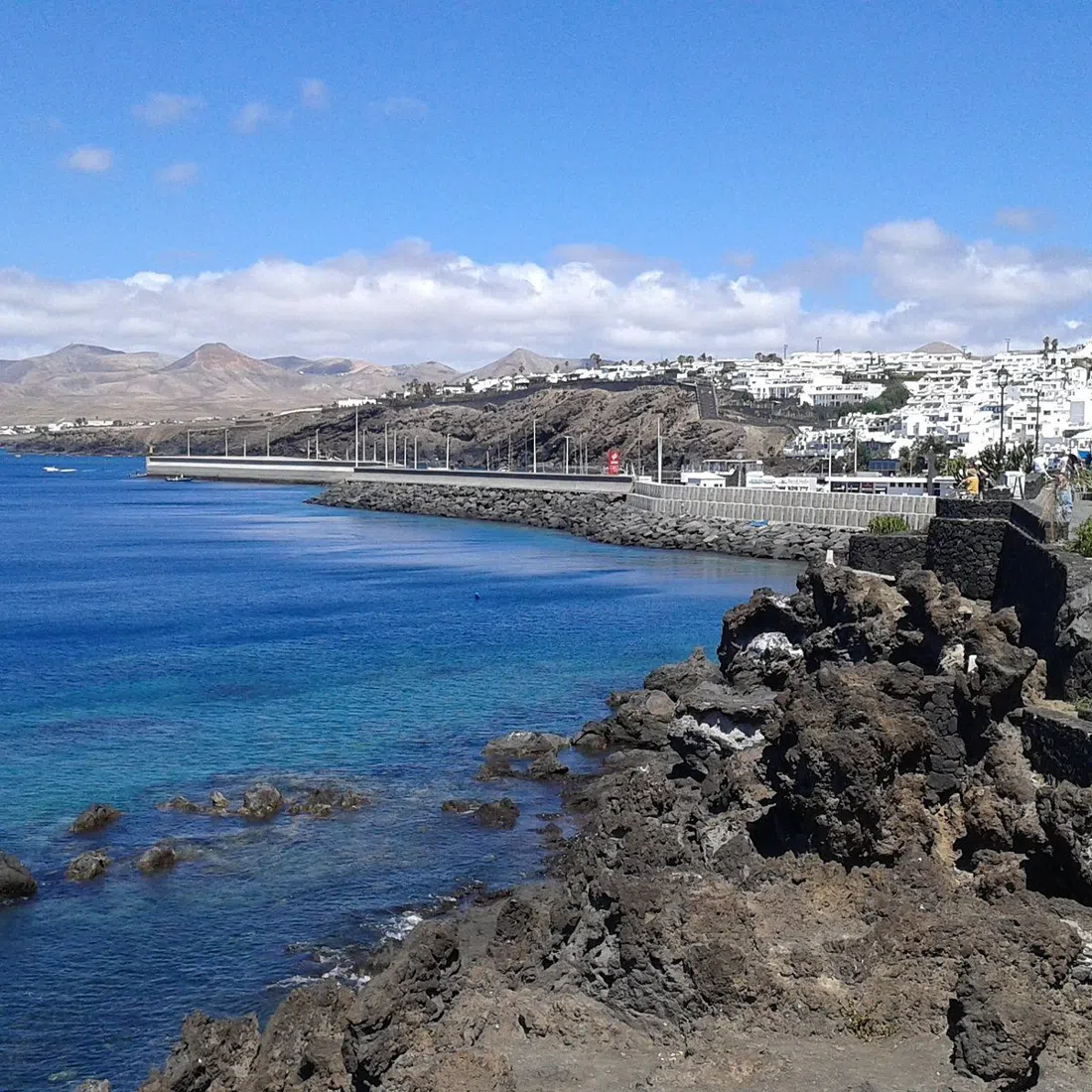
At 4.5 it's the best-regarded dive site in the resort, and the pleasing thing is how unceremonious it all is: you walk down with a mask, step in off the rocks, and the reef starts almost immediately. Mornings are calmest.
Playa Grande is the other pole of the day — the main central beach, wide golden sand backed by the promenade and most of the hotels, 4.6, and busy in the way a successful beach is busy.
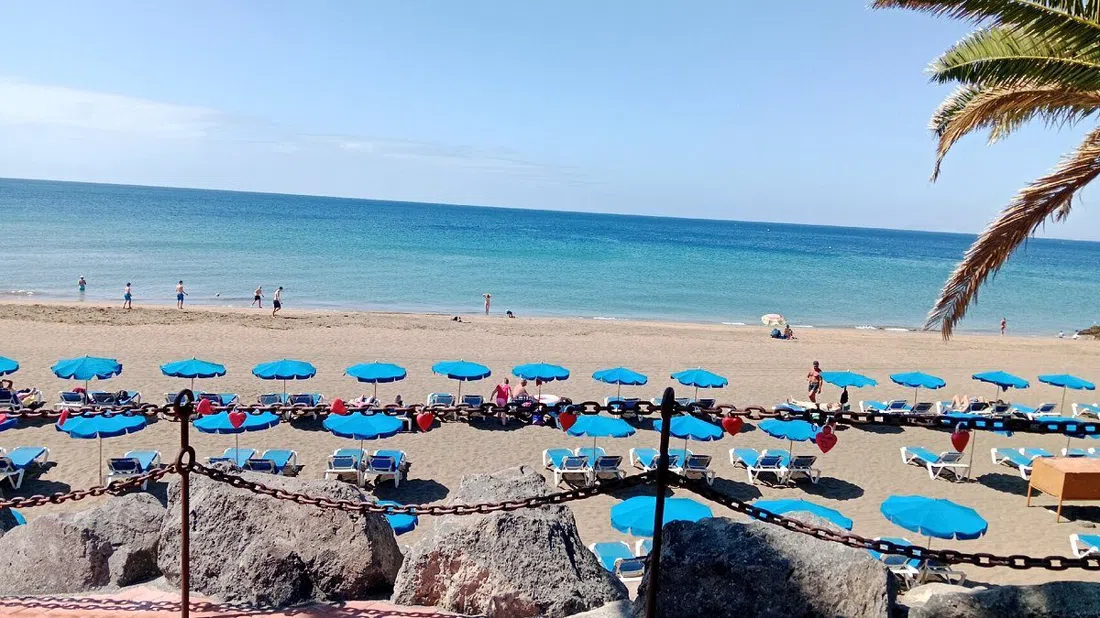
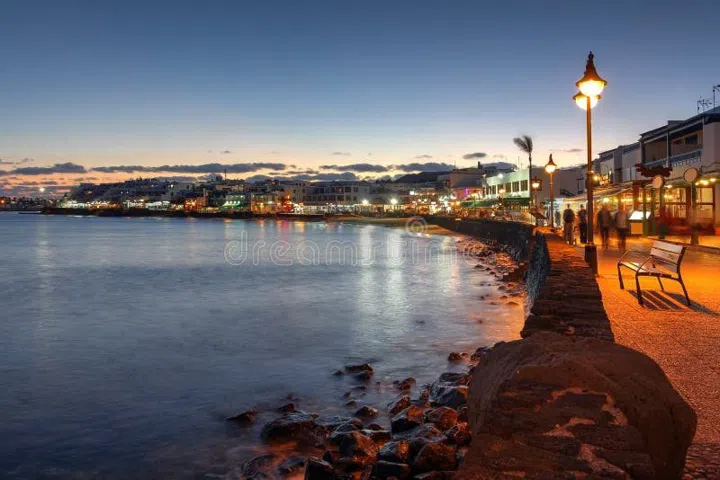
Between the two, a day assembles itself without effort: reef in the morning, sand after lunch, the promenade at dusk when the whole resort comes out to walk off dinner. What you can't do on foot is the island's interior — Timanfaya National Park and the volcanic north need a hire car or an organised tour, since the bus network doesn't reach them.
Shopping
Nobody comes to Puerto del Carmen to shop, and the resort is relaxed about that. Biosfera Plaza on Avenida Juan Carlos I, in the centre of town, is the one proper shopping centre: open-air, a mix of clothing shops, cafés and restaurants, open 10am–9pm Monday to Saturday.
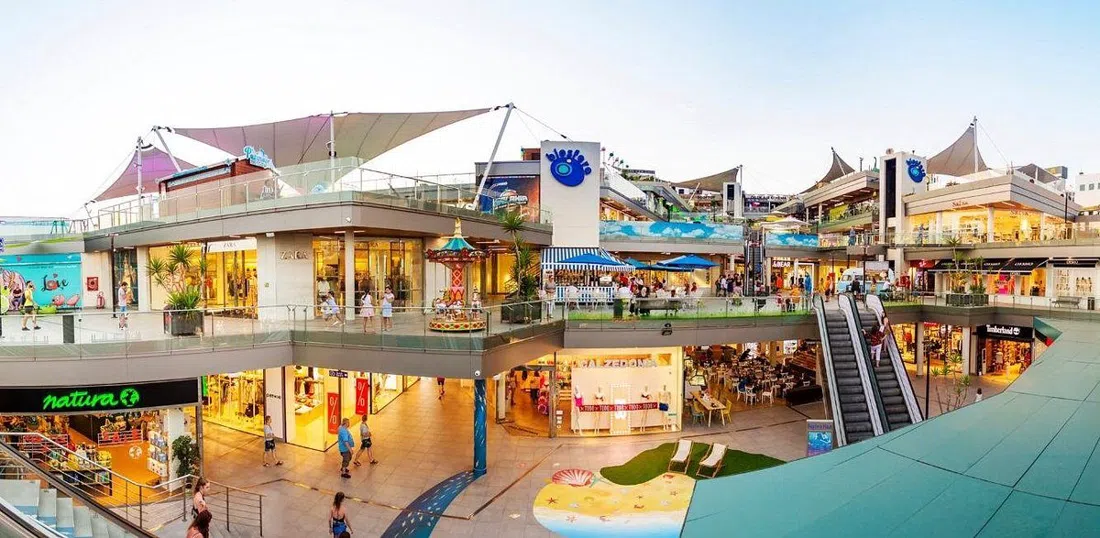
Its real asset is the roof, which holds a dinosaur-themed mini-golf course and an open-air cinema — a combination that sounds like a fever dream and works perfectly on the evening when the children have had enough beach and you have had enough children. Otherwise, shopping means the Strip: sunglasses, inflatables, the usual.
Where to stay in Puerto del Carmen
Which stretch you choose matters more than which hotel. Around Playa Grande and the old town you're closest to the harbour's seafood terraces and to the Avenida de las Playas nightlife — pick this if you want to walk to dinner and then to a bar crawl, and if you don't mind the noise finding you at one in the morning. It's also the priciest core.
Head east to Los Pocillos and Matagorda and the rates undercut that core, while the promenade still delivers you into the middle of everything on foot. Those stretches feel calmer and more residential, better for small children and early nights. Budget-wise the resort spans a lot: pub food and tapas at €5–20 a head, mid-range seafood dinners €20–40, fine dining at €60-plus.
Getting around
Puerto del Carmen is flat, and its promenade runs the full seven kilometres from the old harbour through Playa Grande to Los Pocillos and Matagorda, which means most visitors never use transport inside the resort at all. Walk it, or hire a bike; the sea is on one side the whole way.
The nearest airport is César Manrique-Lanzarote Airport, about 10km out — roughly 20 minutes on the Line 22 bus for €1.40, or 10–15 minutes by taxi at €15–20. There's no ferry terminal in the resort itself. Buses also run to Arrecife, but anything inland, Timanfaya above all, wants a car or a tour.
As for safety, this is a long-established mass-tourism resort with heavy foot traffic deep into the night, and it feels it. The ordinary late-night caution applies around Strip drinking — watch your drink, watch your friends — and otherwise you can walk home along the sea at two in the morning with your shoes in your hand, which is more or less what the place was built for.
24 October 2026